Tree Identification Quiz (SFR349)
 Call Kai
 Learn
Learn Practice Test
 Spaced Repetition
 Match
Match Flashcards
 Knowt Play
1/32

There's no tags or description
Looks like no tags are added yet.
Name | Mastery | Learn | Test | Matching | Spaced | Call with Kai | Chat |
|---|
No analytics yet
Send a link to your students to track their progress
33 Terms
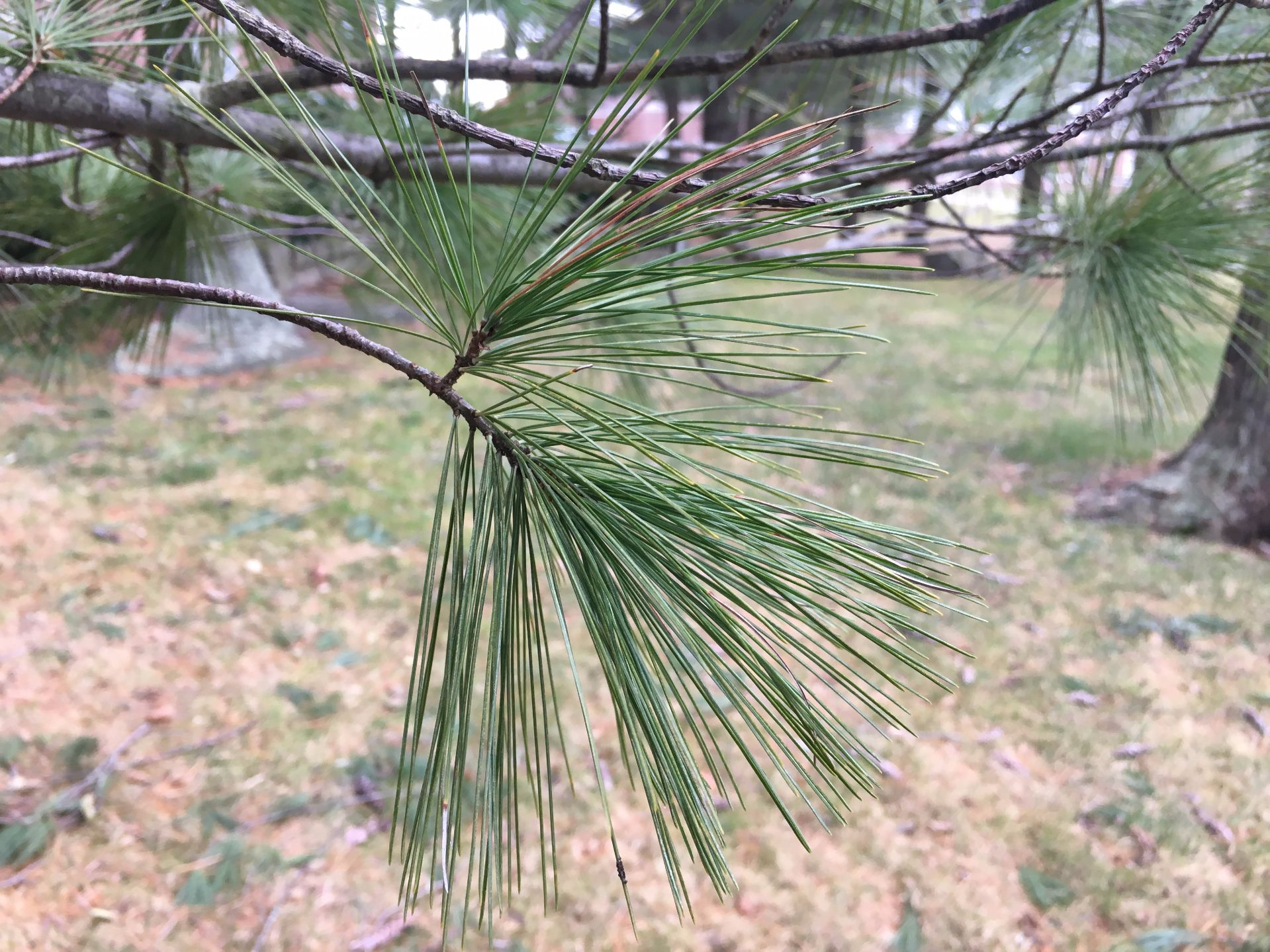
eastern white pine
5 needles per fascicle, 3-5" long
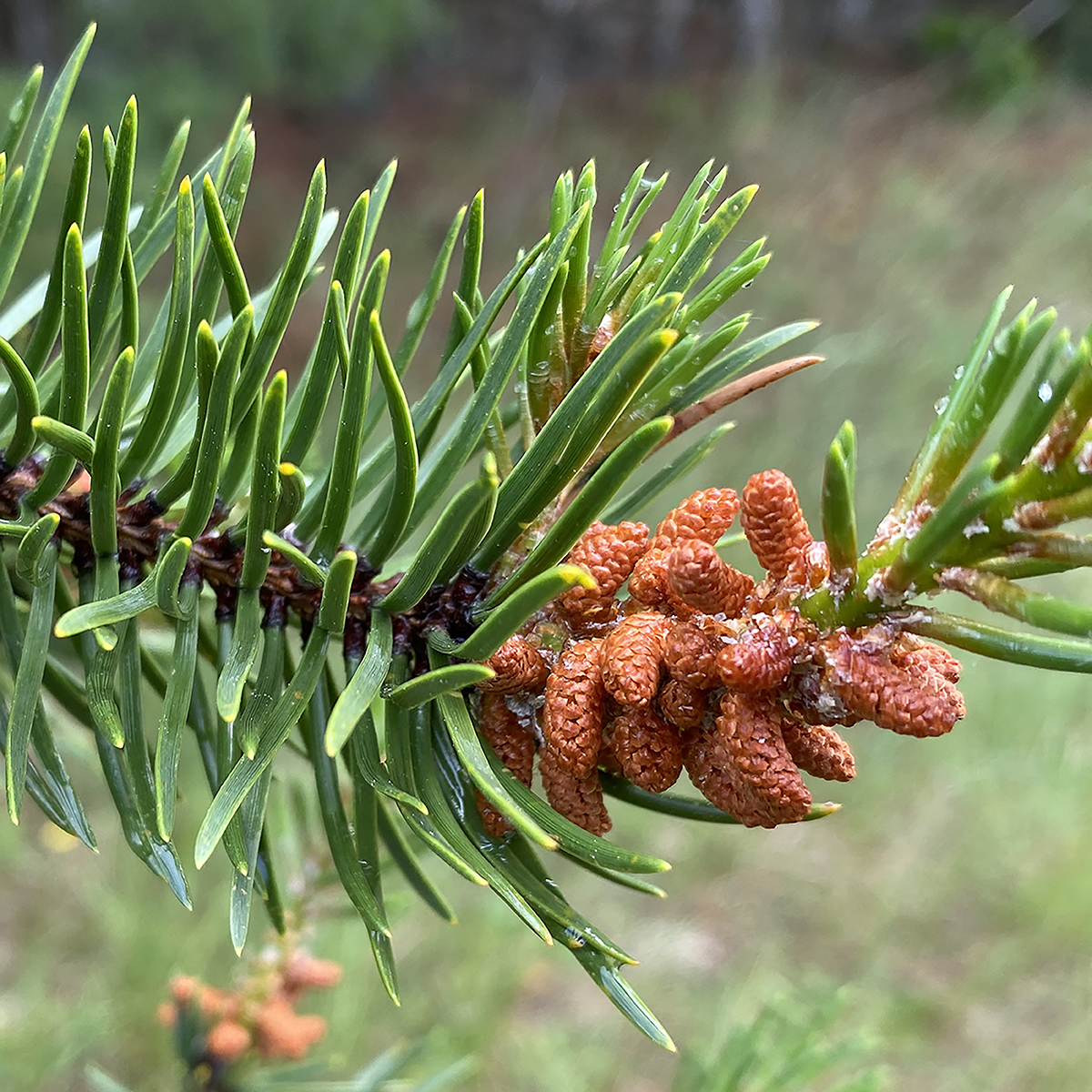
jack pine
Leaves: 2 per fascicle (3 at tip), 3/4-1.5'' long
-Cones: 1.5-2'' long, incurved, persistent, serotinous
-Bark: thin, scaly, irregular ridges when mature
balsam fir
flat, mostly 2-ranked, parallel-sided, 1" long, green above, white lined below, tiny notch at tip except at top of tree

red pine
2 per fascicle, 4-6" long, break when doubled over

pitch pine
3 per fascicle, 3-5" long

black spruce
4-angled, spirally arranged, 1/4-1/2" long, persistent 7-10 years, borne on peglike projections - twigs pubescent
inner bark shows red flecks, bark breaks into very thin, corn flake sized flakes
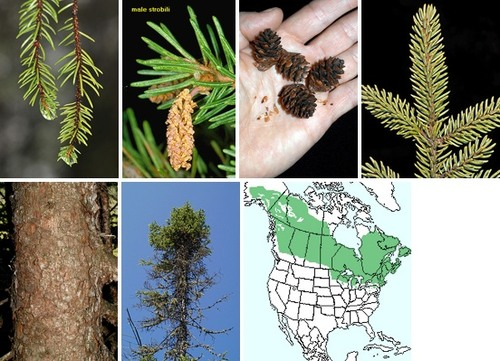
red spruce
1/2-5/8" long, 4-sided, spirally arranged, persistent - twigs pubescent
sessile on a peg

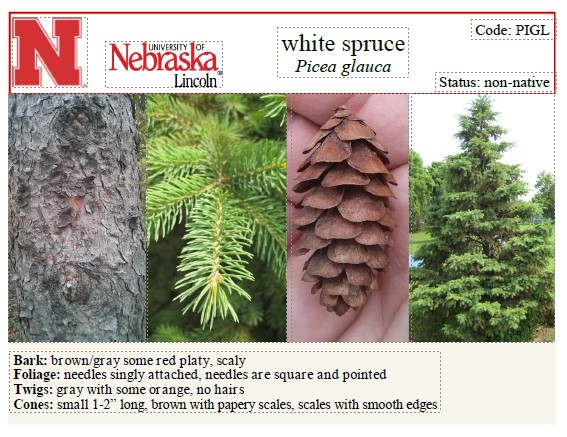
white spruce
1/2-3/4'' long, 4-sided, spirally arranged, persistent
-Cones: 2'' long
-Bark: thin, gray half-dollar sized plates
eastern hemlock
flat, tapering, 1/3-2/3" long, 2-ranked, borne on short petiole, lustrous green above, 2 white stomate lines below

northern white cedar
scalelike, twigs flat & 2-4 mm. wide

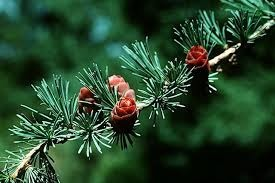
tamarack / eastern larch
1" long, triangular x.s., clusters of 8+ on persistent spurs - leaves deciduous after turn bright gold in fall
quaking aspen
flattened petiole

bigtooth aspen
strongly toothed leaf margin

yellow birch
golden bark, often peeling, wintergreen odor to twigs
more pointed than white birch
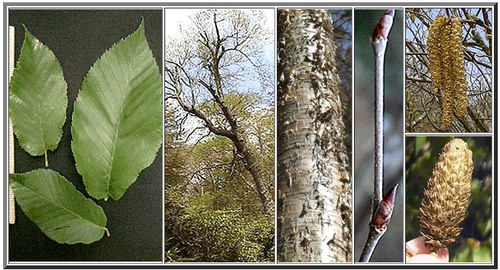
paper/white birch
white, peeling bark

gray birch
tight, sooty - white bark, fine, dark twigs
“elephant” leaves

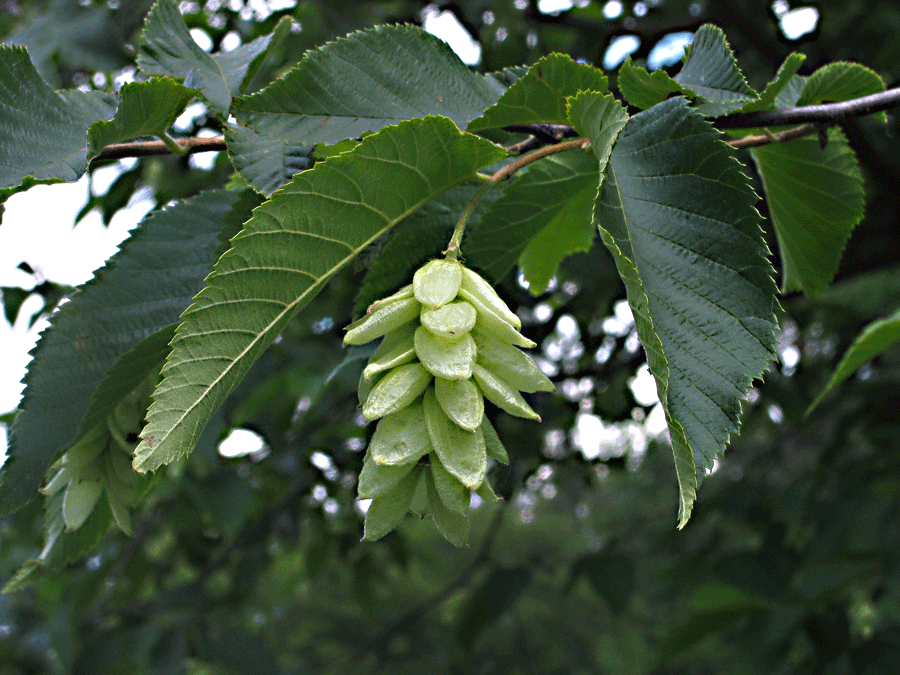
ironwood / eastern hophornbeam
a relatively small, slow-growing tree with very hard wood; grey bark with long, narrow fissures (forming strip-like scales); fruits are bladder-like, enclosing
fuzzy leaves, teeth are “big-small-big-small”
American beech
tight, light gray bark, sharp buds, toothed leaves

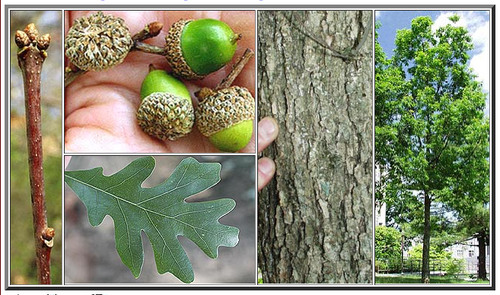
white oak
branchy, rough, ridgy, light gray bark, strongly and rounded lobes
northern red oak
leaf lobes mucronate, bark fissures red

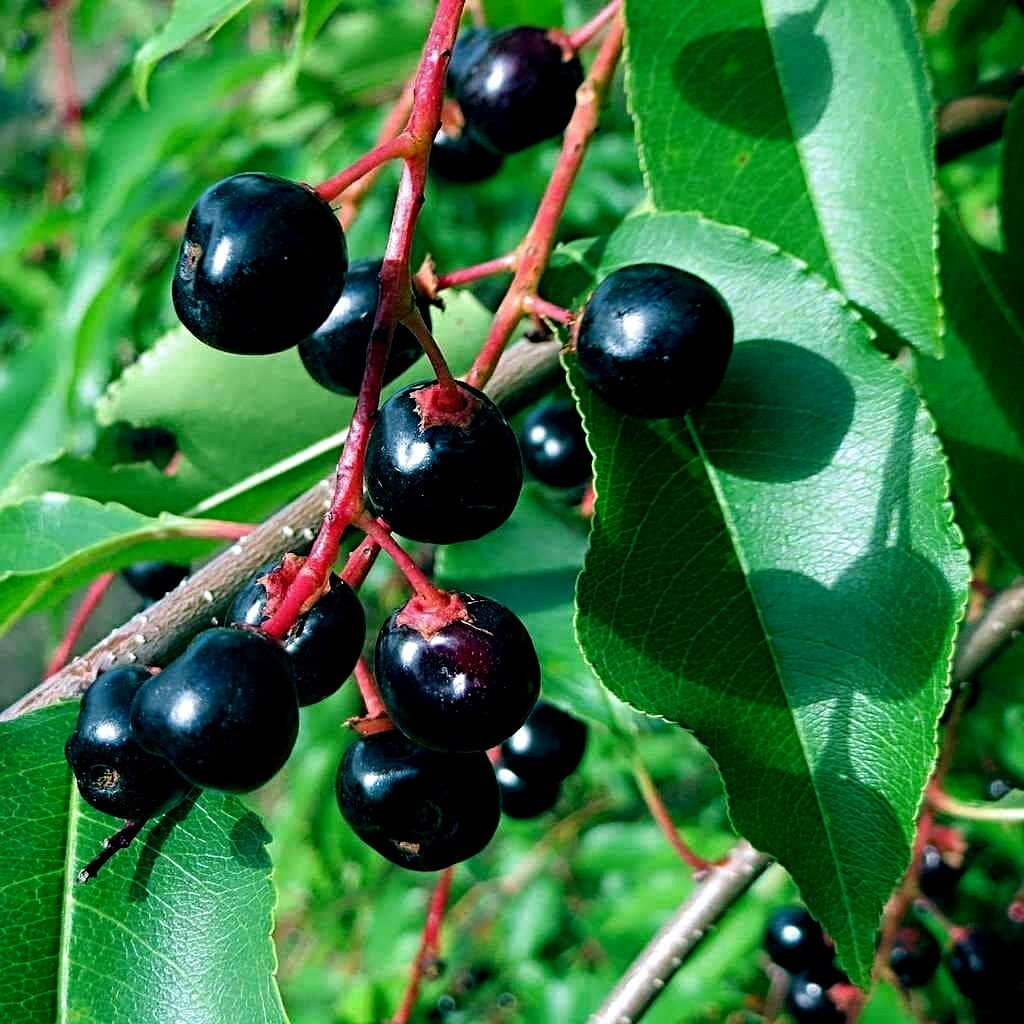
black cherry
buds pointed, bark red-black when young, black and rough when mature, pungent and very bitter, flowers borne in 4-5" raceme, leaf with rufous hairs at base midrib on underside
larger leaves, bigger teeth on margins
red hairs underneath leaf
pin cherry
small tree, tight, red-black bark, bitter but less pungent with orange lenticels, flowers and fruit occur in clusters on long pin-like stalks, leaves glabrous below, buds blunt
leaves thinner than black cherry, less serrated

chokecherry
small tree; leaves with a coarsely (sharp) serrated margin are dark green above and lighter underneath and are wider toward the tip than the base of the leaf; fragrant, cup-shaped, 5-lobed, white flowers (each to 1/2” across) in elongated clusters to 3-6” long bloom in mid-spring. Flowers give way to clusters of globular, pea-sized berries HANG that ripen to dark purple/black in August

shadbush
large teeth, more rounded at the bottom of the leaf
shrub to small tree; finely-toothed, obovate leaves, short-stalked white flowers in drooping clusters which appear before the leaves emerge in early spring. Flowers give way to small, round green berries which turn red and finally mature to a dark purplish-black in early summer. Bark is gray and smooth but streaked with longitudinal fissures; often with a reddish cast.
alternate
sugar maple
5 letters in sugar = 5 sharp lobes
u-shaped notches
bark gray & warty with cocoa-brown fissures, buds small, pointed and light brown, leaves without fine teeth

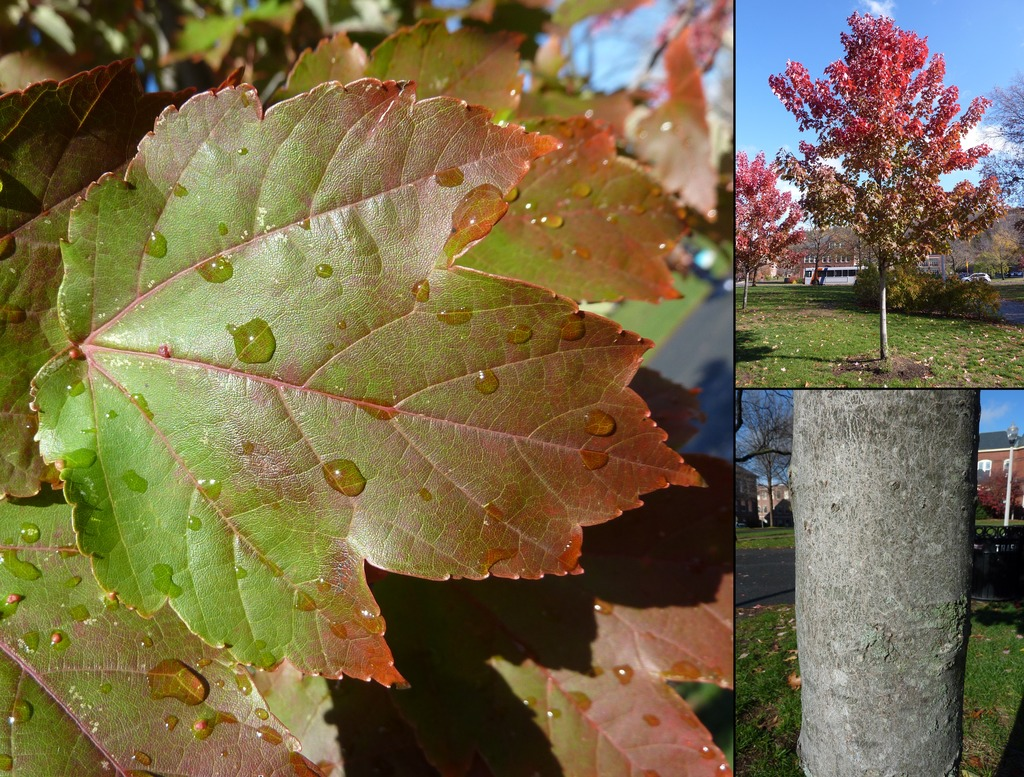
red maple
leaves with finely dentate margins & v-shaped notches, bark tight and dark gray when young, lighter but breaking into rough, scaly ridges when mature (esp. in swamps), buds globose, twigs and buds red
not as deeply lobed
silver maple
leaves with 5 deeply palmate sinuses, lobe margins coarsely serrate; light green above, pale, silvery white below. Bark is light gray and smooth when young, when older breaks up into long thin strips, loose at ends; similar to red maple but coarser. Samara is largest of any native maple, divergent wings

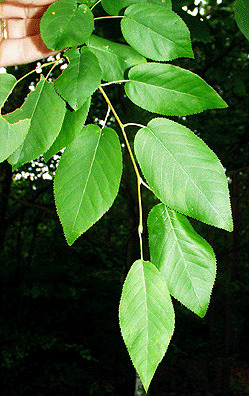
white ash
pinnately compound leaf, hairy below, 5-9(7) leaflets, bark light brown with longitudinal ridges, terminal bud brown, blunt, hairless, inner bark of shoots bright, brick red
VERY LONG/NOTICABLE PETIOLE

green ash
7-9 leaflets, hairy below, buds hairy, otherwise similar to F. americana, inner bark of shoots cinnamon-colored
little petiole
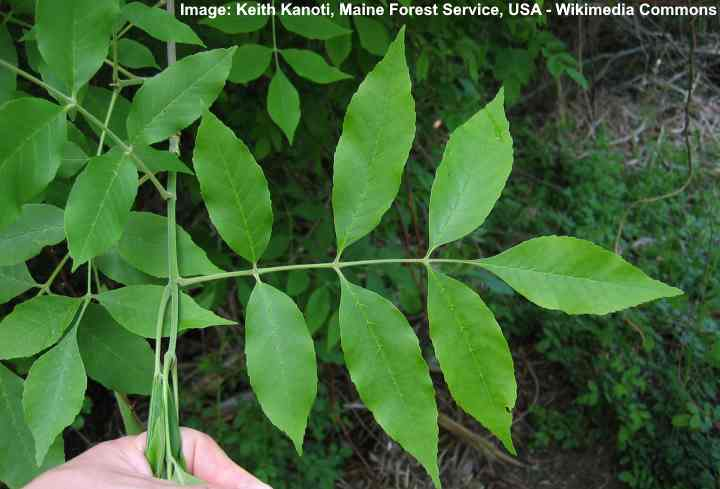
brown ash
7-11 leaflets, a few hairs a junction of leaflets and rachis, bark corky & light brown, inner bark of shoots off-white, buds with sharp points
11 leaflets = ALWAYS brown ash
pretty much no petiole, less fissured

basswood
heart-shaped leaf with VERY asymmetrical base, distinct berries
non-native bush honeysuckle
opposite, leaves are smooth, matte, long and have a “scratchy” feeling, come to a rounded point
Most are woody shrubs, often multi-stemmed, but some can become the size of small trees (10’ tall). Large twigs are hollow, a key characteristic that differentiates non-native honeysuckles from native honeysuckles. Leaves are simple and opposite. Flowers are showy, fragrant, and range in color from creamy white to yellow to pink

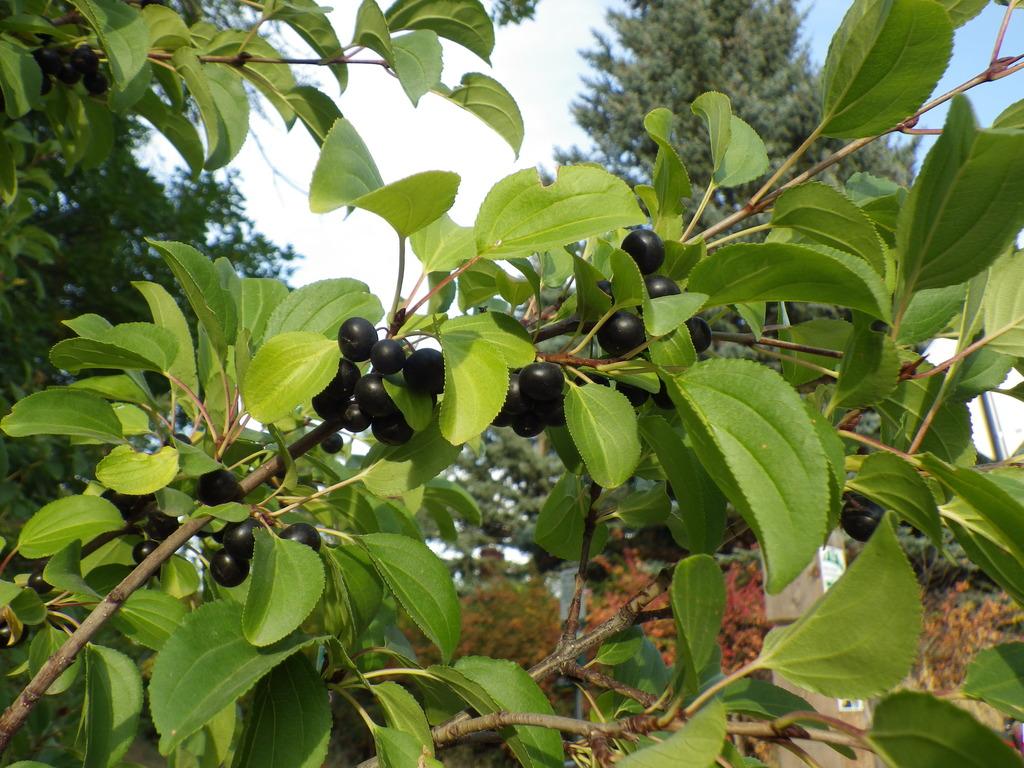
common buckthorn
almost opposite, bark has white spots, berries are very close to the stem, rounded leaf margin with teeth, single small thorn at end of twigs, fleshy dark purple to black berrylike fruits.