intro to patho : basics and terms
 Call Kai
 Learn
Learn Practice Test
 Spaced Repetition
 Match
Match Flashcards
 Knowt Play
1/23

There's no tags or description
Looks like no tags are added yet.
Name | Mastery | Learn | Test | Matching | Spaced | Call with Kai | Chat |
|---|
No analytics yet
Send a link to your students to track their progress
24 Terms
how is health defined today
it is multifactorial
pt must be considered holistically- all aspects of health must be considered in their management plans
what are social determinants of health
income and education
access to decent work, living wage, job security and safe working conditions
access to community and social support systems including medical care
access to adequate and affordable housing
access to public spaces
living conditions free from discrimination and violence
what are structural determinants of health
federal provincial indigenous and local governments
educational health immigration and financial
labour markets
international relations and agreements on subjects like trade and human rights
daily living conditions
access to opportunities
how social and material resources are distributed
how is disease defined
an acute or chronic illness that one acquires or is born with that causes physiological dysfunction in one or more body system
generally
caused by an etiological agent-
identified by group of signs and symptoms
identified by consistent anatomic alterations - birthmark type thing that can be found
what are the aspects of disease process
etiology
pathogenesis
morphological changes
clinical manifestations
diagnosis
clinical course
what is etiology
the cause of a disease —> by a pathogen/ etiologic agent
biological agent ( bacteria virus fungi)
physical forces ( trauma burns radiation footwear)
chemical agents ( arsenic poisoning alcohol)
genetic factors ( rheumatoid arthritis psoriasis)
nutritional excess or deficits (rickets, pernicious anemia)
multifactorial
do not have a single cause and in fact have multiple factors involved
types of etiology classification
nosocomial- originating/ acquired from a hospital ( mrsa, vre)
iatrogenic- caused by a treatment( blisters from cryotherapy for wart ( verrucae pedis)
idiopathic- unknown cause or origin
etiology and risk factors
factors predisposing an individual to a disease
one way to view the factors that cause disease is to group them into categories according to whether they were present at birth or acquired later
congenital- defects from birth- intrauterine crowding—> clubfoot
acquired defects - events after birth, smoking —> peripheral heart disease—> gangrene
what is pathogenesis
sequence of cellular and tissue events that take place from initial contact with etiologic agents until the expression of disease
explains how the disease process evolves
eg. rhumatoid arthritis
etiology- genetic predisposition autoimmune response
pathogenesis- auto antibody antigen complex attaches to joints —> inflammatory process—> joint destruction
what is morphology
refers to the fundamental structure or form of cells or tissue
morphological changes
anatomic or microscopic changes that are characteristics of disease
histology- the study of cells and extracellular matrix- microscopic changes ie, cellular changes in malignant melanoma, biopsies are helpful for diagnosis of disease
lesions- pathogenic trauma discontinuity of a body organ or tissue
can be visualized by imaging modalities biopsies and samples for joint changes
what are clinical manifestations
how the disease manifests
signs and symptoms are terms used to describe the structural and functional changes that accompany a disease
signs
objective findings from an observer
redness swelling elevated temperature
symptoms
subjective descriptions, from the pt like pain heaviness and numbness
signs and symptoms
objective findings from an observer
redness swelling elevated temperature
symptoms
subjective descriptions, from the pt like pain heaviness and numbness
s and s can be manifestation of disease process ( fever)
or
body’s ability to compensate for the disease [process ( tachycardia due to blood loss
can be
local or systemic
when observing signs and symptoms what acrynm/ steps must be considered ( for charting notes)
soap
subjective
statements about relevant pt needs, behaviours and status
what the pt tells us
objective
measurable quantifiable and observable data
what we see ( assessments findings)
assessment
interpret the meaning of s and o, always involve the pt
give a name/ diagnosis
plan
anticipated frequency and duration, course of treatment for next session, recommendation and any changes
rx, folllowups
whats a syndrome
compilation of s and s that are characteristics of a specific disease state
etiology is unknown
on the way to disease
ie metabolic syndrome
high blood glucose
high bp
high lipid profile
large wasie size
what is a diagnosis
designation as the nature or cause of a health problem
ie
bacterial skin infections fungal or nail infections
must consider the following factors
history taking
physical examinations
diagnosis tests
imaging or lab
other factors like age sex race and lifestyle
differential diagnosis
other diseases/ conditions with similar signs and symptoms
what is clinical course
the evolution of the disease
acute- relatively severe but self limiting
subacute - intermediate severity between acute and chronic, not as severe as acure and not as prolonged as chronic
chronic- can be continuous, chronic tophaceous gout, or can be intermittent with remission and exacerbations like systemic lupus erythematosus
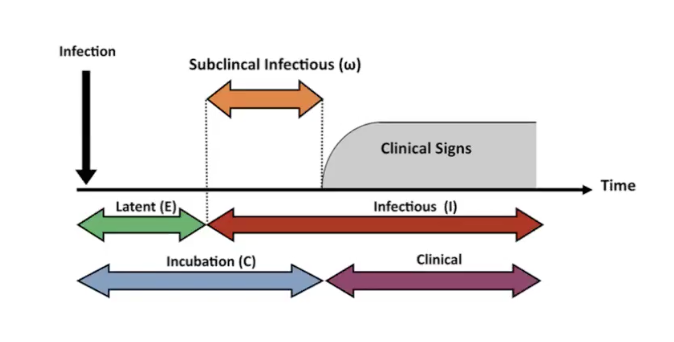
the spectrum of disease severity for infecsious diseases
pre clinical
disease not clinically evident but is destined to progress ie incubation period for infection
subclinical
disease not clinically apparent and not destined to become clinically apparent
diagnosed with antibody or culture tests ( some tb cant be seen only from skin test)
clinical
disease manifested by signs and symptoms ie pt testing positive for tb with a bad cough
carrier
individual who harbour an organism but are not infected s evidence y antibody response or clinical manifestations- asymptomatic covid carriers
what is epidemiology
study of disease occurrence in human populations
the science to study risk factors of diseases specialty multifactorial diseases and cancer
looks for the patterns in the people affected
gender,ethnicity, age, lifestyle
prevalence vs incidence
prevalence- number of existing cases at a given point in time
incidence- the number of new cases arising in population risk during a specified amount of time
what terms refer to population health
endemic- regularly occurring in a small area
epidemic- large scale or widespread (west nile)
pandemic- spread of disease worldwide
morbidity vs mortality
morbidity
functional defect aused by disease
describes the effects an illness has on a persons life ( long term consequences of disease
mortality
death caused by disease
influenced by risk factors usually
natural history and prognosis
progression and predicted outcome of a disease without any medical intervention
helps establish severity nd priorities in health care services
helps determine impacts of early screening and detection
prognosis
probable outcome and prospect f recovery from a disease
what are the 3 levels of prevention
primary
removing risk factors to prevent disease form occuring
typically happens outside the clinic in community settings
immunizations, habits, education
secondary
early detection of disease and treatments
detected during asymptomatic and treatment can affect a cure or stop disease from progressing
often accomplished in a clinical setting
tertiary
clinical intervention to prevent further deterioration or reduce complication of a disease once it has been diagnosed
mostly occurs within the health care system
anti diabetid drugs, on going foot care