ICT Q4 ALL LESSONS
 Call Kai
 Learn
Learn Practice Test
 Spaced Repetition
 Match
Match Flashcards
 Knowt Play
1/56

There's no tags or description
Looks like no tags are added yet.
Name | Mastery | Learn | Test | Matching | Spaced | Call with Kai | Chat |
|---|
No analytics yet
Send a link to your students to track their progress
57 Terms
Crimping Tool
A tool designed to crimp of connect a connector to the end of the cable
Patch Panel
Used for connecting and routing circuits for monitoring, interconnecting and testing circuits in a convenient, flexible manner
LAN cable tester
A device that is used to test the strength and connectivity of a particular type of cable or other wired assemblies
RJ 45
Short for registered jack 45. An eight wire connector used commonly to connect computers onto local area networks especially ethernets
Raceway
An enclosed conduit that forms a physical pathway for electrical wiring. Protects wires and cables from heat, humidity, corrosion, water intrusion, and general physical threats
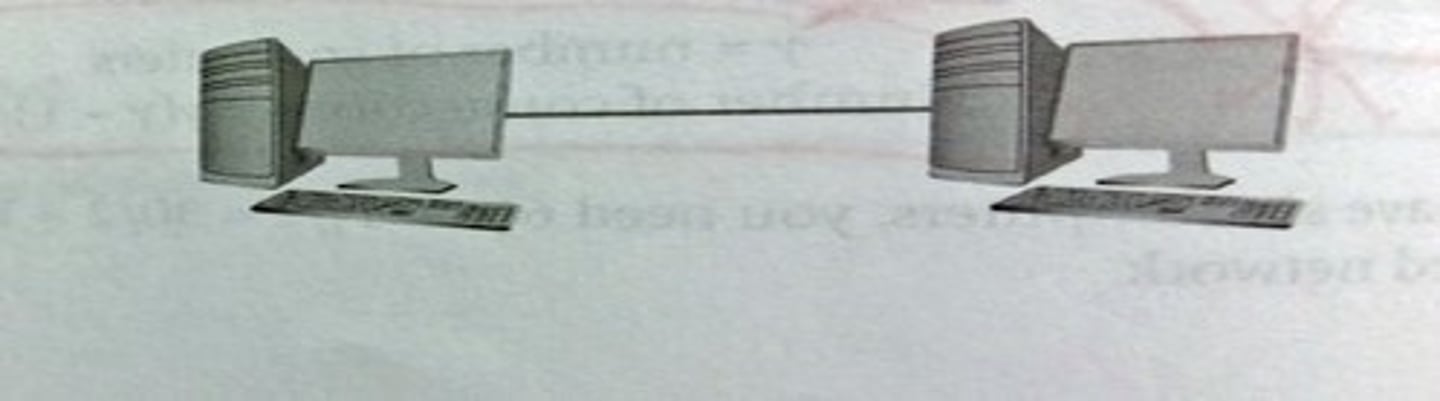
Point - Point
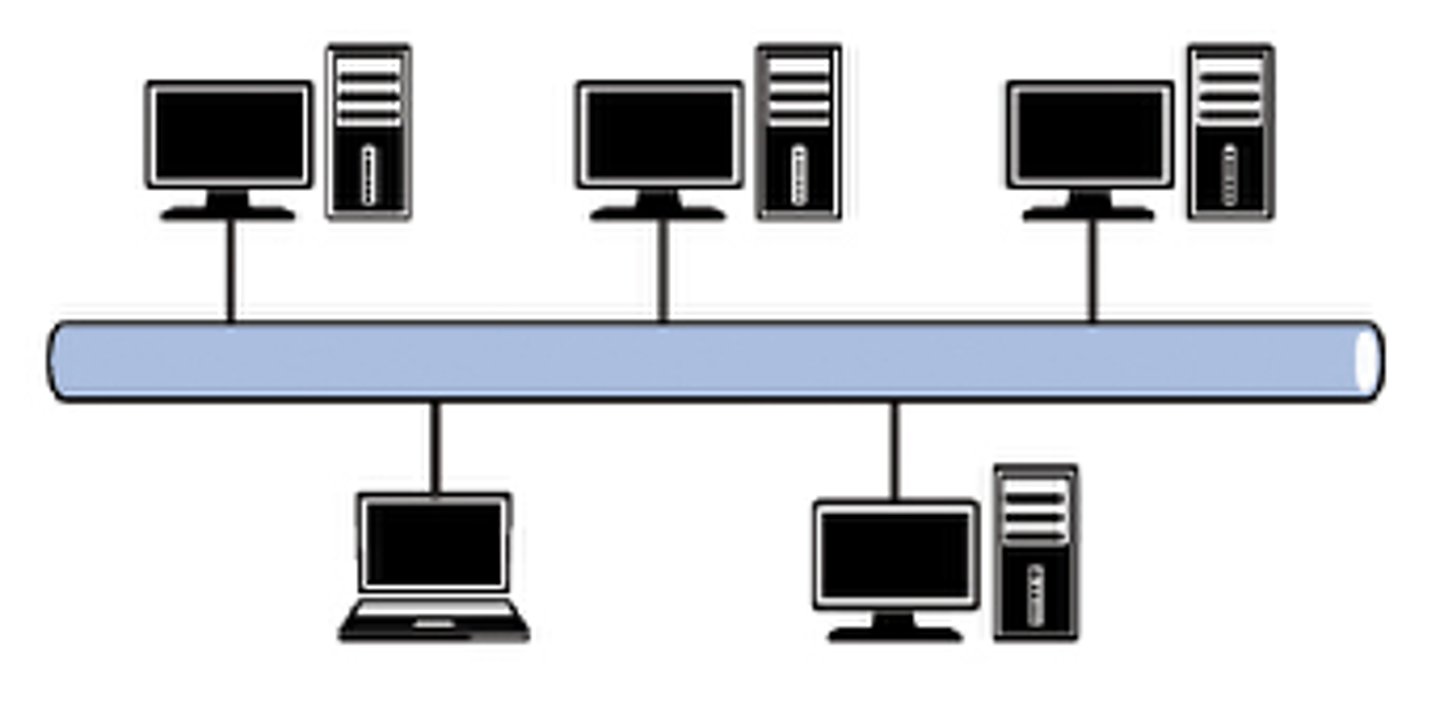
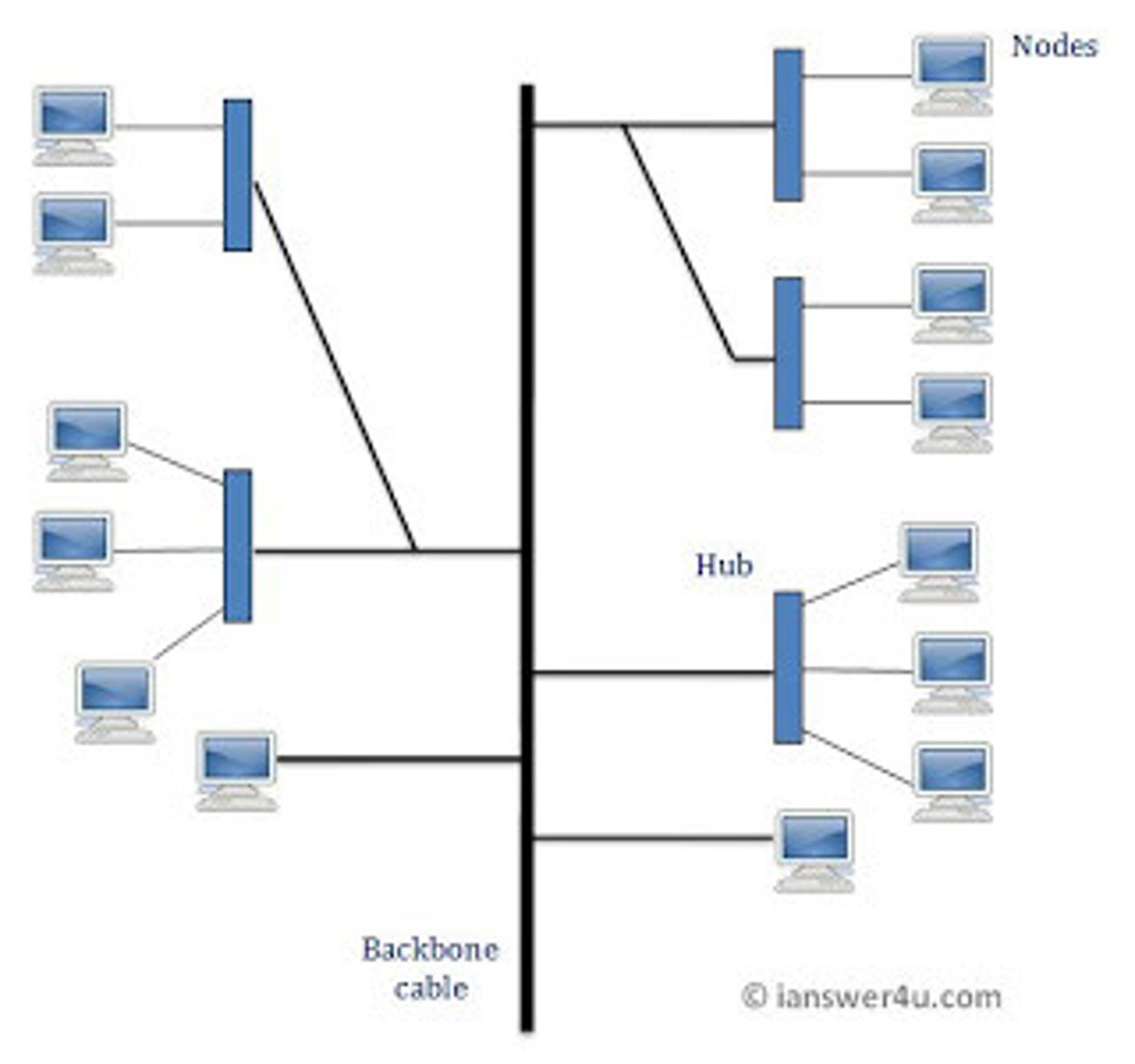
Bus topology
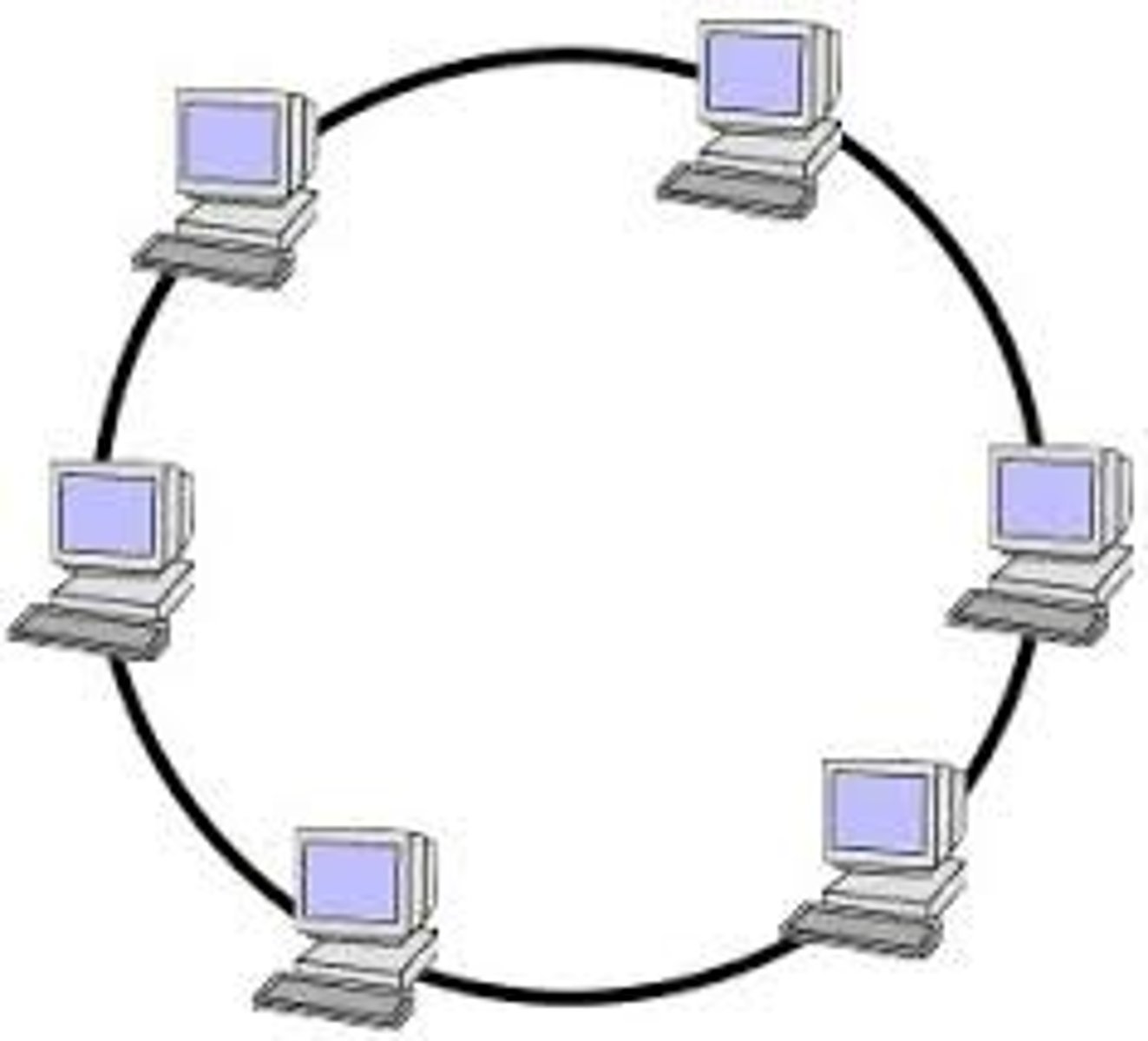
Ring topology
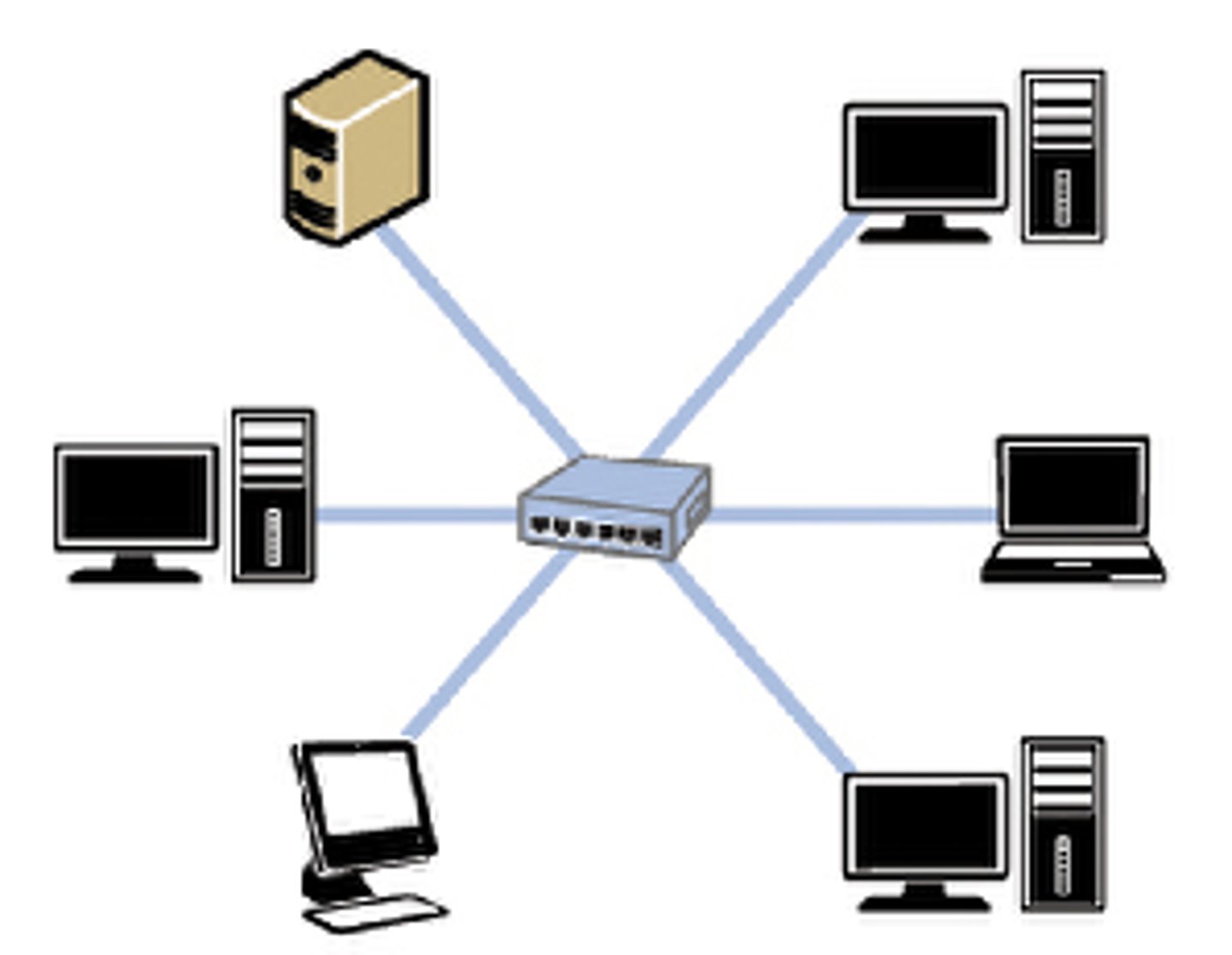
Star topology
Tree topology
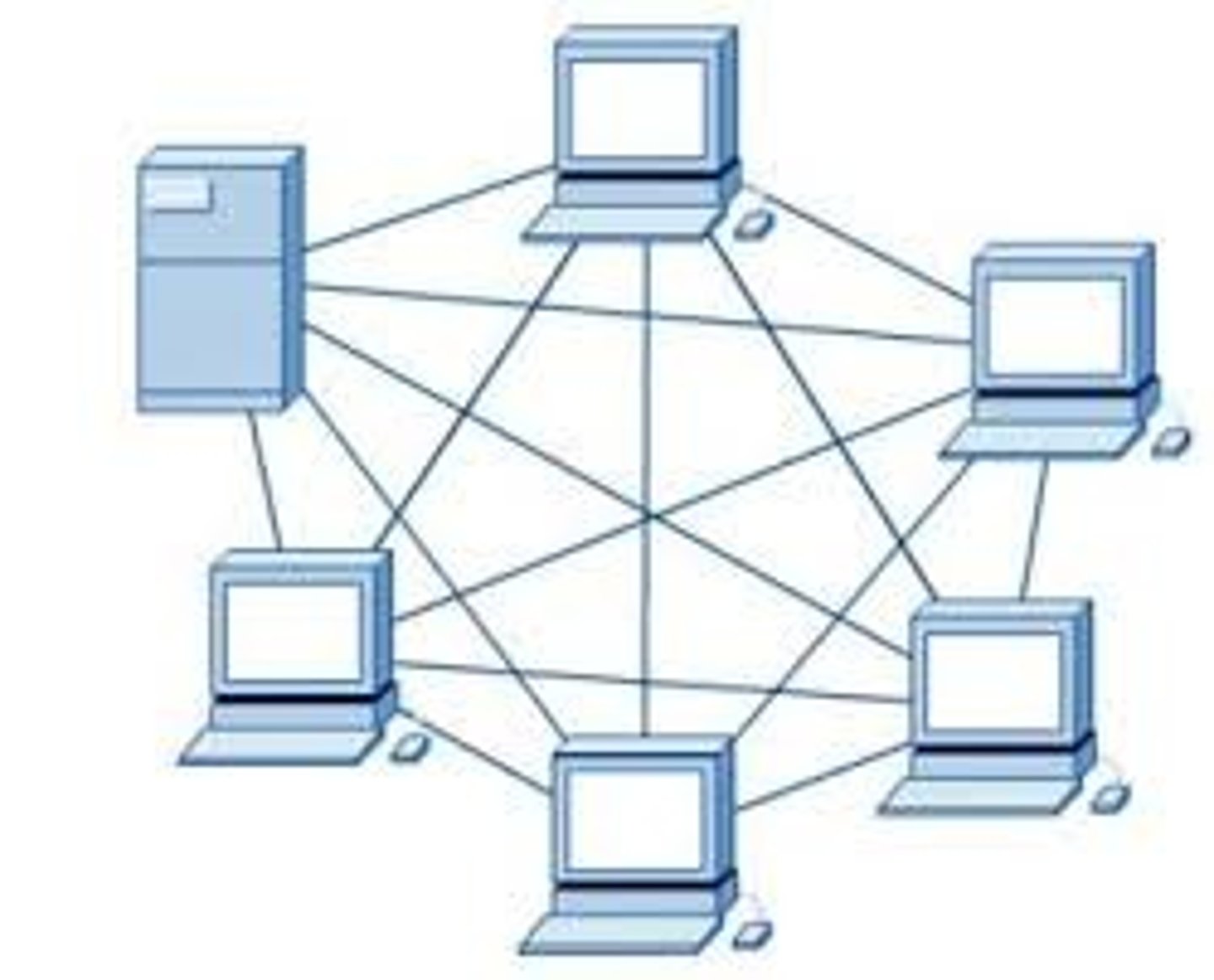
Mesh topology
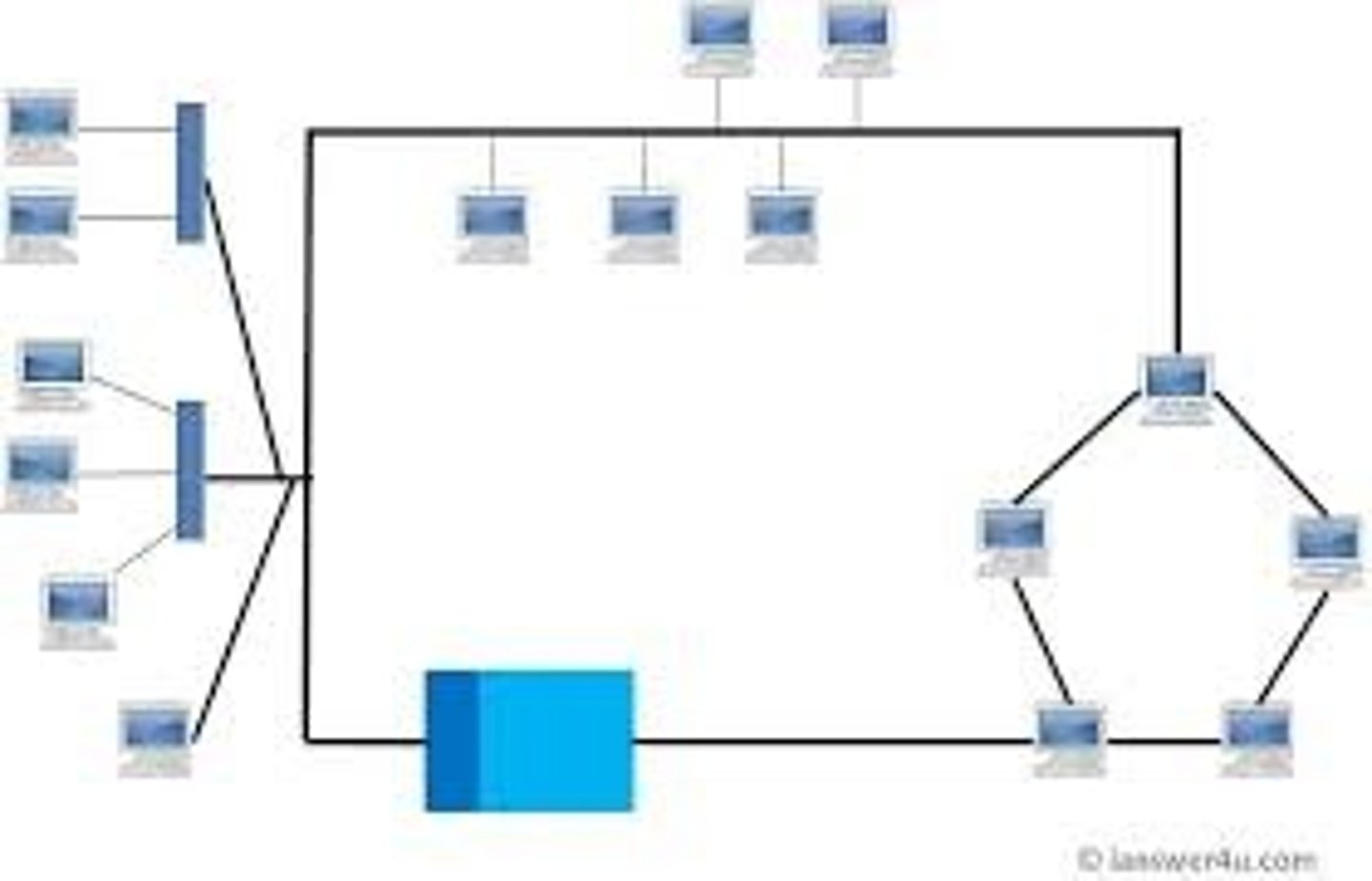
Hybrid topology
Network topology
Is the schematic description of a network arrangement, connecting various nodes (sender and receiver) through lines of connection
bus topology, ring topology, star topology, mesh topology, tree topology, hybrid topology
Types of network topology
Bus topology
It is a network type in which every computer and network device is connected to single cable. When it has exactly two end points, then it is called linear ____ topology
Features of bus topology
1.It transmit data only in one direction
2.Every device is connected to a single cable
Advantages of bus topology
1.It is cost effective
2.cable required is least compared to other network topology
3.used in small networks
4.It is easy to understand
5.easy to expand joining two cables together
Disadvantages of bus topology
1.cables fails then whole network fails
2.if network traffic is heavy or nodes are more the performance of the network deceases
3.cable has a limited length
4.It is slower than the ring topology
Ring topology
It is called __ topology because it forms a ring as each computer is connected to another computer, with the last one connected to the first. Exactly two neighbors for each device
Dual ring topology
The transmission is unidirectional, but it can be made bidirectional by having 2 connections between each network node. It is called ___
Disadvantages of ring topology
1.Troubleshooting is difficult
2.Failure of one computer disturbs the whole network
Star topology
In this type of topology, all the computer are connected to a single hub through a cable. This hub is the central node and all other nodes are connected to the central node
Features of star topology
1.Every node has its own dedicated connection to the hub
2.Hub acts as a repeater for data flow
Advantages of star topology
1.Fast performance with few nodes and low network traffic
2.Hub can be upgraded easily
3.Easy to setup and modify
4.Only that node is affected which has failed, rest of the nodes can work smoothly
Disadvantages of star topology
1.Cost of installation is high
2.Expensive to use
3.If the hub fails then the whole network is stopped because all the nodes depend on the hub
Mesh topology
It is a point-to-point connection to other nodes or devices. All the network nodes are connected to each other. has n(n-1)/2 physical channels to link devices
Features of mesh topology
1.Fully connected
2.Robust (if one of the nodes goes down, it doesn’t necessarily bring to the entire network down)
3.Not flexible
Disadvantages of mesh topology
1.heavily cabled
2.costly
3.if more nodes are added, maintenance is difficult
4.central hub fails, network fails
Tree topology
It has a root node and all other nodes are connected to it forming a hierarchy. It is also called hierarchical topology. It should be at least have 3 levels to the hierarchy
Features of tree topology
1.Ideal if workstations are located in groups
2.Used in wide area network
3.Easily managed and maintained
4.Error detection is easily done
Repeaters
These are electronic devices that amplify communication signals and also filter noise from interfering with the signals
Hubs
These contain multiple ports, allowing a packet of information/data to be copied unmodified and sent to all computers on the network
Routers
These are devices that forward packets between networks by processing the information in the packet
Bridges
These connect network segments, which allows information to flow only to specific destinations
Switches
These are devices that forward, make fowarding decisions and otherwise filter chunks of data communication between ports according to the MAC addresses in the packets of information
Local Area Network
A network that connects computers in the same geographic area or within the local area, such as building, room, home or a school’s computer laboratory. Computers of this kind of network can be interconnected through cables or wireless links
Campus Area Network
A computer network that spans within a limited geographic area. These interconnect multiple LAN within an educational or corporate campus
Metropolitan Area Network
A larger network than LAN. It usually cover several offices, buildings or schools, each with their LAN but connected in the same locality or place
Wide Area Network
A network that connects computers across a large geographic area using telephone lines or satellites
Personal Area Network
It connects electronic devices within a user's immediate area. The size of a PAN ranges from a few centimeters to a few meters
Storage Area Network
A high-speed sub network of shared storage devices. Is the machine that contains nothing but a disk or disks for storing data
Virtual private network
It allow administrators to take advantage of the internet to help provide the functionality and security of private WAN connections at a lower cost
Network
Several computer,printers and other devices that are connected togther with cables or radio signals.
Network
This allows the computer to talk with each other and share info and resources
Server,Client,Media,User,Network Adapter,Resources
List the Components of Computer Network
Server
A powerful computer that provides services to the other computer on the network
Client
A computer that uses the services that a server provides
Media
A physical connection to the devices on a network
User
Refer to any person that uses a client to access resources
Network Adapter
A component of a computer internet hardware that is used for communicating overr a network with another computer
Network Adapter, LAN
It enables a computer to connect with another computer,server. or any network drvices over ______ connection
Cable,Coaxial,Utp
Types of cable
Network cable
Are used to connect one network device to other network devices or to connect two or more computers to share a printer, scanner, etc.
Coaxial cable
Is a copper-cored cable surrounded by a heavy shielding. Is used to connect the computers to the rest of the network
Optical fiber
Is a glass or plastic conductor that transmits information using light
Resources
Are anything available to a client on the network is considered a __, printers, data, fax devices, and other network devices and information are ___
Protocols
Are written rules used for communications. They are the languages that computers use to talk to each other on a network