Crystallisation
 Call Kai
 Learn
Learn Practice Test
 Spaced Repetition
 Match
Match Flashcards
 Knowt Play
1/22

There's no tags or description
Looks like no tags are added yet.
Name | Mastery | Learn | Test | Matching | Spaced | Call with Kai | Chat |
|---|
No analytics yet
Send a link to your students to track their progress
23 Terms
Polymorphism Definition
Substance Capable of forming more than one different crystal
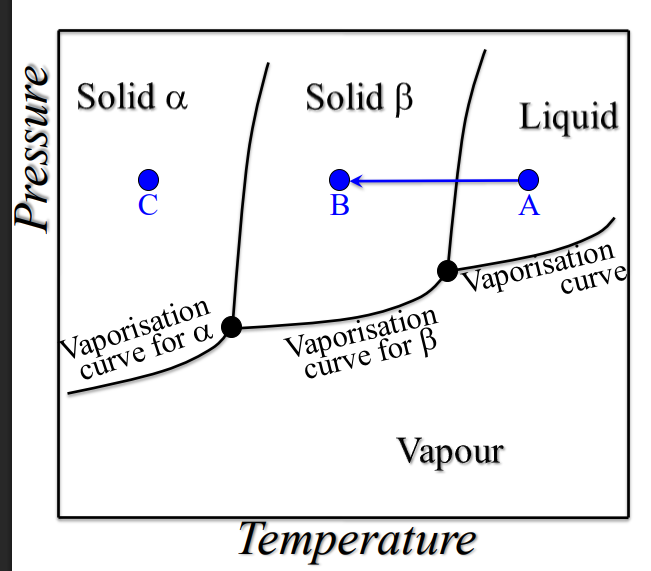
What differentiate how each polymorph is formed?
which is metastable?
Rapid cooling favours a, and slow cooling favours B.
a is metastable and reverts to B upon heating
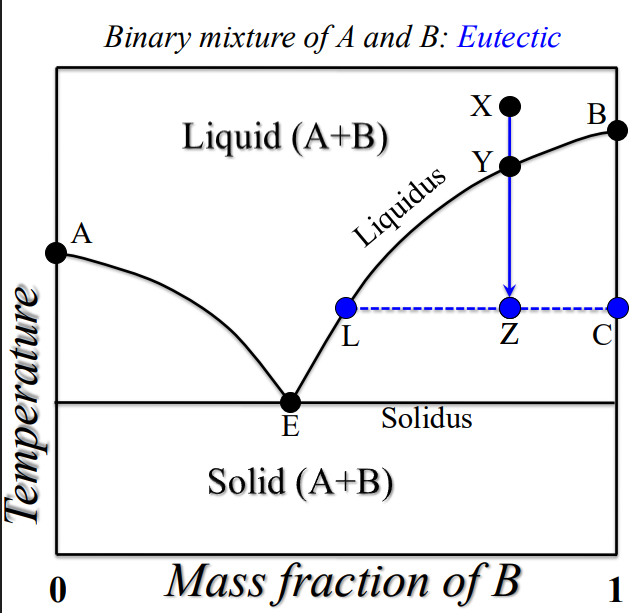
IMPORTANT
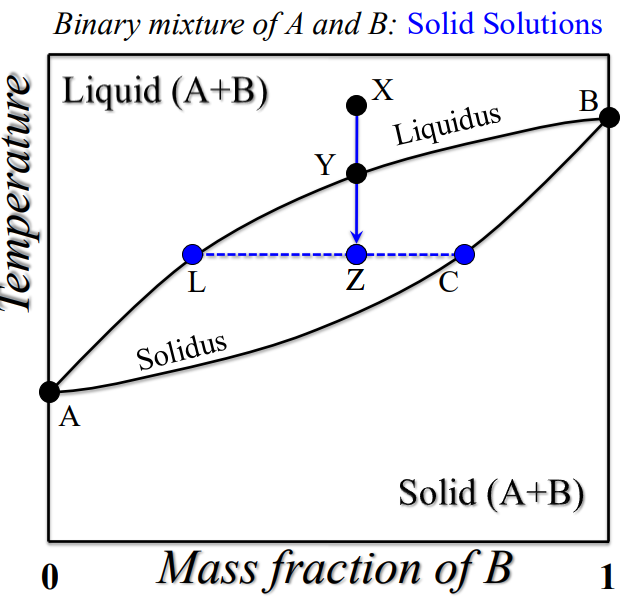
What does A,B,E,C,Z,L,Y,X mean?
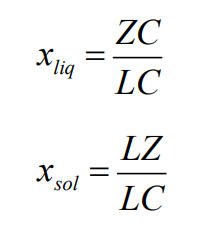
How do you calculate mass proportion of liquid and solid
A/B - Freezing point of Pure A/B
E - Eutectic point, which corresponds to the composition of a+b with lowest crystallisation temperature. Eutectic’s are easy to seperate
Y- Pure B starts to Crystallise
Z- 2 phases exist in eqm B crystals (C) and Liquid A+B mixture (L)
IMPORTANT
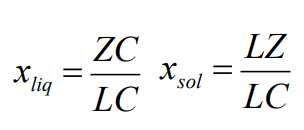
What does Y, A, B, A, C,Z mean
How do you find the mass proportions?
Y- both A+B start to crystallise
Z - two phases (A+B) crystals (C) and liquid (L) are in eqm.
States for solutes to exist
Unsaturated/ dilute - stable state, no crystals are present and there is no potential for crystals to be formed
Saturated soln, - Stable state, S and L in eqm. with conc. of dissolved material
Supersaturated soln. - Unstable state, sys. beyond eqm., conc. of dissolved species>eqm, conc.
What are the general steps of crystallisation
Prep of soln. containing species which is to be crystallised
Use of the former for the prep of supersaturated soln.
Precipitation of crystals from the formed supersaturated soln.
Different methods of achieving supesaturation
Temp change- used for systems where solubility decreases with temp.
Solvent removal - Used if temp change isn’t possible
Addition of 3rd component - If top 2 don’t work. Added component may form with original solvent to form a mixed solvent of reduced solubility - salting. The added component may react chemically with the original solute to form an insoluble substance - precipitation.D
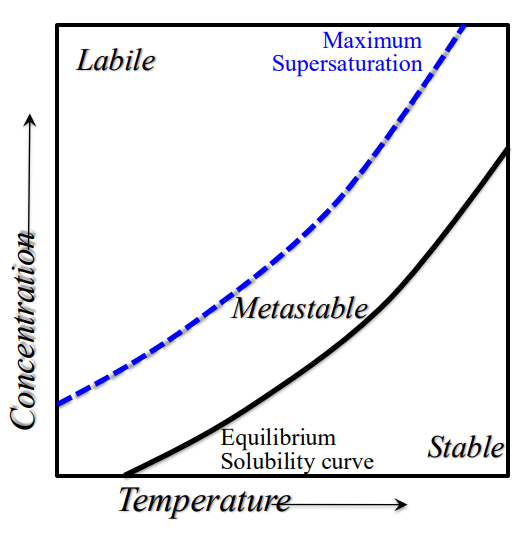
Draw solubility- supesolubility curve
Stable- unsaturated region, where crystallisation is impossible
Metastable - Super-saturated region, where spontaneous nucleation is improbable
Labile - Super-saturated region, where spontaneous nucleation is probable
Different types of crystal nucleation
Primary nucleation - Occurs in the absence of crystals, likely to occur in the labile region
Secondary nucleation - Occurs in the presence of crystals of the same species, can only occur in the metastable region
Can be generated due to damage to growing crystals when subjected to high enough shear fields
Different types of Primary Nucleation
Homogenous Nucleation - result of biomolecular collisions and interactions in a supersaturated fluid.
Heterogeneous Nucleation - Initiated by a ‘foreign’ substance.
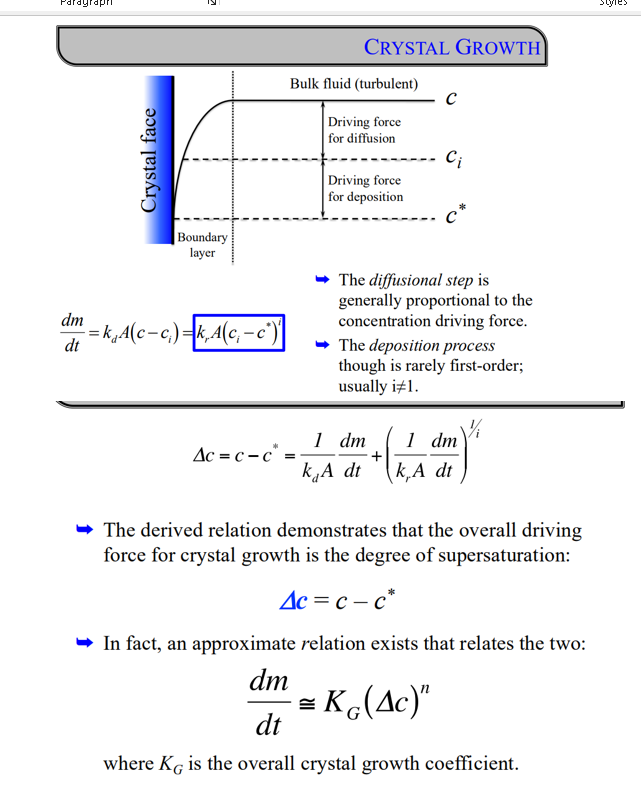
What are the two stages of Crystal formation.
And what are the two stages of the 2nd step.
Nucleation and then growth.
Diffusional Step - solute is transported from the bulk fluid
Deposition Step - adsorbed solute ions or molecules at the crystal surface are deposited and integrated into the crystal lattice
Give the mass Balance of growth of crystal formation
Give the Mass Balance in the form of bulk and boundary layer
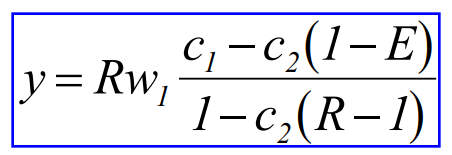
What is the crystal yield equation
R - mass of salt+liquid/mass of salt
E - wt. solvent evap/wt. solvent inititally
c1 - feed solute conc.
c2 - solute saturation
IMPORTANT
Crystallisation heat Balance
Qsc - heat to be removed from feed solution over the temperature cooling range
Qec - heat to be removed from the cyrstallizer
Qcrys - heat to be removed due to crystallisation of solute
Qevap - heat removed due to solvent evaporation
Qrem - Qsc + Qec + Qcrys - Qevap
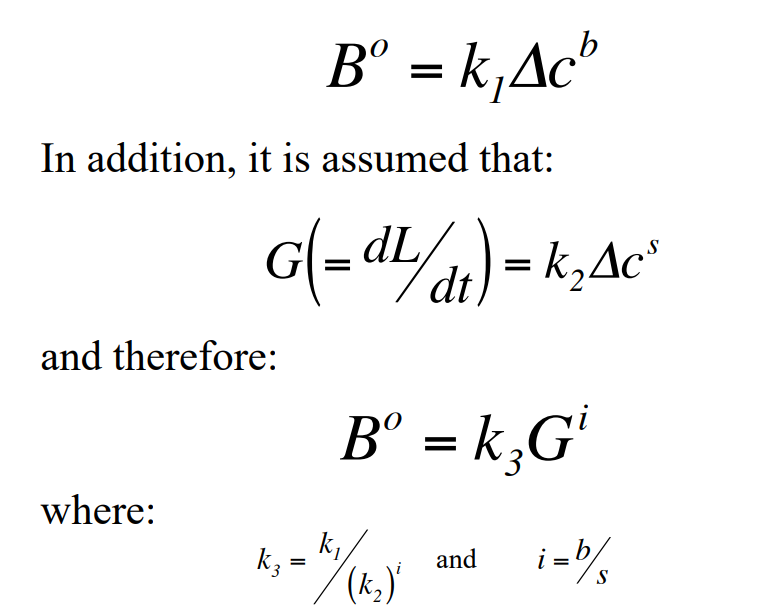
Rate of nucleation equation
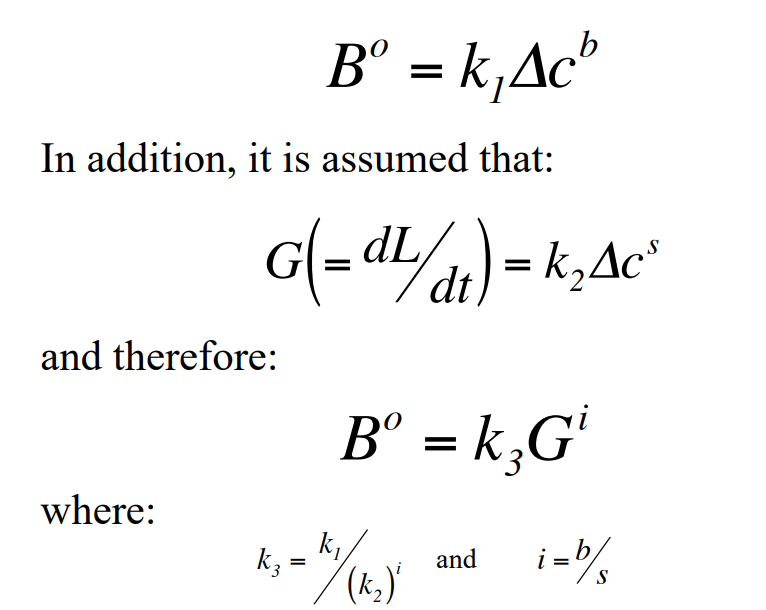
Where B - rate of nucleation
dC - level of supersaturation
What are the MSMPR model assumptions
Crystalliser acts as a continuous stirred tank crystalliser
No crystals are present in the feed stream, all crystals are of the same shape
No crystals break down by attrition, & and crystals growth is independent of crystal size
Assumes these equations
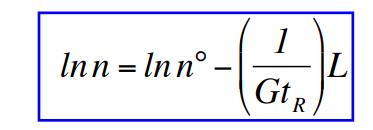
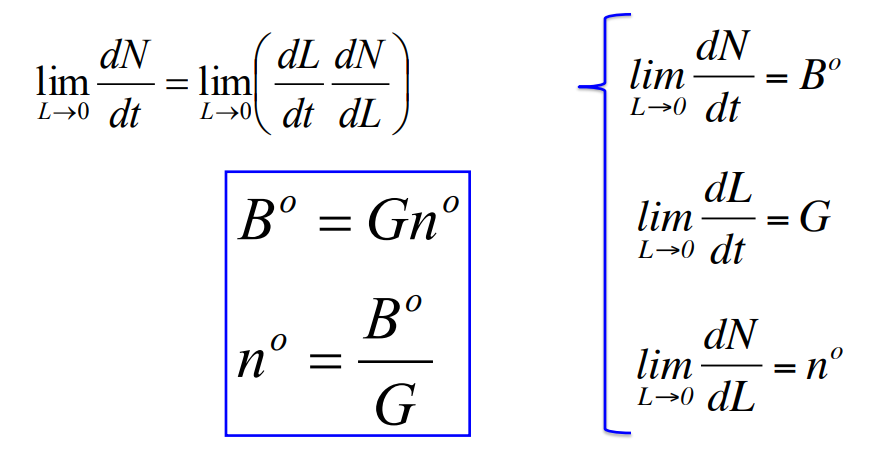
What is the fundamental relation of MSMPR crystalliser
n- Population density of crystals of size L
n0- Population density at zero size (nuclei)
Relation between nucleation rate, growth rate, and initial pop density
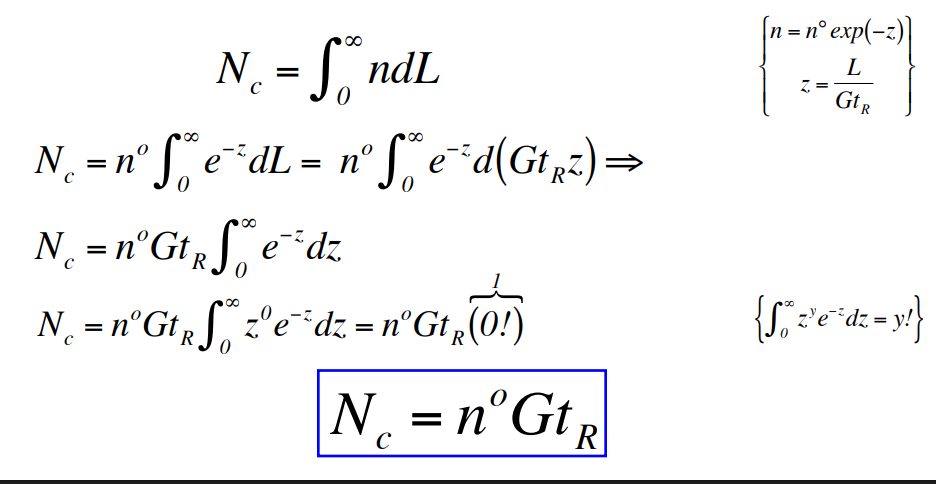
Number of crystals per unit volume
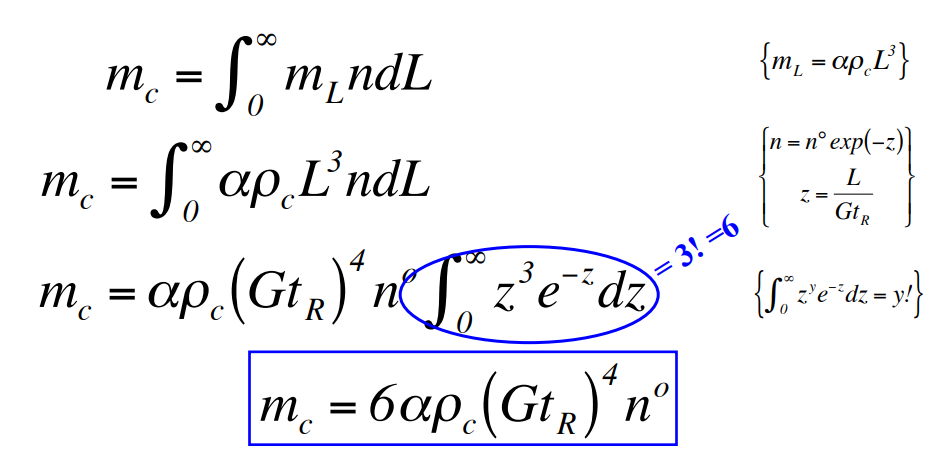
Mass of crystals per unit volume
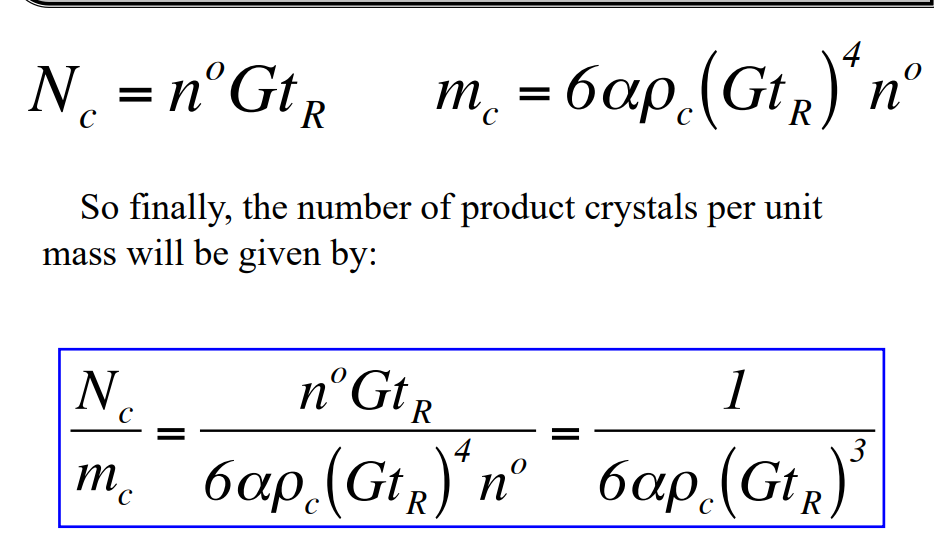
Number of crystals per unit mass
What is the equation of the predominant crystal size
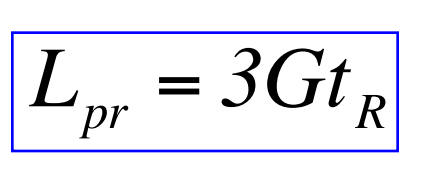
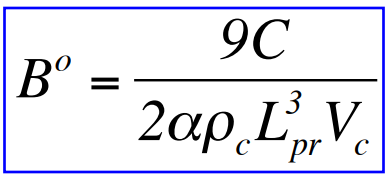
nucleation rate equation related to the predominant crystal size