PE Paper 1
 Call Kai
 Learn
Learn Practice Test
 Spaced Repetition
 Match
Match Flashcards
 Knowt Play
1/150

There's no tags or description
Looks like no tags are added yet.
Name | Mastery | Learn | Test | Matching | Spaced | Call with Kai | Chat |
|---|
No analytics yet
Send a link to your students to track their progress
151 Terms
Give the functions of the skeleton
Protection of vital organs
Structure+ support
Movement
Blood cell production
Mineral storage
Bone classification
Long bones:enable gross movement
e.g. humerus,tibia
Short bones:allows finer controlled movement and provide support and stability
e.g. carpals,tarsals
Flat bones: protect organs
e.g. ribs,cranium,sternum
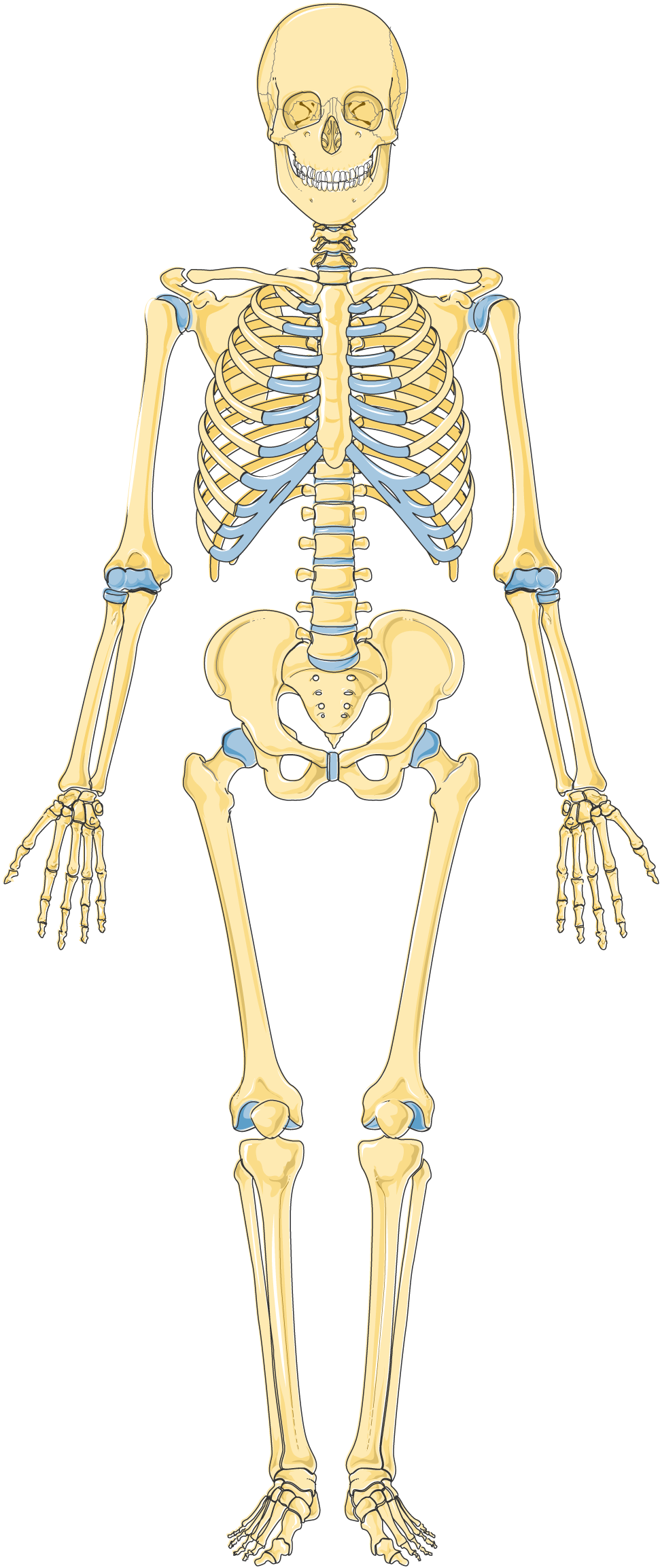
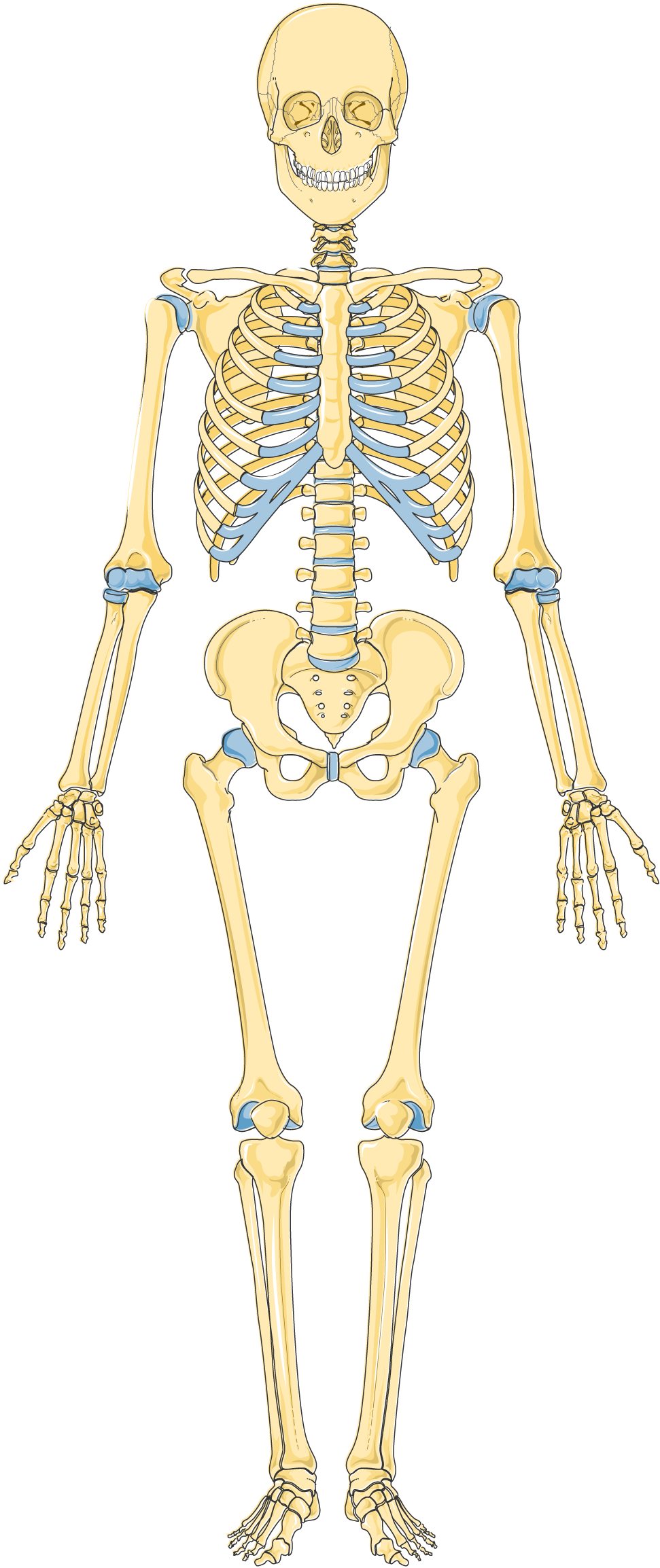
Name the 14 bones and their location
Cranium- head
Vertebrae- back
Scapula-back
Ribs- rib cage
Humerus-arm
Sternum- rib cage
Radius-arm
Ulna-arm
Pelvis-abdomen
Femur- leg
Patella-knee
Fibula-leg
Tibia-leg
Talus-foot
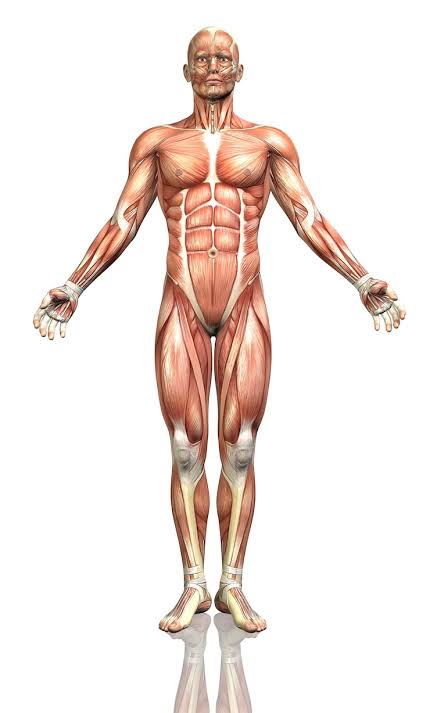
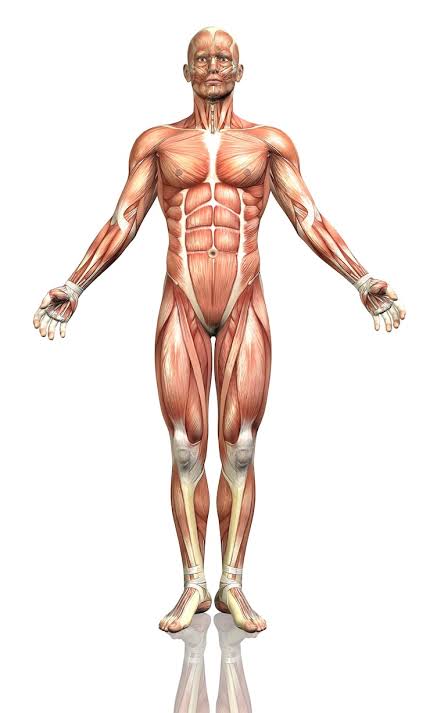
Location of the 13 main muscles
Rotator cuffs
Pectorals
Biceps
Abdominals
Hip flexors
Quadriceps
Tibialis anterior
Deltoid
Triceps
Latissimus dorsi
Gluteals
Hamstring
Gastronemius
Function of the rotator cuffs
Rotation at the shoulder
Function of the pectorals
Adduction of the arm and movement like pushing and lifting the arm
Function of the biceps
Flexion of the arm
Function of the abdominals
Flexion of the vertebrae
Function of the hip flexors
Flexion of the leg at the hip
Function of the hip flexors
Extension of the leg at the knee.
→ involved in circumduction
Function of the hip flexors
Extension of the leg at the knee.
→ involved in circumduction
Function of the deltoid
Allows movement in the arms in different directions
Function of the tricep
Extension of the arm
Function of the latissimus dorsi
Adduction,extension and rotation of the arm
Function of the gastronemius
Enables planter flextion
Function of the hamstring
Ending the knee and movement of the hip
Antagonist muscle pairs
The agonist is the prime mover which contracts
The agonist is the muscle which relaxes
Antagonist muscle pairs
The agonist is the prime mover which contracts
The agonist is the muscle which relaxes
Elbow joint
Movement: flexion Agonist: bicep Antagonist: tricep
Movement: extension Agonists:tricep Antagonist: bicep
Isometric+isotonic muscle contractions
Isometric: here the muscle is contracted, but the length remains the same e.g. holding a hand stand.
Isotonic: the muscle moves under pressure. It shortens and lengthens e.g. a press up. When the muscle shortens, this is concentric and when it lengthens, this is an eccentric contraction
What is health?
A state of complete emotion,physical and social wellbeing not merely the absence of disease or infirmity
What is fitness?
The ability to meet the demands of the environment
Agility
The ability to change direction quickly whilst in control of the movement
Balence
The ability to keep your centre of mass over the base of support
Cardiovascular fitness
The ability of the heart and lungs to deliver oxygen to the working muscle
Co-ordination
The ability to use two or more parts together smoothly and efficiently
Flexibility
The range of movement possible at a joint
Muscular endurance
The ability of a muscle group to undergo repeated contractions, avoiding fatigue
Power
The ability to do strength performances quickly→ strength x sped to create fast high intensity movements
Reaction time
The time taken to respond to a stimulus
Speed
Maximum rate at which an individual is able to perform a movement/cover a distance in a period of time
Strength
The ability to overcome a resistance. It requires a force to be applied to a muscle or muscle group
What is the difference between quantitive and qualitative data?
Quantitive is numbers and qualitative is opinions on performance
Why do we do fitness testing?
to identify strengths and weaknesses in a performance/the success of a training program
to monitor improve improvement
to show a starting level of fitness
to compare against norms of the group/national averages
Agility- Illinois agility test
Set up the test shown in the diagram
Lie down on your front with your head by the start this is known as the superman position
when instructed to go the stopwatch starts and run the course
Once finished, stop the stopwatch
Compare your score to the National averages table
Balance – standing stalk test
Stand on one foot and place your hands on your hips
Raise up on your tip toes
Stand in position for as long as possible
Once the balance is broken, stop the timer
Compare time to the national averages table
Cardiovascular endurance – multistage fitness test
Set up markers 20m apart
The multistage fitness test track should be started when you begin
You must run between the markers
The time between the beeps reduces
After missing a beep, you were given a warning, and second time you are out
Compare your score to national averages table
Coordination– wall toss test
measure a cone on the floor, 2 m away from the wall
start with the ball in your left hand
Throw the ball against the wall, using the underarm, throw and catch with the right arm
Repeat for 30 seconds, and if the ball is dropped, the score is reset, but the time it continues
Compare your score to the national averages table
Speed – 30 meter sprint
Set out two cones, 30 m apart
Run as fast as you can, from the start the end
Once past, the end, stopwatch should be stopped
Compare your score to the national averages table
Reaction time – ruler drop test
Stand with your hand open around the ruler, with 0 cm mark between thumb and forefinger
assistant hold and dropped the ruler.
catch the ruler as quick as possible
record result in compare to a rating chart.
Strength- hand grip dynamometer
Adjust the grip to your hand
keep your arms beside you at the right angle to your body
squeeze the handles hard as you can
record results in the parts of the rating charts
Muscular endurance – sit up bleep test
Why are the mat knees bent feet on the floor, your hands across your chest and shoulders
start audio recording
sit up until you can no longer continue
record results and compare to a rating chart
Flexibility – sit and reach test
Sit with your legs straight and the soles of your feet flat against the box
with palms face down one hand on top of the order, stretch and reach as far out out as possible
record results and compare to a rating charts
Power – vertical jump test
Stand side onto the wall feet flat on the floor, marked the highest points that the tips of your fingertips can reach
holding a piece of chalk jump as high as you can
mark on the wall the top of your jump
measure the distance between the first and the second
Advantages of fitness testing
to inform training requirements
to motivate/set goals
to provide a variety in the training programs
Limitations to fitness testing
Tests are often not sport specific/too general.
They do not replicate the movements of the activity.
They do not replicate competitive conditions required in sport
May do not use direct measuring
They must be carried out with correct procedures to increase validity.
What is continuous training?
Sustained excessive without rest, improving cardiovascular and muscular endurance. It last for at least 20 minutes.
What are the advantages and disadvantages of continuous training?
Advantages: no equipment or facilities, has many heath benefits and can be done alone
Disadvantages: boring, no change of pace and can cause impact injuries
What is fartlek training?
A form of continuous training that varies in pace and terrain. It is both aerobic and anaerobic, and can improve cardiovascular and muscular endurance.
What are the advantages and disadvantages of fartlek training?
Advantages: no equipment or facilities needed, change of pace can be more interesting and can be done on your own
Disadvantages: high intensity can be avoided, and a safe route may be hard to find
What is circuit training?
Contains stations organised in a circuit, they can be skill or fitness based. Intensity is measured by circuits, time or repetitions. Can be adapted to improve all types of fitness
What are the advantages and disadvantages of circuit training?
Advantages: variety of stations generates interest, can be skill or of fitness, they can easily be adapted
Disadvantages: equipment can be costly and can be time consuming to set up
What is interval training?
High intense exercise followed by periods of rest to recover. Usually anaerobic and can be used in a variety of different locations.
What are the advantages of interval training?
Advantages: can be used to improve health and fitness (aerobic and anaerobic) and no equipment needed
Disadvantages: can be repetitive and boring and you need to plan and keep track of sets
What is plyometric training ?
Maximum intensity involving jumping/bounding. It involved and eccentric contraction (muscle lengthens) immediately followed by a concentric (muscle shortens.)
What are the advantages and disadvantages of plyometric training?
Advantages: develops power quickly and no equipment is needed.
Disadvantages: can cause injury due to high intensity
What is weight training?
Form of interval training which involves reps and sets. The weight provides resistance. Can be done using free of fixed weights
What are the advantages and disadvantages of weight training?
Advantages: can target specific areas of the body
Disadvantages: can cause injury with wrong technique, a spotter is needed with free weights and can be expensive.
What is altitude training?
Altitude training is the practice of training at high elevations to improve athletic performance by increasing the body oxygen-carrying capacity
Advantages and disadvantages of altitude training?
Advantages: increases red blood cell production, hemoglobin concentration, and oxygen-carrying capacity, significantly improving aerobic endurance upon returning to lower altitudes
Disadvantages: reduced training intensity, fatigue, potential altitude sickness, costly travel, l
Training intensities
Aerobic training zone: 60%-80% of max heart rate
Anaerobic training zone: 80%-90% of max heart rate
What is the equation to work out max heart rate?
220 - age
What is alveoli?
Tiny air sacs at the end of the bronchioles. There are millions in the lungs.
Structure of Alveoli
Surrounded by capillaries so excellent blood supply
huge total surface area, very thin, moist cell walls, making diffusion easy
short distance for diffusion
What is gaseous exchange?
CO2 (high concentration) from blood in capillaries moves into alveoli to breathe out.
O2 (high concentration) moves from alveoli into red blood cells and capillaries.
All gases move from high to low concentrations
What is the process of air and gaseous exchange?
Gases move from areas of high concentration to areas of low concentration. If there is more oxygen in the alveoli than the capillaries, oxygen will move into the capillaries
Oxygen is diffused into the blood. It binds with the haemoglobin in the blood to form oxyhaemoglobin
Oxyhaemoglobin is transported to the working muscles where is is used for aerobic activity
During aerobic activity carbon dioxide is produced. This is taken out of the muscles by haemoglobin
What is aerobic respiration?
Uses oxygen for energy production
Includes activities that are of a long duration
Includes activities of a moderate intensity
The heart and lungs can supply all the blood and oxygen to the working muscles to produce energy aerobicly
What are sports that are classed as aerobic exercise?
Long distance cycling
Marathon running
Triathlon
Long distance rowing
What is the equation for aerobic respiration?
Glucose+ O2 → CO2+ H2O+ Energy
What is anaerobic exercise?
Does not use oxygen for energy production
Include activities that are of a short duration
Includes activities that are of a high intensity
The heart and lungs cannot supply blood and oxygen to muscles fast enough to use so energy is produced anaerobicly
What is EPOC?
EPOC is the additional amount of oxygen consumed after anaerobic exercise. Sometimes EPOC is referred to as oxygen debt.
It refers to the amount of oxygen needed to recover after exercise
It enables lactic acid to be converted to glucose, carbon dioxide and water
It explains why we breathe deeply and quickly after vigorous exercise
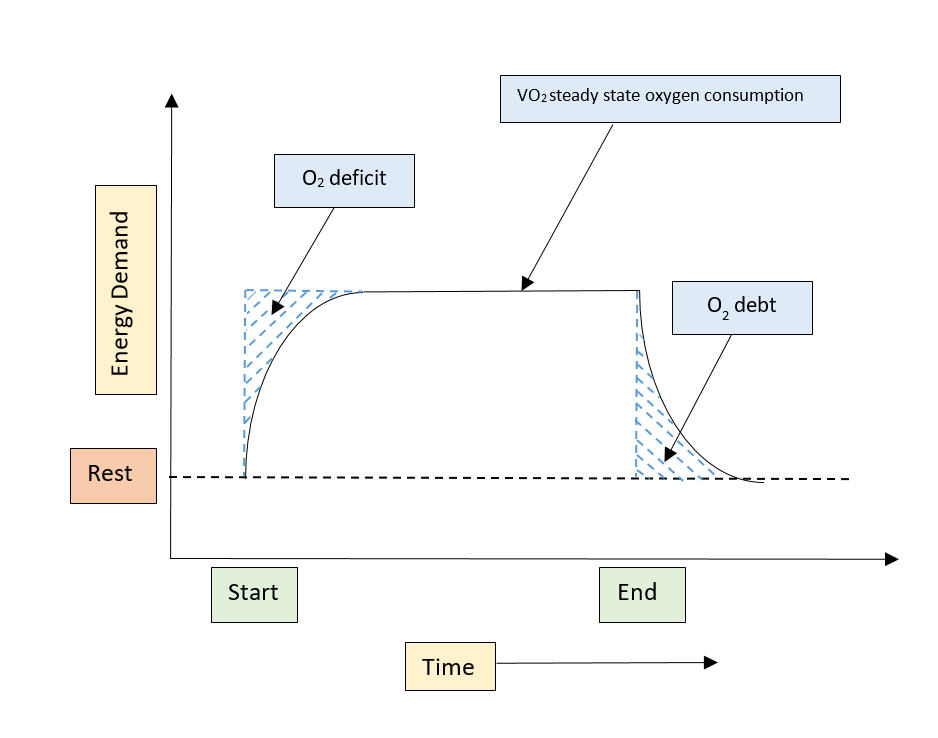
Give the reason for EPOC
The resting requirement identifies how much oxygen is required at rest
When we start to exercise the demand for oxygen increases. It taken times to get the oxygen to the working muscles, not all the oxygen can be provided (anaerobic) we get an O2 deficit
When we stop exercising the demand for oxygen remains higher (to pay back the deficit) this is EPOC
Name 5 ways to recover after vigorous exercise
Cool down
Massage
Ice baths
Manipulation of diet- carbohydrates
Rehydration
Explain cool downs
A cool down is important after vigorous exercise. Light exercise and stretching helps to keep the breathing/heart rate elevated ensures blood flow to the muscles which helps convert the lactic acid to glucose, carbon dioxide to water to prevent muscle soreness.
Who would benefit from cool downs?
Any sports players after vigorous exercise
Explain massages
A massage helps the delayed onset of muscular soreness (DOMS). This is when muscle soreness does not happen immediately but one or two days after a period of intense exercise. The massage:
reduces inflammation of a tender area
increases blood flow, so increases oxygen delivery to the muscles which helps the removal of lactic acid
Who would benefit from massages and why?
Games players may use an ice bath after an intense match to help recovery
Explain ice baths
Getting into ice baths 5-10 minutes after intense exercise helps:
Aid and repair micro tears in muscle fibres preventing DOMS
Reduces swelling of an injured area
When you get out an ice bath the warmer temperature dilates blood vessels which allows oxygenated blood to rush to the muscles removing lactic acid and other waste products
Who would use ice baths and why?
Games players may use an ice bath after an intense match to help recovery
Explain manipulation of diet
Food high in carbohydrates should be consumed soon after exercise. This should replace glycogen stores
Who would need to manipulate their diet?
Endurance athletes such as runners
Explain rehydration
Water or isotonic drinks should be consumed soon after exercise. This aims to replace fluids that are lost during exercise and prevent dizziness and nausea that are symptoms of dehydration.
Who should benefit from rehydration?
Any performer that sweats needs to rehydrate
What are the immediate effects that happen during exercise ?
Getting hot, getting sweaty, having red skin, increased depth and rate of breathing and increased heart rate.
What are the short term effects that happen 24-36 hours after exercise?
Tiredness and fatigue, light headedness, nausea, aching muscles, cramp and DOMS
What are the long term effects that happen over month and year of exercise?
Change in body shape, improved stamina, increased size of heart and lower resting heart rate.
What is cardiac hypertrophy?
Increased size of heart
What is bradycardia?
A lower resting heart rate due increased fitness levels
What type of a joint is the ankle?
Hinge joint
What type of joint is the knee?
Hinge joint
What type of joint is the hip?
Ball and socket joint
What type of joint is the shoulder joint?
Hinge joint
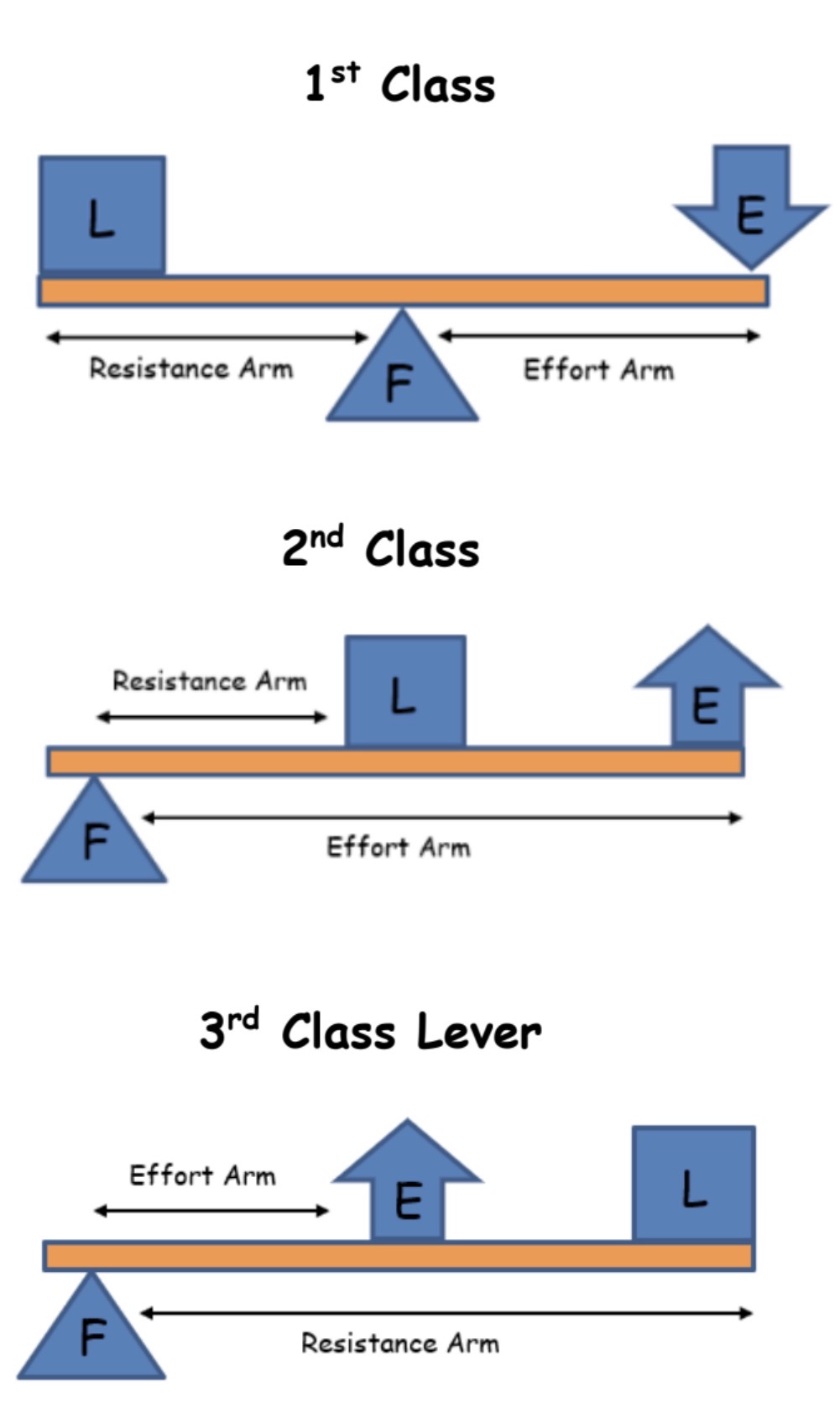
What are lever systems?
Lever systems help you move. They can increase the amount you can lift or speed in which you can move something.
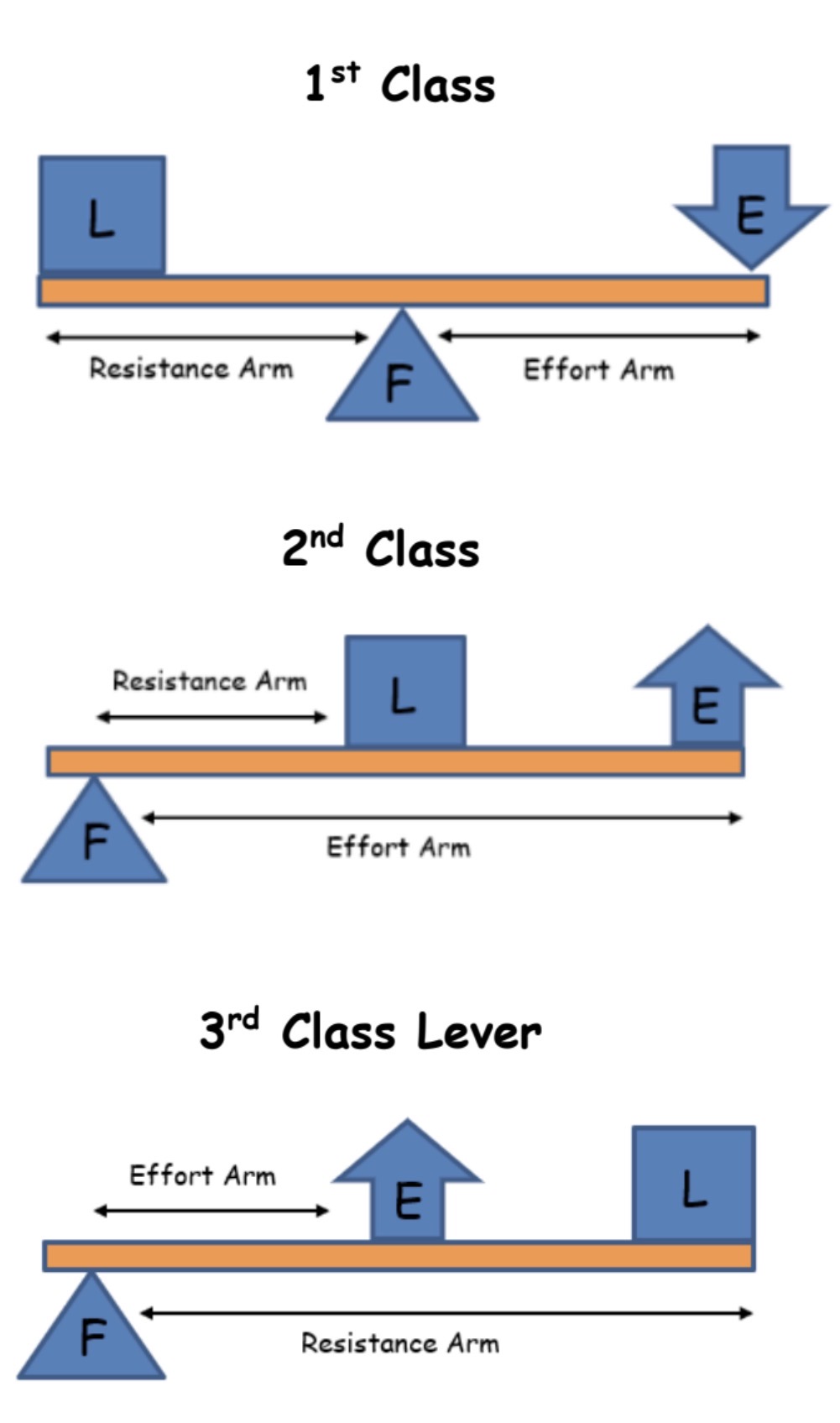
Give the description of 1st class lever systems
The fulcrum is surrounded by the effort and the load
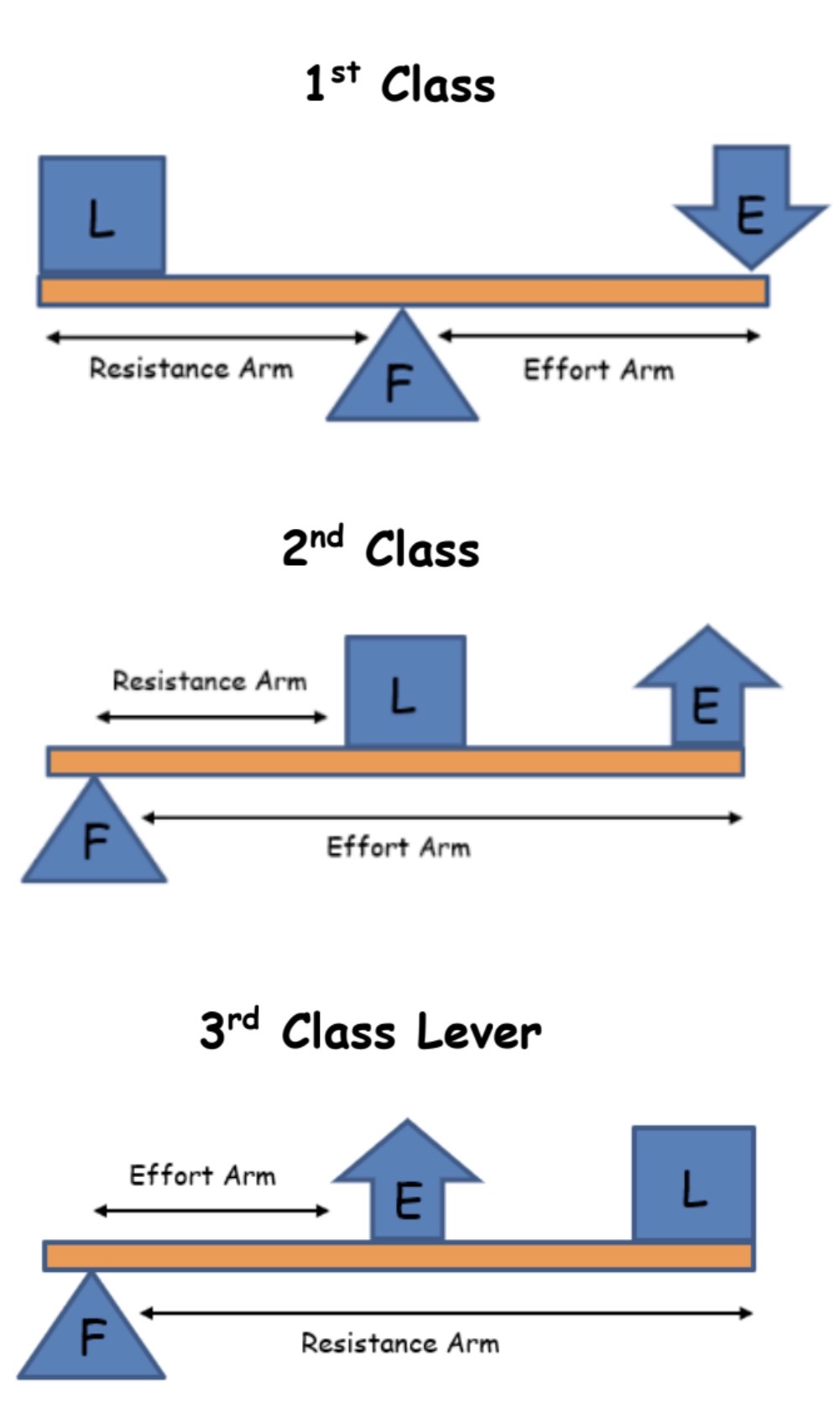
Give an example of a 1st class lever system
Heading a ball
What are the advantages of 1st class lever systems?
Will vary depending on the distance of the load and the effort from the fulcrum
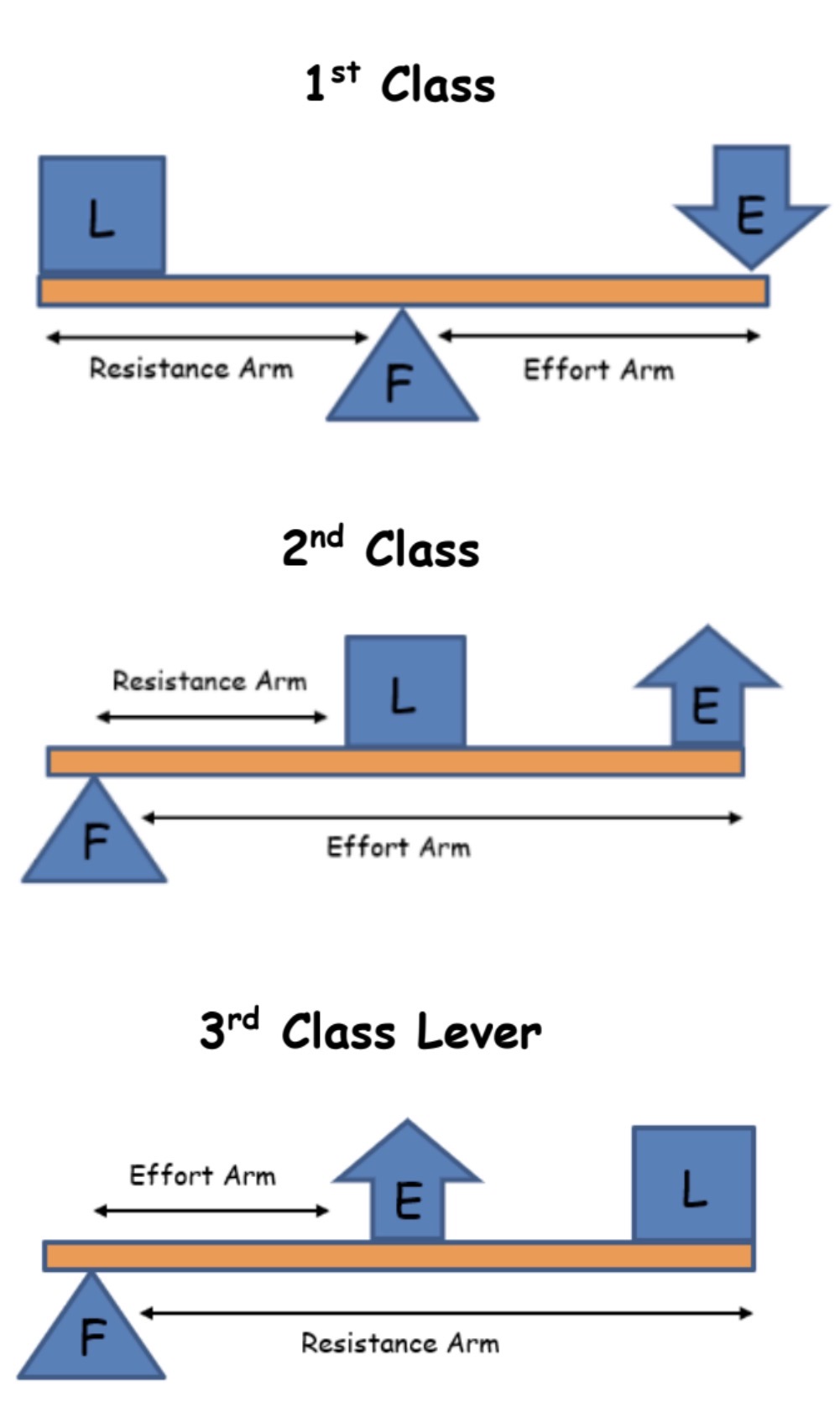
Give the description of 2nd class lever systems
The load is surrounded by the fulcrum and the effort
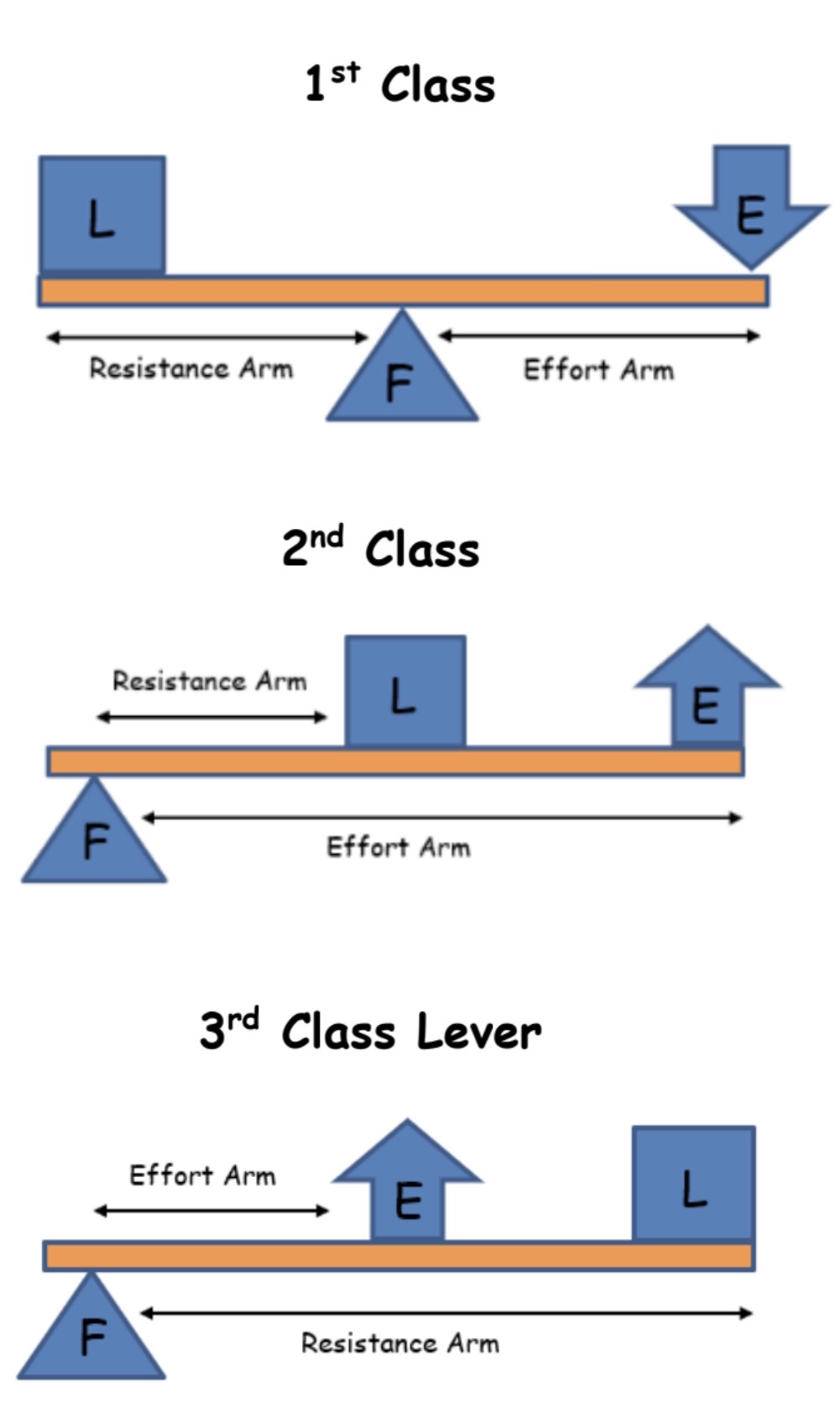
Give an example of a 2nd class lever system
Calf raises
What are the advantages of 2nd lever system?
Able to lift heavier loads owning to its large effort arm
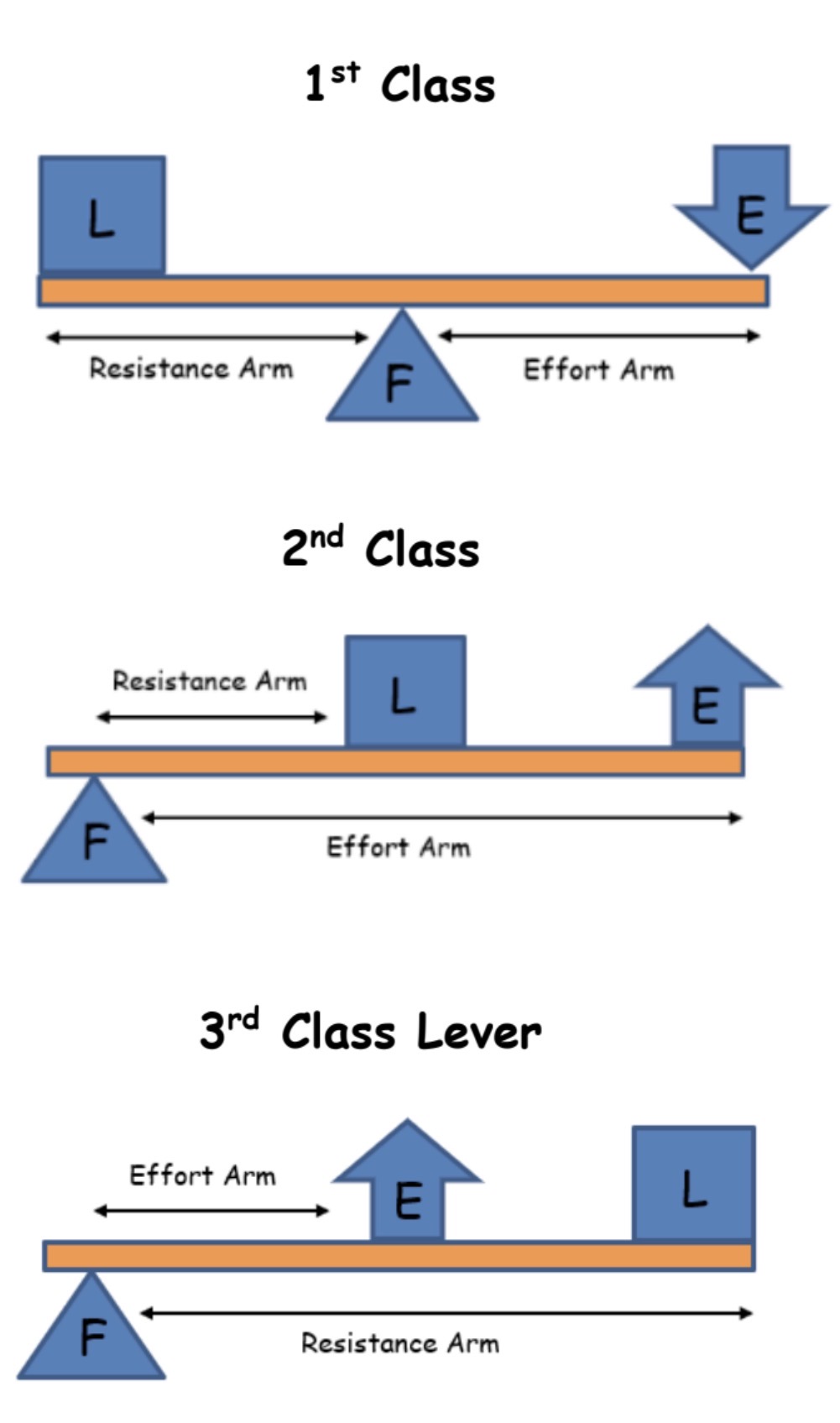
Give the description of 3rd class lever systems
The load is surrounded by the fulcrum and the effort