Biochem Quiz 9
 Call Kai
 Learn
Learn Practice Test
 Spaced Repetition
 Match
Match Flashcards
 Knowt Play
1/54

There's no tags or description
Looks like no tags are added yet.
Name | Mastery | Learn | Test | Matching | Spaced | Call with Kai | Chat |
|---|
No analytics yet
Send a link to your students to track their progress
55 Terms
Asparagine Synthesis
Amidation of aspartate
OAA → Aspartate via Transaminase
glutamate to a-kg
Aspartate → Asparagine via Asparagine Synthetase
glutamine → glutamate
ATP → AMP + P
Asparaginase
Can covert asparagine to aspartate by hydrolysis
Deamidation
Removal of amino group from asparagine
Conditionally Essential Amino Acids
Arginine
Cysteine
Glutamine
Glycine
Proline
Tyrosine
Where is creatine synthesized?
Muscles (mainly)
Liver
Kidneys
Pancreas
Synthesis of Creatine
Reactants: Arginine, Glycine, Methionine
Enzyme: SAM (AdoMet) → AcoHcy
Product: Creatine
Creatine is stored as _________ . This is created via the enzyme ________ .
phosphocreatine; creatine kinase
Creatinine
waste product; indicator of renal function
produced from breakdown of creatine
occurs in muscle cells
Synthesis of Tyrosine
Reactant: Phenylalanine
Enzyme: Phenylalanine Hydroxylase
Cofactor: BH4
Product: Tyrosine
SAM/Ado-Met
Methylating agent
Most abundant methionine containing metabolite
Formation of creatine and epinephrine
Methionine Cycle: SAM Synthesis
Methionine and ATP are converted into S-adenosylmethionine (SAM) by the enzyme methionine adenosyltransferase (MAT)
Methionine Cycle: Methylation
SAM donates methyl group to various substrates via methyl transferases, forming S-adenosylhomocysteine (SAH)
Methionine Cycle: SAH Hydrolysis
SAH is hydrolyzed by adenosylhomocysteinase (AHCY) to produce homocysteine and adenosine
Methionine Cycle: Remethylation
Homocysteine is recycled back into methionine via methionine synthase, utilizing vitamin B12 and 5-methyltetrahydrofolate (5-MTHF) as cofactors
Glutathione (GSH)
Cellular reducing agent
Derived from glutamate, cysteine, and glycine
Glutamate as a Neurotransmitter
Main excitatory neurotransmitter
Memory, cognition, mood regulation
Aspartate as a Neurotransmitter
Excitatory
Glycine as a Neurotransmitter
Inhibitory
Within spinal cord, brainstem, retina
Catecholamines
Fight or flight response
Require tyrosine for synthesis
Dopamine, Norepinephrine, Epinephrine
GABA
Need glutamate for synthesis
Vitamin B6 dependent
Inhibitory neurotransmitter
Serotonin
Derived from tryptophan
Mood regulation, sleep, digestion
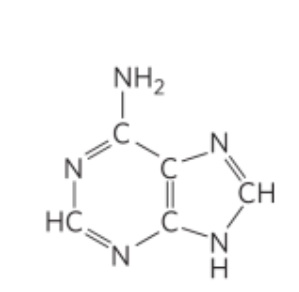
Adenine
Adenine
Purine
Matches with thymine (DNA) or uracil (RNA)
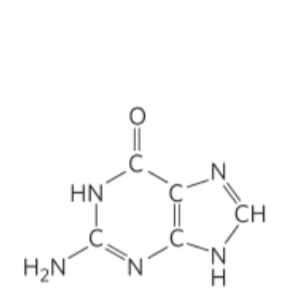
Guanine
Guanine
Purine
Matches with cytosine
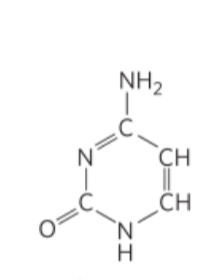
Cytosine
Cytosine
Pyrimidine
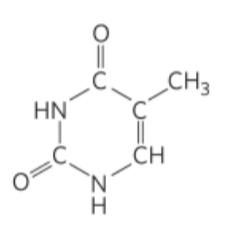
Thymine
Thymine
Pyrimidine
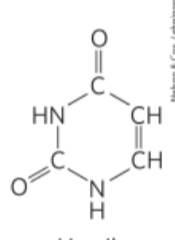
Uracil
Uracil
Pyrimidine
In RNA
De Novo Pathways: Nucleotide Biosynthesis
Bases synthesized while attached to ribose
Pyrimidine ring synthesized as orotate
Glu provides most amino groups
______ is the precursor for purines
Gly
_____ is the precursor for pyrimidines
Asp
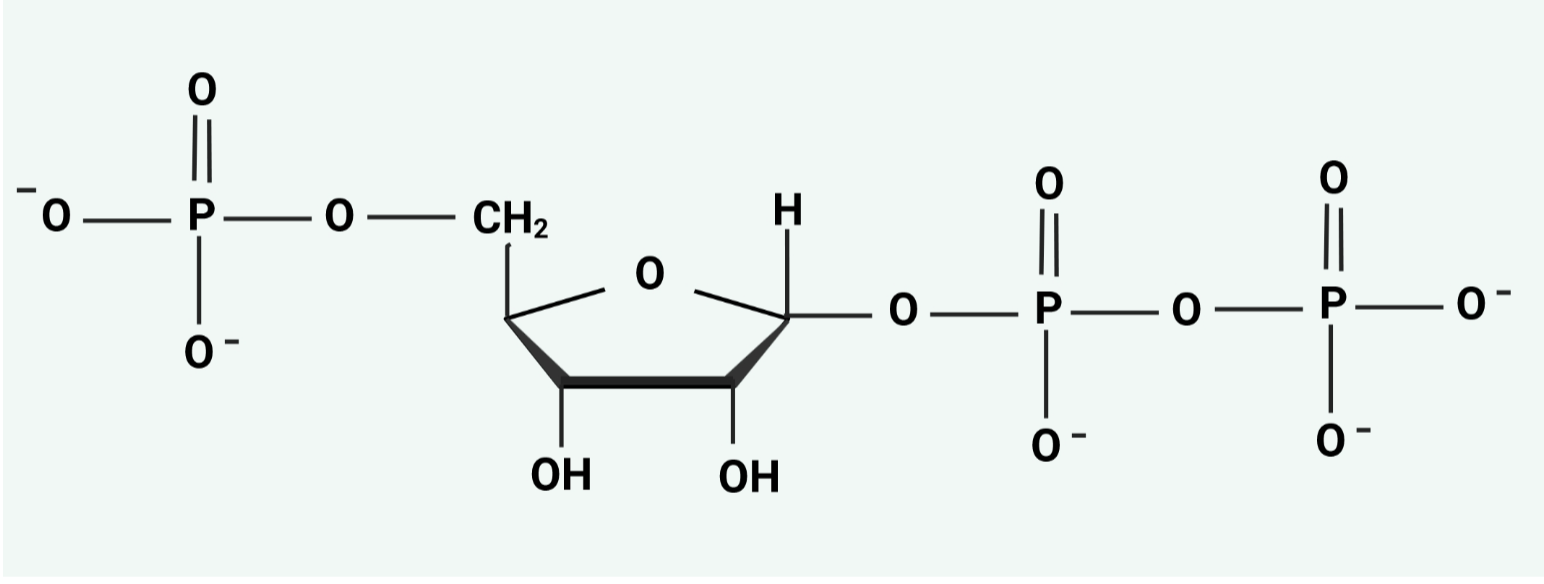
PRPP
Synthesis of PRPP
Reactants: Ribose-5-phosphate and ATP
Enzyme: PRPP synthetase
Product: PRPP + AMP
CPS2
cytosolic enzyme
makes carbamoyl phosphate
glutamine dependent
transfer tunnel
Ammonia Transfer Tunnel of CPS2
moves unprotonated ammonia from glutamine hydrolysis site
prevents ammonia protonation
allows for carbamate to be transferred to carbamoyl phosphate
Formation of Carbamoyl-Aspartate
Reactant: Aspartate, Carbamoyl Phosphate
Enzyme: ATCase
Product: N-Carbamoylaspartate
What is the CAD Complex?
CPS2, ATCase, DHD
Formation of Orotate (2) Steps
Step 1:
N-Carbamoylaspartate → L-Dihydroorotate via DHO (dehydration)
Step 2:
L-Dihydroorotate → Orotate via DHODH (oxidation)
NAD+ reduced to NADH
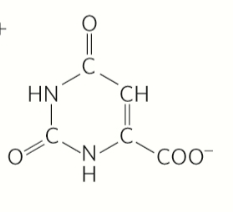
orotate
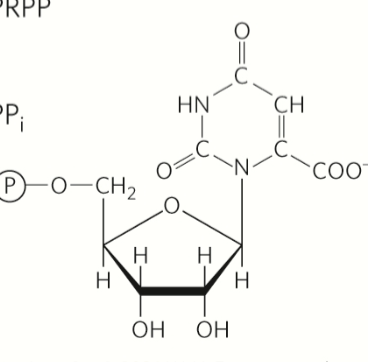
OMP
Formation OMP
Reactants: Orotate and PRPP
Enzyme: OPT
Product: OMP
Formation of UMP
Reactant: OMP
Enzyme: OMP Decarboxylase
Product: UMP
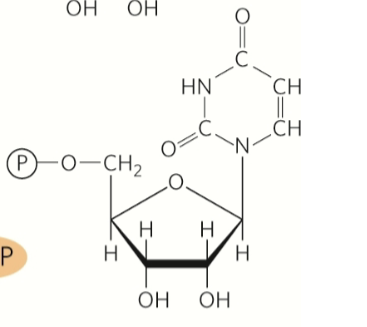
UMP
Formation UTP
Reactant: UMP and 2 ATP
Enzyme: Kinase
Product: UTP
Formation of CTP
Reactants: UTP
Gln → Glu
ATP → ADP
Enzyme: CS
Product: CTP
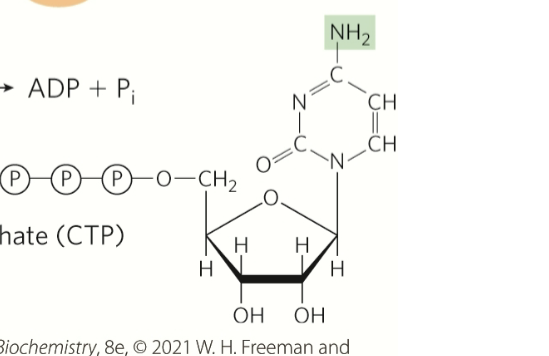
CTP
Formation of TMP
Thymidylate Synthase: dUMP → dTMP
One carbon unit transferred from N5, N10 methylenetetrahydrofolate to dUMP
then reduced to a methyl group
Dihydrofolate Reductase: reduces dihydrofolate to tetrahydrofolate
CPS2 inhibited by _______ and activated by _______
UTP; PRPP
ATCase Regulation
Feedback Inhibition via CTP
Accelerated by ATP
CTP Synthetase (CS 2 is form used in pyrimidine synthesis)
Activated by GTP
Balances amounts of C and G