Drug Induced Lung Diseases
 Call Kai
 Learn
Learn Practice Test
 Spaced Repetition
 Match
Match Flashcards
 Knowt Play
1/21

There's no tags or description
Looks like no tags are added yet.
Name | Mastery | Learn | Test | Matching | Spaced | Call with Kai | Chat |
|---|
No analytics yet
Send a link to your students to track their progress
22 Terms
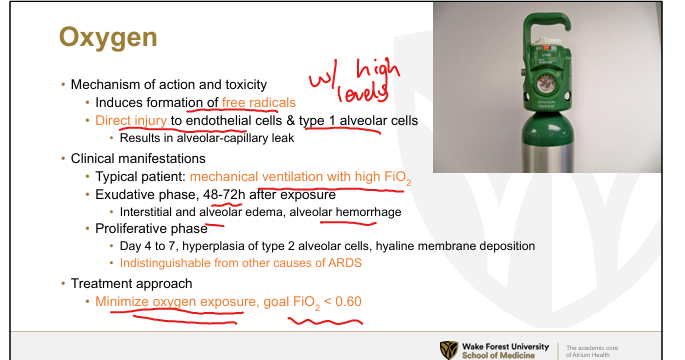
Oxygen: mechanism of toxicity
Induces formation of free radicals causing direct injury to endothelial cells and type I pneumocytes, resulting in alveolar‑capillary leak.
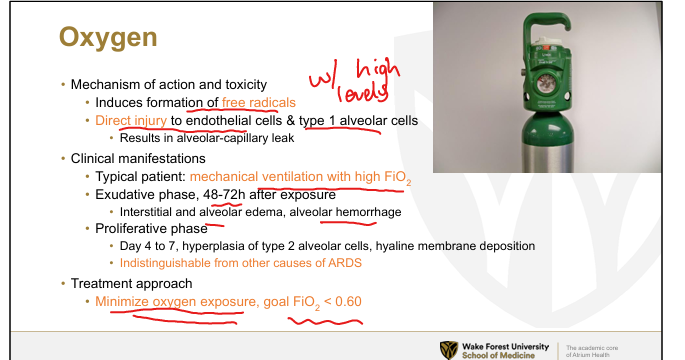
Oxygen toxicity: clinical features
Occurs in mechanically ventilated patients with high FiO₂
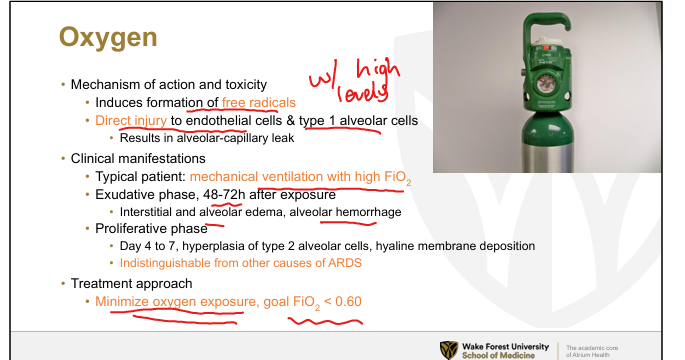
Oxygen: treatment
Minimize oxygen exposure: FiO2<0.6
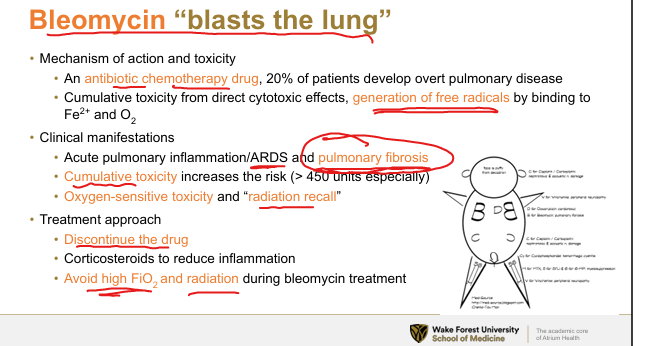
Bleomycin: mechanism of toxicity
Chemotherapy antibiotic causing cumulative toxicity via direct cytotoxicity and free radical formation when binding Fe²⁺ and O₂. ~20% develop pulmonary disease.
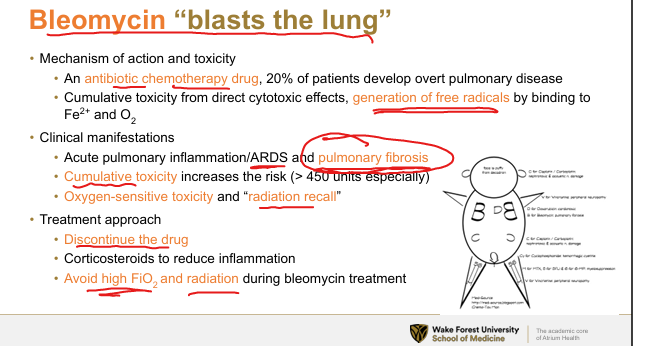
Bleomycin: clinical features
Acute pneumonitis/ARDS and pulmonary fibrosis
Amiodarone: mechanism of toxicity
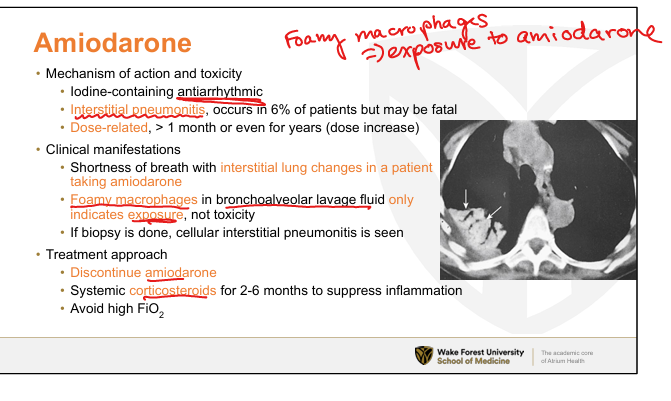
Iodine containing antiarrhythmic causing dose‑related interstitial pneumonitis
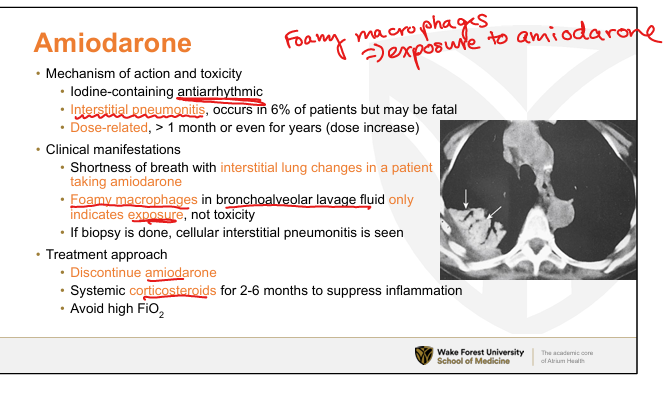
Amiodarone: clinical features
Dyspnea with interstitial changes, foamy macrophages
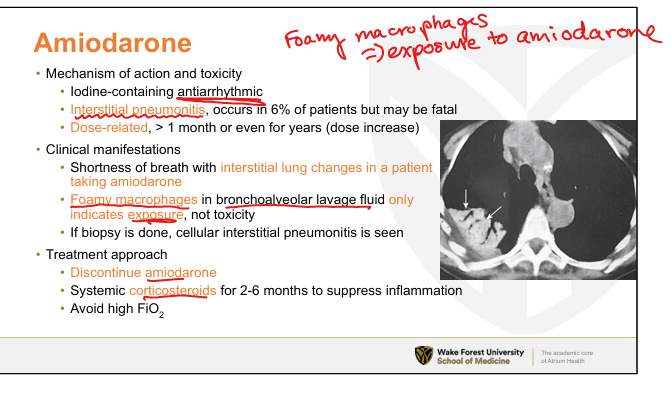
Amiodarone: treatment
Discontinue drug, steroids
Methotrexate: clinical features
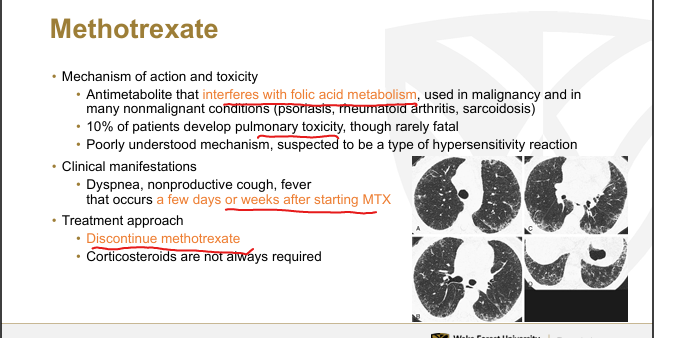
Dyspnea, dry cough, fever occurring days–weeks after starting MTX
Nitrofurantoin normal use
Oral UTI antibiotic
Nitrofurantoin: clinical features of toxicity
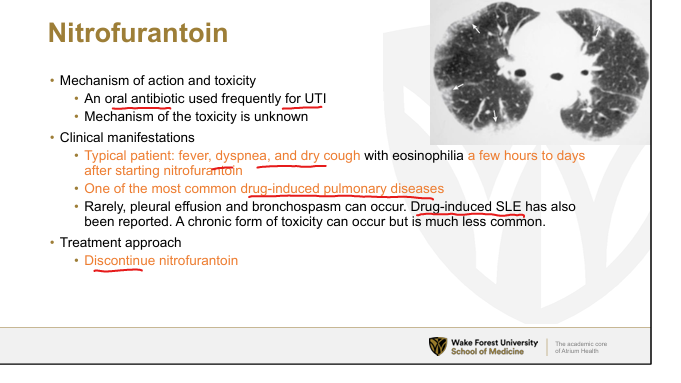
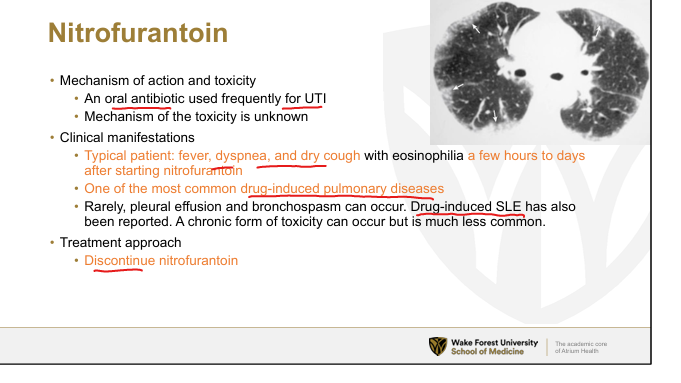
Fever, dyspnea, dry cough with eosinophilia hours–days after starting; common drug induced pulmonary toxicity
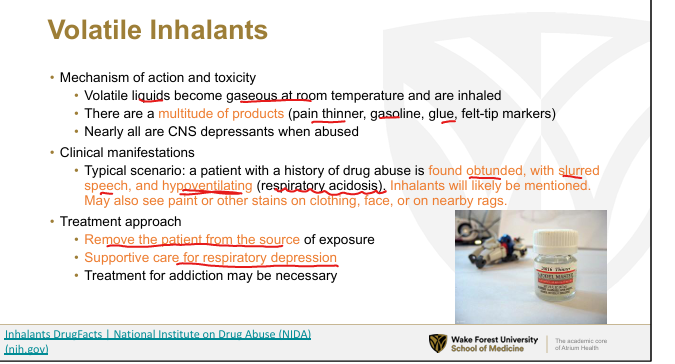
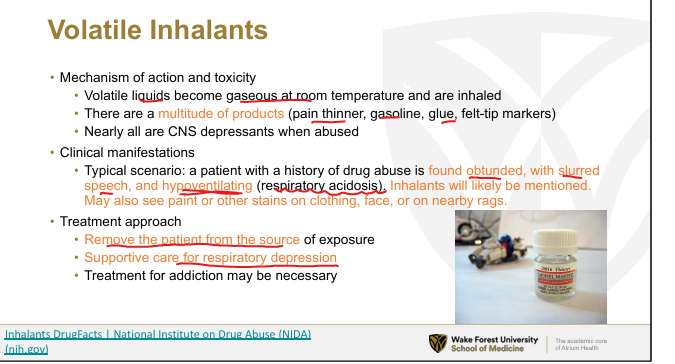
Volatile inhalants: mechanism of toxicity
Volatile liquids (paint thinner, gasoline, glue, markers) vaporize at room temp»CNS depressants
Volatile inhalants: clinical features
Patient found obtunded with slurred speech, hypoventilation/respiratory acidosis
Nicotine/tobacco: clinical features
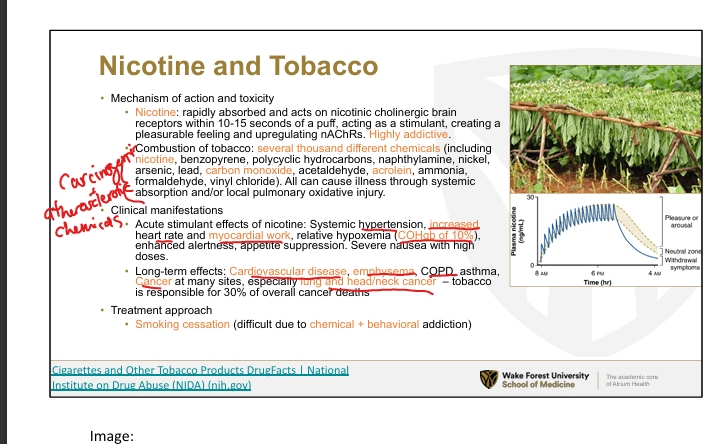
Acute: hypertension, tachycardia, increased myocardial work, CO‑mediated hypoxemia, alertness, appetite suppression.
Chronic: CVD, emphysema, COPD, asthma, multiple cancers (30% of cancer deaths).
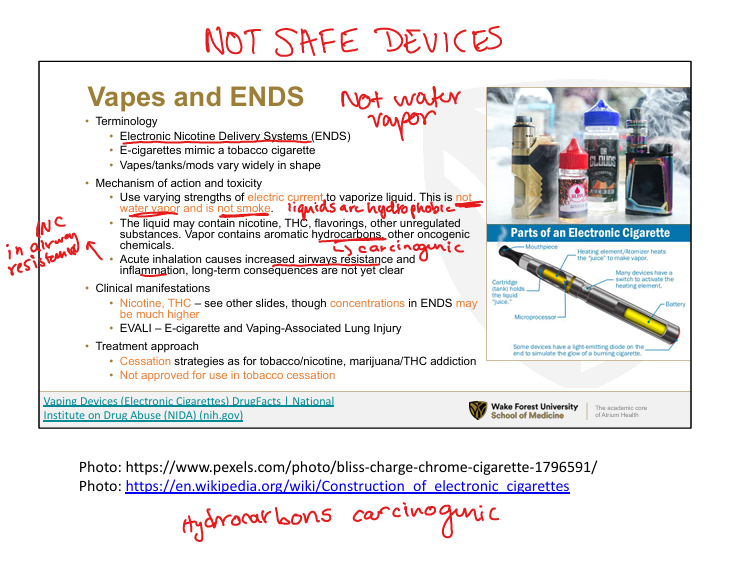
Vapes/ENDS: mechanism of toxicity
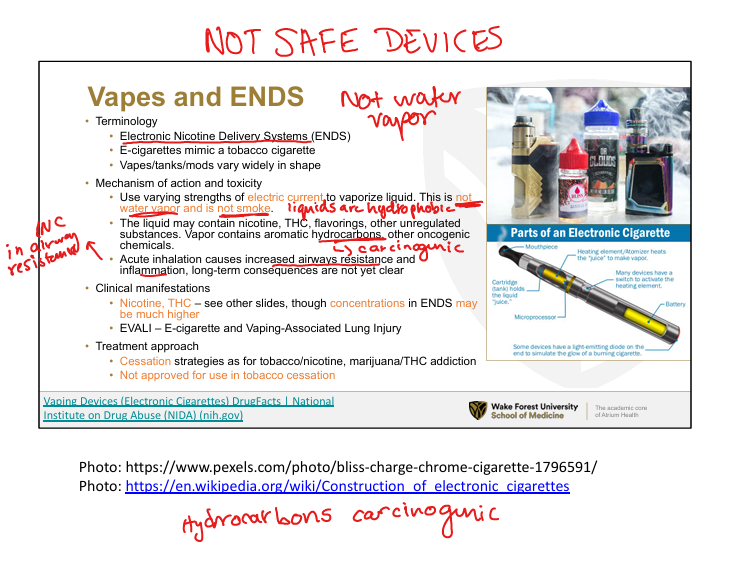
Electronic nicotine delivery systems vaporize hydrophobic liquid containing nicotine, THC, flavorings, unregulated chemicals
Vapes/ENDS: clinical features
Acute airway resistance and inflammation, carcinogenic hydrocarbons
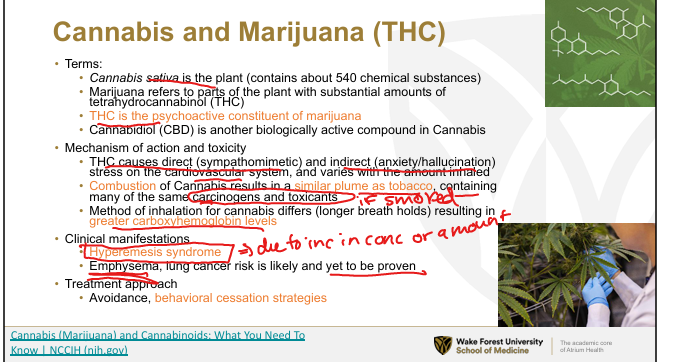
Cannabis/THC: mechanism of toxicity
THC causes sympathomimetic and anxiety/hallucination‑mediated cardiovascular stress
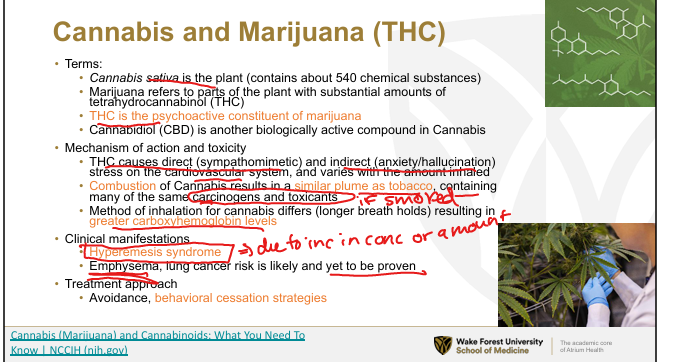
Cannabis/THC: clinical features
Hyperemesis syndrome
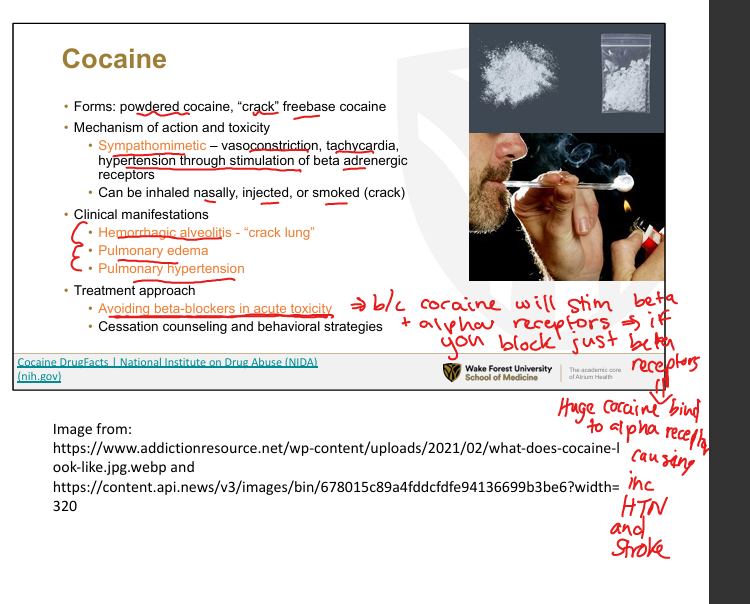
Cocaine: mechanism of toxicity
Sympathomimetic causing vasoconstriction, tachycardia, hypertension via beta‑adrenergic stimulation
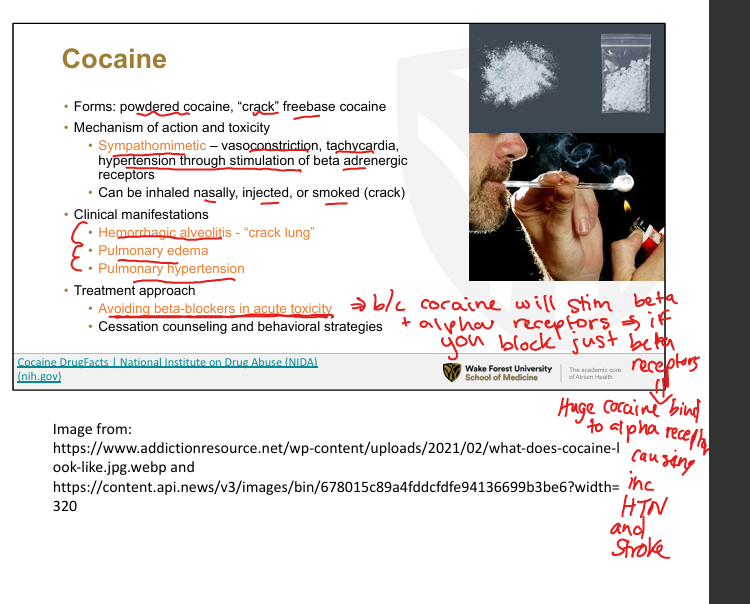
Cocaine: clinical features
Hemorrhagic alveolitis (“crack lung”), pulmonary edema, pulmonary hypertension.
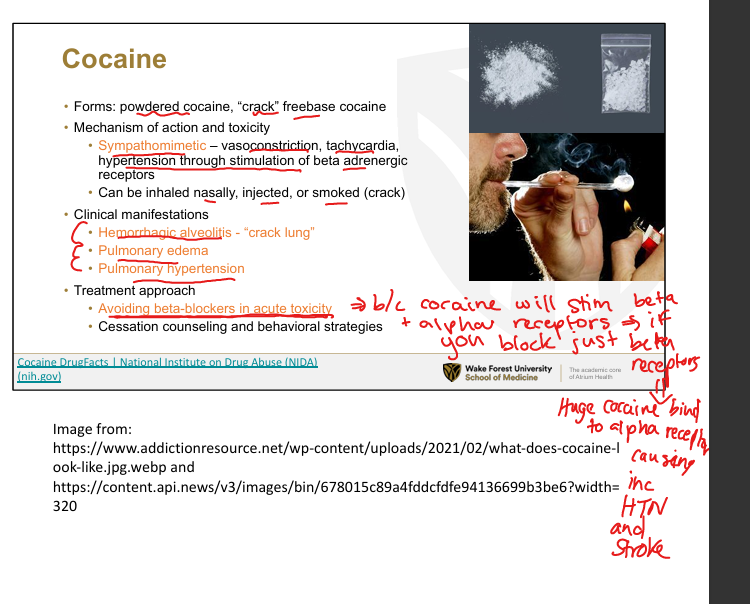
Cocaine: treatment
Avoid beta‑blockers in acute toxicity»they can lead to inc stim of alpha receptors and overall spike in HTN»Stroke
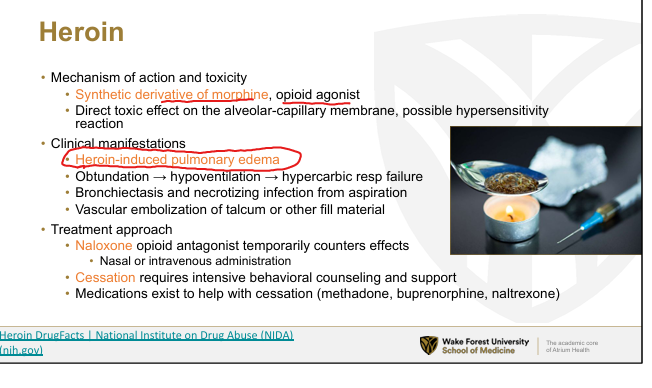
Heroin toxicity: clinical features
Obtundation → hypoventilation → hypercarbic respiratory failure