Chapter 2.3: Chemical Transformations Involve Energy and Energy Transfers
 Call Kai
 Learn
Learn Practice Test
 Spaced Repetition
 Match
Match Flashcards
 Knowt Play
1/7

Name | Mastery | Learn | Test | Matching | Spaced | Call with Kai | Chat |
|---|
No analytics yet
Send a link to your students to track their progress
8 Terms
Molecular stability
This is inversely associated with the molecule’s level of energy; higher-energy states transition to lower-energy states for greater levels of this
Energy
The capacity to produce a change, as all changes in the universe require this in a transformation
Kinetic energy
The energy of movement, including thermal, sound, and electromagnetic energy
Potential energy
Stored energy, including gravitational, elastic, chemical-bond, and nuclear energy

First Law of Thermodynamics
States that energy cannot be created or destroyed, only converted or moved before and after transformation
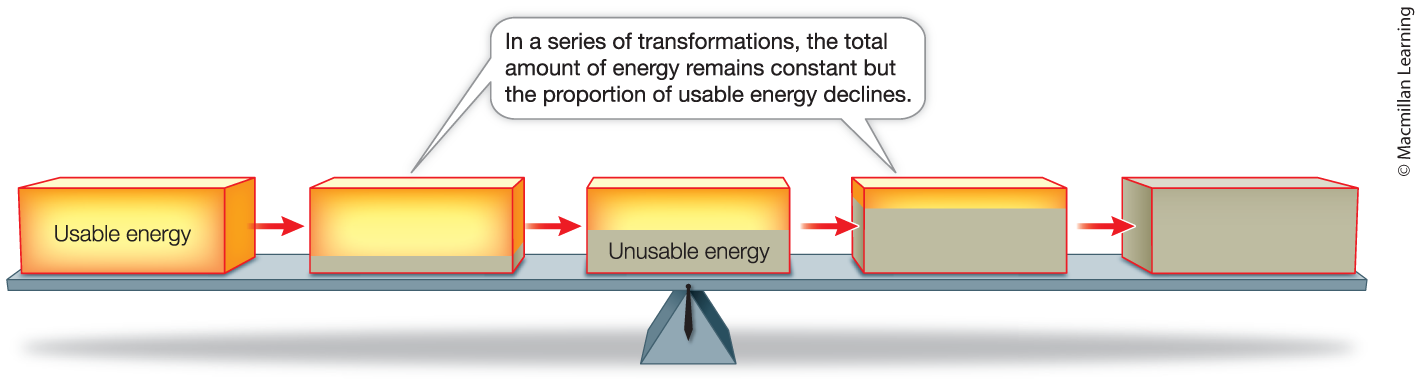
Second Law of Thermodynamics
States that when an energy transformation occurs, there is an increase in entropy and thus less usable energy, even though the total amount of energy stays the same
Energy transfers that increase entropy need an input of energy to begin
Seen in food chains, as the total amount of available caloric energy decreases at every step
Bond strength
Determined by how much energy is needed to break it, with higher potential energy states being easier to break for greater stability
Converting energy from this high to low state results in the release of chemical-bond energy
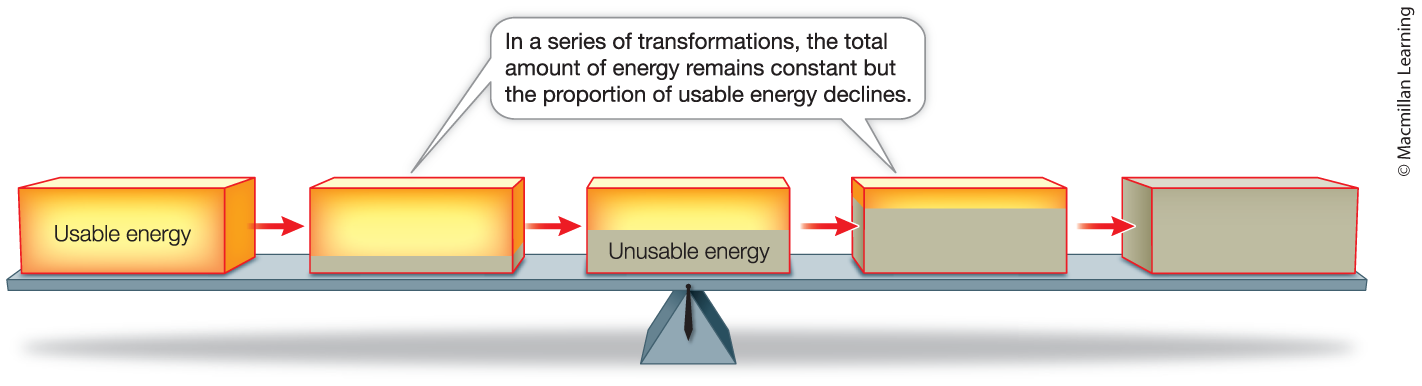
Entropy
A measure of disorder or how spread out energy is, thus making it unusable