Medical Botany Exam 1 USF Rao
 Call Kai
 Learn
Learn Practice Test
 Spaced Repetition
 Match
Match Flashcards
 Knowt Play
1/96

There's no tags or description
Looks like no tags are added yet.
Name | Mastery | Learn | Test | Matching | Spaced | Call with Kai | Chat |
|---|
No analytics yet
Send a link to your students to track their progress
97 Terms
Different examples of early land plants in Fossils reading (ProCopy Reading # 1)
conifer, podocarp, red pine
cycad-like Bennettiales
Which of the above plant examples contain naked seeds? (be curious about the other group/s mentioned by googling) (ProCopy Reading # 1)
conifer, podocarp, red pine
cycad-like Bennettiales
Which is the main plant group discussed in the reading that survived the great dying and when did the great dying occur? (ProCopy Reading # 1)
Podocarps
Countries bordering the Dead sea. (ProCopy Reading # 1)
Jordan
Which organism originally makes BMAA?
Cyanobacteria
How does cycasin act like a mutagen?
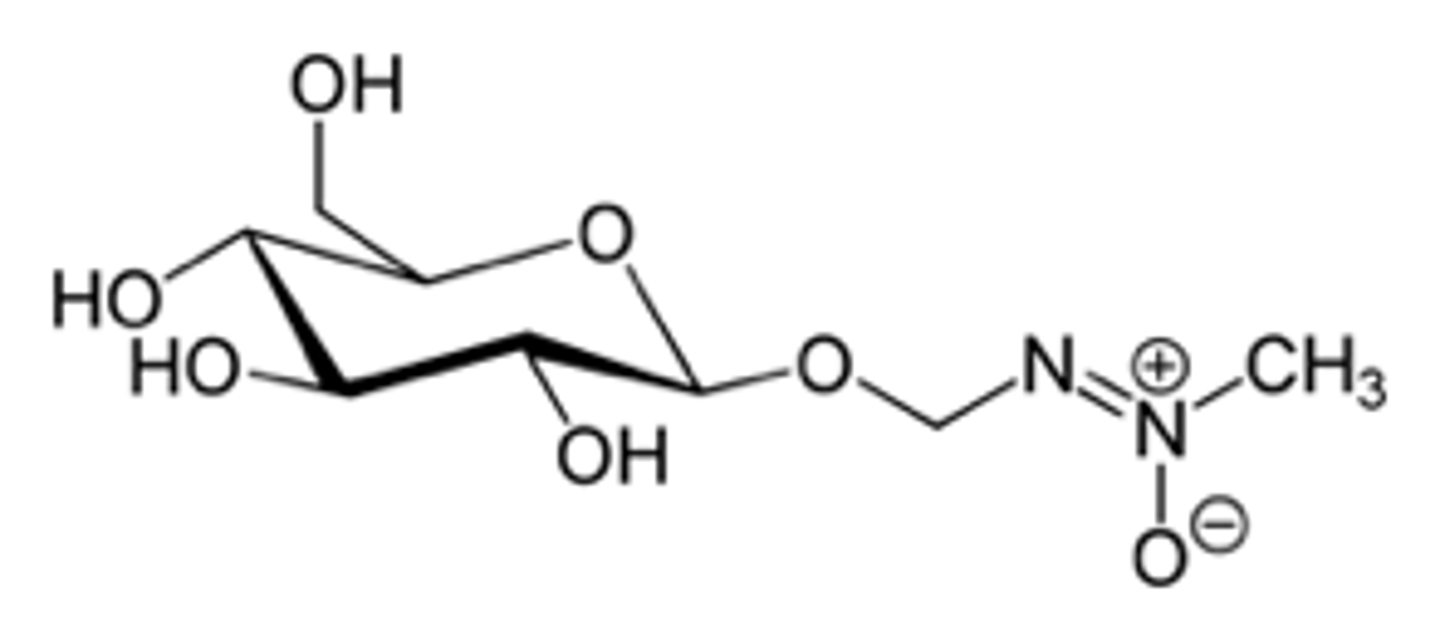
It acts as a substrate for Na+/Glucose cotransporter (cycasin enters as Na+ does). Cycasin then enters the nucleus and acts as a mutagen which converts G:C to MeG:T (Methylated guanine).
Which is the toxin purified from bread seed poppy aka opium poppy?
Morphine
What is the category (i.e. a taxon, in taxonomy jargon) that is just higher to a species?
Papaver
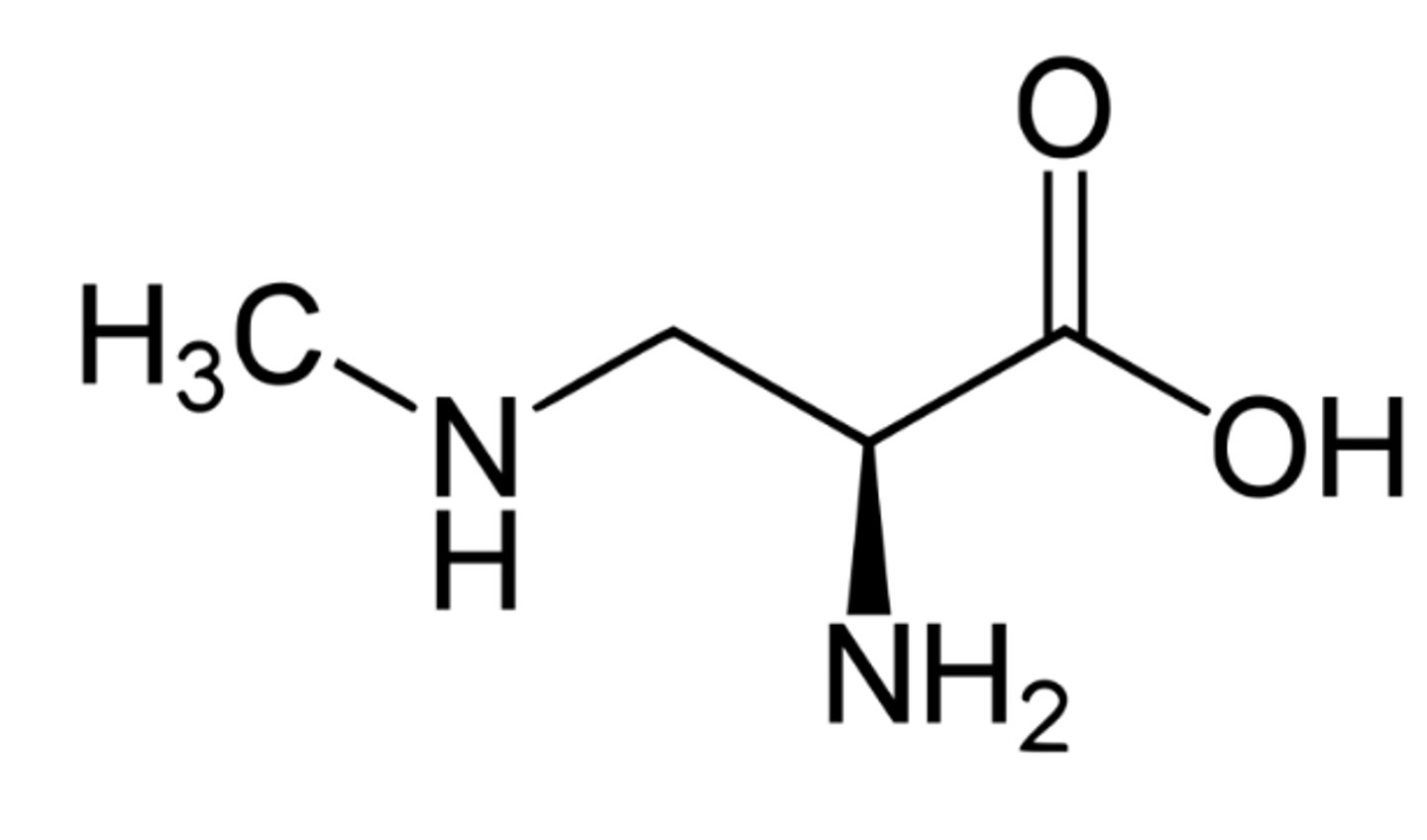
BMAA
metabolite causes neurological syndrome in Chamorro people (indigenous pop of Guam)
cycasin
poison contained in cycads, mutagen (neurological disorders)
Plant families related to different kinds of materials used to make masks?
Linaceae, Moraceae, Malvaceae
What kind of literature is actually reading 4? (Plant as a pugilist ProCopy Reading # 4)
Book review
What are the research focus areas of various types of scientists described in reading 4 such as the plant herbivore community? (ProCopy Reading # 4)
Entomology and small molecular structure
What is the purpose of toxins like cyanide and mustard oil for plants? (ProCopy Reading# 4)
Defensive toxins
The plants are at the bottom of the food chain; toxins are defense metabolites to resist being consumed
What is the opinion of Ian Baldwin, the book reviewer, about some interesting plant traits such as tolerance traits in Walters book? (ProCopy Reading # 4)
Tolerance traits- such as kinase enzymes that place plant sugars in below ground storage during attack- not mentioned in Walter's book
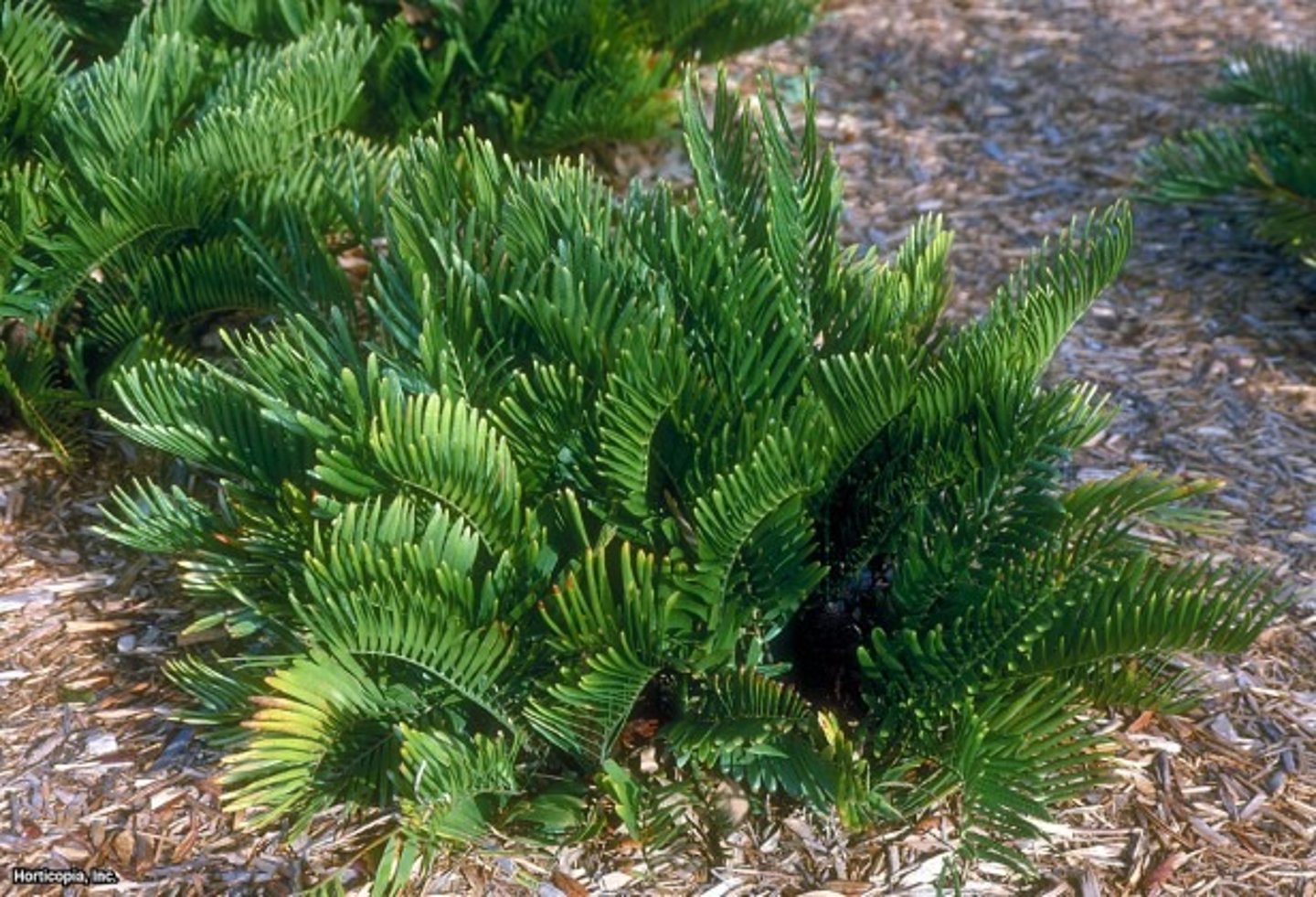
Given picture of Zamia (coontie), which family does it represent?
Zamiaceae
Some plants that are staple in Africa
millet, teff, sorghum, wheat, yam
Mechanism of action of plant secondary metabolite known as cardiac glycosides
inhibit the Na+/K+ ATPase, leads to incrs in Ca in muscle, leads to incrs contractions and convulsions
Use of the plant secondary metabolite known as vinblastine in medicine
Rosy periwinkle Catharanthus roseus - from Madagascar
Used for treatment of childhood Leukemia, Hodgkins, Lymphona Diseas, breast cancer,Sarcoma, and more.
This plant is used in chemotherapy treatments and is typically injected.
Lymphoma, swelling of lymph's
given image of a plant that produces opioids like morphine, which family?
Papaver somniferum. It belongs to the Papaveraceae family.
secondary metabolites
Complex metabolic chemistry of plants produces many toxic organic compounds. Toxic to animals.
different groups of professionals and other people who have knowledge of plants (Medical Botany (1897) ProCopy Reading # 3)
botanist, pharmacist, medical students, children living in the country side
Different common features of yarrow, boneset, wormwood as per ProCopy Reading # 3including family/families they are in
They have floral characteristics of the Asteraceae
They were often used medicinally
They were commonly recognized by country folk
Reason/s why a species might be reclassified as discussed in ProCopy Reading # 3 and any modern method/s that might result in similar re-classification of species
use of biotechnology and DNA sequencing
importance of observation and two ways in which it needs to be documented as per ProCopy Reading # 3 that might still be useful today
record both in writing and sketching
Status of American medical association in 1897. ProCopy Reading # 3
existed in the 19th century
What is the discussion related to Tansy and Pansy in ProCopy Reading # 3?
Mix up between Tansy and Pansy illustrates the danger of using common names
Examples of bacterial mediators (Cross-kingdom interactions in aquatic environments ProCopy reading # 5)
vitamins, morphogens, quorum sensing molecules, bacterial lipid based molecules, phytohormones
Various ways in which traditional herbal knowledge may be lost
pandemic, wars, loss of language, loss of habitat for special plants, assimilation of culture
Bishop flower used to treat this skin condition
vitiligo
source of extract EGb761
Gingko
Functions better than placebo in certain treatments
wormwood
a fungus is found and may be able to curtail some nematodes
iceman
Scurvy
Lind
What does macaw eat to protect itself from poisons in a plant that it eats for food?
The scarlet macaw enjoys eating poisonous unripe fruit fo the sandbox tree. They survive eating the poisonous fruit because they also eat a clay they find n high river banks that neutralizes the fruit's toxin.
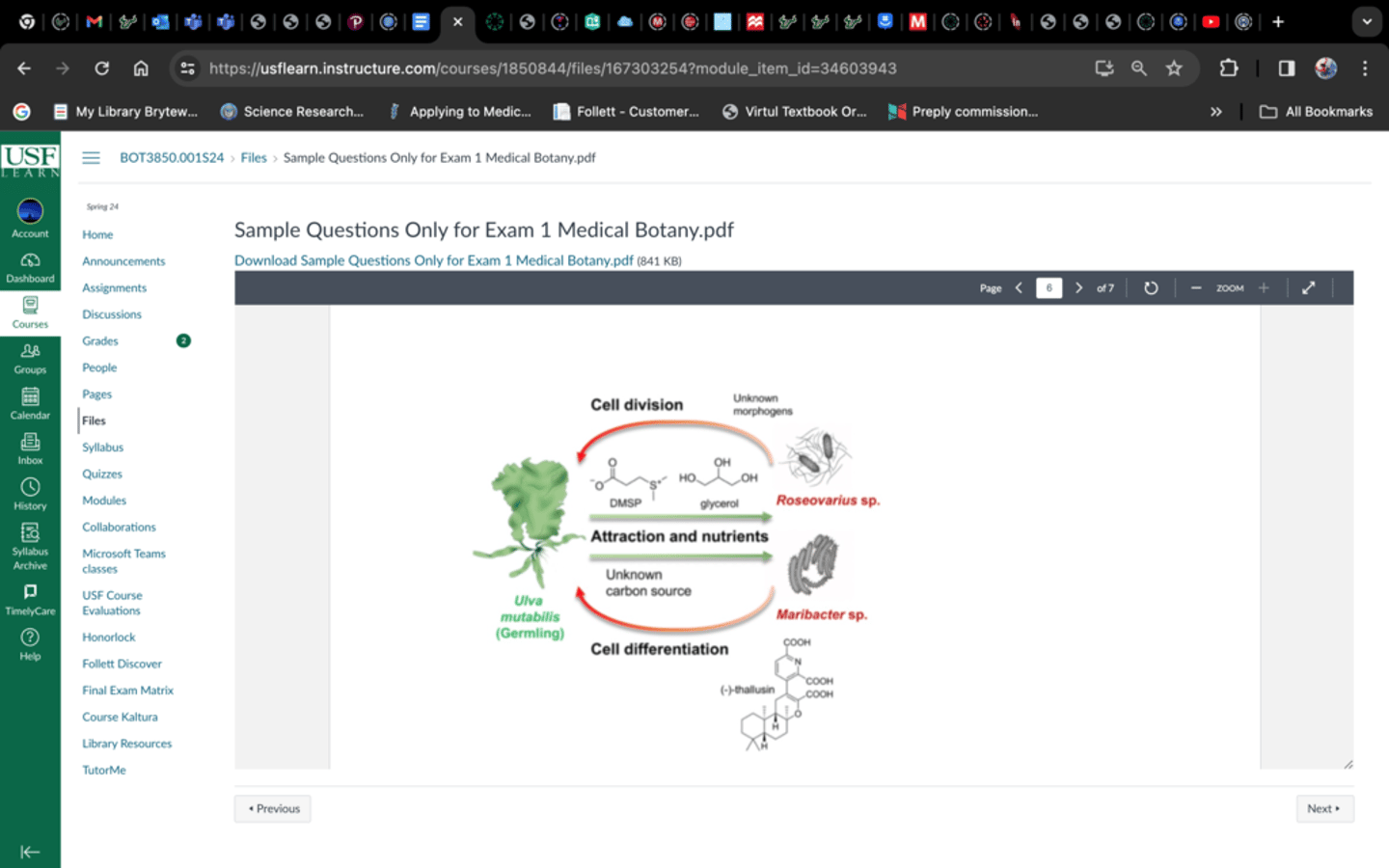
Example of a tripartite community including two kinds of bacteria (prokaryote) and a macroalga (eukaryote). Given the schematic of interactions, decide which statements are accurate
The bacterial species make thallusin and/or other morphogens that help the macroalga with its differentiation
The bacterial species utilize macroalgal derived glycerol and/or metabolites as a carbon source
The macroalga, Ulva depends upon the morphogens secreted from bacteria for its normal development
The successful tripartite community includes both eukaryotic and prokaryotic species
Orthodox Medicine
It rests carefully controlled clinical trials
It involves placebo controlled studies
It involves double blind study where neither physician or the patients know what they are receiving till the end of the study
Traditional medicine
Its reputation rests on use and history for hundreds or thousands of years
Vitiligo treatment in Ancient Egypt and India and plants used (Procopy Reading #6chapter 9 pages: 49-54)
Vitiligo is a long term skin condition characterized by patches of the skin losing their pigment. The patches of the skin affected become white and usually have sharp margins. The hair from the skin may also become white. The inside of the mouth and nose may also be involved. Often the patches begin on areas of skin that are exposed to the sun. It is more noticeable with dark skin.
Egyptians used the juice or an extract of bishop's flower to treat Vitiligo. Rubbed the juice on the patients patches and then the patients laid the sun. The patches darkened and became less prominent.
Vitiligo can occur in any ethnic population and it is still used today.
Although dong-quai works in Traditional Chinese medicine, why did it fail in the clinical trials in the US? (ProCopy Reading #6 chapter 9 pages: 49-54)
In traditional Chinese medicine, Dong quai is used in combination with several other herbs
Out hominin ancestors possessed self-medicative behavior. How would you classify the statement from Dr. Huffman Ape's perspective ProCopy Reading #7?
This is a thesis statement for introducing the paper
Why plants produce different kinds of secondary metabolites ProCopy Reading #7?
Life feeding on life
Life destroying life
Life defending against life
Life attracting life
Life protecting itself from the environment(Competition)
FDA
The evaluation of food and drug safety
NIH
the clinical trial process
FTC
Nutritional supplement advertising
Trema orientalis belonging to the Cannabaceae family
used for whole leaf swallowing by apes to get rid of parasites
Tabernathe iboga belonging to the Apopcynaceae family
animals go into a wild frenzy on consuming these plant parts due to stimulants
Veronis amygdalina belonging to the Asteraceae family
used for bitter pitch chewing by sick apes
given picture of a plant which produces alkaloids used against cancer, identify the plant family
Apocynaceae
What nutrients most essential for "encephalization" of human brain?
Iodine, DHA, omega 3 fatty acids, iron, zinc, copper, etc.
Cyanotoxins produced by cyanobacteria that affect liver, brain, etc
Microcystins, Nodularins, Cylinderospermospins are cyanobacterial toxins that affect the liver
Anatoxin-a , Guanitoxin and BMAA are cyanobacteria toxins that principally affect the nervous system
Advantages of hybrid diploid breeding
Makes it easier to combine traits in one variety
May result in being able to plant with seeds
It may save time
what general issues related to potatoes needed to be resolved (New Potatoes (ProCopyReading 8)
potatoes cannot self-fertilize
the world's gene banks are not well-stocked with valuable genes
potatoes have too many chromosomes
How to remove undesirable traits in plants? (ProCopy Reading 8)
using crosses
Where is potato production increasing or decreasing in the world? (ProCopy Reading 8)
More in Asia. China is the major producer of potato and next is India. But china grows twice as more than India.
In Europe
What is special about the transition zones in Brazil with respect to potato adaptation?(ProCopy Reading 8)
temperate regions
What explains the susceptibility of potatoes to Phytophthora infestans during the potato famine? (ProCopy Reading 8)
Due to the absence of genetic diversity since all the potatoes grown were clones due to the propagation of the tuber eyes and were not resistant to this pathogen
Neanderthal dental plaque which plants found and which family?
Asteraceae
Different methods that can be possibly used to find evidence for use of plants by ancient humans
What does evidence say about the relative timelines of invention of agriculture by humans and the use of plants for nutrition in their diet?
Finding plant material in corprolites or fossilized feces
Finding plant genetic material in various microfossils and ancient utensils
Carbon-14 dating
Identifying microscopic granules of plant pieces from calculus of human teeth found in very old graves and caves
Finding starch granules on very old grinding stones
Recognize caterpillar shaped toxin produced by Karenia brevis that causes red tide blooms and mechanism by which it causes toxicity to sea organisms or humans who consume contaminated sea food
Voltage gated Na+ channels, Brevetoxin
Recommendation of the USDA food plate with respect to kinds of fruits and vegetables
True
Which of the following statements are relevant to the genera Matricaria and Achillea?
Both belong to the Asteraceae family
They were both identified as potential medicinal components in the Neanderthaldiet based on mass spectrometric analysis of dental calculi
_______ is a taxon/category that just falls below genus in the classification hierarchy.
somniferum
Millet, corn, rice, rye, and wheat are all examples of cereal grains that make up ~51% of the total food consumed by humans.
True
Popularly considered to be an edible genus among the cyanobacteria
Arthrospira
How does a plant secondary metabolite usually act on mammalian cells?
It interacts with receptors on the cell surface or inside the cytoplasm
Which of the following toxins inhibit the Na + /K + ATPase?
cardiac glycosides
Which of the following is not one of the three main groups of secondary metabolites based on their structures or precursor molecules?
Ester
Morphine is a terpenoid from Papaver somniferum used to treat ovarian, lung, and breast cancers
False
Brevetoxin is known to do which one of the following?
Bind voltage gated sodium channels causing an influx of sodium
As a general rule of thumb, eating fruits of many different colors is healthy practice, for a well-balanced diet
True
Which of the following is evidence that humans began cooking plants at least 24,000 years ago?
Cracked/roasted starch granules in the dental calculus of two adult archaic humans
Non-essential carbon containing molecules in plants with adaptive value are referred to as which of the following?
A. Primary metabolites
B. Target receptors
C. Raphides
D. None of the above
None of the above
Which of the following is NOT a mechanism that cyanobacterial algal blooms can use to float in water?
Production of extracellular microtubules that use special extracellular motor proteins
What is the cause of excessive cyanobacterial blooms seen nowadays?
A. rising carbon dioxide concentrations
B. excessive nutrients in water bodies
C. warmer temperatures
D. all are correct
E. none is correct
all are correct
Your dog may love chocolate
A. do not use it as a treat for training purposes
B. it is very toxic because one of the secondary metabolites in it is slowly metabolized
C. it main toxin belongs to the Apocynaceae family
D. two are correct
E. all are correct
D. two are correct
If global warming occurs in the future, which is the group of marine animals that would be most susceptible?
B. those used to higher oxygen levels in cooler waters at the higher latitudes
What happened toward the end of the Permian period:
70% of life on land and 90% of marine life perished due to reasons that are still being debated by geo-bio scientists
In tryptophan-dependent Indole Acetic Acid (IAA) synthesis pathways, typically the bacterium provides the tryptophan and the eukaryotic organisms such as diatoms make and release IAA that act upon bacterium as a morphogen
False
Best explanation for the presence of plant pigments and bitter testing compounds with no nutritional value in Neanderthal diets:
A. Neanderthals were exclusively vegetarian
B. Neanderthals lived as individuals and not in closely knit social groups
C. Neanderthals had metabolic pathways that allowed them to extract energy from such compounds
D. all are correct
E. none is correct
E. none is correct
Order in the evolution of plants on our planet from earliest to latest among the choices given:
A. Aquatic plants> Early land plants> Seed plants > Flowering plants
"Kelp highway hypothesis" is an idea which suggests that humans may have populated the Americas earlier than originally thought, by traveling along the coastline that was rich in seafood, rather than through a land bridge across Beringia
True
Which plant can trace its domestication to South America?
A. cassava
B. potato
C. soybean
D. two are correct
E. all are correct
D. two are correct
Vinca alkaloids, vincristine and vinblastine, are compounds isolated from the Madagascar periwinkle in the family _________ and are useful to treat ____________
E. Apocynaceae, various malignancies
A plant might send a pest to attack old leaves rather than young ones, benefitting both the plant and the pathogen.
a tolerance trait
Narcan is an antidote for the highly potent and dangerous synthetic opioid fentanyl. The antidote is now available over the counter at pharmacies so that thousands of lives could be saved in the case of accidental opioid overdoses and poisonings. Which plant family are the opioids related to?
Papaveraceae
What is the main catalyst for the mass extinction event at the end of the Permian period,a.k.a. "The Great Dying"?
Global warming and ocean acidification whose exact origins are still debated
Which of the common names of plants we have encountered in this course are correctly matched with their families?
A. tansy: Asteraceae
B. poison oak: Anacardiaceae
C. sweet cicely: Apiaceae
D. two are correctly matched
E. all are correctly matched
E. all are correctly matched
Zamia and Cycas are genera that can provide a rich carbohydrate food source with very careful preparation
True
A plant family not related to face masks?
A. Linaceae
B. Cactaceae
C. Moraceae
D. Malvaceae
E. None is related
B. Cactaceae
When grown alone (axenic conditions), the macroalga Ulva mutabilis develops into an undifferentiated callus with atypical cell wall formation, slow growth and absence of cell differentiation. Creating a tripartite community in the laboratory with Roseovarius andMaribacter species of bacteria similar to what is found naturally in the aquatic environments leads to the restoration of the Ulva morphogenesis.Refer to the figure below and pick the incorrect statement from the following:
The bacterial species make thallusin and and/ or other morphogens that help the macroalga with its differentiation
How have potatoes commercially been propagated for last several hundred years?
through vegetative reproduction using tuber "eyes"
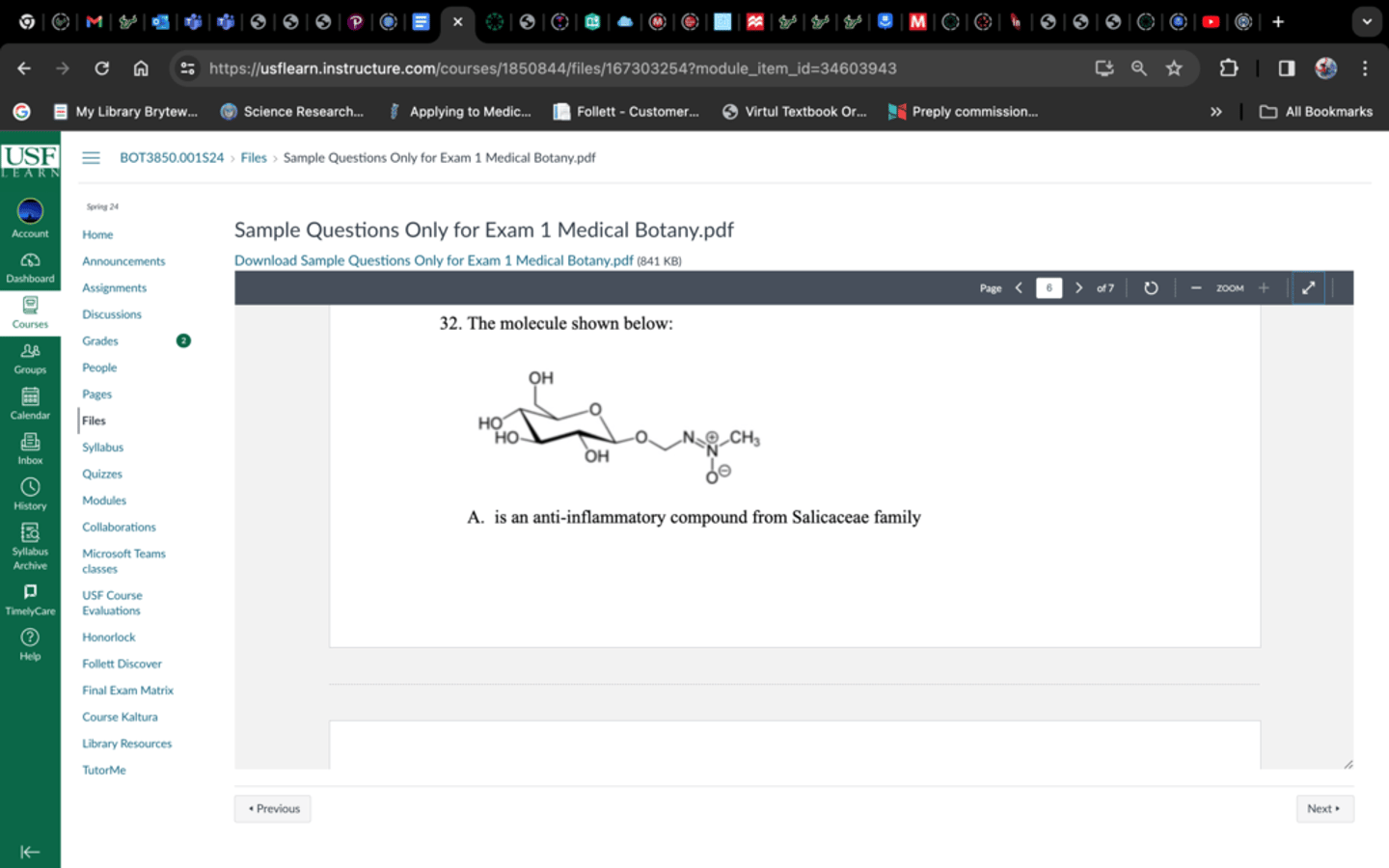
The molecule shown below:
is a mutagen causing the replacement of GC with AT base pairs
The passage below is derived from which one of the following readings described below? A pervasive issue is Walters's use of military metaphors. Although they are inevitable in this context, Walters often over-eggs: the chapter titles, for instance, range from "Call to arms" to"Weapons of war". Such language has shaped the mental constructs of biologists who study"evolutionary arms races". But military metaphors themselves evolve as wars shift from outright destruction to the gain of strategic aims, and the military rarely leads when it comes to understanding interactions. Plant-heterotroph interplay is likely to be nuanced, given how long most of the partners have been at it. Summoning ideas of conflict can limit thinking, as doctors have found in treating disease
a Pro-Copy reading that is actually a book review of plants
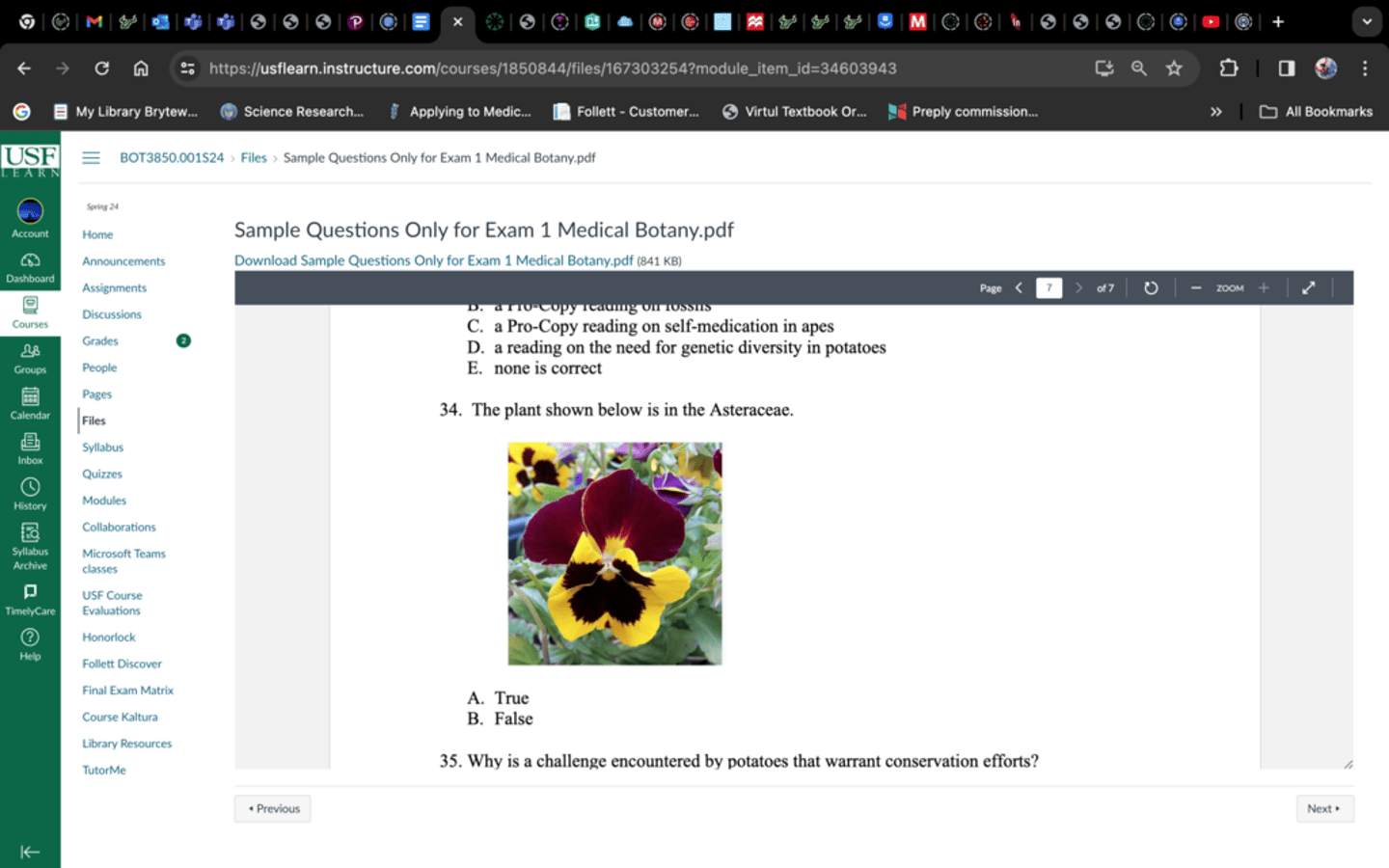
The plant shown below is in the Asteraceae
False
Why is a challenge encountered by potatoes that warrant conservation efforts?
A. increased pests and infectious diseases
B. droughts
C. extreme temperatures
D. loss of habitat
E. all are correct
E. all are correct