Parasite Quiz
 Call Kai
 Learn
Learn Practice Test
 Spaced Repetition
 Match
Match Flashcards
 Knowt Play
1/25

There's no tags or description
Looks like no tags are added yet.
Name | Mastery | Learn | Test | Matching | Spaced | Call with Kai | Chat |
|---|
No analytics yet
Send a link to your students to track their progress
26 Terms
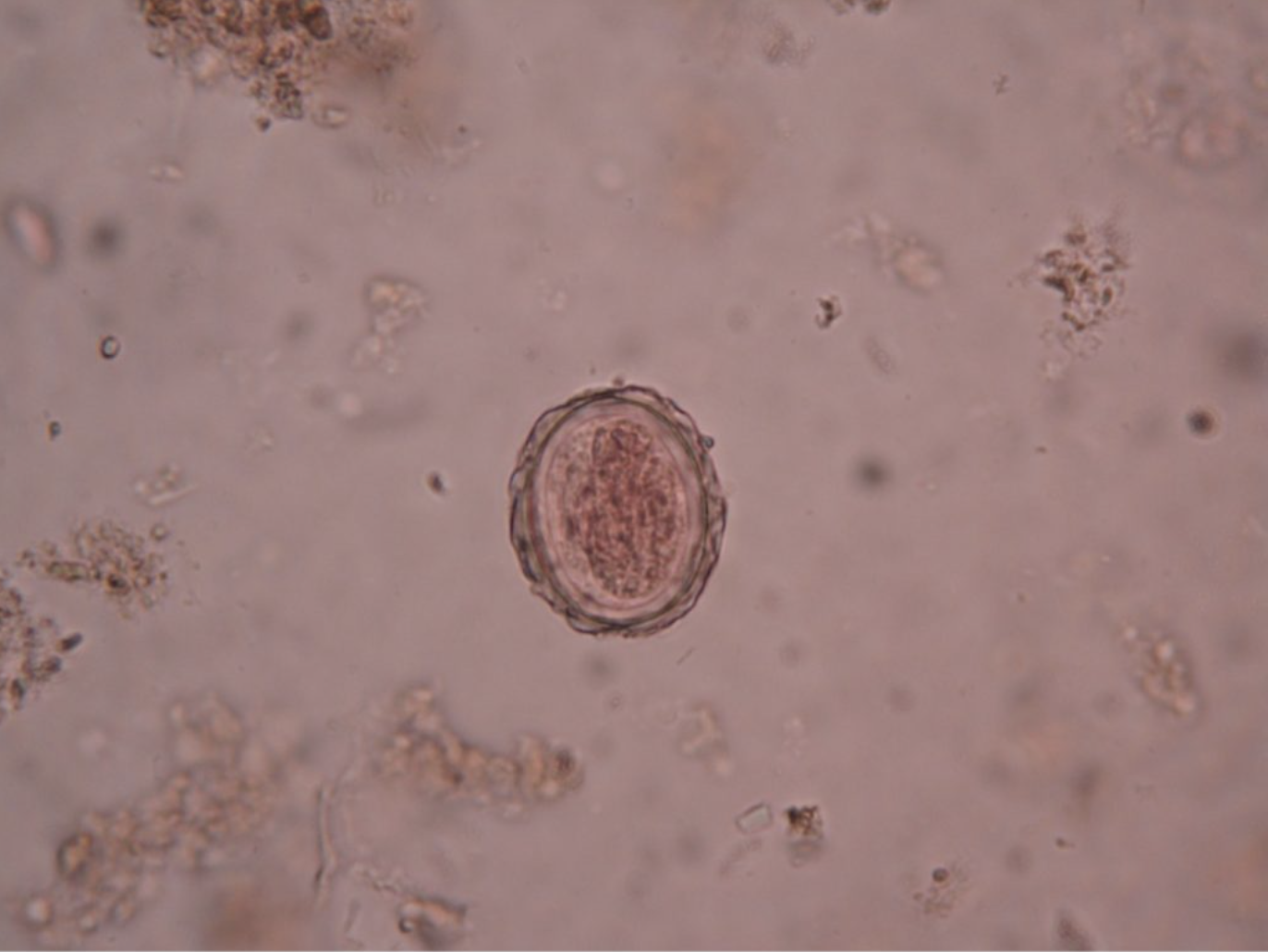
Ascaris lumbricoides — transmission & egg ID?
Fecal-oral; thick, bumpy (mammillated) shell
Fecal-oral (soil-matured eggs). Egg: thick, bumpy, golden-brown shell.

Necator americanus — transmission & egg ID?
Larvae penetrate bare skin; smooth thin shell, rounded ends
Larvae in soil penetrate skin (bare feet). Egg: smooth, thin-shelled, bluntly rounded ends — NO bumps.

Enterobius vermicularis — transmission & egg ID?
Hand-to-mouth; flattened/asymmetrical (D-shaped) egg
Hand-to-mouth. Egg is flattened on one side. Diagnosed via Scotch tape test, morning exam.
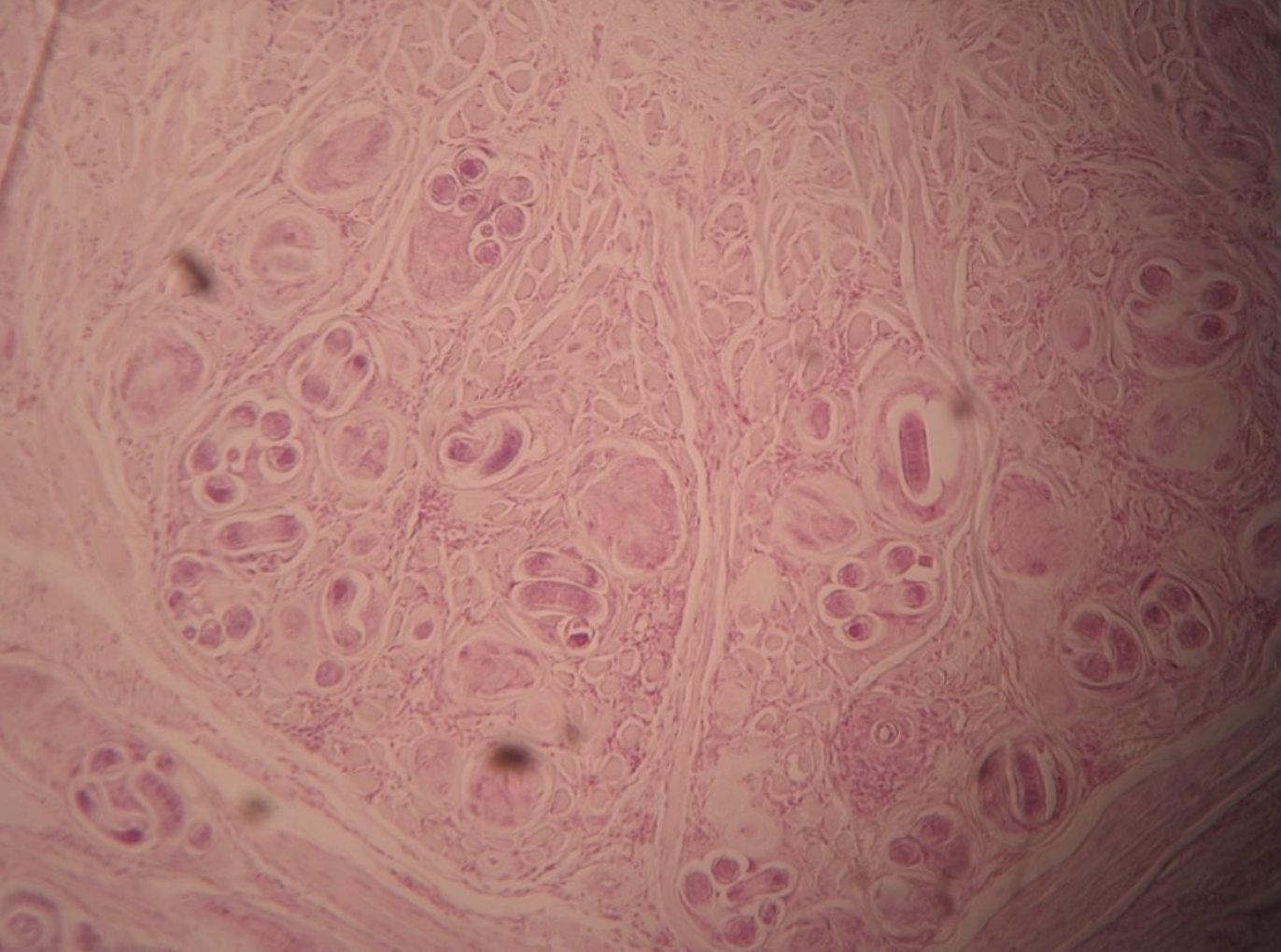
Trichinella spiralis — transmission & ID?
Undercooked pork/bear meat; coiled larvae encysted in striated muscle
Eating undercooked pork or bear meat. Identified as coiled larvae in striated muscle tissue, not a stool egg.

Clonorchis sinensis — transmission & egg ID?
Undercooked fish; pumpkin-seed shaped egg with operculum
Eating undercooked/raw freshwater fish. Egg: small, pumpkin-seed shaped, with a lidded operculum.

Schistosoma mansoni — transmission & egg ID?
Cercariae penetrate skin in water; egg has a lateral spine ("talk bubble")
Larvae (cercariae) in water burrow through skin. Egg has a distinctive lateral spine.

Taenia saginata — transmission & scolex ID?
Undercooked beef; scolex has NO hooks (suckers only)
Beef tapeworm. Scolex has 4 suckers, no hooks. >15 lateral proglottid branches.

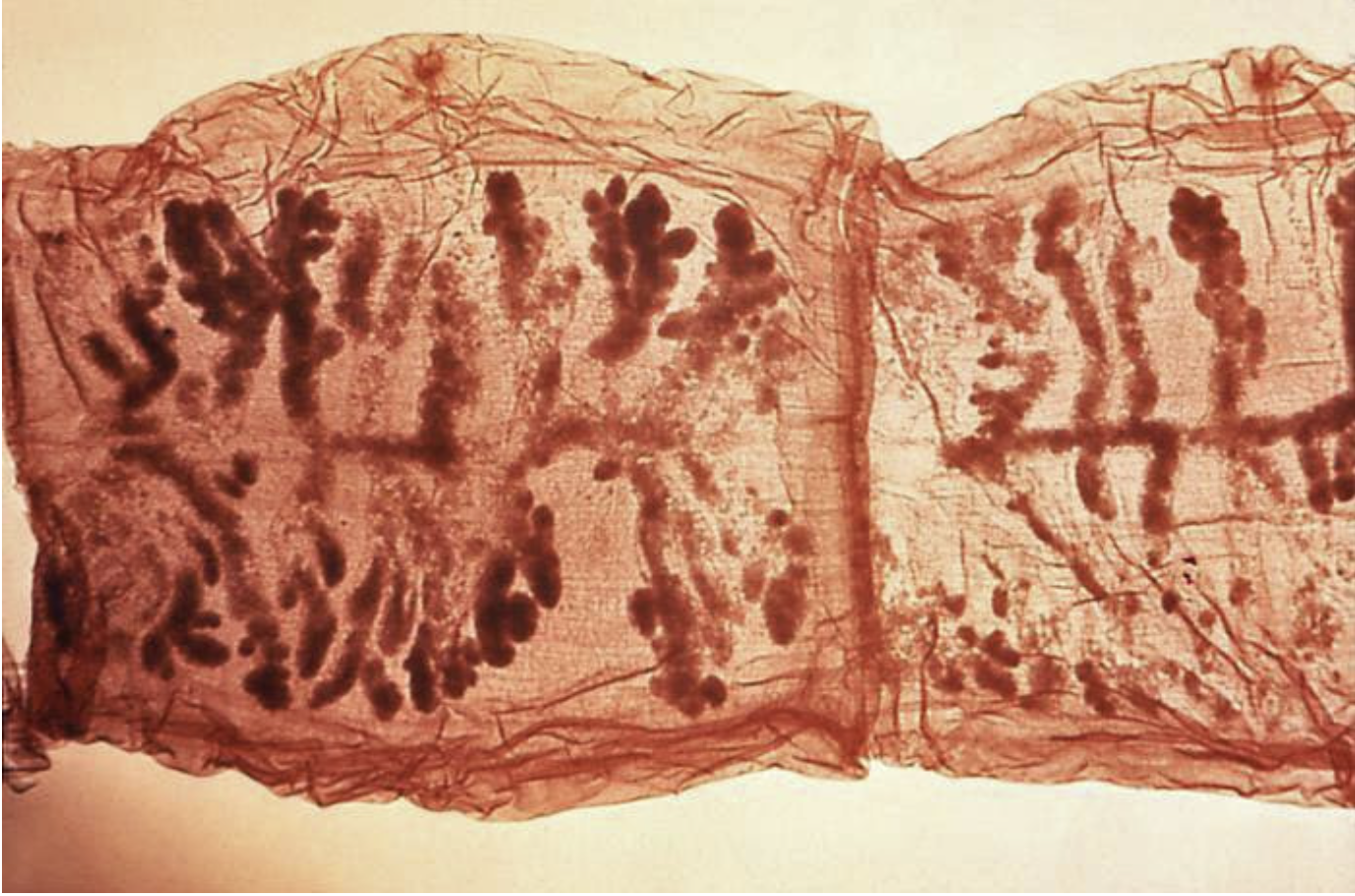
Taenia solium — transmission & scolex ID?
Undercooked pork; scolex HAS a double crown of hooks
Pork tapeworm. Scolex has 4 suckers PLUS a double crown of hooks. 8-13 proglottid branches. Can cause cysticercosis.

Define: Cysticercosis
Larval (cysticerci) invasion of tissue (e.g. brain) after ingesting T. solium eggs directly
A severe disease where humans become the intermediate host for T. solium larvae, which migrate to tissue like the brain.
Define: Ova
eggs
Define Scolex
tapeworm head w/ suckers(±hooks)
Define Proglottid
body segment with reproductive organs
Define: Monoecious
both sexes in one individual (tapeworms, Clonorchis)
Monoecious organisms can self-fertilize; dioecious ones need both sexes present
Define Dioecious
separate male/female individuals (Schistosoma)

Entamoeba histolytica — transmission, ID, disease?
Fecal-oral; troph=irregular w/ pseudopods, eats RBCs; cyst=spherical, up to 4 nuclei; causes amoebic dysentery
Classic amoeba ID: irregular feeding troph vs. round resting cyst.


Giardia lamblia — transmission & troph ID?
Fecal-oral (water); pear-shaped troph with 2 nuclei ("eyes on a face")
"Backpacker's parasite." The 2-nuclei "face" look is the signature ID feature.


Trichomonas vaginalis — transmission & troph ID?
Sexual contact; teardrop-shaped, NO cyst stage, jerky/darting motility
Only sexually-transmitted one on the list; also the only one with no cyst stage.

Balantidium coli — transmission & ID?
Fecal-oral (pigs); only ciliated human parasite, largest intestinal protozoan
Distinguish by cilia and huge size compared to other protozoa.
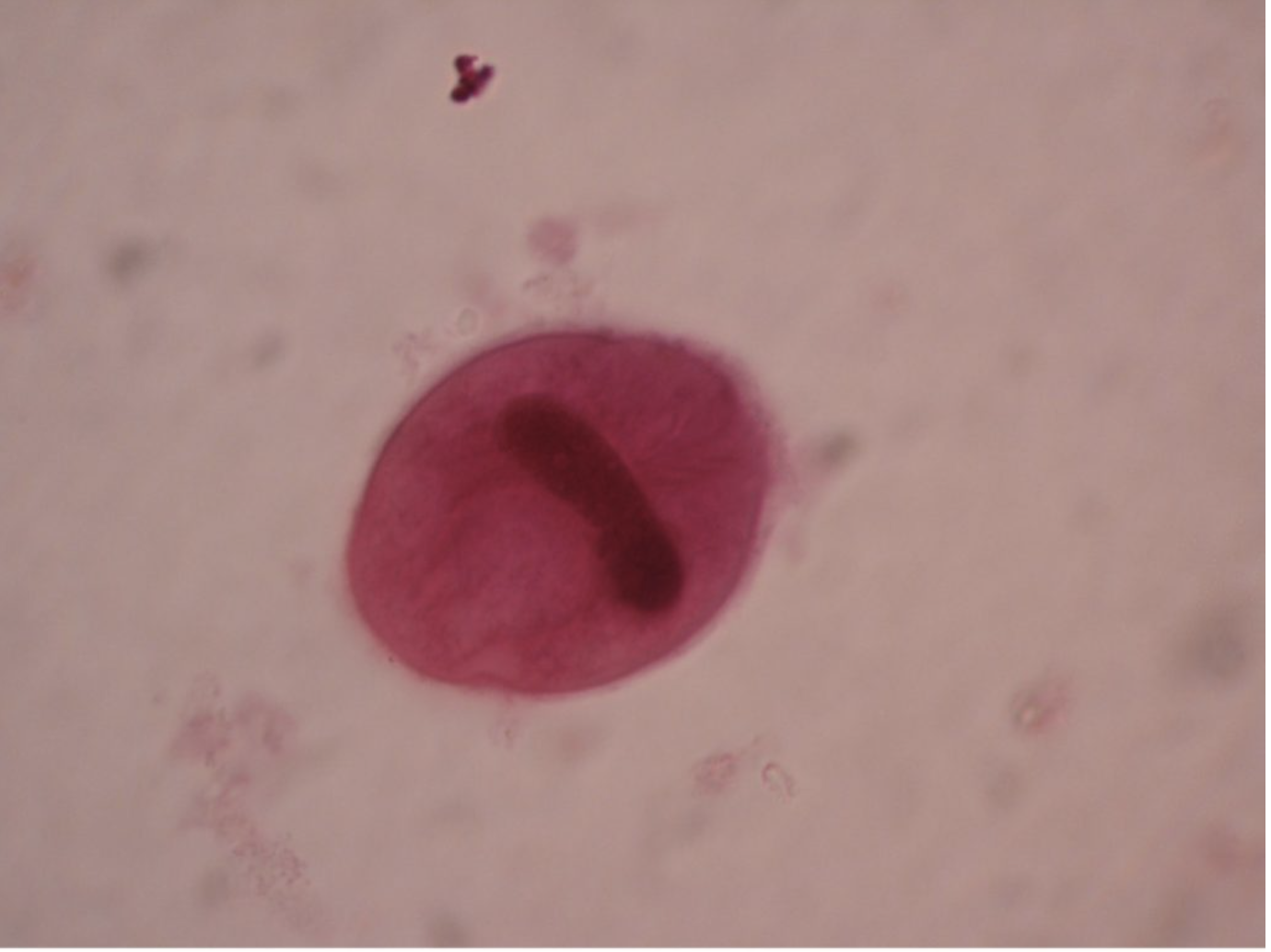

Cryptosporidium parvum — transmission & oocyst ID?
Fecal-oral (water); small round oocyst, stains bright red on modified acid-fast stain
Resistant to chlorination; linked to pool/water park outbreaks.

Plasmodium — transmission, troph ID, disease?
Anopheles mosquito bite; ring-form troph inside RBC; causes malaria
Ring stage inside red blood cells is the classic slide finding.

Toxoplasma gondii — transmission & troph ID?
Cat feces, undercooked meat, or congenital; crescent-shaped trophozoite
Cat = definitive host. Dangerous to fetus if mother infected while pregnant.
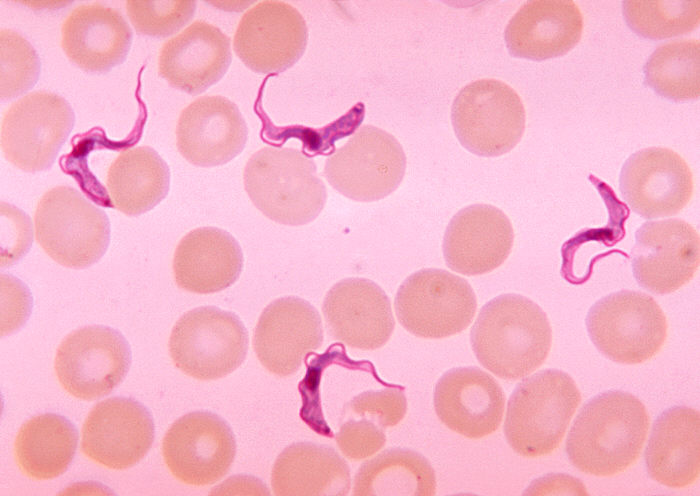
Trypanosoma brucei — transmission & disease?
Tsetse fly bite; causes African sleeping sickness
Wavy troph with undulating membrane, seen between blood cells.

Trypanosoma cruzi — transmission & disease?
Kissing bug bite + feces rubbed into wound; causes Chagas disease
Describe: Trophozoite stage
active, feeding, motile stage that causes symptoms.
Describe: Cyst Stage
dormant, thick-walled resting stage that survives outside the host and spreads infection

Trypanosoma trophozoite — general visual ID (applies to both brucei and cruzi)?
Wavy/spiral motion from an undulating membrane + flagellum; visible between RBCs in blood smear; NO cyst stage (hemoflagellate)