6 - GP material selection
 Call Kai
 Learn
Learn Practice Test
 Spaced Repetition
 Match
Match Flashcards
 Knowt Play
1/71

There's no tags or description
Looks like no tags are added yet.
Name | Mastery | Learn | Test | Matching | Spaced | Call with Kai | Chat |
|---|
No analytics yet
Send a link to your students to track their progress
72 Terms
What is the Dk of a lens?
permeability of O₂
What is the D of Dk?
ability of the material to allow gas through
What is the k of Dk?
degree to which oxygen is solubilized (stays within plastic)
What is Dk/t (aka Dk/L)?
oxygen transmissibility
What does Dk/t depend on?
thickness of the lens (L or t)
Manufactures usually report Dk/t for which power of lens?
-3.00 lens → plano shape
How does high minus or plus power affect Dk/t?
lowers Dk/t because lens is thicker
What is the minimum Dk/t for daily wear RGPs if you don't want corneal swelling?
25 Dk/t
What is the minimum Dk/t for overnight wear if you want to keep the overnight corneal swelling to normal level (4%)?
85-135 Dk/t
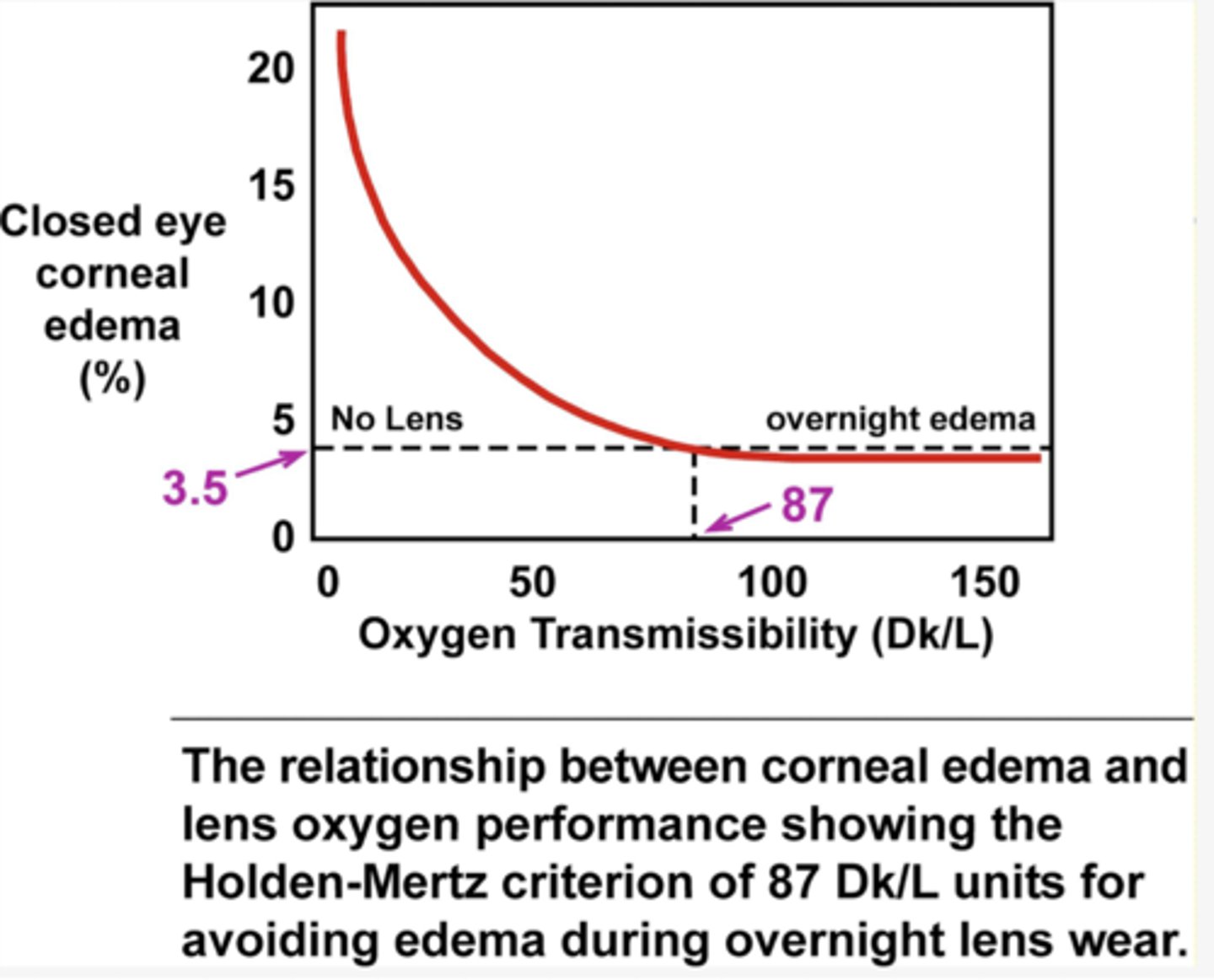
Why are GPs a good option for overnight wear?
less swelling d/t tear lens and allow tear turnover
What is the equivalent oxygen percentage (EOP)?
comparison of open eye oxygen uptake of cornea to oxygen uptake after CL exposure
How does Dk relate to EOP?
higher Dk → higher EOP
direct relationship
What are the 3 components of durability that are looked at in an RGP?
1. hardness
2. modulus
3. toughness
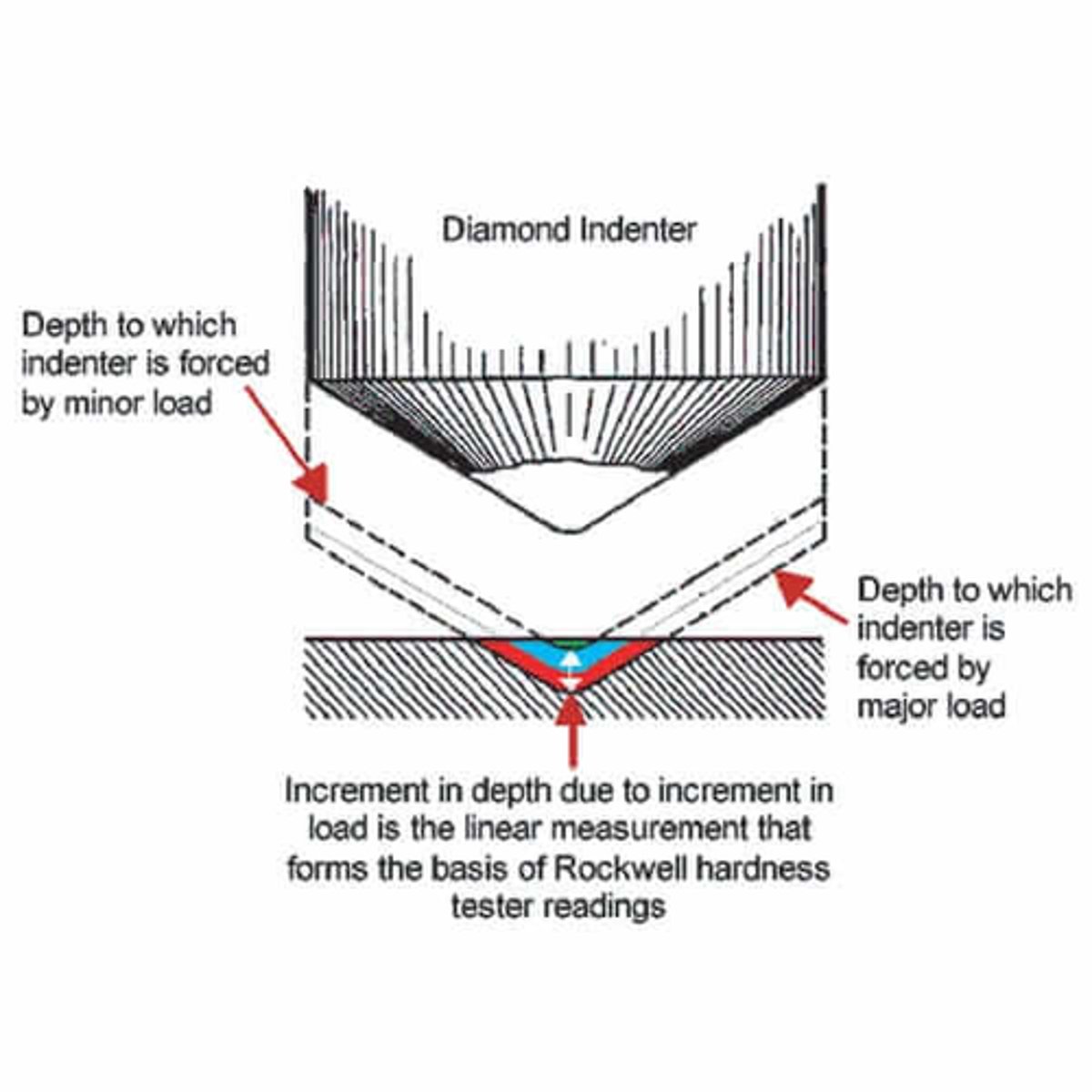
What does the hardness of a GP indicate?
scratch ability → most GPs are scratchable usually on front surface
what measures hardness of GP?
Rockwell indentation method
What is modulus? And what equation represents modulus?
bending on the eye → aka stiffness or flexible
= slope of the stress - strain curve
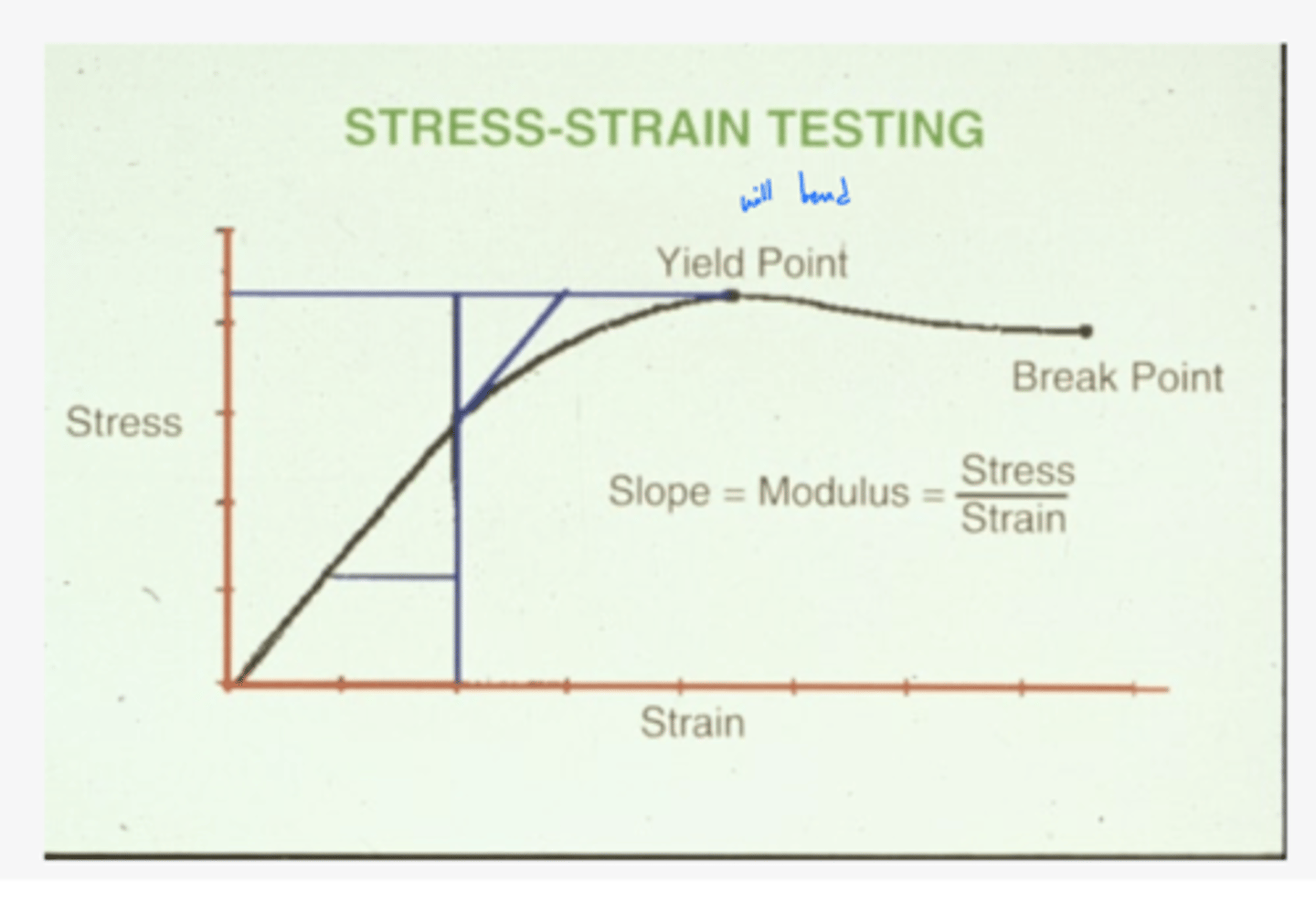
What is modulus (stiffness) measured in?
mega pascals (MPa)
What molecular property affects modulus?
by polymer chemistry
more cross-linking → more modulus/durability
How does polymer cross linking affect the Dk of a lens?
decreases Dk/t (O₂ transmission)
What durability quality is important in the ability of a GP to mask astigmatism (esp irreg astigmatism)?
modulus
"may bend too much and cause tear lens to wrap as well → cause unwanted astigmatism"
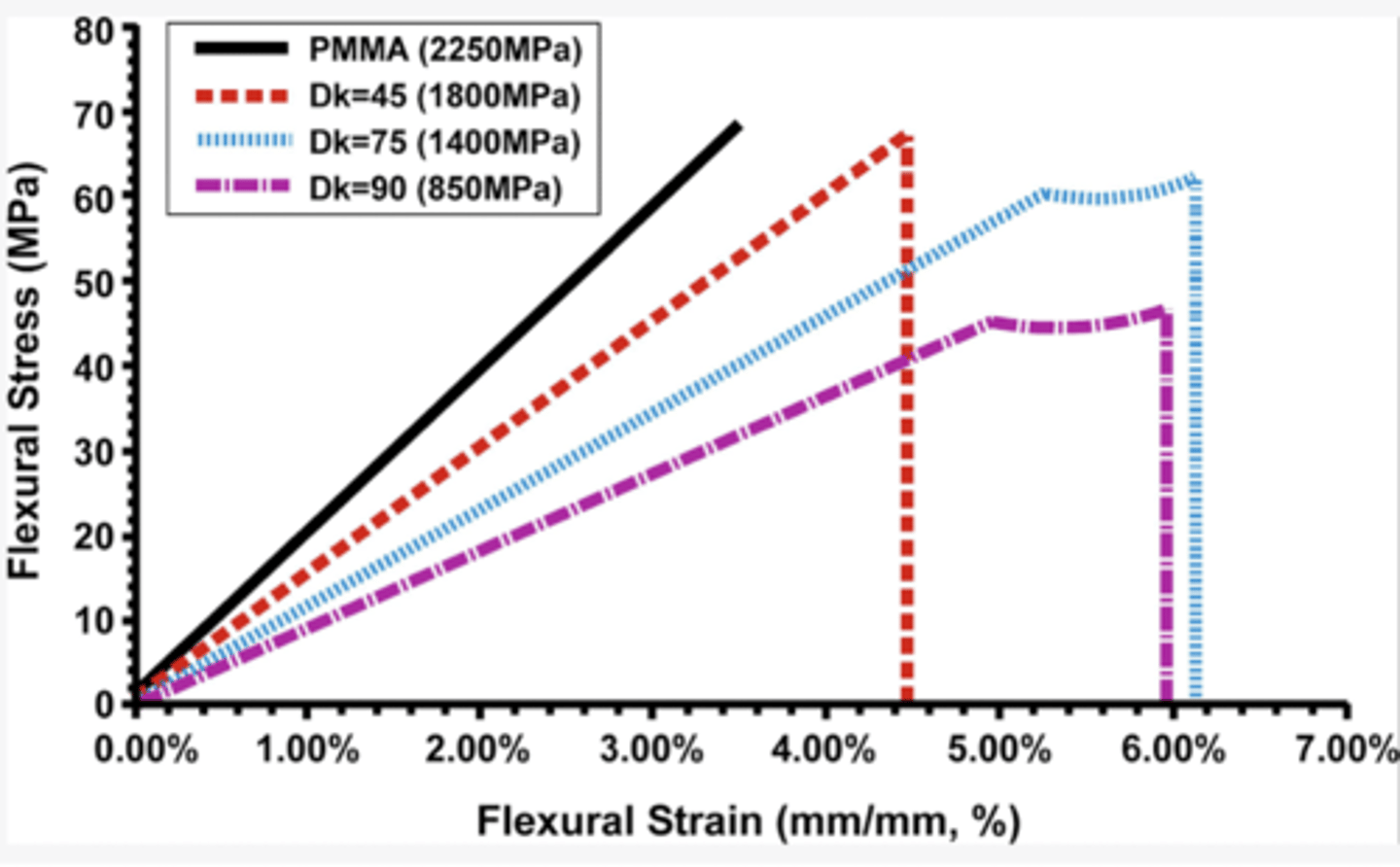
What does a higher modulus mean?
stiffer lens (less likely to warp)
What is modulus measured with?
stress-strain curve → modulus is the slope [stress/strain]
![<p>stress-strain curve → modulus is the slope [stress/strain]</p>](https://knowt-user-attachments.s3.amazonaws.com/28d1f3f6-a321-4eb0-9224-7c2afbe1594b.png)
What is toughness of a RGP?
resistance of material to breakage
How do you increase toughness/reduce breakage of an RGP?
1. increase thickness
2. choose material with more cross linking
What is the relationship between Dk and toughness?
more Dk → less toughness
What should you do if you see a chip in a GP?
replace immediately
What GP material is flexible but weak (low toughness)?
silicone
but has high Dk
What are the 3 tests for surface wettability?
1. contact angle in air
2. captive bubble
3. Wilhelmy plate (surface tension angle)
"don't correlate well with on eye wettability"
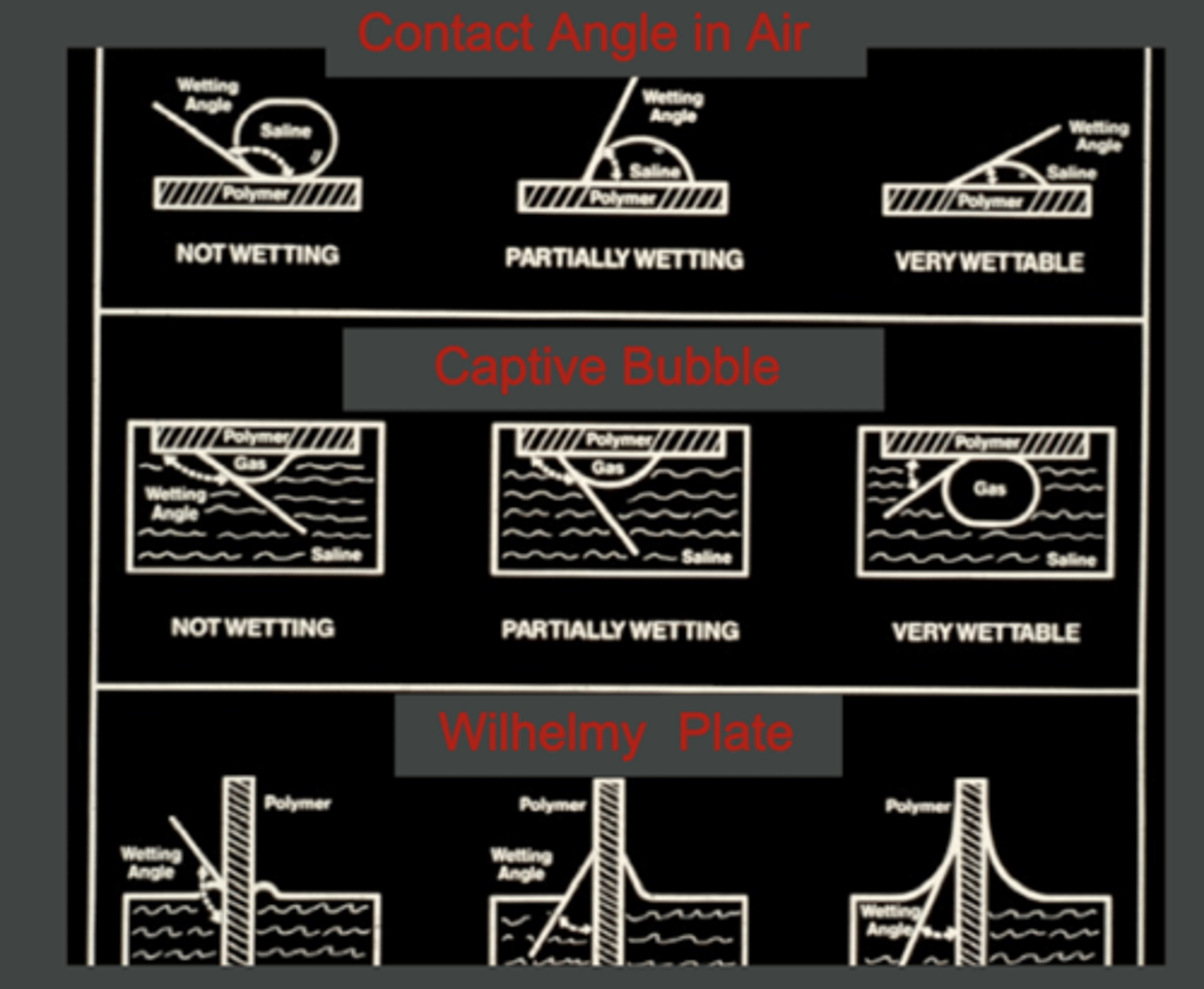
What test results for the 3 wettability tests means good wettability?
small angle!
Why are lab tests poor indicators of surface wettability?
1. not only dependent on polymer
2. surface chemistry changes (in air, water, CL soln)
3. binding to eye, protein, lipids
4. surface treatments
different environment!
What are the 3 general forces acting on a GP lens?
1. surface tension
2. lid interactions
3. gravitational
What does surface tension do?
suctions the lens to the eye
What is surface tension?
interaction of water molecules on lens and cornea
what does surface tension cause to form on the edge of the lens?
form a tear meniscus
How does the upper lid force affect a GP?
lid attached fit
1. can keep a CP lens up
2. moves lens in vertical direction during blink
How does the lower lid force affect a GP?
can push up on bottom of a GP lens
What is the importance of the center of mass or gravity (CoM/CoG) of a lens?
influences the position on eye and stability of fit → balancing point
What is the ideal CoG/CoM for a GP?
CoM further behind the lens helps lens position better
What happens if the CoM/CoG of a lens is closer to the back surface of the lens?
make the lens drop
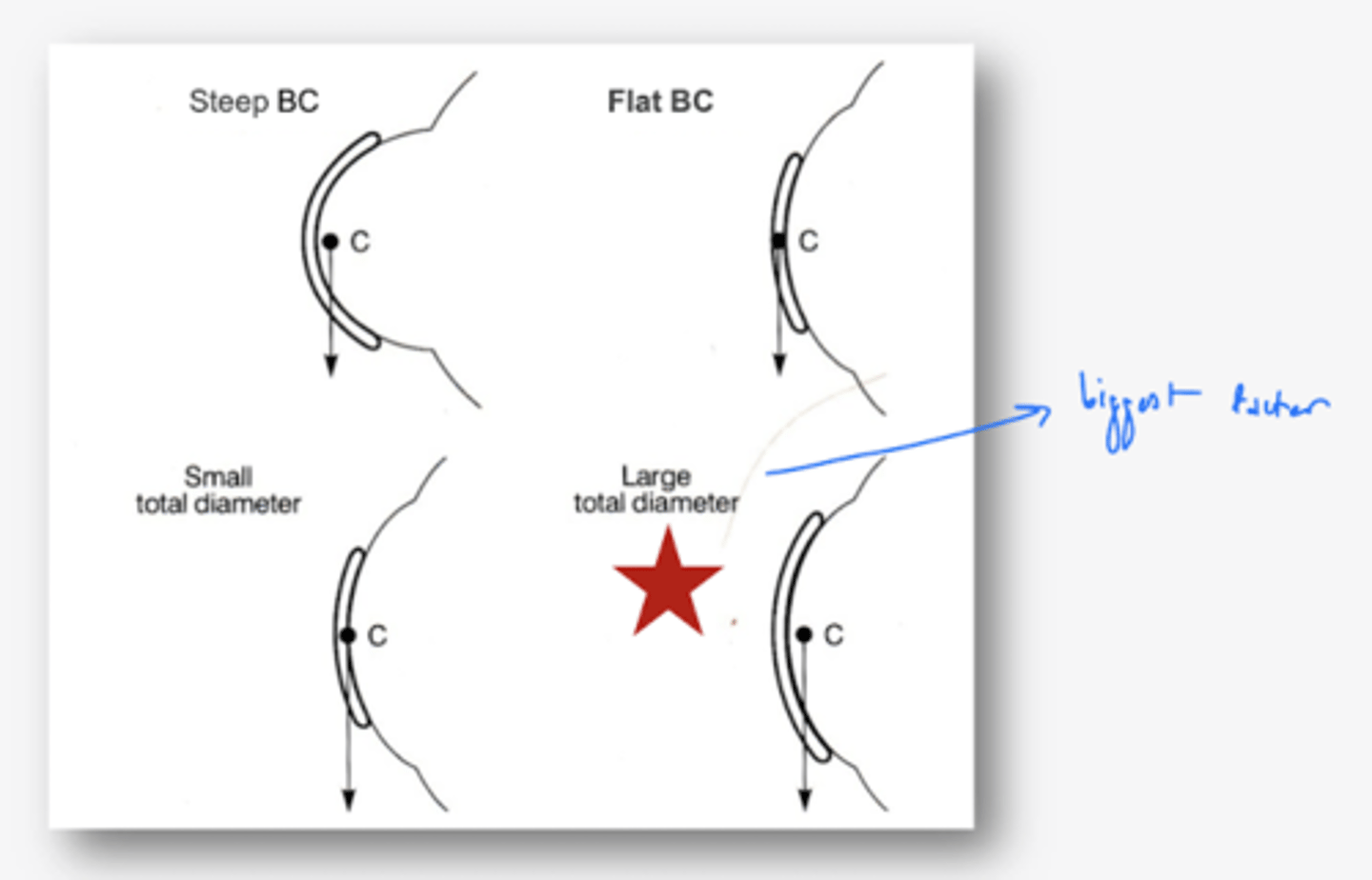
What factors lead to a CoM further back from back surface of lens (ideal position)?
1. larger lens (largest effect) - refers to larger diameter
2. more minus power
3. thinner → lenticulars
Which lens is more likely to drop, a plus or minus lens?
a plus lens
What factor of CoM is the most important to location?
lens diameter → 4-7x more important than thickness or power (size of lenses)
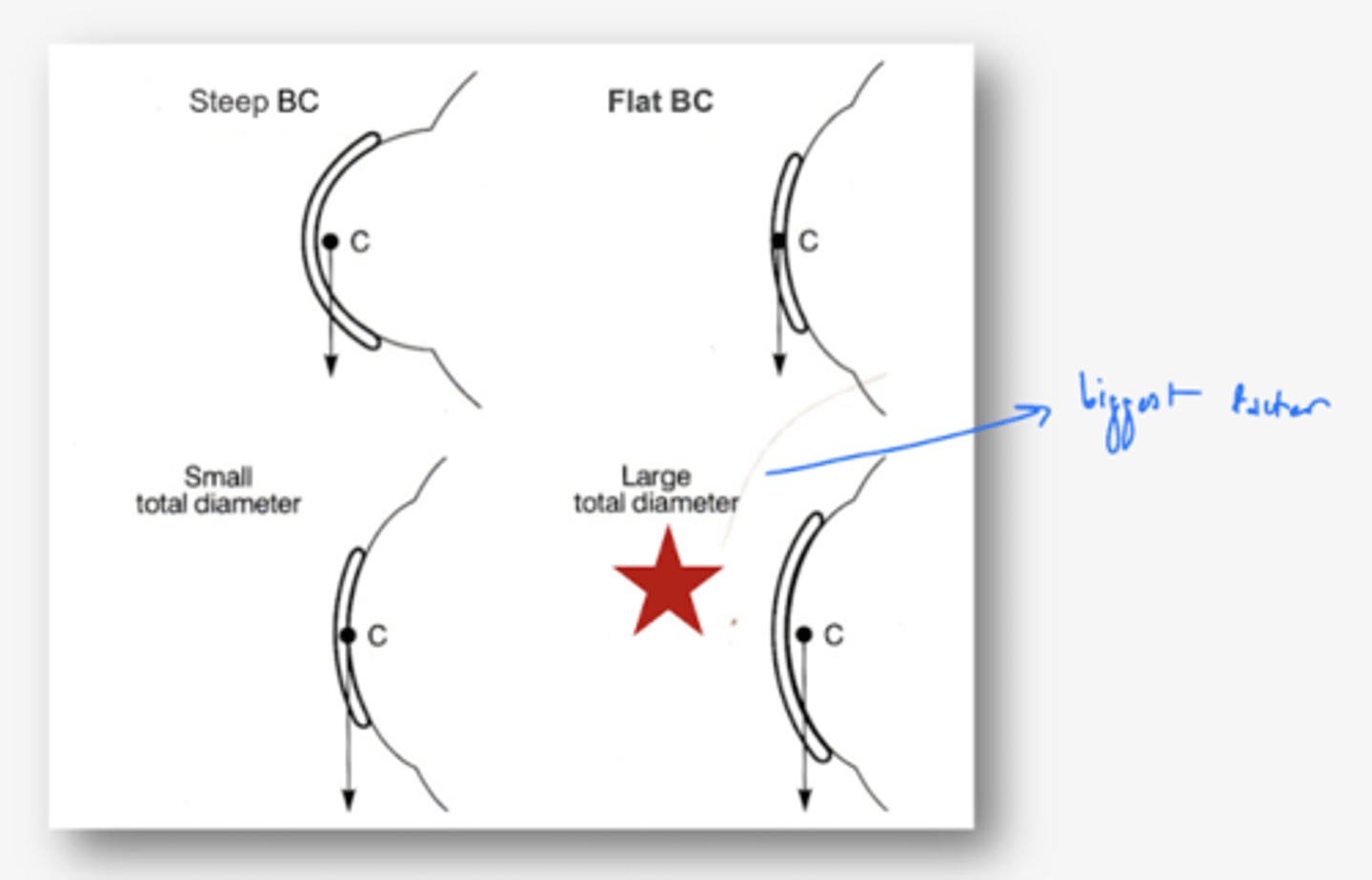
How does BCR affect the CoM?
steeper BCR → further back CoM
What is the equation of lens mass?
= volume × specific gravity
When altering lens mass, what is the first thing you try and change?
specific gravity
What is specific gravity?
ratio of the mass of a solid to an equal volume of water
How should you adjust specific gravity if a lens is dropping too low on the cornea?
order a lower specific gravity to decrease lens mass
How should you adjust specific gravity of a lens is riding too high on the cornea?
order a higher specific gravity to increase lens mass
How does light transmission in CL compare to spectacles?
light transmission is higher in CL than specs
What is the index of refraction of different GP materials?
they are all very similar and don't really make a difference (all around 1.45)
What are polymers?
repeating monomers joined together to form long chains
What are the characteristics of polymers?
1. long chains with high molecular weight
2. linked by chemical covalent bonds
What are the types of polymers?
1. Homopolymer
2. Copolymer
What is a homopolymer?
polymer with a chain of the same monomer
What is an example of a homopoymer?
Polymethyl methacrylate (PMMA)
What is a copolymer?
polymer made up of 2 or more monomers
what polymer is in all modern materials?
copolymers
What is the monomer backbone for most GPs?
methyl methacrylate (MMA)
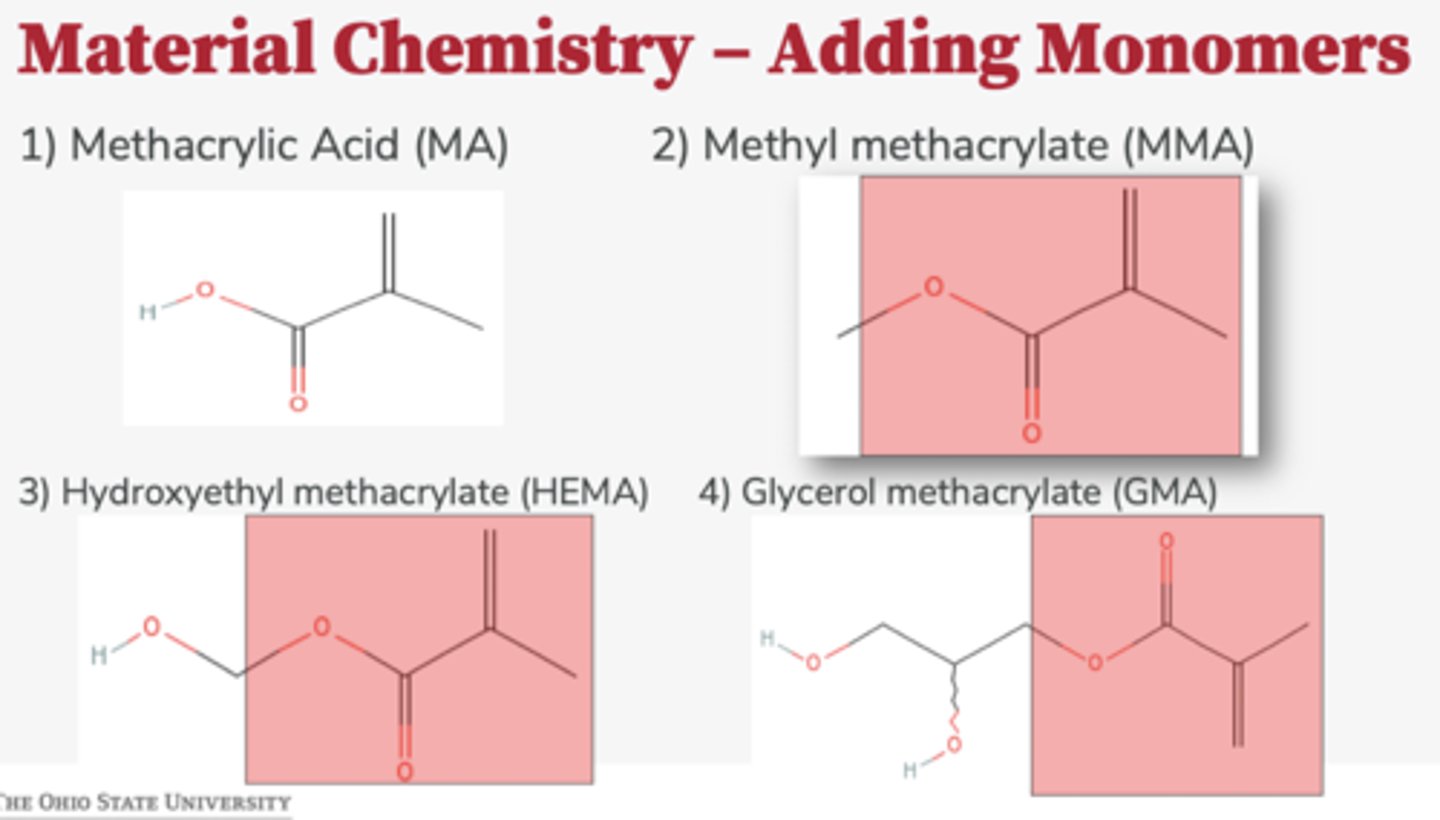
What is polymer cross-linking?
long main polymer chains cross linked to other polymer chains
what effect does more cross-linking have on durability and Dk?
↑ durability
↓ Dk
What are the advantages to PMMA?
1. readily machined
2. low cost
3. fairly wettable
4. easy to care for
What is the main disadvantage to PMMA?
zero O₂ transmissibility
What is the purpose of silicone acrylate in GPs?
added to PMMA to increase O₂ transmissibility
What is the Dk of silicone acrylate?
low-medium (12-60)
what are the molecular characteristics of silicone acrylate?
1. surface negatively charged
2. hydrophobic (lipophilic)
What are the advantages to silicone acrylate?
1. higher Dk than PMMA alone
2. reduced rigidity (stiffness)
What are the disadvantages to silicon acrylates?
1. more lipid deposit prone
2. surface easily scratched
3. higher breakage rate
4. flexure problems → too flexible
5. parameter instability → warps over time
what effect (and by how much) does adding fluorine monomer to silicon acrylate have?
1. lowers surface charge
2. increases Dk → 40-100+ (med-high)
used in paragon lenses
What are the advantages to fluorosilicone acrylates?
1. more wettable
2. less lipid deposits
3. higher Dk
What are the disadvantages to fluorosilicone acrylate?
1. easily scratchable
2. too much lens flexure
Menicon Z material is made up of what?
fluorosilcione acrylates + silystyrene
What is the advantage of Menicon Z?
very high Dk (163); Dk/t ~ 125
approved for up to 30 nights wear