Orofacial Complex Form and Funciton
 Call Kai
 Learn
Learn Practice Test
 Spaced Repetition
 Match
Match Flashcards
 Knowt Play
1/23

There's no tags or description
Looks like no tags are added yet.
Name | Mastery | Learn | Test | Matching | Spaced | Call with Kai | Chat |
|---|
No analytics yet
Send a link to your students to track their progress
24 Terms
Things that must be considered for form and function of teeth(6)
Proximal contact areas
Interproximal spaces
Embrasures
Labial and Buccal Contours @ that cervical third
Lingual Contours at the middle third of crowns
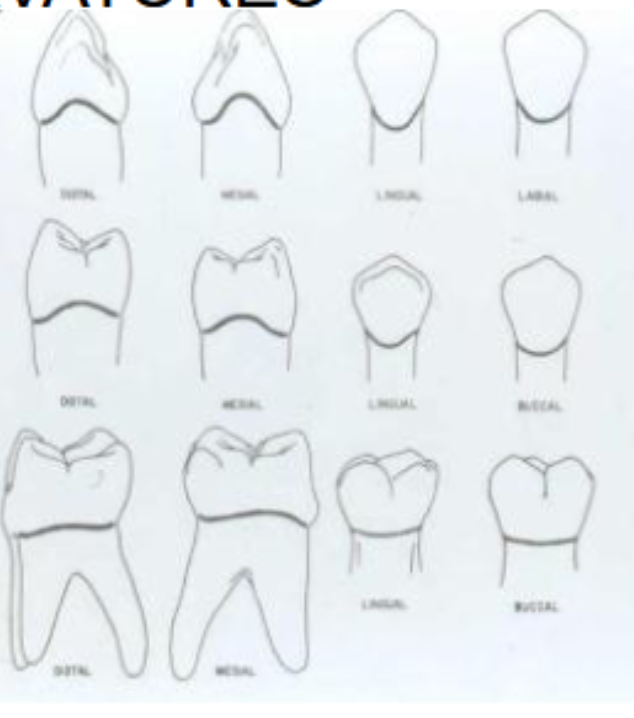
Curvatures of cervical lines(CEJ) on mesial and distal surfaces
Proximal contact areas over time
Gets bigger over time
Are all proximal contact areas the same size and in the same locations?
no,
they very in size and locations
What teeth are not in contact with 2 meighboors
3rd molar
How do proximal contact areas help protect teeth
help prevent food impaction
help stabilize teeth
provide for proper food flow pattern
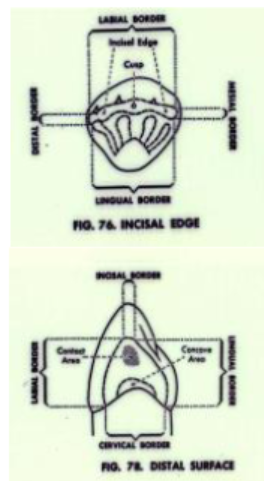
How to observe Proximal contact areas
Labial Buccal view = shows position of contact areas cervicoincisally or cervicoocclusally
Incisal / occlusal view= shows position of contact areas labiolingually or buccolingually
Contacts and size as you go from anterior to postierior
contacts become more cervical and size increases
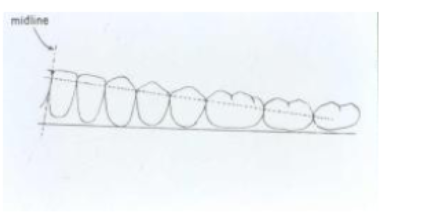
Distal vs mesial contact
on individual tooth distal contact is more cervical than mesial contact
Anterior teeth contacts are centered in a…
centered in a facial/lingual direction
positioned equidistant from facial and lingual surfaces

Postierior teeth contacts are centered in a…
NOT DIRECTLY CENTERED
Located slightly buccal/ facial to center

Interproximal spaces shape and its boundaries? What does this shape effect?
Triangular
alveolar bone = base of triangle
Proximal surfaces of adjacent teeth = sides of triangle
Contact area= apex of triangle
This shape can effect health and stimulation of periodontium
Embrasure spillways purposes (2). How do they diverge?
spillaway for food during clewing/self cleaning
prevents food from being forced through contact area
Diverge facially, lingually, incisally/occlusally,cervically
Are embrasures equal in sized and shape when bisected?
yes
As contact areas become more cervical what happens to occlusal/incisal and cervical embrasures?
Occlusal/lingual embrasures= increase in size
cervical embrasures= decrease in size

As contact areas move more facially (posterior teeth) what happens to the size of the facial and lingual embrasures
Facial embrasures= decrease
Lingual embrasures= increase

Contact form, interproximal spacing, and thev embrasure form are constant in…
Sections!
max anteiors
man anterior
max posterior
man posterior
Facial/ lingual cervical third contors & Lingual middle thirds contour job?
prevents food impaction and trauma
faulty counters=> food impaction/trauma→ initiates localized inflammatory responses
soft tissue attached @ cervicial third of crown
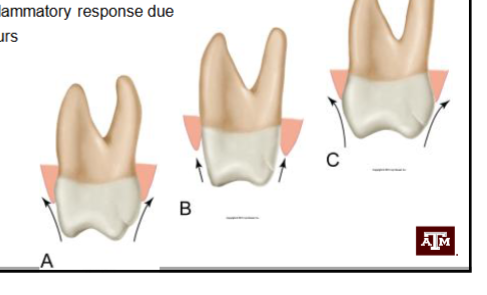
cervical height of contour characteristics.
most of the curvature lies beneath gingival crest
CEJ may appear as we age/ perio disease
protective curvatures work when teeth are in alignment
normal curvature measurement from CEJ to crest of contour is .5mm except on mand posterior about 1.0mm
Epithelial attachment job
seals soft tissue of teeth
How to damage epithelial attachment
probing, scaling, operative work
What is the hight of normal gingival tissue mesially/distally dependent on
The epithelial attachment
How are the cervical line related to crow and interproximal contact areas?
The depth of curvature of the cervical line is related to widths and lengths of the crown and interproximal contact area
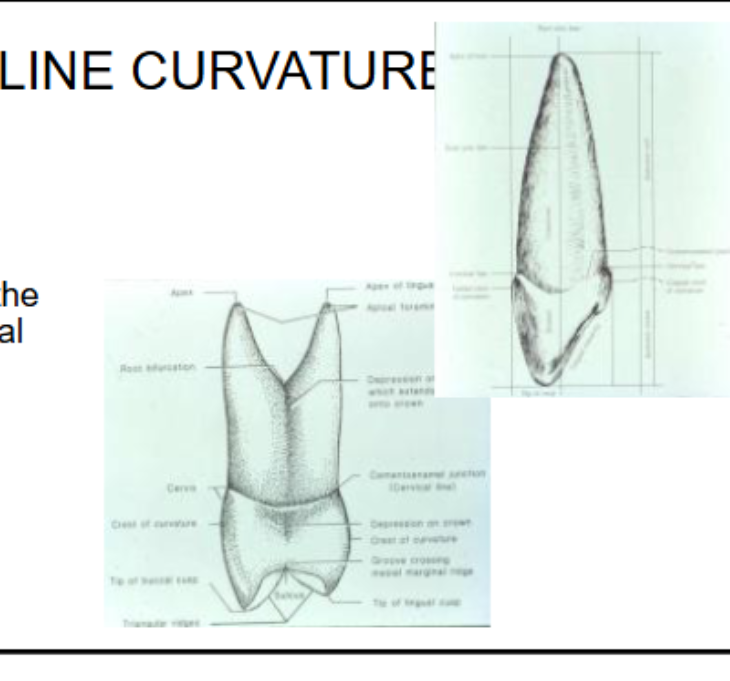
Cervical line curvature rules (5)
curved to incisal/occlusal on m/d
curved toward apical on facial/lingual
depth of curveture is greater on mesial than distal
cervical lines on approximatig surfaces of adjacent teeth are the same
depth greatest on incisors(mesial of centrals) and decrease as move postieriorly
Can tooth form and function lead to perio
yes, and need to note when restoring teeth