Aldehydes and Ketones
 Call Kai
 Learn
Learn Practice Test
 Spaced Repetition
 Match
Match Flashcards
 Knowt Play
1/34

There's no tags or description
Looks like no tags are added yet.
Name | Mastery | Learn | Test | Matching | Spaced | Call with Kai | Chat |
|---|
No analytics yet
Send a link to your students to track their progress
35 Terms
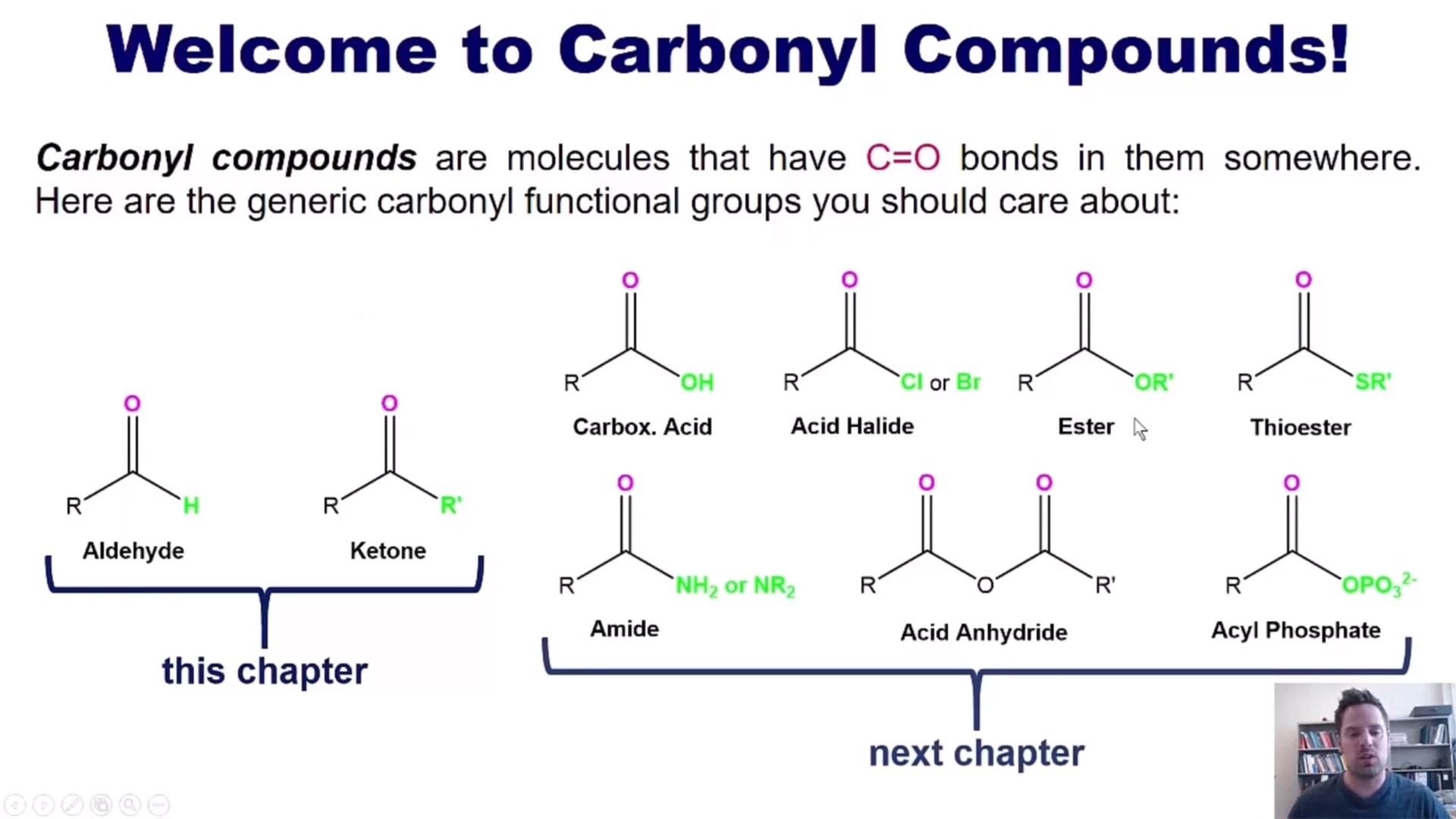
Carbonyl Compounds
Compounds with C=O
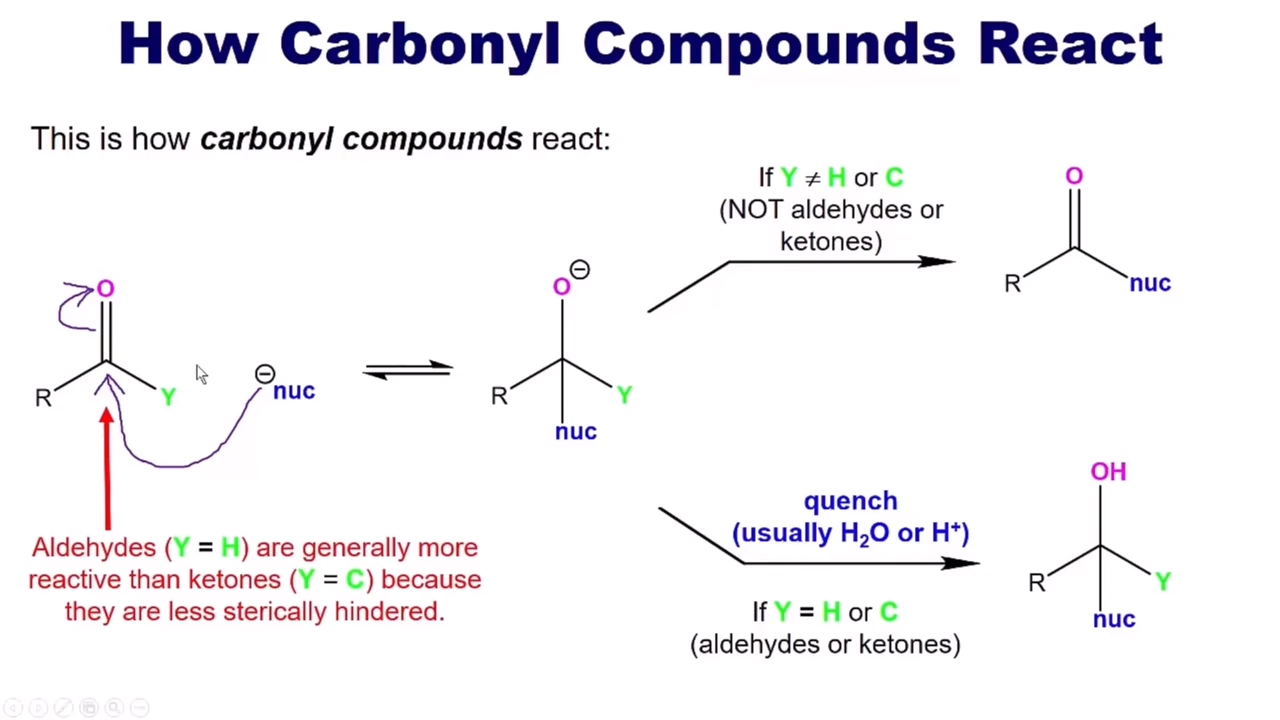
Aledhyde vs Ketone Reactivity
Aldehydes (Y=H) are more reactive than ketones (Y=C) since they are less sterically hindered.
Carbonyl Compound reaction with a nucleophile (aldehydes and ketones vs non)
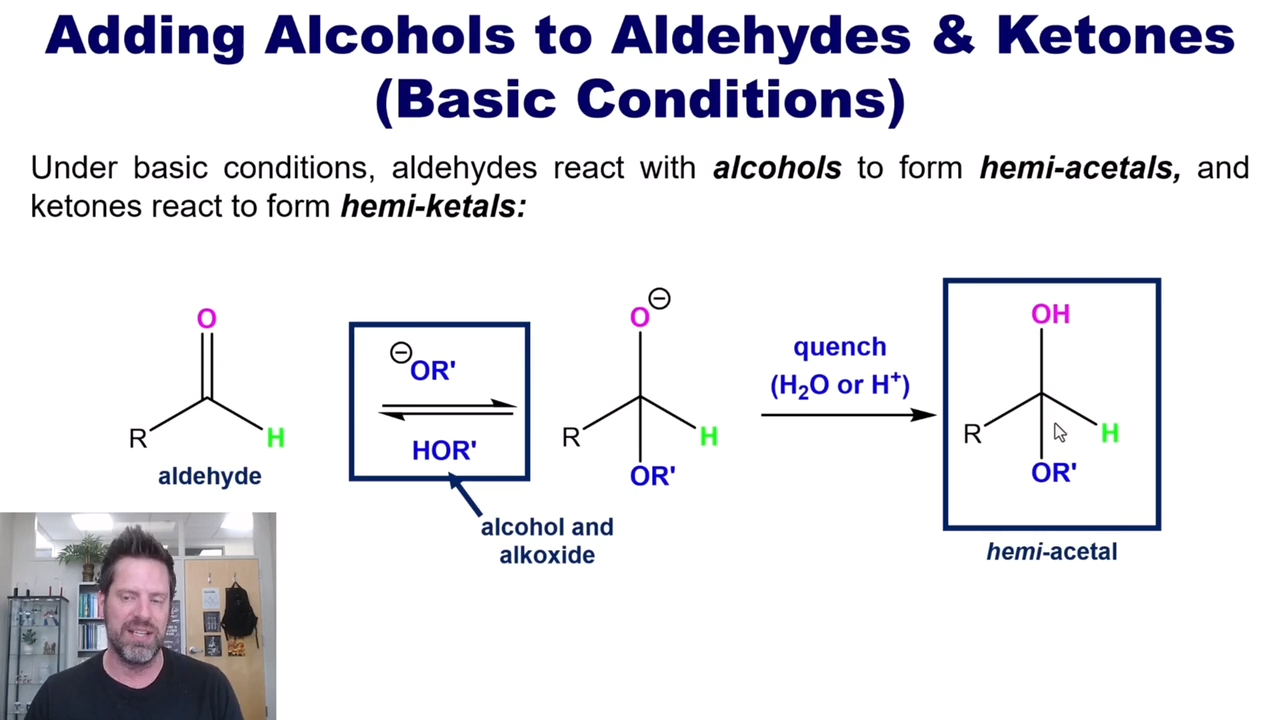
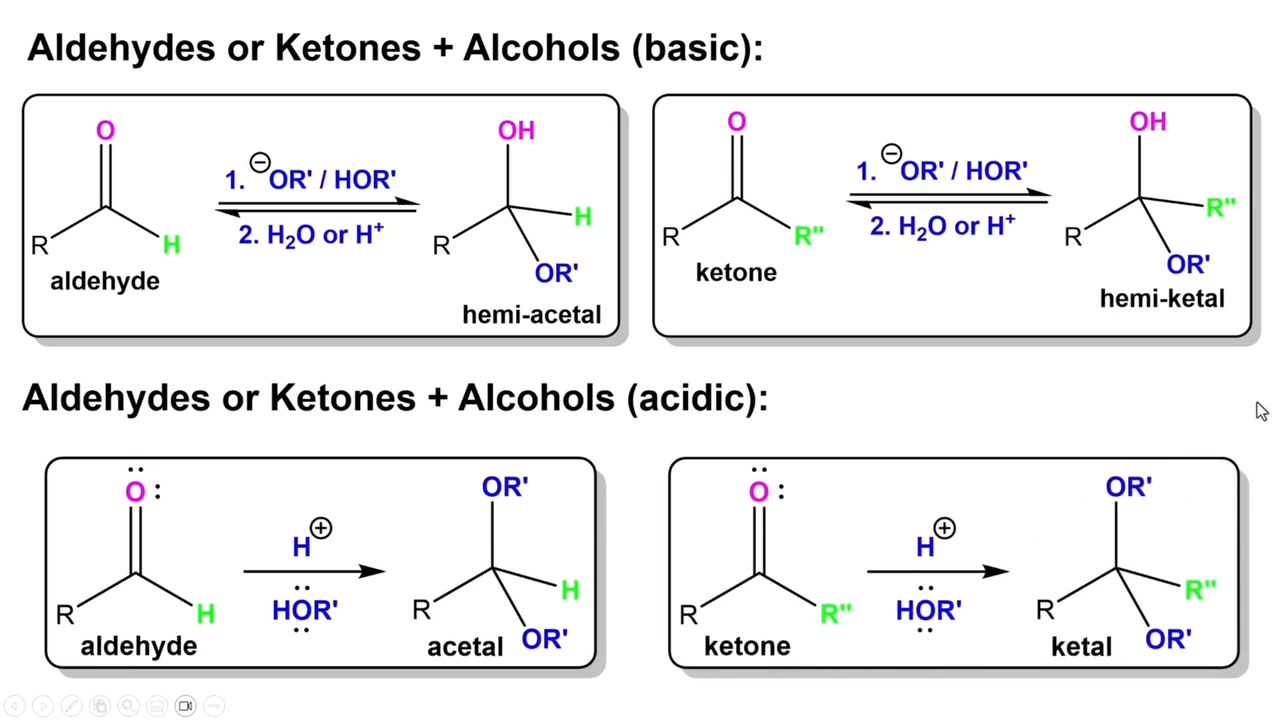
Adding Alcohols to aldehydes and ketones
Basic conditions create a Hemiacetal (aldehyde) or Hemiketal (ketone)
Hemiacetal
Hemi = half
Acetal has 2 OR groups, so this is half one of those.
Created from a aldehyde reaction
Hemiketal
Hemi = half
Acetal has 2 OR groups, so this is half one of those.
We have a carbon group vs the H in a hemiacetal.
Created from a ketone reaction
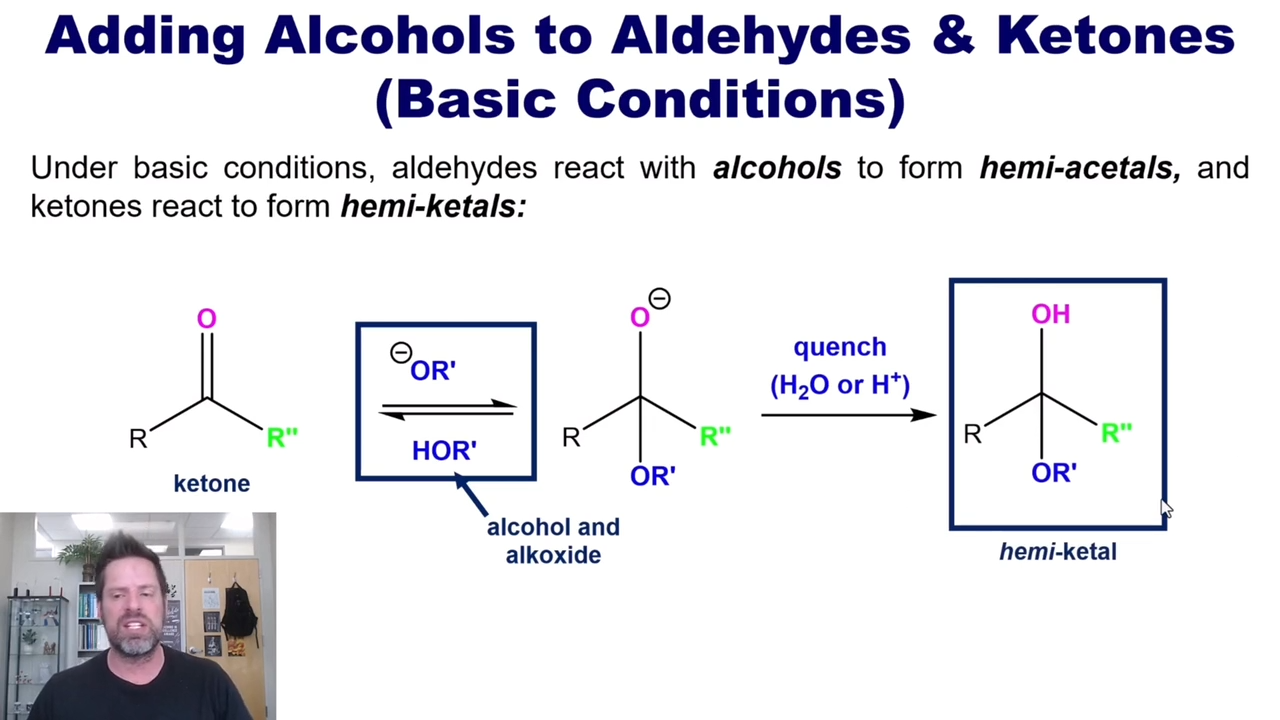
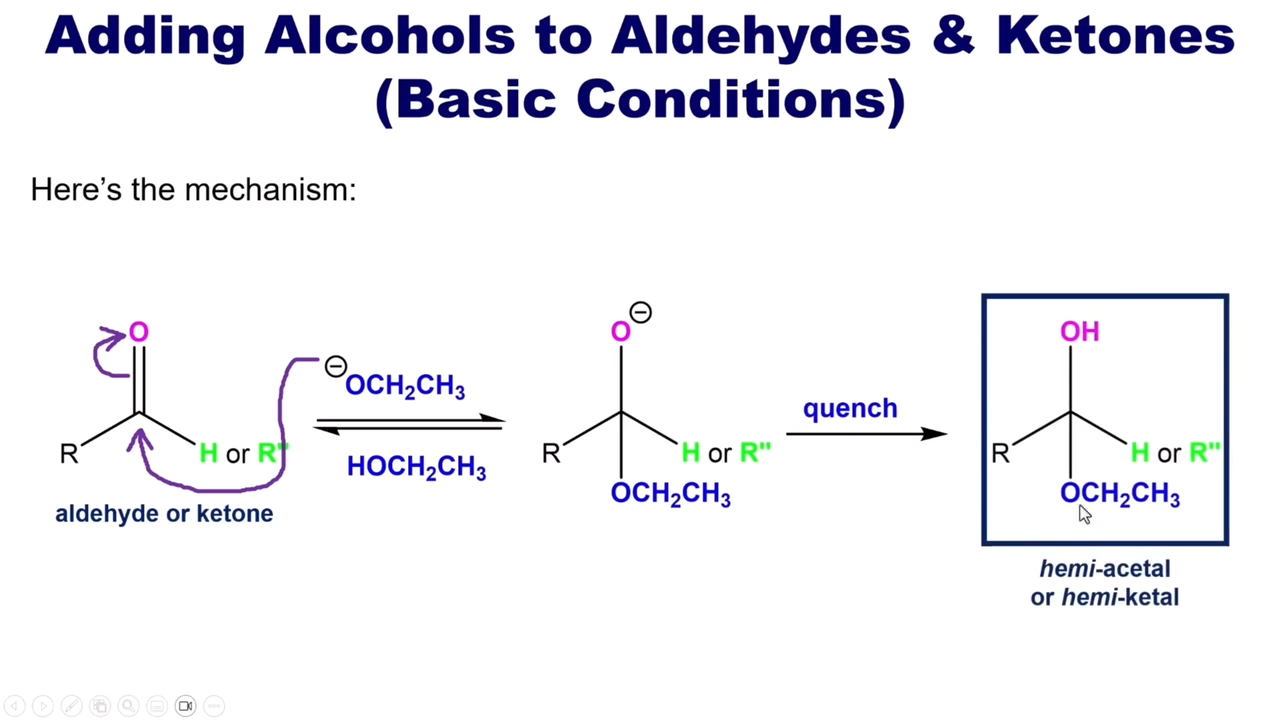
BASIC CONDITIONS (adding alcohols to aldehydes and ketones)
Aldehyde or Ketone
Basic Conditions
Alcohol
Quench
Water or Slightly acedic water
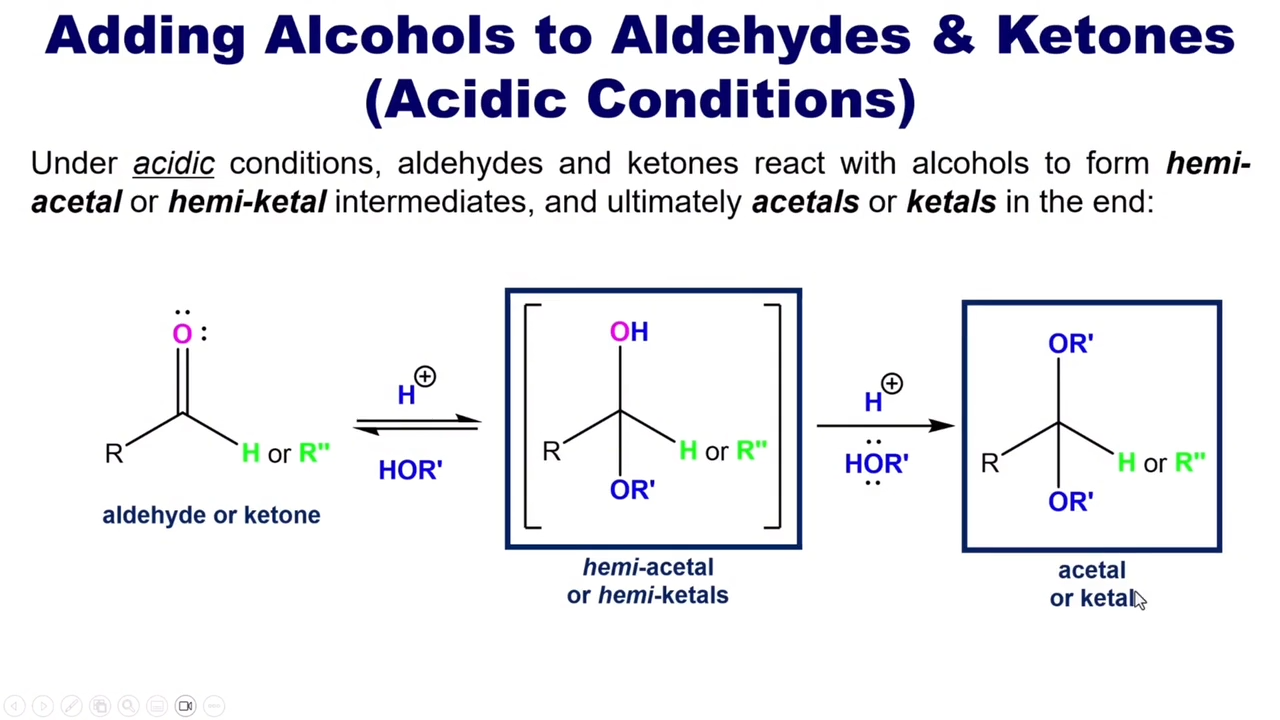
ACIDIC CONDITIONS (adding alcohols to aldehydes and ketones)
Acidified Alcohol (HOR)
Acid Source (H+)
Full acetal group
Abundance of Solvent
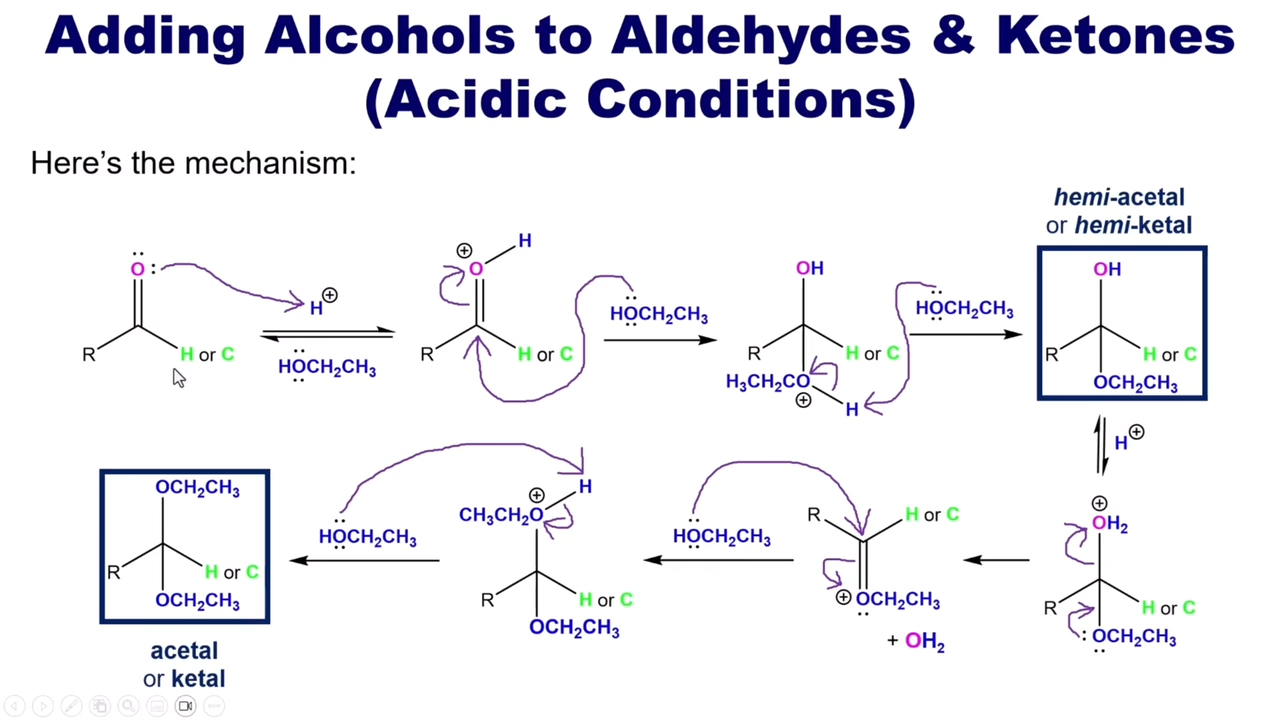
Aldehydes or Ketones (alcohols) Acidic and Basic Wrapup
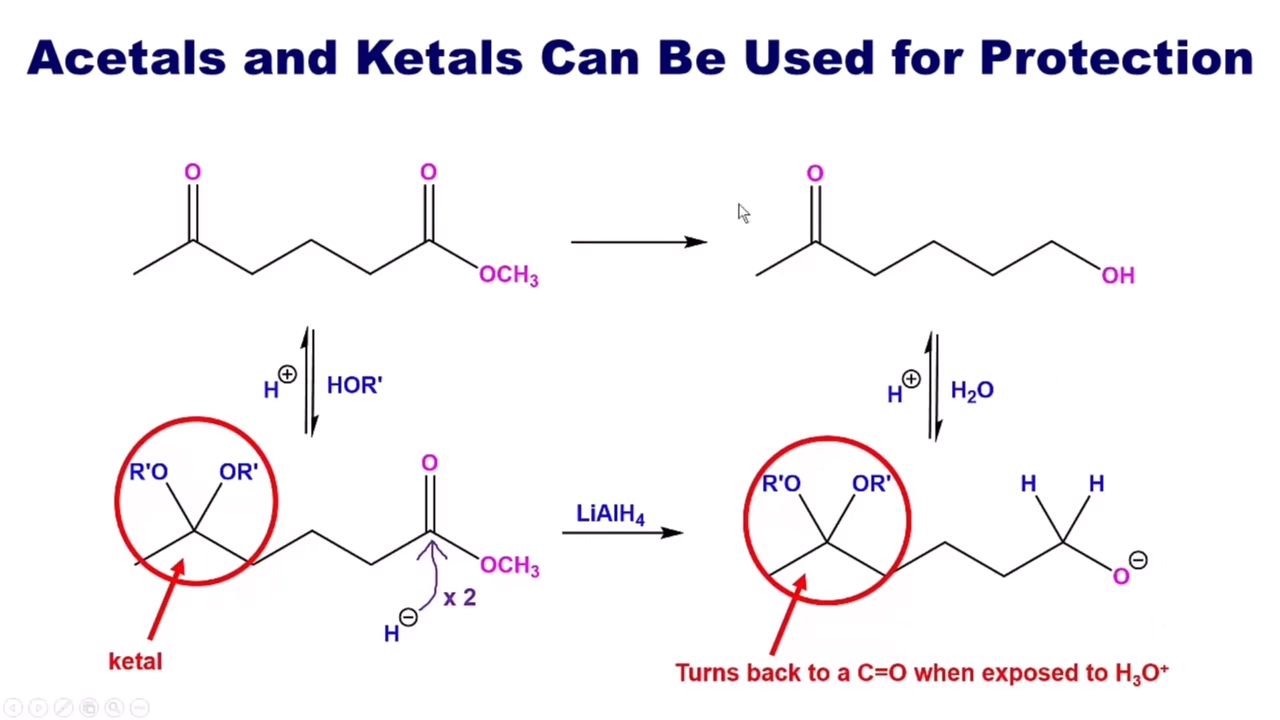
Why do ketals or Acetals matter?
They can help protect aldehyde and ketone C=O during synthesis.
We see in the image that it protects it from LiAlH4
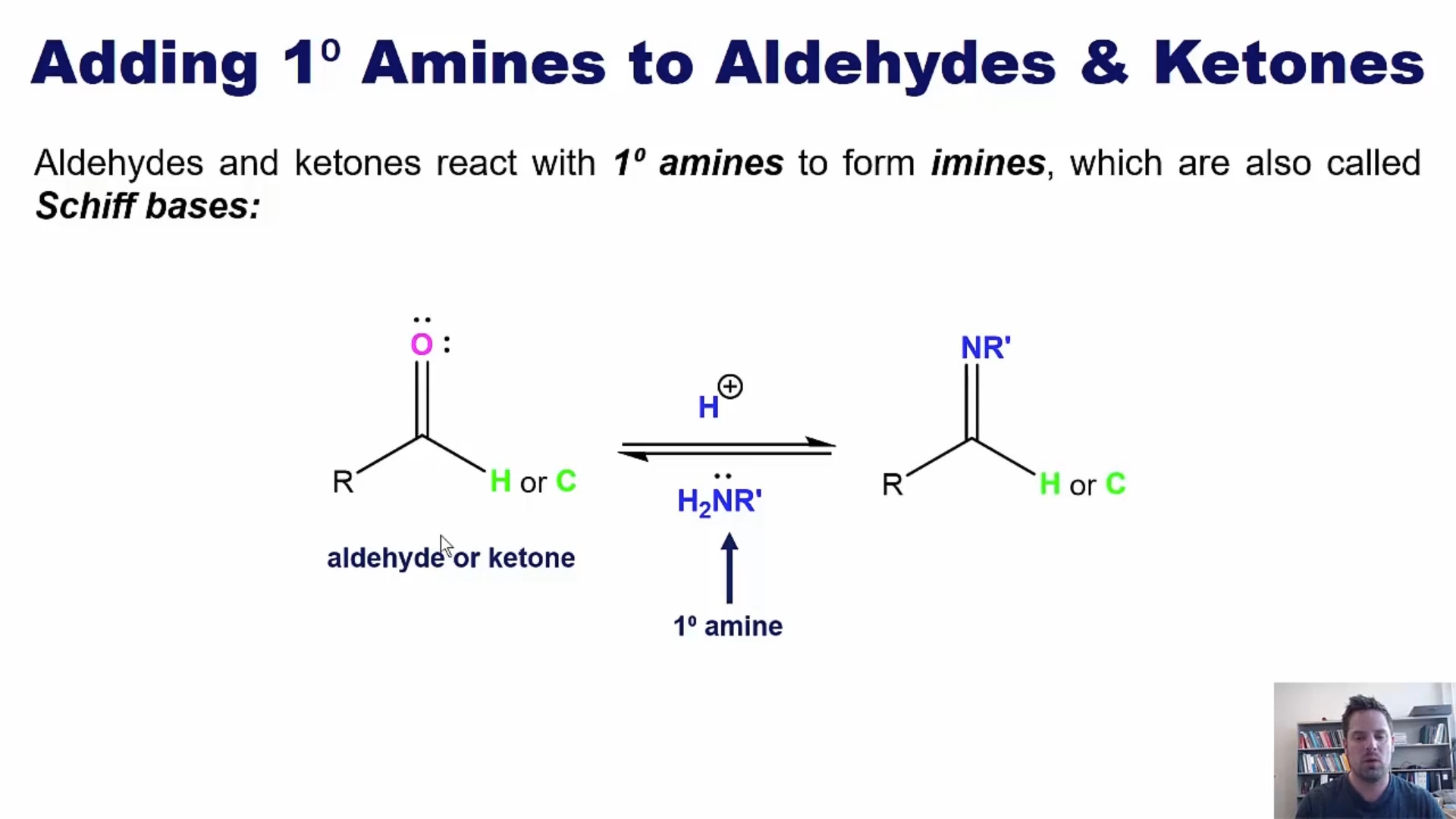
Adding 1o amines to form imines (schiff bases)
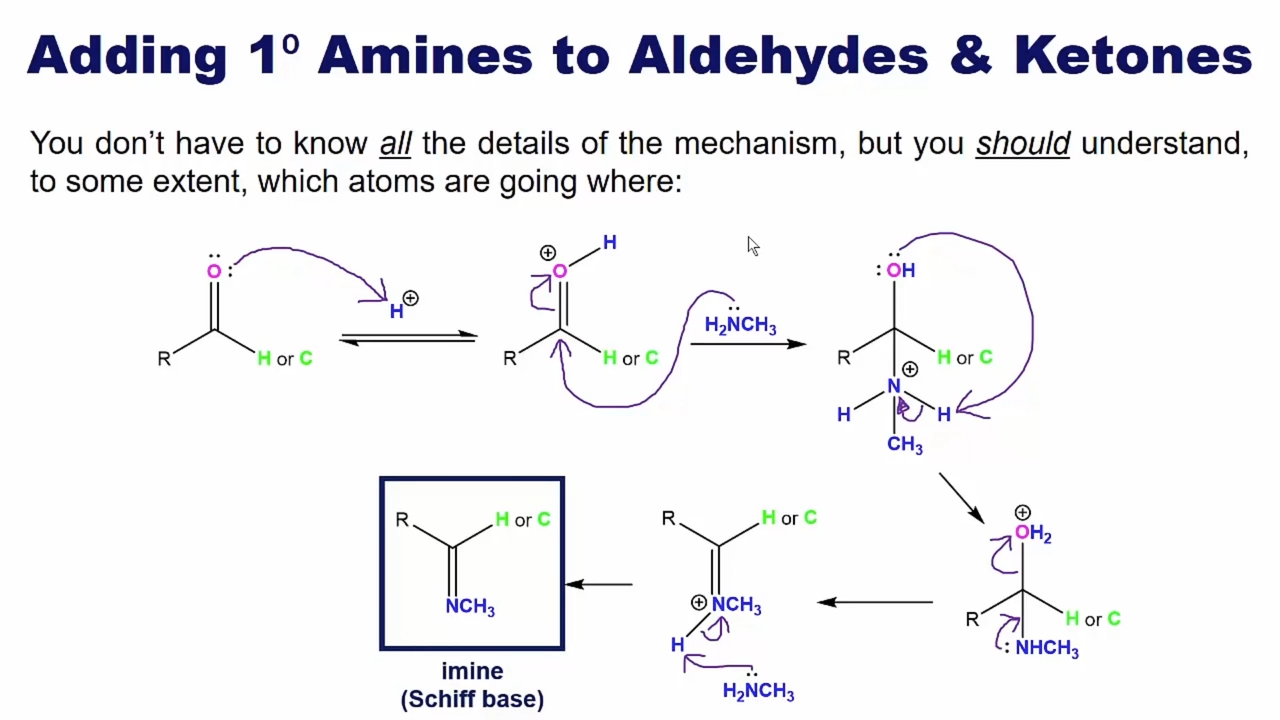
Schiff Bases reaction mechanism
Enamines (2o amines) with aldehydes and ketones
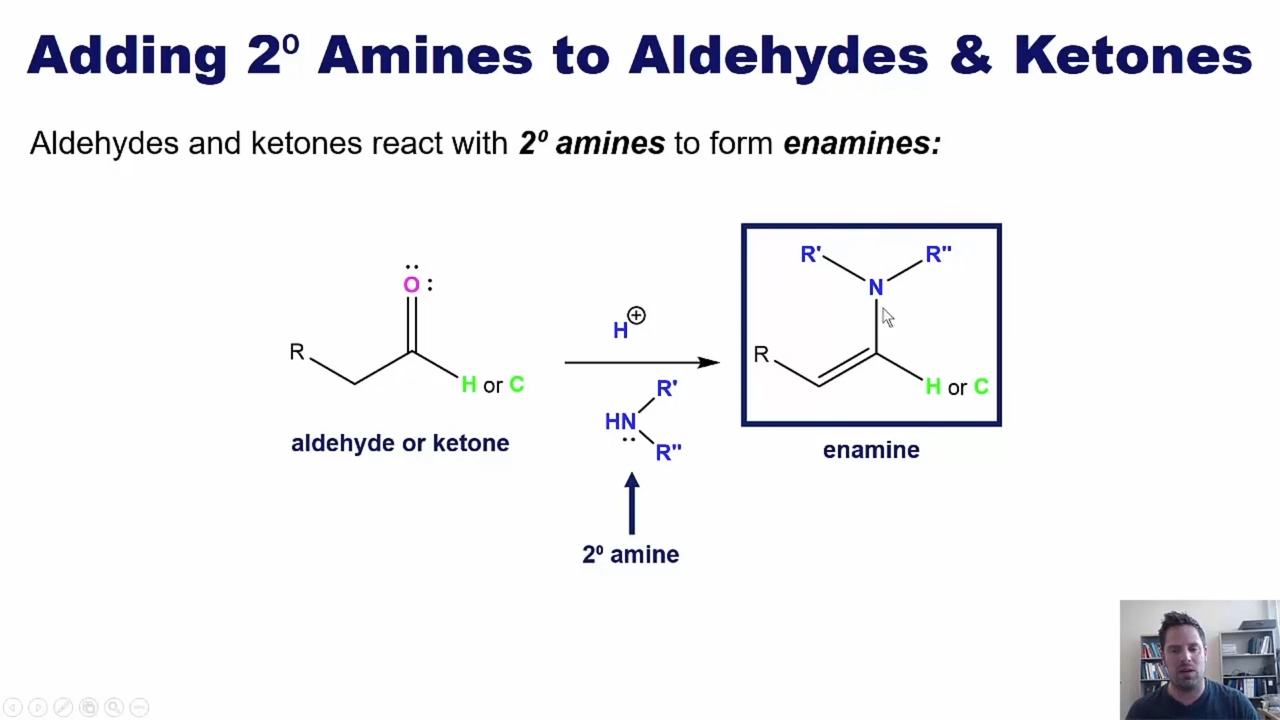
Enamine Mechanism
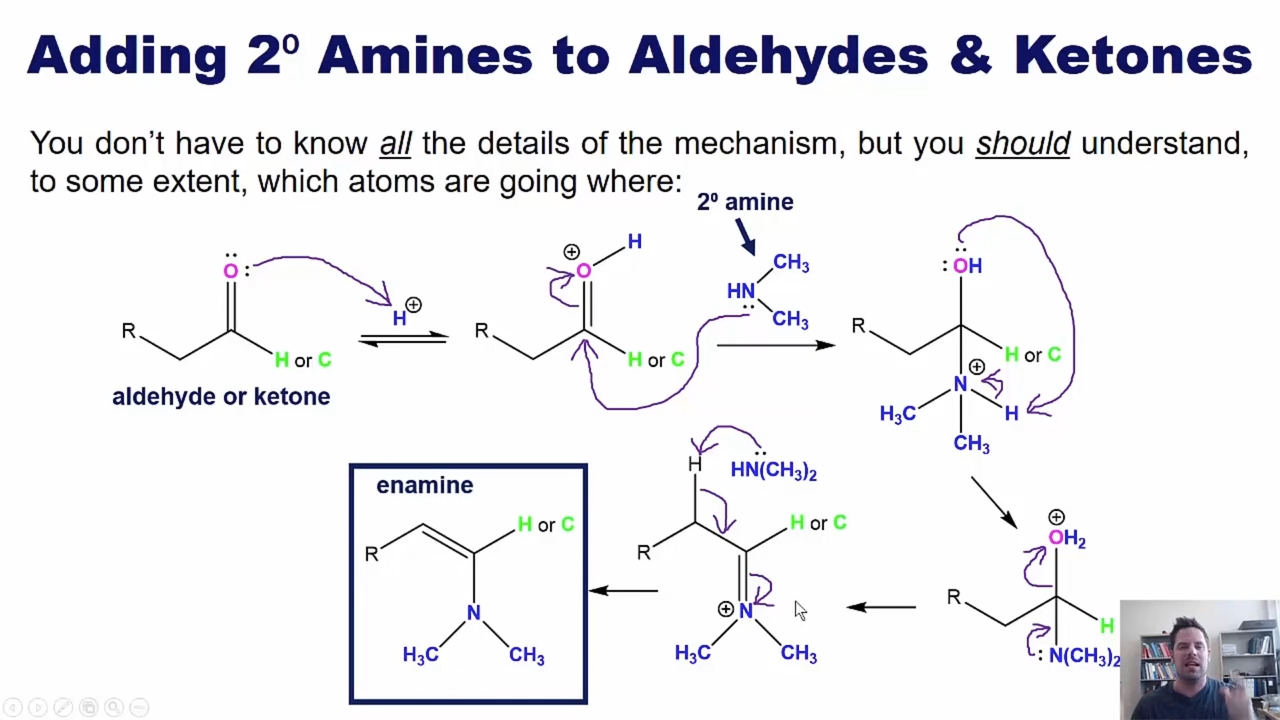
What happens if you have a non-symmetrical (asymmetric) ketone? Enamines
The enamine will generally be less substituted. Antizaistev.
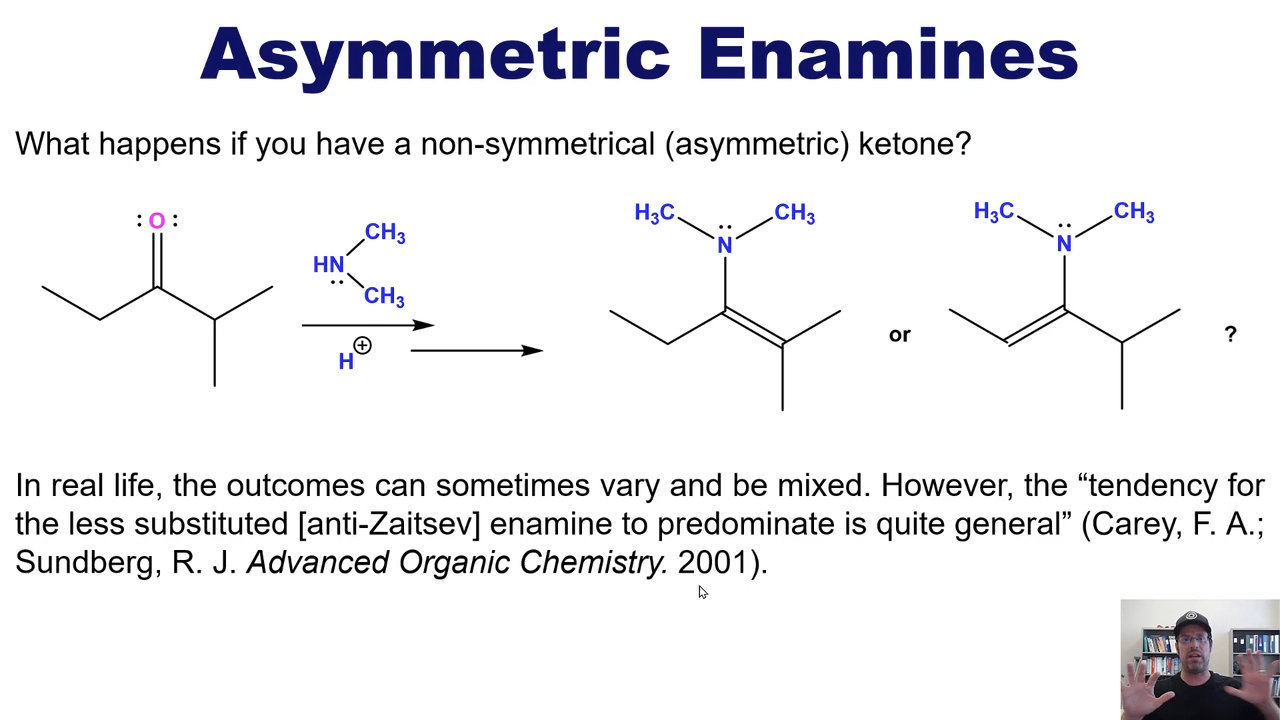
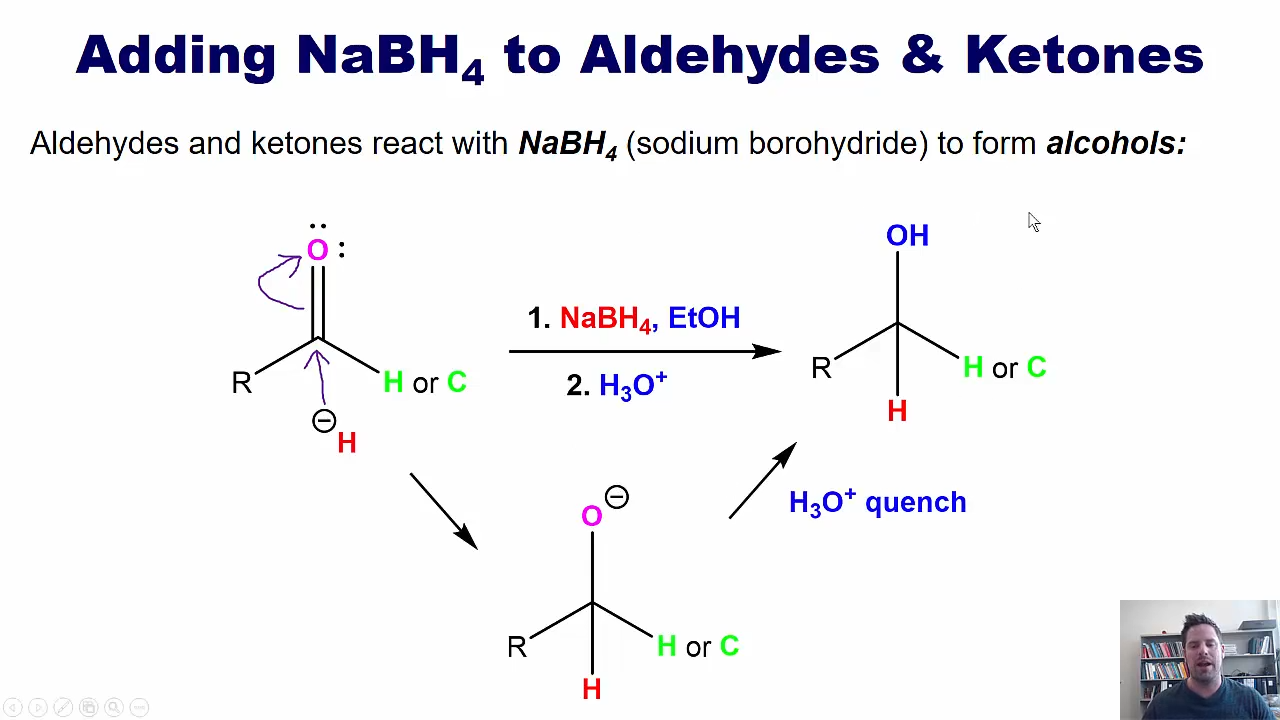
NaBH4 to aldehydes and ketones
NaBH4, EtOH, Quencher (H3O+)
Changes Carbonyl (C=O) into a OH (alcohol)
LiAlH4 (aldehydes and ketones)
Same reaction as NaBH4
However, LiAlH4 is much stronger
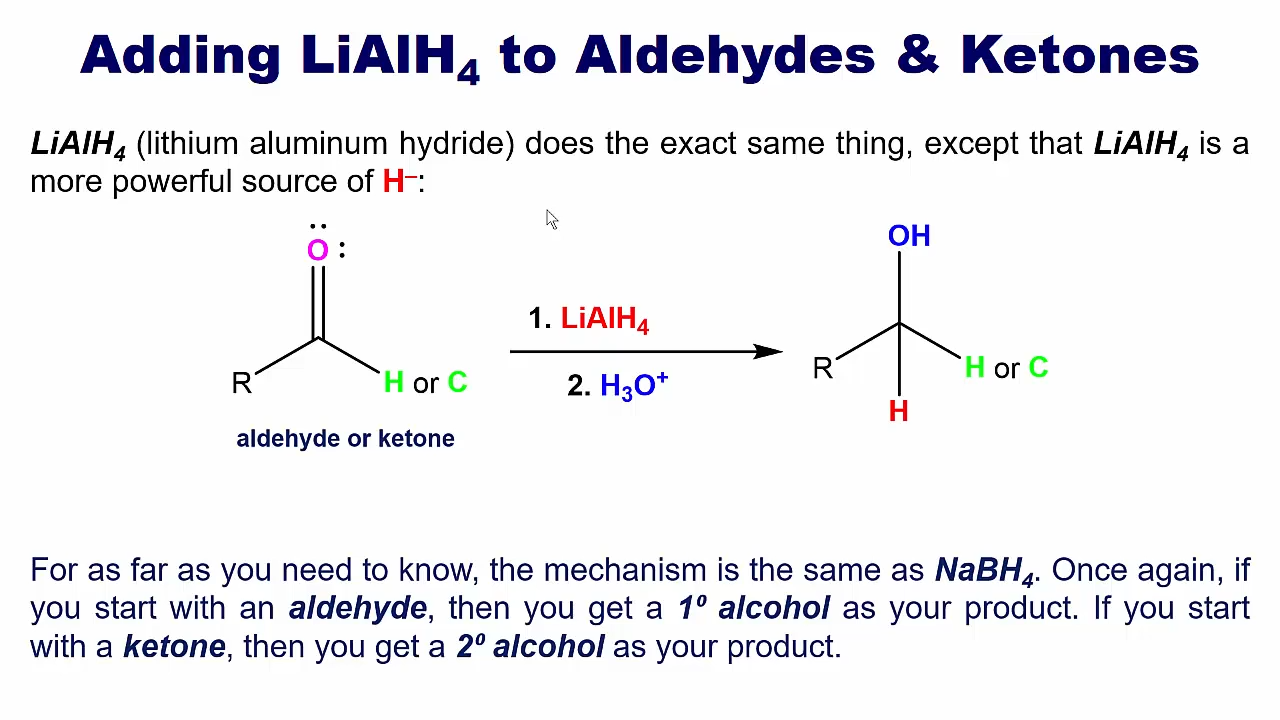
LiAlH4
Only it can reduce all the way to a primary alcohol (gets rid of OH or ester) and reduces to an OH.
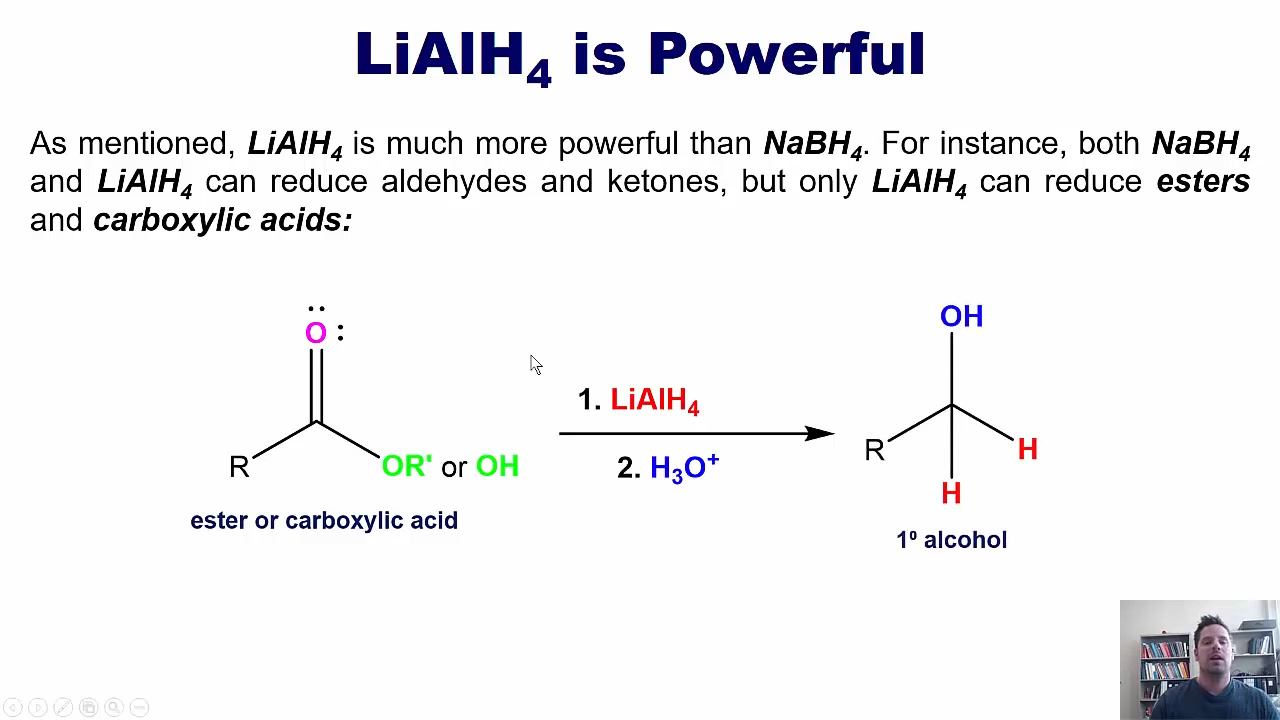
NaBH4 as a carboxylic acid reducer
IT CANNOT, it is not strong enough.
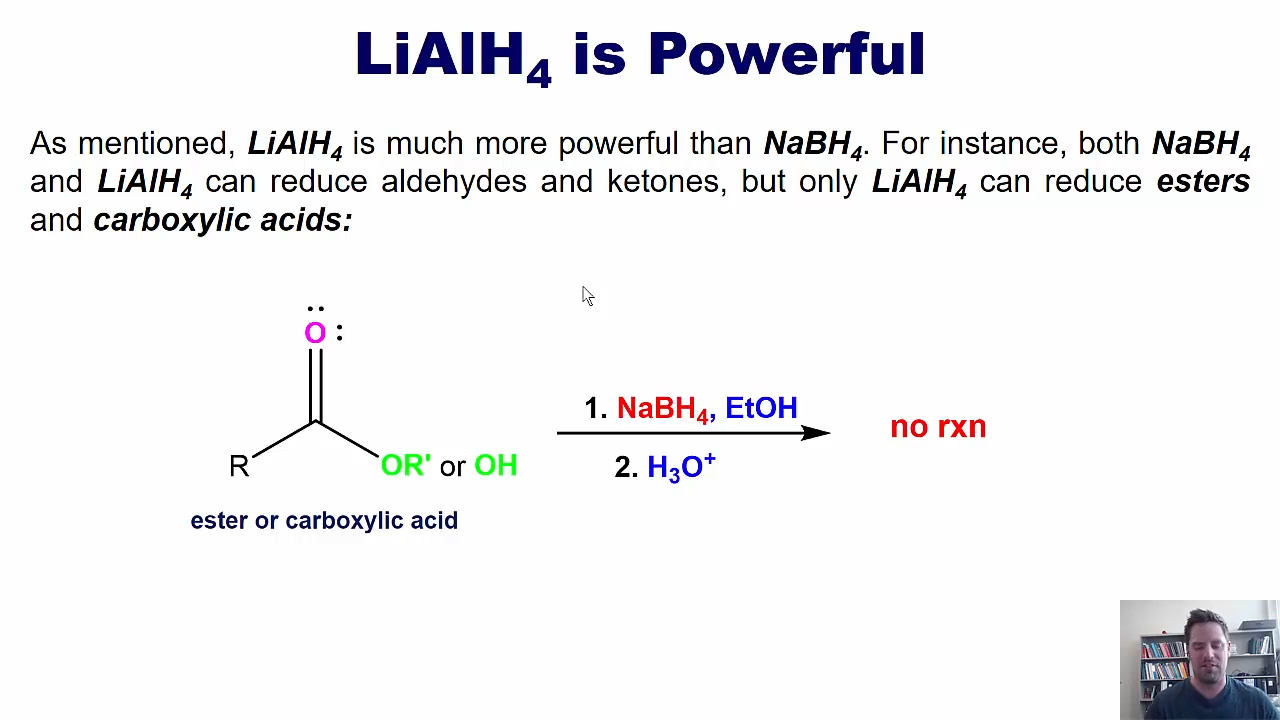
Grignard Reagent.
Just add the R group. (with the quench)
CANNOT RUN WITH PROTIC SOLVENT (it will just get protenated)
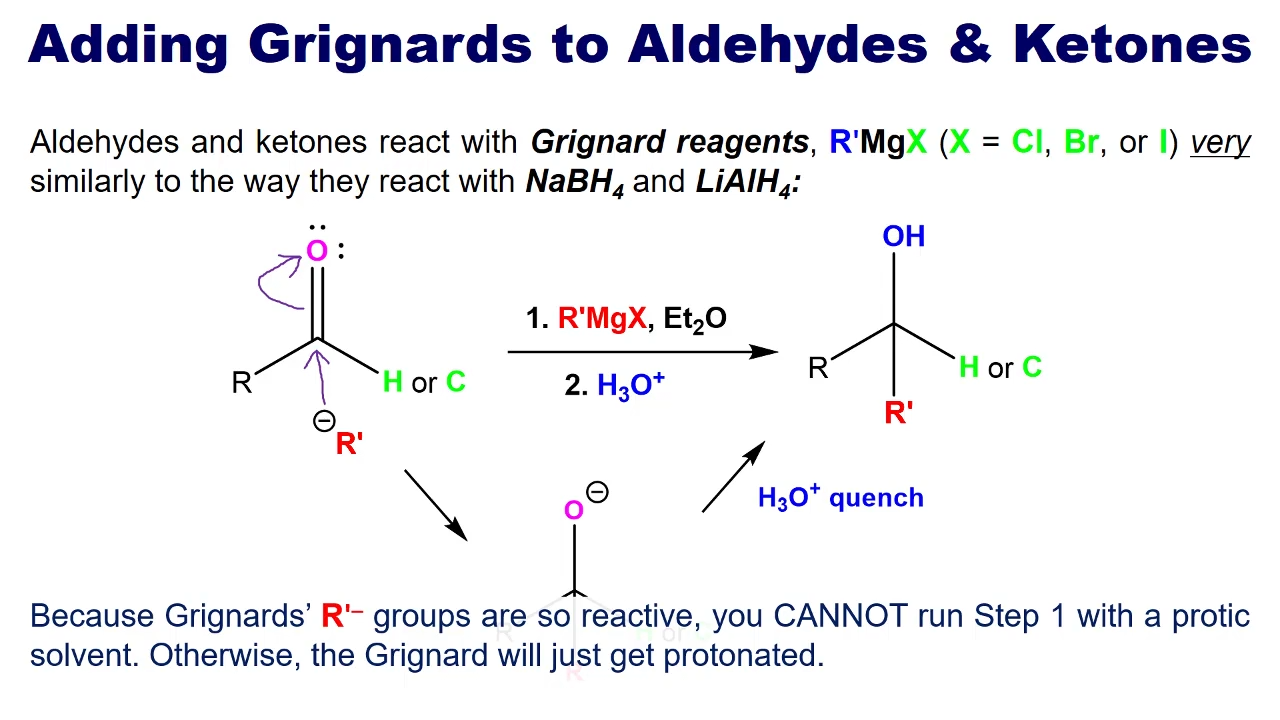
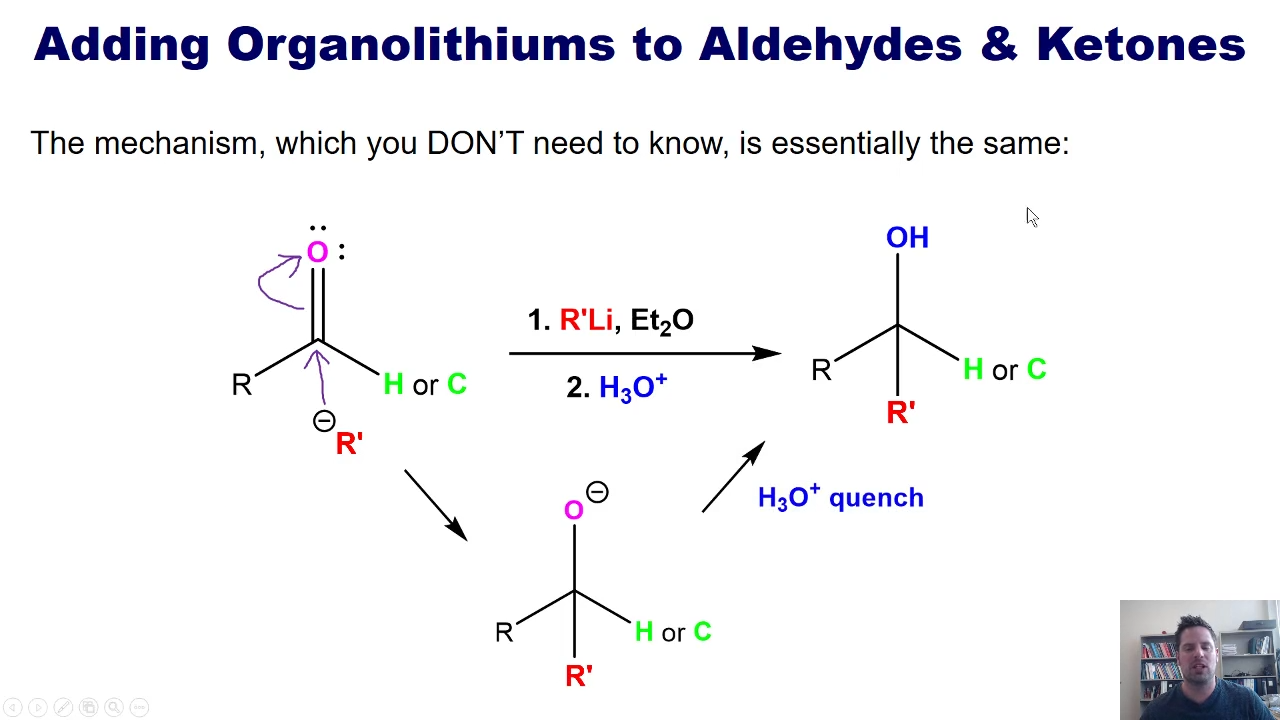
Organolithium (R,Li)
EXACT SAME AS GRIGNARD.
CANNOT RUN WITH PROTIC SOLVENT (it will just get protenated)
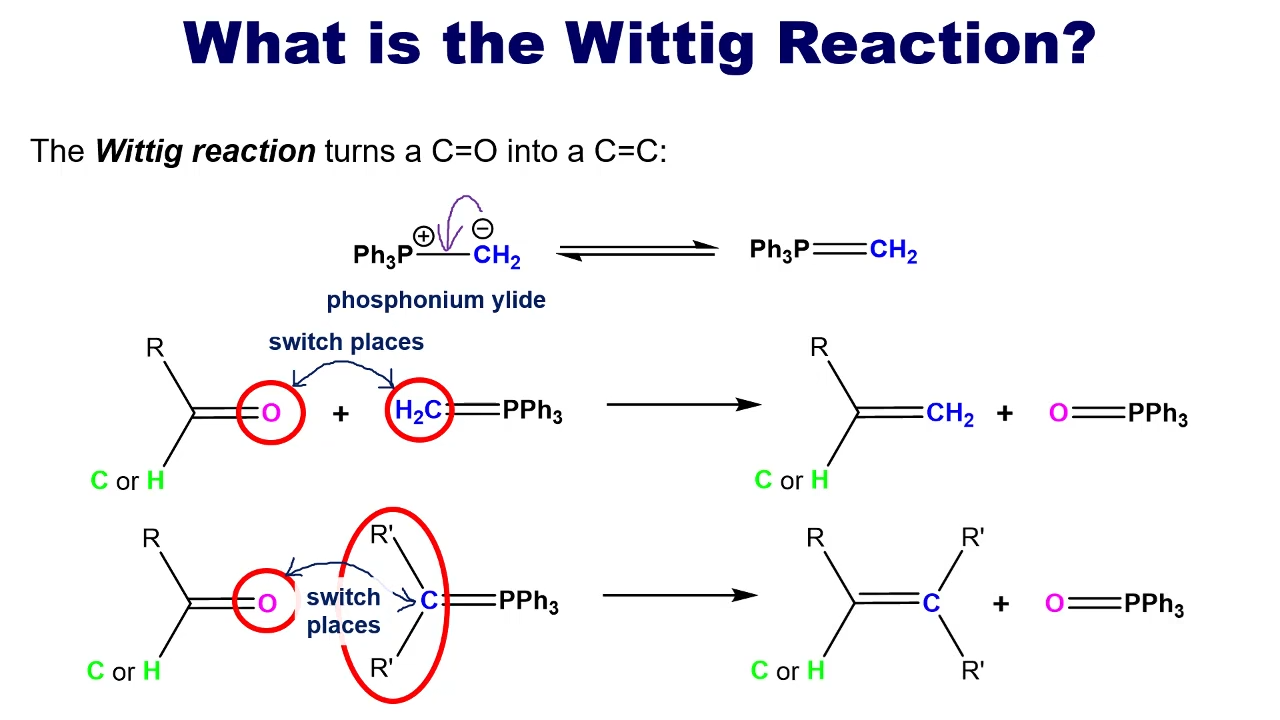
Wittig Reaction
Phosphonium ylide
Turns C=O into C=C
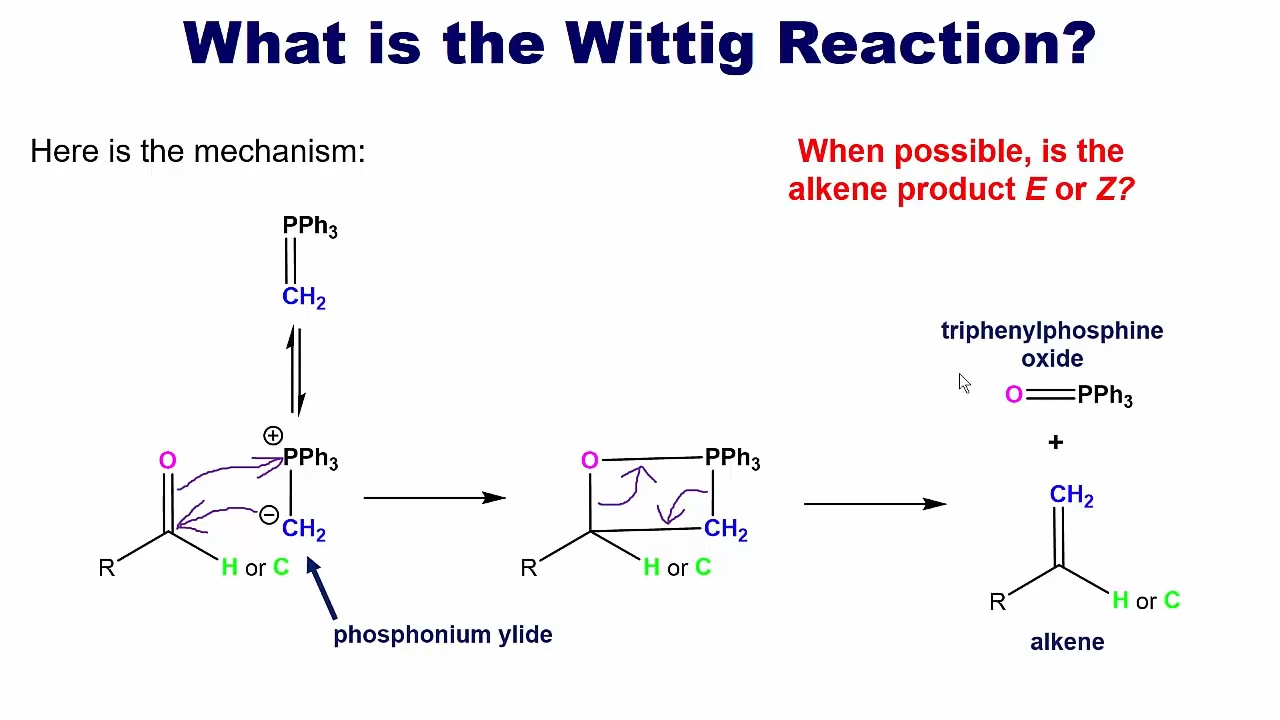
Wittig Reaction Mechanism
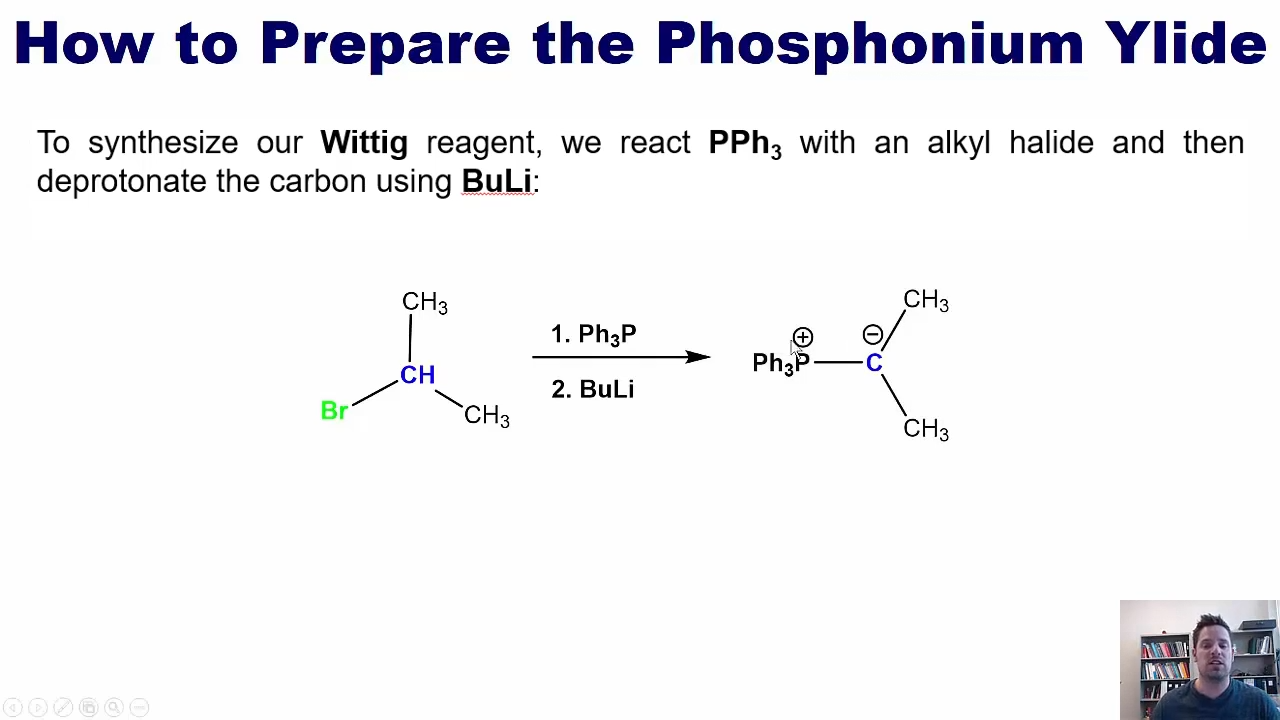
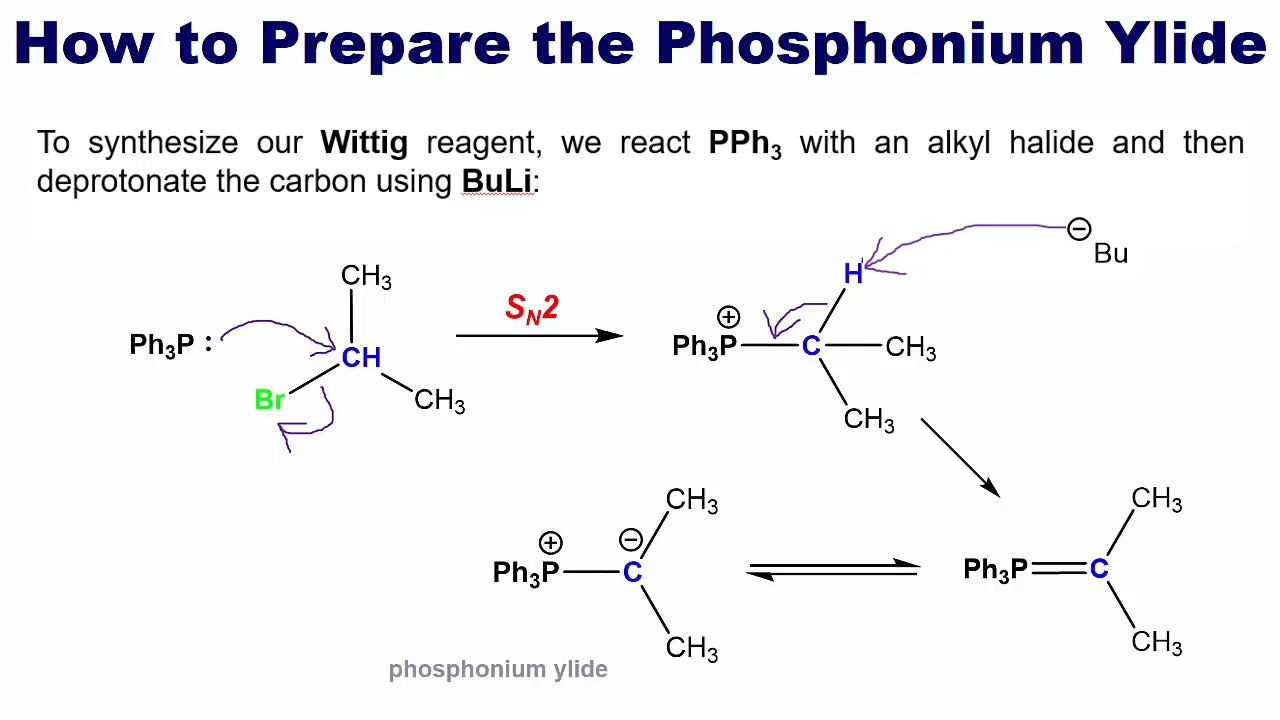
How to make Phosphonium Ylide
PPh3 with an alkyl halude, then deprotenate using a BuLi.
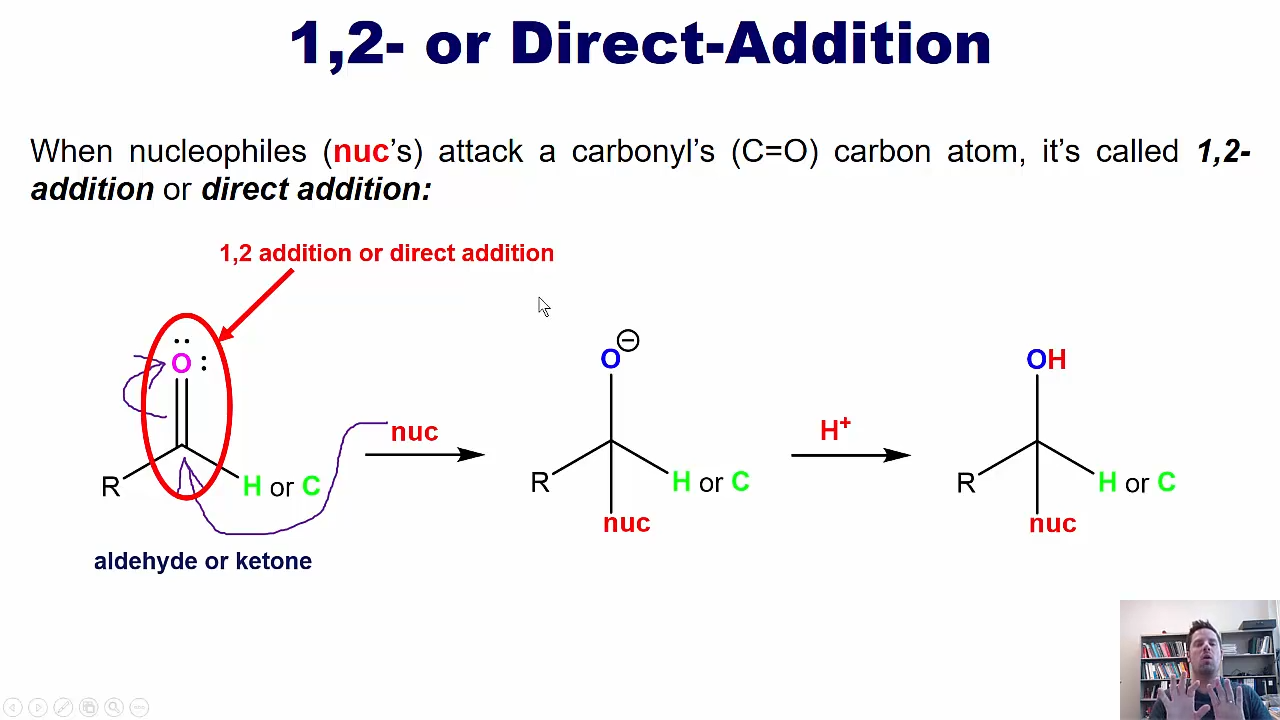
(1,2 addition)
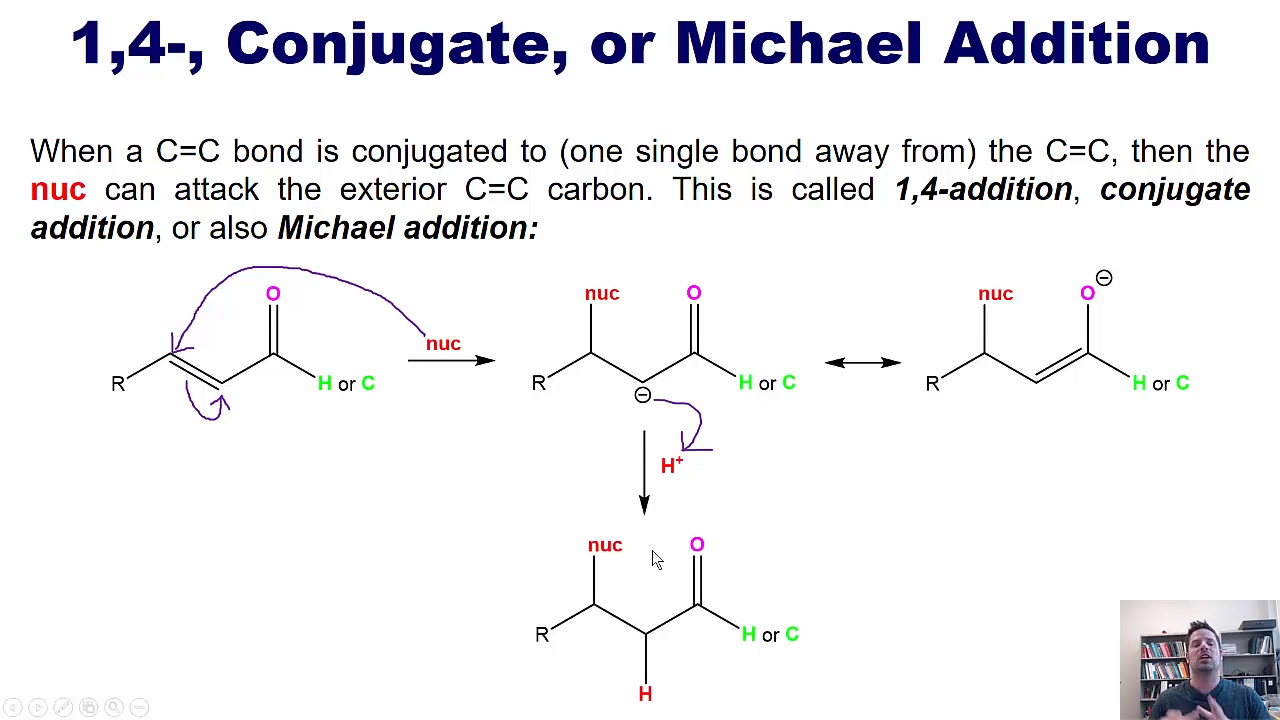
1,4 Conjugate or Michael Addition
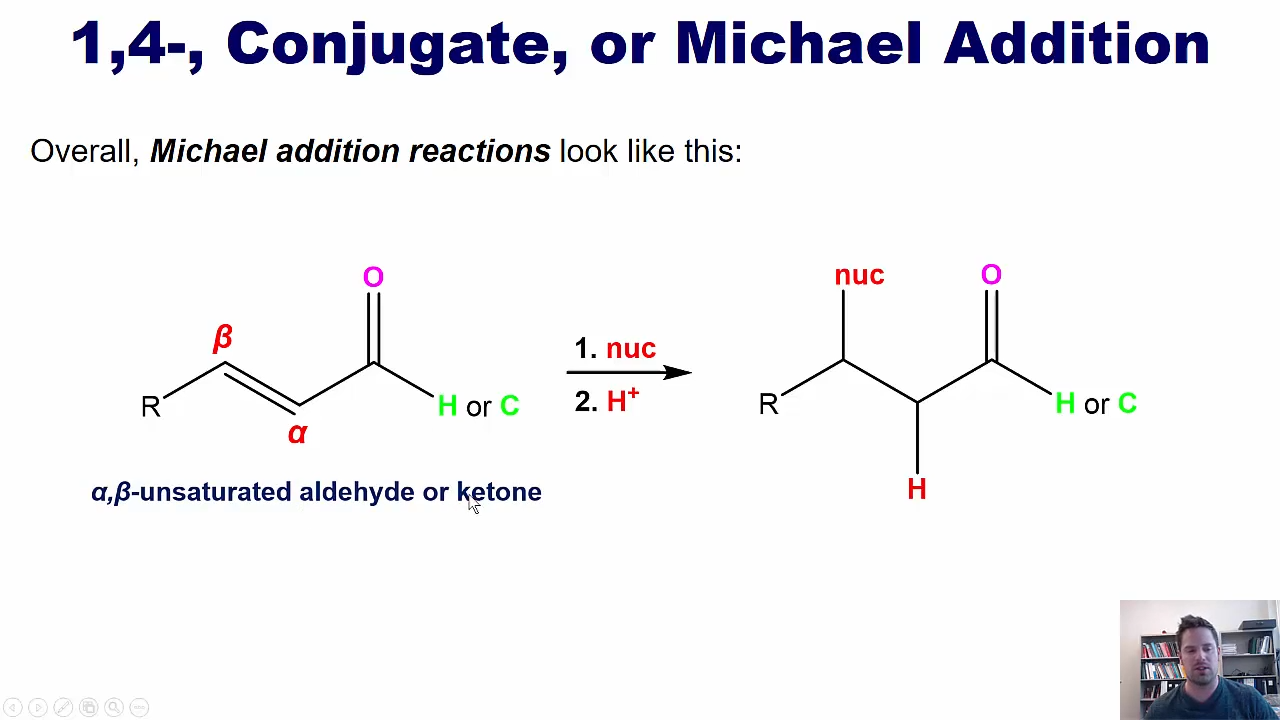
Michael Addition general trend
Michael addition nucleophiles (that prefer it)
Slightly Weaker Nucleophiles Prefer it
-C(Triple bond)N
Cyanide
HNR2
Amines with one lone pair
R2CuLi (Li acts like an R-)
Acts like a grignard except they preferentially use 1,4.
HSR (sulfides)
Direct 1,2 addition
NaBH4 (H- source)
LiAlH4 (H- source)
RMgX (Grignard)
What is the fastest when it comes to Nuclophillic addition the fastest?
The most EN
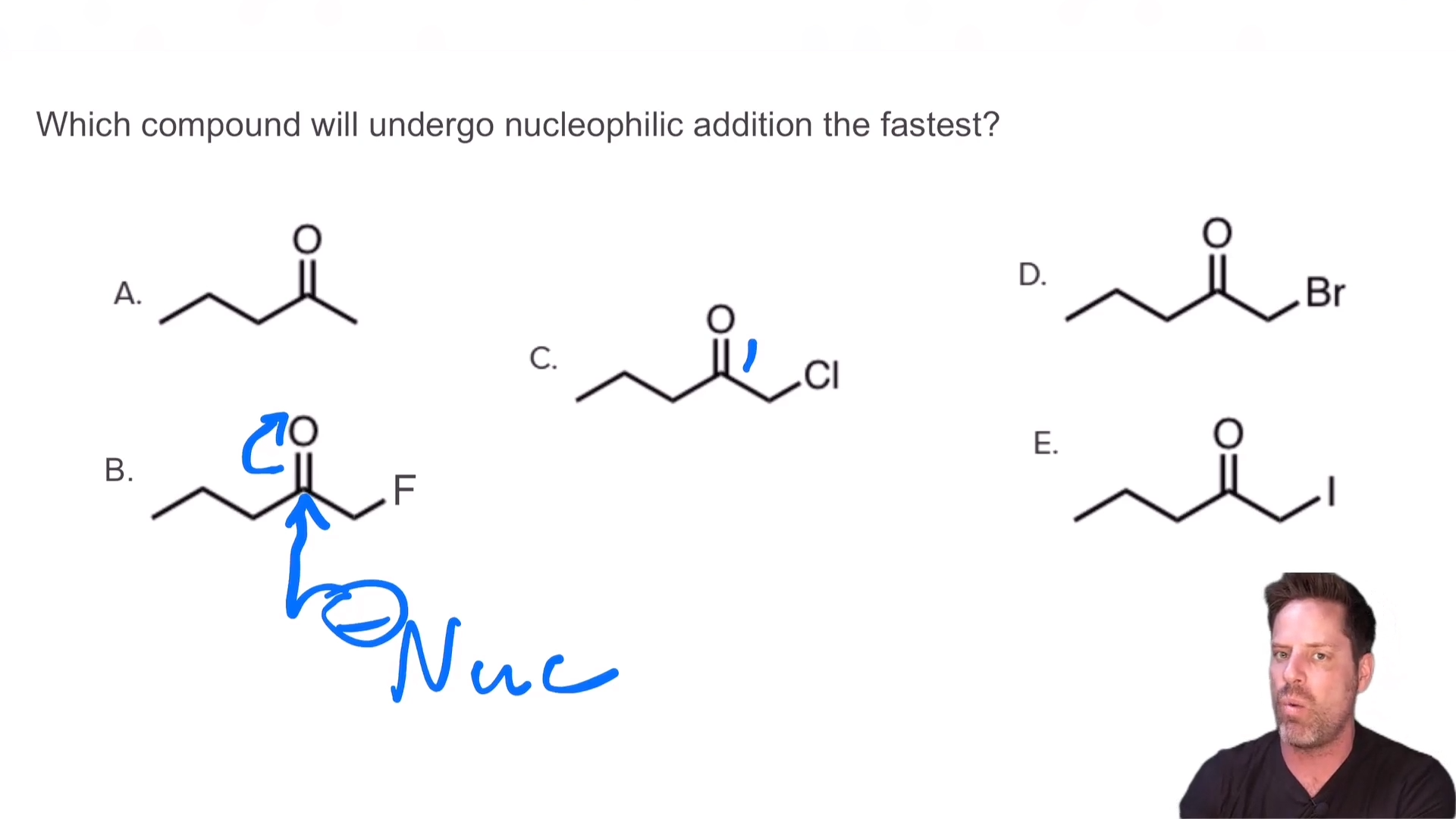
Order of reactivity for carbonyls (for nucleophiles) (most nucleophillic)
Aldehyde > Ketone > Carboxylic Acid
Most electrophilic carbonyls.
Due to resonance, they WANT ELECTRONS more than they want nucleophiles.
They also have more steric hinderance, which makes it hard for Nucs to get in.