Ch. 13.1 APUSH Unit 5: Civil War/Reconstruction 1844-1877
 Call Kai
 Learn
Learn Practice Test
 Spaced Repetition
 Match
Match Flashcards
 Knowt Play
1/22

Earn XP
Description and Tags
pg. 429 + 465-477
Name | Mastery | Learn | Test | Matching | Spaced | Call with Kai | Chat |
|---|
No analytics yet
Send a link to your students to track their progress
23 Terms
Jefferson Davis
Secretary of War, from Mississippi. One of the largest slaveholders. Eventually became president of the Confederate States of America. Insisted that the Statue of Freedom should have a helmet with feathers instead of the liberty cap, which was a French symbol for the emancipation of enslaved peoples.
Trade with California
California’s commercial link with the United States: New England ships were trading with the regions. California also attracted small number of American newcomers.
Californios
Mexican cattle ranchers, defined themselves against the Native Population. Defined themseves as gente de razón (people of reason), while referring to the Native population as gente sin razón (people without reason). They owned most of the land in California.
Tejanos
Texas settlers of Spanish and Mexican descent.
Moses Austin
Connecticut-born farmer. Spanish government accepted an offer by him to colonize it with Americans.
Antonio López de Santa Anna
Mexico’s ruler, a general who in 1835 sent an army in Texas to impose central authority/strike down a rebellion. According to the local committee, he was charged because his motives were to give Liberty to the enslaved peoples and make the other peoples enslaved. He was a dictator.
Texas Revolt
“Remember the Alamo” was the Texans’ rallying cry. People from Texas, many of them American emigrants, rebellion against the Mexican control of the region in the 1830s.
Sam Houston
First president elected of the Republic of Texas in 1837. Former governor of Tennessee, routed Santa Anna’s army at the Battle of San Jacinto and forced him to recognize Texan independence.
“Fifty-four forty or fight”
A popular campaign slogan by the Democratic party that suggested occupation of Oregon all the way to it’s northern border.
James K. Polk
Won the presidential election as part of the Democratic party. Closely associated with Andrew Jackson. Was a slaveholder with plantations in Tennessee and Mississippi: Conditions were so brutal only half of the children lived to 15, and adults frequently ran away.
James K. Polks set of goals as president
Going into presidency, he had very clear set of goals: to reduce the tariff, reestablish the Independent Treasury system, settle the dispute over ownership of Oregon, and bring California into the Union.
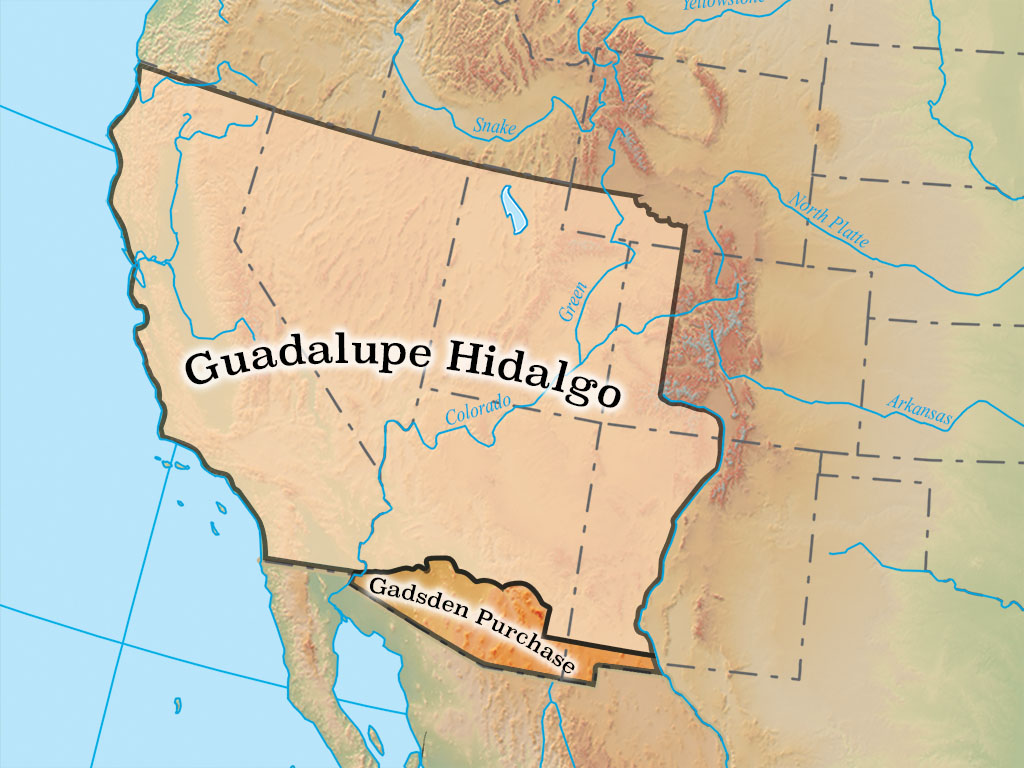
Mexican War (1846-1848)
States v. Mexico for control of California and New Mexico. Resulted: Treaty of Guadalupe Hidalgo, U.S. “won.”
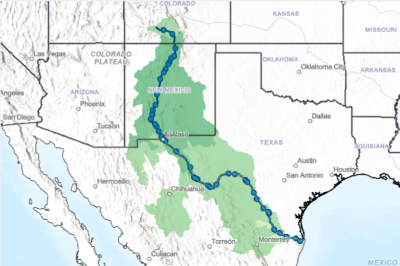
Treaty of Guadalupe Hidalgo
Treaty signed at the end of the Mexican War, extended the United States to the Pacific coast, and drew the border at the Rio Grande. This Treaty annexed more than half a million square miles of Mexican territory. Included the annexation of Texas, ceded California, and present-day New Mexico, Arizona, Nevada, and Utah to the United States. U.S. gave Mexico $15 million.
Ulysses S. Grant
A critic of the war with Mexico.
Mexican Cession
The name for the land annexed by Mexico
Gadsden Purchase
30k square miles in present-day Arizona and New Mexico bought by Congress from Mexico in 1853, primarily for the Southern Pacific Railraod’s transcontinental route. Bought from Mexico in 1853 and Alaska, from Russia in 1867.
Anglos
White settlers from the East
Juan Seguín
Tejano, served for a time as mayor of San Antonio. 1842, still mayor, was driven out of town by vigilantes, and he became, he lamented, “a foreigner in my native land.”
Emigration to California
After January 1848, the population of California greatly spiked because of the discovery of gold near Sierra Nevada Mountain. By ship and land, newcomers poured into California.
Gold Rush
Massive migration of Americans into California territory, starting near 1848 through 1850s, in pursuit of gold.
Committees of Vigilance
Groups that swept aside established courts to try and execute those accused of crimes.
“Foreign miners”
Mexicans, Chileans, Chinese s, French, and American Indian miners. White miners organized illegal groups that expelled these people from areas with gold. Legislature imposed a tax that made them pay twenty dollars on a month, which drove them from the state.
Commodore Matthew Perry
Sailed an American warship to Tokyo Harbor. Demanded that the Japanese deal with him (His task for being there was to establish trade connection).