Summer combined
 Call Kai
 Learn
Learn Practice Test
 Spaced Repetition
 Match
Match Flashcards
 Knowt Play
1/1117

Earn XP
Description and Tags
term
Name | Mastery | Learn | Test | Matching | Spaced | Call with Kai | Chat |
|---|
No analytics yet
Send a link to your students to track their progress
1118 Terms
What type of tissue covers the internal and external surfaces of the body?
a. Muscular
b. Connective
c. Nervous
d. Epithelial
Epithelial
A body system that consists of an association of organs that share a common function
a. True
b. False
True
How many individual body systems comprise the human body?
a. 22
b. 13
c. 10
d. 8
10
How many separate bones are found in the adult human body?
a. 181
b. 215
c. 206
d. 236
206
Which of the following systems of the human body includes all ductless glands of the body?
a. Endocrine
b. Integumentary
c. Muscular
d. Glandular
Endocrine
Which of the following body systems helps to regulate body temperature?
a. Circulatory
b. Urinary
c. Endocrine
d. Nervous
Circulatory
Which of the following bones is part of the axial skeleton?
a. Radius
b. Hip bone
c. Clavicle
d. Sternum
Sternum
How many bones are there in the adult axial skeleton?
a. 206
b. 80
c. 54
d. 136
80
What is the name of the small oval-shaped bone found in tendons?
a. Wormian
b. Tendinous
c. Irregular bones
d. Sesamoid bones
Sesamoid bones
Which of the following is classified as a long bone?
a. Carpal bone
b. Scapula
c. Cranium
d. Humerus
Humerus
What is the name of the dense fibrous membrane that covers bone?
a. Cancellous portion
b. Periosteum
c. Diploe
d. Medullary portion
Periosteum
Which of the following bones is classified as a short bone?
a. Vertebrae
b. Phalanges (toes)
c. Scapulae
d. Carpal (wrist bones)
Carpal (wrist bones)
Which of the following is a secondary growth center for endochondral ossification?
a. Diaphysis
b. Epiphyses
c. Metaphysis
d. Articular cartilage
Epiphyses
Which aspect of the long bones is responsible for the production of red blood cells?
a. Compact bone
b. Periosteum
c. Medullary cavity
d. Spongy or cancellous bone
Spongy or cancellous bone
Examples of "flat" bones are the:
a. Calvaria, ribs, scapulae and sternum
b. Ribs, sternum, patella and ilia of pelvis
c. Sternum, scapulae, ilia of pelvis and base of cranium,
d. Sternum and ilia of pelvis cavity
Calvaria, ribs, scapulae and sternum
What is the primary center for bone growth termed?
a. Epiphyses
b. Diaphysis
c. Metaphysis
d. Epiphyseal plate
Diaphysis
Which of the following is NOT a functional classification of joints?
a. Synarthrosis
b. Amphiarthrosis
c. Cartilaginous
d. Diarthrosis
Cartilaginous
The structural term for a freely movable joint is:
a. Fibrous
b. Cartilaginous
c. Synovial
d. Gomphosis
Synovial
Which of the following joints displays a "hinge" type of movement?
a. Trochoid
b. Ellipsoidal
c. Sellar
d. Ginglymus
Ginglymus
Which of the following joints is NOT a synovial joint?
a. Skull suture
b. Elbow joint
c. Hip joint
d. Proximal radioulnar joint
Skull suture
Which of the following is classified as a sellar joint?
a. Ankle joint
b. Temporomandibular joint
c. Knee joint
d. Intercarpal joint
Ankle joint
Which of the following is classified as a biocondylar joint?
a. Shoulder joint
b. Temporomandibular joint
c. First and second cervical vertebra joint
d. Distal radioulnar joint
Temporomandibular joint
An upright position with the arms abducted, palms forward and head forward describes the ___ position.
a. Anteroposterior (AP)
b. Decubitus
c. Anatomic
d. Oblique
Anatomic
A representation of the patient's anatomic structures that can be obtained, viewed, manipulated and stored digitally is the definition for:
a. Radiograph
b. Radiography
c. Radiographic image
d. Radiographic examination
Radiographic image
The vertical plane that divides the body into right and left halves describes the ___ plane.
a. Corona
b. Median or midsagittal
c. Longitudinal
d. Horizontal
Median or midsagittal
A longitudinal plane that divides the body into equal anterior and posterior parts is the ___ plane.
a. Midcoronal
b. Midsagittal
c. Horizontal
d. Oblique
Midcoronal
Which of the following terms describes the sole of the foot?
a. Palmar
b. Dorsum
c. Volar
d. Plantar
Plantar
Which term describes the back or posterior aspect of the hand?
a. Dorsum pedis
b. Dorsum manus
c. Palmar
d. Volar
Dorsum manus
A lateromedial projection is one in which the lateral aspect of the anatomy part is closest to the image receptor (IR).
a. True
b. False
False
A position in which the head is lower than the feet is:
a. Trendelenburg
b. Lithotomy
c. Fowler's
d. Recumbent
Trendelenburg
Which term describes lying down in any position?
a. Horizontal
b. Fowler's
c. Recumbent
d. Anatomic
Recumbent
A recumbent oblique position in which the patient is lying on the left anterior side rotated anteriorly, with the right knee and thigh flexed is termed:
a. Trendelenburg
b. Left posterior oblique
c. Sims' position
d. Fowler's position
Sims' position
A patient is lying on her back facing the x-ray tube. The right side of her body is turned 45 degrees toward the image receptor. What is the radiographic position?
a. LPO (left posterior oblique)
b. RPO (right posterior oblique)
c. RAO (right anterior oblique)
d. LAO (left anterior oblique)
RPO (right posterior oblique)
A patient is erect with the left side directly against the image receptor. The central ray (CR) enters the right side of the body. What is this radiographic position?
a. Right lateral
b. Left lateral decubitus
c. Left lateral
d. Dorsal decubitus
Left lateral
A patient is lying on her back. The x-ray tube is horizontally directed with the CR entering the right side of the body. The image receptor is adjacent to the left side of the body. What is the radiographic position?
a. Left lateral decubitus
b. Left lateral
c. Right lateral decubitus
d. Dorsal decubitus
Dorsal decubitus
A patient is erect facing the image receptor. The left side of the body is turned 45 degrees toward the image receptor. The CR enters the posterior aspect of the body and exits the anterior. What is the radiographic position?
a. LAO
b. LPO
c. Left lateral
d. Posteroanterior (PA)
LAO
What type of projection is created with the CR directed along or parallel to the long axis of the body?
a. Axial
b. Tangential
c. Lordotic
d. Transthoracic
Axial
A projection in which the CR skims a body part is termed:
a. Tangenital
b. Lordotic
c. Axial
d. Decubitus
Tangential
What is the general term for a position in which the long axis of the body is angled in relationship to the image receptor rather than the central ray (e.g., special chest projection)?
a. Axial
b. Trendelenburg
c. Decubitus
d. Lordotic
Lordotic
The opposite term for supination is:
a. Protraction
b. Adduction
c. Pronation
d. Retraction
Pronation
Which of the following positions is often used to insert a rectal enema tip before a barium enema study?
a. Fowler's
b. Modified Sims
c. Lithotomy
d. Trendelenburg
Modified Sims
Tangenital and axial projections are the same type of projection
a. True
b. False
False
A dorsoplantar projection would be a radiographic study of:
a. Any anatomic region
b. The hand
c. The foot
d. The skull
The foot
Moving the foot and toes downward is:
a. Eversion
b. Inversion
c. Dorsiflexion
d. Plantar flexion
Plantar flexion
Movement in the form of a circle is the definition for:
a. Rotation
b. Retraction
c. Circumduction
d. Protraction
Circumduction
Which of the following terms is the opposite of ipsilateral?
a. Medial
b. Deviation
c. Contralateral
d. Axiolateral
Contralateral
The radiographic term projection is defined as:
a. General position of the patient
B. Path or direction of the central ray
C. Radiographic image as seen from the vantage of the image receptor
D. Computer-assisted image
Path or direction of the central ray
According to the American Registry of Radiologic Technologists (ARRT) Code of Ethics, a radiologic technologist may render a diagnosis during a radiographic examination if requested by the patient.
a. True
b. False
False
According to the ARRT Code of Ethics, radiologic technologists must participate in continuing education activities throughout their professional career.
a. True
b. False
True
It is legally acceptable to write "right" or "left" on a radiograph if the anatomic side marker is not visible.
a. True
b. False
False
A patient enters the emergency department (ED) with a piece of wire in the palm of the hand. What is the minimum number of projections required to be taken for this radiographic study?
a. One
b. Two
c. Three
d. Four or more
Two
Which of the following radiographic procedures often only requires a single AP projection be taken?
a. Finger
b. Ribs
c. Chest
d. Pelvis
Pelvis
What is the final step taken before making the exposure during a positioning routine?
a. Image receptor centering
b. Placing anatomic markers on image receptor
c. Ensuring correct gonadal shield placement
d. Collimation adjustments
Ensuring correct gonadal shield placement
What is the minimal number of projections taken for a study of the femur?
a. One
b. Two
c. Three
d. Four
Two
What is the minimal number of projections taken for a study of the right hip?
a. One
b. Two
c. Three
d. Four
Two
What is the minimal number of projections taken for a study of the elbow?
a. One
b. Two
c. Three
d. Four
Three
PA or AP oblique projections are placed on the view box with the patient's right side of the body facing the viewer's right.
a. True
b. False
False
Decubitus chest projections are placed for viewing the way the image receptor "sees" them.
a. True
b. False
False
A patient is erect with his right side of the chest placed against the image receptor. The central ray enters the left side of the upper chest and exits the right. Which specific position has been performed?
a. Dorsal decubitus
b. Transthoracic lateral
c. Right lateral
d. Ventral decubitus
Right lateral
A patient is erect facing the x-ray tube and leaning the shoulders backward 20° to 30° toward the IR. The central ray is perpendicular to the IR. What specific position has been performed?
a. Lordotic
b. Axial
c. Kyphotic
d. Tangential
Lordotic
The top of the foot is placed against the image receptor with the perpendicular central ray entering the sole of the foot. What specific projection has been performed?
a. Transpedal
b. Plantodorsal
c. Axial dorsoplantar
d. Tangential plantodorsal
Plantodorsal
The patient is lying on her right side on a cart. The anterior surface of the patient is against the image receptor. A horizontal central ray enters the posterior surface and exits the anterior surface of the body. What specific projection/position has been performed?
a. AP
b. PA
c. Right lateral decubitus
d. Left lateral decubitus
Right lateral decubitus
A 40-inch (102 cm) SID should be the minimal distance used for most radiographic projections.
a. True
b. False
True
A 20-year-old woman is brought into radiology from the ED with a possible fracture of the pelvis. What should the technologist do regarding gonadal shielding?
a. Perform a PA projection of the pelvis and use gonadal shielding
b. Take AP projection of pelvis without using any shielding
c. Cover the area of the ovaries and uterus with a gonad shield for the AP pelvis projection
d. Refuse to take any radiographs without the radiologist's consent.
Take AP projection of pelvis without using any shielding
Which of the following precautions reduces radiation exposure to the technologist during a fluoroscopic procedure to the greatest degree?
a. Wearing a protective lead apron of 1-mm lead thickness
b. Wearing a thyroid shield
c. Standing as far away as possible from the radiation scatter fields
d. Turning your back to the fluoroscopy table
Standing as far away as possible from the radiation scatter fields
The two most common landmarks for chest positioning are the:
A. Top of shoulders and xiphoid process
B. Jugular notch and top of shoulders
C. Lower margin of thyroid cartilage and vertebra prominens
D. Jugular notch and vertebra prominens
D. Jugular notch and vertebra prominens
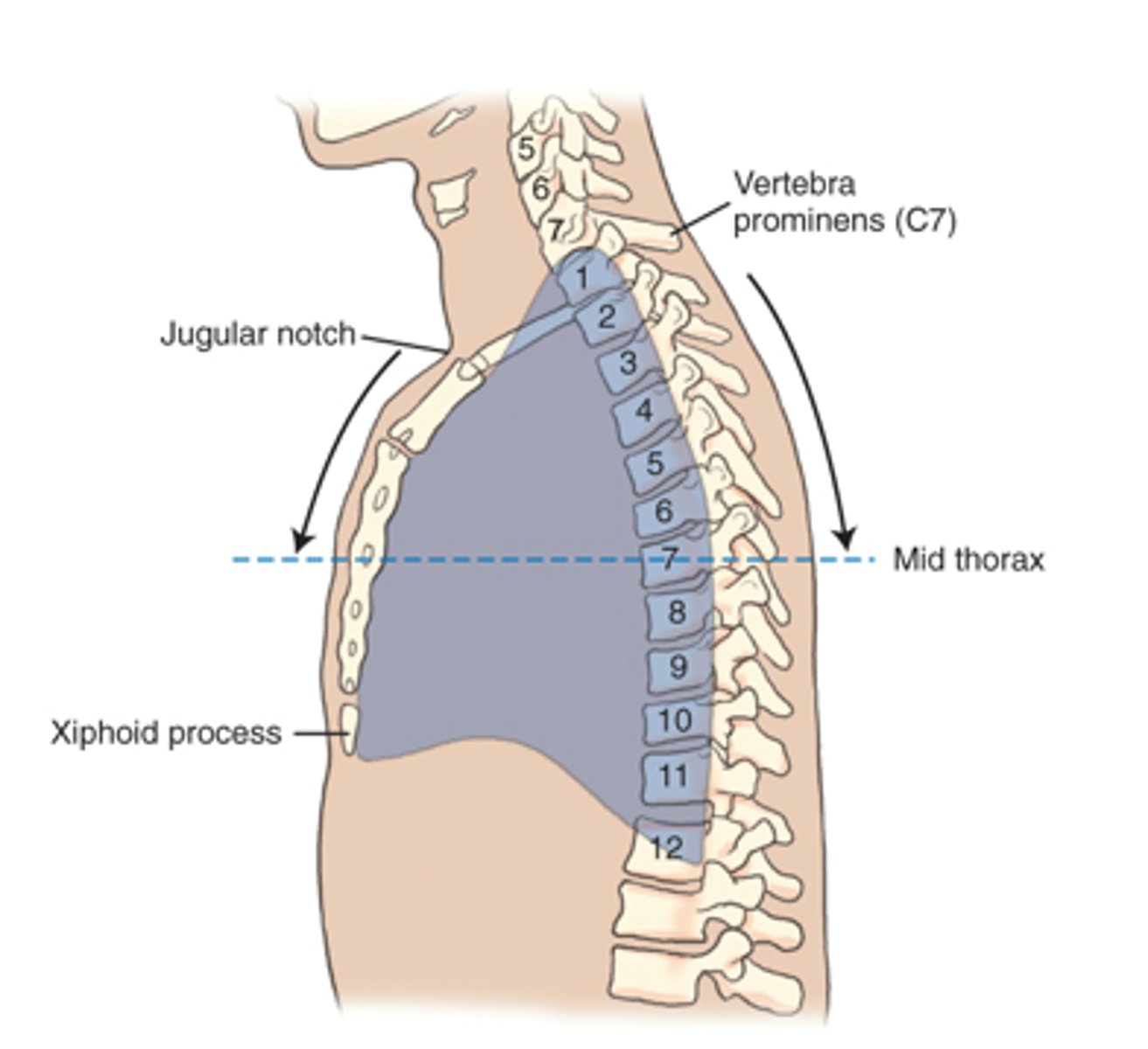
The vertebra prominens corresponds to the level of:
A. C7
B. C5
C. T2
D. C 4-5
A. C7
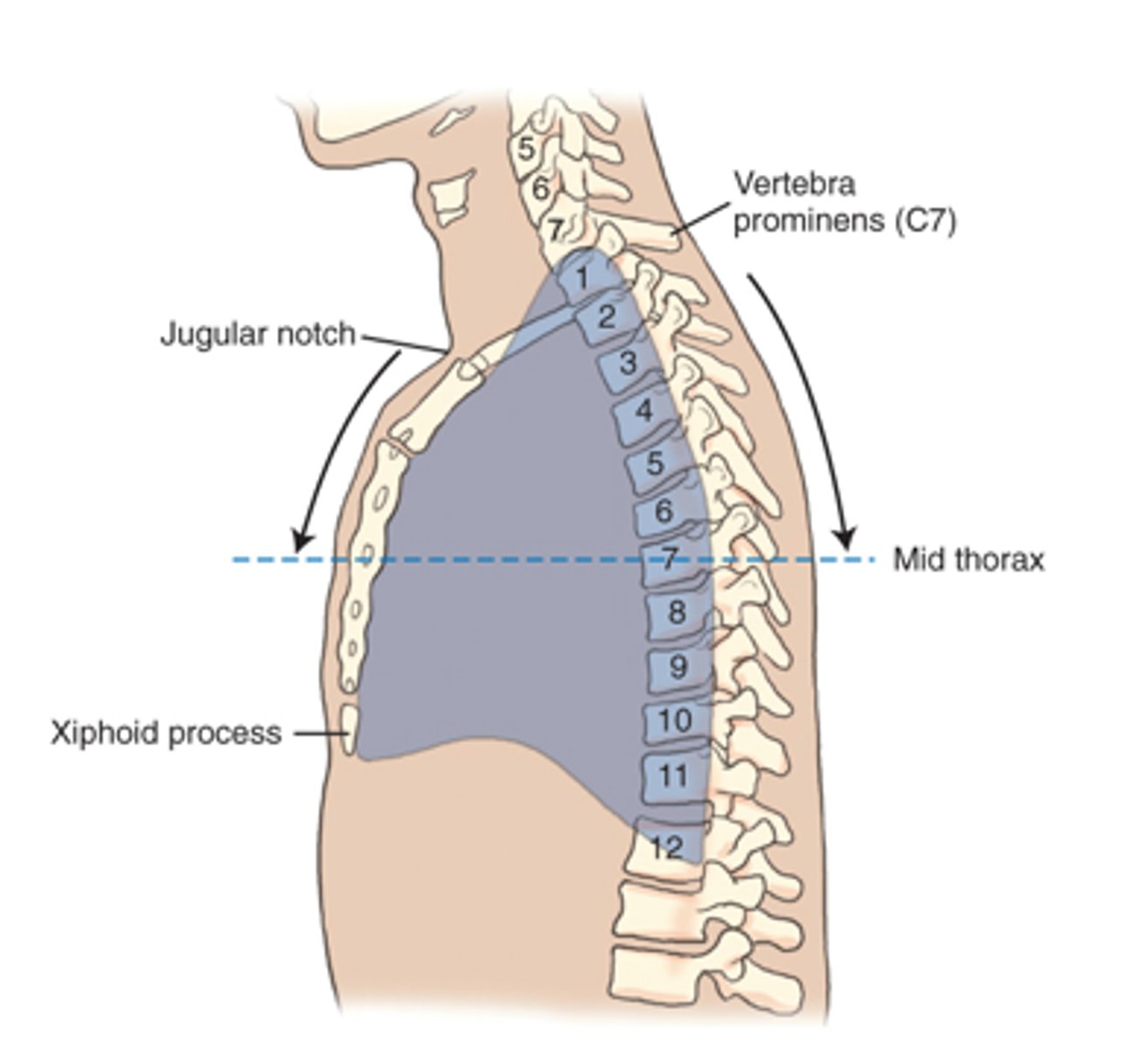
The xiphoid process is a reliable positioning landmark for determining the lower margin of the lungs for chest positioning.
a. True
b. False
b. False - because of different body habitus it is not a reliable landmark.
It does however correlate with T9, T10, and the anterior portion of the
diaphragm.
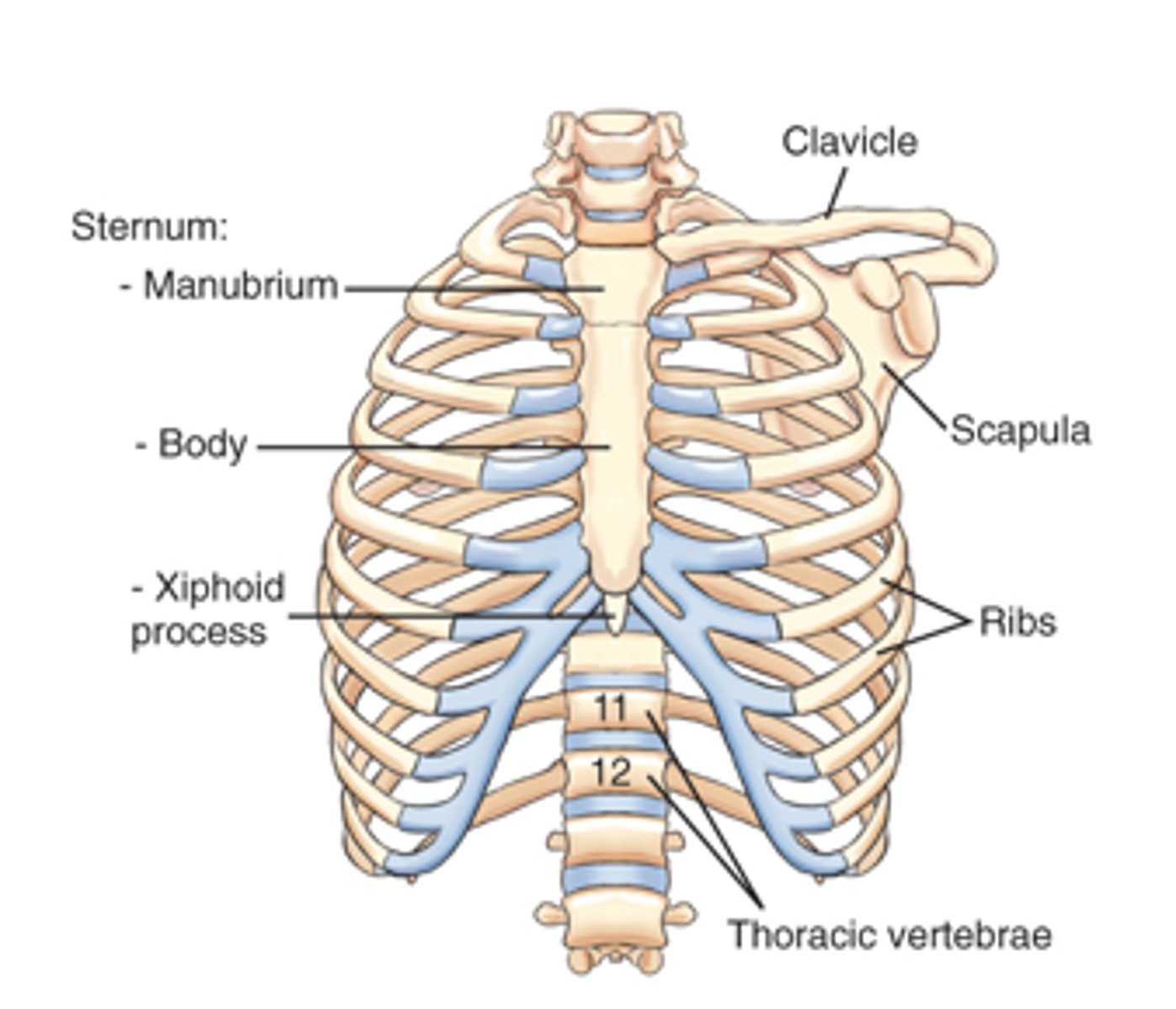
The upper margin of the lungs is at the level of the:
a. jugular notch.
b. vertebra prominens.
c. laryngeal prominence.
d. sternal angle.
b. vertebra prominens.
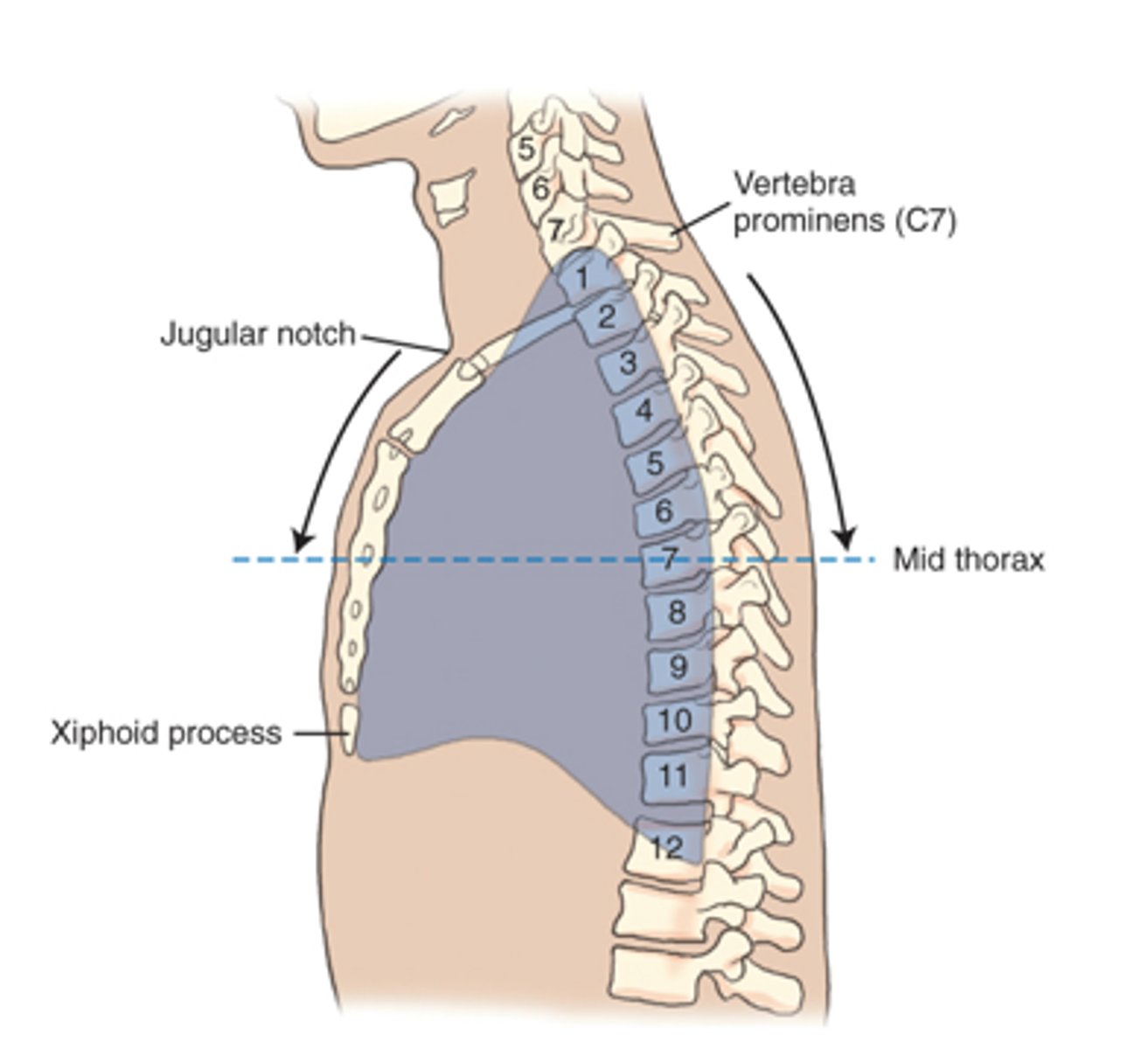
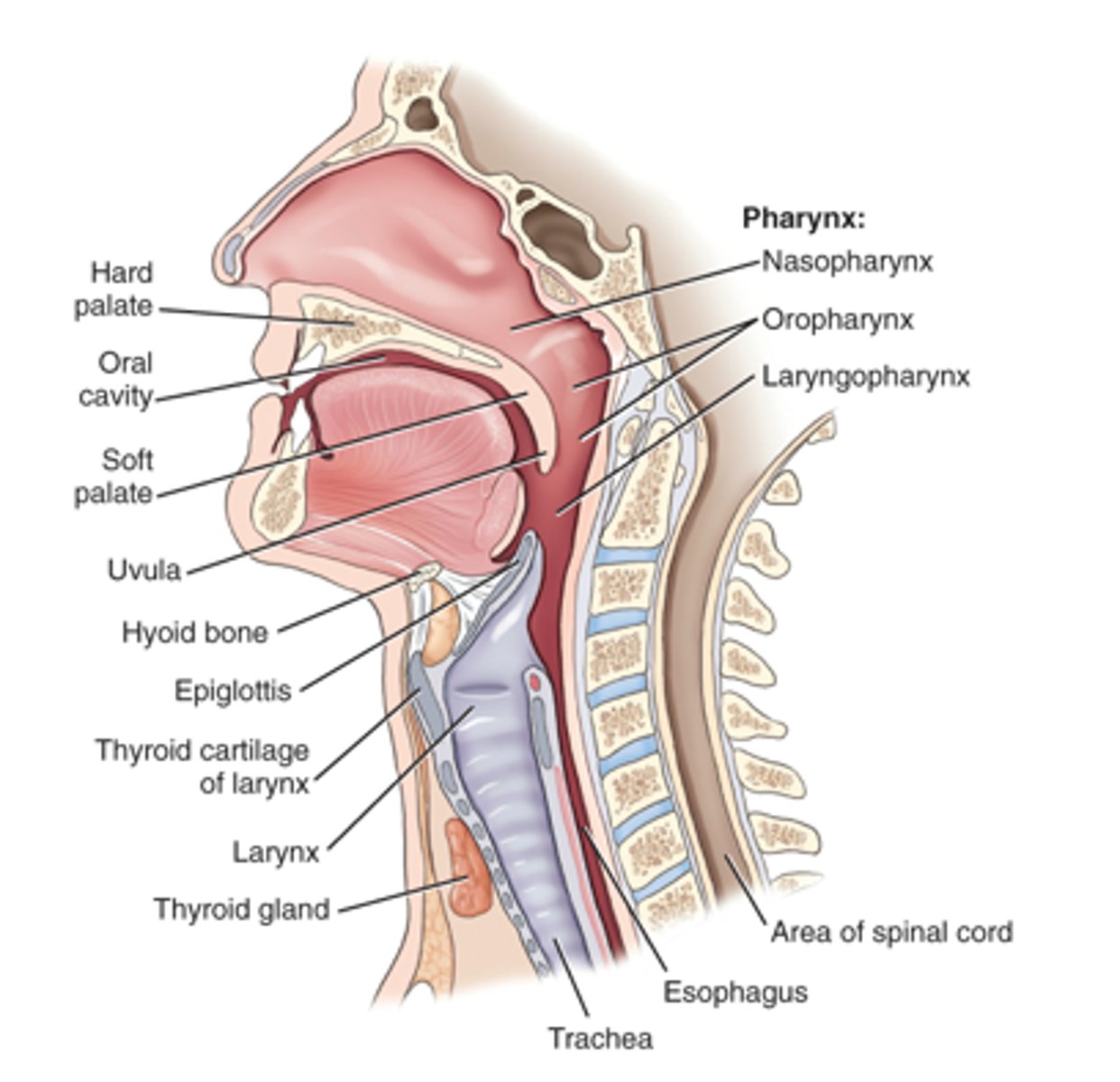
What is the name of the structure that serves as a common passageway for both food and air?
a. Epiglottis
b. Larynx
c. Pharynx
d. Esophagus
c. Pharynx
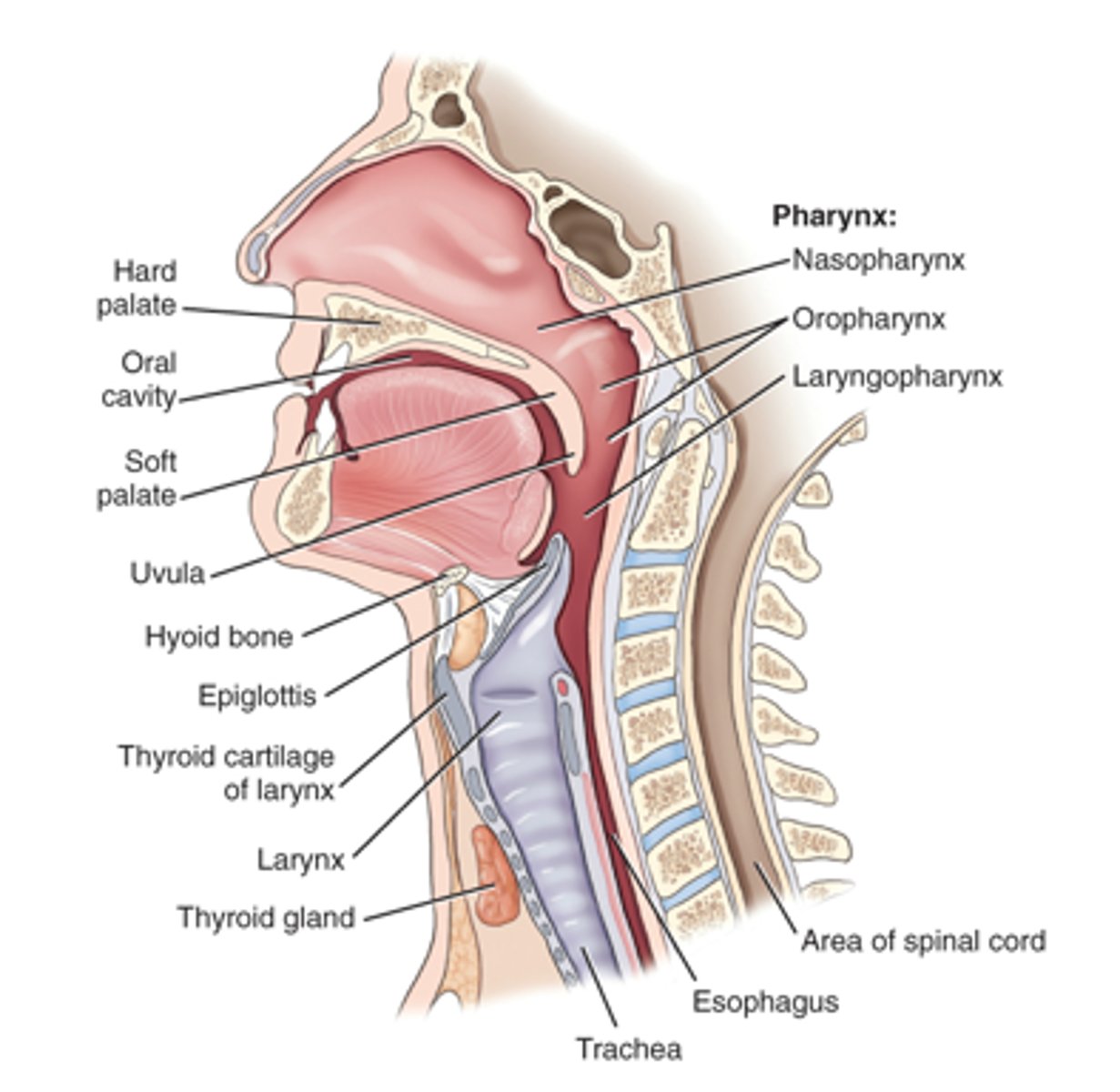
The jugular notch is located on the:
a. sternum.
b. thyroid cartilage.
c. seventh cervical vertebra.
d. scapula.
a. sternum.
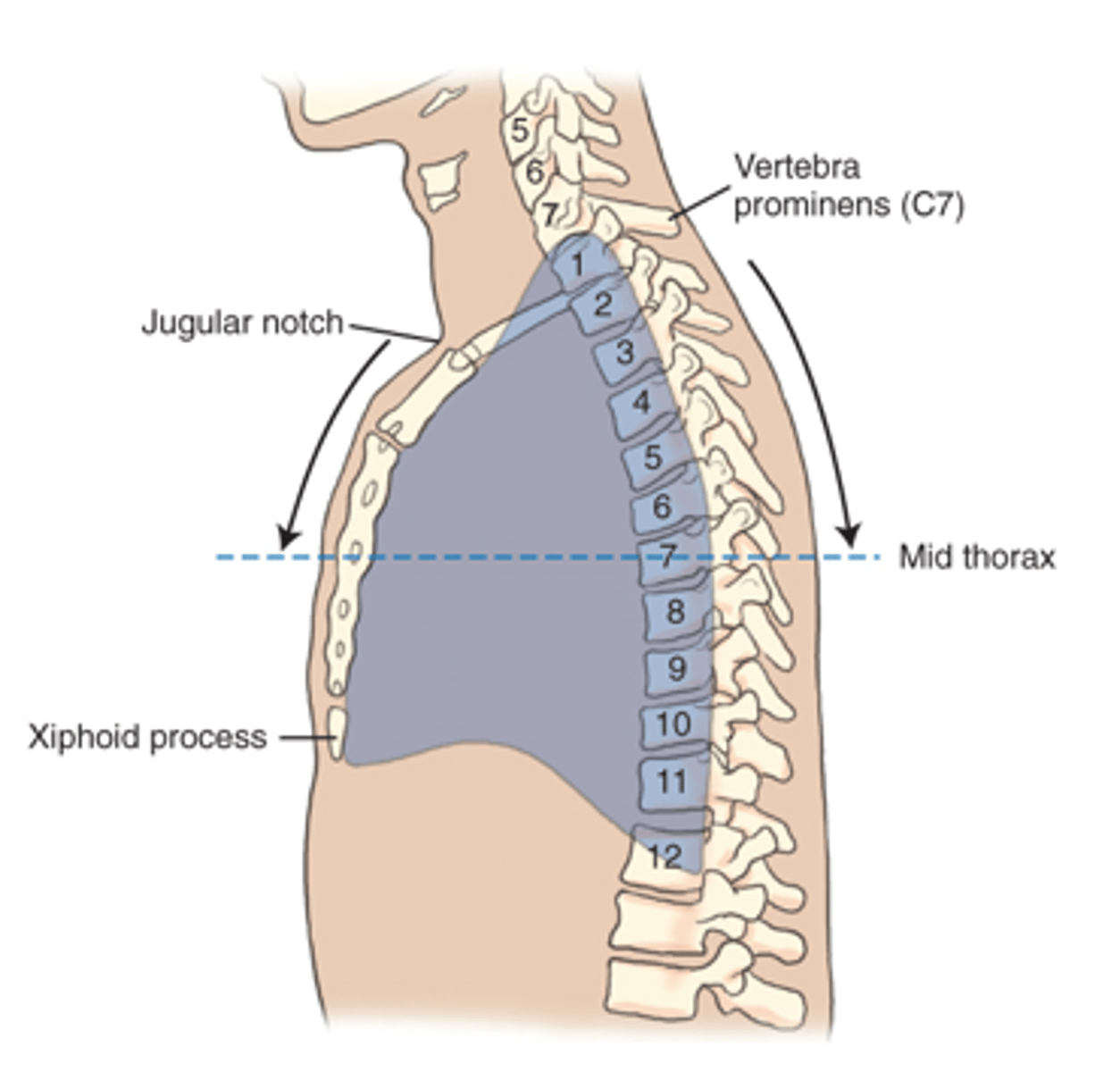
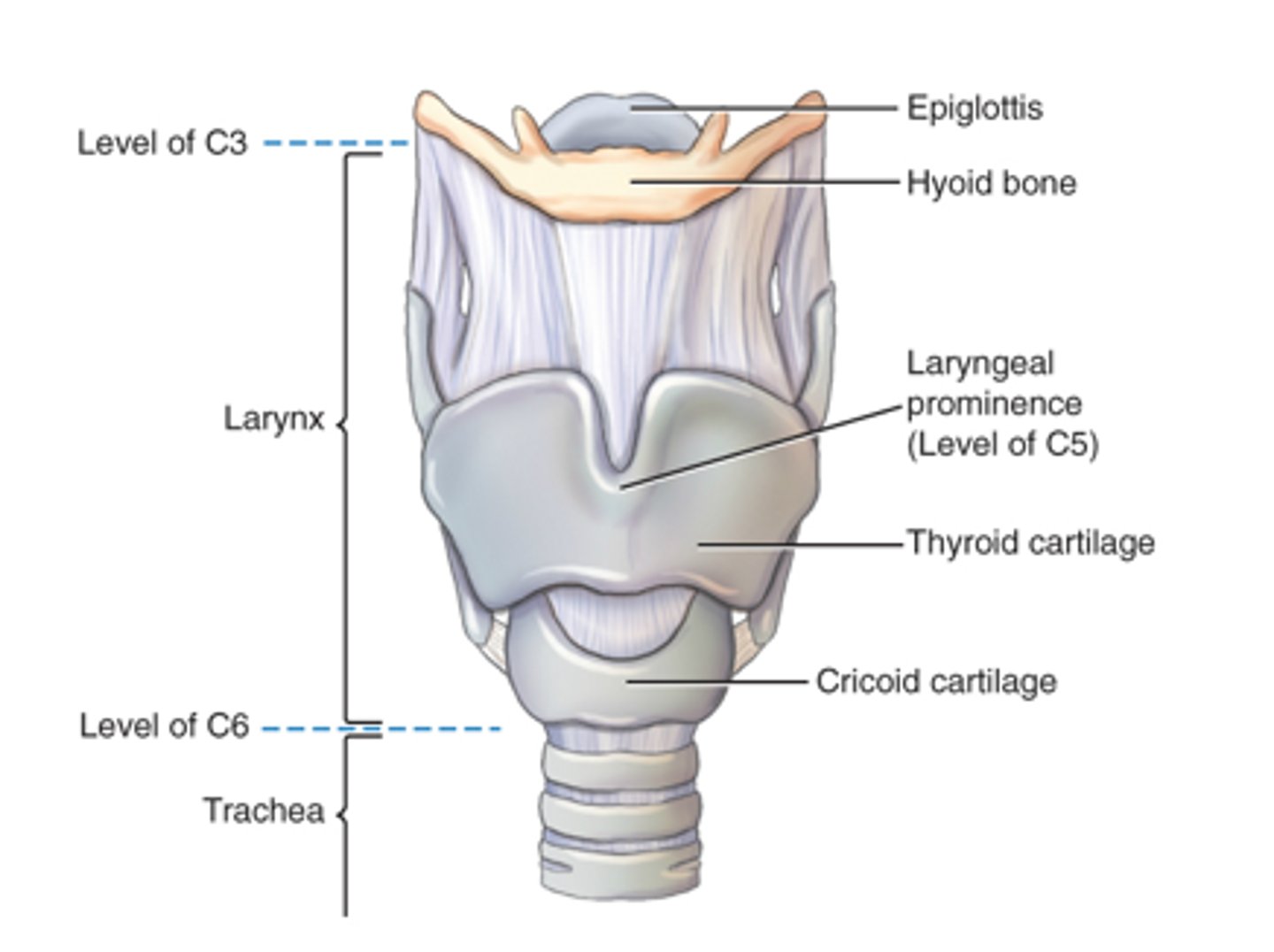
What is the correct anatomic name for the Adam's apple?
a. Sternum
b. Epiglottis
c. Cricoid cartilage
d. Laryngeal prominence
d. Laryngeal prominence
What is the name for the structure that serves as a lid over the larynx to prevent aspiration of food or fluid?
a. Uvula
b. Epiglottis
c. Hyoid bone
d. Oropharynx
b. Epiglottis
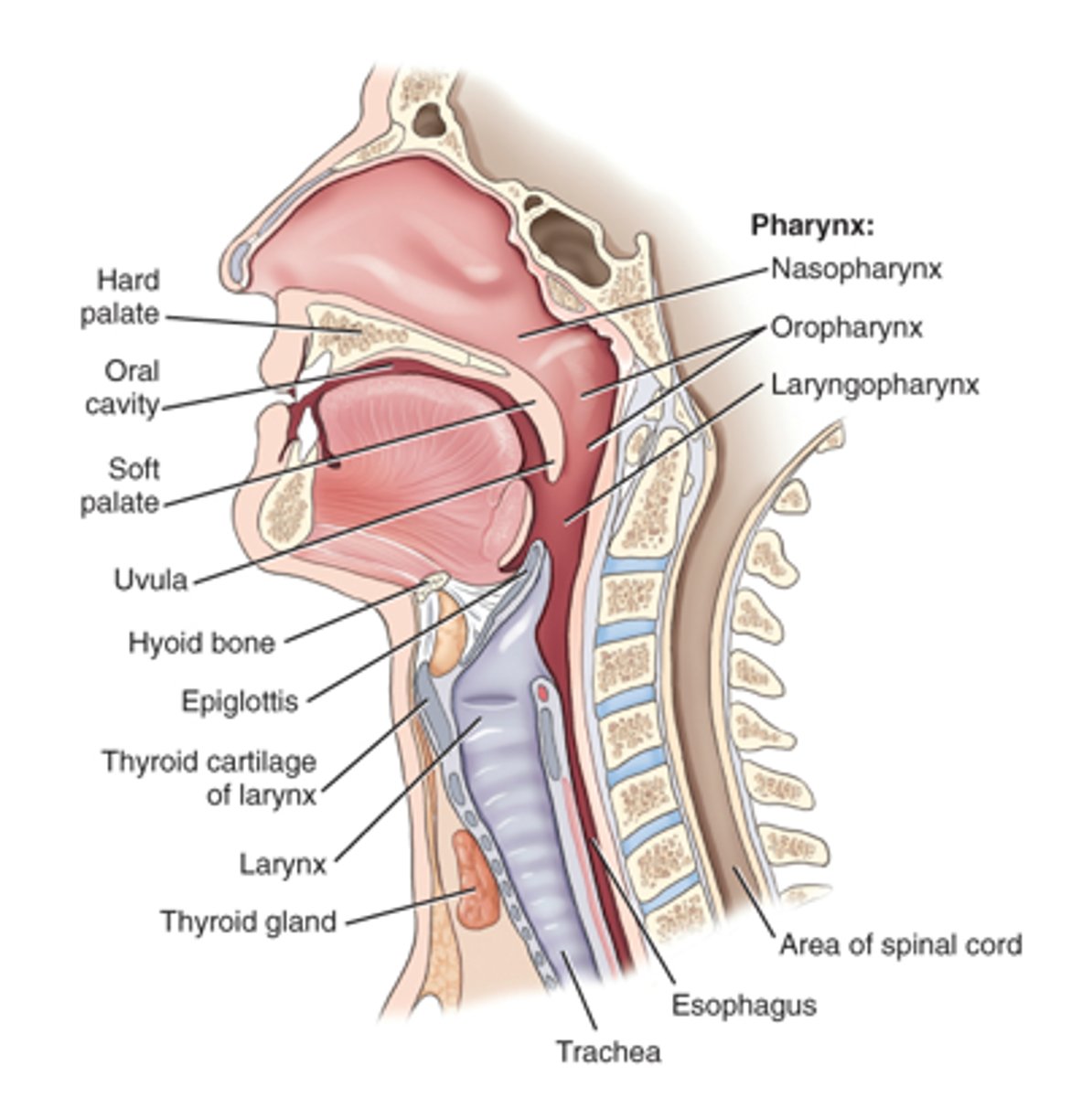
Which of the following structures is considered to be most posterior?
a. Larynx
b. Esophagus
c. Trachea
d. Hyoid bone
b. Esophagus
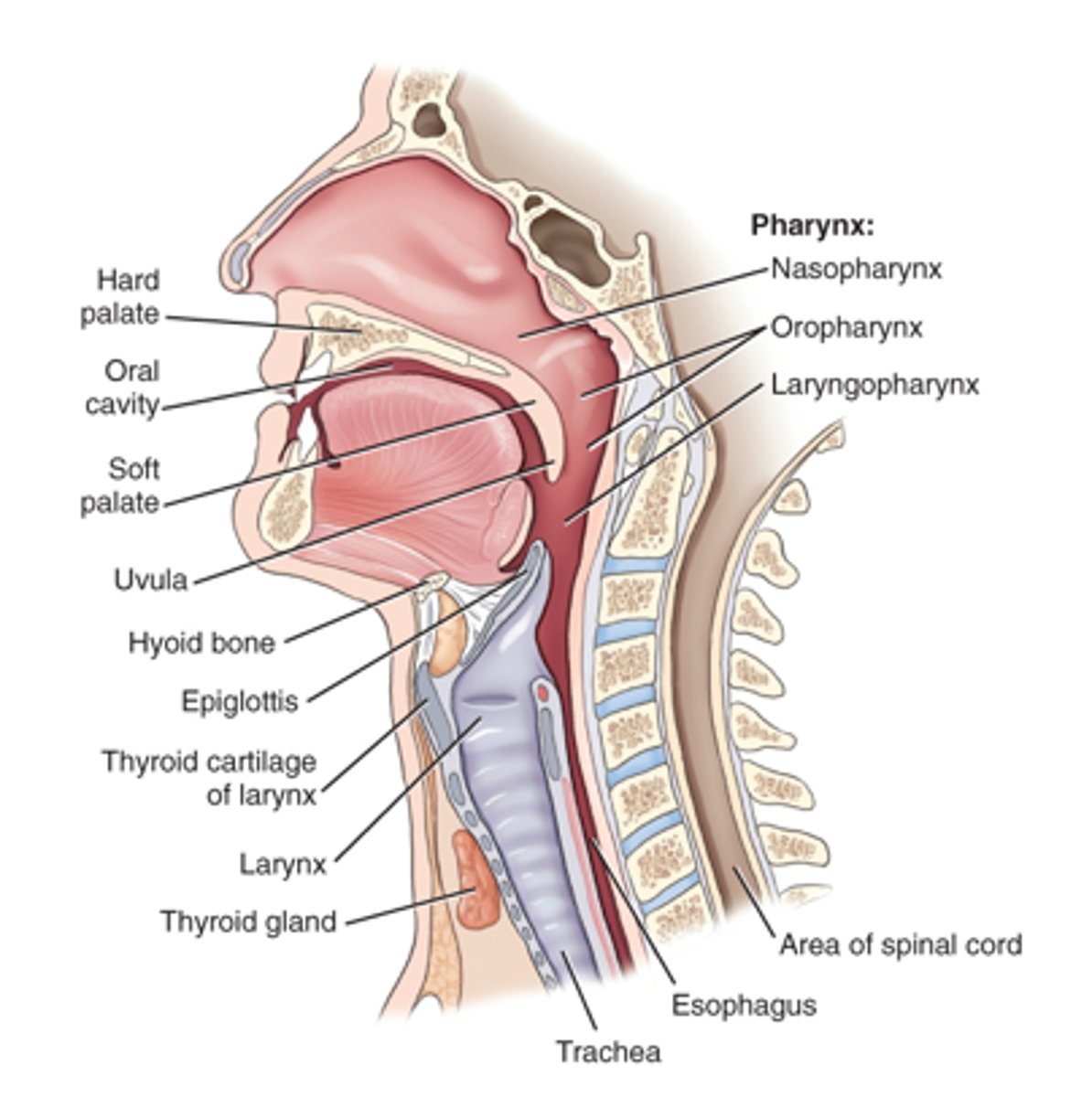
The lower concave area of the lung is termed the:
a. base.
b. apex.
c. hilum.
d. costophrenic angle.
a. base.
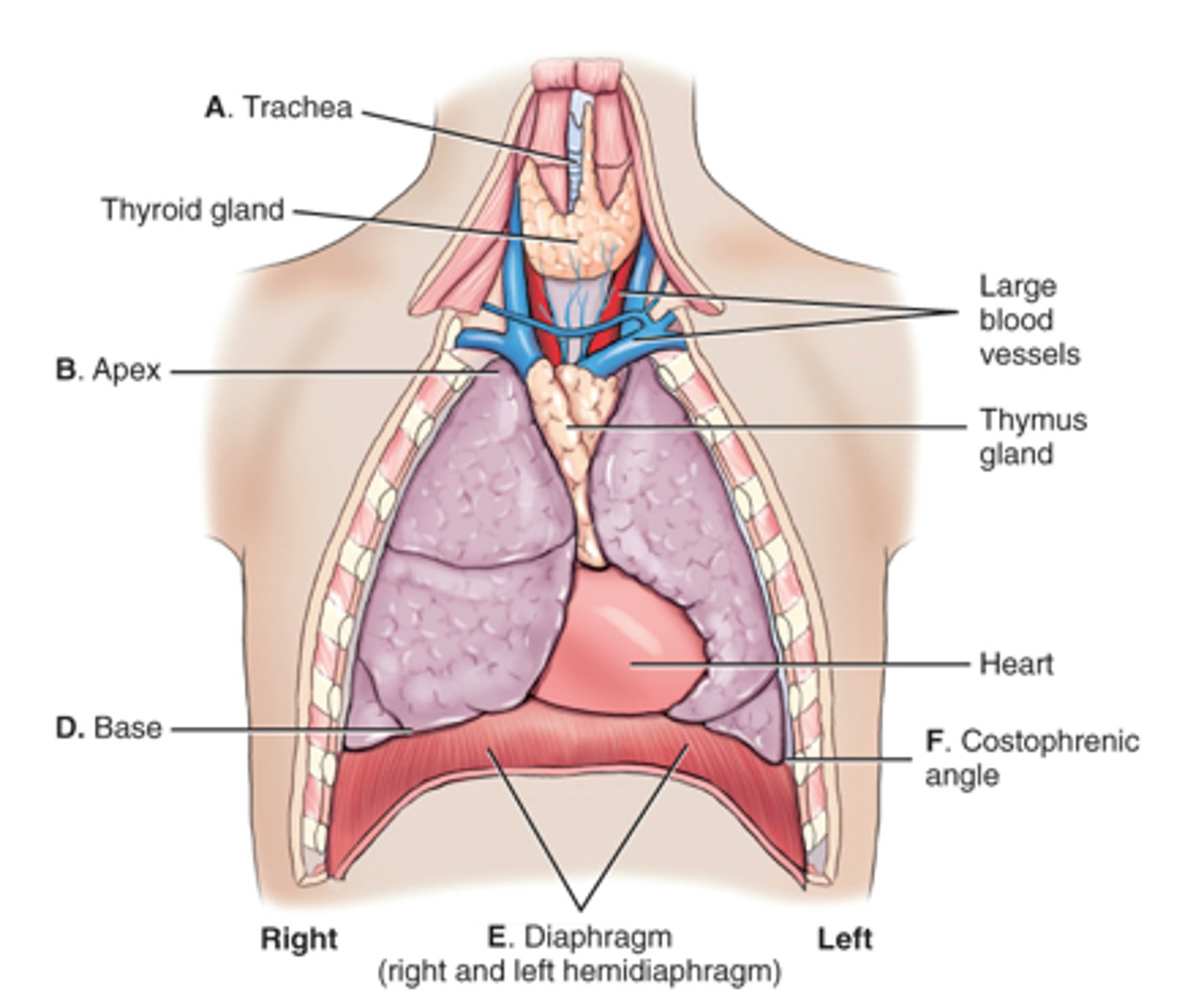
Which of the following structures is considered to be most inferior?
a. Epiglottis
b. Hyoid bone
c. Carina
d. Vocal cords
c. Carina
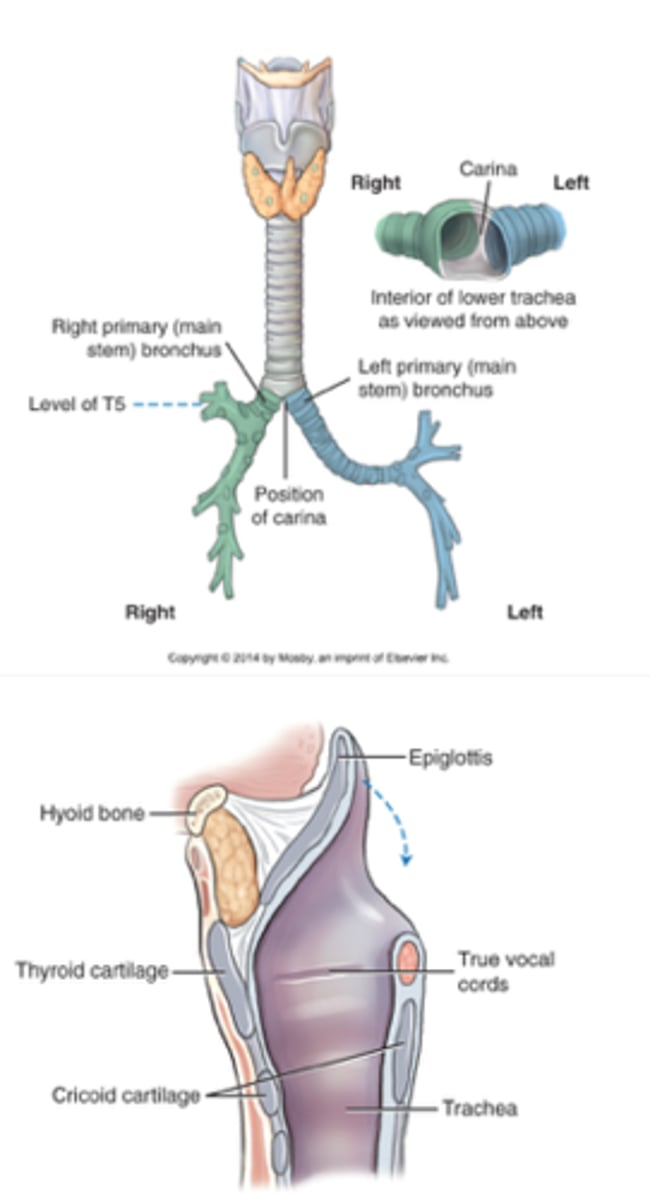
The internal prominence or ridge in which the trachea bifurcates into the right and left bronchi is termed the:
a. carina.
b. hilum.
c. thyroid cartilage.
d. costophrenic angle.
a. carina.
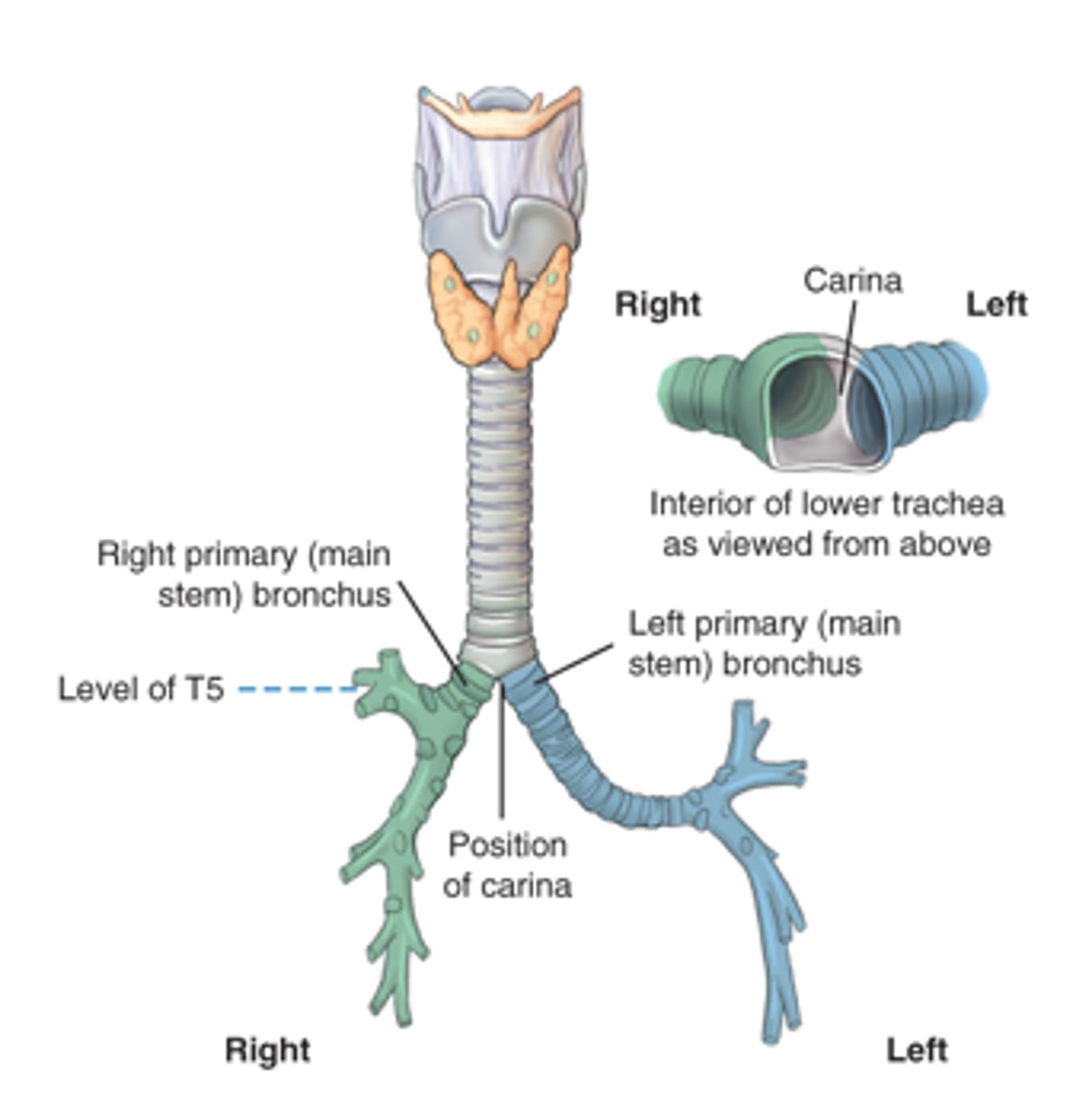
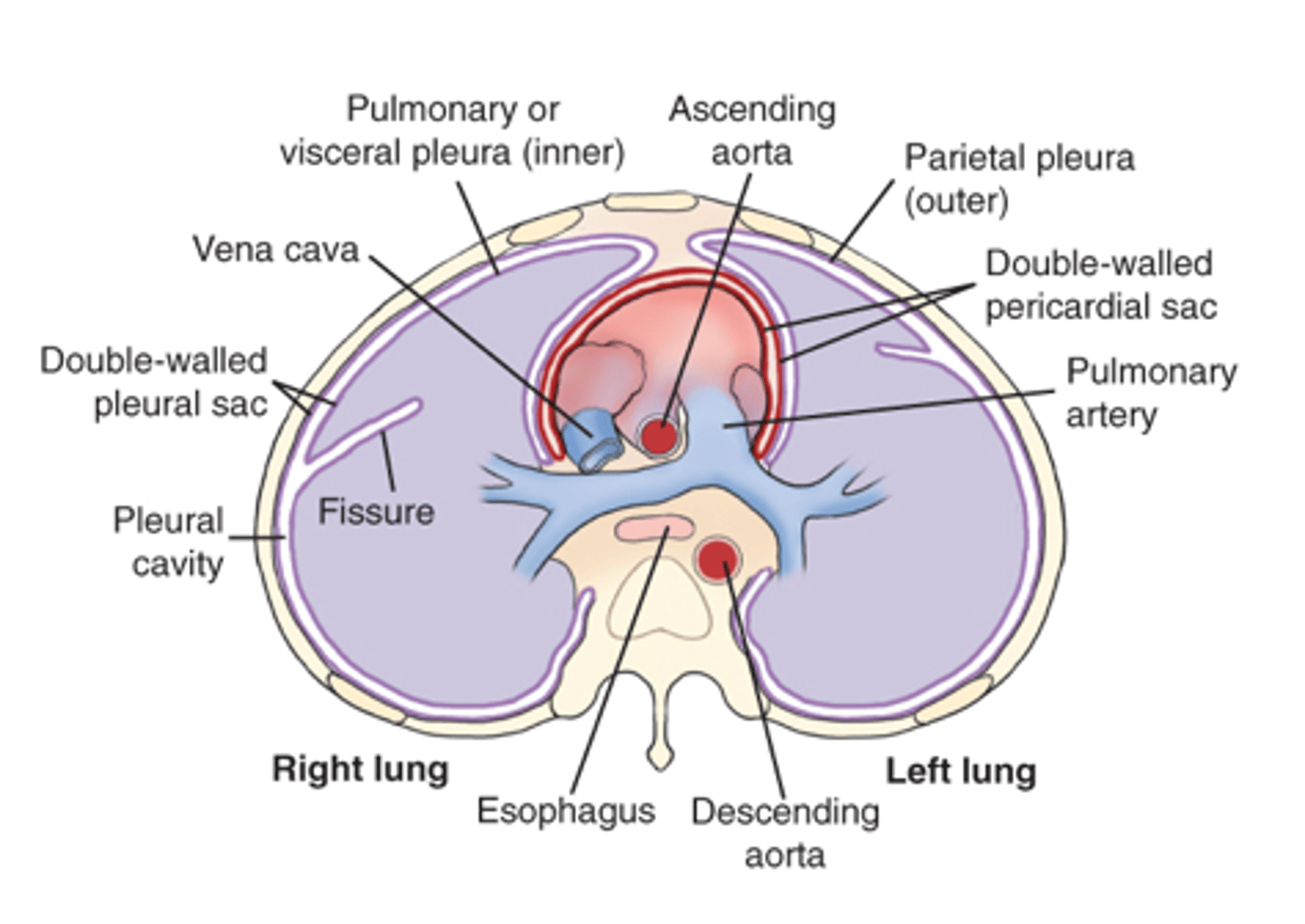
The inner layer of the pleura that encloses the lungs and heart is called the:
a. parietal pleura.
b. pericardial sac.
c. pulmonary pleura.
d. pleural cavity
c. pulmonary pleura.
Can also be referred to as visceral pleura.
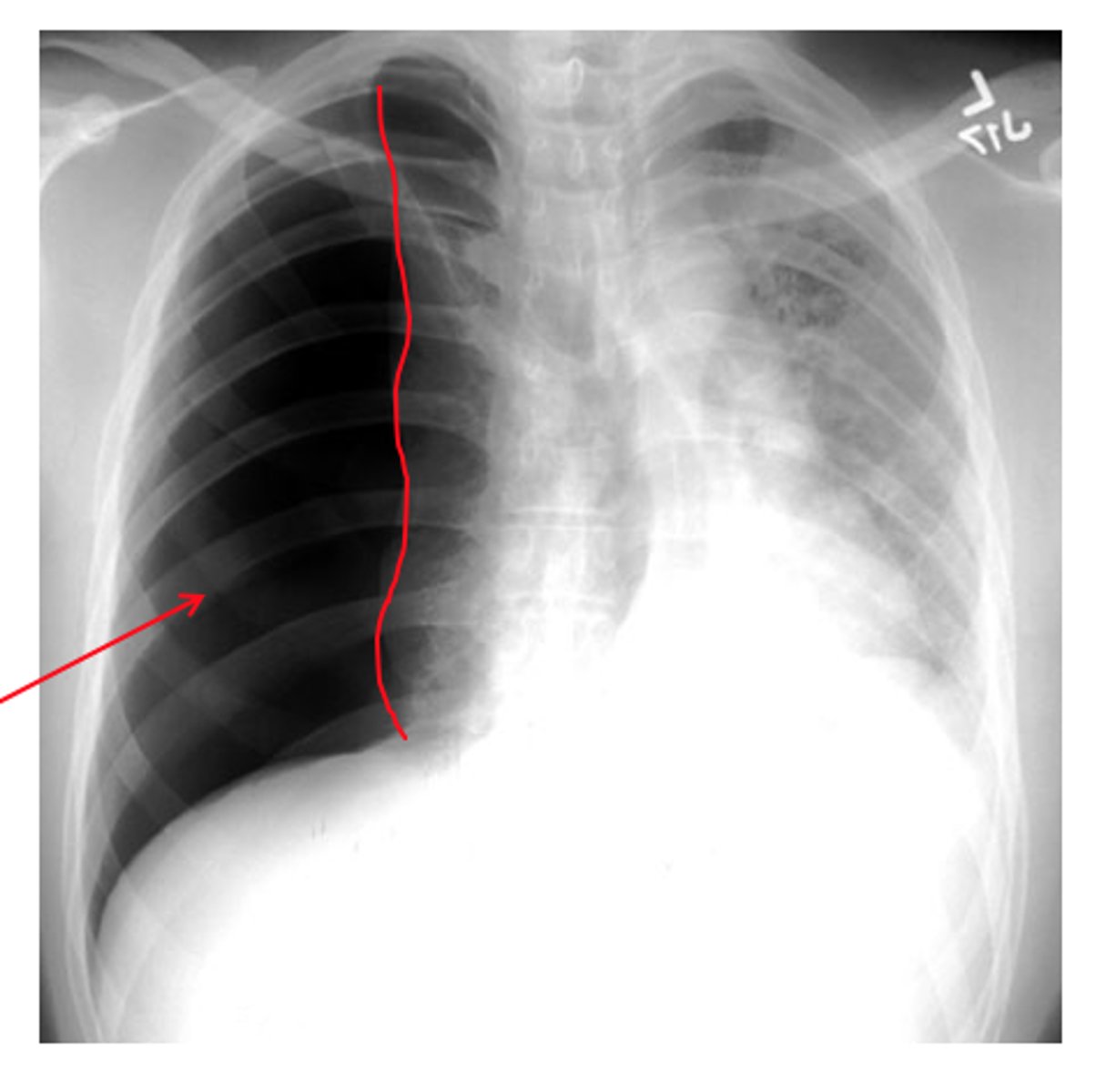
Air or gas that escapes into the pleural cavity results in a condition known as:
a. air bronchogram.
b. pneumothorax.
c. hemidiaphragm.
d. hemothorax.
b. pneumothorax.
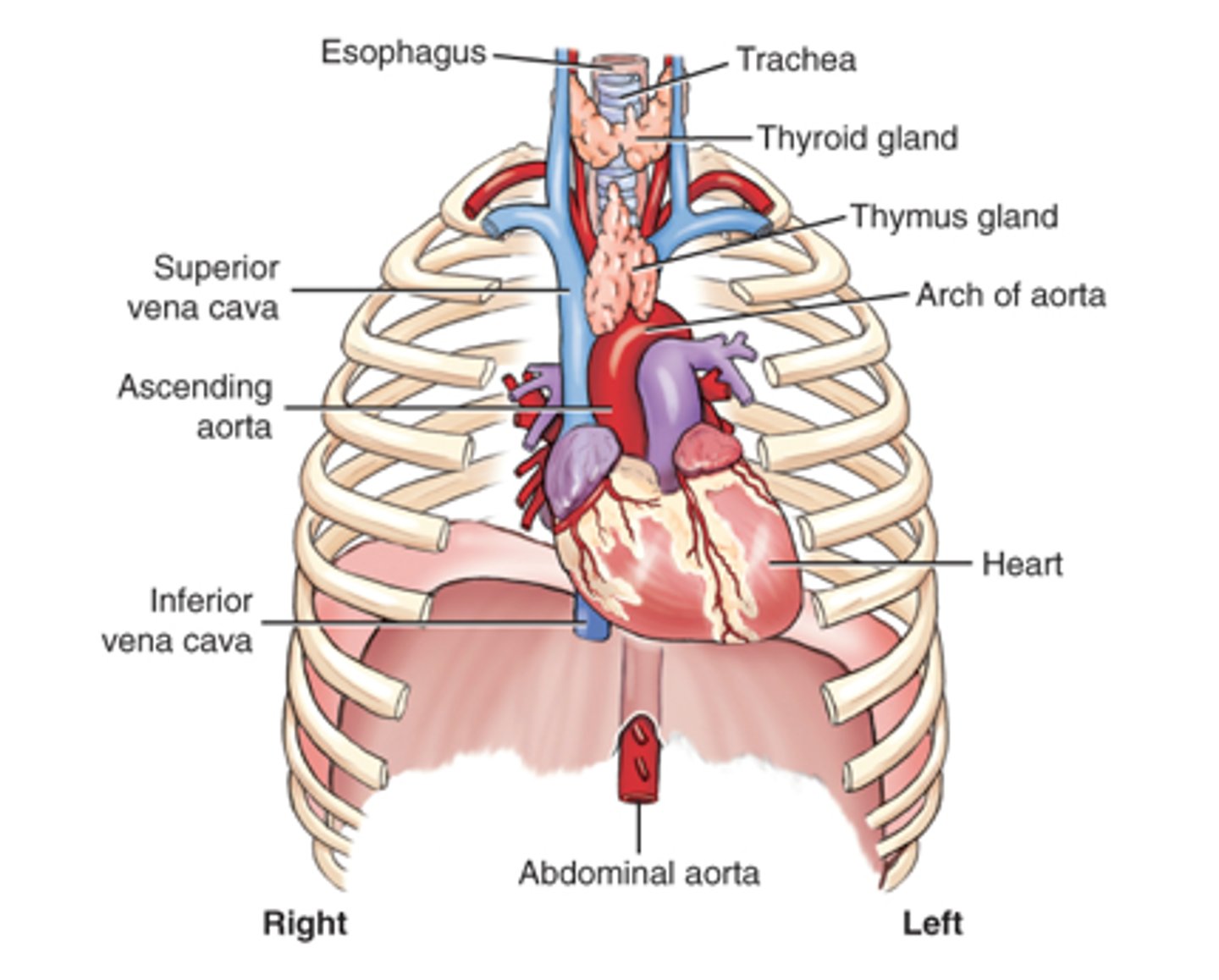
Which of the following structures is NOT considered as a mediastinal structure?
a. Thymus gland
b. Aorta
c. Trachea
d. Epiglottis
d. Epiglottis
Which of the following is considered a structure/organ of the thoracic cavity?
Medistinum
Heart
Aorta
Thymus
a, b, & c only
a only
b, c, & d
b, & d only
3. b, c, & d
The laryngeal prominence is a positioning landmark located at the level of:
a. T1.
b. C7.
c. C5.
d. C3.
c. C5.
The thyroid gland is located at the approximate level of:
a. C1-3.
b. the carina.
c. the epiglottis.
d. C5-7.
d. C5-7.
The thymus gland is at its maximum size at:
a. age 40.
b. age 21.
c. puberty.
d. birth.
c. puberty.
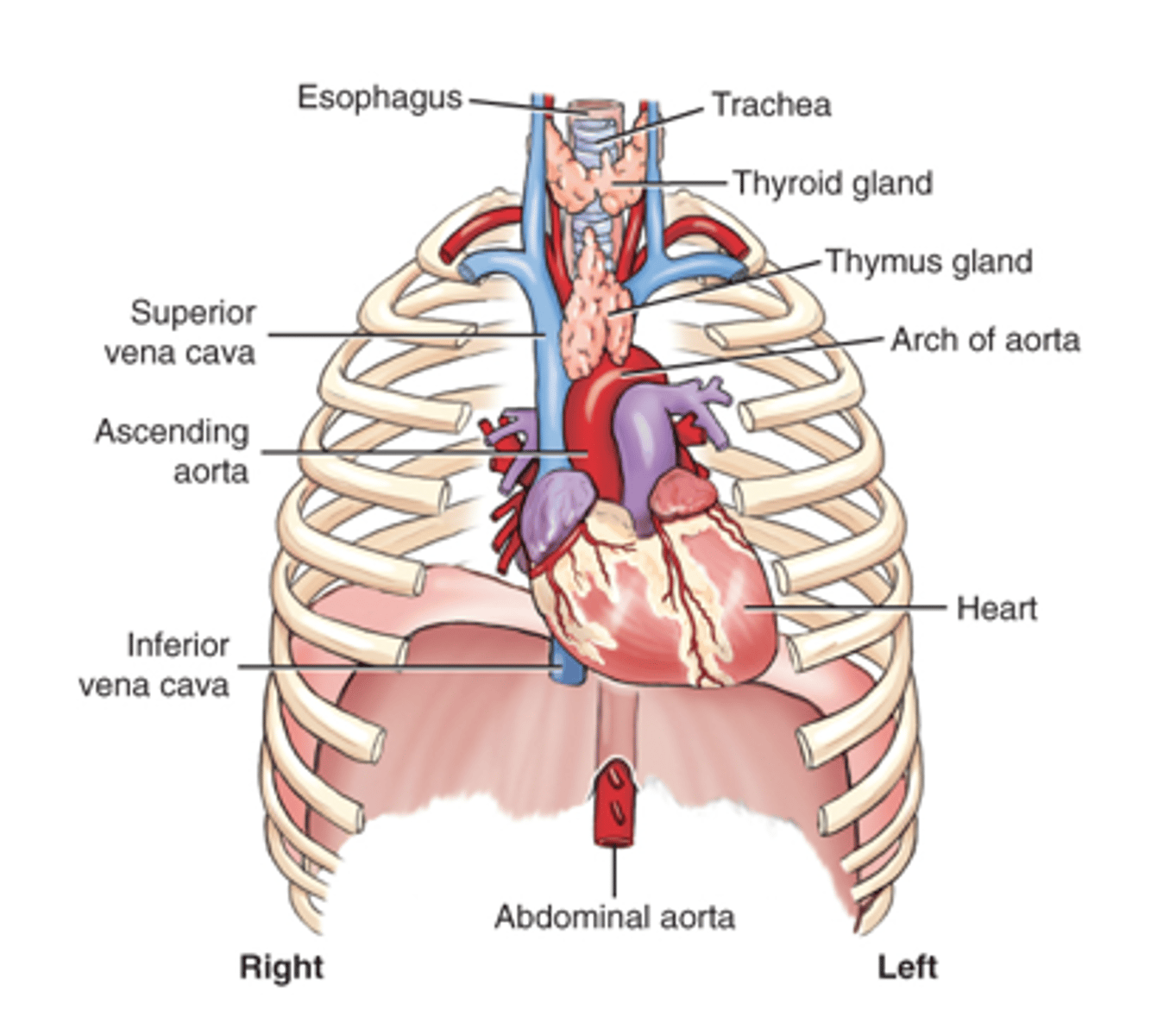
The heart is located in the anterior chest at the level of:
a. T2-5.
b. the thymus gland.
c. the arch of the aorta.
d. T5-8.
d. T5-8.
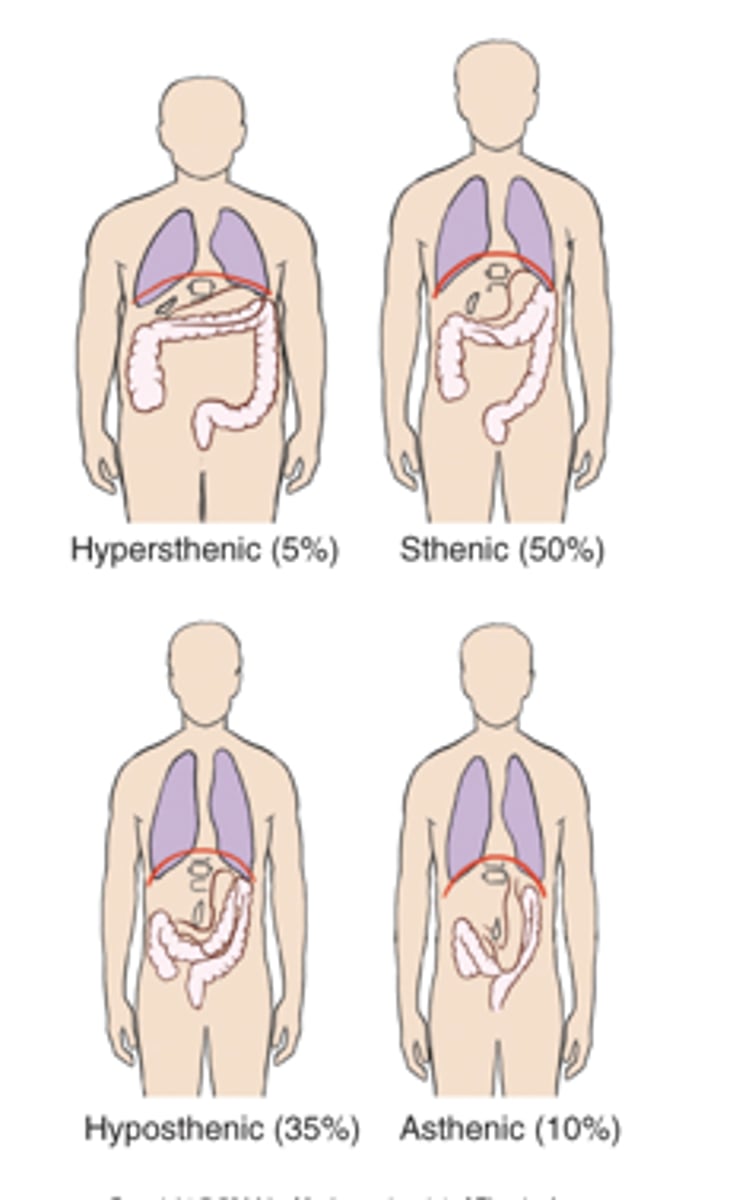
The asthenic body type makes up approximately ____% of the population.
a. 35
b. 50
c. 5
d. 10
d. 10
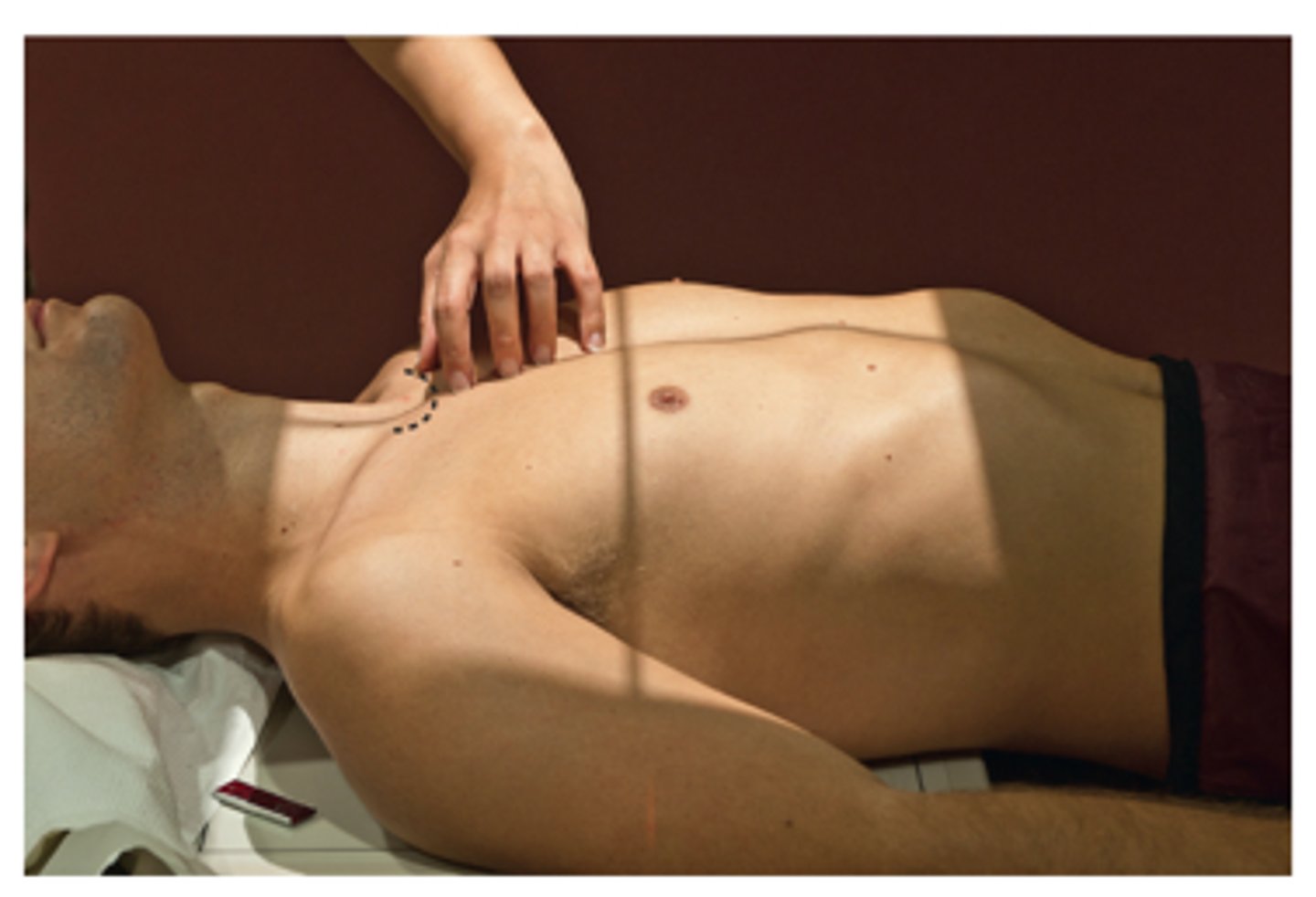
The central ray (CR) for an anteroposterior (AP) supine, adult chest projection, should be centered:
a. to level of T4.
b. 3 to 4 inches (8 to 10 cm) below the jugular notch.
c. at the vertebra prominens.
d. at the xiphoid process.
b. 3 to 4 inches (8 to 10 cm) below the jugular notch.
For an AP portable chest on an older or hypersthenic male patient, which of the following should occur?
a. The image receptor generally should be placed lengthwise.
b. The CR should be centered 3 inches (8 cm) below the jugular notch.
c. The CR should be centered to the mammillary (nipple) line.
d. None of the above should occur.
b. The CR should be centered 3 inches (8 cm) below the jugular notch.
Which one of the following clinical indications often requires the inspiration/expiration chest series to be taken?
a. Chronic asthma
b. Small pneumothorax
c. Pneumoconiosis
d. Primary tuberculosis
b. Small pneumothorax
Pleurisy may be demonstrated radiographically by associated:
a. pleural effusion.
b. empyema.
c. pneumothorax.
d. silicosis.
a. pleural effusion.
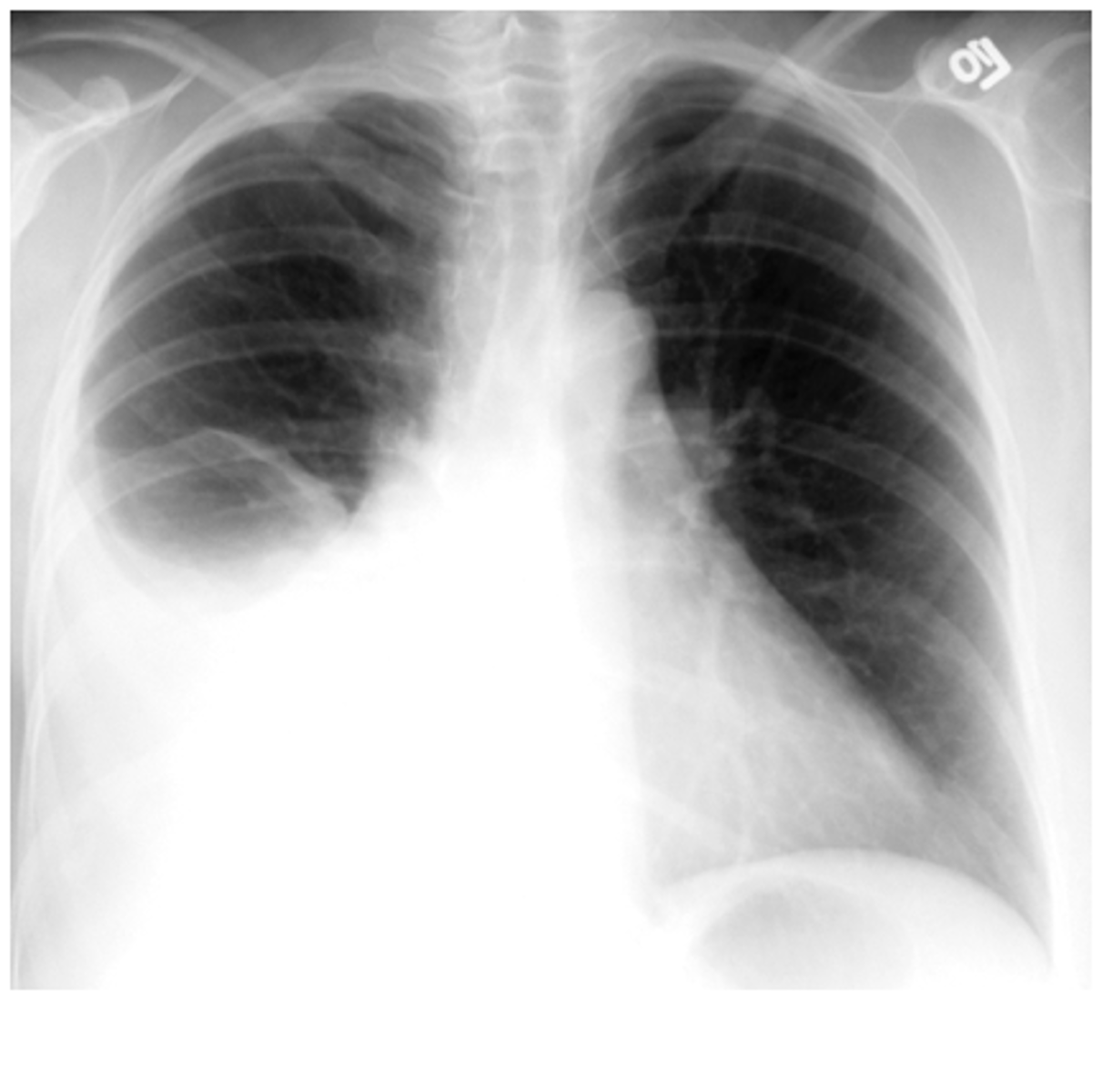
What is a common radiographic sign seen on a chest radiograph for a patient with respiratory distress syndrome (RDS)?
a. Enlargement of heart
b. Fluid in apices
c. Elevated diaphragm
d. Air bronchogram
d. Air bronchogram
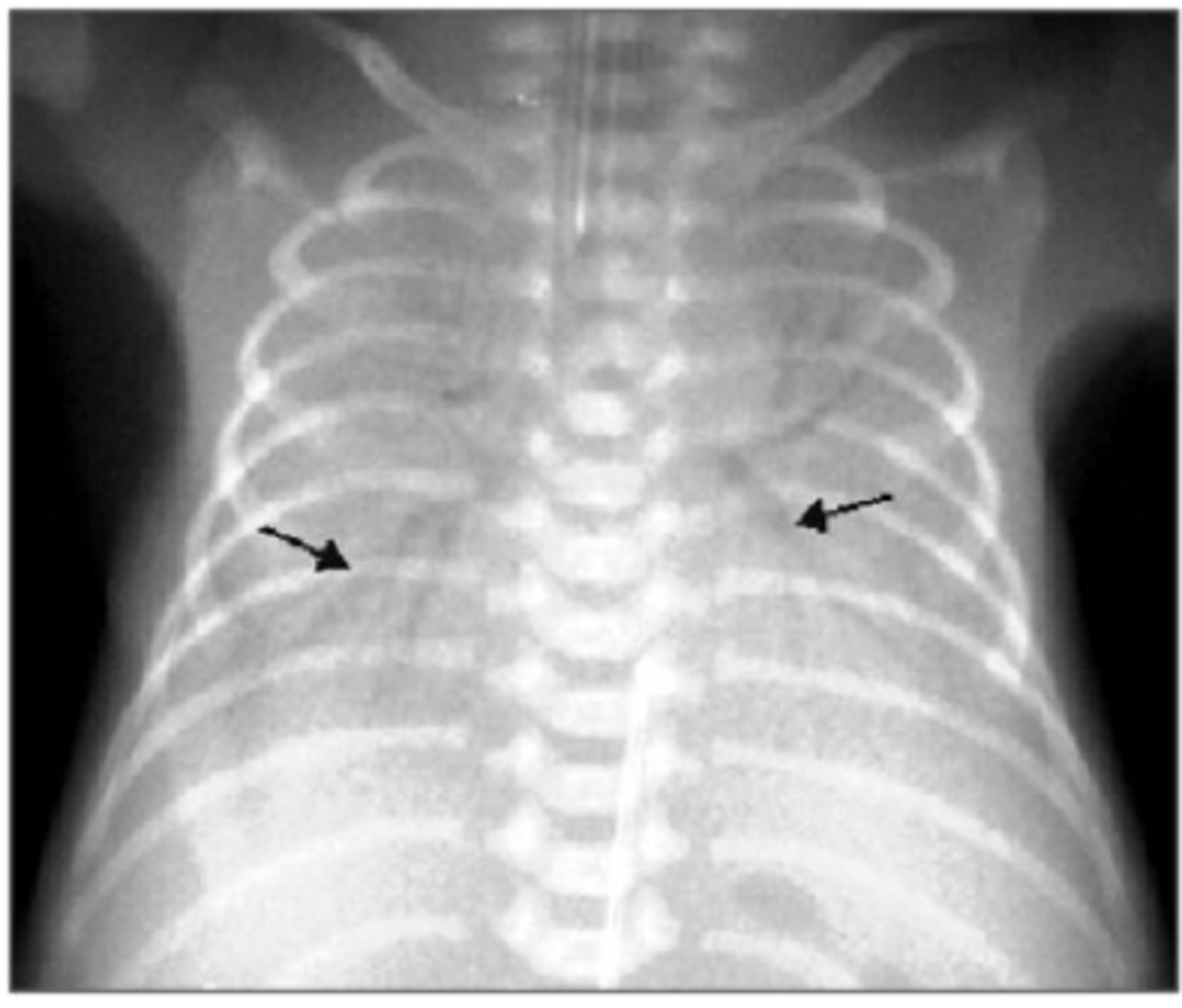
Which type of body habitus typically requires that the image receptor be placed crosswise rather than lengthwise for a posteroanterior (PA) chest?
a. Hypersthenic
b. Asthenic
c. Sthenic
d. Hyposthenic
a. Hypersthenic
Geriatric patients generally require higher central ray (CR) centering than younger patients.
a. True
b. False
a. True - because their lungs tend to be more shallow due to less inhalation capabilities. Should also take kyphosis into consideration.
Top of image receptor placed approximately 3 inches (7.6 cm) above the shoulders is a recommended centering technique for adult chest radiography.
a. True
b. False
b. False - 1 ½ to 2 inches above the shoulders for the average size patient
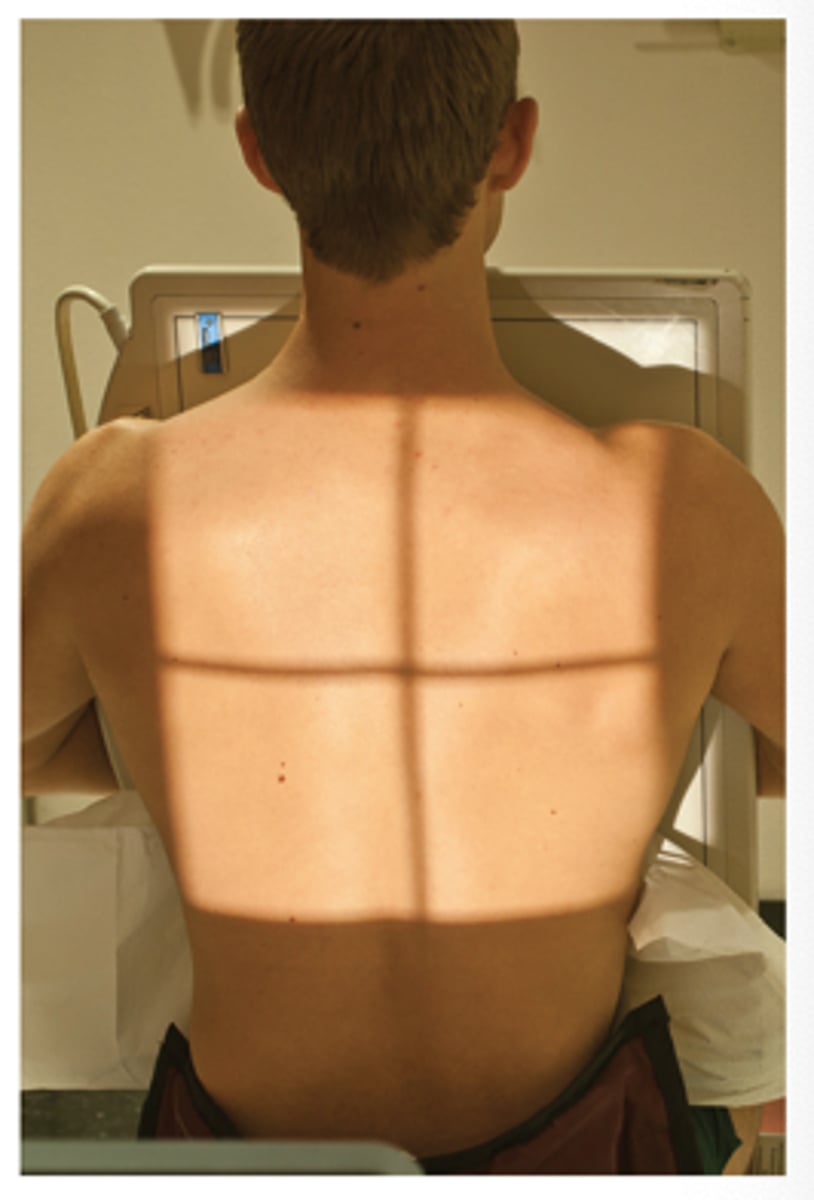
Collimation guidelines indicate the upper border of the collimation field should be about 2 inches (5 cm) above the vertebra prominens.
a. True
b. False
b. False - upper border of collimation field should be at the level of vertebral prominens.
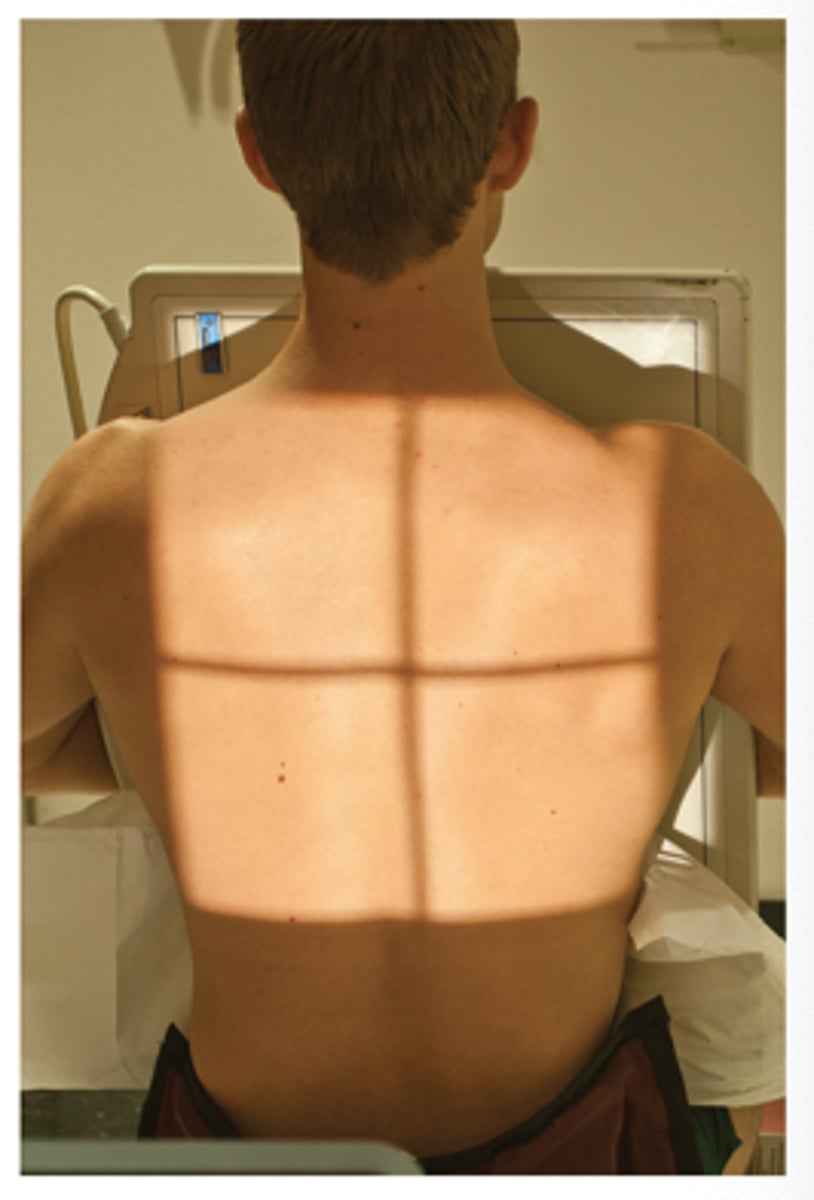
An electrocardiography and echocardiography are the same procedure.
a. True
b. False
b. False - electrocardiography looks at the electrical impulses of the heart,
Whereas echocardiography uses ultrasonic waves to study blood flow
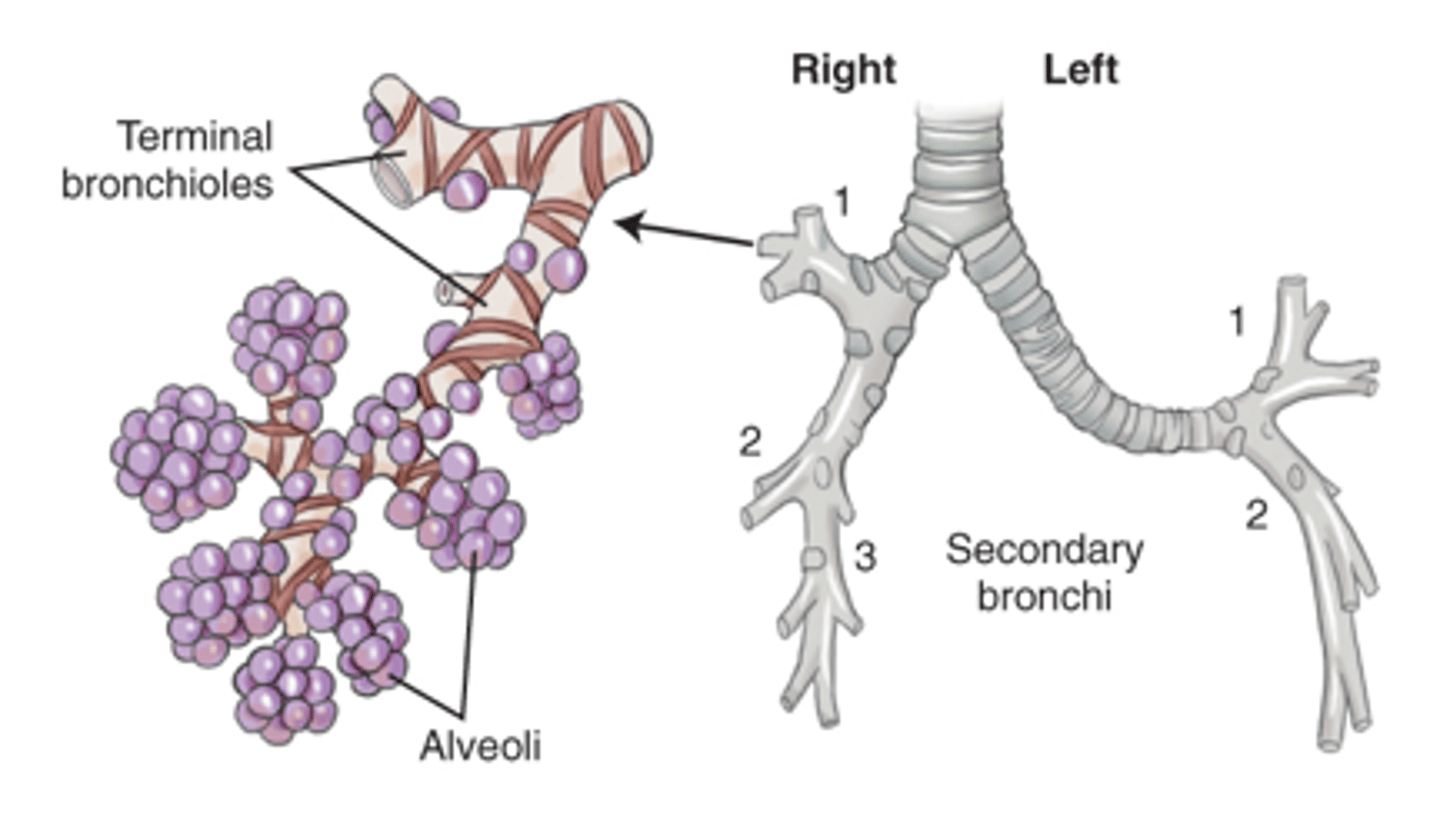
Which of following statements is NOT true?
a. The angle of divergence of the left bronchus is greater than that of the right bronchus.
b. The left bronchus is more horizontal than the right bronchus.
c. The right bronchus is shorter than the left bronchus.
d. The right lung contains three lobes.
b. The left bronchus is more horizontal than the right bronchus.
A well-inspired average adult chest PA projection will have a minimum of ____ posterior ribs seen above the diaphragm.
a. 8
b. 7
c. 10
d. 1
c. 10
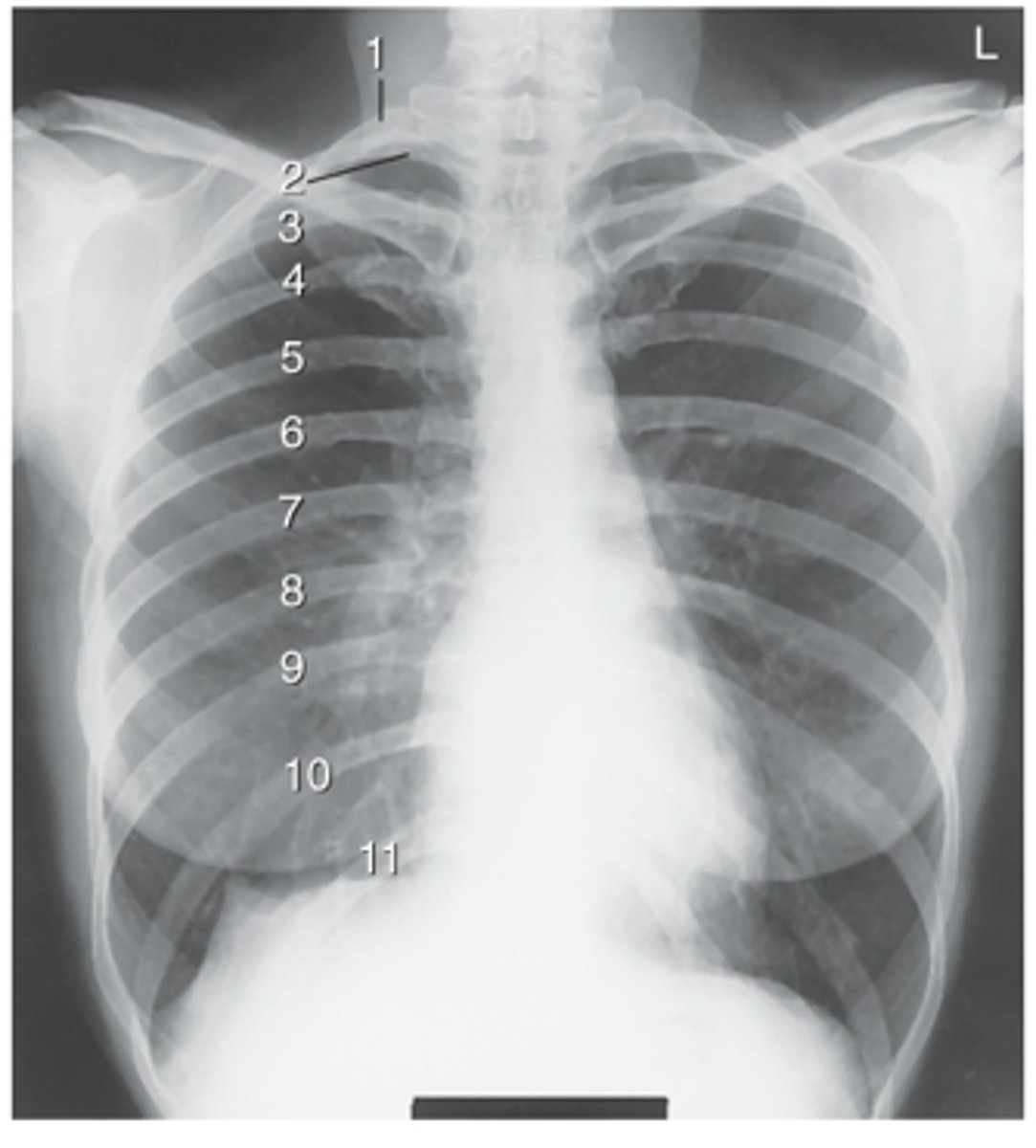
Which of the following objects does NOT have to be removed or moved before a chest radiography?
a. Necklace
b. Bra
c. T-shirt
d. Glasses
d. Glasses
A PA chest radiograph reveals that only seven ribs are seen above the diaphragm on a healthy adult. Which of the following suggestions would improve the inspiration of lungs?
a. Use higher kV to penetrate the diaphragm.
b. Perform chest position supine.
c. Take exposure on the second inspiration rather than on first.
d. Use a shorter exposure time.
c. Take exposure on the second inspiration rather than on first.