BY 124L - Lab 10: Development
 Call Kai
 Learn
Learn Practice Test
 Spaced Repetition
 Match
Match Flashcards
 Knowt Play
1/27

There's no tags or description
Looks like no tags are added yet.
Name | Mastery | Learn | Test | Matching | Spaced | Call with Kai | Chat |
|---|
No analytics yet
Send a link to your students to track their progress
28 Terms
Stages of Early Development
1. Fertilization (Zygote)
2. Cleavage
3. Blastulation
4. Gastrulation
5. Neurulation + Organogenesis
differentiation
cells of different tissue lineages will express different parts of their genome to fulfill their designated function
morphogensis
development of an organism's body plan and tissue organization
Zygote
• sperm meets egg in metaphase 2
• polar body is expelled + zygote completes metaphase 2, leading to a single diploid cell
• embryonic development
• has TWO poles
embryonic development of zygote
• single 2n cell has multicellularity via mitotic divisions and cell signaling
two poles of zygote
• Animal Pole: becomes the organism
• vegetal pole: feeds the animal pole
Cleavage
• the division of the single cell into multiple cells without an overall change in size
• Blastomere
• results in the morula
blastomere
a cell produced by cleavage events
morula
• result of cleavage
• consists of 16 to 32 blastomeres
cleavage events
• first 2 events: longitudinal (4 blastomeres present)
• third event: latitudinal (leads to 8 blastomeres)
blastulation
• forms the blastocoel
• cells apical to the blastocoel become ectoderm
• results in blastula
blastocoel
fluid filled spaced formed within the morula
blastula
• completion of the blastocoel
• has the dorsal lip of the blastopore
gastrulation
• cell begin migrating inward (invagination), destroying the blastocel, forming the archenteron (the precursor for mesoderm and endoderm)
• FIRST TIME the cells are differentiated
Neurulation
nervous tissue begins forming
organogensis
first two organs to develop are the neural tube ectoderm and the notochord form the mesoderm
neurulation and organogensis
• archenteron becomes the gut
• vegetal pole begins shrinking because it is used as fuel for this process
• archenteron moves to either end of the developing embryo to become the anus and mouth
ectoderm
becomes brain, spinal cord, and pituitary during last stage
mesoderm
becomes notochord, heart, liver, and skeletal muscle
endoderm
becomes anus, mouth, pharynx, and intestines
Muscle structural hierarchy
• sarcomere
• myofibril
• muscle fiber
• muscle
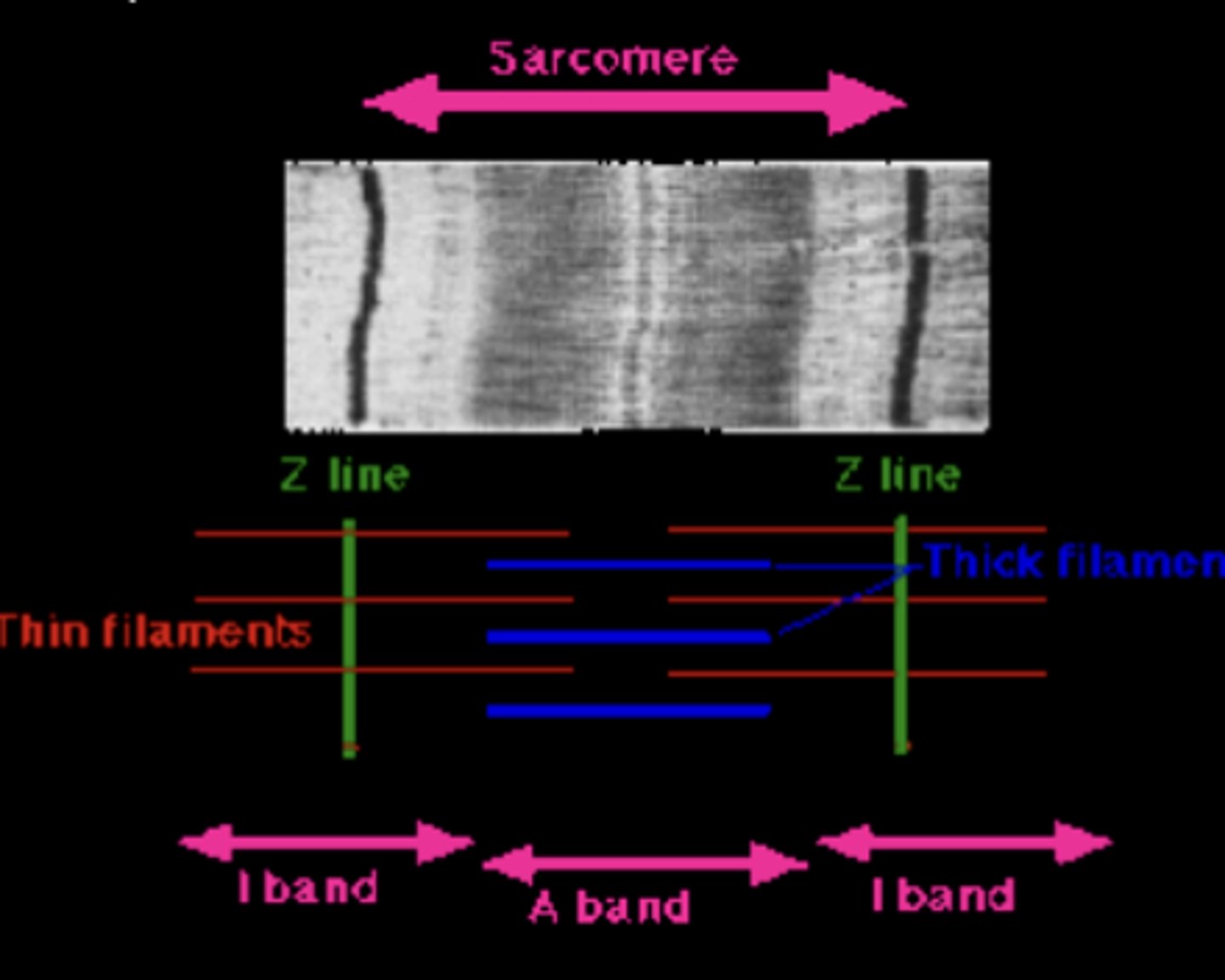
sarcomere
the fundamental functional and contractile unit of striated muscle, bounded by Z-lines and containing overlapping thin actin filaments and thick myosin filaments
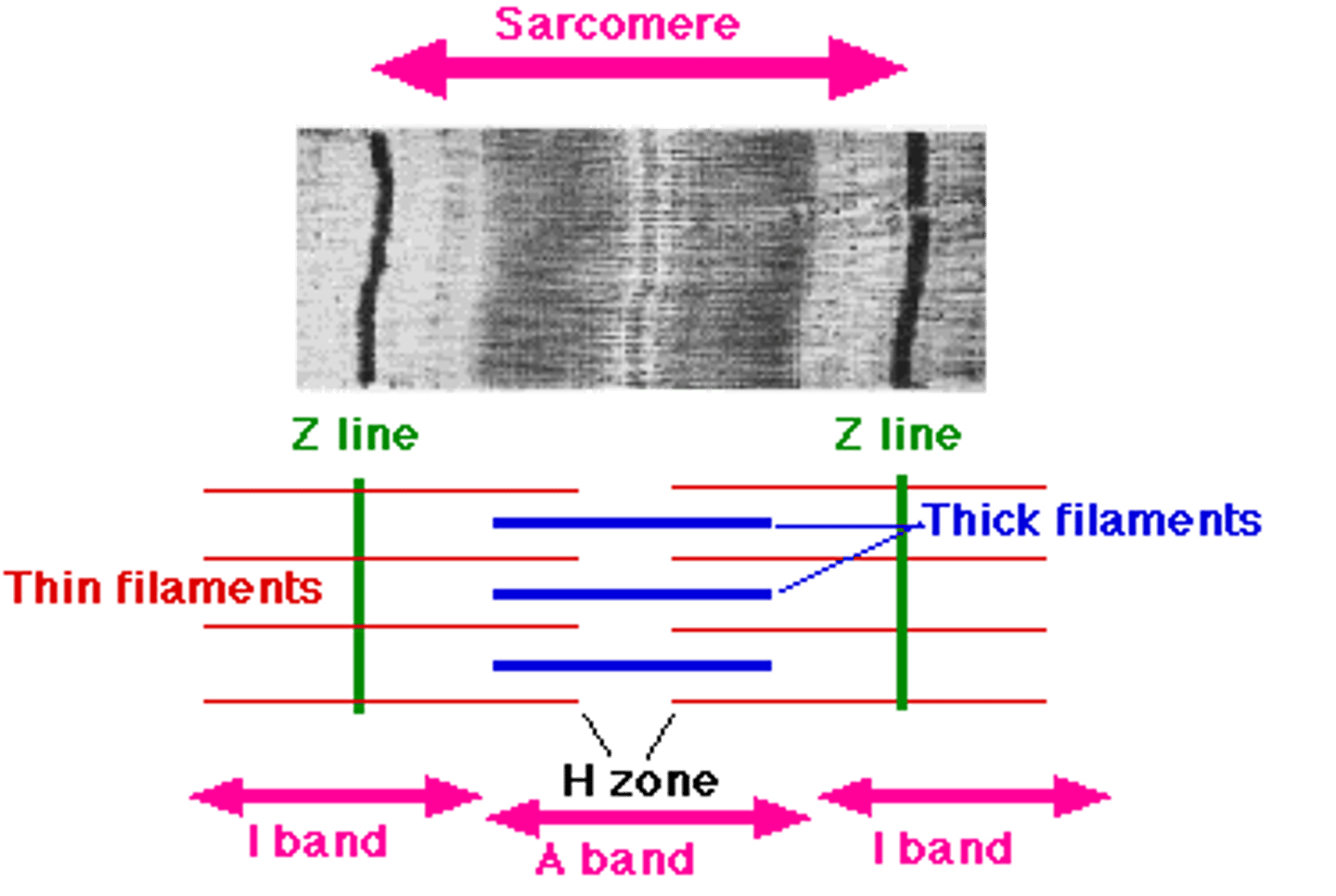
myofibril
A long, repeating chain of sarcomeres lined end-to-end inside a muscle cell
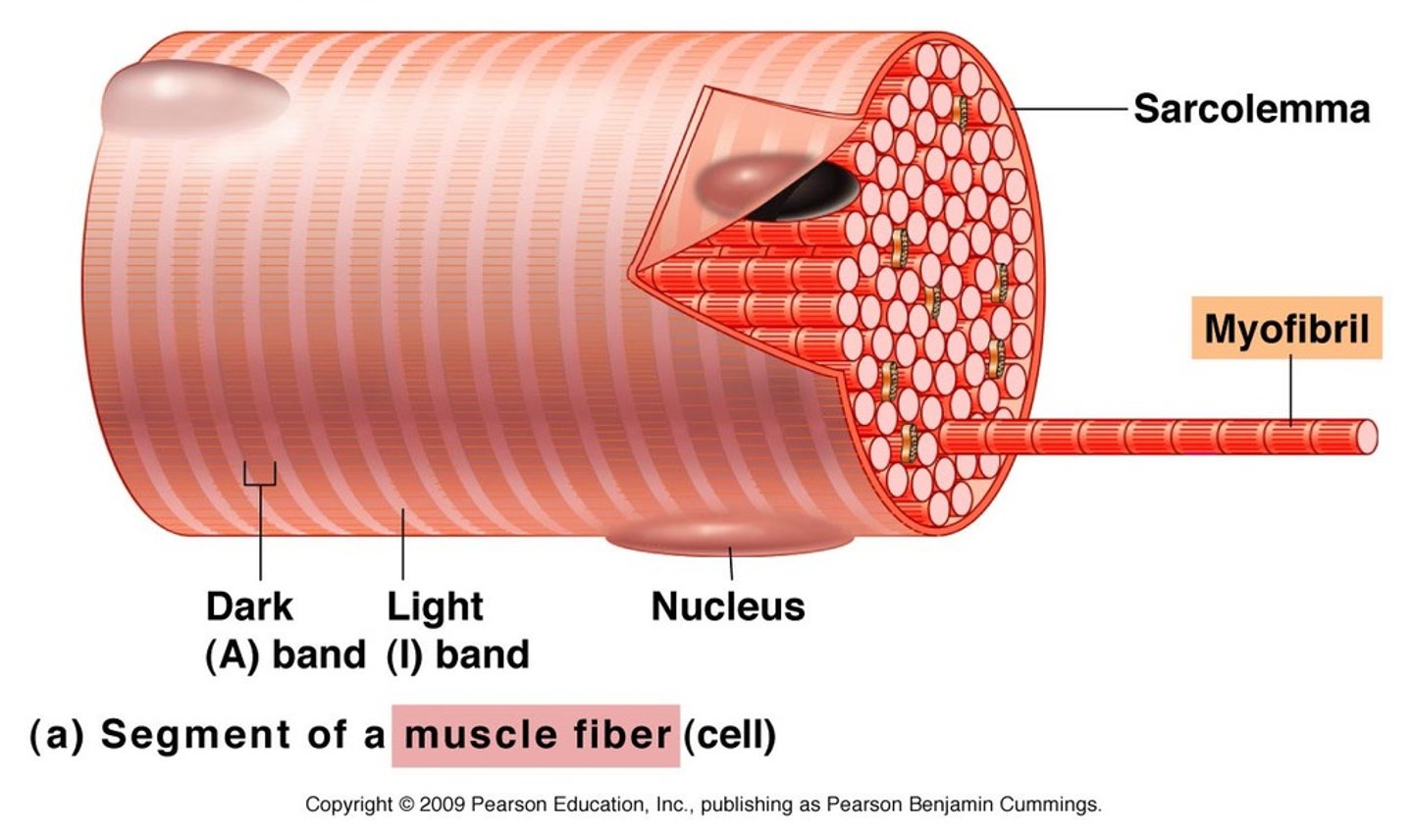
Muscle Fiber
an individual, multinucleated muscle cell packed with myofibrils

Muscle
The complete muscle organ made up of thousands of bundled muscle fibers
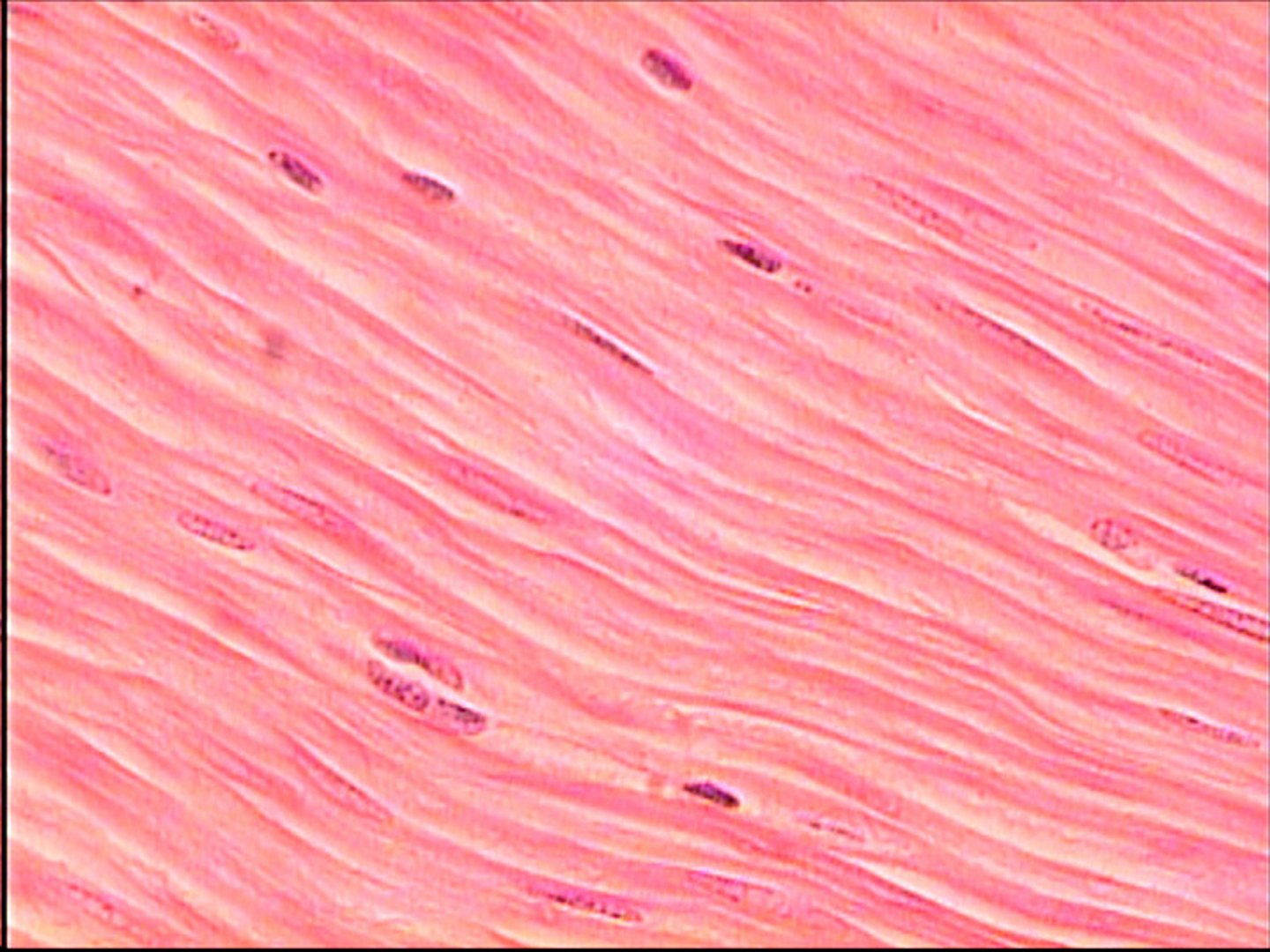
Muscle Fiber types
• fast-twitch (light fibers)
• slow-twitch (dark fibers)
Fast-twitch fibers
• lower myoglobin content
• anaerobic
• fatigues quickly
• low mitochondria
• sprinting, jumping, weightlifting
Slow-Twitch fibers
• high myoglobin and blood supply
• slow
• high fatique (built for endurance)
• aerobic
• high mitochondria density
• long-distance running, cycling,