Week 6: Inequitable Energy, Sustainability, Introduction to Waste (2/19-2/26)
 Call Kai
 Learn
Learn Practice Test
 Spaced Repetition
 Match
Match Flashcards
 Knowt Play
1/17

There's no tags or description
Looks like no tags are added yet.
Name | Mastery | Learn | Test | Matching | Spaced | Call with Kai | Chat |
|---|
No analytics yet
Send a link to your students to track their progress
18 Terms
Energy Democracy
communities should have a say and agency shaping their energy future. decentralization, community ownership & decision making
Energy Burden
expense of energy relative to household income (can ppl afford energies)
Energy Expenditure Calculation
Total spend on heating/cooling, other energy / total household income. Generally 6%
Energy Insecurity
hardships faced meeting basic needs (cost is impacting ability of household/tradeoffs)
Energy Poverty
lack of access to energy/power
the best way to help low-income households are direct installs & building performance guidelines
Community Solar
participants pay for share of the solar farm, electricity is distributed to the grid and put into utilities and fed back to households
Split Incentive Problem
building owner has rights and capital to invest in energy efficiency but tenant pays utility bills (no incentive for building owner then)
Low Income Energy Challenges
Higher overall energy costs per square foot
Higher energy costs as share of income
Appliances & water heaters or older and less efficient
Heating is more likely to be electric (more expensive)
Most likely to have additional space heating
Less control of temp/thermostat
Energy Burden Impacts
food, medical care, rent tradeoffs, mental stress, uncomfortable temperatures (and sickness), CO poisoning, unsafe heaters
Waste Streams
industrial, mining/mineral processing, construction & demolition, municipal solid, oil/gas exploration, hazardous solid (where does waste come from)
Linear Economy
inefficient; extraction, production, consumption, land-filling & incineration (waste is manufactured, disposed of using resources, reducing waste uses resources). can be circular to less goes to landfill
Where does majority of waste come from?
Paper/paperboard & food (30% of all food produced)
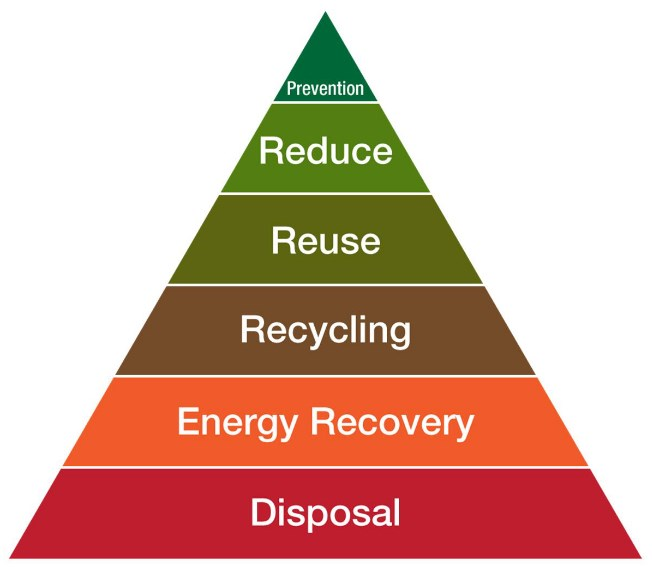
Waste Hierarchy
Most preferred method to control waste is reduction, while least preferred is disposal
Zero Waste Steps
Producer responsibility
Price goods to reflect impacts
Make recycling accessible and cheaper than landfilling
Require built-to-last goods
Ban single-use items
Invest in repair, reuse, recycling, & composting infrastructure
Require producers to use recycled materials
Safe disposal of wastes
Oppose subsidies for landfills, incinerators
Municipal Solid Waste
MSW, everyday items that are discarded by the public
Why do we consume so much?
mass production, manufacturing after WWII, consumerism, status & identity
Fast Fashion
accelerated process of new designer ideas into products. new trends and campaigns mean stores can quickly change menu items to stay relevant (and older items become irrelevant)
Polyester
what clothes are often made of, connected to fossil fuels/petroleum, is harmful for environment and non-biodegradable
leading cause of microplastics in oceans