microbio lab practical
 Studied by 0 people
 Call with Kai
 Learn
Learn Practice Test
 Spaced Repetition
 Match
Match Flashcards
 Knowt Play
1/52

There's no tags or description
Looks like no tags are added yet.
Name | Mastery | Learn | Test | Matching | Spaced | Call with Kai |
|---|
No study sessions yet.
53 Terms
first step of gram stain
primary stain, reagent is crystal violet, gram pos and gram neg is purple
second step of gram stain
mordant, reagent is iodine solution, gram pos and gram neg purple
third step of gram stain
decolorization, reagent is alcohol, gram pos purple, gram neg clear cause don’t have enough peptidoglycan to retain purple
fourth step of gram stain
counterstain, reagent is safranin, gram pos purple, gram neg pink
purpose of gram stain
To differentiate bacteria based on cell wall composition
results- purple
is gram positive and has thick peptidoglycan
results- pink
is gram negative and has thin peptidoglycan and outer membrane
bacillus subtilis
bacteria, gram positive, motile
citrobacter freundii
bacteria, gram negative, motile
Ecoli K12
bacteria, gram neg, motile
enterobacter aerogenes
bacteria, gram neg, motile
enterococcus durans
bacteria, gram positive, nonmotile
micrococcus luteus
bacteria, gram pos, nonmotile, pigmented
micrococcus roseus
bacteria, gram positive, nonmotile
pseudomonas fluorescens
bacteria, gram negative, motile, pigmented
S cerevisiae
fungi, nonmotile, yeast
Staphylococcus epidermidis
bacteria, gram positive, nonmotile
differentiation
used to distinguish one organism from another
selection
enhances the growth of one organism while suppressing another organism
hypothesis
what you think will happen, includes if then statement, preview of discussion section
predictions
describe appearance of results that would support the hypothesis, preview of results section
results
only what you can see or observe
conclusions
if it was successful or not successful, interpretation of results, sources of error, what needs to be done next time
puc119 cut with ecori
one band, 3.2kb
puc119 with hindiii
one band, 3.2 kb
puc119 cut with ecori and hindii
one band, 3.2 kb
prux492 cut with ecori
one band, 3.2 kb plus x
prux492 cut with hindiii
one band, 3.2 kb plus x
prux492 cut with ecori and hindiii
two band, 3.22 kb and x
tryptone
provides amino acids or nitrogen source
yeast extract
provides vitamins
lactose
provides carbon source and sugar
mannitol
type of sugar and gives carbon source
dipotassium phosphate
provides buffer and keeps stable ph in media
sodium chloride
provides ideal osmotic pressure in media
dextrose
help microbes make atp
peptone
provides amino acids, peptides, and nitrogen
P10 micropipette
from .5 to 10 ul
P100 micropipette
from 10 to 100 ul
P1000 micropipette
from 100 to 1000 ul
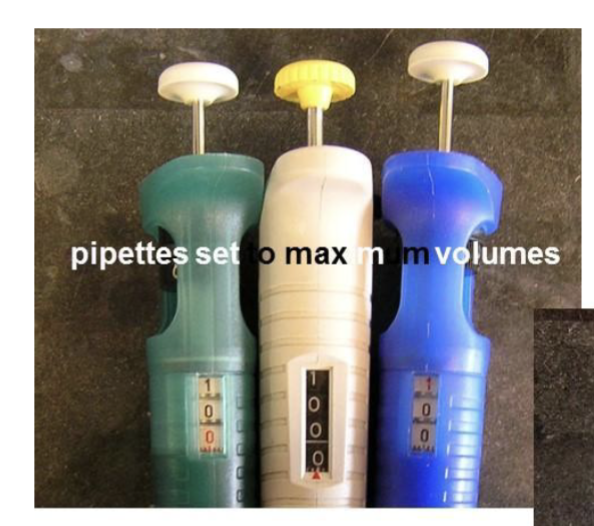
p10 is 10 ul, p100 is 100ul, p 1000 is 1000ul
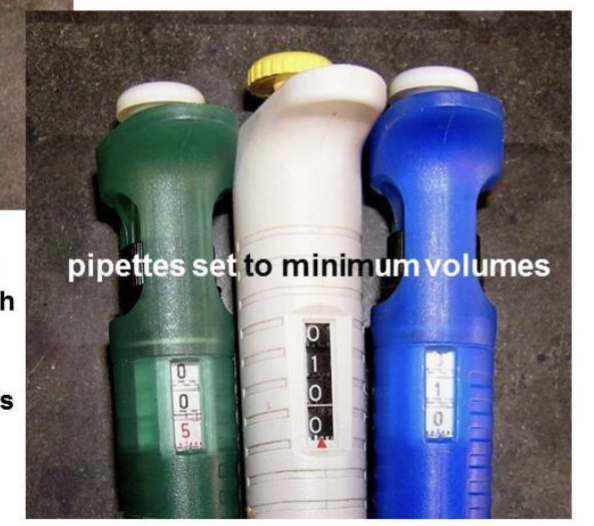
p10 is .5 ul, p100 is 10 ul, p1000 is 100ul

p10 is 3.2 ml, p100 is 54.5 ml, p1000 is 945ml
DH5a strain
is sensitive to ampicillin and can’t ferment lactose, agar is maroon and no colonies
DH5a transformed with pUC119
ferments lactose and ampicillin resistant, agar is maroon with maroon colonies
DH5a transformed with pRU4×92
can’t ferment lactose and amp resistant, agar is amber with clear colonies
transformation
the genotypic and phenotypic alteration of a cell due to uptake of foreign dna
plasmid isolation
removal of plasmid dna from previously transformed cells
ingredient important for selection
ampicillin cause it allows transformed cells to grow
ingredient important for differentiation
Ph indicator cause maroon colonies ferment lactose and clear colonies don’t
macconkey agar
selects for gram neg and differentiates between lactose fermenting and non lactose fermenting
What does it mean when the Macconkey agar turns from maroon to amber?
the cell can not ferment lactose and is ampicillin resistant
What does it mean when you observe maroon colonies on maroon agar?
the cell can ferment lactose, acid produced, ph dec