Impressionism
 Call Kai
 Learn
Learn Practice Test
 Spaced Repetition
 Match
Match Flashcards
 Knowt Play
1/17

There's no tags or description
Looks like no tags are added yet.
Name | Mastery | Learn | Test | Matching | Spaced | Call with Kai | Chat |
|---|
No analytics yet
Send a link to your students to track their progress
18 Terms

Impression Sunrise, 1872, Claude Monet, Impressionism, France 19th c
Hallmarks of Monet?
outdoors, how color is a function of light, same place but painting at different times, present moment focus, painting what he sees.


How is Monet’s artwork very realistic?
you don't actually see the details evident in artwork. Paints what he sees exactly and quickly.

Argentueil, 1874, Monet
Impressionism, France 19th c, Captures light and shadow under the bridge. Paints the mast from another boat even if it is confusing. Fidelity to the natural world

Gare Saint-Lazare, 1877, Claude Monet, Impressionism, France 19th c
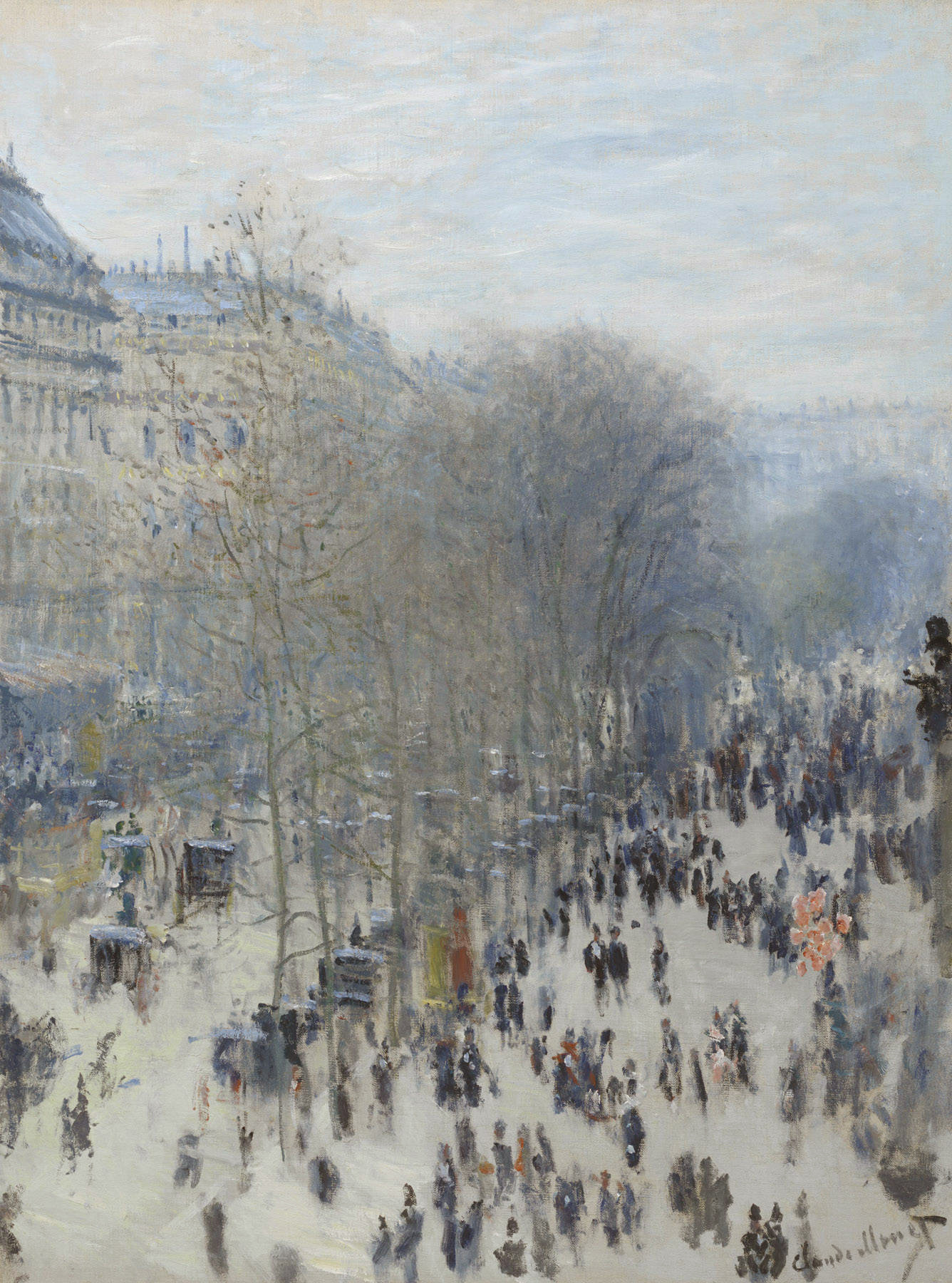
Boulevard des Capucines, 1873, Claude Monet, Impressionism, France 19th c
Impressionist art looks different, what brings them together?
know the salon won't accept their work. As a group decide to have their own exhibition. Louis leroy hates their work and calls them impressionists. Pushing against academic standard.
Optical mixing
individual colors next to each other rather than mixed

Paris; A Rainy Day, 1877, Gustave Caillebotte
France Impressionism 19th c, tighter brushstrokes than Monet, but still painterly. Studio painting, not outside. Focus on light, crops streetlight and peoples ankles that feels like photographic snapshot. Diagonal lines create motion.

Luncheon of the Boating Party, 1875, Renoir
French Impressionism 19th c Painted from life and outdoors, not in one afternoon, has his friends return for the same party so he can paint from life.
The Dance at the Moulin de la Galette, 1876, Renoir
French Impressionism, 19th c, Brushstrokes, some detailed faces in the foreground, mushy sea of bodies in the background, focus on light effected by environment,
Mary Cassatt
American impressionistic artist who trains in the US and then Paris. Shows the female gaze. 19th. Paints women and children, patterns, asymmetry. Inspired by Japanese art.


In the Loge, 1878, Mary Cassatt
American Impressionist, 19th c. Loose brushwork, lack of detail, vague architecture, woman looking at a person, background man looks at her. Opera is for music and to look at people, female gaze.

Tea, 1880, Mary Cassatt
American Impressionist, 19th c. Social commentary on what it feels like to be a woman in the middle class. Wearing hat and gloves shows who is going out. Not looking at each other or the same direction.

The Bath, 1892, Mary Cassatt
American Impressionist, 19th c. women and child. aSymmetry in composition, looking down. Patterns,
Japonisme
craze for all things Japanese after the west forcibly opens Japan to trading.
How was impressionism received?
originally made fun of, but a regular presence within years. Within the decade was no longer controversial. About 20 years until academic painters begin incorporating some ideas.
Characteristics of the impressionists
painting outdoors (planar painting), celebration of brushstrokes, little preparatory or underpainting, wet on wet, mix directly on palette, colors straight from the tube, lack of specific details for overall form
