Bio Midterm
 Call Kai
 Learn
Learn Practice Test
 Spaced Repetition
 Match
Match Flashcards
 Knowt Play
1/53

There's no tags or description
Looks like no tags are added yet.
Name | Mastery | Learn | Test | Matching | Spaced | Call with Kai | Chat |
|---|
No analytics yet
Send a link to your students to track their progress
54 Terms
What is a independent variable
The variable that is changed by the investigator, it is the variable that is thought to have an impact on the dependent variable.
What is the dependent variable
This is the variable that is measured, counted, or recorded by the investigator.
Standardized variable?
These are the variables that are kept the same in all treatments.
What is the experimental treatment ?
The experimental treatment is the one where the indecent variable is manipulated.
What is the control treatment?
Where the indecent variable is either eliminated or set at standard value.
Gram to KG
1kg=1000g
1000g=1kg
Celcius to Fahrenheit
F=(Cx1.8)+32
Fahrenheit to Celcius
C=(F-32) ÷1.8
When to use a line graph
To compare changes in a dependent variable when the independent variable is continuous.
When to use a bar graph
To compare outcomes between different groups.
What do enzymes do?
Enzymes speed up the rate of chemical reactions.
What is a catalyst
A stubstance involved in, but not consumed in, a chemical reactions.
What are enzymes?
Enzymes are proteins that catalyze biochemical reactions by lowering the activation energy necessary to break the chemical bonds in reactants and form new chemical bonds in the products.
What is the active site?
The area in which bonds of the reactants are broken down.
What is a substrate?
The reactants of enzyme-catalyzed reactions.
Enzymes are…
Substrate spefic, meaning that they only catalyze specific reactions.
Catechol
Small amounts of the substate catechol occur naturally in fruits and vegetables, along with the enzyme catecholase.
Catalase
A common enzyme found in nearly all living organisms exposed to oxygen ( such as bacteria, plants, fungi, and animals.
Amylase
An enzyme that catalyzes the breakdown of starch into simple sugars.
negative and positive control
Negative- lacks the independent variable to prove that nothing should happen when there is no effect
Positive- contains all the necessary elements of an experiment to confirm that there is an effect when there should be an effect
How to calculate total magnification
TM= (ocular lens magnification)x (objective lens magnification)
Example- TM= (10X) x (4X)= 40X
What is a prokaryote
A prokaryote is a single-celled organism whose cells lack a membrane-bound nucleus and membrane-bound organelles.
What is a eukaryotes
A eukaryote is an organism whose cells contain a true, membrane-bound nucleus that houses its DNA, along with membrane-bound organelles that compartmentalize cellular functions.
Key features of eukaryotic cells:
DNA enclosed within a nucleus
Presence of organelles such as mitochondria, endoplasmic reticulum, Golgi apparatus, and (in plants) chloroplasts
Generally larger and more complex than prokaryotic cells
Can be single-celled or multicellul
Key characteristics of prokaryotes
No nucleus: DNA is free in the cytoplasm (nucleoid region).
No membrane-bound organelles: No mitochondria, ER, or Golgi.
Single-celled: Always unicellular organisms.
Circular DNA: Usually one main circular chromosome.
Cell wall usually present: In bacteria, made of peptidoglycan.
Reproduce by binary fission: Asexual cell division.
Small and simple cells: Much smaller than eukaryotic cells.
What are bacteria?
Small, prokaryotic cells that can be found anywhere and everywhere
Cocci
Spherical
Bacilli
Rod shaped
Spirillum
Spiral-shaped
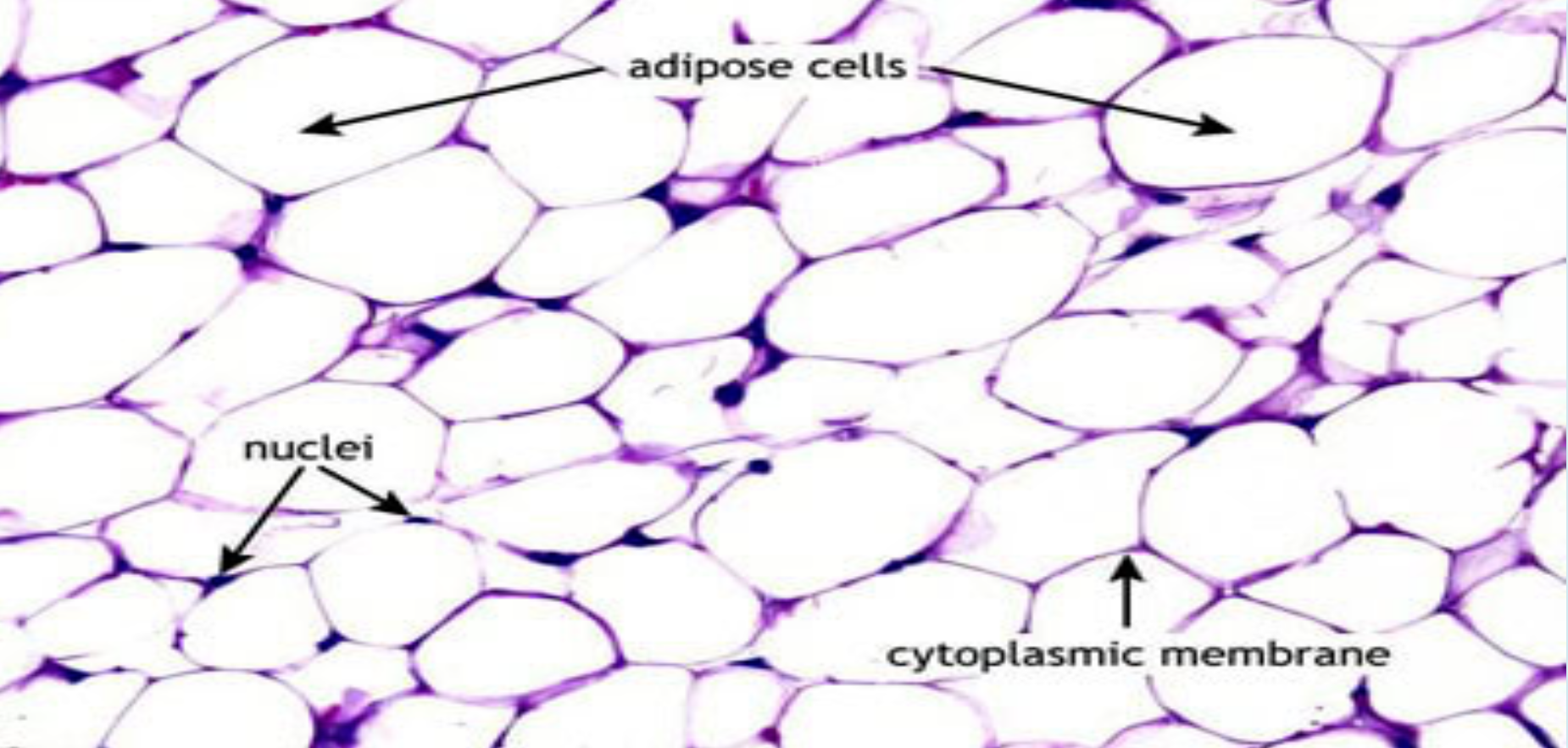
Adipose
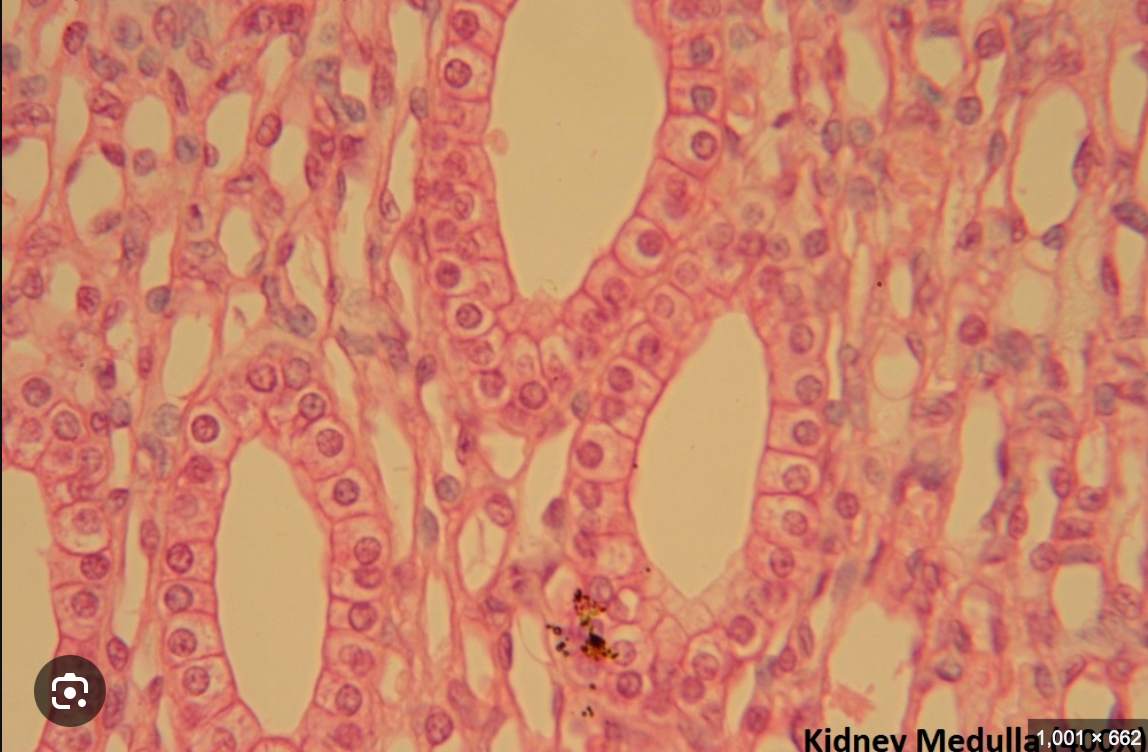
Simple Squamous
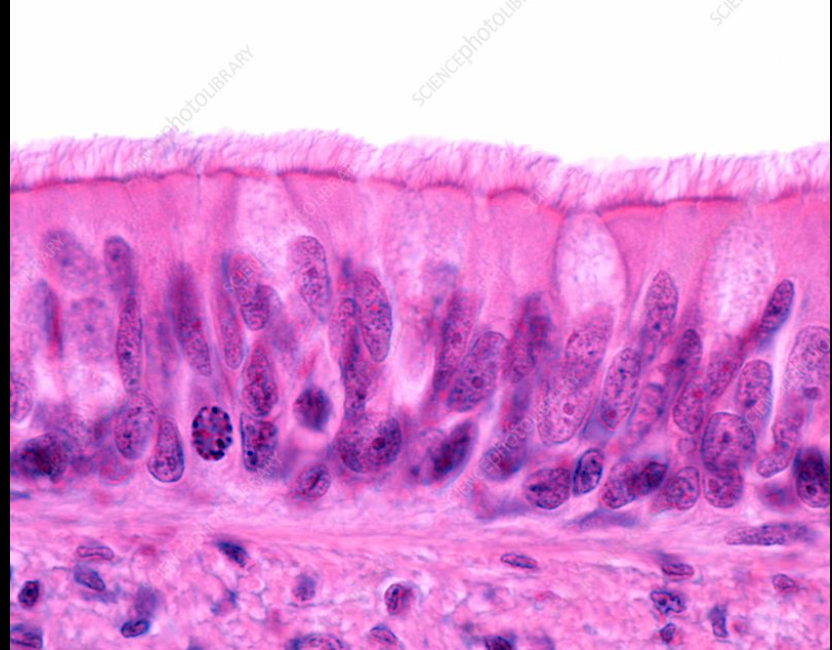
Ciliated Columnar
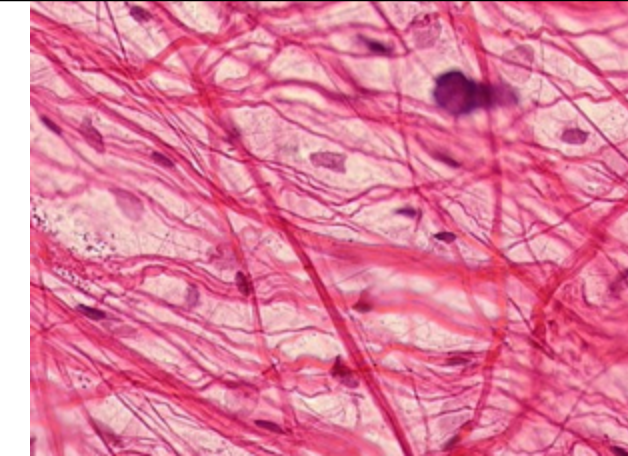
connective Tissue
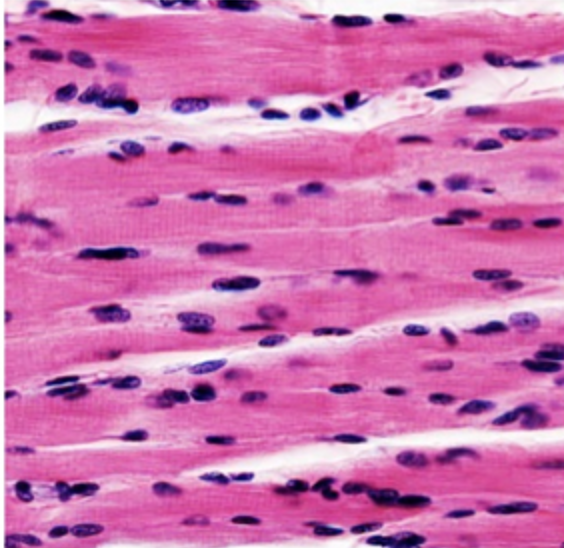
Skeletal Muscle
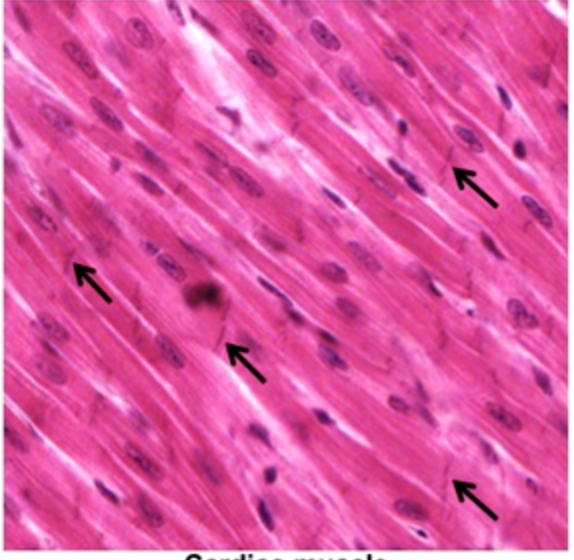
Cardiac Muscle
4 main tissue types
Epiththelial, connective, muscle, and nervous tissue
Epithelial
Covers the outside of organs, lines body surfaces, and cavities of the body.
Simple vs Stratified epithelium
Simple- Inly composed of one layer of calls
Stratified- Composed of numerous layers
Squamous
Flat epithelial cell
Cuboidal
Cubed-shaped
Columnar
Tall and narrow
Cartilaginous tissue
Can be found in ears, nose, joins and provides structural support.
Blood
Type of fluid connective tissue made of up of RBCs(erythrocytes) WBCs(leukocytes) and fluid (Plasma)
3 types of muscle
Skeletal, cardiac, smooth
Skeletal muscle
Responsible for voluntary movements ex: jumping
Cardiac muscle
Exclusive to the heart, responsible for the involuntary contraction
Smooth muscle cle
Responsible for involuntary control and line the walls of many organs, tubes and the digestive tract.
Nervous tissue
Consits of specialized cells that send and achieve electrical signals throughout the body, The primary cell is the neuron. The ;argue structure containing the nucleus is the cell body.
Dendrites
Extend from the cell body which receives signals and transfer the impulse down a long thread-like structure called an axon.
Organism and ATP
There are three ways an organism can make ATP, aerobic cell respiration, anaerobic cell respiration or fermentation.
Luchens
Represent a mutalisitt symbiotic relationship between several types of fungi and either algae or cyanobacteria.
Substates VS enzymes
Enzyme = a protein catalyst that speeds up a chemical reaction without being used up.
Substrate = the molecule the enzyme acts on.
Mitochondria
Known as the powerhouse of the cell
Function: produce ATP (energy) through cellular respiration
Found in: plant and animal cells
Chloroplasts
Found only in plants and some protists
Function: perform photosynthesis to make glucose using sunlight
Contain chlorophyll, which gives plants their green color
Also have their own DNA