AP1 portage
 Call Kai
 Learn
Learn Practice Test
 Spaced Repetition
 Match
Match Flashcards
 Knowt Play
1/76

There's no tags or description
Looks like no tags are added yet.
Name | Mastery | Learn | Test | Matching | Spaced | Call with Kai | Chat |
|---|
No analytics yet
Send a link to your students to track their progress
77 Terms
six levels of organization of the body?
Chemical, cellular, tissue, organs, organ structure, organisms levels
What is the necessary function of life that protects our internal environment from our external environment is provided by what system?
Integumentary system
The function of movement is provided by what system?
Muscular system
The function of responsiveness is provided by what system?
Nervous system
The function of digestion is provided by what system?
Digestive system
What is anabolism
Making more complex cellular structure from simpler ones (BUILDING)
What is catabolism
The breakdown of complex cellular structures into simpler ones (BREAKING)
Excretions involve which systems?
Respiratory, digestive, urinary system
The reproductive system is controlled by what other system?
Endocrine system
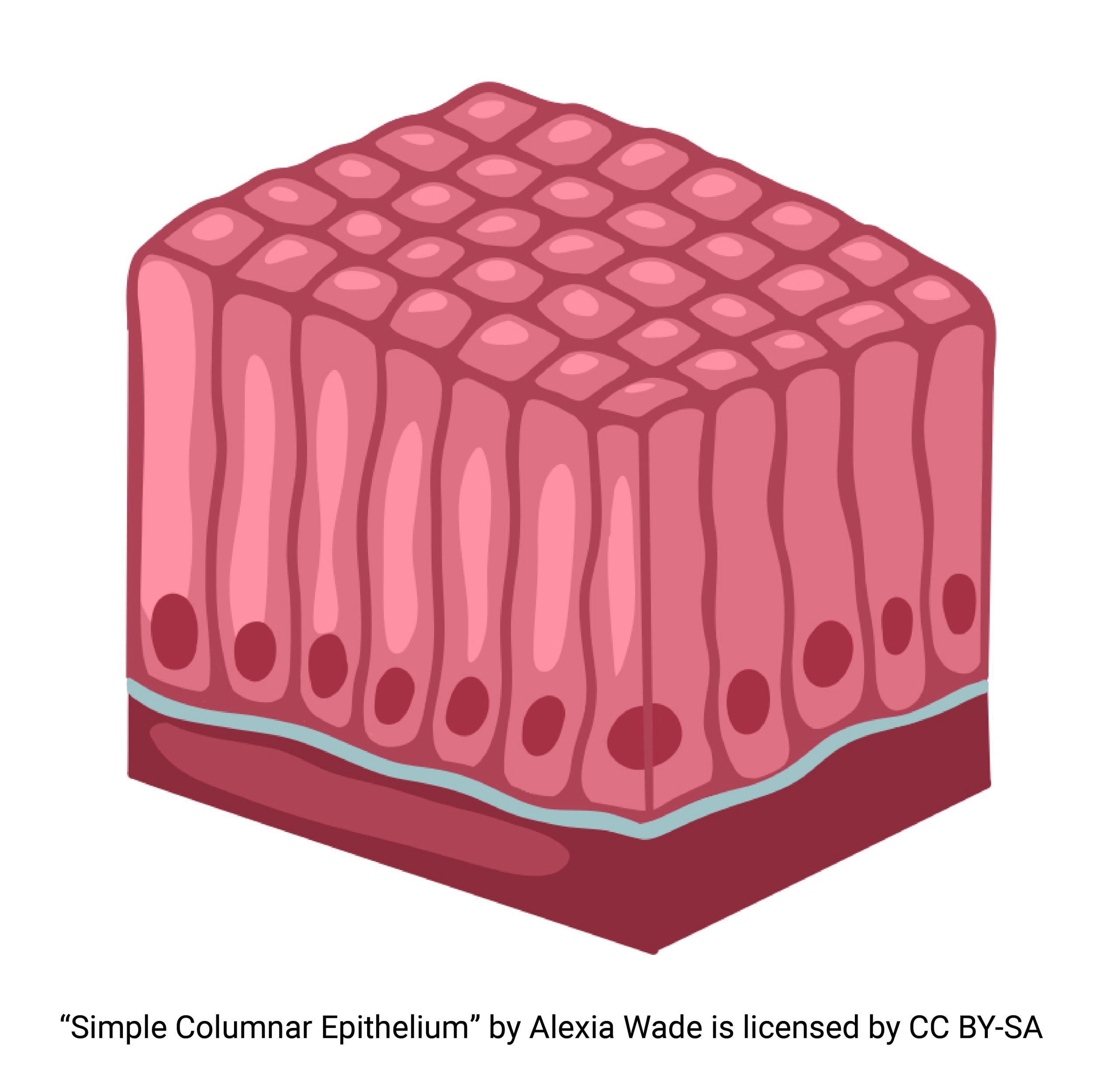
Which tissue covers the body surfaces and lines the cavities of the body?
Epithelium
Name the three steps of cellular respiration
Citric Acid cycle, Glycolysis, Electron transport system
Epithelial cells
-absorption and secretion
-under constant division to replace dead cells and shed
What are the four basic tissues types?
Epithelial, Connective, Nervous, Muscle
What are the major body systems?
Muscular, skeletal, cardiovascular, respiratory, digestive, urinary, nervous, integumentary, reproductive, lymphatic, endocrine
TOWARDS or at the body surface is what direction?
Superficial
AWAY from the body surface is what direction?
Deep
Between a more medial and more lateral structure is what orientation?
Intermediate
Towards or at the midline of the body or on the inner side of is what direction?
Medial
Away from the head end or toward the lower part of a structure of the body is what direction?
Inferior
Towards the head end or upper part of a structure ABOVE is what direction?
Superior
Towards or at the front of the body is what direction?
Anterior
Is the knee proximal or distal to the pelvis?
Distal
Is the elbow proximal or distal to the hand?
Proximal
Towards or at the back of the body is what direction?
Posterior or dorsal
Closing of a joint is what action?
Flexation
Opening of a joint is what action?
Extension— arm in the R arrow going down/out
In anatomical positions are the hands in pronation or supination?
Supination
Why are the hands in this position #28
The ulna and radius bones are uncrossed
Elevation
Movement in upwards direction
Depression
Movement in a downward direction
Retraction
Movement in posterior (TOWARDS BEHIND) direction
Protraction
Movement in anterior (TOWARDS FRONT OF BODY) direction
A person standing in anatomical position moves their right wrist laterally towards the radius (OUTSIDE bone) what is this action called?
radial deviation
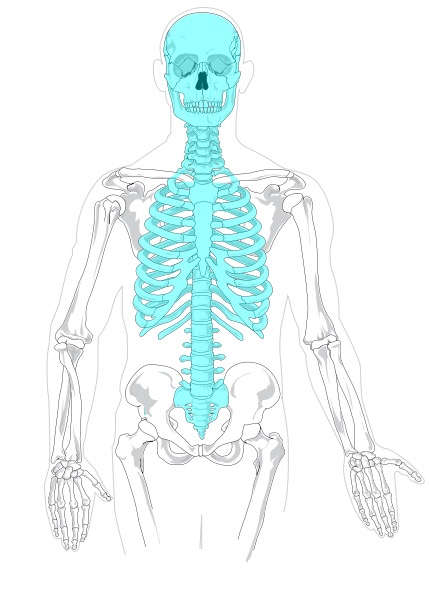
This body division includes the head, neck, and trunk
Axial division
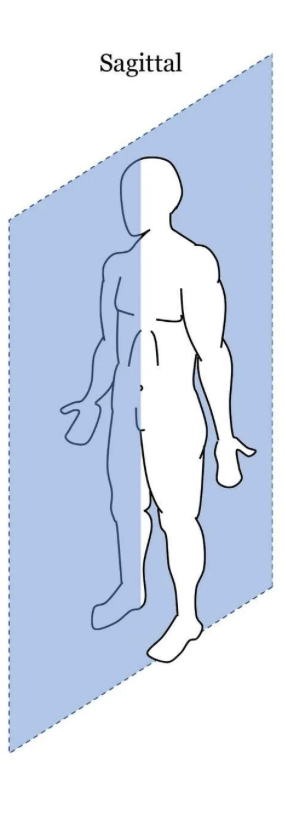
This is a vertical plane that divides the body into left and right parts
Sagittal plane
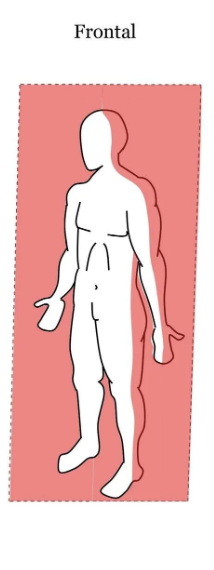
These planes lies vertically and divide the body into anterior and posterior parts
Frontal plane- coronal plane
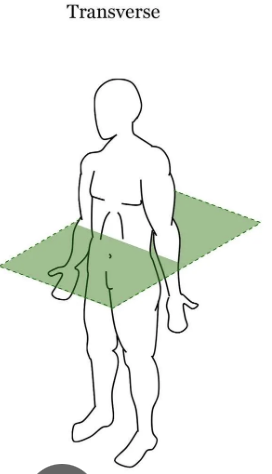
These planes divide the superior and inferior parts
Transverse plane
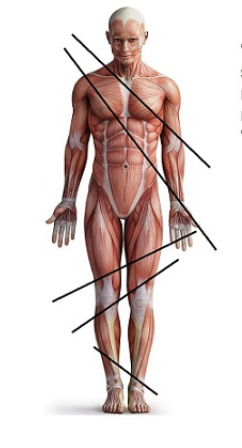
These sections are made diagonally between the horizontal and vertical planes
Oblique
This body cavity protects the nervous system
Dorsal cavity
This body cavity encases the brain
Cranial cavity
This body cavity encases the spinal cord
Spinal cavity
The ventral body cavity is divided into these two cavities
Abdominopelvic cavity and thoracic cavity
This cavity enclose the heart
Pericardial cavity
The outer surfaces of the organs and body cavities are covered by this double layered membrane called the
Serosa
Pleurisy?
inflammation of pleura
The abdominopelvic region is divided into what four quadrants
RU, RL, LU, LL
This regional surrounds the naval- belly button
umbilical region
This region houses the pelvis
Iliac
This cavity houses the teeth and tongue
oral cavity
This cavity houses the eyes
Orbital cavity
Joints are lines with what?
Synovial fluid
This cavity contains the tiny ear bones
-Middle ear: Malleus, incus, and stapes
Explain why active metabolizing cells need to be relatively small
Cells need to remain small so their volume to surface area stays larger, so the metabolic processes occur faster
Three differences between prokaryotic and eukaryotic cells
Prokaryotic cells are much smaller, do not contain DNA in a nuclear membrane and do not have membrane bound organelles
Explain function of the nucleus
Contains DNA and is the control center of the cell
Explain the function of the ribosomes
Tiny manufacturing plants that assemble proteins
Explain the function of the smooth ER
Synthesizing lipids
Explain the function of the rough ER
Modifies and transports proteins derived from the ribosomes
Explain the function of RNA
Takes the coded amino acids sequences from nucleus to ribosomes for protein synthesis
Explain the function of the endospore
Dormant and durable cell produced by bacteria
Explain the function of the Golgi Complex
responsible for receiving proteins and lipids synthesized by the ER, altering their structure and shipping them to other parts of the cell
Explain the function of the lysosomes
possess digestive enzymes which break down biomacromolecules
Explain the function of the mitochondria
Converts chemical energy (glucose) into usable energy (ATP)
Explain the function of the plasma membrane
Contains specialized pumps and gates to control the material goes in and out of the cell
Explains the function of microtubules
Hallow and anchored to MTOC
Explain the function of microfilaments
Solid and create movements
Explain the functions of extracellular matrix
Contains collagen fibers
Describe aerobic respiration and the purpose of ATP production
Eukaryotic cells require mitochondria to convert the chemical energy found in food (glucose) into ATP. This process is called aerobic respira!on. During cellular respira!on oxygen is required to break down food. Carbon dioxide, water and ATP are produced
What happens in Tay-Saches disease
One of the normally presents digestive enzymes inside lysosomes is lacking, and a toxic lipid in the brain cell cannot be broken down. The resulting buildup of lipids in these cells can cause intellectual disability and death
Diffusion
Diffusion: small molecules move across the membrane from area of high concentration to area of low concentration. This continues until molecules are equally distributed on each side of the membrane.
Facilitated diffusion: involved diffusion of lipid-insoluble molecules across a membrane. integral protein specific for a certain molecule will bind and release it onto the other side
Active Transport
occurs when molecules or ions are pumped from an area of LOW concentration to one of greater concentration (against the concentration gradient). Because they don't naturally want to move this way, additional energy and carrier proteins are required.
Endocytosis
three types: phagocytosis, pinocytosis, receptor-mediated endocytosis.
phagocytosis: used for extremely large objects, once cell is in vesicle, it fuses with lysosome and is digested.
pinocytosis: tiny droplets of fluid. the membrane pinches inward without needing to extend pseudopods to ingest material.
receptor-mediated endocytosis: transferring information from one cell to another. a receptor protein binds with a signaling molecule sent from another cell. the receptor protein must transfer the signal across the membrane. changes shape and shape of surround proteins to do so.
Isotonic
equal amounts of solute on either side of the membrane
Hypertonic
more concentrated solute outside of the membrane vs inside, causing the cell to shrink
Hypotonic
more concentrated solute on the inside of the membrane that the outside, causing it to burst
Cholesterol
Controls temperature within the cell membrane