Introduction to Fluids and Electrolytes: Key Concepts for Pharmacotherapy
 Call Kai
 Learn
Learn Practice Test
 Spaced Repetition
 Match
Match Flashcards
 Knowt Play
1/135

There's no tags or description
Looks like no tags are added yet.
Name | Mastery | Learn | Test | Matching | Spaced | Call with Kai | Chat |
|---|
No analytics yet
Send a link to your students to track their progress
136 Terms
What is the primary purpose of fluid balance in the body?
To maintain body temperature, cell shape, and transport nutrients, gases, and wastes.
What are the two main compartments of body fluids?
Intracellular- 2/3 (40% of weight) and extracellular 1/3 (20% of weight)
What is the normal range for sodium levels in the body?
135-145 mEq/L.
What are the causes of sodium deficiency?
Excessive sweating, diuretics, and certain medical conditions.
What is the treatment for hypokalemia?
Oral or IV potassium supplementation.
What is the normal range for potassium levels in the body?
3.5-5.0 mEq/L.
What is the role of magnesium in electrolyte management?
It helps in the management of other electrolyte deficiencies and is crucial for neuromuscular function.
What is the formula for calculating Ideal Body Weight (IBW) for males?
50 kg + (2.3 x inches over 60").
What is the formula for calculating Ideal Body Weight (IBW) for females?
45.5 kg + (2.3 x inches over 60").
What is the significance of osmolarity in IV solutions?
It measures solute concentration and affects fluid movement across cell membranes.
What is the osmolarity of a hypotonic solution?
Less than 154 mOsm/L.
What is the osmolarity of a hypertonic solution?
Greater than 600 mOsm/L.
What is the average daily fluid loss through urination?
400-1500 mL.
What are the components of the Renin-Angiotensin Aldosterone System (RAAS)?
Renin secretion, sodium/water regulation via aldosterone.
What is the role of Atrial Natriuretic Peptide (ANP)?
It decreases ADH release and counteracts the effects of RAAS.
What is the most common maintenance IV fluid?
D5W + ½ NS + 20 mEq KCl/L.
What are the advantages of balanced salt solutions over normal saline?
Lower risk of hyperchloremic metabolic acidosis and renal injury.
What is the typical volume of one unit of packed red blood cells (RBCs)?
Approximately 230-350 mL.
What is the expected increase in hemoglobin from one unit of RBCs?
Approximately 1 g/dL.
What are signs of dehydration?
Decreased skin turgor, dry mucous membranes, and tachycardia.
What is the normal range for calcium levels in the body?
8.5-10.5 mg/dL.
What is the treatment for hypophosphatemia?
NaPhos or KPhos treatment based on lab results.
What is the definition of osmolality?
A measure of solute concentration in a solution.
What factors affect fluid balance?
Fluid intake, fluid losses, and hormonal regulation.
What is the role of the kidneys in fluid regulation?
They filter blood and regulate fluid and electrolyte balance.
What is the significance of daily weight monitoring in fluid management?
It helps assess fluid status and detect changes in volume.
What are insensible fluid losses?
Fluid losses that cannot be measured, such as through skin and lungs.
What is the primary goal of electrolyte therapy?
To prevent and treat serious complications, normalize serum concentration, identify and correct underlying causes, and avoid overcorrection.
What is the normal serum sodium concentration range?
135 - 145 mEq/L
What is the primary extracellular cation in the body?
Sodium (Na+)
What is hyponatremia?
A condition characterized by low sodium levels in the blood, often leading to significant morbidity and mortality.
What is the osmolality range for hyponatremia classification?
275 - 290 mOsm/L
How is serum osmolality calculated?
Osm = (2 x Na) + (BUN/2.8) + (Glucose/18)
What is pseudohyponatremia?
A condition where extreme elevations of lipids and proteins lead to a dilution effect, making sodium appear low without actual sodium deficiency.
What is hypertonic hyponatremia commonly associated with?
Elevated blood glucose levels, where serum sodium falls by 1.6 mEq/L for each 100 mg/dL increase in blood glucose above 100 mg/dL.
What is the formula for corrected serum sodium?
Corrected Na = Naserum + 1.6[(BG - 100)/100]
What is hypovolemic hypotonic hyponatremia?
A decrease in both total body water and sodium, often due to renal or non-renal causes.
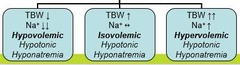
What are renal causes of hypovolemic hypotonic hyponatremia?
Diuretics, adrenal insufficiency, salt losing nephropathy, and cerebral salt wasting.
What is isovolemic hypotonic hyponatremia?
A condition with increased total body water and normal or slightly increased sodium, often appearing euvolemic.
What is the most common cause of isovolemic hypotonic hyponatremia?
Syndrome of Inappropriate AntiDiuretic Hormone (SIADH) release.
What are common causes of SIADH?
Tumors, CNS disorders, and certain medications.
What is the first-line treatment for SIADH?
Free water restriction.
What characterizes hypervolemic hypotonic hyponatremia?
An increase in total body sodium but an even greater increase in total body water, leading to expanded extracellular fluid volume and edema.
What symptoms are associated with acute hyponatremia?
Nausea, malaise, weakness, headache, disorientation, seizures, and respiratory arrest.
What is the treatment goal for acute symptomatic hyponatremia?
Increase serum sodium by 1-2 mEq/L/hr until symptoms resolve, with a reasonable short-term goal of 120 mEq/L.
What is the maximum increase of sodium allowed in the first 24 hours?
8-12 mEq/L.
What is the risk of correcting sodium too rapidly?
It can lead to diffuse demyelinating lesions, known as central pontine myelinolysis.
What is the treatment for acute symptomatic hyponatremia?
Administer hypertonic saline (3% NaCl) and replace half of the sodium deficit in 8 hours.
What is the significance of assessing volume status in hyponatremia?
It is crucial for determining the appropriate classification and treatment of hyponatremia.
What is the clinical presentation of hypovolemic hypotonic hyponatremia?
Dehydration symptoms such as decreased skin turgor, orthostatic hypotension, tachycardia, and dry mucous membranes.
What are the symptoms of isovolemic hypotonic hyponatremia?
Malaise, psychosis, seizures, and coma.
What is the treatment approach for hypervolemic hypotonic hyponatremia?
Focus on treating the underlying cause and managing fluid overload.
What are the neurological risks associated with chronic hyponatremia?
Brain cells swell, leading to cerebral edema, severe neurologic symptoms, brain herniation, and death.
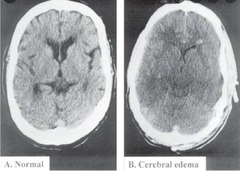
What is the sodium deficit calculation for a patient with serum sodium of 110 mEq/L?
Sodium deficit can be calculated based on the patient's weight and desired serum sodium level.
What is the normal total body water (TBW) calculation for males?
NL TBW in males = 0.6 x weight (in kg)
What is the normal total body water (TBW) calculation for females?
TBW = 0.5 x weight (in kg)
How do you calculate sodium (Na+) deficit?
TBW x (Nagoal - current Naserum)
What is the initial sodium replacement dose for symptomatic patients?
½ of 330 mEq over the first 8 hours = 165 mEq
What is the infusion rate of 3% NaCl for sodium replacement?
40 mL/hr for 8 hours, then 20 mL/hr for 16 hours
What is the infusion rate of 0.9% NaCl for sodium replacement?
134 mL/hr for 8 hours, then 67 mL/hr for 16 hours
What should be monitored in symptomatic patients with hyponatremia?
Serial exams of heart, lungs, and neurologic status, and serum Na+ concentration every 2-4 hours
What are Vaptans used for?
To promote excretion of free water without loss of serum electrolytes
What is the loading dose for Conivaptan?
20 mg IV bolus infused over 30 minutes
What is the maximum dose for Tolvaptan?
60 mg PO daily based on sodium response
What are the contraindications for Vaptans?
Hypovolemic hyponatremia, patients without a sense of thirst, anuria, and use with strong CYP3A4 inhibitors
What is the free water deficit formula?
Free H2O deficit = NL TBW x [(Naserum/140) - 1]
What is the goal for correcting sodium levels?
0.5 mEq/L/hr decrease in Naserum
What is the treatment for hypovolemic hypernatremia?
Restore hemodynamic status first, may use 0.9% NaCl
What is the treatment for isovolemic hypernatremia due to Diabetes Insipidus?
Desmopressin (DDAVP) or Vasopressin
What is the estimated change in sodium calculation?
Change in Naserum = (Nafluid - Naserum) / [TBW + 1L]
What is the normal potassium range?
3.5 - 5 mEq/L
What is the significance of a potassium level of 2.4?
It indicates hypokalemia, requiring potassium replacement
What is the maximum duration for Tolvaptan therapy?
30 days maximum duration
What should be done after restoring intravascular volume in hypernatremia?
Calculate and replace free water deficit
What is the initial dosing for acute treatment of Diabetes Insipidus?
0.25 - 0.5 mL of Desmopressin BID
What is the treatment for hypervolemic hypernatremia?
Stop hypertonic fluids and match I/O
What is the formula for calculating the actual body weight ratio?
Actual wt / IBW ratio = 124 kg / 68.4 kg
What is the significance of monitoring I/O every 8-12 hours?
To assess fluid balance and prevent complications
What is the treatment for symptomatic euvolemic and hypervolemic hyponatremia?
Conivaptan
What is the role of the pharmacist in sodium management?
To monitor and adjust sodium levels and fluid therapy
What is the normal potassium level range?
3.5 - 5 mEq/L
What is the primary intracellular cation responsible for cell metabolism?
Potassium (K+)
What are the consequences of hypo- and hyperkalemia?
They are associated with potentially fatal cardiac arrhythmias.
Which factors affect potassium levels?
Na/K ATPase pump, insulin, glucagon, catecholamines, aldosterone, kidneys, arterial pH, diuretic loss, β-agonist medications, NG drainage, metabolic alkalosis, diarrhea, and magnesium depletion.
What is hypokalemia?
A condition characterized by low potassium levels, causing symptoms like weakness, nausea/vomiting, arrhythmias, and muscle cramping.
What is the treatment goal for potassium levels in ICU patients?
To maintain potassium levels > 4 mEq/L.
What is the preferred route of potassium administration for asymptomatic patients?
Oral (PO) route.
What are the criteria for intravenous potassium administration?
Severe hypokalemia (K+ < 2.5 to 3 mEq/L) with signs/symptoms like ECG changes or muscle spasms.
What is hyperkalemia?
A condition characterized by potassium levels ≥ 5.5 mEq/L.
What are the classifications of hyperkalemia based on potassium levels?
Mild (5.5-6 mEq/L), Moderate (6.1-6.9 mEq/L), Severe (≥ 7 mEq/L).
What does 'C A BIG K DROP' stand for in hyperkalemia treatment?
1. Antagonize membrane actions, 2. Decrease extracellular K+ concentrations, 3. Remove K+ from the body.
What is the role of magnesium (Mg++) in the body?
Important for neuromuscular function and as a co-factor for many enzymes.
What is the normal magnesium level range?
1.5 - 2.5 mg/dL.
What are common causes of hypomagnesemia?
GI disorders, decreased intestinal absorption, severe malnutrition, and certain medications.
What are the clinical presentations of hypomagnesemia?
Cardiovascular issues, neuromuscular symptoms, and CNS effects.
What is the treatment for asymptomatic hypomagnesemia?
Oral magnesium supplements like Milk of Magnesia or Mag-Ox.
What is hypermagnesemia?
A condition characterized by magnesium levels > 4 mg/dL.
What are the clinical manifestations of hypermagnesemia?
Loss of deep tendon reflexes, drowsiness, hypotension, and cardiac rhythm abnormalities.
What is the normal calcium level range?
8.5 - 10.5 mg/dL.
What is the role of calcium in the body?
Necessary for bone formation and neuromuscular function.