Eco U4 AOS 1 Data
 Call Kai
 Learn
Learn Practice Test
 Spaced Repetition
 Match
Match Flashcards
 Knowt Play
1/12

There's no tags or description
Looks like no tags are added yet.
Name | Mastery | Learn | Test | Matching | Spaced | Call with Kai | Chat |
|---|
No analytics yet
Send a link to your students to track their progress
13 Terms
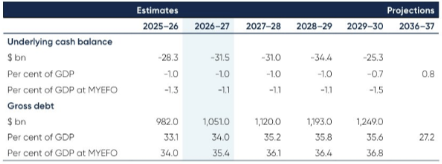
Budget outcome 2025/26
estimate $28 bn deficit – final known in October
Budget outcome 2026/27
estimate $32 bn deficit
Roughly expected outcomes in next 4 years after 2026/27
Roughly staying around $30bn not achieving surplus to 2036/37 on projections
Note:
Know at least 3 budgetary initiatives from last 2 years
At least one must be from 2026/27
At least one must be a spending initiative
At least one must be a taxing initiative.
(I recommend: Fuel Excise Cut; Local Infrastructure Fund; Income Tax Cuts but others possible). You do not need all the detail in the spreadsheet.
Current TCR
TCR over the past 2 years
Current TCR is 4.35%
contractionary for most of 2024
RBA loosened in 2025 down to 3.6%
started tightening again in February 2026
Note:
Forward guidance: May 2026 statement RBA will do what ever is necessary to achieve dual mandate (LASI and FE) “including increasing the cash rate target further if required”. Intended to signal possible further tightening.
Current GDP growth
GDP growth over past 2 years
2.5% for year ending March 26
slowly increasing from very low (0.8%) in late 2024
BUT most recent figure the same as Dec 25 so growth increase may have stalled
Current UE rate
UE over past 2 years
4.4% June 26 just in FE range
UE over past 2 years:
has been down as low as 3.5% in June 2023 has crept up a slowly since then
Current inflation rate
Inflation over past 2 years
3.8% year ending June 26
Inflation over past 2 years:
has been above 3% since September 2025
4.6% for year ending March 2026 and has fallen each month since then
How is the war in Iran affecting inflation and growth?
Directly pushing up CPI (as petrol is part of CPI)
Pushing up production costs for businesses as almost all businesses spend on transport
Pushing up other production costs such as fertiliser for farmers
Slowing growth by slowing aggregate supply and reducing consumer confidence
Income tax cuts (2025/26) |
|
Suburban Rail Loop (2026/27) |
|
Fuel excise cut (2026/27) |
--> it boosts disposable income and AD (helping growth and employment) - increases risk of demand inflation --> However cutting the fuel excise also directly LOWERS measured inflation in the short term, because automotive fuel is included in the CPI basket and so CPI records lower fuel prices --> so in the short term it actually helps the goal of low inflation, even though the extra spending it allows adds some demand pressure --> The cut is also temporary (three months)
|