A&P Chapter 4 Study Guide
 Call Kai
 Learn
Learn Practice Test
 Spaced Repetition
 Match
Match Flashcards
 Knowt Play
1/116

There's no tags or description
Looks like no tags are added yet.
Name | Mastery | Learn | Test | Matching | Spaced | Call with Kai | Chat |
|---|
No analytics yet
Send a link to your students to track their progress
117 Terms
Tissues
Group of cells similar in structure that perform common or related functions
Histology
Study of cells
Epithelial tissue
Connective tissue
Muscle tissue
Nervous tissue
4 basic tissue types
Nervous tissue
Internal communication
Brain
Spinal cord
Nerves
Muscle tissue
Contracts to cause movement (shortens to produce movement)
Epithelial tissue
Forms boundaries between different environments, protects, secrets, absorbs, filters
Connective tissue
Supports, protects, binds other tissue together
Epithelial tissue (epithelium)
Is a sheet of cells that covers a body surface or lines a body cavity
Coverings and lining epithelium
Glandular epithelium
Epithelial tissues 2 main forms
Coverings and lining epithelium
Forms the outer layer of skin, lines open cavities, and covers walls and organs of ventral body cavity
Glandular epithelium
Forms glands of the body that secrete substances
Salivary glands
Polarity
Specialized contacts
Supported by connective tissue
Avascular but innervated
Regenerative
Epithelial tissue has 5 distinguishing characteristics
Polarity
Cells may have top and bottom
Apical
Borders open (hollow) space
Basal surface
Next to underlying connective tissue
Faces inward towards body organ
Specialized contacts
Epithelial tissues need to fit close together
Supported by connective tissue
All epithelial sheets are —
Reticular lamina
Deep to basal lamina
Consist of network of collagen fibers
Basement membrane
Basal and reticular lamina make up basement membrane
Resist stretching and tearing
Avascular but innervated
No blood vessels are found in epithelial tissues, however its supplied by nerve fibers
Regeneration
Self-repairing shield when it gets damaged, it can quickly make new cells to replace old ones
Number of cells
Shape of cells
All epithelial tissue have two names
Simple epithelia
Stratified epithelia
Number of cells
Squamous
Cuboidal
Columnar
Shape of cells
Simple epithelia
Consist of a single cell layer

Stratified epithelia
Consist of two or more cell layers
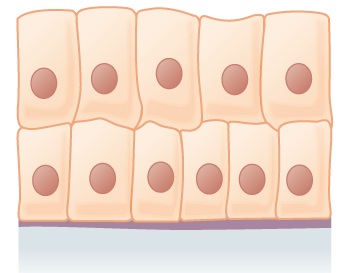
Squamous
Flattened and scale like

Cuboidal
Box like, cube
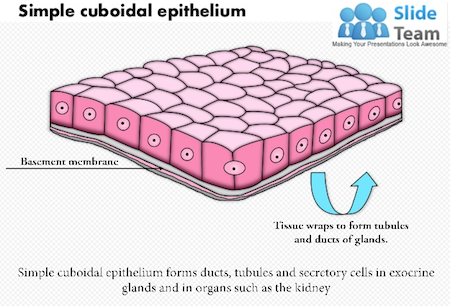
Columnar
Tall, column like

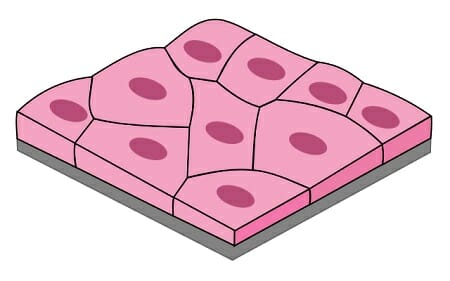
Simple squamous epithelia
Cells single layered and are flattened
Endothelium
Lining of lymphatic vessels, blood vessels, and heart
Mesothelium
Serous membranes in ventral body cavity
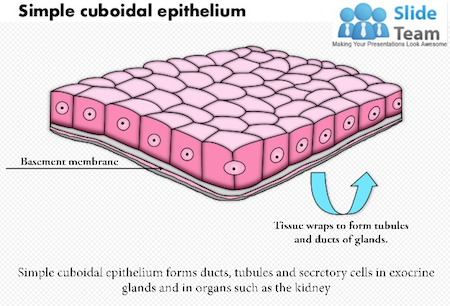
Simple cuboidal epithelium
Single cell layer
Secretion and absorption
Forms walls of smallest ducts of glands and many kidney tubules
Digestive tact; gallbladder; ducts of some glands; bronchi; and uterine tubes
Simple cuboidal epithelium locaiton
Simple columnar epithelium
Single layer of tall, closely packed cells
Absorption and secretion of mucus, enzymes, and other substance
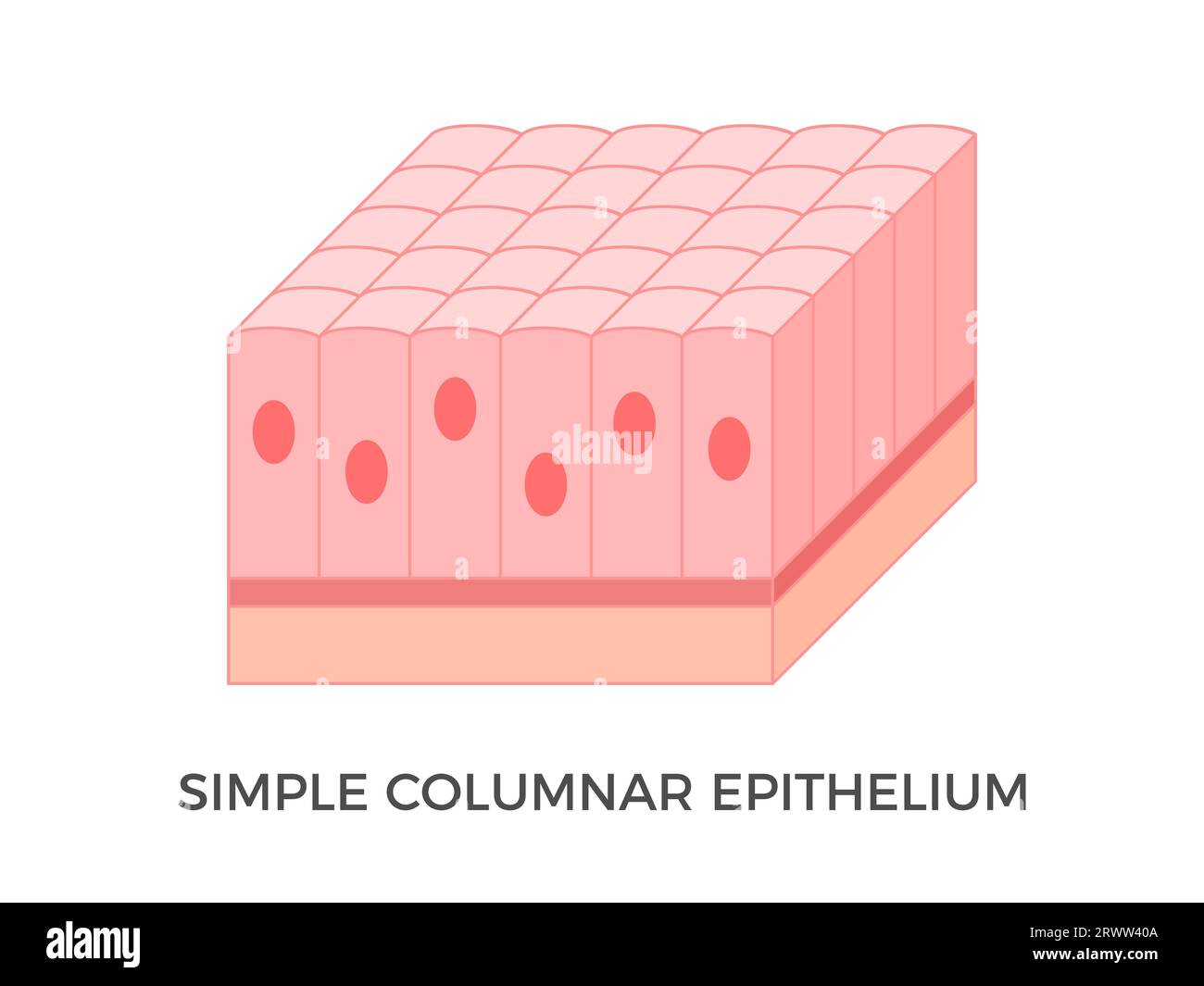
Kidney tubules; ducts and secretary portions of small glands; ovary surface
Simple columnar epithelium location
Pseudostratified columnar epithelium
Looks like a lot of layers (like stratified epithelium) but it has just one layer

Simple epithelium tissues
Involved in absorption, secretion, filtration
Stratified epithelium tissues
Two or more layers of cells
More durable than simple because protection is major role
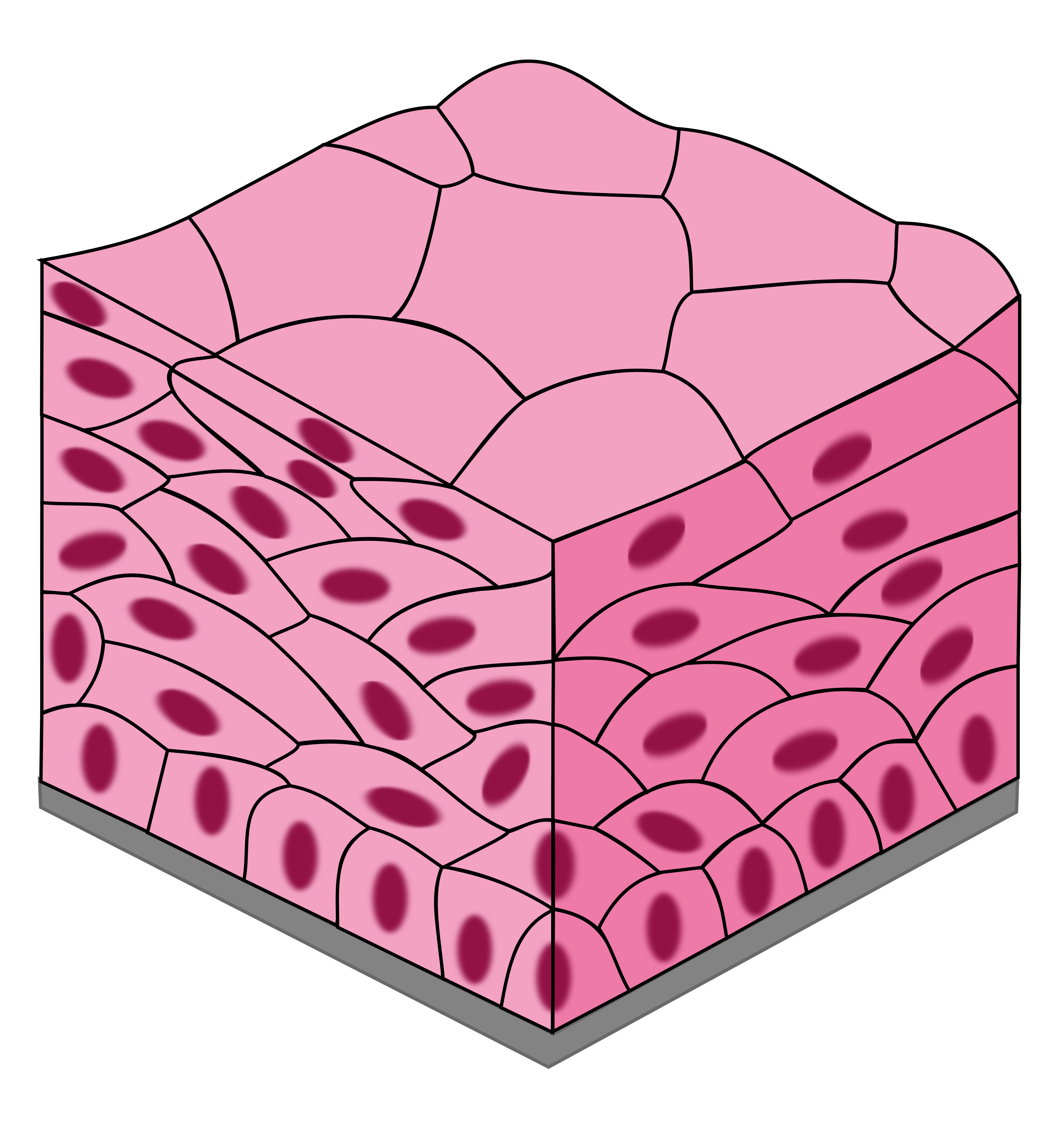
Stratified squamous epithelium
Multilayered, flattened
Located in area of wear and tear (skin)
Protects underlying tissues in area subject to abrasions
Stratified cuboidal epithelium
Typically only two layers think, quite rare
Found in sweat and mammary glands

Stratified columnar epithelium
Also very limited, small amounts found in pharynx, in male urethra, and lining some glandular ducts

Transitional epithelium
Forms lining of hollow urinary organs (bladder, urethra, and ureters)

Gland
One or more cells that make and secrete an aqueous fluid called a secretion
Endocrine
Ductless glands that produce hormones
Secretions arent released into a duct, into surrounding interstitial fluid, which is picked up by circulatory system
Secrete hormones, messenger chemical that travel through lymph or blood to their specific targets
Exocrine
Secrete products onto body surfaces or into body cavities
Sweat glands, salivary glands
Secretions are released onto body surfaces, or body cavities
Unicellular exocrine glands
Mucus cells and goblets cells (the only important part)
Produce mucus
Merocrine
Holocrine
Apocrine
Mode of secretion
Merocrine
Secrete products by exocytosis as secretions are produced
Holocrine
Accumulate products within until rupture
(explode)
Apocrine
Accumulate products within, but only apex ruptures
Cell repairs damage and repeats
Connective tissue proper
Cartilage
Blood
Bone
Connective tissue 4 main classes
Extracellular matrix
Of nonliving portion of connective tissues in which the living cells are suspended in
Ground substance
Fibers
Cells
All connective tissue have 3 main components
Ground substance
Unstructured gel like material that fills space between cells
Connective tissue fibers
Provide structure
Collagen fibers
(physical support) Strongest, most abundant
Elastic fibers
(like rubber bands) long, thin, elastin fibers that allow for stretch and recoil
Reticular fibers
(are flexible) short, fine, highly branched collagenous fibers
Connective tissue cells
Immature and mature forms of many cell types
Fibroblasts
In connective tissue proper become fibrocytes
Chondroblasts
In cartilage become chrondocytes
Osteoblasts
In bone becomes osteocytes (manage and protect)
Hematopoietic stem cells
Are the immature form of blood cells
“Hemocytoblast” maker of hemo cells
“blasts”
Cells are immature form of cell that secretes ground substance and matrix fibers
“cytes”
Cells are mature form of cells that maintain health of the matrix, can revert to “blasts”
Adipocytes
Store energy fats
Leukocytes (white blood cells)
Responds to tissue injury
Mast cells
Detect foreign microorganisms and initiate local inflammatory response (only in connective tissues)
Hesparin
An anticogulant
Histamine
Makes capillaries leaky
Proteases
Enzymes that degrade proteins
Macrophages
Breaks down foreign materials and dead cells
Connective tissue proper
Consist of all connective tissues. Except bone, cartilage, and blood
Areolar
Adipose
Reticular
Connective tissue proper : loose connective tissue
Dense regular
Dense irregular
Elastic
Connective tissue proper : dense connective tissue
Areolar
Supports and binds other tissues
Universal packing material between other tissues
Adipose
White fats
Adipocytes
Functions in shock absorption, insulation, energy storage
Brown fats
Use lipid fuels to heat bloodstreams rather than to produce ATP
Tendon
Connects muscle to bone
Ligaments
Connects bone to bone
Aponeuroses
Connects to muscle to muscle
Dense regular
Very high tensile strength
Closely packed bundles of thick collagen fibers
Manufactures collagen fibers and ground substance
Dense irregular
Bundles of collagen thicker and irregularly arranged
Forms sheets rather than bundles
Resists tension from any direction
Elastic
Some ligaments are very elastic
Found in the walls of many large arteries
Cartilage
Matrix secreted from chondroblasts (during growth) and chondrocytes (adults)
Hyline cartilage
Elastic cartilage
Fibrocartilage
3 types of cartilage
Hyline cartilage
Most abundant
Found at tips of long bones, nose, trachea, larynx, and cartilage of ribs
Elastic cartilage
Similar to hyline but more elastic fibers
Ears and epigolottis
Fibrocartilage
Properties between hyline and dense regular tissue
Strong, found in areas as intervertebral discovered and knee
Bone, or osseous tissue
Support and protects body structures
Stores fat and synthesizes blood cells in cavities
Osteoblasts produce matrix
Osteocytes maintains matrix
Blood
(transport mechanism) most typical connective tissue because its fluid
Muscle tissue
Responsible for most types of movement
Chemical energy to mechanical energy
Skeletal muscle
Cardiac muscle
Smooth muscle
3 types of muscle tissue
Skeletal muscle tissue
Attached to and causes movement
Cardiac muscle tissue
Found only on the walls of the heart
Intercalated disc
Are specialized joints where cardiac cells are joined
Smooth muscle tissue
Mainly found in the walls of hollow organs
Nervous tissue
Main components : spinal cord, brain, nerves
Neurons
Respond to stimuli via processes called dendrites
Membranes
Organs of more than one type of tissue that cover and line