637 Ch20 Prevention and Health Promotion
 Call Kai
 Learn
Learn Practice Test
 Spaced Repetition
 Match
Match Flashcards
 Knowt Play
1/45

There's no tags or description
Looks like no tags are added yet.
Name | Mastery | Learn | Test | Matching | Spaced | Call with Kai | Chat |
|---|
No analytics yet
Send a link to your students to track their progress
46 Terms
Who is primary prevention for? What do primray prevention programs target?
Individuals who are at high or moderate risk for CVD prior to dx, including a family history
Primary Prevention Programs target:
Resting BP - reduce
Blood Sugar Education - improve glucose tolerance and insulin sensitivity
Cholesterol - reduce LDL, improve total cholesterol/HDL ratio
Sedentary lifestyle - reduce BMI, increase aerobic conditioning and exercise capacity
What are modifiable risk factors for CVD?
Tobacco use
Elevated cholesterol
High BP
Deconditioning/sedentary lifestyle
Obesity
How should clinicians tailor their advice to a patient for primary prevention of CVD? What kind of approach is preferred? When should it begin?
Sociodemographic characteristics, educational status, cultural, work, and home environment
Patient-centered, team approach
Begin at 20 y/o, repeat every 4-6 yrs (more risk = more often)
What is in the ABCDE checklist?
Assess, antiplatelet therapy
Blood pressure
Cholesterol, cigarette smoke
Diabetes, diet and weight
Exercise, economic and social factors
When and how do you measure exercise readiness?
Prior to starting an exercise program
PAR-Q or PAR-Q+
What is the PAR-Q+? What additional follow up medical questions does it include?
7 step PA readiness questionnaire
Follow up:
Risk factors
Mental health
Metabolic disease
Respiratory disease
Stroke
CA
MSK
CV disease
SCI
Blood pressure
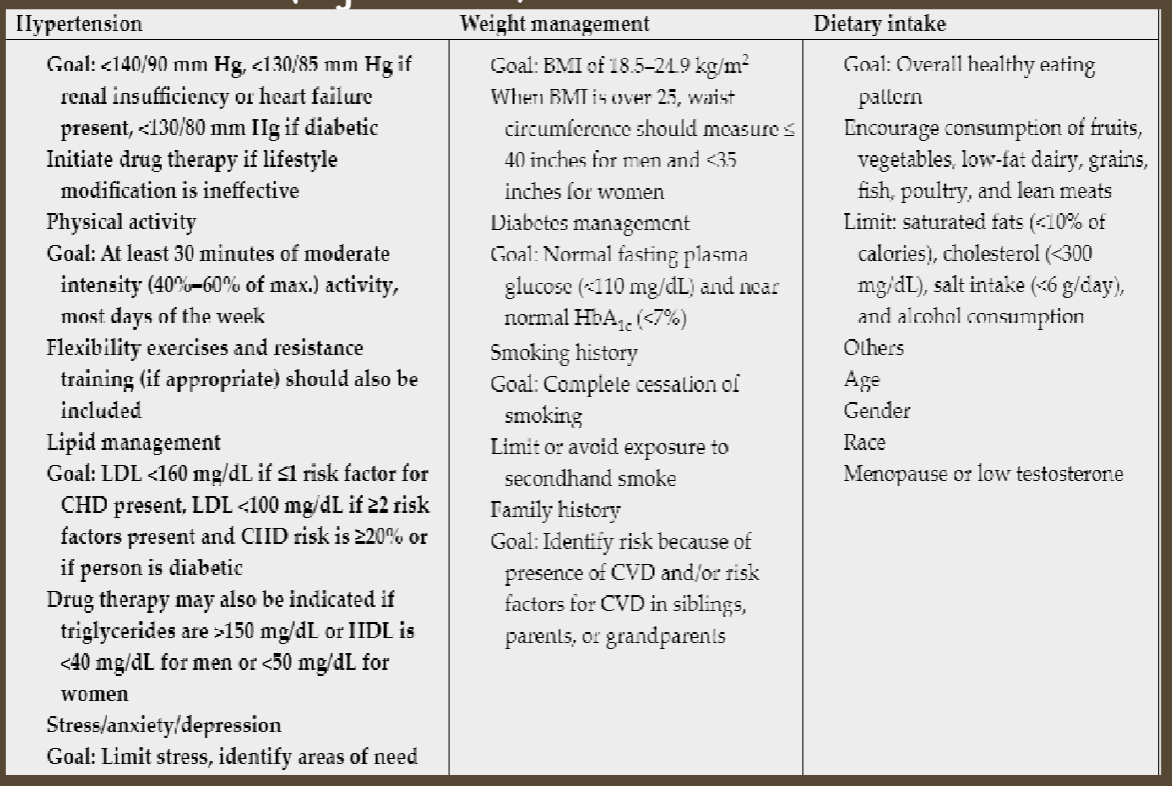
Describe the risk assessment goals for hypertension, weight management, and dietary intake
What kind of patients participate in cardiovascular rehabilitation programs? Primary vs secondary?
What do the CR programs include?
Education of the patient & fam for recognition, prevention & treatment of CVD
Bettering/reducing RFs
Deal w/ psych & behavioral factors that influence recovery
Structured, progressive PA
Vocational/return to leisure activities counseling
ADL and funcitonal training
What individuals are considered NOT good candidates for CR?
Pts have overt HF, unstable angina pectoris, hemodynamically unstable, serious arrhythmias, conduction defects, or impaired fx of other organ systems
Pts have uncontrolled HTN
Pts have other disease/illness that precludes exercise
Healthy individuals
Describe two signs that would indicate that a patient in your clinic is not a good candidate for CR.
Chest pain at rest
Falling BP with exercise
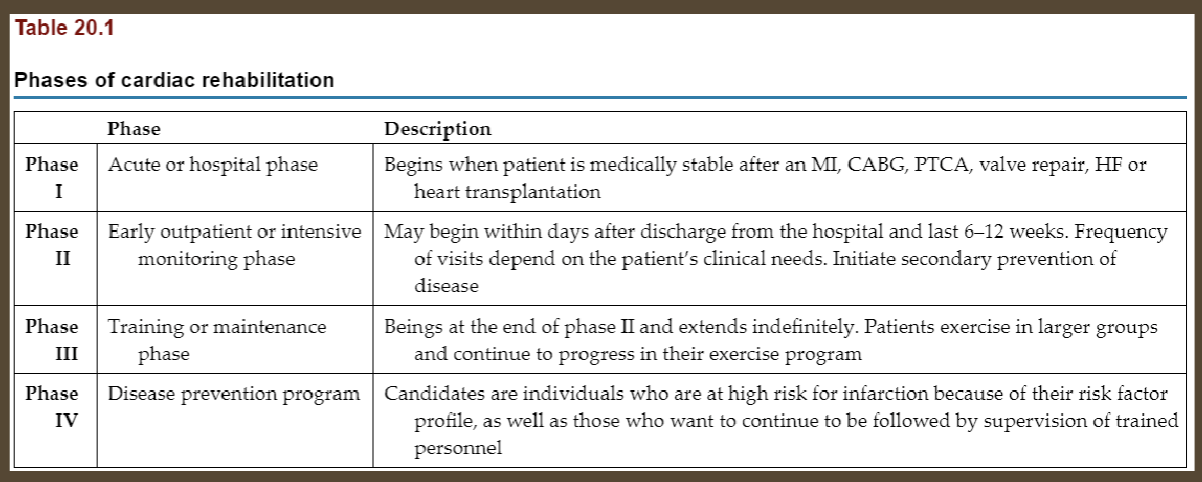
Describe the four phases of CR.
Phase 1: acute, in hospital
Ambulating by day 2 post-surgical stay (CABG)
Moved to step-down unit after 24-48hrs from ICU (MI) and d/c in 2 days
Phase 2: 3 days a week for 12 weeks (36 sessions)
Early outpatient or intensive monitoring
Phase 3: 2-3 days/week for 3 months
Intensive training and maintenance, less monitoring
No EKG
Phase 4: independent exercise and lifestyle management
Maintenance and independence; primary prevention for high-risk patients
When does Phase 1 CR begin? What are the overall goals? What do the goals include?
Begins when pt transfers from ICU to step-down/telemetry unit, can also begin in ICU/CCU, CONSIDERED STABLE
Overall goals: assess safety performing activities for d/c, increase knowledge of disease and management
Goals include:
Keep team members up to date on pt’s hemodynamic status, current level of activity & guidelines, vital responses to activity to inform medical management
Pt continuously monitored via ECG, hemodynamics assessed w/ movement & ADLs
Pt & fam education on RFs, modifications, self-monitoring techniques, activity guidelines, and enrollment for Phase 2 CR
What does a PT initial assessment include for Phase 1 CR?
Chart review
Patient-family/care partner interview
Physical examination
Activity & ambulation evaluation
Ambulation activity
When do you want to monitor sxs and ECG during Phase 1 CR?
Before, during, and immediately after activity and 1-3 min after
When is it appropriate to increase activity in Phase 1 CR? What can the pt’s response be dependent on? Frequency of Phase 1 CR?
Pt is hemodynamically stable and ECG responses to activity is normal
Dependent on:
# of days of bed rest, complicated course, PLF, MD orders
HR > or equal to 120 bpm or 20-30 above resting is the ceiling (exception: rate reducing meds → consider other hemodynamic signs, sxs, and ECG findings)
1x/day, 10-15 mins (10 for modified programs)
What is the HR ceiling for Phase 1 CR?
HR > or equal to 120 bpm or 20-30 above resting is the ceiling (exception: rate reducing meds → consider other hemodynamic signs, sxs, and ECG findings)
What is the McNeer criteria for complicated MI?
Poor ventricular fx
Significant ischemia w/ low-level activity
Cardiogenic shock
Vtach/Vfib
Aflutter/Afib
2nd/3rd degree AV block
Persistent sinus tachycardia (>100 at rest)
Persistent systolic hypotension (systolic BP <90 mmHg at rest)
Pulmonary edema
What kind of BP issue fits the criteria for a complicated MI?
Persistent systolic hypotension (systolic BP <90 mmHg at rest)
What are indications to modify during Phase 1 CR?
Large infarction, but stable after 2-3 days
Resting tachycardia (100bpm) or inappropriate HR increase w/ self-care activities
BP failing to rise or decrease w/ self-care activities
ECG >6-8 PVC/min or progressive HB w/ self-care activities
Need for prolonged bed rest (>4 days)
If an individual is considered to have experienced complications w/ his or her acute Mi per McNeer Criteria
What are indicaitons to withold Phase 1 CR?
Severe pump failure: SOB, peripheral edema, diaphoresis, or chest x-ray, falling BP response to activity
Classification in a high-risk subset, described by:
Recurrent malignant arrhythmias
Vtach, 4 PVCs in a row, Vfib and no internal/external defibrillator
Angina pectoris
2nd/3rd degree HB
Persistent hypotension (even w/ vasopressors)
Rapid atrial rhythm
Unstable angina pectoris or change in sxs in preceding 24hrs
What are cardiac procedures done with median sternotomy?
CABG, LVAD placement
What do sternal precautions do? How long does it last? Lifting restriction? Risk factors with sternal precautions?
Reduce chance of sternal wound dehiscence or infection
SP limit UE movement for 6-12wks
5-10lb lifting restriciton
RF: obesity, previous sternotomy, diabetes requiring medication for blood glucose control, HF, respiratory failure
What are the most important factors of keep your move in the tube?
Position, force, and lever arm of humerus (the further from the sternum the more force on the incision)
Weighted and resisted movements should not move away from midline
What are general precautions of Phase 1 CR?
Do not initiate exercise within 1hr of eating
Avoid:
Isometric holding
Breath holding
Pt’s status should be reassessed before the start of each session
ECG
Vitals: HR, BP
Heart and lung auscultation
Sxs
What are relative contraindications (abnormal exercise responses) for continuing exercise?
Unusual HR increase >50 bpm w/ low level activity
BP HTN, high systolic >210 mmHg or diastolic >110 mmHg
Drop in SBP >10mmHg with low-level exercise
Sxs w/ activity
Angina ¼
Excessive dyspnea 2+/4+Excessive fatigue
Mental confusion/dizziness
Severe leg claudication 8/10
Signs of pallor, cold sweat, ataxia
Changing heart sounds w/ activity - new murmur or ventricular gallop
Changing lung sounds w/ activity - increase in level of rales w/ sxs of SOB
An ECG abnormality, including marked ST-segment changes
If a pt has a drop in 10mmHg SBP with standing, is this considered a contraindication for continuing exercise?
No, only with low level exercise
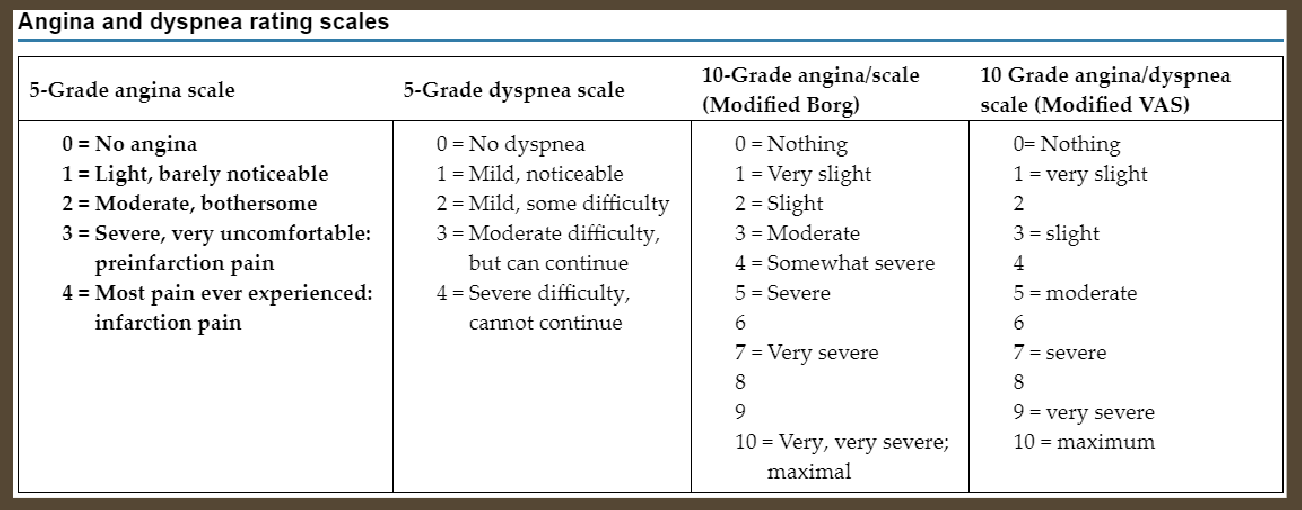
Describe the 5-grade/10-grade angina and dyspnea rating scale.
What are other Phase 1 CR education will the pt receive besides PA?
Diet & nutrition
Psychologic and behavioral rehab
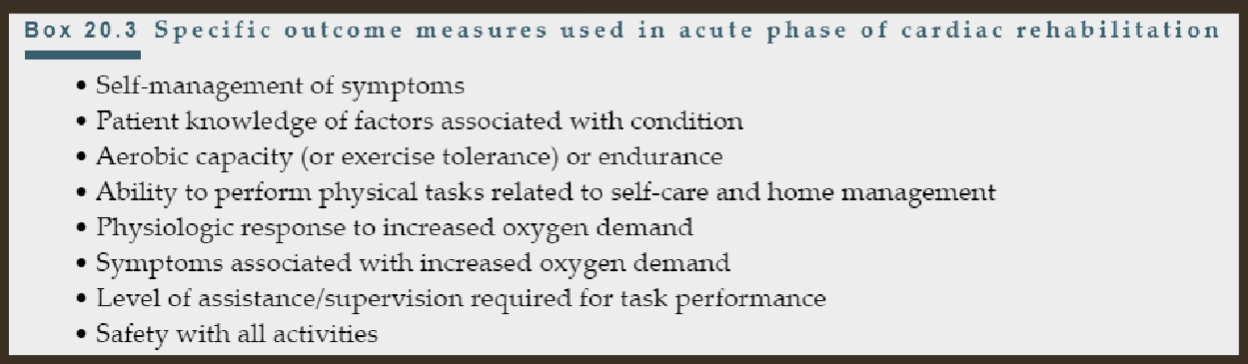
Because of the shorter time frame of Phase 1 CR, what are outcomes based on? Can you name some specific outcome measured used during this phase?
Based on functional limitations or disabilities that were quantified during initial assessment
What should be done in terms of D/C planning for Phase 1 CR?
Planning a day prior/stabilized
Activity guidelines, sxs to pay attention to, medicaiton schedule & dietary regimen
Referral to outpatient PT (must be able to handle PT 3x/wk)
Low level sxs - limited exercise test
What is the goal of post acute phase rehab?
To reduce mortality due to a CV event or diagnosis, cardiac RF modificaiton, control cardiac sxs, stabilize or reverse atherosclerotic process, etc.
What are groups that are commonly referred to CR?
MI, HF, angioplasty/stent, heart transplant, stable angina, CABG, valve replacement
Also: comorbid conditions, poor EF, cardiomyopathy, serious arrhythmias
What is the difference between the goals of Phase 1 and 2 CR?
Make pt appropriate for D/C
Lower RHR & BP, reduce risk
What would qualify a pt for home based CR? Is it a feasible option? How would you monitor vitals?
Pt can’t attend outpatient CR center b/c of availability, location, socio/economic factors, transportation
More extensive monitoring, instruction and education w/ PT and nursing
Tele-based CR: sensor technology, communication technology, data analysis
What has CR shown to help?
Increase in baseline; reduce occurrence of coronary events, improve aerobic capacity, increase EF, stroke volume and rate pressure product
Describe 7 risk factors that are involved as a CR program component? What would the assessment and intervention consist of?
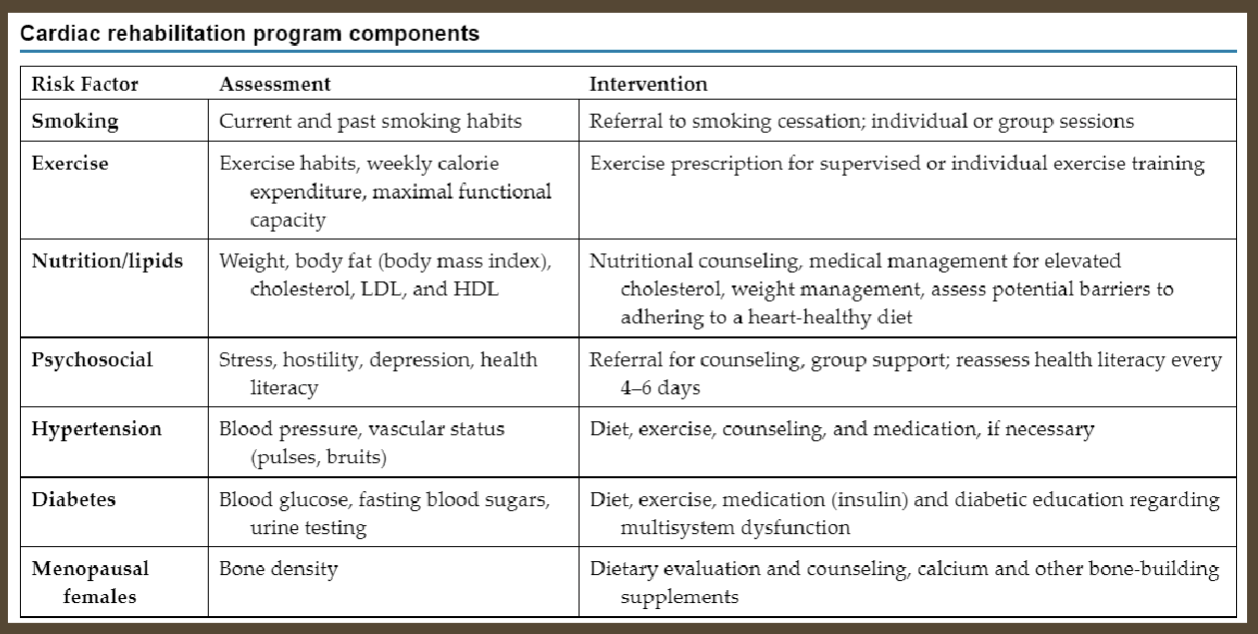
What aspect of aerobic exercise training can be modified for the patient? What does this benefit/improve?
Intensity - to achieve benefits for reduced RHR and improve SV
70-85% maxHR or modified to 40-50%
Using HR as your measure for aerobic exercise training can have what complications?
BBs, CCBs, surgical intervention, pacemakers
What RPE score is equivalent to the ventilatory/anaerobic threshold?
13 (somewhat hard)
Training HR with RPE is especially helpful for what pt population?
Afib
Describe abnormal responses to exercise. BP changes?
Systolic >240 mmHg
Diastolic >110 mmG
>20 mmHg drop from upright resting BP
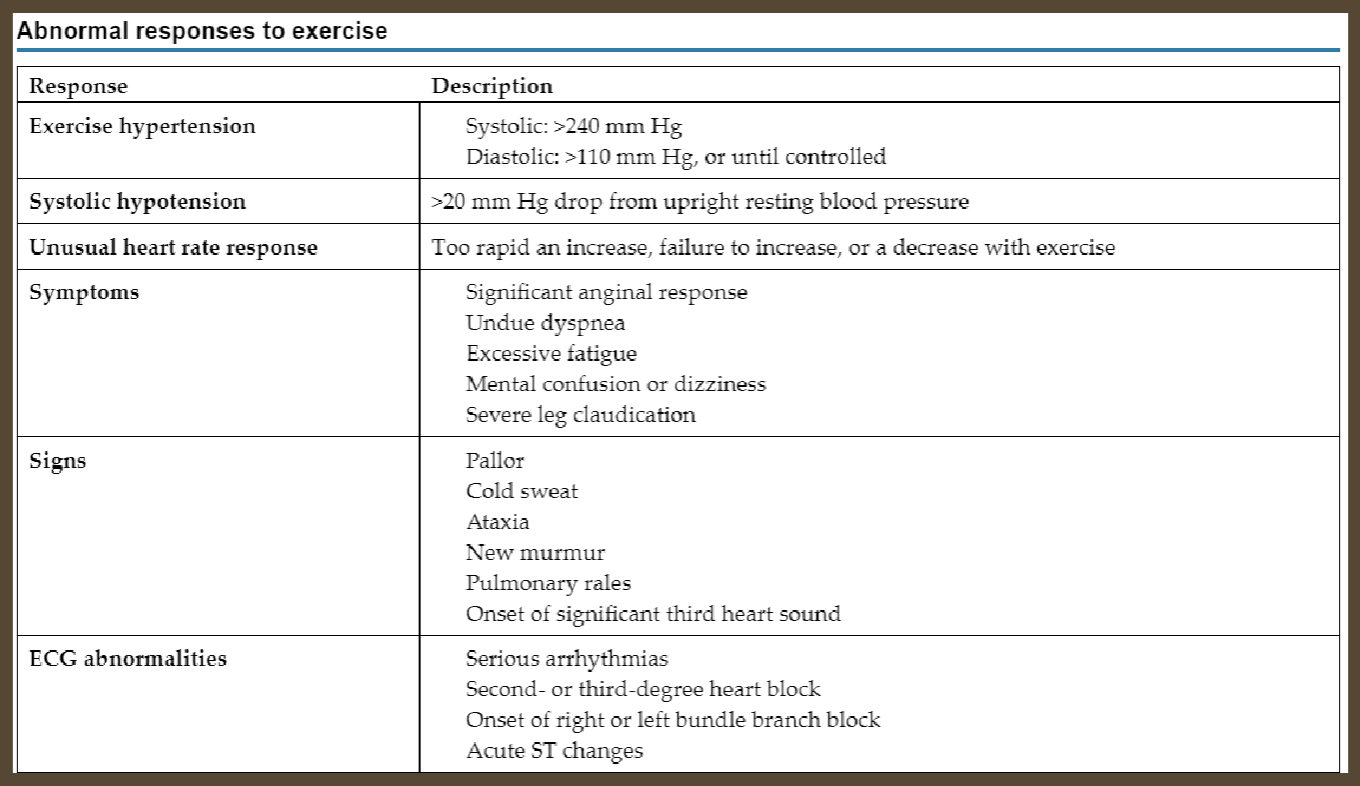
Stable cardiac patients can exercise up to what on the angina scale?
1: light, barely noticeable
What other program interventions besides aerobic training will pts receive?
Resistance training, coupled w/ breathing strategies
Circuit training
Flexibility programming
*What are 3 factors that influence exercise programs?
Altitude - >3500’ increases HR to meet CO, sxs angina
Cold - increase in peripheral resistance, increases arterial BP, sxs ischemia
Heat and humidity - dilation of peripheral vasculature and HR increases to maintain CO
What can you educate pts on for factors that can influence their exercise program?
Be aware of altitude changes
Wear warm clothing and stay hydrated in the cold
Avoid vigorous exercise >75F or high humidity >65-70%, wear loose clothing, stay hydrated, sunscreen, shade during heat