Elderly Final
 Call Kai
 Learn
Learn Practice Test
 Spaced Repetition
 Match
Match Flashcards
 Knowt Play
1/134

Earn XP
Description and Tags
Fellow chuds we are almost done. Remember this shit is communicative so got to review the midterm shit too smh
Name | Mastery | Learn | Test | Matching | Spaced | Call with Kai | Chat |
|---|
No analytics yet
Send a link to your students to track their progress
135 Terms
Identify issues of aging related to pain management interventions
What are the two major issues associated with chronic pain and opioid use in older adults?
Elderly people with chronic pain have two major issues associated with opioid use, addiction and constipation
Describe the challenges of pain management in older adults:
_______ and _______ of pain
Medication ______ and ______ events
Impact of pain on what two things?
_______ conditions that compound the amount of pain
Association of _________ factors with with pain ______ and ______.
Underreporting and undertreatment of pain
Medication adherence and adverse events
Impact of pain on function and mobility
Comorbid conditions that compound the amount of pain
Association of socioeconomic factors with pain incidence and impact
For the challenges of pain management in older adults, what are some strategies that can be used to overcome these challenges? (6, think of general treatment that you could impliment)
Modalities
Movement and exercise prescription
Manual therapy
Patient education
Body mechanics training
Cognitive behavioral therapy when appropriate
Identify examination/evaluation components for an older adult dealing with acute or chronic pain.
What should you look for/ask for: Patient history, Pain history, physical examination/
Patient history
Social history, current work/volunteer status, living environment, general health perceptions, etc
Pain history
Quality of pain, intensity of pain, location of pain, aggravating/alleviating factors (you can use screening tools and standardized pain instruments to determine these)
Physical examination
Identify impairments related to joint mobility, motor function, muscle performance, sensory integrity, integumentary integrity, etc.
Given a case scenario, be able to develop a pain management program for a patient.
What sort of modalities/interventions can be used?
Use the following appropriately depending on the patient:
Thermal agents
Manual therapy
TENS
Protective/supportive devices
Exercise (flexibility, aerobic, and resistance exercise are most effective)
Be familiar with the common drugs prescribed for pain management
Opioid analgesics (5)
Common side effects of opioids? (5)
Nonopioid analgesics (4)
NSAIDs may cause? (3) What might they feel?
Opioid analgesics: Codeine, Meperidine, morphine, Oxycodone, Propoxyphene
Common side effects of opioids are sedation, mood changes, GI problems, confusion, and orthostatic hypotension
Nonopioid analgesics: Aspirin, Ibuprofen, cortisone, prednisone (Ex: Voltaren, Lidocaine, and capsaicin)
NSAIDs may cause gastric ulcers, make BP decrease, and HR increase.
They may feel fatigued.
Be able to apply Cognitive-Behavioral Therapy approaches appropriate to physical therapy practice.
Education about?
Patients that struggle to cope with this should be referred to? If they have a baseline level of it, then they should be educated on what two things?
Relaxation training includes? (3)
Cognitive ______
______ activities
If you cant help, then?
Education about pain
Patients struggling to cope with chronic pain should be referred to a psychologist; also, if they have a baseline level of pain then they should be educated on what pain levels are appropriate and what pain levels are indicative of an actual problem
Relaxation training: breathing exercises, imagery, and visualization
Cognitive restructuring
Distraction activities
Referrals
How might relaxation training or distraction help in a pain management program?
Decrease the activity of what system?
Lower _____ (type of hormone)
Inhibit ______ process
Relaxation training can help in activating what system?
Distraction activities can cause the brain to?
Decrease the activity of the sympathetic NS
Lower cortisol
Inhibit inflammatory process
Relaxation training can help in activating the parasympathetic nervous system
Distraction activities can cause the brain to focus on other stimuli aside from the noxious stimulus
Describe post epidural instructions.
No driving for how long?
No drinking for how long?
No _____ activity
No walking or standing for more that how long at a time?
No driving for 24 hours
No drinking alcohol for 24 hours
No intense activity
No walking or standing for more than 10-20 mins at a time
How can technology be utilized to improve the health and quality of life for an older adult?
What are some health apps that can be downloaded for (8)
Health Management (DM, CHF, COPD)
Fall Detection (built-in accelerometers)
Medication Reminders
Video calls to stay connected with friends/family
Meal planning
Social Interaction
Entertainment
Robotic pets
How can technology improve the safety for older adults?
Bed/chair alarms are helpful to?
Medication reminders for?
Biofeedback for?
Motion activated what and where?
Bed/chair alarms are helpful to notify the care team that the patient is getting up (fall risk implications)
Medication reminders (BP, fall risk and decompensation of medically managed conditions)
Biofeedback for exercise response monitoring
Motion-activated lighting in the home
How can we assist older adults to remove the barriers to accessing technology?
Help them what?
Manage physical problems that limits their ability to?
Give them what?
Help them learn
Manage physical problems that limits their ability to use the technology (arthritis, limb deficiency, ;decreased grip, etc.)
Give them reference material/resources for good internet connection
What is the role for technology in patient care and physical therapy interventions? (6)
Which one is for UMN only?
Documentation
Telehealth/Video digital medicine
FES (UMN lesions only!)
Robotics for Examination & Treatment (Lokomat, InMotion)
BITS (Bioness Integrated Therapy System) which is used for hand-eye coordination that can be utilized in the home and hospital setting
Robotic Pets
How might a robotic pet impact the life of a patient with cognitive loss?
The robot pet may give them a sense of what?
For pt with cognitive loss, the simple _____ of the robot pet, the _____ or _____ component may help the pt become?
The robotic pet may give them a sense of calm/remind them of a calming time they spent with their pet
For a pt with cognitive loss, the simple weight of the robot pet, the purr or tactile component may help a pt relax and grounded
How might technology decrease social isolation?
Apps and systems facilitate social interaction (6)
One of them is the ElliQ, what is it?
ElliQ (AI-driven companion robot specifically designed for older adults to combat loneliness, promote independence, and encourage healthy daily habits)
FaceTime/Zoom
Video Games (Wii, VR)
Hearing Aids, low vision aids
Augmented Communication (aphasia, voice synthesis)
Robotic Pets
What is the role of falls and rhabdomyolysis in an older adult?
Damage to skeletal muscle causes muscles cells to _____ and release ______, which cause damage to the _____ and lead to?
Main S/S are? (5)
What was found to be the most common cause of rhabdomyolysis in elderly people? 2/3 of people who develop rhabdomyolysis eventually developed what?
What should you work on in the clinic knowing this?
Damage to skeletal muscle causes muscles cells to disintegrate and release myoglobin, which can cause damage to the kidneys and lead to kidney failure and then death
Main S/S are pain, tenderness, weakness, muscle swelling, and red/tea colored urine
Falls were found to be the most common cause of rhabdomyolysis in elderly people, and 2/3 of people who develop rhabdomyolysis developed acute kidney injury
do fall prevention
Be able to examine an older patient with orthopedic issues.
Prescribe a comprehensive physical therapy program for a patient with joint dysfunction and weakness.
Be able to prescribe an appropriate exercise program for a patient with orthopedic issues.
Not on ashleys, but can probably guess what to do (IE strengthening, ROM, conditioning, etc)
Prescribe a physical therapy treatment plan for a senior athlete.
Do what training?
Stay?
Preform _______ ______ and recovery, depending on? Example?
Do sport-specific training
Stay fit and strong
Perform injury prevention and recovery, depending on their activity (ex: for a person who golfs, perform movements that will counteract the repetitive movement of swinging the club)
How should a physical therapist respond if a cast is not fitting properly?
contact their MD
What role does medication play in pain and inflammation management? Potential side effects?
NSAIDs can cause what gastric issue? What are the signs of internal bleeding associated with this?
What is Voltaren? Why would you use this over oral NSAIDs?
What is Lidocaine?
How does capsaicin help control pain (Interferes with)? What should you educate the patients on when using capsaicin?
Corticosteroids are used for? What should you avoid applying over the treatment area and why?
NSAIDs can cause gastric ulcers. Signs of possible internal bleeding may include decreased blood pressure, increased heart rate, and fatigue.
Voltaren is a topical NSAID applied locally through the skin, making systemic side effects less likely than with oral NSAIDs.
Lidocaine is an over-the-counter topical pain reliever.
Capsaicin helps control pain by interfering with substance P, a neurotransmitter involved in pain transmission. Educate the patient to wear gloves during application and avoid touching the eyes, mouth, or other sensitive areas.
Corticosteroids are used for anti-inflammatory purposes. Avoid applying heat over the treatment area because heat causes vasodilation, which may increase systemic absorption of the medication.
Be able to detail an appropriate treatment program for the musculoskeletal diagnoses discussed in class
For fracture management, Obtain what to determine what was preformed during surgery? Then confirm the patients what status? Assess what following the fracture or surgery?
For avascular necrosis, what may be necessary? (2)
For osteoarthritis, medical management for? If standing hurts too much, what can you do and how?
For hip replacement, what motions are not allowed? For weight bearing, how does it change based on what is used in the surgery (no cement vs with cement)?
For rheumatoid arthritis, preserve joints and maintain function via? If necessary, use a cervical collar for?
For shoulder bursitis what should you do and how?
For RC pathology, what should you do?
For lumbar stenosis, what exercise motion is ideal and which is not? What motion at the pelvis is ideal?
For osteoporosis, what type of exercises/training are ideal?
Fracture management: Obtain the surgical report to determine what was performed during surgery. Confirm the patient’s weight-bearing status and assess limb length following a fracture or surgery.
Avascular necrosis: Medication may be required, along with an assistive device such as a walker to reduce weight bearing.
Osteoarthritis: Use medical management for pain. Reduce weight-bearing activities if standing is too painful by using alternatives such as aquatic exercise or cycling.
Hip replacement: Avoid hip flexion greater than 90 degrees, adduction, internal rotation, and crossing the legs. Follow toe-touch weight bearing if no cement was used during surgery. Use weight bearing as tolerated if cement was used.
Knee replacement: Focus on motor-function training, range-of-motion exercises, and stretching.
Rheumatoid arthritis: Preserve the joints and maintain function through adaptive equipment, pain management, and activity modification. A cervical collar may be used when necessary to help protect against atlanto-occipital or upper cervical instability.
Shoulder bursitis: Create more space in the shoulder through mobilization and address the cause of the bursitis with appropriate stretching and strengthening.
Rotator cuff pathology: Perform range-of-motion exercises, scapular stabilization exercises, and progressive strengthening as tolerated.
Lumbar stenosis: Emphasize flexion-based exercises and avoid excessive lumbar extension. Posterior pelvic tilts may be used.
Osteoporosis: Include resistance exercise, weight-bearing exercise, fall-prevention strategies, proper body mechanics, and postural training.
How does the Stabilizer (or blood pressure cuff) work to help patients identify neutral spine?
Where is it placed and how is the patient positioned?
Ensure stabilizer or BP cuff is where and is filled to how much mmHG?
Have the patient do what once set up? What would an increase mmHG mean and a decrease is mmHG mean?
What feedback should you provide and what does this teach?
Ideally, what happens to the cuff pressure when the patient does exercise and what does this mean? What are the two spots you can place the cuff and how does the initial mmHg differ in those too spots?
Place a stabilizer or blood pressure cuff under the lumbar spine while the patient is in the hook-lying position.
Inflate the stabilizer or cuff to 40 mmHg.
Have the patient alternate lifting one foot at a time while maintaining a neutral spine. A posterior pelvic tilt will increase the pressure, while an anterior pelvic tilt will decrease the pressure.
The stabilizer provides pressure biofeedback and helps the patient develop motor control of the lumbar spine.
When they put the blood pressure cuff under a certain part of their spine the pressure in the cuff should not increase while they do the exercise, signifying that they maintain a neutral spine (For low back: 40 mmHg, For cervical spine: 20 mmHg)
Be able to detail an appropriate treatment program for the musculoskeletal diagnoses discussed in class. Examples include the following:
Osteoporosis: Encourage what posture and why?
Vertebral compression fracture: Avoid what motion and promote what alignment and why?
Osteoarthritis of the spine and extremities: Improve what alignment and reduces what movements hat may place additional stress on arthritic joints?
Rheumatoid arthritis of the spine and extremities: Support inflamed joints through what and this helps reduce?
Lumbar stenosis: Teach what control to avoid what motion? Why?
Shoulder and other UE pathologies: Promote proper what positioning and posture? This helps improve what and reduce what?
Joint replacement treatment (Hip, knee, shoulder): Reinforce safe and proper alignment of what during functional activities and postoperative mobility?
Fractures: Provide what movement and what activation to avoid stressing the injured area while promoting safe reconditioning?
Osteoporosis: Encourages a neutral spine posture to reduce the risk of vertebral fractures during movement and exercise.
Vertebral compression fracture: Helps avoid spinal flexion and promotes safe spinal alignment to protect the healing vertebrae.
Osteoarthritis of the spine and extremities: Improves joint alignment and reduces compensatory movements that place stress on arthritic joints.
Rheumatoid arthritis of the spine and extremities: Supports inflamed joints through gentle stabilization, helping reduce pain and joint irritation.
Lumbar stenosis: Teaches trunk control to avoid excessive lumbar extension, which may aggravate nerve compression.
Shoulder and other upper-extremity pathologies: Promotes proper scapular positioning and posture, improving shoulder mechanics and reducing strain.
Joint replacement treatment of the hip, knee, and shoulder: Reinforces safe and properly aligned movement patterns during functional activities and postoperative mobility.
Fractures: Provides controlled movement and core activation to avoid stressing the injured area while promoting safe reconditioning.
How could assistive devices/braces improve the functional status of a patient with orthopedic impairments?
Reduces what on injured joints? Example?
Improves what two things? Example?
Supports what tissues? Example?
Corrects what or enhances what? Example?
Enables earlier _____ and return to _______, improving overall _______.
Reduce pain and decrease the load placed on injured joints, such as using a cane to reduce stress on a knee with osteoarthritis.
Improve safety and independence, such as using a walker for balance deficits.
Support healing tissues, such as using a knee brace after surgery.
Correct deformity or improve alignment, such as using an ankle-foot orthosis for foot drop.
Allow earlier mobility and return to activities of daily living, improving overall function.
Be able to describe kinesiology taping principles to improve a patient’s posture and to reduce edema
To improve posture: Apply tape with what level of tension and along what areas? This stimulates what and cues for what?
To reduce edema: Use what technique and with how much tension? Anchor near what areas and spread towards what area? The lifting of the skin helps improve what two things?
To improve posture: Apply tape with light to moderate tension along the upper back, shoulders, or spine. The tape provides proprioceptive input and cues the patient to correct posture, such as applying tape over the upper trapezius to encourage shoulder retraction.
To reduce edema: Use a fan or web technique with very light tension of approximately 10%–15%. Anchor the tape near the lymph nodes and spread the strips toward the swollen area. The tape gently lifts the skin to help improve lymphatic drainage and circulation.
What rheumatic condition is associated with temporal arteritis?
Common in what population and what are 3 symptoms? What are 3 areas that pain will be?
Rare in patients under what age and more common in patients of what descent?
Treatment is what drug?
Polymyalgia Rheumatica (PMR): often associated with temporal arteritis (a.k.a. giant cell arteritis).
Common in older adults; symptoms include headache, jaw claudication, and vision changes, pain in eye, shoulder and pelvic girdle pain
Rare in patients under 50 and more common in pts of Scandinavian descent
TX: prednisone (steroid)
Be able to create a fall prevention program for a patient with osteoporosis or other orthopedic problems
Do what activites?
Wear a?
No what activitites?
Do what training?
________ modifications?
Patient ______?
What correction?
Do weight bearing activities
Wear a gait belt
No high impact activities
Do balance training
Environmental modifications
Patient education
Posture correction
Cue a patient to move during shoulder elevation to promote a more normal scapulohumeral rhythm
Cue them to raise their arms without doing what? This should be where?
Bring your ______ forward
Use what cueing if needed?
Cue them to raise their arms w/o lifting their shoulders. This should be done in front of a mirror.
Bring your sternum forward
Use tactile cueing if necessary
Describe components of the Lower Extremity Functional Scale (LEFS)
What is it and how many questions?
Assess your ability to do what?
The scoring goes from what range? What would be extreme difficulty/unable and what would be no difficulty in terms of score values? How many points is it out of?
MCID for this scale is?
A questionnaire containing 20 questions
assess your ability to do functional activities that require the use of your LEs.
The scoring goes from 0-4, with 0 being extreme difficulty or unable and 4 being no difficulty performing the task. It is out of 80 points.
The MCID for the LEFS is 9 points
How can the Minimally Clinically Important Difference be used during goal writing?
It can be used by taking the MCID and making that value the amount of increase/decrease the patient should have on a functional outcome measure for a goal.
An increase/decrease of at least the MCID will indicate an actual clinically-important improvement in function.
Apply general principles to patients receiving Regenerative Medicine (stem cells and platelet rich plasma).
The general concept of regenerative medicine is just to introduce healing factors into the area
Be able to use Blood Flow Restriction techniques with an older adult (Safety Precautions and Treatment Protocols)
For BFR, they can use it active or passive. What is the passive protocol? (How many minutes of pressure and how many without? How many sets and how may times a day)
What about active protocol? (How many reps initially, followed by how many sets of how many reps? Rest between sets is how long)
The load for active protocol is typically how much percent of 1RM? It helps recruit what muscle fibers. What is the arterial occlusion pressure AOP used for treatment (Typically its how much percent of the pressure used to totally occlude the artery?)
What type of exercises are not allowed?
Passive protocol is to have 5 mins of pressure, 3 mins of no pressure, and repeat that for 3-4 sets, 1-2 times per day
For an exercise they will do 30 reps, followed by 3 sets of 15 reps w/ 30 sec rest between sets
The load is typically between 20-30% of 1RM. It helps recruit type II muscle fibers. The arterial occlusion pressure (AOP) used for treatment is typically 40-80% of the pressure used to totally occlude the artery
No power, speed, or jumping exercises.
How can the Flexicurve Ruler be used to examine kyphosis? Be able to calculate the kyphotic index?
The formula is? A score of more than what indicates clinical kyphosis?
You measure the shape of their spine with it and then use the measurement to plug their thoracic width and length into a formula to determine their Kyphosis Index.
The formula is (TW/TL) x 100
A score of > 13.0 indicates clinical kyphosis
Review sarcopenia concepts and exercise prescription.
What is sarcopenia?
It increases the risk of? (5)
Causes? (5)
Exercises prescription improves/preserves what (3)? Reduces what risk? Enhances what (2)?
Sarcopenia is the progressive loss of skeletal muscle mass, strength, and function associated with aging or chronic disease.
It increases the risk of:
Falls
Frailty
Functional decline
Loss of independence
Mortality
Causes:
Aging (primary sarcopenia)
Inactivity or immobilization
Poor nutrition (esp. protein deficiency)
Chronic diseases (e.g., diabetes, cancer, COPD)
Hormonal changes (e.g., ↓ testosterone, IGF-1)
Exercise Prescription:
Preserve/improve muscle mass, strength, power, and physical performance
Reduce fall risk
Enhance quality of life and independence
How do physical therapists approach the care of complex medical patients?
First check?
Review what?
Communication with?
Review notes from?
______ centered approach to care?
Maintain what two things?
Monitor what?
Consistent patient what?
Vitals
Thorough systems and health chart review
Communication with other members of the health care team
Review notes from previous sessions
Patient-centered approach to care
Maintain HIPPA
Maintain Privacy
Monitor exercise response
Consistent patient feedback
What are the signs and symptoms of sepsis? urinary tract infections? kidney stones?
Sepsis S/S (they will likely have had a recent what?) (3)
Urinary tract infection S/S (5)
Kidney stones S/S (5)
Sepsis: Confusion/ delirium, rapid heartbeat, low BP (they will likely have had a recent infection that the body is unable to fight off)
Urinary Tract Infection: Cloudy urine, hematuria, burning with urination, fever, pelvic pain
Kidney Stones: Acute flank pain with radiation into the groin or perineal region with the inability to relieve pain, hematuria, urinary urgency and frequency, dysuria, N/V
Given a case scenario, be able to design a treatment program for a patient with end-stage renal disease.
The functional side effects related to renal disease result primarily from what two things?
This means you need to be aware that they will what during exercise?
They will need a increased in what two thing to prevent arrythmias?
What scale should you use to determine exercise risk?
The functional side effects related to renal disease result primarily from anemia and congestive heart failure, so be aware that they will:
fatigue faster
they need an increase warm up and cool down to prevent arrhythmias
and you should use the green, yellow, red scale to determine exercise risk
What precautions would need to be taken with a patient on dialysis?
Don’t take ______ ______ on the _____ side as the _______.
You may do your session at the same time as their? What to be aware of the longer time goes on since then?
Don’t take blood pressure on the same side as the fistula
You may do your session at the same time as their dialysis session, but the longer time goes on since the dialysis the less energy they have
Given a case scenario, be able to design a treatment program for a patient with diabetes
Your treatment program will consist of what 4 things?
Proper diet (refer to dietician)
Exercise
Education for self monitoring
Drug therapy
What are the neuropathies associated with Diabetes?
Peripheral neuropathy: Mostly associated in what part of the body? May also affect what other part of the body? Affects what two sensations? This leads to what? (3)
Autonomic Neuropathy: What two systems are affected that cause the issue? What does it require and why?
Peripheral Neuropathy: Mostly associated with the underside of the foot, but may also affect the hands. It will affect protective sensation and proprioception; this may lead to impaired balance, falls, as well as wounds that become infected
Autonomic Neuropathy: The sympathetic and parasympathetic nervous systems don’t have the ability to adequately control the body’s processes. This will require a prolonged warm up and cool down to prevent arrhythmias
Design a physical therapy program for a patient who has cancer or is receiving cancer treatments?
Prevent what from developing? Maintain what to extremities? Focus on what management strategies?
We just need to be able to prevent contractures from developing, maintain circulation to all extremities, as well as focus on pain management strategies
Design an exercise intervention for cancer-related fatigue
Assess what?
Identify what factors?
Appropriate _____ of exercise?
Assess fatigue and manage
Identification of treatable factors that exacerbate fatigue (pain, sleep disturbance, etc.)
Appropriate dosage of exercise is important (don’t over exert)
What exercise environment is contraindicated for a patient receiving radiation?
Aquatic therapy
How can chemotherapy drugs impact an older adult differently than a younger adult?
Older adults are especially prone to adverse effects such as? (3)
Normal reactions for all ages include? (3)
Older adults are especially prone to adverse effects such as cardio toxicity, neurotoxicity, and blood disorders (anemia, thrombocytopenia)
Normal reactions for all ages include GI distress, skin reactions, and toxicity of various organs
Be able to clinically apply the information concerning cardiopulmonary changes with aging and disease.
Diseases of the heart, lungs, and blood vessels are the most prominent causes of morbidity and mortality among elderly individuals. Some common diagnoses are? (4)
Diseases of the heart, lungs, and blood vessels are the most prominent causes of morbidity and mortality among elderly individuals. Some common diagnoses are:
Atherosclerotic heart disease
Hypertension
Congestive heart failure
Arrhythmias
Review the diagnoses and interventions mentioned in your textbook.
Bih ahhhhhhh textbook bruh (nothing on ashleys)
How do the typical physiological cardiovascular changes impact the maximum heart rate in an older adult?
Maximum HR decreases for older is thought to be due to:
Changes in what system?
Age related decrease in the number of cells in the?
HR max equation? This shows that the older you are, the ____ your HR max will be.
Maximum HR decreases for older adults is thought to be due to:
Changes in the autonomic nervous system
Age-related decrease in the number of cells in the sinoatrial node
Recall:
HR Max = 220-age
The older you are, the lower your HR max will be
Why are extended warm-up and cool-down periods necessary with the older adult when exercising?
An extended warmup and cooldown period help prevent exercise induced arrhythmias
What is the ischemic threshold and how does it relate to physical therapy care?
The ischemic threshold is the heart rate at which __ mm downslope of the ___ segment occurs during an ECG
What is the equation for ischemic threshold? This is in reference to the HR they will begin to have? You should stay above or below this HR and why?
The ischemic threshold is the heart rate at which 1 mm downslope of the ST segment occurs during an ECG
(SBP X HR) = Ischemic Threshold
However, in reference to us this is the HR in which they will BEGIN to have s/s such as chest pain.
You should stay below this HR to prevent symptoms arising during tx as well as preventing ischemia from occurring
What are the signs and symptoms of silent ischemia? (7)
Initially, it will have? Eventually?
Silent ischemia has no symptoms (AKA silent)
But silent ischemia will eventually have symptoms, which are most commonly left sided chest pressure/pain, neck/jaw pain, shoulder/arm pain, rapid heartbeat, shortness of breath, sweating, and N/V
Be familiar with cardiopulmonary medications
What is the ending to beta blockers? What are they used for and effects will cause a decrease in what during exercise?
What is the ending to diuretics? What are they used for and what effects can it lead to?
What is the ending to statins? What are they used for and they can increase the for what?
What is the ending to ACE inhibitors? What are they used for and they can cause what side effects?
What is the ending to anticoagulants? What are they used for and they can cause what side effects?
What is the ending to Calcium Channel Blockers? What are they used for
Beta Blockers (-olol): Primarily used for hypertension, angina, and arrhythmias. Effects will be a decreased expected HR increase during exercise
Diuretics (-ide): Primarily used for hypertension and CHF. Can lead to dehydration and orthostatic hypotension.
Statins (-statin): Used for hyperlipidemia. Can increase the risk for myalgias and rhabdomyolysis.
ACE Inhibitors (-pril): Used for hypertension and CHF. Can cause coughing, dizziness and diarrhea.
Anticoagulants (-arin): Used for overactive clotting. Can cause excessive bleeding and severe bruising.
Calcium Channel Blockers (-dipine): Prevents a strong contraction of the heart and arterial muscles, to prevent HTN
What modalities are contraindicated with a pacemaker or implanted defibrillator?
Electric stimulation, especially near the implanted device
How would you modify the exercise program for a patient with stable congestive heart failure?
Follow what guidelines for exercise?
If they are actively having symptoms associated with heart failure, then do not? What are some s/s of heart failure? If they are beginning to show mild symptoms, what should you do?
Follow the green, yellow, red guidelines for exercise risk.
If they are actively having symptoms associated with heart failure then do not exercise, such as gaining weight in a couple days or chest pain. If they are beginning to have mild symptoms such as a small amount of weight gain or increased fatigue with activity then be cautious and maybe contact their doctor with your findings, depending on what they are.
Based upon a case study, prescribe an appropriate exercise program for an older adult
Okay (LOL this is all Ashley wrote here, shes so fed up with this s*it LMAO)
How does ejection fraction relate to a patient with CHF and a cardiac rehabilitation program?
A patient with CHF is likely to have a reduced what? What is a normal value of this? If this is less than 35%, is exercise impacted? If they have decreased of this, then be mindful that they are likely to what during exercise?
A patient with CHF is likely to have a reduced ejection fraction.
A normal value for ejection fraction is roughly 55-75%.
< 35% does not mean exercises is contraindicated, on the contrary
If they have a decreased ejection fraction then be mindful that they are likely to fatigue very easily so don't overexert them
How does atrial fibrillation relate to stroke? Heart failure?
A-fib reduces what? This is due to a reduced?
This will cause blood to what? Leading to?
This same concept applies to what other cardiac condition? How is it similar?
A-fib will reduce the amount of blood that reaches the ventricles due to reduced atrial kick.
This will cause blood to pool up in the atria, and the pooling blood is likely to clot.
The same concept applies to heart failure, where blood is not able to leave the left ventricle and go to the body as well, and it is likely to clot in the ventricle
Be familiar with the ECG strips discussed in class
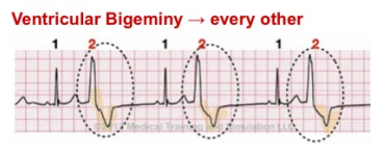
Ventricular Arrythmia (Bigeminy): If you see this what should you do? If chest pain is occurring? What if it goes back to normal?
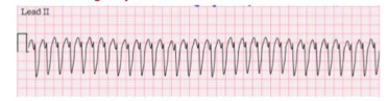
Ventricular Tachycardia: This rhythm is (same thing with V-FIB? What is diminished? This is an emergency because it can turn into?
Normal Sinus Rhythm: What does it look like?
Ventricular arrhythmia (bigeminy)
Do not continue exercise, check vitals
IF CHEST PAIN = 911
If goes back to normal, no 911 required but report ECG findings to doctor
Ventricular tachycardia
SHOCKABLE RHYTHM (V-TACH/V-FIB shockable)
CO and Bp are diminished
Emergency! Could turn into V-Fib.
Normal sinus rhythm (Slightly elevated heart rate because they're exercising)

What are the signs and symptoms of pneumonia in an older adult (7)?
Cough
Fever
Shortness of breath
Changes in mental status
Anorexia
Decreased function and activity tolerance
Elevated heart rate
What is vital capacity? Tidal volume?
Vital capacity is the amount of air that is under volitional control (aka: the amount of air you can maximally inhale and then maximally exhale)
Tidal volume is the amount of air that is used during normal, quiet breathing
Case Study: Mrs. S is 75 years old. She has a diagnosis of severe peripheral arterial disease, which required a transtibial amputation on the left. She has a history of ischemic heart disease and hypertension. She is excited to be fitted for a prosthesis. Please outline her treatment program. What precautions must be taken due to her age and medical condition?
Case Study: Mr. P is 80 years old. He has a longstanding history of COPD. His condition has worsened and he has been referred to physical therapy. He has secretion accumulation and difficulty recovering from episodes of shortness of breath. He demonstrates overall weakness, with limited coughing ability. Please outline his treatment program.
Case Study: Mr. Y is 68 years old. He has a diagnosis of diabetes mellitus and compensated heart failure. He uses insulin to control his glucose levels and multiple medications to manage his congestive heart failure. He complains of general weakness and poor functional endurance. His physician has sent him to physical therapy to establish an appropriate home exercise program to address his needs. Please outline his treatment program, including any specific safety precautions.
Ah hell nah aint no one got time for this (Nothing on ashleys)
What is the function of the integumentary system?
The two main functions
Two main functions of the epidermis:
1. Moisture retention and protection of deeper structures
2. The dermis is responsible for providing hydration, oxygen, and nutrition
What changes occur with aging skin?
Epidermis becomes less effective at? Why is this the case (and what cells decrease and what do those cells do)
The skin has increased ______ due to the decrease in ______ caused by the decrease in ______.
Decreased perception of what two things? This is due to the degeneration of what in the dermis?
What sort of lifestyle aspects can impact the skin?
The epidermis becomes less effective at protecting the person from pathogens due to becoming thinner and decreasing in the presence of Langerhans cells, which trigger the immune system in the presence of pathogens
The skin has increased turgor due to the decrease in elastin caused by the decrease in fibroblasts
Decreased perception of light touch and pressure sensation due to degeneration of Meissner corpuscles in the dermis
Wrinkling and change in skin texture due to lifestyle such as sun exposure, smoking, etc.
How would you respond if you suspected your patient had a skin cancer lesion?
Refer to doctor for examination DUMB AHHH
What is the ABCDE method to assess skin lesions?
Asymmetry: One half is unlike the other half
Border: There is an irregular, scalloped, or poorly defined border
Color: The color is varied from one area to another
Diameter: Greater than 6 mm is indicative of melanoma
Evolving: Changing shape, size, or color
How can a skin assessment be used to monitor hydration status?
How can you quickly assess dehydration?
Older adults are more prone to dehydration because of what three things?
You can do the skin pull assessment to quickly identify if they are dehydrated
Older adults are more prone to dehydration because they have a decreased thirst mechanism, reduction in total body fluids, and decreased renal function causing them to retain enough fluid
What are the signs and symptoms of dehydration in an older adult? (5)
AKA, these are ______ symptoms.
Dizziness
Dark urine
Headache
Fatigue
Confusion
AKA: Systemic symptoms
Be able to differentiate between the different types of lower extremity wounds.
Arterial ulcers: Dry or wet? Is blood absent or pooling? How des the wound look like? What area does it occur in commonly?
Venous ulcers: What area does it occur in commonly? How does the wound look like? Dry or wet?
Diabetic ulcers: What area does it occur in commonly? Will likely have what surrounding the wound?
Pressure ulcers: Occur in someone who is?
Stage 1: Skin is? What color of the localized area?
Stage 2: ______ thickness loss of the dermis? Presenting as a _____ or shallow ______.
Stage 3: ______ thickness loss of the dermis? This is where what is visible but not what?
Stage 4: ______ thickness loss of the dermis? This is where what is visible? An unstageable wound is where the base of the ulcer is covered by what?
Arterial ulcers: Usually dry, absence of blood, circular with well-defined borders, and occur commonly on the lateral foot
Venous ulcers: Commonly occur on the medial aspect of the foot or ankle, bigger in size, have irregular shape, and usually have excessive fluid
Diabetic ulcers: Usually occur on the bottom of the foot, will likely have a callous surrounding the wound
Pressure ulcers: Occur with someone who is bedridden without moving very much.
Stage 1 has intact skin with nonblanchable redness of the localized area.
Stage 2 has partial-thickness loss of dermis presenting as a blister or shallow crater.
Stage 3 is a full-thickness tissue is through the dermis where subcutaneous fat is visible but muscle/bone are not.
Stage 4 is full-thickness tissue loss where bone/muscle are visible. An unstageable wound is where the base of the ulcer is covered by slough and/or eschar.
Be able to develop a treatment plan for a patient who has a wound.
You will pick appropriate dressing for the wound in order to facilitate ______ debridement and prevent what? For treatment, don't do exercise that will do what? Prevent what two things?
For venous insufficiency, you'd want to apply?
For arterial insufficiency you'd want to apply?
You will pick appropriate dressing for the wound in order to facilitate autolytic debridement and prevent the progression of the wound. For treatment, don't do exercise that will impact the healing of the wound, prevent infection, and prevent shearing force being put on the wound.
For venous insufficiency, you'd want to apply compression around the limb
For arterial insufficiency you'd want to apply a wound dressing to improve wound moisture
Identify the different types of dressings available for wound care and when they are appropriate to use:
Hydrogels: Donates?
Hydrocolloids: Used to promote what debridement and for a wound that has what potential?
Alginates: What does it do?
Antimicrobial dressings: Prevents what in the wound? Commonly in what form?
Honey-impregnated gauze: Used to remove what on a wound bed?
Transparent film: Used to allow? Should not be used with what type of wound?
Hydrofiber: What advantage is there when using this form of dressing?
Hydrogels: Donates water to the wound
Hydrocolloids: Used to promote autolytic debridement in a wound that has potential to heal on its own
Alginates: Absorbs moisture
Antimicrobial dressings: Prevent bacteria from accumulating in the wound; these are most commonly foams
Honey-impregnated gauze: Used to remove the biofilm that accumulates on the wound bed
Transparent Film: Used to allow certain types of modalities to be applied through the film, but should not be used with a heavily draining wound
Hydrofiber: When dipped into water it turns into a gel that can be molded to fit into small spaces within the wound bed
How does silicone work on scars?
Maintains what type of environment? Why would this environment be beneficial?
Collagen deposition will result in what to the skin? The use of silicone allows the skin to?
Maintains a moist environment, this moist environment prevents the deposition of collagen when the scar is healing.
Collagen deposition will result in hardening and raising of the skin. The use of silicone allows the skin to heal in a more organized fashion
When is it NOT appropriate to debride a wound? This indicates?
When there is eschar covering the entirety of the wound bed
Indicates "Unstagable Wound"
Be able to develop a program for the prevention of pressure injuries
Identify people who are at-risk for developing? These will be people who are doing to be what for long periods of time?
What should we focus on in terms of treatment? Educate them on (How often for bed and chair)? Recommend using what surfaces?
Identify people who are at-risk for developing pressure injuries. These will be people who are going to be bedridden for extended periods of time with immobility.
We should maximize mobility/activity levels as much as possible, educate them on repositioning every 2 hours in bed or every 15 minutes in a chair, as well as recommending the use of appropriate support surfaces
What is herpes zoster and how does it manifest itself on the patient’s skin? How should the PT respond?
Results from?
It manifests as? Followed in ___ days by _____ and ______.
What should be done if this is seen?
Herpes zoster results from the reactivation of the varicella zoster virus (chicken pox)
It manifests itself as tingling or pain in a unilateral dermatome followed in 1-2 days by erythema and vesicles (blisters).
They should be sent back to their doctor to be given medicine to manage via antiviral medication
What treatment interventions should be considered for a patient with a burn?
Position them appropriately to prevent what?
What position for shoulder, elbow, or hand?
You can apply medication to relieve pain as long as it does not delay what?
Position them appropriately to prevent contractures:
Shoulder: abducted and ER
Elbow: extended with forearm supination
Hands: fingers extended
You can apply medication to relieve pain as long as it does not delay the healing of the burn
Where should the gait belt be placed for a patient with a colostomy bag?
Around the chest, just under the axilla/armipits
What is superficial candida?
What is it and is common with what populations?
It occurs with?
The skin appears _____ with what three things?
It is a superficial yeast infection that is common with older adults and others who are immunocompromised
It occurs with prolonged exposure to moisture damage
The skin appears macerated with erythema, pustules (small, inflamed, raised skin bumps with a red base and a white or yellow center filled with pus), and papules (a small, raised, solid skin lesion)
How would scabies be identified and treated?
Scabies is due to? When do symptoms appear?
What two symptoms and what three areas of the body?
Its treated via? If you see this what should you do?
Scabies is due to a mite that lays its eggs in burrows on the skin which causes symptoms several weeks later.
Symptoms include excoriation (skin damage) and papules (bumps) around the axillae, wrists, and groin.
It is treated via topical medication that kills the mites so they should be sent to their doctor
How should a PT respond if the patient has suspected cellulitis or lymphangitis?
Immediate medical attention
How do K- Levels relate to prosthetic prescription?
K1: The patient has the ability or potential to? This would be a _______ ambulator.
K2: The patient has the ability for? This would be a _______ ambulator.
K3: The patient has the ability to? This is a ______ ambulator and may have a?
K4: The patient has the ability to perform? This will be what three populations?
The K level will determine what type of prosthetic a person is prescribed
K1: The patient has the ability or potential to use a prosthesis for transfers or ambulation on level surfaces at fixed cadence. This would be a household ambulator
K2: The patient has the ability for ambulation with low-level environmental barriers such as curbs, stairs, or uneven surfaces. This is a limited community ambulator.
K3: The patient has the ability to ambulate with variable cadence over multiple types of terrain. This is a community ambulator and may have vocational and/or exercise activity that demands prosthesis use beyond simple walking
K4: The patient has the ability to perform high-impact activities that require high levels of energy output. This will be children, active adults, or athletes
How do K – Levels relate to the Amputee Mobility Predictor Form?
The person's score on the AMP will determine what?. Some of the things on the test are?
What are the ranges for each K level?
The person's score on the AMP will determine what K level they are. Some of the things on the test are sitting forward in a chair with arms folded across their chest for 60 seconds, single-limb standing balance, and picking up objects off the floor.
K1 between 15-26
K2 between 27-36
K3 between 37-42
K4 between 43-47
(Start at 15 and add 11, 9, 5, 4)
Name the different types of prosthetic components.
For transfemoral prosthetic, what is the:
Socket
Suspension
Knee component
Foot/Ankle components
For a transfemoral prosthetic:
Socket: The interface between the residual limb and the prosthetic device. It’s essentially what they put their residual limb into.
Suspension: The method in which the residual limb is held within the socket (ex: suction, seal-in liner, etc.)
Knee Component: The type of artificial joint that comprises where the “knee” would be. Should be appropriate to what the patient requires.
Foot/Ankle Components: The type of artificial joint that comprises where the “ankle” would be and how the foot would move. Can either conform for forces put on it or can be fixed in place depending on what the patient requires.
Be able to prescribe a prosthetic device for a patient
okay (Once again shes so tired of this shit LOL she didnt write anything else)
Describe a physical therapy plan of care for a patient who had an amputation
Strengthen what muscles? Especially ones that are responsible for?
Strengthen all the other muscles that are involved in their ADLs, especially ones that are responsible for moving/stabilizing the prosthetic
Describe a physical therapy plan of care for a patient receiving a new prosthesis
I’ll try (😭😭😭)
How can footwear impact a patient’s function and potential pain issues?
An appropriate fitting show will allow patients to? (3)
An appropriately fitting shoe will allow the patient to transfer their body weight appropriately, provide adequate protection, as well as decrease pressure in order to allow for prolonged function and decreased pain
What type of shoe would be appropriate for a patient with diabetes or toe malformations?
They provide what whole minimizing what? This reduced the risk of developing what as well as giving more room for?
Extra depth shoes are appropriate for diabetics
they provide support and protection while minimizing pressure points on the feet; this reduces the risk of developing diabetic ulcers as well as giving more room for accommodating diabetic inserts
How can a leg length discrepancy be corrected? A difference in limb length of more than ____ should be corrected?
A difference in limb length of more than 1/2" should be corrected by shoe elevation
Based upon a patient case scenario, prescribe an orthotic device.
Posterior leaf spring: Helps promote _____ during _____ phase; they need adequate _____.
Solid AFO: Provides more _____ support than posterior leaf spring, does not allow for active movement so it should be used with someone lacking?
AFO w/ uprights: Used to correct _____/_____ of the foot via straps connected to the _____. These are fixated to the?
KAFO: Used when the person doesn't have adequate control of _____ ______ during gait. They should have adequate _____ strength however.
HKAFO: Provide stability to? Can be used just to? OR in the case of an RGO, can be used to promote what via weightshifting?
Posterior leaf spring: Helps promote dorsiflexion during swing phase; they need adequate plantarflexion
Solid AFO: Provides more lateral support than posterior leaf spring, does not allow for active movement so it should be used with someone lacking strength of the ankle
AFO w/ uprights: Used to correct valgus/varus of the foot via straps connected to the uprights. These are fixated to the actual shoe.
KAFO: Used when the person doesn't have adequate control of knee musculature during gait. They should have adequate hip strength however.
HKAFO: Provide stability to all joints of the LEs. Can be used just to bear weight or in the case of an RGO, can be used to promote reciprocal gait pattern via weight shifting.
Describe orthotic components, including an AFO. When would FES be appropriate?
Insert: The portion of the orthosis that contacts the?
Stirrup: A U-shaped fixture that provide _____ and ______ support and are riveted to the? This is not always?
Ankle Control: Portion of the AFO that limits ______ or ______ by assisting motion.
Foot control: Limits what two motions?
Superstructure: The portion of the AFO above the? This may be a _____ or ______.
The components of an AFO are:
Insert: The portion of the orthosis that contacts the plantar surface of the patient's foot
Stirrup: A U-shaped fixture that provide medial and lateral support and are riveted to the bottom of the shoe. This is not always a part of an orthotic now.
Ankle Control: Portion of the AFO that limits plantarflexion or dorsiflexion by assisting motion.
Foot control: Limits inversion and eversion
Superstructure: The portion of the AFO above the ankle and foot components. This may be a shell or uprights.
(Not on ashleys, but FES would be useful for patients that lack dorsiflexion during gait such as stroke patients. This is what i would assume the answer would be lol)
When would back braces or cervical collars be appropriate for a patient?
Cervical collars would be appropriate when you wish to limit what? Give an example of what you would want to do that.
Back braces would be appropriate in order to provide? They can either provide support/counterforce in what two ways?
Cervical collars would be appropriate when you wish to limit neck motion for any number of reasons, possibly because of cervical radiculopathy
Back braces would be appropriate in order to provide stability to the trunk to regain function. They can either provide support/counterforce to a specific segment of the trunk or limit an entire motion, such as flexion.
What would be involved in orthotic training? (6)
Donning/doffing
Balance
Gait training
ADLs
Functional training
Developing a wearing schedule where the patient slowly increases usage over time
Based upon a case scenario, be able to prescribe a wheelchair for a patient.
Case Study: Mrs. S is 74 years old with post-polio syndrome. She is complaining of weakness and pain in her knee, mostly on the posterior aspect. Genu recurvatum in that knee during gait is noted. How could the use of an orthotic device be helpful for this patient?
Nothing on ashelys
What is motor learning?
_____ practice
What skill acquisition?
Ability to use muscle or movement in?
Related to?
Give an example for the concept of motor learning and neural adaptions. Improvement is NOT related to?
Neural adaptation to repetitive stimulus
random practice
motor skill acquisition
Ability to use muscles or movements in multiple ways
Related to functional demands
Ex: A pt comes into the clinic for their first evaluation and treatment session. The patient states that they haven't exercised in "decades". Initially, the patient demonstrates poor scapulothoracic control during scaption and excessive upward rotation is noted during overhead reaching tasks. At the end of the session, the pt demonstrates significantly increased control of upward rotation. This increase in control represents the concept of motor learning and neural adaptions, this improvement is NOT related to strength gains
What are common motor control impairments seen in neurological conditions? (11)
Paresis (weakness)
Abnormal tone
Fractinated movement disorders
Ataxia
Hypokinesia
Somatosensory loss
Perceptual deficits
Stimulus and repetition
Random practice
Skill acquisition
Ability to use muscle or movement in multiple ways
When would remediation be appropriate? Compensatory mechanisms?
Remediation is? This is appropriate when there is?
Compensatory mechanisms are? This is appropriate if there is?
Remediation is the restoration of previously lost motor ability and function. This is appropriate when there is the possibility of restoring lost function.
Compensatory mechanisms are maximizing function within the confines of their limited motor abilities. This is appropriate if there is no possibility of regaining lost function
Be able to examine a patient with neurological issues
What are the components of an examination?
The components of an examination are:
Subjective interview
Medical history and medications
Prior level of function
Triggering event leading to physical therapy needs
Screening procedures
Specific tests and measures
Functional examination
Risk identification
Goals and prognosis
Be able to apply concepts of physical therapy interventions for a patient with neurological disease
Movement training (exercise, balance/coordination, and postural awareness/gait training)
Functional limitations
Psychosocial needs
Adaptive equipment
Referrals
Support
Be able to differentially diagnosis a patient with complaints of dizziness.
Orthostatic Hypotension: If you suspect this what should you check? How do you know the dizziness is due to orthostatic hypotension?
Medication: What type of medications cause dizziness?
Vestibular: If you suspect this what should you do?
3 Possibilities for dizziness:
Orthostatic Hypotension: take their BP in supine and sitting/standing
If the systolic BP decreases >20 then its likely due to this
Medication: Their medications may have side effects such as dizziness/drowsiness
Medications addressing HTN (diuretics, ACE inhibitors, etc.) commonly cause this
Vestibular: Performing vestibular-related tests (CTSIB, log roll, Dix-Hallpike) could identify vestibular-related cause
Identify the common symptoms and impairments associated with Parkinson’s Disease (9)
Kyphotic/stooped posture
Shuffling gait/Festinations
Bradykinesia
Postural Instability
Rigidity
Cognitive impairments
Balance & Coordination impairments
Tremor (resting vs. intention)
Mask Face (reduced ability to show facial expression)
How is Parkinson’s Disease medically treated?
What medications can be used? (2)
Levodopa
Dopamine agonists (amantadine)