A&P Lesson 4 - Cellular form and Function; Genes & Cellular Function
 Call Kai
 Learn
Learn Practice Test
 Spaced Repetition
 Match
Match Flashcards
 Knowt Play
1/92

There's no tags or description
Looks like no tags are added yet.
Name | Mastery | Learn | Test | Matching | Spaced | Call with Kai | Chat |
|---|
No analytics yet
Send a link to your students to track their progress
93 Terms
Nucleus
largest organelle in the cell and contains cell’s genetic material
How large is the nucleus?
5 um
Anuclear
without a nucleus (ex. erthrocytes)
multinuclear
have multiple nuclei (ex. skeletal muscle cells)
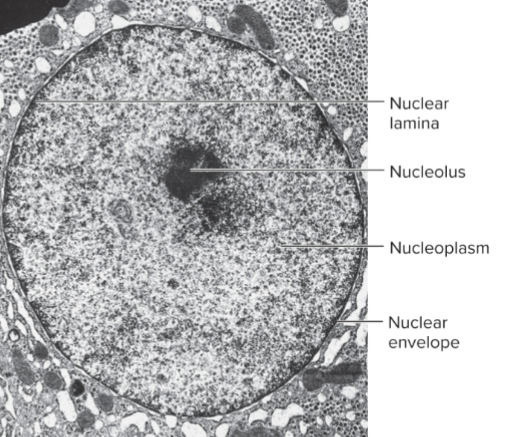
Nuclear envelope
double membrane around the nucleus that regulates molecular traffic

Nuclear lamina
web of protein filaments that supports the nuclear envelope

nucleoplasm
material within the nucleus
What does nucleoplasm include?
chromatin and one or more nucleoli
Chromatin
fine filamentous DNA material complexed with proteins; tightly packed and usually found during mitosis

How big are chromatin?
6 feet long packed in cell nucleus of 5 um diameter
Nucleolus
area in the nucleus that is composed of RNA, enzymes and histones and is abundant in cells that produce proteins

What is the function of the nucleolus?
produces rRNA and ribosomal subunits which are both essential for protein production in the cytoplasm during translation
ribosomes
composed of rRNA and ribosomal proteins
DNA
long, thread-like molecule with uniform diameter but varied length (average 2 inches) that carries genes for the synthesis of proteins
Gene
an information-containing segment of DNA that codes for the production of a molecule of RNA that most often plays a role in synthesizing one or more proteins
only 2% of total DNA
What determines the amino acid sequence of a protein?
the nucleotide sequence in the DNA
how many DNA molecules (chromosomes) are in the nucleus?
46 (23 maternal and 23 paternal)
What are the 3 components of a nucleotide?
a sugar
a phosphate group
a nitrogenous base
Purines
double ringed structure
adenine (A), guanine (G)

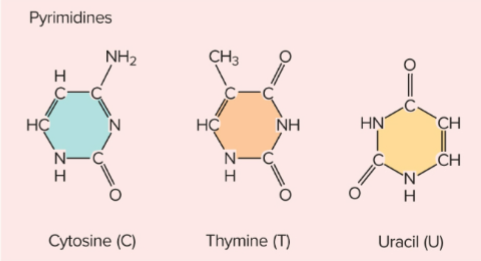
Pyrimidines
single ringed structure
Cytosine (C), thymine (T), uracil (U)
what type of bond connects the nitrogenous bases in DNA?
hydrogen bonds
Histones
proteins around which DNA winds; cluster in groups of 8 molecules
Nucleosome
DNA wrapped around histones
DNA replication
the copying of DNA to make another molecule of DNA
Sister chromatids
2 parallel filaments of identical DNA
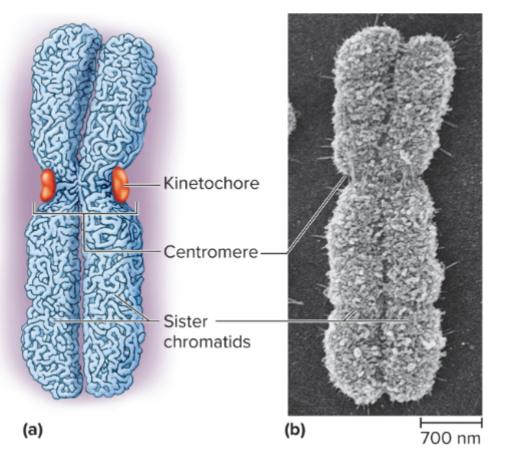
Kinetochores
protein plaques on each side of centromere that play a role in cell division

RNA
single nucleotide chain, smaller than DNA and function mainly in cytoplasm
What are the 3 RNA that are important for protein synthesis?
messenger RNA (mRNA)
ribosomal RNA (rRNA)
transfer RNA (tRNA)
Gene
an information-containing segment of DNA that codes for the production of a molecule of RNA that most often plays a role in synthesizing one or more proteins
What determines the amino acid sequence of a protein?
the nucleotide sequence in the DNA
T/F All body cells except sex cells and some immune cells contain identical genes
true
what genes are activated in cells?
different genes are activated in different cells
how many of its genes does a cell use?
1/3 - 2/3 of its genes
In what order is RNA, DNA, and protein made?
DNA → RNA → protein
Where does transcription occur?
in the nucleus
Transcription
copying genetic instructions from DNA to mRNA utilizing RNA polymerase enzyme
RNA polymerase
enzyme that binds to transcription start sequence in DNA and unwinds the DNA double helix
reads the nitrogenous bases from one strand of DNA to build a complementary strand of mRNA (CGTA → GCAU)
terminator
stop sequence on DNA at the end of a gene
Pre-mRNA
immature RNA produced by transcription that undergoes processing
What processing occurs to pre-mRNA?
enzymes within nucleus remove introns from the pre-mRNA and splice exons together
introns
intervening sequences that are not used to code for a protein
Exons
the RNA sequences that will be expressed
where does translation occur?
in the cytoplasm
Translation
nucleotide language in mRNA is converted into amino acid language
What are the 3 main participants in translation?
mRNA, tRNA, ribosomes
mRNA
carries the genetic code from the nucleus to the cytoplasm
has protein cap that is recognition site for ribosome
when is mRNA made?
when a gene is activated
codon
series of 3 nucleotides on mRNA
tRNA
delivers a single amino acid to the ribosome
contains an anticodon
anticodon
series of 3 nucleotides that are complementary to the mRNA codon
Ribosomes
organelles that read the message and build a peptide chain
contains a large and small subunit
The E, P and A site on the ribosome are involved in the translation process
Where are ribosomes located?
free in cytosol, on rough ER, and on nuclear envelope
What are the 3 main steps in translation?
initiation, elongation, termination
Initiation
ribosomes assemble with mRNA in the cytosol
small subunit binds to leader sequence of mRNA and reads the mRNA strand until it reaches the start codon (AUG)
the first tRNA brings the first amino acid (methionine) and then the large ribosomal subunit attached
protein synthesis begins
Where is the first tRNA?
in the P site
Elongation
tRNA with its amino acid arrives and binds to A site
ribosome creates peptide bond between first and second amino acids
ribosome moves down mRNA by 1 codon so growing peptide is now attached to tRNA in P site
process continues and peptide grows
Termination
ribosome reaches a stop codon on mRNA
the A site binds a protein called a release factor
ribosome disassembles and dissociates from the mRNA
what happens to proteins destined for lysosomes or secretion?
they are modified by the ER
polyribosomes
multiple ribosomes in clusters that can translate the same mRNA molecule simultaneously
What is the process of protein processing and secretion?
post-translational modification
protein pinches off from rough ER in transport vesicle
clusters of vesicles fuse and form a new Golgi cistern
new cistern migrates through Golgi to opposite face
the trans cistern breaks up into vesicles containing cell product
some vesicles become lysosomes others become secretory vesicles that fuse with membrane to release their content
Post-translational modification
protein assembled on ER surface threads itself through a pore in the rough ER membrane into its cistern
enzymes in the rough ER modify the protein (remove some amino acid segments, fold the protein, stabilize with disulfide bridges, add carbohydrates, etc.)
can cells permanently turn off genes?
yes
ex. liver cells turn off hemoglobin genes
When can cells turn on genes?
only when needed
Gene regulation example: Casein synthesis and secretion
Hormone prolactin binds to receptors on membrane of mammary cell
Receptors trigger activation of a regulatory protein (transcription activator) in the cytoplasm
Regulatory protein moves into the nucleus and binds to the DNA near the casein gene
The binding enables RNA polymerase to bind to the gene and transcribe it, producing the mRNA for casein
The casein mRNA moves to the cytoplasm, bind to ribosomes, start translation, and ribosomes move to and attach to the rough ER complete translation
The Golgi complex packages casein into secretory vesicles
The secretory vesicles release the casein by exocytosis, and it becomes part of the milk
What complex outcomes can genes greatly affect?
behavior, aggression, and sex drive
what do cells synthesize?
glycogen, fat, steroids, phospholipids, pigments, other compounds
DNA replication
when a cell duplicates its DNA so that it can give a complete copy of all its genes to each daughter cell
What are the 4 steps of DNA replication?
unwinding the helix from the histones
unzipping small portion of helix by DNA helicase enzyme separating the strands and forming a replication fork
DNA polymerase moves along each strand, reads exposed bases, and synthesizes complementary strands
New histones synthesized used to organize new DNA strands into nucleosomes
Semiconservative replication
each new DNA molecule contains old (parental) DNA and newly synthesized DNA

DNA ligase
connects segments on new but discontinuous strand
What are the 2 main parts of the cell cycle?
Interphase and mitotic phase
What is included in interphase?
G1
S
G2
G1
interval between cell division and DNA replication
cell carries out normal tasks and synthesizes proteins and materials for next phase
S phase
cell replicates all nuclear DNA and duplicates centrioles
G2
interval between DNA replication and cell division
cell repairs DNA replication errors, grows and synthesizes enzymes that control cell division
G0
cells that have left the cycle and cease dividing for a long time or permanently
What cells will never enter G0?
Stem cells- they need to undergo mitosis to replace worn out tissue
Mitotic phase
refers to the events during nuclear division; cell replicates its nucleus
Mitosis
cell division resulting in 2 genetically identical daughter cells
Meiosis
produces egg and sperm cells containing half the genetic information
What are the 4 phases of mitosis?
prophase, metaphase, anaphase, telophase
Prophase
genetic material condenses into compact chromosomes
46 chromosomes (2 chromatids per chromosome
nuclear envelop disintegrates
centrioles sprout spindle fibers

Metaphase
chromosomes are aligned on cell equator
spindle fibers form lemon shaped array called mitotic spindle
shorter microtubules from centrioles complete a starlike aster which anchors itself to inside of cell membrane

Anaphase
enzyme cleaves 2 sister chromatids apart at centromere
single-stranded daughter chromosomes migrate to each pole of the cell as motor proteins in kinetochores crawl along spindle fibers

Telophase
chromosomes cluster on each side of the cell
rough ER makes new nuclear envelope around each cluster
chromosomes uncoil to chromatin
mitotic spindle disintegrates
each nucleus reforms nucleoli

Cytokinesis
not a phase of mitosis!
occurs during late anaphase of mitosis and causes the cell to pinch in 2 to form new daughter cells
division of cytoplasm into 2 cells
What are the regulations of cell division?
when cells have enough cytoplasm for 2 daughter cells
when they have replicated their DNA
they have adequate supply of nutrients
they are stimulated by growth factors
neighboring cells die opening up space
When do cells stop dividing?
nutrients or growth factors are withdrawn
they snugly contact neighboring cells
they experience contract inhibition
Contact inhibition
the cessation of cell division in response to contact with other cells
Malignant tumors
tumors that cause cancer by spreading into surrounding tissue (invasion)
grow rapidly
tend to metastasize
may stimulate tumor angiogenesis
distinguished from slow growing encapsulated benign tumors
metastasize
give off cells that spread and seed the growth of tumors elsewhere

Lethal effects of cancer
replace functional tissue in vital organs
put pressure on organs blocking their normal function
weaken immune system
open door for opportunistic infectinos
steal nutrients from the rest of the body
cachexia
severe wasting away of depleted tissues