2.2 Circulatory System 🫀
 Call Kai
 Learn
Learn Practice Test
 Spaced Repetition
 Match
Match Flashcards
 Knowt Play
1/43

Earn XP
Description and Tags
Name | Mastery | Learn | Test | Matching | Spaced | Call with Kai | Chat |
|---|
No analytics yet
Send a link to your students to track their progress
44 Terms
Functions of circulatory system
transport substances and fight against disease
Function of red blood cell
carry and transport oxygen
Structure of red blood cell
contain haemoglobin to carry oxygen
biconcave shape to provide large surface area for diffusion of oxygen
no nucleus to provide more space for haemoglobin
Function of white blood cell
Defend the body against disease
Structure of white blood cell
contain nucleus
lymphocytes to make antibodies
phagocytes to engulf and digest microorganisms
Function of platelets
convert fibrinogen to fibrin, forming a mesh that traps blood components
What are platelets needed for
blood clotting and forming scabs
Structure of platelets
cell fragments (very small)
Function of plasma
transport blood cells, glucose, carbon dioxide, urea and hormones
Structure of plasma
yellow coloured liquid
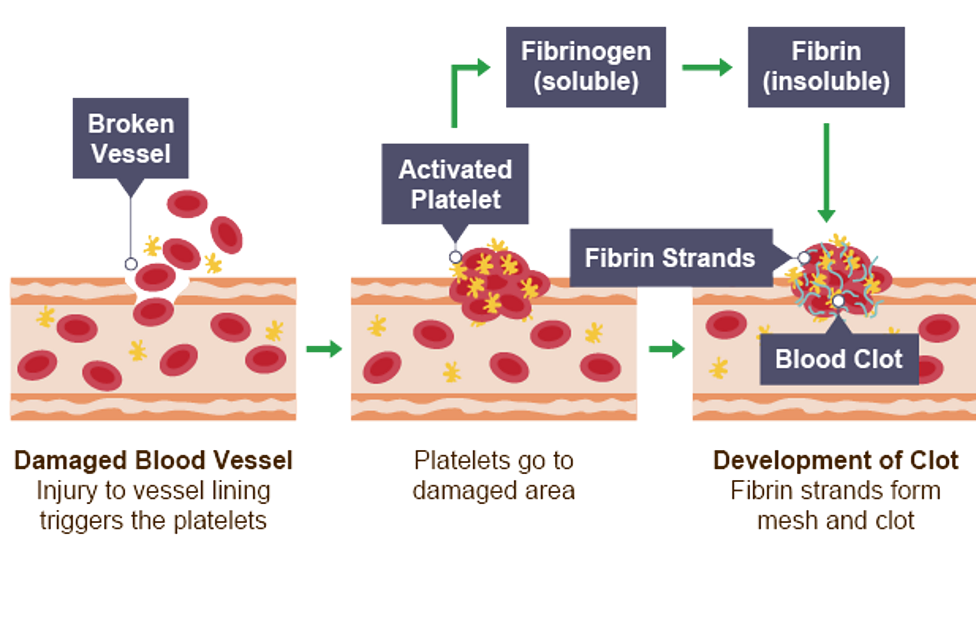
Role of platelets in blood clotting and scab formation
Blood vessel is damaged and platelets triggered
Converts fibrinogen (soluble) to fibrin (insoluble)
Forms a mesh/ net to trap blood components
A clot is formed which dries to from a scab
Red blood cell lysis
when placed into dilute solution, water moves into cell by osmosis causing them to swell and burst as the dont have a cell wall
Concentration of blood importance
salts and other chemicals in plasma keep it close to a red blood cell’s to prevent lysis
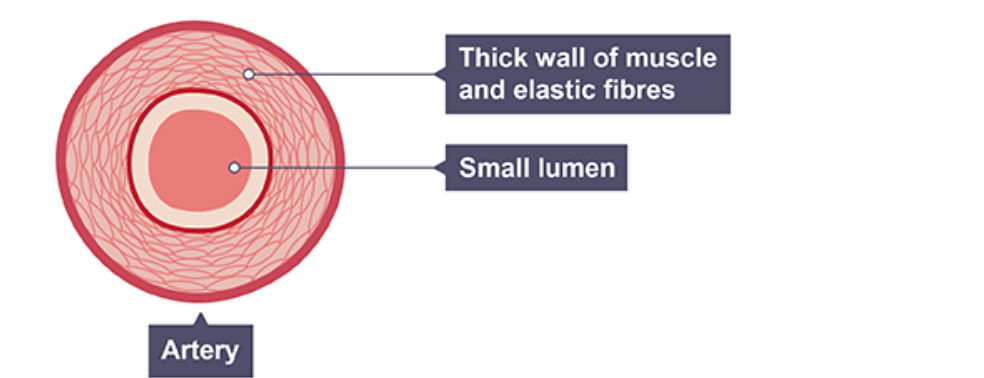
Artery
thick wall
thick layer of muscle and elastic fibres
small lumen
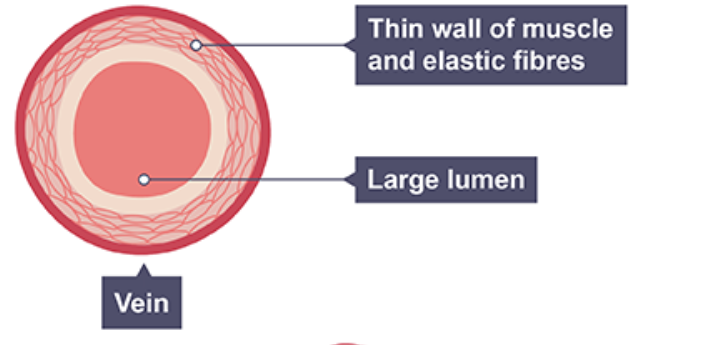
Vein
thin wall
thin layer of muscle and elastic fibres
large lumen
have valves
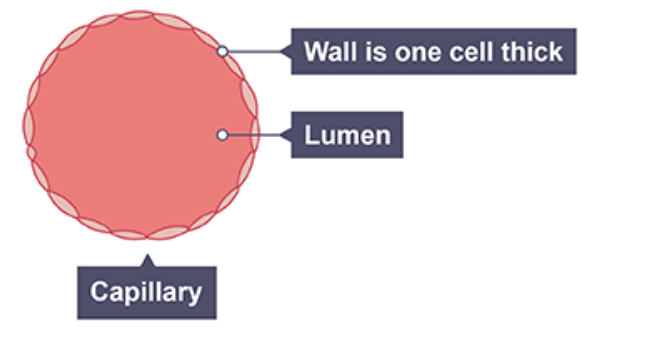
Capillary
very thin, one cell thick
no layer of muscle or elastic fibres
very small lumen
Blood in arteries (except pulmonary)
carry oxygenated blood away from the heart to the body
Pulmonary artery
carries deoxygenated blood from the heart to the lungs
Why do arteries have thick walls/ muscles and elastic fibres
to withstand high blood pressure and allow expansion/ recoil with heart beats
Blood in veins (except pulmonary)
carry deoxygenated blood from the body back to the heart
Pulmonary vein
carry oxygenated blood from the lungs to the heart
Why do veins have valves
they close to prevent the backflow of blood (ensures unidirectional flow)
Why do veins have thin walls/ no muscle and elastic fibres
blood is moving at low pressure
Function of capillaries
allow exchange of substances between blood and cells (diffusion)
Walls of capillaries
permeable and one cell thick to provide short diffusion path
Flow of blood
unidirectional pump
Right side of heart
pumps deoxygenated blood to the lungs
Left side of heart
punps oxygenated blood to the body
Why is left ventricle wall thicker than right/ higher pressure
has to pump blood around the entire body, right only pumps to the lungs
Coronary arteries
supply heart muscle with oxygen and glucose for respiration
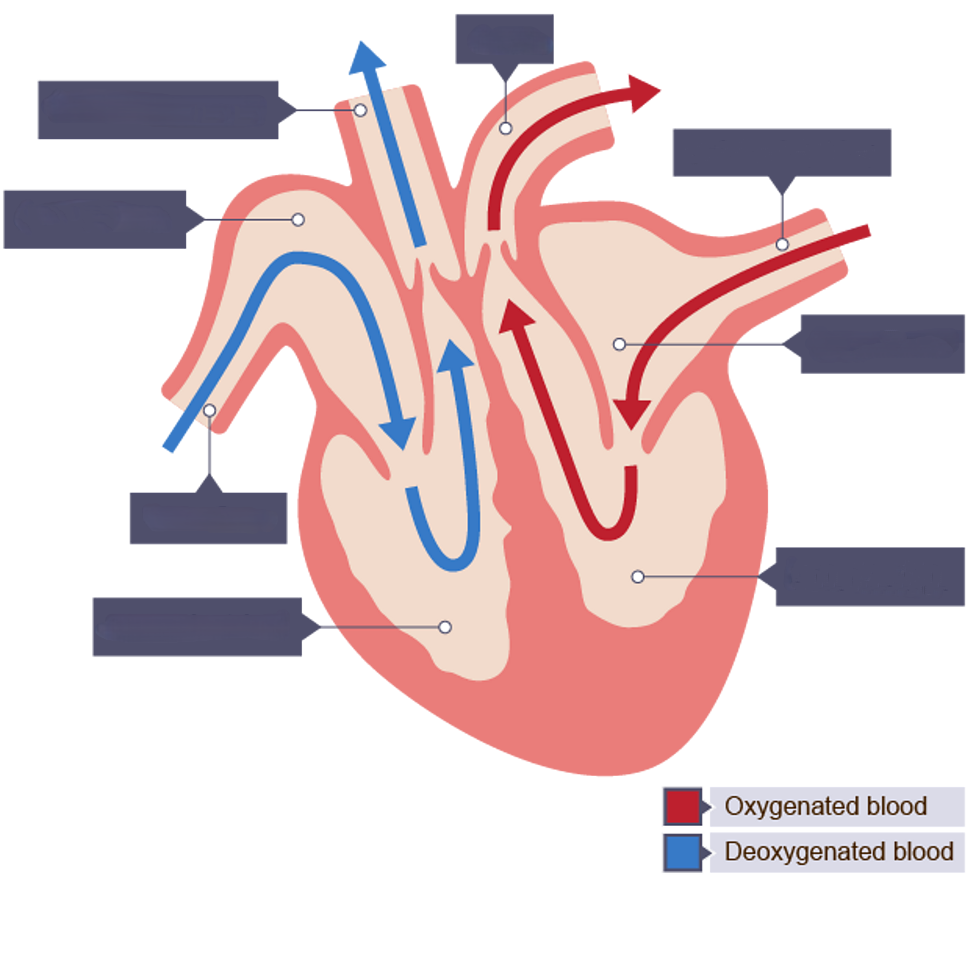
Labelling the heart
Vena Cava
Right Atrium
Right Ventricle
Pulmonary Artery
Pulmonary Vein
Left Atrium
Left Ventricle
Aorta
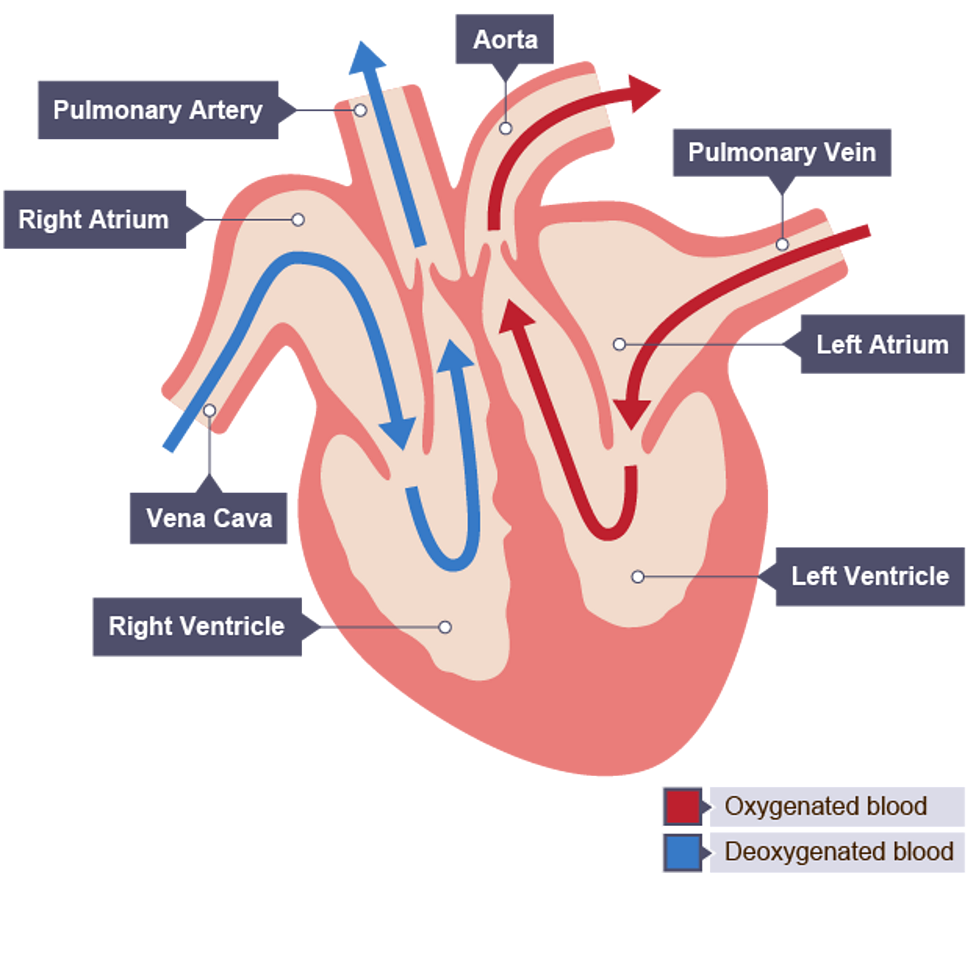
Heartbeat cycle
Deoxygenated blood enters the right atrium from the vena cava
Blood moves into the right ventricle
Deoxygenated blood is pumped into the pulmonary artery to the lungs
Blood becomes oxygenated in the lungs
Oxygenated blood leaves the lungs via the pulmonary vein
Blood enters the left atrium
Blood moves into the left ventricle
Blood is pumped into the aorta to circulate oxygenated blood around the body
Double circulatory system
blood passes through the heart twice in each full circulation
carries deoxygenated blood back to the heart and digested food from the liver around the body
carries oxygenated blood rich in urea to the kidneys for excretion
carries deoxygenated blood low in urea back to the heart
Hepatic
liver
Renal
kidneys
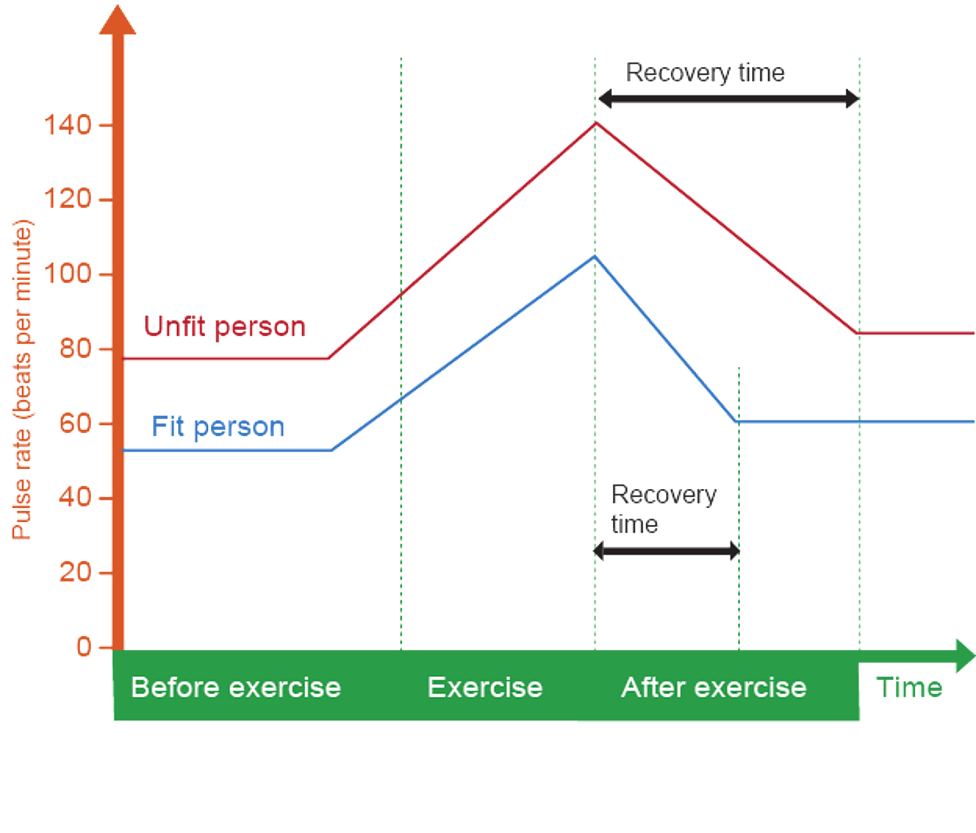
Increased respiration during exercise
muscles contract more, requiring more energy, so blood flow increases (raises pulse rate)
Benefits of regular exericse
strengthens heart muscle
increases cardiac output at rest
reduces chance of heart attack
reduces recovery rate