Biol 1070 Chapter 2
 Call Kai
 Learn
Learn Practice Test
 Spaced Repetition
 Match
Match Flashcards
 Knowt Play
1/28

Earn XP
Description and Tags
Biochemistry
Name | Mastery | Learn | Test | Matching | Spaced | Call with Kai | Chat |
|---|
No analytics yet
Send a link to your students to track their progress
29 Terms
Properties of water (that are essential to life)
polar (forms hydrogen bonds)
cohesion (molecules stick together)
adhesion (sticks to surfaces)
solvent (dissolves chemicals)
ice floats in liquid water
high specific heat and heat of vaporization (takes a lot of heat to change temperature)
Why is it important that water is polar?
allows water to stay liquid at room temperature, allows for acids and bases to dissolve in water, causes the high specific heat and heat of vaporization of water, and enables water to hold cell membranes in place around cells
Carbohydrates
molecules composed of C, H, and O, typically with 2x as many H atoms as O atoms
Monosaccharides
fructose, glucose, galactose
isomers with the same chemical formula but different shape
used for energy
monomers of carbohydrates

Disaccharides
sucrose (fructose+glucose), lactose (galactose+glucose), maltose (glucose+glucose)
made of two monosaccharides joined by dehydration synthesis
Polysaccharides
starch (amylose), cellulose, glycogen, chitin
made of many monosaccharides joined by dehydration synthesis
Dehydration synthesis
The opposite of hydrolysis: during a reaction joining two monomers, an enzyme removes the components of water (OHH) and creates a bond between the two monomers, and the OHH rearrange into a stable water molecule
Hydrolysis
The opposite of dehydration synthesis: when a polymer is broken down into monomers, an enzyme takes a water molecule, and separates it, breaking the bond between the monomers and instead bonding them to the OHH.
Starch (amylose)
function: plant food storage
monomers: glucose
Cellulose
function: plant cell walls
monomers: glucose
Glycogen
function: animal food storage
monomers: glucose
Chitin
function: fungi cell walls, insect external skeletons
monomers: amino sugars
Lipids
contain many more H atoms than C atoms and do not dissolve in water to any great extent
triglycerides, phospholipids, and steroids
Triglycerides
fats and oils, containing a “backbone” of glycerol and three fatty acids
Saturated triglycerides
triglycerides that are “saturated” with H atoms, three straight fatty acids
typically come from animals and are solid at room temperature
can cause heightened cholesterol

Unsaturated triglycerides
triglycerides with a double carbon bond, causing a “kink” in the fatty acid chain
typically come from plants and are liquid at room temperature

Phospholipids
contain a glycerol, a phosphate, and two fatty acids
hydrophilic head and hydrophobic tail, form a double-layered cell membrane held together by the force of water

Steroids
estrogen, progesterone, testosterone, and cholesterol
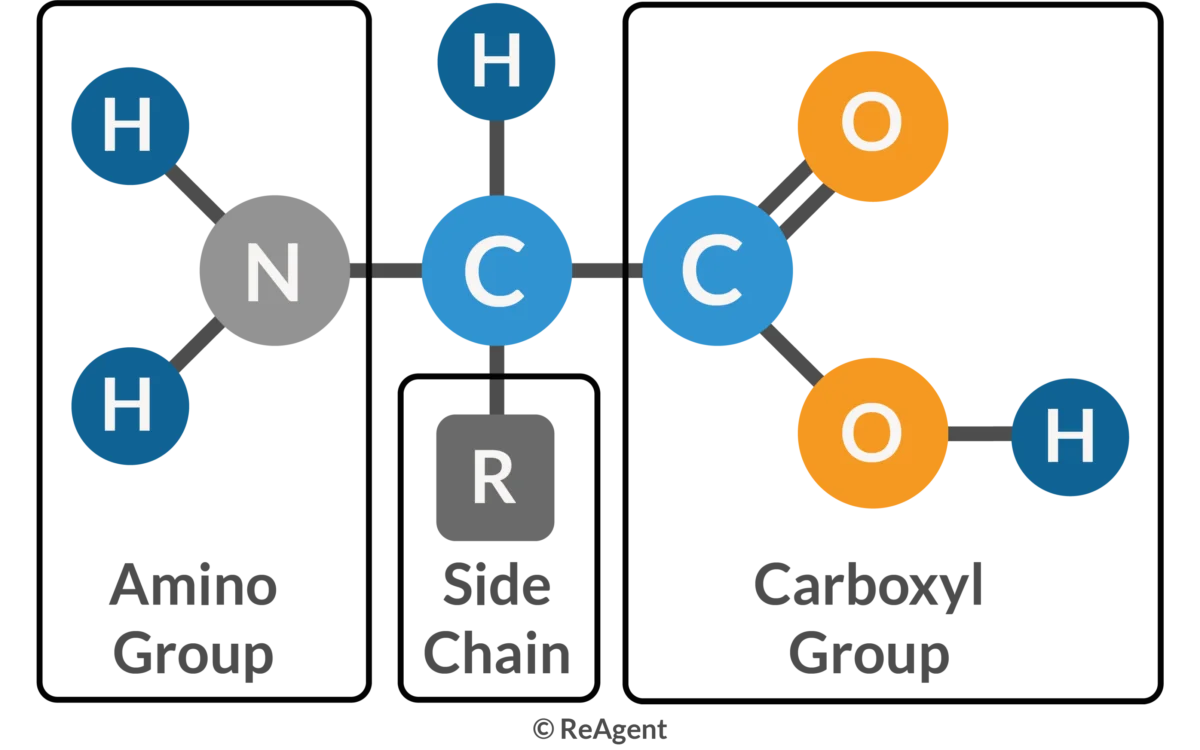
Amino acids
2nd most common compound in humans (after H2O), the monomers of proteins.
Contain an amino group, a carboxyl group, and an R group
20 different amino acids, all differ only in the composition of the R group
Proteins
polymers made of chains of amino acids joined by peptide bonds through dehydration synthesis
Major functions of proteins
structure
transport
hormones
contractility (e.g. muscles)
antibodies
enzymes
cell identification
receptors
membrane pumps
Enzymes
facilitate chemical reactions that would otherwise take too long in the body
two substrates bond to the active site in the enzyme, the enzyme holds them together until they form a product, which then detaches and allows another reaction to take place

Nucleic acids
DNA (deoxyribonucleic acid) and RNA (ribonucleic acid), monomers are the nucleotides: adenine, thymine, cytosine, guanine, and uracil. Thymine is replaced by uracil in RNA
DNA
deoxyribonucleic acid; functions as a code book, two stranded nucleic acid, contains the program for every protein, but will only be opened to make certain proteins
functions are: DNA replication and transcription to mRNA (messenger RNA)
RNA
ribonucleic acid; single-stranded nucleic acid, functions as DNA’s messenger in creating proteins
ATP
adenosine triphosphate, functions as the main energy source for life processes, releases a phosphate along with energy and becomes ADP (adenosine diphosphate)

Sucrose
contains one glucose and one fructose
Lactose
contains one glucose and one galactose
Maltose
contains two glucoses