L10: mechanical ventilation
 Call Kai
 Learn
Learn Practice Test
 Spaced Repetition
 Match
Match Flashcards
 Knowt Play
1/41

There's no tags or description
Looks like no tags are added yet.
Name | Mastery | Learn | Test | Matching | Spaced | Call with Kai | Chat |
|---|
No analytics yet
Send a link to your students to track their progress
42 Terms
what is IPPV?
airway pressure is maintained above atmospheric pressure during inspiration and then falls to
atmospheric pressure, allowing for passive expiration
what does IPPV stand for?
intermittent positive pressure ventilation
manual ventilation
closing the APL valve and squeezing the bag
spontaneous ventilation
the movement of gas in and out of the lungs produced by the individual using the diaphragm and intercostal muscles
describe inspiration
thoracic cavity volume increases → alveolar pressure decreases below atmospheric pressure → air flows into lungs
describe expiration
thoracic volume decreases → alveolar presssure increases above atmospheric pressure → air forced out
what are the clinical indications for IPPV?
inability to ventilate
decreased ventilatory drive
describe IPVV in anesthesia
limited period of time
used on healthy lungs
controlled ventilatory modes
describe IPPV in ICU
long term use
underlying disease that impairs ventilation
assisted ventilatory modes
when performing manual IPPV in a small animal, what value do you need to make sure the pressure does not go over?
10-20 cmH20
when performing manual IPVV in a small animal, how long do you squeeze the bag for?
no longer than 1 second
how to perform manual positive pressure ventilation in small animals?
close APL valve
squeeze reservoir bag for 1 sec
watch the pressure gauge
watch chest inflation
open the APL valve
what is tidal volume?
amount of air moved in and out of the lungs with each respiratory cycle
what is peak inspiratory pressure (PIP)?
the highest pressure measured during the respiratory cycle
what is inspiratory to expiratory ratio (I:E)?
ratio of the duration of inspiratory and expiratory phases
what is positive end expiratory pressure (PEEP)?
positive pressure that the ventilator maintains within the breathing system after the end of each expiratory phase between breaths
atelectasis
alveoli tend to close under anesthesia leading to hypoxemia and hypercapnia
what are the functions of PEEP?
keep alveoli open to prevent atelectasis
minimize damage to the lung during ventilation
what do high PEEP values mean?
collapse of capillaries in the lung → reduced cardiac output
In small animals, what value will we set PIP on the mechanical ventilator in a closed chest animal?
10-15 cmH20
what will we set the tidal volume on the mechanical ventilator in a small animal?
10-15 mL/kg
what will we set the PEEP value on the mechanical ventilator on a small animal?
0-4 cmH20
what will we set the respiratory rate on the mechanical ventilator in a small animal?
10-20 breaths/min
what will we set the PIP on the mechanical ventilator in a large animal?
less than 20 cmH20
what will we set the respiratory rate on the mechanical ventilator for large animals?
6-8 breaths/min
what will we set the tidal volume on the mechanical ventilator for a large animal?
10 mL/kg
what is the I:E ratio on the mechanical ventilator for both small and large animals?
1:2
what do we set the PEEP value on the mechanical ventilator in large animals?
0-4 cmH20
what are the types of Bellow ventilators referred to based on?
how the bellow is moved during expiration
ascending bellow
bellow moves upward during expiratory phase of breathing cycle
which bellow system is it easy to detect system leaks or disconnection?
ascending (standing) bellow
descending (hanging) bellow
bellow will descend towards the bottom during expiration
which bellow collects humidity within the bellow, adding weight to the system?
descending bellow
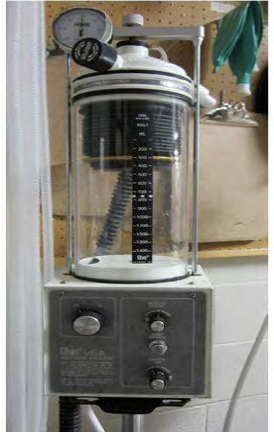
what type of bellow is shown?
descending bellow
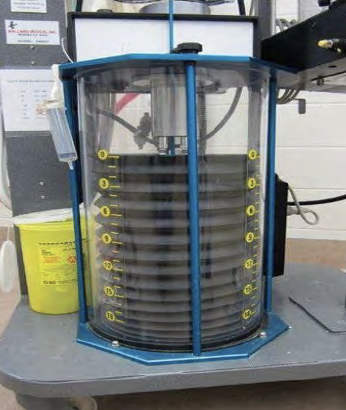
what type of bellow is shown?
ascending bellow
what 4 mechanisms contribute to lung injury associated with mechanical ventilation?
volutrauma
barotrauma
atelectrauma
biotrauma
volutrauma
Excessive stretch from high tidal volumes
barotrauma
Pressure-related injury that generates overdistension of the alveoli
atelectrauma
high force exerted on alveoli → triggers a local inflammatory response→ alveolar-capillary membrane injured
biotrauma
Biological response that promotes injury even in lung areas not subjected to mechanical stress and in extrapulmonary organs
what is the consequence of IPPV on the cardiovascular system?
decrease in venous return and preload leading to hypotension
what worsens venous return when an animal is on IPPV?
low inspiratory times
high PIP
PEEP