PED - Ethics: confidentiality
 Studied by 0 people
 Call Kai
 Learn
Learn Practice Test
 Spaced Repetition
 Match
Match Flashcards
 Knowt Play
1/13

Earn XP
Description and Tags
- why it it important , list duty and laws associated, describe practical concerns in a pharmacy settings,what needs to be discussed and when it can be breached
Name | Mastery | Learn | Test | Matching | Spaced |
|---|
No study sessions yet.
14 Terms
Why do we need to maintain confidentiality ?
a person may be reluctant to share so they can have proper care if the professional doesn’t maintain confidentiality
can damage public trust and confidence in healthcare professionals if confidential information isn’t handled appropriately
What is the GPhc standard relating to confidentiality ?
standard 7
-Pharmacy professionals must respect and maintain a person’s confidentiality and privacy
What is confidentiality ?
-Confidentiality refers to the obligation to protect sensitive information from unauthorized access
What is privacy ?
Privacy is the right to control your personal information and how it is used
What is respect to autonomy ?
Respect for autonomy: patients have the right to control information relating to their health, and to decide who has access to it
What is the duty of confidentiality?
• Professional and legal duty to keep information confidential
• A duty of confidentiality arises when one person discloses information to another in circumstances where it is reasonable to expect that the information will be held in confidence.
• Applies to any age of patient, and even after a person dies
What are the laws related to confidentiality and protection of data ?
• Common law duty of confidentiality
• Human Rights Act (1998) Right of respect for private and family life
• Data Protection Act 2018
• General Data Protection Regulations (GDPR)
What are some examples of confidential information ?
• Electronic and hard copy data
• Personal details
• Information about a person’s medication (prescribed and non-prescribed)
• Other information about a person’s medical history, treatment or care that could identify them, and
• Information that people share that is not strictly medical in nature, but that the person disclosing it would expect to be kept confidential
How do pharmacists protect information ?
Pharmacists must:
• Take all reasonable steps to protect the confidentiality and security of information that they receive, access, store, send or destroy
• Ensure personal data is accurate and up-to-date
• Prevent accidental disclosure of confidential information
• Access confidential records only as part of providing treatment and care for a person
How do pharmacy do confidential consultations?
any discussion related to a person’s condition or treatment must occur in a private or secure setting - away from public view
important in providing services that may seek care for more sensitive health concerns
pharmacy owners must ensure everyone in the pharmacy team understand the principles of privacy and confidentiality
What must you do when disclosing information ?
Make sure the patient understands:
• what information will be disclosed
• why information will be disclosed
• who it will be disclosed to
• the likely consequences of disclosing and of not disclosing the information
Note - when the reason for sharing confidential info is one that they wouldn’t expect - must get explicit consent
What happens if the patient refuses consent ?
Respect their decision
But explain the care they can receive may be limited
Explain what this might potentially mean regarding the care or treatment they can receive
When can confidential information be disclosed ?
These are when a pharmacy professional:
• has the consent of the person under their care, or
• has to disclose by law, or
• should do so in the public interest
• must do so in the vital interests of a person receiving treatment or care, for example if a patient needs immediate urgent medical attention
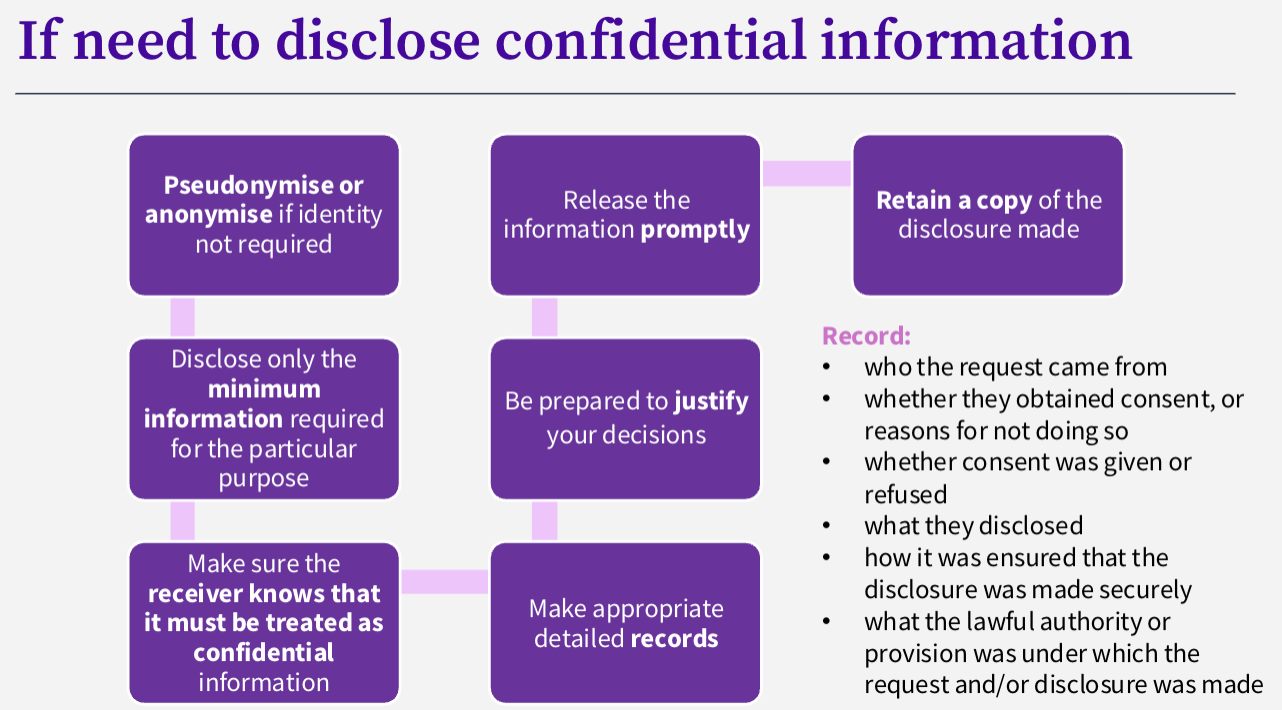
What do you do if you need to disclose confidential information ?