1.1 & 1.2 - Carbohydrates & lipids
 Call Kai
 Learn
Learn Practice Test
 Spaced Repetition
 Match
Match Flashcards
 Knowt Play
1/33

There's no tags or description
Looks like no tags are added yet.
Name | Mastery | Learn | Test | Matching | Spaced | Call with Kai | Chat |
|---|
No analytics yet
Send a link to your students to track their progress
34 Terms
What are the four types of organic molecules found in living organisms?
Carbohydrates
Lipids
Proteins
Nucleic acids (DNA)
What elements do carbohydrates only contain?
Carbon, hydrogen & oxygen
(they are polar)
What are 3 examples of monosaccharides?
Glucose
Fructose
Galactose
What are 3 examples of disaccharides?
Sucrose
Maltose
Lactose
What are 3 examples of polysaccharides?
Starch
Cellulose
Glycogen
What is the definition of a monosaccharide?
An organic monomer that cannot be hydrolysed to a simpler sugar
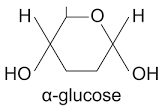
Draw the structure of alpha glucose
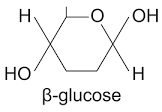
Draw the structure of beta glucose
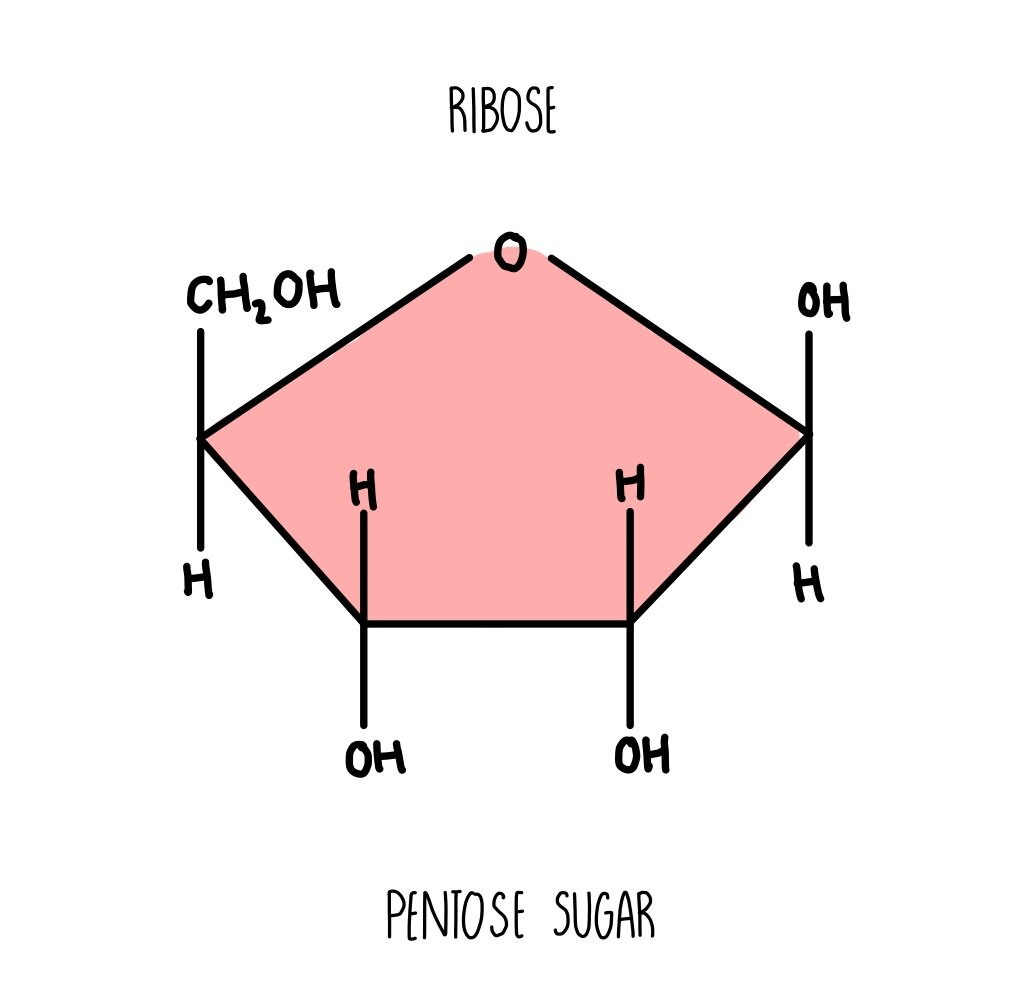
Draw the structure of the pentose, ribose
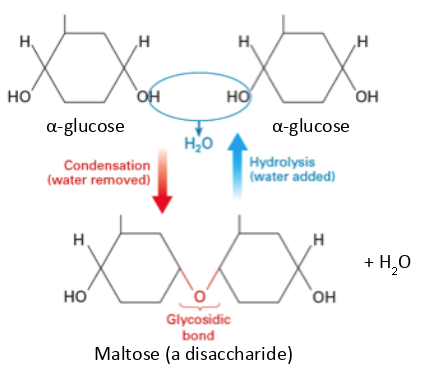
What is a condensation reaction?
Joining two molecules together, creating a chemical bond & removing a molecule of water
How to work out how many bonds are required to join monomers together in a condensation reaction?
If there are ‘n’ number of monomers, then the number of bonds required to join the monomers together is ‘n-1’
Draw the condensation reaction to form maltose
How are disaccharides formed?
When two monosaccharides are joined together by a glycosidic bond via a condensation reaction
What is the reverse process of a condensation reaction?
Hydrolysis reaction: breaking a chemical bond between two molecules using water
How is maltose formed?
Glucose + glucose → maltose + water
How is sucrose formed?
Glucose + fructose → sucrose + water
How is lactose formed?
Glucose + galactose → lactose + water
What are polysaccharides?
Chains of many monosaccharides joined together by glycosidic bonds
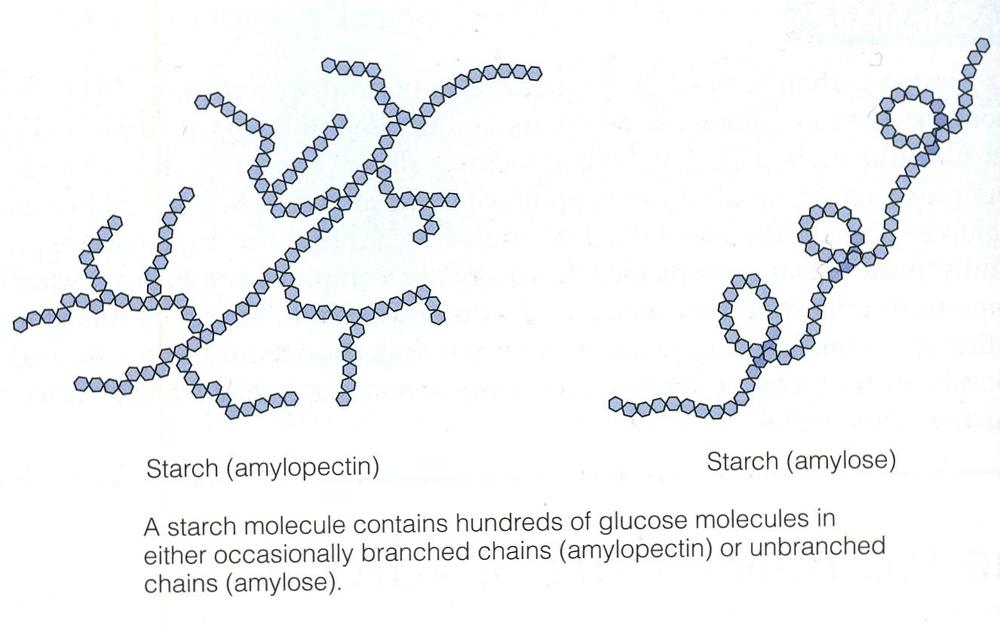
What is starch?
Plant storage polysaccharide
Insoluble & forms starch granules inside many plant cells
Mixture of amylose & amylopectin
What is the difference between amylose & amylopectin?
Amylose:
1,4 glycosidic bonds
long glucose chain that coils up into a helix held together by hydrogen bonds
Amylopectin:
1,4 & 1,6 glycosidic bonds
highly branched, so can be broken down (hydrolysed) quicker than amylose by amylase enzymes
how to remember → think amyloPECtin = chicken pecking to hydrolyse quickly
What is glycogen?
The animal storage polysaccharide, mainly found in muscle & liver cells
Contains 1,4 & 1,6 glycosidic bonds
Highly branched, so can be broken down (hydrolysed) into glucose very quickly for energy

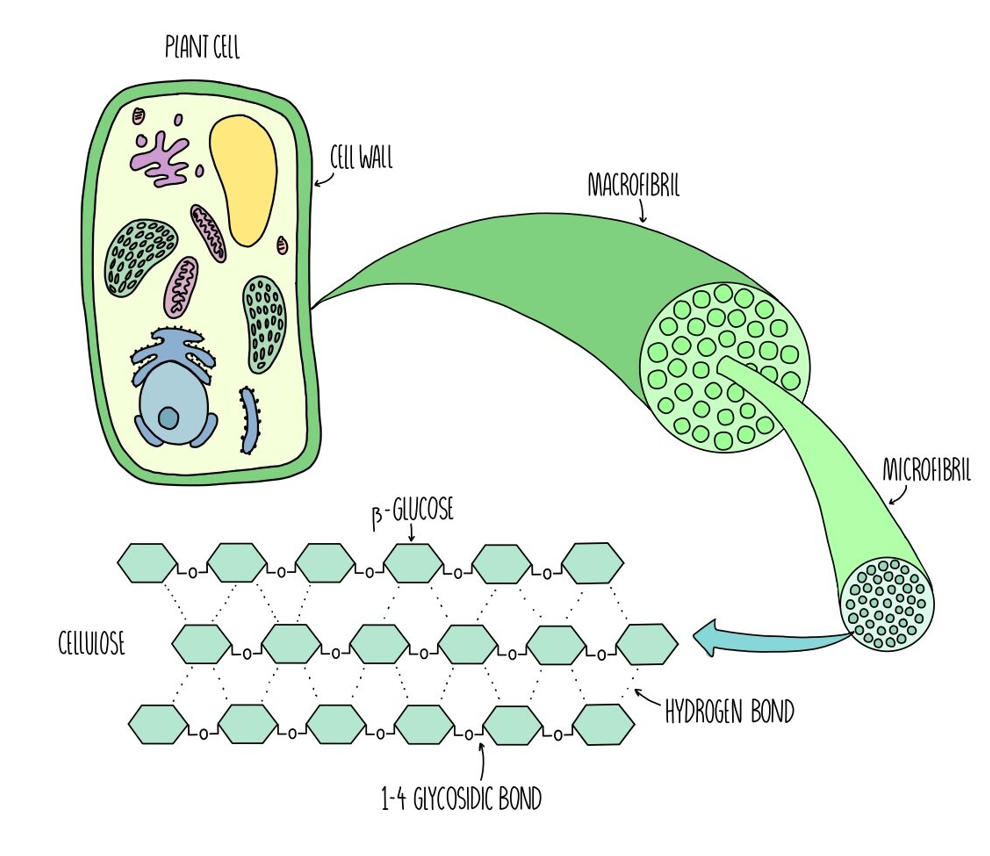
What is cellulose?
Only found in plants & is the main component of cell walls
Contains 1,4 glycosidic bonds & beta-glucose molecules → alternate glucose molecules are flipped
(starch & glycogen only contain alpha-glucose)

What is the structure of cellulose?
Beta-glucose bond is rigid, so cellulose molecules form straight chains
Hundreds of these chains are linked together by hydrogen bonds between the chains to form cellulose microfibrils
These microfibrils are very strong & rigid, giving strength to plant cell walls
What elements do lipids contain & what are the most common?
Carbon, hydrogen, oxygen & sometimes phosphorus
Most common lipids are triglycerides & phospholipids
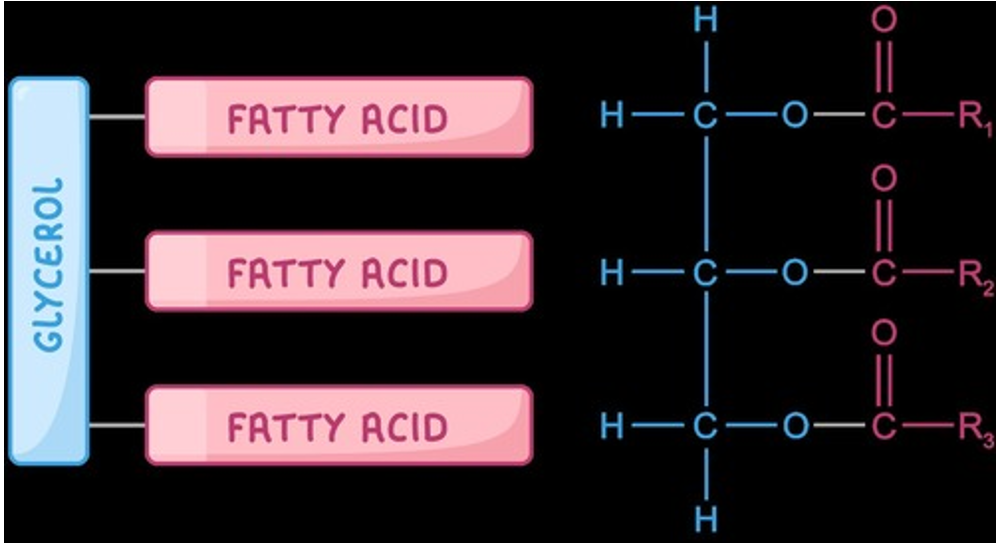
How are triglycerides formed?
Condensation reaction between 1 molecule of glycerol & 3 fatty acid molecules, joined by ester bonds → results in 3 water molecules
(they are non-polar)
What are the purposes of triglycerides?
Energy storage: due to large ratio of energy-storing hydrocarbon bonds
Insulation: fatty tissue under the skin is used to insulate warm-blooded mammals against heat loss
Waterproofing: mammals’ fur & birds’ feathers contain the lipid lanolin for waterproofing → plants have a lipid waxy cuticle to reduce water loss
What is the difference between a saturated & unsaturated fatty acid?
Saturated fatty acid:
fatty acid chains in a triglyceride have no C=C double bond
tend to be found in warm-blooded animals
high melting point & solid at room temperature
Unsaturated fatty acid:
fatty acid chain in a triglyceride do have C=C double bond
tend to be found in cold-blooded animals & plants
low melting point & liquid at room temperature
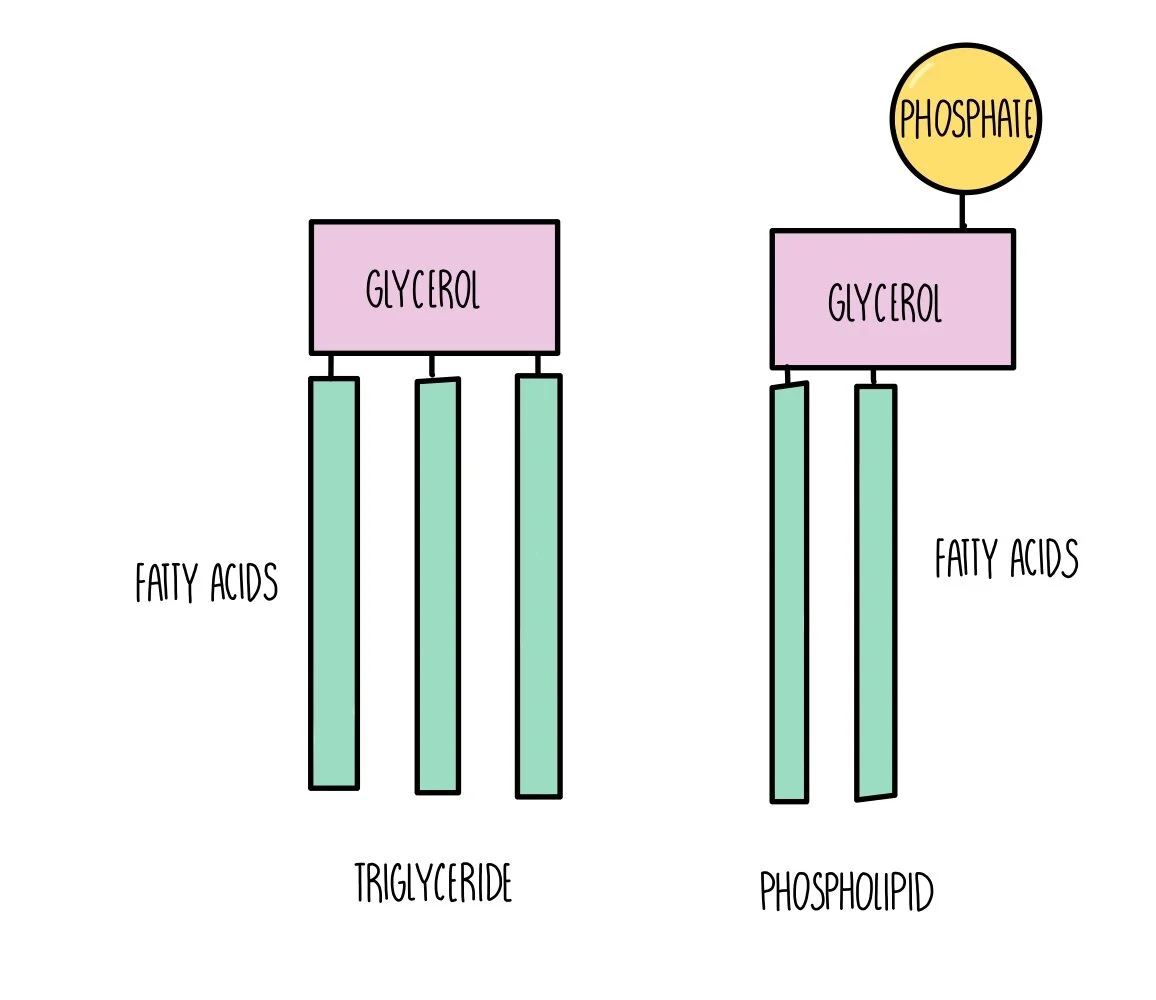
How do phospholipids differ from triglycerides?
Phospholipids have a glycerol attached to 2 fatty acids & 1 phosphate attached to the glycerol
What is the function of phospholipids?
Main components of cell membranes:
when mixed with water, they form a phospholipid bilayer
the hydrophilic, polar phosphate heads interact with the water & the hydrophobic, non-polar fatty acid tails face inwards towards each other
What is the biochemical test for reducing sugars?
Benedict’s test:
add Benedict's reagent to the sample & heat on a Bunsen burner/water bath
if reducing sugars are present, the sample will change from blue to brick red precipitate
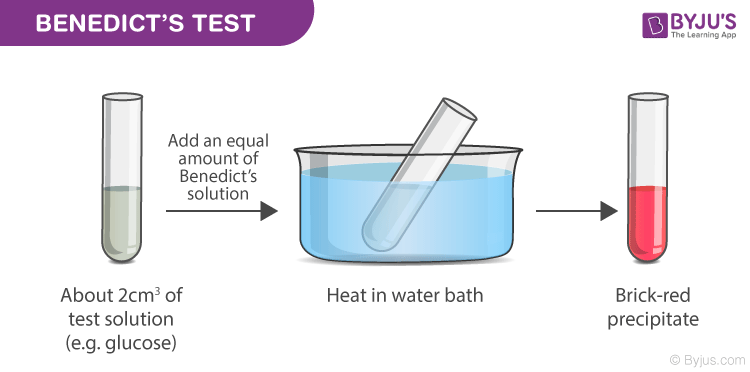
What is the biochemical test for lipids?
Emulsion test:
add ethanol to the sample, shake & pour into water
if lipids are present, a cloudy, white emulsion will form on the surface
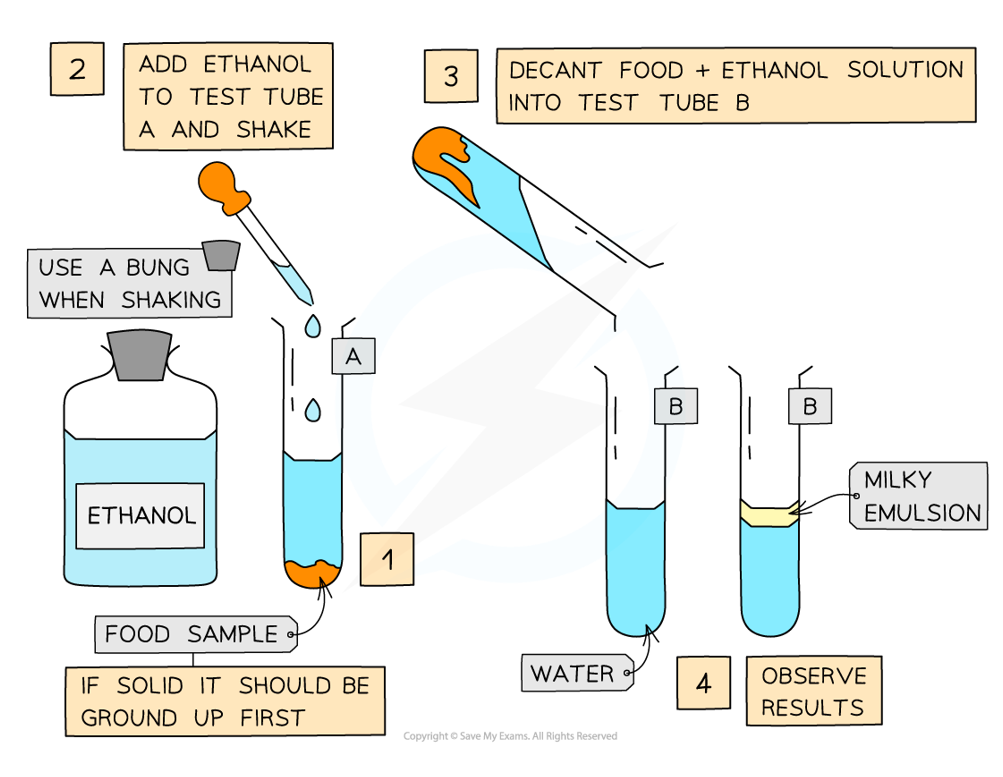
What is the biochemical test for starch?
Iodine test:
add iodine solution to the sample
if starch is present, the solution will immediately change from orange/brown to blue/black colour
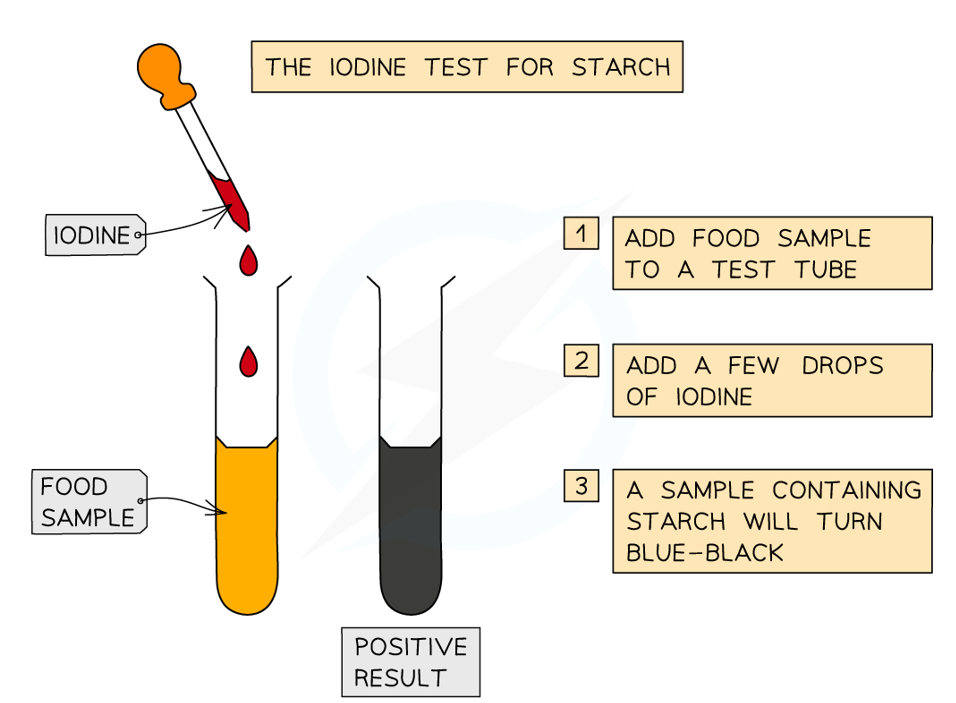
What is the biochemical test non-reducing sugars (e.g. sucrose) ?
Test for reducing sugars first, using Benedict’s test → result will be negative
Take a fresh sample & heat with dilute HCl
Neutralise with sodium hydrogencarbonate (check against pH paper). Add Benedict's reagent & heat again
If non-reducing sugars are present, the solution will change from blue to brick red precipitate
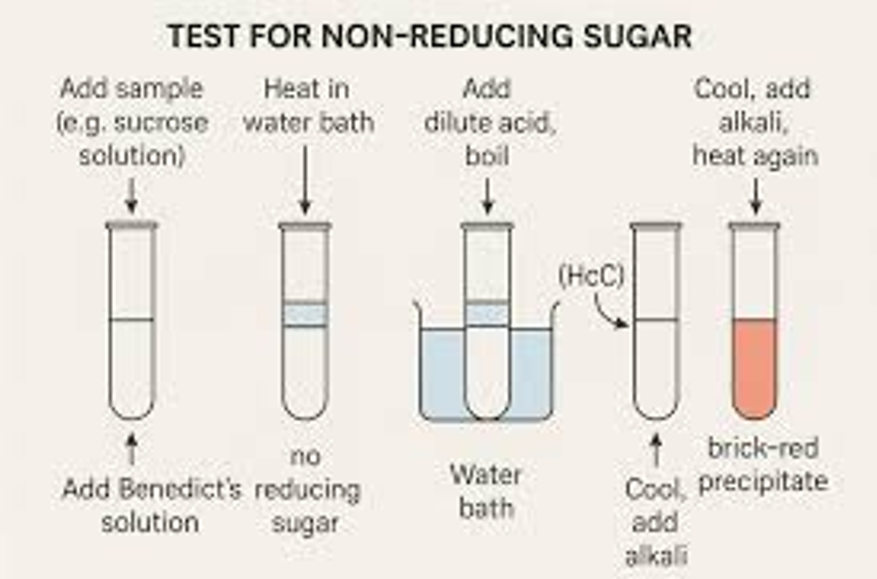
What is the biochemical test for proteins?
Biuret test:
add few drops of sodium/potassium hydroxide, then add copper sulphate
if proteins are present, solution will change from blue to purple
