Ch. 16 LEC - Endocrine System
 Call Kai
 Learn
Learn Practice Test
 Spaced Repetition
 Match
Match Flashcards
 Knowt Play
1/45

There's no tags or description
Looks like no tags are added yet.
Name | Mastery | Learn | Test | Matching | Spaced | Call with Kai | Chat |
|---|
No analytics yet
Send a link to your students to track their progress
46 Terms
what do the endocrine and nervous systems work together to do?
to coordinate the activity of body cells
the endocrine system works [FASTER/SLOWER] than the nervous system
slower
responses from the [ENDOCRINE/NERVOUS] system tend to last longer than that of the [ENDOCRINE/NERVOUS] system
endocrine, nervous
the endocrine system's response is delivered by [HORMONES/NEUROTRANSMITTERS] via [NEURONS/THE BLOODSTREAM]
hormones, the bloodstream
list the main 5 organs of the endocrine system
pituitary, thyroid, parathyroid, adrenal, and pineal glands (OTHERS: hypothalamus, thymus, pancreas, ovaries (female), testes (males))
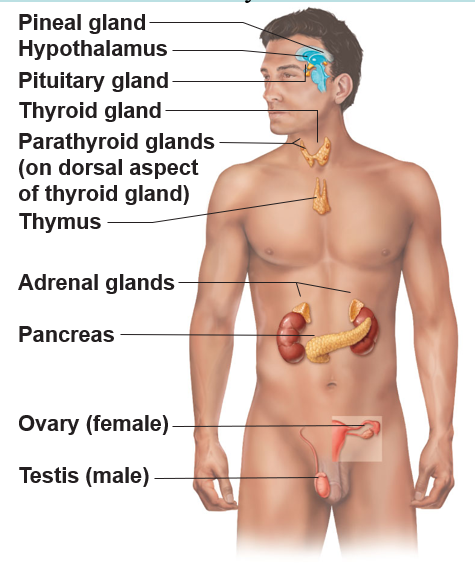
true or false: all organs release hormones, but endocrine glands are unique because that is their main function
true
define “hormones”
long-distance chemical signals that travel in the blood or lymph
what are the two main classes of hormones?
amino acid-based (proteins) and steroids (cholesterol, fat)
how can hormones affect target cells? (5 possible answers)
alter plasma membrane permeability
stimulate synthesis of proteins
(de)activate enzymes
induce secretory activity
stimulate mitosis
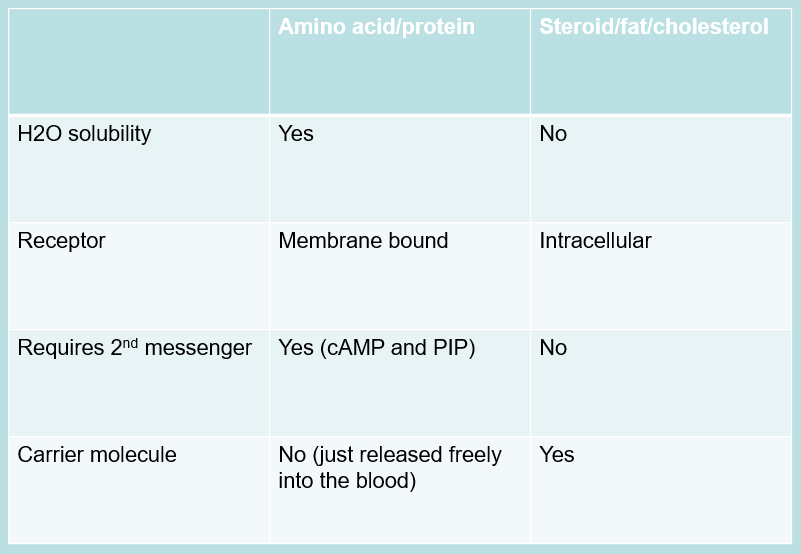
complete these prompts for AMINO ACID-BASED HORMONES:
water solubility - [YES/NO]
receptor location - [MEMBRANE BOUND/INTRACELLULAR]
requires 2nd messenger - [YES & NAMES/NO]
carrier molecule - [YES/NO]
water solubility - YES
receptor location - MEMBRANE BOUND
requires 2nd messenger - YES, cAMP and PIP2
carrier molecule - NO
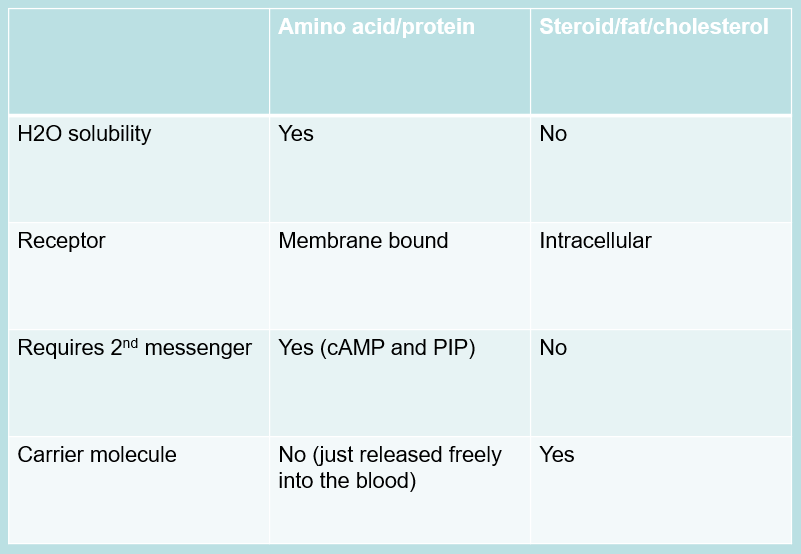
complete these prompts for STEROID HORMONES:
water solubility - [YES/NO]
receptor location - [MEMBRANE BOUND/INTRACELLULAR]
requires 2nd messenger - [YES & NAMES/NO]
carrier molecule - [YES/NO]
water solubility - NO
receptor location - INTRACELLULAR
requires 2nd messenger - NO
carrier molecule - YES
complete the steps of the cAMP signaling mechanism:
[AMINO ACID/STEROID] hormone (1st messenger) binds to [1]
[1] activates [2]
[2] activates [3]
[3] converts ATP to [4] (2nd messenger)
[4] activates protein kinases
amino acid
[1] receptor
[2] G protein
[3] adenylate cyclase
[4] cAMP
![<p>amino acid</p><p>[1] receptor </p><p>[2] G protein</p><p>[3] adenylate cyclase </p><p>[4] cAMP</p>](https://assets.knowt.com/user-attachments/ee813f07-fa00-43da-8f3c-4987a653a361.png)
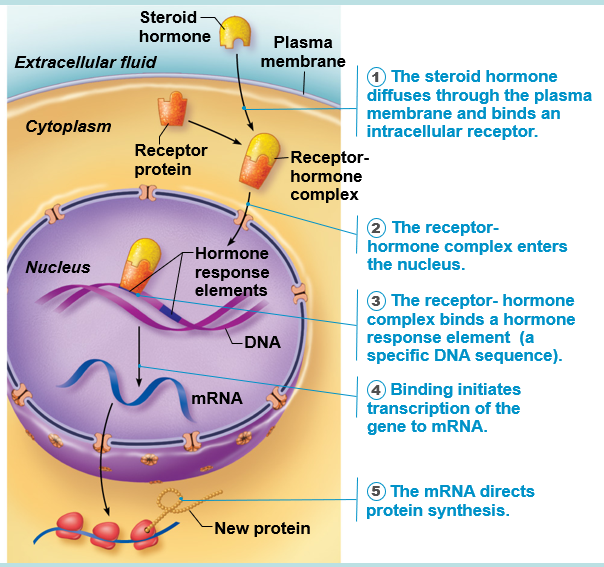
what types of hormones activate their target cells via intracellular receptors and direct gene activation?
steroid and thyroid hormones
define "target cell specificity"
target cells must have specific receptors to which the hormone binds
what 3 factors does target cell activation depend on?
blood levels of the hormone
number of receptors on/in the target cell
affinity of binding between receptor and hormone
define "up-regulation" in the context of how hormones influence the number of their receptors
target cells form more receptors in response to the hormone
define "down-regulation" in the context of how hormones influence the number of their receptors
target cells lose receptors in response to the hormone
how are hormones removed from the blood? (3 possible answers)
degradation via enzymes
kidneys: excretion via urine
liver: degradation via enzymes
what are the 3 ways multiple types of hormones interact with each other?
permissiveness, synergism, antagonism
define "permissiveness"
hormone A can't exert its effects without hormone B being present
define "synergism"
1+ types of hormones produce the same effects on a target cell
define "antagonism"
1+ hormones opposes the action of another hormone
hormones are synthesized and released in response to [3 TYPES OF STIMULI]
humoral stimuli
neural stimuli
hormonal stimuli
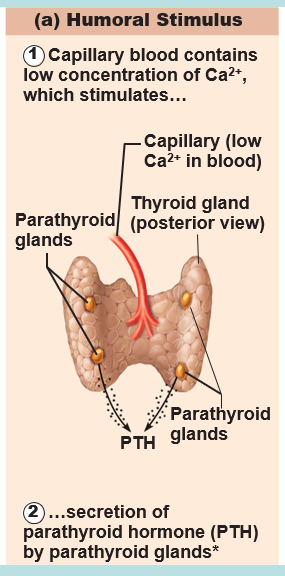
define "humoral stimuli"
change in blood levels of ions and nutrients stimulates secretion of hormones
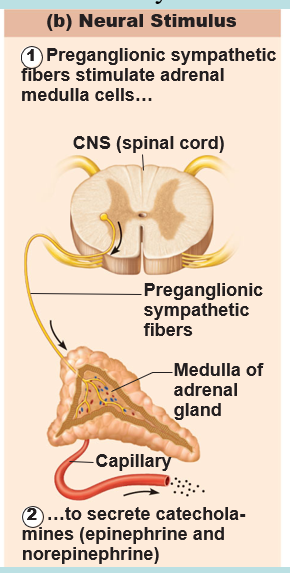
define "neural stimuli"
nerve fibers stimulate hormone release (sympathetic nervous system)
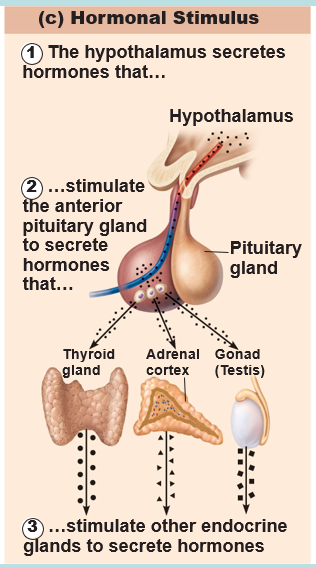
define "hormonal stimuli"
hormones stimulate other endocrine organs to release their hormones
true/false: the nervous system modifies the stimulation of endocrine glands and their negative feedback mechanisms
true (e.g., glucose levels rise under severe stress)
what are the 2 major lobes of the pituitary gland?
anterior pituitary (adenohypophysis) and posterior pituitary (neurohypophysis)
what is the makeup of the posterior pituitary gland?
nerve fibers
what is the makeup of the anterior pituitary gland?
glandular tissue
list the hormones that the posterior pituitary gland releases
oxytocin
antidiuretic hormone (AH)
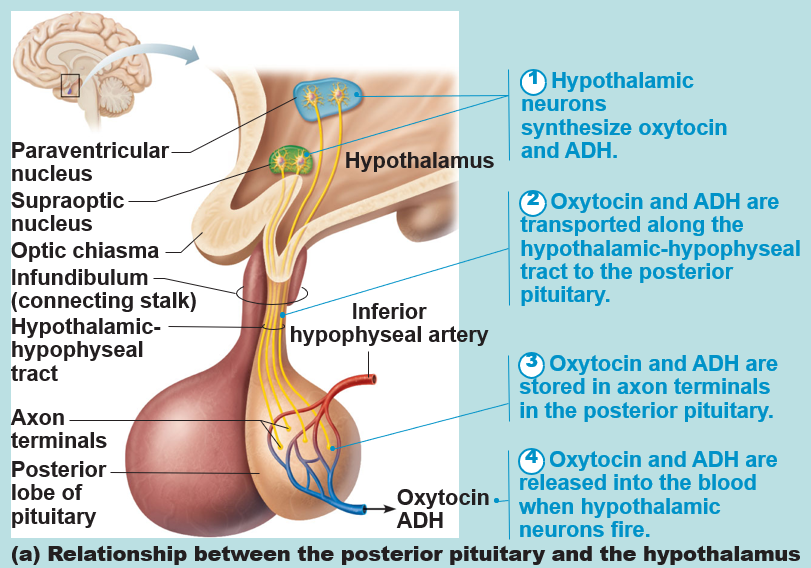
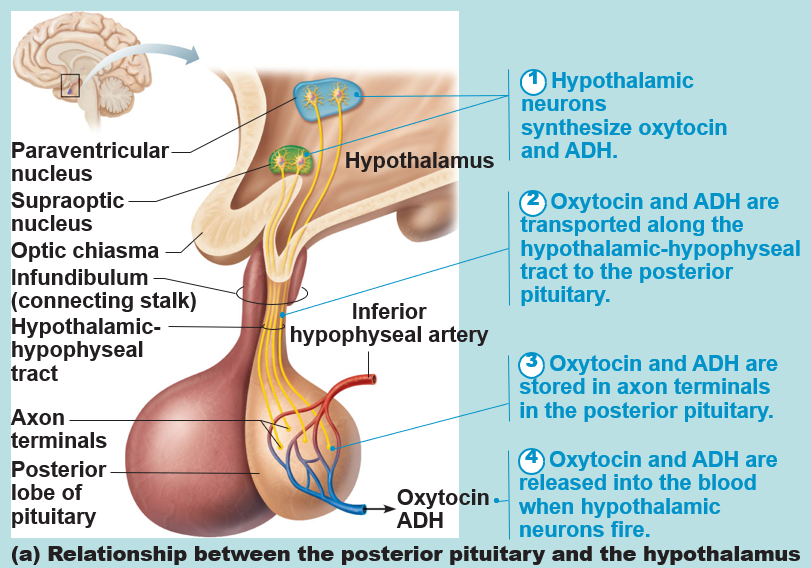
what is the “hypothalamic-hypophyseal tract”?
the neural pathway of axons that connects the hypothalamus to the posterior pituitary gland
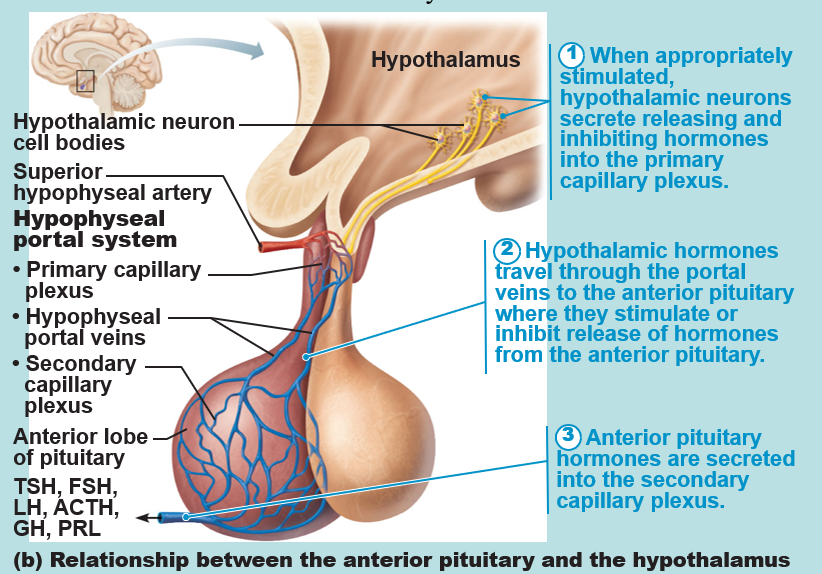
what is the “hypophyseal portal system”?
the network of blood vessels that carries hormones and connects the hypothalamus to the anterior pituitary gland
list the hormones that the anterior pituitary gland releases
growth hormone (GH)
thyroid-stimulating hormone (TSH) or thyrotropin
adrenocorticotropic hormone (ACTH)
follicle-stimulating hormone (FSH)
luteinizing hormone (LH)
prolactin (PRL)
true/false: all anterior pituitary hormones are steroids
false - they are all proteins
define “tropic" hormone
a hormone whose target is another endocrine gland
list the 4 anterior pituitary hormones that are tropic
TSH, ACTH, FSH, LH
name the hormone that fits this description:
secreted by the anterior pituitary gland
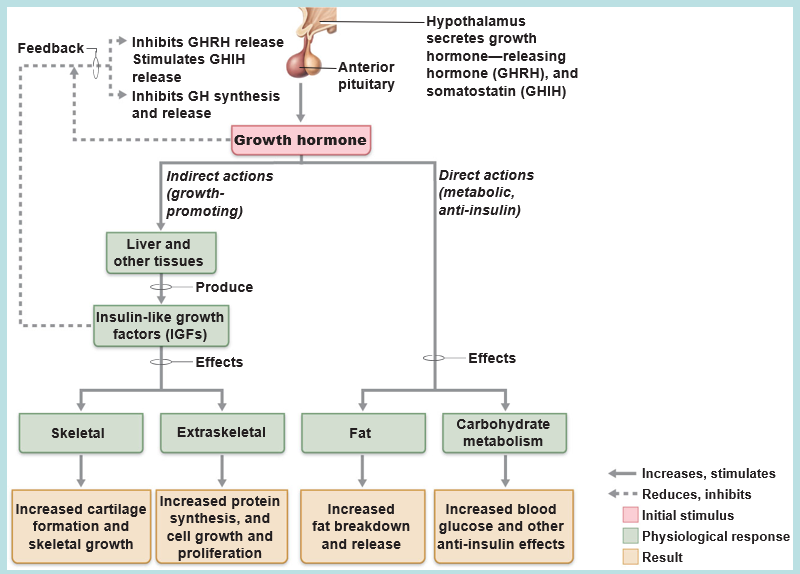
stimulates most cells - targets mostly bone and skeletal muscle
promotes protein synthesis
encourages use of fats for fuel (elevates blood glucose by decreasing glucose uptake and encouraging glycogen (fat) breakdown)
anti-insulin effect of GH
most effects are mediates indirectly by insulin-like growth factors (IGFs)
stimulates liver, skeletal muscle, bone, cartilage to produce IGFs
growth hormone (GH)
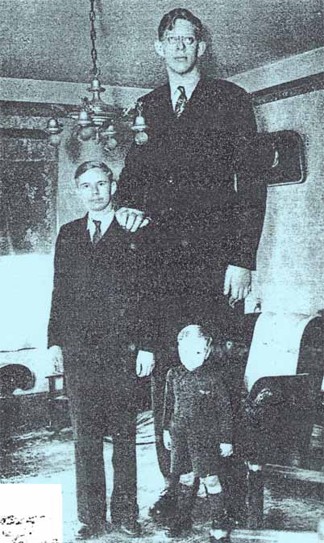
hypersecretion of growth hormone (GH) in children results in _
gigantism
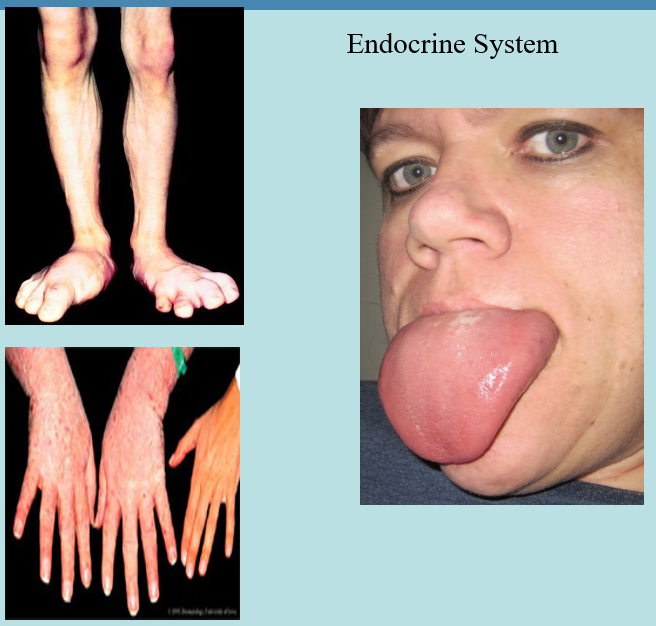
hypersecretion of growth hormone (GH) in adults results in _
acromegaly (enlarged feet, fingers, and/or tongue)
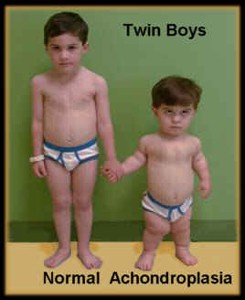
hyposecretion of growth hormone (GH) in children results in _
pituitary dwarfism
name the hormone that fits this description:
secreted by the anterior pituitary gland
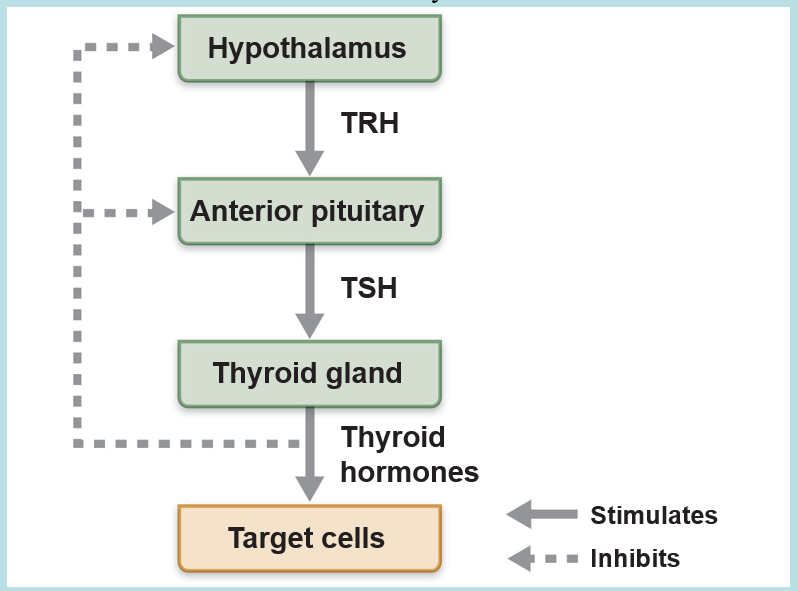
stimulates the thyroid
stimulated by thyrotropin-releasing hormone (TRH) released by the hypothalamus
inhibited by high blood levels of thyroid hormones that act on the pituitary and hypothalamus
thyroid-stimulating hormone (TSH) (thyrotropin)
name the hormone that fits this description:
secreted by the anterior pituitary gland
stimulates the adrenal cortex to release corticosteroids
adrenocorticotropic hormone (ACTH) (corticotropin)
name the hormone that fits this description:
is a gonadotropin, which is a hormone related to sexual development
secreted by the anterior pituitary gland
stimulates gamete (egg or sperm) production
absent from the blood of prepubertal boys and girls
follicle-stimulating hormone (FSH)
name the hormone that fits this description:
is a gonadotropin, which is a hormone related to sexual development
secreted by the anterior pituitary gland
promotes production of gonadal hormones (in ovaries and testes)
absent from the blood of prepubertal boys and girls
luteinizing hormone (LH)
name the hormone that fits this description:
secreted by the anterior pituitary gland
stimulates milk production
prolactin (PRL)