Acquired Brain Injury
 Call Kai
 Learn
Learn Practice Test
 Spaced Repetition
 Match
Match Flashcards
 Knowt Play
1/78

There's no tags or description
Looks like no tags are added yet.
Name | Mastery | Learn | Test | Matching | Spaced | Call with Kai | Chat |
|---|
No analytics yet
Send a link to your students to track their progress
79 Terms
Acquired brain injury
any sudden, non-progressive or non-degenerative change in neurological processing due to internal (non-traumatic infection, stroke, vestibular dysfunction, tumor, etc.) or external (traumatic) causes. Does not include congenital or degenerative disorders and birth trauma.
Traumatic brain injury
disruption of normal brain function caused by head injury (blow, jolt, penetration, etc). Is classified base on severity as it can present with a wide range of dysfunction. Is the leading cause of neurologic disability in the US.
Fall
the leading cause of TBI
30.5%
percentage of injury related deaths in the US attributed to traumatic brain injury
Glasgow Coma Scale
scale (3 to 15) used to classify the severity of traumatic brain injury based on ocular, verbal, and motor responses.
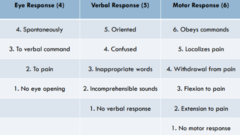
Diffuse axonal injury
the most common pathological feature of traumatic brain injury occurring due to mechanical forces and secondary strain and shearing of axons. Results in a buildup of transport product and the release of free radicals. Is delayed occurring hours to weeks post injury. Neuroimaging appears normal due to diffuse damage that cannot be detected.
Coup
injury to the brain at the point of contact
Contre-coup
injury to the brain opposite to the point of contact
Chronic traumatic encephalopathy (CTE)
delayed progressive, degenerative disease of the brain found in those with a history of repeated brain trauma or concussive events. Degeneration occurs due to a buildup of tau protein. Results in memory loss, confusion, impulse control problems, aggression, and depression. Can only be diagnosed post-mortem.
80%
percentage of patients with traumatic brain injury that complain of dizziness and balance problems likely secondary to vestibular deficits.
Disequilibrium
sensation of walking on uneven ground
Dizzines
subjective feeling of nausea, light-headedness, or disorientation
Visual motion sensitivity
dizziness that is provoked by full field repetitive or moving visual environments
Vertigo
illusion of movement of surroundings
Vestibular
Proprioception
Visual
3 Afferent Systems Controlling Balance
Musculo-skeletal
Oculomotor
2 Efferent Systems Controlling Balance
Vestibular nuclei
Cerebellum
Cerebrum
Superior colliculus
4 Integrative Systems Controlling Balance
-Otologic (inner ear infection)
-Unknown (brain filtering problems)
-Psychological (anxiety)
-Central/neurologic (stroke, head trauma)
-Medical (low blood pressure)
5 Causes of Dizziness (most to least common)
Anticonvulsants
Antihypertensives
Ototoxic drugs
Psychotropic agents
Stress reduction drugs
5 Medications Causing Dizziness
mycin antibiotics, anti-cholinergic
two ototoxic drugs causing dizziness
Vestibulo-ocular reflex
reflexive gaze stabilization that functions to maintain a steady image on the retina during head movement. Requires communication between the vestibular and visual systems.
3, 6, 8, MLF
In the vestibulo-ocular reflex CN _____ (2) communicate with CN ____ via the _____ to generate horizontal eye movements in response to head movement
Anisometropia
Uncorrected astigmatism or HA
Multifocal lenses
Glare
4 Optical Causes of Vestibular Problems
50%
percentage of cranial nerves that impact visual function directly or indirectly. Neurons involved in visual function travel to all four lobes of the brain, not just the occipital lobe
2, 3, 4, 6
four cranial nerves impacting visual function directly
5, 7, 8
three cranial nerves impacting visual function indirectly
Ventral stream (what)
pathway connecting the occipital lobe to the temporal lobe playing a role in object recognition, memory, and emotion. Is less commonly affected in traumatic brain injury.
Dorsal stream (where)
pathway connecting the occipital lobe to the parietal lobe playing a role in spatial orientation and multisensory integration. Is more commonly affected in traumatic brain injury.
Prefrontal
portion of the parietal lobe that functions in the control of eye movements and spatial working memory (visuospatial processing)
Premotor
portion of the parietal lobe that is responsible for mapping of objects in space and coordination body position (visually guided actions)
Medial temporal
portion of the parietal lobe that updates body position during navigation
vergence
pursuits
saccades
fixation
accommodation
Dorsal ventral stream miscommunication results in a difficulty to locate objects in space impeding on visual functions such as... (5)
-Address optical and visual input problems
-Address non-optical visual triggers
-Strengthen the connection between eyes and brain
3 Roles of Optometry in Vision Rehabilitation
Accommodative insufficiency
most common accommodative defect diagnosed following acquired brain injury
Saccade deficit
most common versional defect diagnosed following acquired brain injury
CN palsies 3, 4, 6
INO
Skew deviation
Consider these 3 conditions in vergence defects following acquired brain injury...
Convergence insufficiency
most common vergence defect diagnosed following acquired brain injury
Scattered, non-lateralized
visual field defect that is more commonly associated with diffuse damage caused by traumatic brain injury rather than stroke.
Lateralized
visual field defect that is more common in stroke rather than traumatic brain injury.
right brain lesions
Inattention of a visual field defect is common with...
-Illness (I.e. barometric pressure changes in those with vestibular dysfunction)
-Fatigue
-Controlled substances
-Changes in stress
4 Factors Exacerbating Symptoms
-Exam not exceeding 1 hour
-Dim lighting
-Speak clearly and slowly
-Slow changes in prism magnitudes
-Have patient close eyes between tests
Clinical Pearls for examining traumatic brain injury
Nature/date of the insult
History of hospitalization
Loss of consciousness
Therapies received
History of Acquired Brain Injury (4 important aspects)
nystagmus
During visual acuity testing in patients having acquired brain injury it is important to note any ____ eye movements
Lid asymmetries
Pupil dysfunctions
Facial asymmetries
External Examination of TBI cases be keen to notice... (3)
Over/under shooting
Unsteadiness
Slow reaction time
Head/body movement
Observation of Saccades in TBI (4)
15-0.25(age) - formula for expected minimum accommodative amplitude
+0.50-0.75
expected FCC/MEM results
+2.00/-2.37
expected NRA PRA results
8 cpm
expected BAF results
11 cpm
expected MAF results
4:1
expected ACA ratio
15 cpm
expected vergence facility results
5/7 cm
expected NPC results without RG glasses
7/10 cm
expected NPC results with RG glasses
Tannen Prism Flipper Test
Name this test: 2 BI/4 BO prism flipper is utilized 15 feet from a 20/30 letter. Is used to evaluate distance fusional facility in TBI
concussion, visual motion sensitivity
Distance fusional facility may be reduced in patients having ____ suggesting ____
15 cpm
normal tannen prism flipper test results
10 cpm
tannen prism flipper test results that will make the patient visually symptomatic
2 lines
Patient must have their visual acuity tested with head movement (dynamic VA). If there is a drop in acuity of ____, this is pathognomonic for a visual vestibular issue
VOR
Dynamic visual acuity assesses _____ response
sensitivity to movement in the peripheral field
peripheral OKN can be performed to Assess...
Abnormal egocentric localization (Visual midline shift syndrome)
patient's perception of their body position is different from what is actually occurring. Commonly occurs with hemiparesis or hemiplegia. Patient will lean away from the paretic side and will have an abnormal gait.
Yoked prism
prism equal in magnitude and direction which can be useful in the treatment of abnormal egocentric localization.
Visual neglect (visual spatial inattention)
condition where the region of space contralateral to the brain lesion is perceived as not existing (I.e. denying of the existence of contralateral limb)
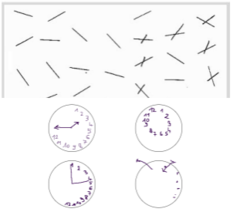
Right
____ sided spatial neglect is rare due to the redundancy of the visual system where this field is controlled by both the right and left sides of the brain
Divergence excess
vergence disorder that is rare in acquired brain injury and likely represents a long standing binocular dysfunction
50
Photophobia is reported in ____% of patients following traumatic brain injury
balance stability
An omega blue tint is useful for the "dizzy" patient as it provides...
general photophobia
A grey or brown tint is useful for...
migraine
The FL 41 tint is useful for...
before
Underlying binocular vision dysfunctions must be addressed ____ initiating visual field expansion procedures
10-15 PD
amount of yoked prism used for stationary viewing
6-10 PD
amount of yoked prism used for reading
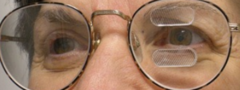
Peli Prism (40 PD BO)
what is this visual field expansion technique?
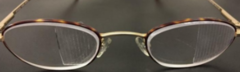
Hemi Field Prism (18-20 PD)
what is this visual field expansion technique?
Bottom up processing
reactive processing that depends on the brain's reception of stimulus. Is mediated by sensory cues of blur and retinal disparity. I.e.) stubbing your toe on a chair
Top down processing
voluntary processing that involves cognitive control and selective attention. I.e.) avoiding a chair that you previously stubbed your toe on
Fronto-parietal
regions of the brain responsible for top down processing