Hyper Kinetic
 Call Kai
 Learn
Learn Practice Test
 Spaced Repetition
 Match
Match Flashcards
 Knowt Play
1/23

There's no tags or description
Looks like no tags are added yet.
Name | Mastery | Learn | Test | Matching | Spaced | Call with Kai | Chat |
|---|
No analytics yet
Send a link to your students to track their progress
24 Terms
List the dif Classification of Movement Disorders and Give examples
Classification of Movement Disorders
Hypokinetic
Parkinsonism
Hyperkinetic
Tremor, Dystonia, Tics, Ballismus, Chorea, Myoclonus
Mixed
Drug induced (e.g. tardive dyskinesia), Huntington’s disease, Wilson’s disease
Define:
Tremor:
Dystonia:
Tics:
Myoclonus:
Chorea:
Athetosis:
Ballismus:
Definitions
Tremor:
Rhythmic, sinusoidal (oscillatory) movement of a body part, caused by regular contractions of reciprocally innervated muscles
Dystonia:
Unnatural spasmodic movement of posture that puts the limb/body part in a twisted posture
Tics:
Involuntary, compulsive, rapid, repetitive, stereotyped movement or vocalization
Myoclonus:
Very rapid, shock-like contractions of a group of muscles, irregular in rhythm and amplitude
Chorea:
Involuntary irregular movements of a forcible, rapid, jerky type
In Latin Chorea means DANCE
Athetosis:
Inability to sustain the fingers and toes, tongue, or any other part of the body in one position
Ballismus:
Uncontrollable, poorly patterned flinging movement of an entire limb

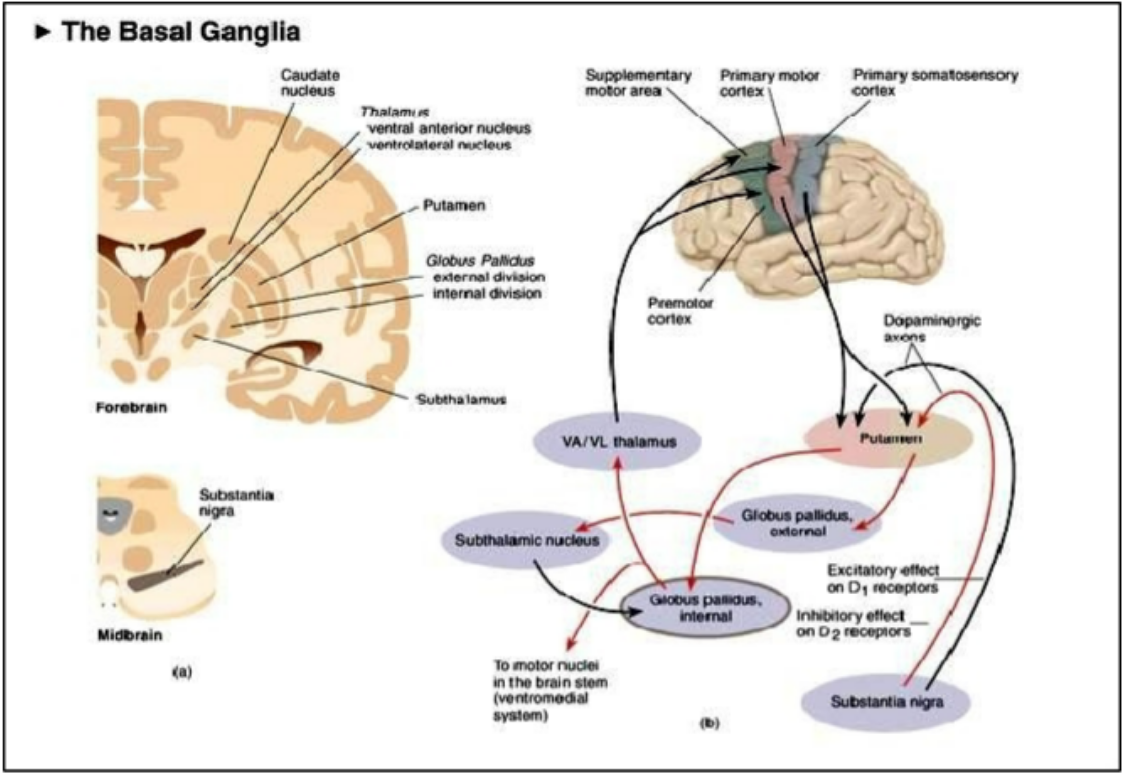
[REVIEW] Basal Ganglia Pathways

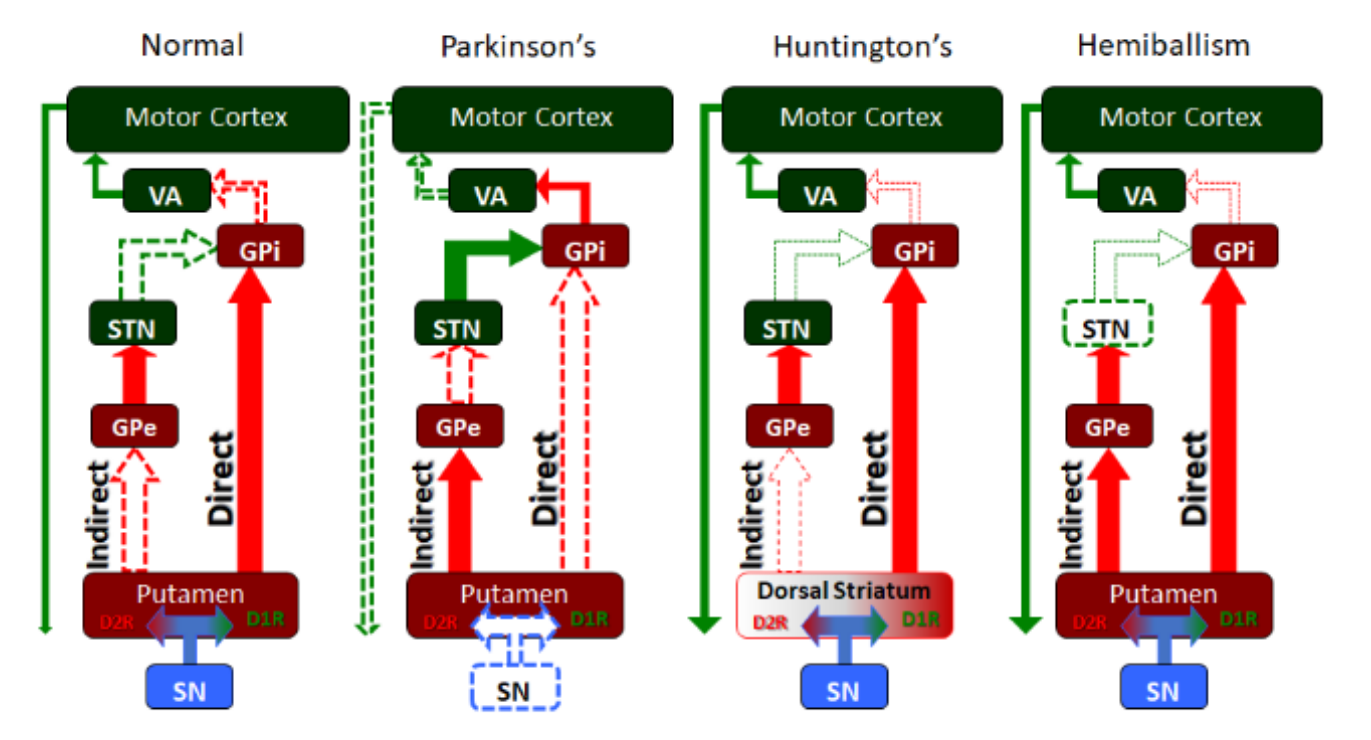
Draw out the Basal Ganglia Pathway for:
Normal
PD
Hunt.
Hemiballism
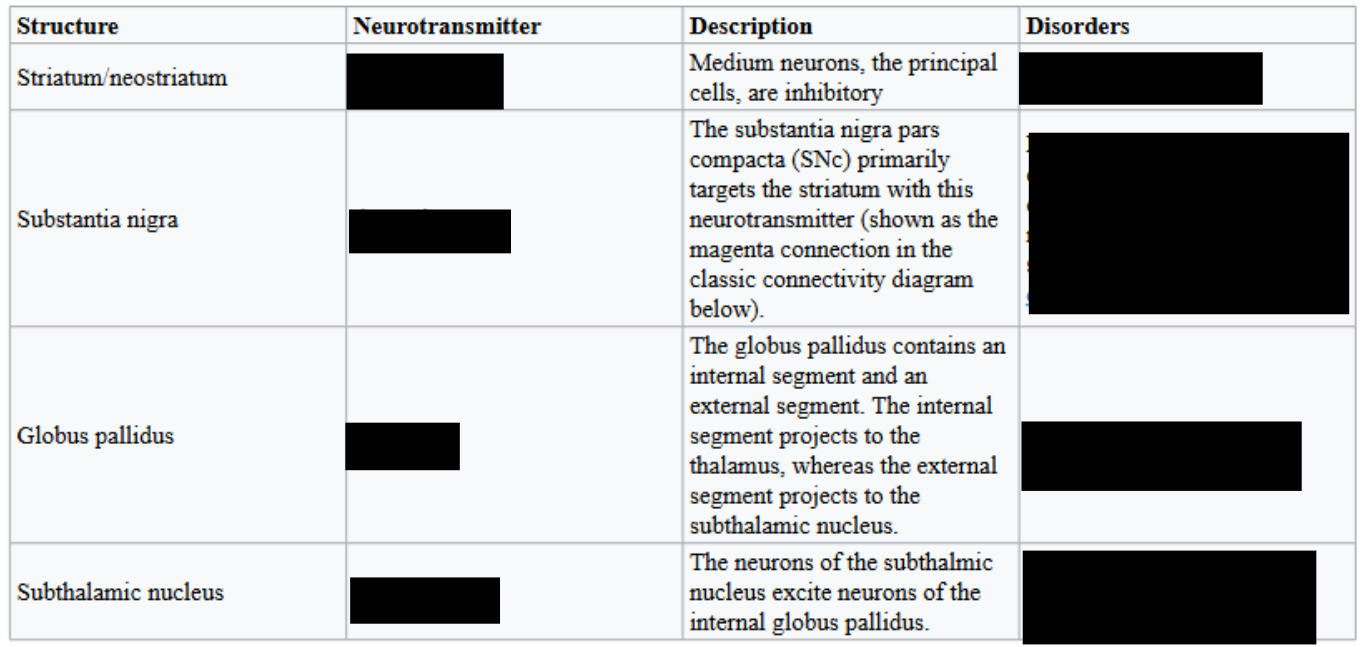
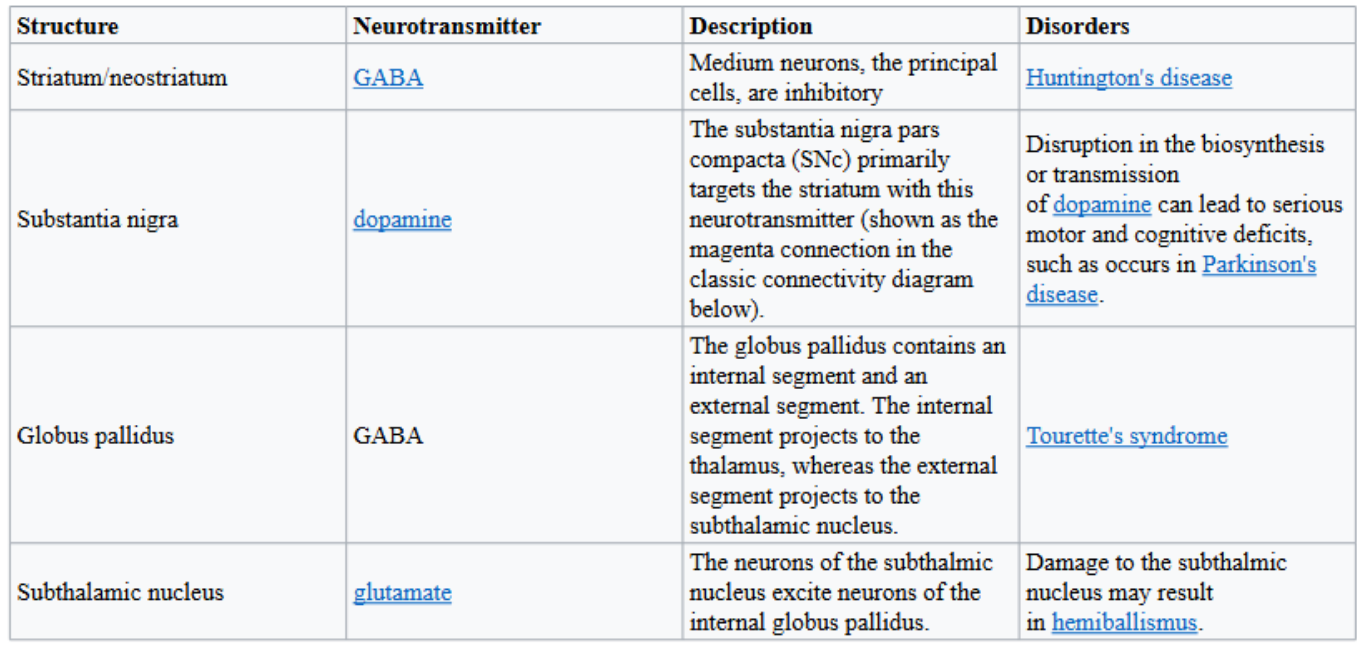
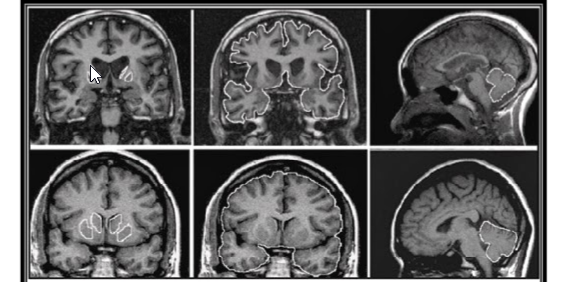
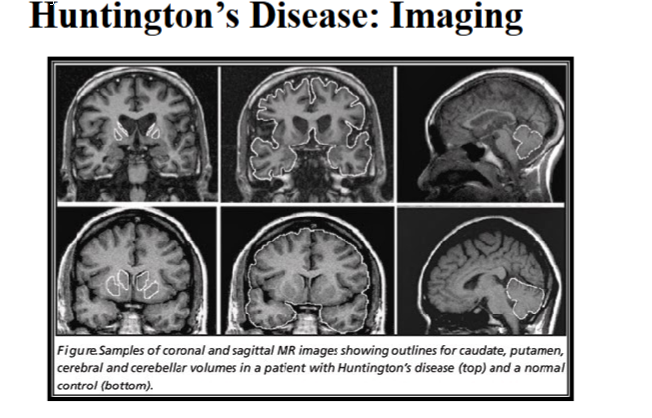
Describe Huntington’s Disease
Genetics
Clinical Manifestations
Prognosis
Pathology
DDx
Treatment
Genetics:
Chr 4 Defect
CAG repeat in huntingtin gene
Autosomal Dom
Clinical Manifestations
Gradual onset + progression of chorea + dementia/cognitive change
Personality changes, impulsiveness, aggressive behavior, depression, and paranoid psychosis
Prognosis:
Death in 15-20 years
Pathology
Neuronal loss + inclusions/gliosis of:
striatum (caudate and putamen)
cerebral cortex
DDx:
Medication effect,
infectious,
immune disorders (SLE, Sydenham chorea),
other genetic disorders (Wilson disease),
stroke,
metabolic disorders (hyperthyroidism),
etc.
Treatment (symptomatic)
Chorea may respond to
tetrabenazine,
amantadine,
riluzole
Describe Hemiballismus
What is it?
Patho
Treatment
What is it?
Only one side
single limb or both upper and lower limbs
Patho:
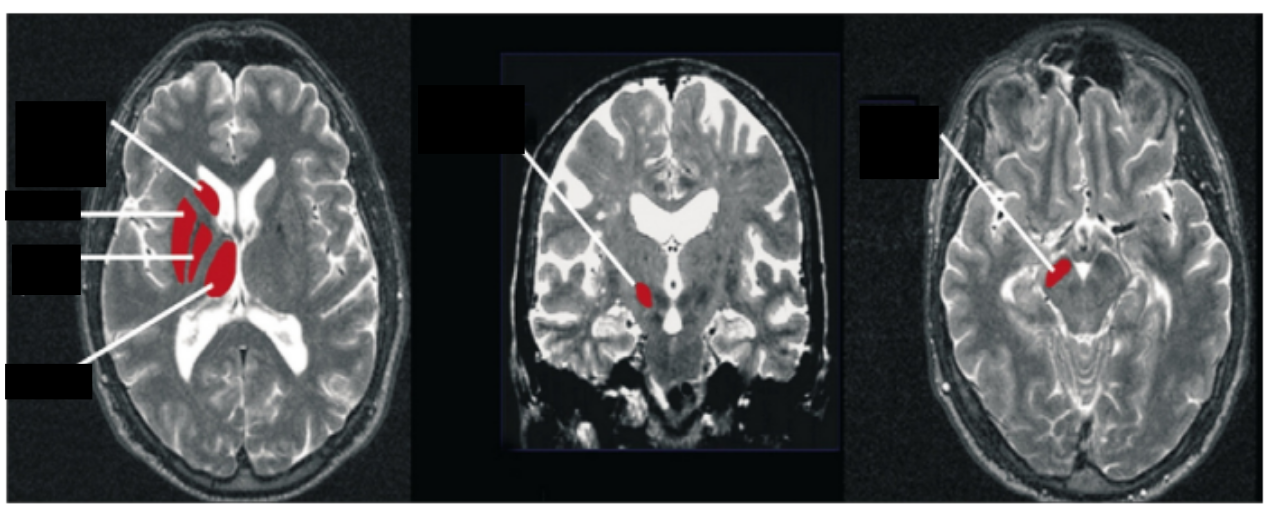
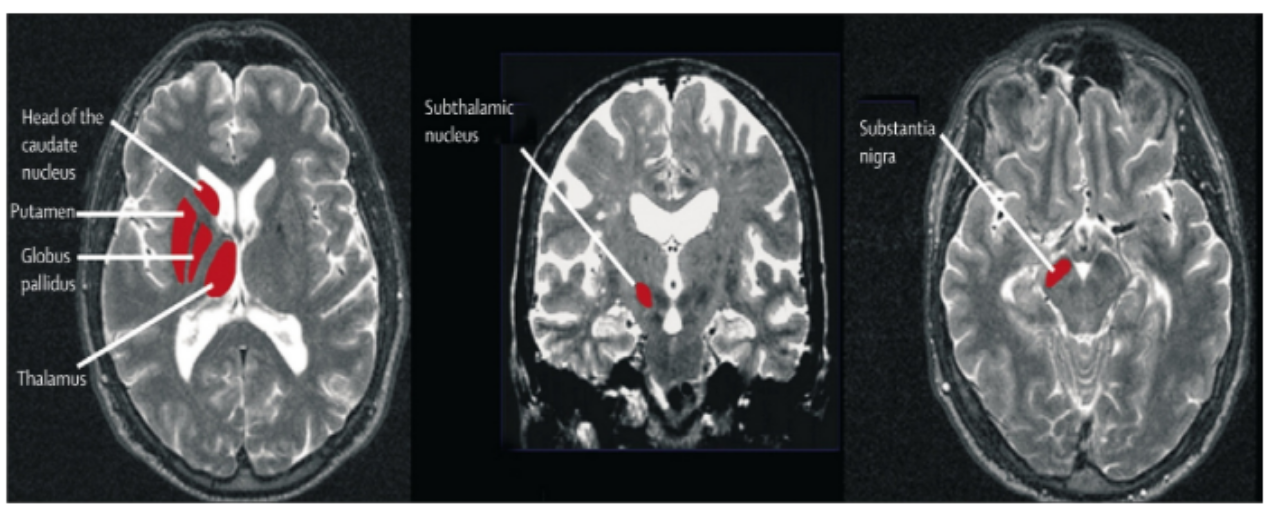
Acute Lesion:
contralateral subthalamic nucleus
surrounding structures (putamen, thalamus, parietal cortex
Due to ischemia or hemorrhage
Can also be seen with non-ketotic hyperglycemia
Treatment
Dopamine blocker (haloperidol)
Dopamine depleter (tetrabenazine)
Neurosurgery for refractory, persistent symptoms
Describe Dystonia
Patho
Causes
Dystonia
Patho:
Loss of inhibitory function @
spinal,
Brainstem
cortical levels
Causes:
Severe Generalized Dystonia:
Heritable diseases
Rare
Acute generalized dystonia
Antipsychotics
Metoclopramide
What does Generalized/Focal Dystonia look like?

Describe Idiopathic Torsion Dystonia
Clinical Features
Treatments
Describe Focal Dystonia
Difference from tics
DDx
Examples
Treatment
Idiopathic Torsion Dystonia
Clinical Features:
Normal birth and developmental history
NO other neurologic signs besides dystonic movements or postures
Treatment: Responds poorly
Medications
diazepam,
baclofen,
levodopa,
Carbamazepine
Surgery
Brain stimulator in selected patients
Focal Dystonia
Difference from Tics:
Longer duration
Exhibits directionality
Typically aggravated by voluntary movement
DDx
Idiopathic
Form of Tardive Dyskinesia
Other neurologic diseases
Systemic diseases
Examples:
Blepharospasm
Oromandibular dystonia
Torticollis
Writers cramp
Treatment
Botulinum A toxin injection
blepharospasm, torticollis; writers cramp
Describe the different types of Tremors
Types
Resting
Parkinson disease, Parkinsonism syndromes
Action
Postural: when trying to maintain a posture vs. gravity
Kinetic: with voluntary movement
Intention: Increases when approaching a target
Finger to Nose Test
Mixed
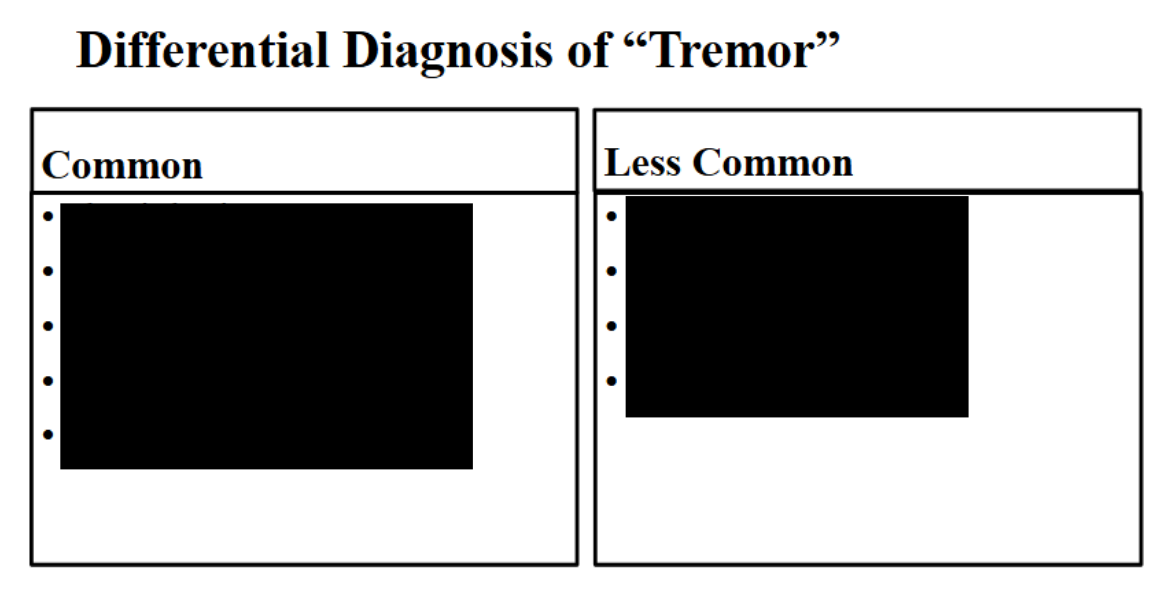
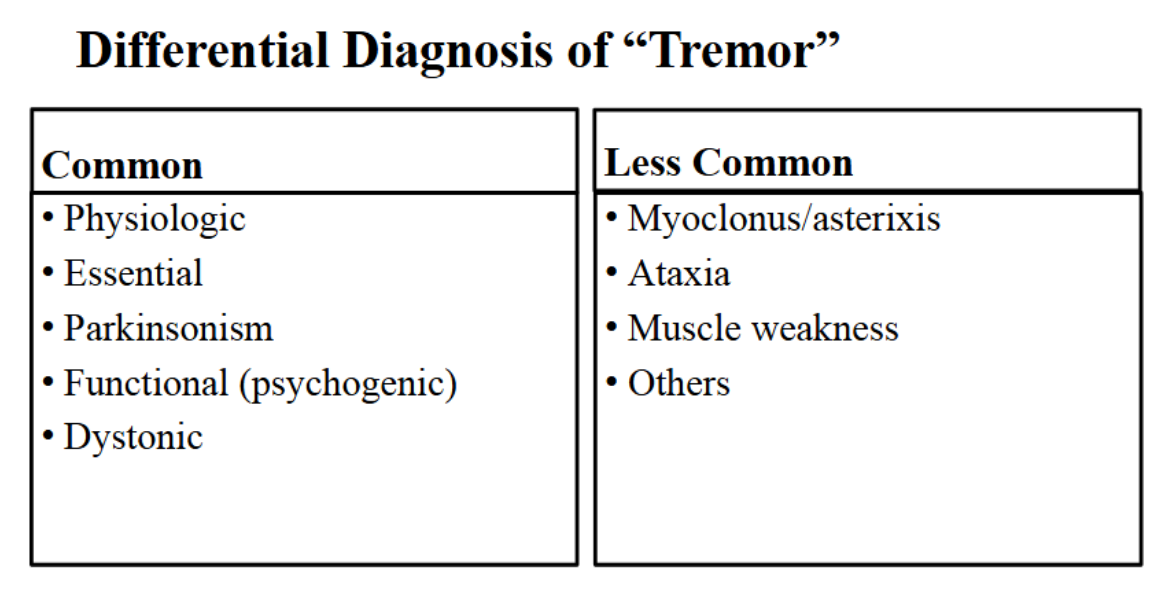
When taking History, What would you look out for when discussing tremors:
Medical History
Meds
FH
SH
ROS
What about for PE:
Vitals
Mental Status
CNs
Motor
Gait
Psychiatric
History
Medical History
Liver disease,
Renal insufficiency,
Hyperthyroidism
Medications
Beta agonists,
thyroid medication,
steroids,
neuroleptics,
metoclopramide, SSRI/TCA,
Family History
Essential Tremor, Parkinson
Social History:
Substance use,
caffeine,
psychological trauma
ROS
Constipation, loss of smell, lightheadedness (think Parkinsonism)
Mood disorder (think Functional)
Vitals:
Orthostasis (PD)
Mental Status:
Impaired alertness (myoclonus)
Cranial Nerves:
Anosmia, hypophonia (PD)
Motor: Rigidity, bradykinesia, type or tremor, etc.
Changes in tremor with entrainment/distraction
Functional Tremor
Gait:
shuffling, asymmetric arm swing (PD)
Psychiatric:
Mood, insight
Describe Physiologic Tremor
What is it?
Exacerbation?
Physiologic Tremor
What is it?
7- to 12-Hz detectable in everyone w/ electrophysiologic recording
Symptomatic when exacerbated by:
Fatigue
Anxiety/excitement
Medications
Caffeine
Systemic processes (illness)
Describe Essential Tremor
STATs
Forms
Genetics
Key Characteristic
Treatment
Essential Tremor
STATs
5% of the population > 60 years
Forms:
Postural tremor of hands,
head tremor
voice tremor
Genetics:
Family history common
Autosomal dominant
Key Characteristic:
May improve temporarily with alcohol
NOTE:
No abnormal findings other than tremor
Treatment (symptomatic):
Beta blockers
(propranolol)
Anticonvulsants
(primidone, topiramate, gabapentin)
Benzodiazepines
(clonazepam, alprazolam)
Botulinum toxin A
Surgical
(Deep brain stimulator, thalamotomy)
Describe Functional (Psychogenic) Tremor
Disease Course
Tremor Characteristics
Functional (Psychogenic) Tremor
Disease Course:
Acute onset
Spontaneous remissions
Tremor characteristics:
Usually restricted to a single limb
(often dominant hand)
Gross tremor
Irregular
Diminishes in amplitude or disappear if distracted
Observe tremor while patient is doing finger tapping on unaffected side, or while patient calculating serial 7s
Describe Tardive Dyskinesia
Causes
Clinical features
Diagnosis Criteria
Treatment
Tardive Dyskinesia
Causes:
Delayed onset after prolonged use of dopamine receptor blocking agents
Drug Classes responsible
Neuroleptics
Seen with older and newer atypical antipsychotics, but less often
Anti-emetics
Metoclopramide
Clinical features
Hyper (usually) or Hypokinetic
Orofacial dyskinesia,
athetosis,
dystonia,
chorea,
tics,
facial grimacing
Diagnosis Criteria:
Presence of dyskinetic or dystonic involuntary movements
History of at least one month of antipsychotic drug treatment
Exclusion of other causes of abnormal movements
Treatment
Stop the offending drug
switch to a second gen antipsychotic if needed
Educate:
Often reversible but may take months to a few years
Pharmacotherapy:
Clonazepam
Trihexyphenidyl
(Anti-Cholinergic)
Dopamine depletors
(tetrabenazine, deutetetrabenzine*, valbenazine*)
Botulinum toxin
for severe dystonia
Describe TICs
Characteristics
Classifications
Primary vs Secondary
Characteristics
Associated with a premonitory sensation
Urge to perform the tic
Can be suppressed
Primary or Idiopathic (most common)
Transient motor or vocal tics
(< 1 year)
Chronic motor or vocal tics
(>1 year)
Tourette’s syndrome
Motor tic + one (at least) vocal tic
Secondary
Genetic/inherited
(Wilson disease, Huntington disease, neuroacanthosis)
Developmental disorders
Drugs
(cocaine, amphetamines)
Medications
(phenobarbital, phenytoin, methylphenidate, levodopa)
Carbon monoxide poisoning
Infections
Stroke
Head trauma
Describe Tourette’s Syndrome
Diagnosis Criteria
Timing
Other Symptoms
Treatment
Tourette’s Syndrome
Diagnosis Criteria:
Multiple motor and phonic tics
Timing:
Onset before age 21 years (usually between 2-15 years)
Tics wax and wane
Other Symptoms:
OCD
ADD
Impulse control probs
Other behavioral disturbances
NOTE:
Absence of other explanatory conditions
Treatment:
Education/Reassurance
Behavioral therapy;
address accompanying behavioral disorder
Medications :
First line (symptoms interfere with function):
Clonidine, guanfacine, clonazepam
Second line (disabling tics):
Dopamine blockers:
Risperidone, haloperidol, pimozide, fluphenazine, aripiprazole
Botulinum toxin injections
Deep brain stimulation (clinical trials)
Describe Myoclonus
Negative vs Positive
List the Different Classifications and Characteristics
List the causes of Secondary
Negative vs Positive
Positive
Active muscle contraction
Negative
Brief inhibition of ongoing muscle activity
Classification
Physiologic myoclonus (types)
Sleep jerks
Anxiety-induced
Hiccups
Exercise-induced
Essential myoclonus (features):
Hereditary or sporadic
Accompanied by postural tremor or dystonia
Non-progressive history
Epileptic myoclonus
Associated with chronic seizure disorder or syndrome
Secondary myoclonus
Neurodegenerative disorders
Metabolic disorders
(Wilson’s disease, storage diseases, electrolyte abnormalities, endocrine disorders)
Infections or post-infectious
Toxins, medications
Paraneoplastic syndromes, tumors
Physical encephalopathies (Anoxia, trauma)
Psychogenic
Describe Cerebellar Tremor(Ataxia)
Tremor characteristics
Accompanying symptoms
What do you always do? Common Causes
Tremor Characteristics
Unilateral, <5hz
Accompanying symptoms
Cerebellar dysfunction
Ataxia
Dysmetria
Disdiadochokinesia
Dysarthria
ALWAYS GET IMAGING
Common Cause
Stroke
Multiple sclerosis
Cerebellar injury
Others: Alcohol, drugs, heritable diseases, mass, infections