Infectious Diseases Week 7
 Call Kai
 Learn
Learn Practice Test
 Spaced Repetition
 Match
Match Flashcards
 Knowt Play
1/250

There's no tags or description
Looks like no tags are added yet.
Name | Mastery | Learn | Test | Matching | Spaced | Call with Kai | Chat |
|---|
No analytics yet
Send a link to your students to track their progress
251 Terms
How are respiratory pathogens transmitted person-to-person
via aerosol droplets
do large droplets fall quickly or slowly
fall quickly
What happens to moderate/small droplets
they persist as microdroplets that remain in air for longer
do most pathogens survive well in the air
no they survive poorly, only survive short distances
what does the environmental niche favour
diff. microorganisms
What major respiratory pathogens are covered in HLTH3250
Mycobacterium tuberculosis
Coronavirus
Influenza virus
what is the classification of viruses
Obligate intracellular parasites
the smallest and simplest life form on earth that can only replicate in living susceptible cells
What changes do viruses cause to cells
Changes to antigenicity, metabolism, and viral particle production
What leads to the manifestations of viral disease
The host response to cell death and viral presence
Are viruses motile
No. They are non-motile and depend on external physical factors to infect other susceptible cells
What percentage of human DNA is made up of ancient retroviral genomes
Approximately 8%
What is viremia
The presence of viral particles in the blood
What is tropism
The ability of a virus to infect a certain tissue and replicate there
What factors does tropism depend on
Accessibility of the target cell
susceptibility (presence of relevant receptor)
permissiveness of the target cell (host cell relevant factors for replication)
avoidance of innate and adaptive immunity
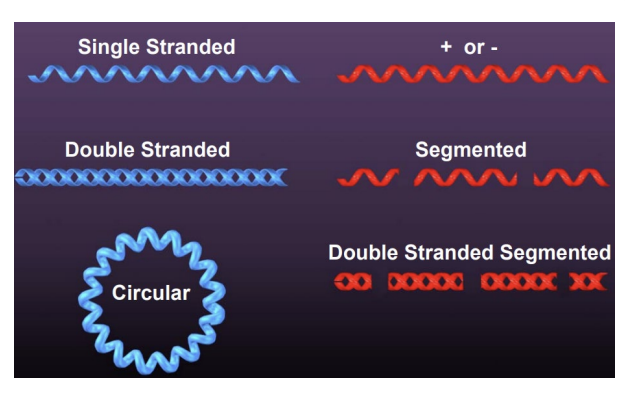
How are viruses classified by genome
DNA genome vs RNA genome
positive or negative orientation
single or double stranded
linear, circular or segmented
What does positive (+) orientation mean in viral RNA
The RNA can directly function as mRNA and be translated by host ribosomes
What does negative (-) orientation mean in viral RNA
The RNA must be converted to positive sense before translation

what is the genome size of a human
~ 25000 genes
what is the genome size of e.coli
~ 2000 genes
what is the genome size of viruses
~ 400 genes
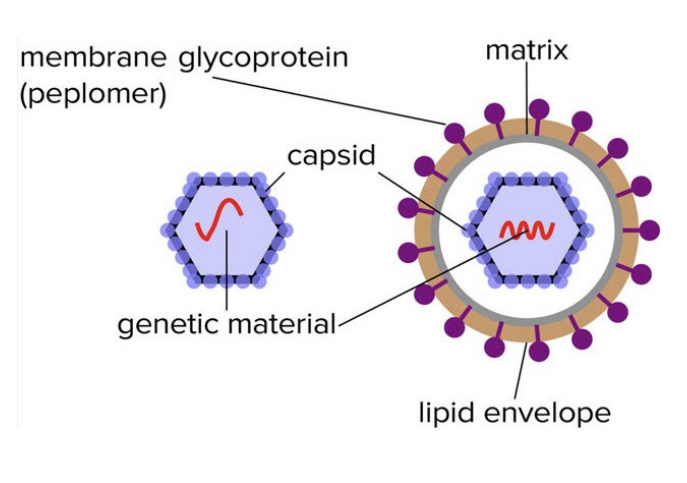
what is a naked virus
Viruses with a capsid only
what is an enveloped virus
Viruses with an envelope

What are the two routes for viral entry
Endocytic route (clathrin-mediated endocytosis and penetration)
non-endocytic route (fusion at the cell surface)


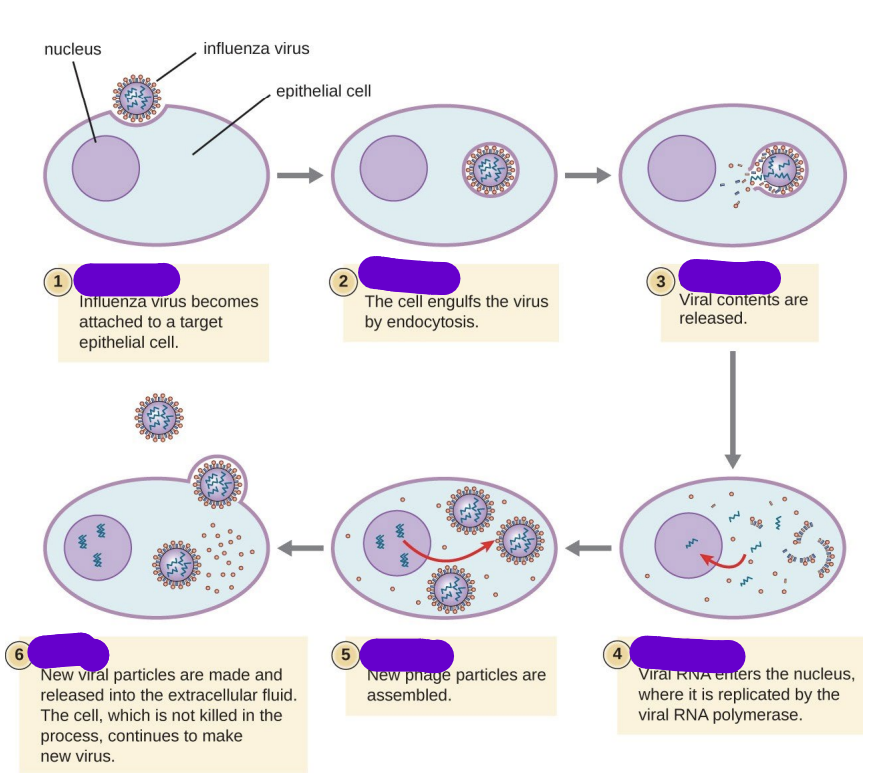
What are the six steps of the viral life cycle
1. Attachment
2. Penetration
3. Uncoating
4. Biosynthesis
5. Assembly
6. Release
What happens during attachment
The virus becomes attached to a target epithelial cell
What happens during penetration
The cell engulfs the virus by endocytosis
What happens during uncoating
Viral contents are released
What happens during biosynthesis
Viral RNA enters the nucleus, where it is replicated by the viral RNA polymerase
What happens during assembly
New phage particles are assembled
What happens during release
New viral particles are made and released into the extracellular fluid. The cell is not killed in the process and continues to make new virus

Where do respiratory viruse pathogens mainly enter
via the nasal passage
where do respiratory viral pathogens mainly replicate
in nasopharyngeal epithelial cells, and the lower respiratory tract (LRT)
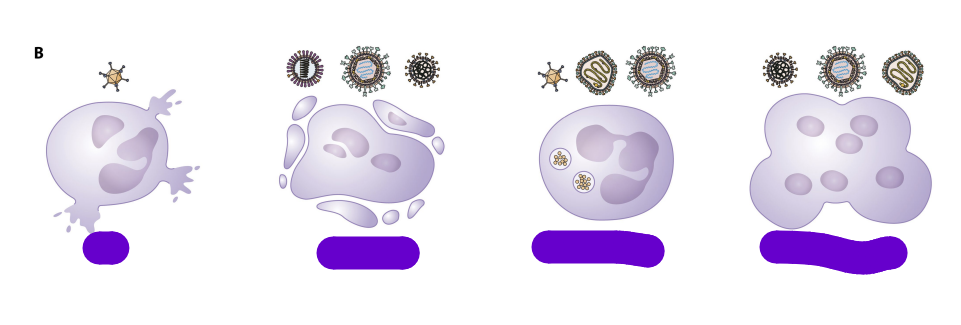
How do respiratory viruses alter cellular homeostasis (4 things)
Direct lysis of infected cells
inducing apoptosis
creating inclusion bodies
syncytia formation (fusing of infected cells into large multi-nucleated cells)

How may respiratory viruses act at a distance
Through neuronal pathways
What nervous supplies may be affected by respiratory viruses
Parasympathetic, sympathetic, and non-adrenergic, non-cholinergic nervous supply
What is the sequence of respiratory virus pathogenesis
1. Entry
2. Replication
3. Inflammatory mediators (chemokines, cytokines, bradykinins) released
4. Immune response (virus eradication) or Vascular leakage + glandular secretion (symptoms: rhinorrhoea, cough, sneezing)
What is measles
An acute, highly infectious disease that often affects susceptible children
What virus causes measles
Paramyxovirus – a negative-strand SSRNA virus
What are the main immune cell targets of measles
T-cells, B-cells, macrophages, and DCs expressing CD150 (SLAM
What is Nectin-4 and where is it found
A receptor on epithelial cells – part of the adherens junction complex on the basolateral side, under tight junctions. Also on keratinocytes and endothelial cells
What may Nectin-4 play a role in
The characteristic skin rash of measles
What is the treatment for measles
No antiviral therapies
Supportive care: antipyretics, antitussives, hydration and/or envivo controls (humidification)
What is the receptor for measles on immune cells
SLAM (CD150)
What is the receptor for measles on epithelial cells
Nectin-4
what does the Varicella-Zoster virus cause
Varicella pneumonia occurs 1 – 6 days after rash
what are symptoms of varicella pneumonia
tachypnoea, chest-tightness, cough, dyspnoea, fever
What does Varicella-Zoster virus establish in neurons
Life-long, latent infection in neurons
What happens when VZV reactivates
It migrates to the skin surface – causing shingles
How is VZV transmitted
Direct contact, aerosol inhalation of vesicular fluid from skin lesions, and possibly respiratory secretions
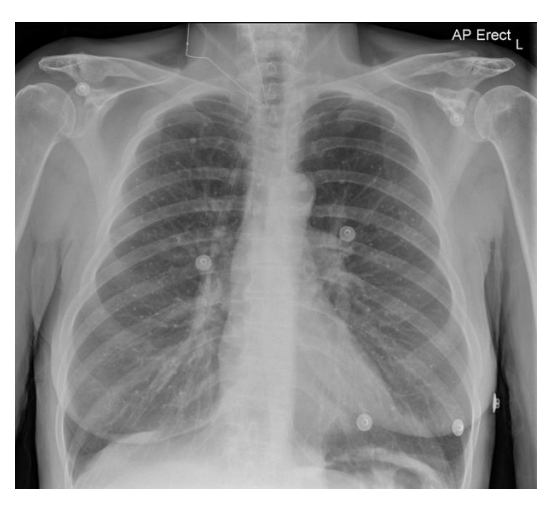
What do VZV lung lesions look like
Multiple small, round calcific lung lesions
Who is vulnerable to VZV
Immunocompromised and unvaccinated individuals
What is the treatment for VZV
Acyclovir
What percentage of common colds are caused by rhinoviruses
30-50%
What are the three species of rhinoviruses
RV-A, RV-B, RV-C (150+ serotypes)
What type of virus are rhinoviruses
Positive-sense, ssRNA non-enveloped viruses
What cell-surface receptors do rhinoviruses bind to
ICAM1, TLR2, CDHR3
What cells do rhinoviruses primarily affect
Airway epithelia (ciliated and non-ciliated)
What percentage of common colds are caused by coronaviruses
10-15%
What percentage of common colds are caused by influenza viruses
5-15%
Are most antiviral drugs effective against the common cold
no
What should future research efforts focus on for the common cold
Non-viral-specific compounds, e.g., broad-spectrum antivirals
Compared to bacterial respiratory pathogens, viral respiratory pathogens are less easily controlled by what
Chemotherapeutics
What do viral respiratory pathogens include
Some of the most prevalent human infections
Are viral respiratory infections mostly acute and self-limiting
yes
How is the diagnosis of viral respiratory infections primarily made
Clinically – symptoms, physical exam, medical history. Further supported by lab techniques
What is the difference between bacterial and viral infections in terms of treatment
Bacterial infections can be treated with antibiotics
viral infections can be treated with antivirals (but antibiotics do not work)
Do viruses reproduce outside living cells
no
What is Streptococcus pyogenes
Group A Streptococcus that can cause strep throat.
More virulent strains are β-haemolytic
Where is S. pyogenes found
In low numbers in the healthy upper respiratory tract – middle ear, throat. Humans are the only reservoir
What are the symptoms of strep throat
Sudden onset pharyngitis, dysphagia, fever
How is S. pyogenes transmitted
via respiratory droplets; saliva/nasal secretions, wound discharge, food (rare).
Facilitated by crowded environments
Are symptomatic or asymptomatic carriers more important for transmission
Symptomatic carriers > asymptomatic carriers
What is scarlet fever
An erythematous rash in children. Can also follow pyoderma/wound infection
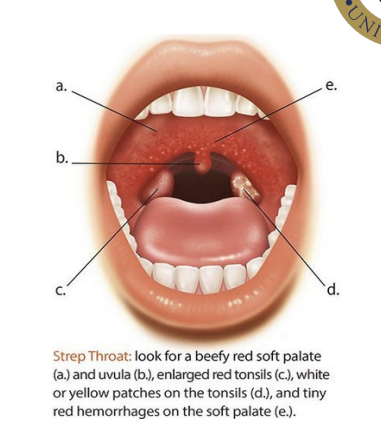
What are the signs of strep throat
Beefy red soft palate and uvula
enlarged red tonsils
white or yellow patches on the tonsils
tiny red haemorrhages on the soft palate
What are the signs of scarlet fever
Characteristic red cheeks and rash, white coating on the tongue, strawberry tongue

is Streptococcus pneumoniae group A
no
where does Streptococcus pneumoniae colonise
mucosal surfaces
What diseases does S. pneumoniae cause
Pneumonia, meningitis, otitis media
How does S. pneumoniae establish infection
It translocates to deeper tissues to establish infection in microenvironmental niches
What are the 3 adaptation and survival mechanisms of S. pneumoniae
Sequesters essential metal ions like iron and zinc from host for metabolic needs
scavenging of carbohydrates from host cells to sustain growth and energy production
biofilm formation allows resistance to host immune responses and antibiotics
Why are encapsulated strains of Streptococcus pathogenic
they are harder to kill
How are encapsulated strains identified
Via India Ink stain
What is lysogenic bacteriophage encoding exotoxins
A bacteriophage that integrates its genome into the bacterial chromosome and encodes exotoxins
What is streptococcal toxic shock
A condition caused by S. pyogenes that induces a massive cytokine cascade
What is molecular mimicry
Cell-surface M protein and cross-reactive antigens that resist phagocytosis, aid adherence and epithelial invasion
Are there vaccines against S. pyogenes
no
What is diphtheria
An acute, severe infection affecting nasal and throat mucosa
What causes diphtheria
Corynebacterium diphtheriae
What are the symptoms of diphtheria
Gradual onset, mild fever, sore throat, dysphagia, malaise, loss of appetite
Is diphtheria preventable and treatable
Yes. Largely prevented through vaccination. Previous infection provides resistance
How is diphtheria transmitted
Via airborne droplets
What is the virulence factor of diphtheria
Diphtheria toxin
What does diphtheria toxin cause
Tissue death
What is the hallmark of diphtheria infection
Pseudomembrane
What is the danger of the pseudomembrane
Fatal airway obstruction if dislodged