Intro Class Fluency
 Call Kai
 Learn
Learn Practice Test
 Spaced Repetition
 Match
Match Flashcards
 Knowt Play
1/23

There's no tags or description
Looks like no tags are added yet.
Name | Mastery | Learn | Test | Matching | Spaced | Call with Kai | Chat |
|---|
No analytics yet
Send a link to your students to track their progress
24 Terms
Ratio female to male
1:4
*over 300 million Americans stutter
*more than 1 in 100
ETIOLOGY: unknown
Stuttering does NOT vary in the same person over different times and places
FALSE
can have good / bad days with speech
T or F Anxiety is the cause of stuttering occurences
FALSE
can develop anticipatory stress as a result but anxiety is NOT the cause!
(can exacerbate)
People who stutter often let the disability determine the vocation they choose
TRUE
NO FIXING but we can…
help to reduce situational stress, teach control / strategies to implement
(NO MIRACLES)
How could you help a CWS during popcorn reading?
unison reading
have the child advocate for themselves (disclose stutter, ask to go first, ask to be called on ONLY when hand is raised)
Do “pass” system
How many children go through a stage of development which they encounter disfluencies severe enough to concern their parents (as speech/lang. become more complex)
20%
Stuttering doesn’t become an increasingly formidable problem in teen years as dating and social interaction begin
FALSE
Myths about Stuttering
No link between stuttering & intelligence
Nervousness DOES NOT CAUSE stuttering
Stuttering cannot be “caught”
Does NOT help to tell a person to take a deep breath, think of what you want to say, speak slower etc.,
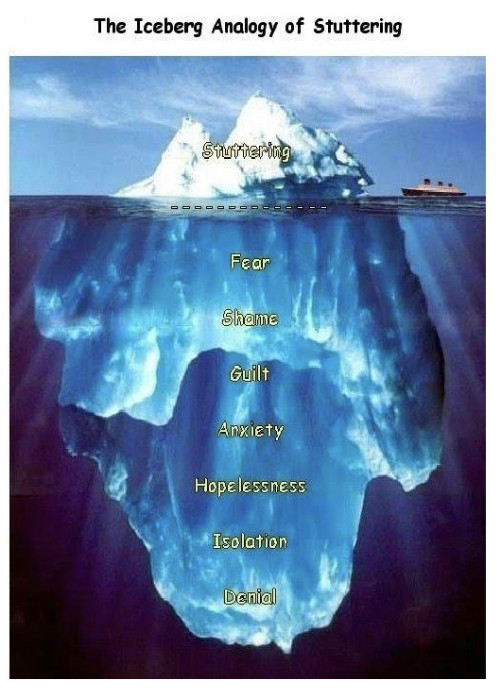
STRESS does not cause stuttering but stuttering can cause stress
Rights for people who stutter
to stutter or be fluent to extent one is able or chooses to be
communicate & be listened to regardless of degree of stuttering
accorded all rights for all citizens regardless of degree of stuttering
redress of grievances for documented evidence of failure to be treated fairly under the law (dignity & respect)
informed about therapy programs & prognosis
receive therapy appropriate for ones unique needs, concerns and characteristics from professionals trained to tx stuttering
choose & participate in therapy change therapy or clinician without prejudice or penalty
Responsibilities for people who stutter
understand that listeners or conversation partners may be uninformed about stuttering & its ramifications, may have different views of stuttering
differentiate those reactions from listeners that are the result of lack of awareness/knowledge & those that result from a lack of respect or fairness
inform listeners if need additional time to comm. (advocate!)
open and collaborative partnership with qualified service provider
do whatever one can to overcome life handicaps that occur because of stuttering : develop realistic appraisal of one’s strengths and weaknesses and develop sense of humor about oneself
Escape vs. Avoidance behaviors
escape: occurs when the speaker is stuttering and attempts to terminate the stutter and finish the word
Person: “I—I—I want the…”
They get stuck on /w/ and then force the word out, change their voice, or add a starter like “um” to break the block.
👉 Think: “I’m already stuck → I need to escape.”
avoidance: occur when the speaker anticipates stutter and tries to avoid it
Substitute another word (“fruit”)
Don't raise their hand
Avoid ordering at a restaurant
Stay quiet instead of speaking
👉 Think: “I might get stuck → I’ll avoid saying it.”
There are 3 types of stuttering
developmental stuttering
neurogenic stuttering
psychogenic stuttering
Stuttering can be considered a disability under the Americans with disabilities act (ADA)
TRUE
—> disability: physical/mental impairment that substantially limits one or more major life activities, including speaking & communicating
Stuttering typically begins between the ages of
2 - 6 yrs old
Many children experience periods of dysfluency during language development, but if it persists beyond a few _______, may indicate stuttering
MONTHS
PWS often feel a lack of…
confidence, self-esteem, and courage to do things they desire due to negative perceptions/reactions from others
Stuttering is a speech condition that….
disrupts the normal flow of speech, a lack of forward movement of speech production
Stuttering is not considered a mental illness even though it can have psychological and emotional consequences, rather it is considered a
neurodevelopmental disorder (origins in brain development)
Stuttering can be cured
FALSE
it can be managed through therapy, significantly reduced or eliminated but may persist
Many children do NOT grow out of stuttering especially if it starts before 3-3.5
FALSE they do!
*75-80% of children who start stuttering will show improvement in 12-24 months without therapy
If stuttering persists beyond ____ months or worsens, less likely to resolve on its own
6 months
Research suggests stuttering etiology is a complex combination of factors including
genetics (family history)
brain function
brain development
processing of speech
speech motor skills
Moment of stuttering MOS does not equal the experience of stuttering