Pentacene Lab Pre & Post
 Call Kai
 Learn
Learn Practice Test
 Spaced Repetition
 Match
Match Flashcards
 Knowt Play
1/20

There's no tags or description
Looks like no tags are added yet.
Name | Mastery | Learn | Test | Matching | Spaced | Call with Kai | Chat |
|---|
No analytics yet
Send a link to your students to track their progress
21 Terms

6,13-pentacenequinone
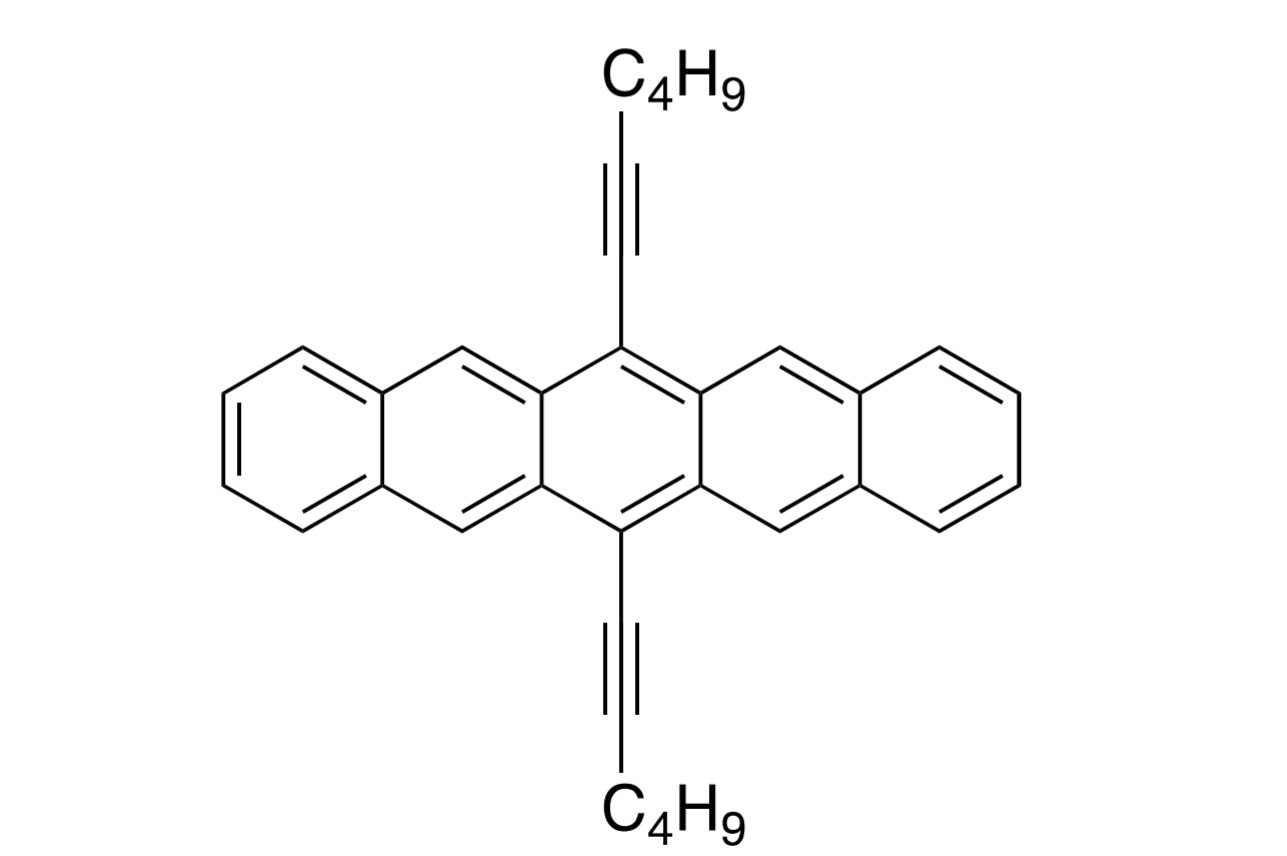
6,13- Dihexynylpentacene
What is the IR spectrum of C=O?
1650-1780
What is the IR spectrum of carbon-carbon TRIPLE bond?
2220
What is the IR spectrum of SP2 C-H?
3053
Column chromatography uses a stationary and a mobile phase to separate compounds. What is the stationary phase in the column chromatography purification of crude pentacene derivative?
Silica gel
What major differences would you be looking for in the IR spectra of 6,13-pentacenequinone and 6,13-dihexynylpentacene?
Disappearance of peak due to C=O in 6,13-pentacenequinone and appearance of peak due to C triple bond C in 6,13-pentacenequinone

LiHMDS
What is the full name of LiHMDS?
Lithium Hexamethyldisilazide
What is the purpose of adding base in the aldol condensation reaction?
Deprotonate alpha-carbon to generate a nucleophile
The elimination step of water during the aldol condensation reaction is an example of:
E1cB
Hexynide lithium reacts with 6,13-pentacenequinone via:
Nucleophilic addition to carbonyl
At the end of day 2, (synthesis of 6,13-dihexynylpentacene), where would you dispose the waste containing tin salts?
Aqueous liquid hazardous chemical waste container
T/F: Increasing the conjugation will decrease the energy of absorption
True
The statement: Tin (II) chloride synthesis of pentacene derivative works as an oxidizing agent is false. Explain why:
Tin (II) chloride (SnCl2) is a reducing agent. It donates electrons, reducing other molecules while itself gets oxidized
Converts functional groups or removes oxygen
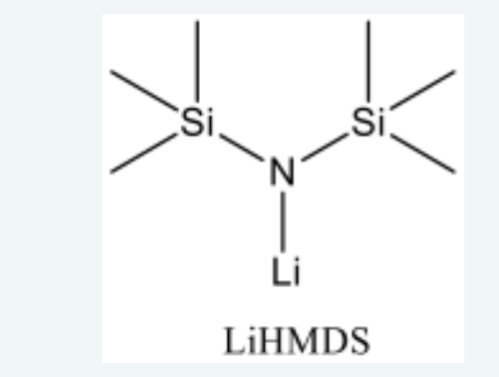
Explain why LiHMDS such a strong base relative to hydroxide ion
This is because LiHMDS’s conjugate base is weak and the bulky trimethylsilyl groups stabilizes the negative charge on nitrogen. This prevents nucleophilic reactions, making LiHMDS a strong, non-nucleophilic base ready to remove protons.
What is the driving force for elimination of water during the reaction to form pentacenequinone?
The formation of additional conjugated double bonds, creating an aromatic system, forming a much more stable product (6,13-pentacenequinone)

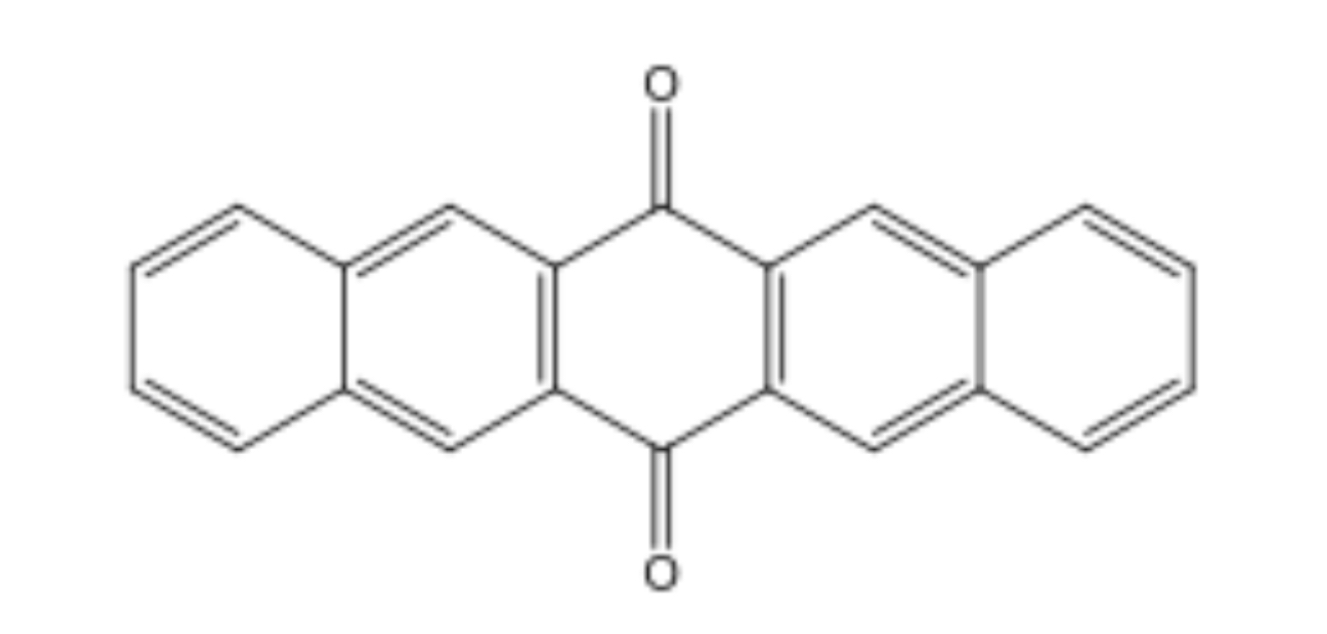
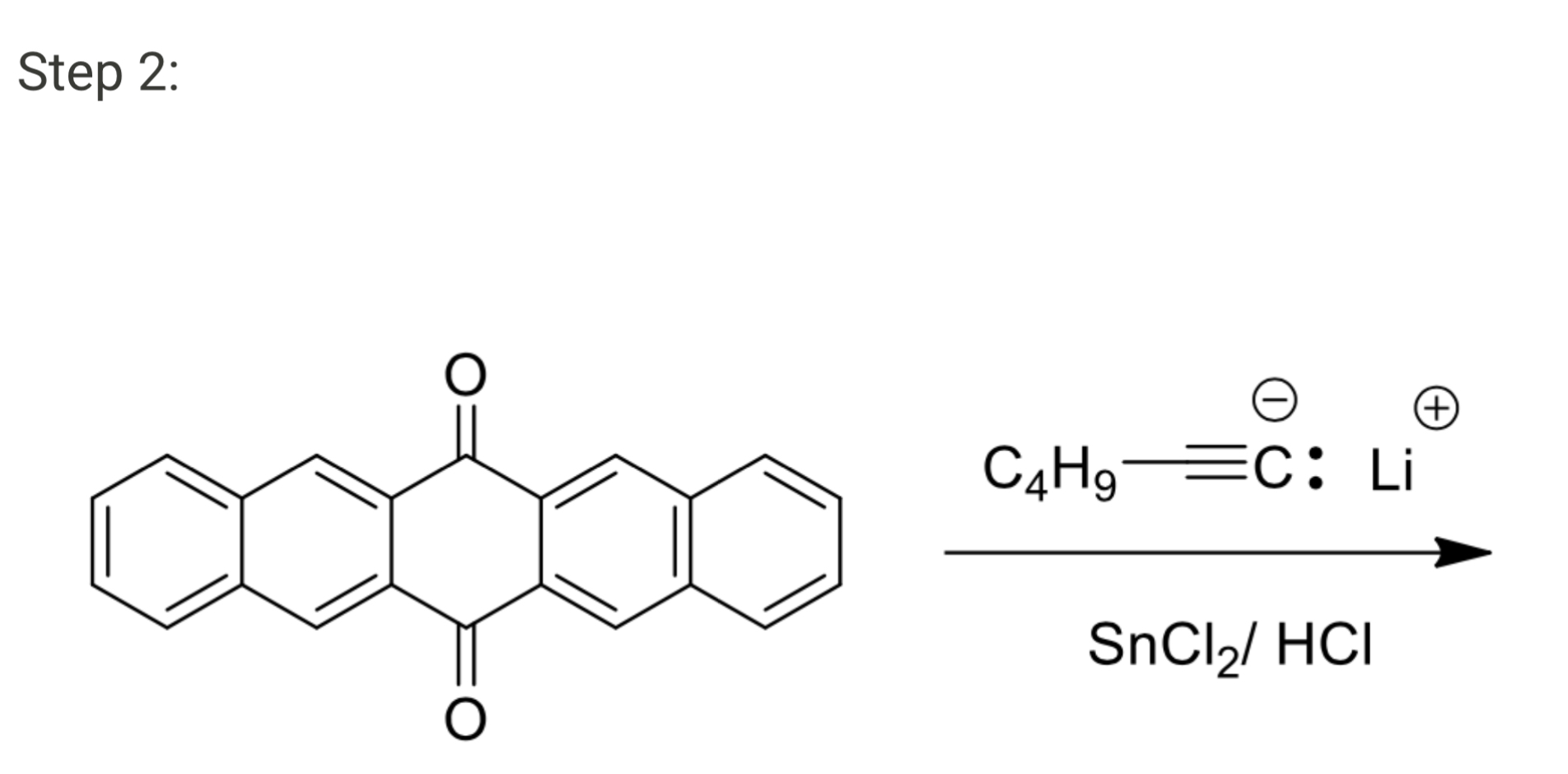
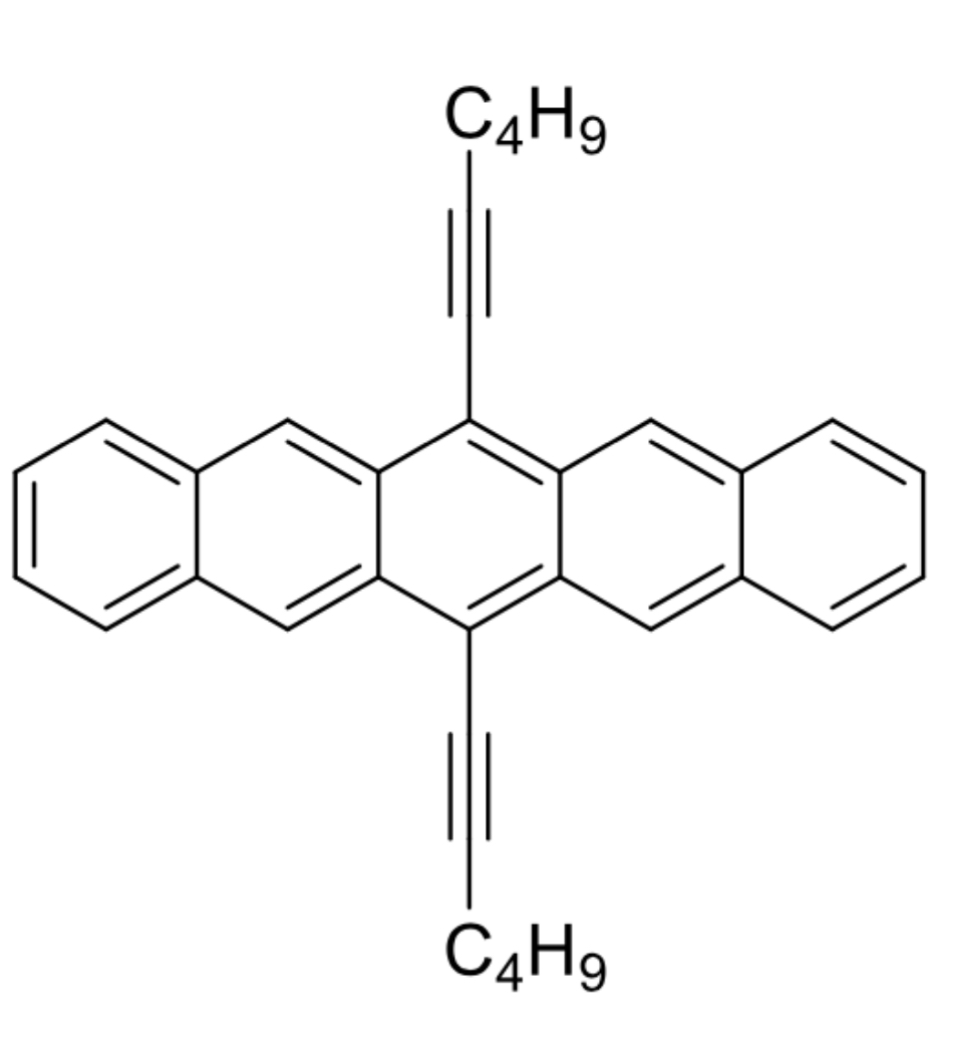
What might happen if the pentacenequinone was not dried completely of methanol and/or any residual water it might have absorbed, before reacting it with hexynyl lithium? What would the result be?
Remaining methanol would react with hexynyl lithium. This is a strong base that would consume the reagent, and form hydrocarbon instead of reacting with pentacenequinone, leading to an incomplete reaction, lowering the yield.
What type of electrons are responsible for the photophysical properties of pentacene?
Pi