Nephritis, Nephrotic Syndrome and Acute Kidney Injury
 Call Kai
 Learn
Learn Practice Test
 Spaced Repetition
 Match
Match Flashcards
 Knowt Play
1/84

There's no tags or description
Looks like no tags are added yet.
Name | Mastery | Learn | Test | Matching | Spaced | Call with Kai | Chat |
|---|
No analytics yet
Send a link to your students to track their progress
85 Terms
What is acute kidney injury (AKI)?
Abrupt decrease in kidney function, resulting in the retention of urea and other nitrogenous waste products
What is prerenal AKI?
Damage before the kidney causes decreased blood flow to the kidneys
What are some causes of prerenal AKI?
hypotension, heart failure, MI, vascular occlusion, sepsis, medication
What medications can cause prerenal AKI?
ACE-I/ARB, anesthetics, NSAIDs, Epinephrine
What is intrarenal (intrinsic) AKI?
Damage to the kidney causing decreased functioning
What are some causes of intrarenal AKI?
acute tubular necrosis, glomerulonephritis, lupus, nephrotoxins, rhabdomyolysis, prolonged hypotension, infections, vascular disease
What medications can cause intrarenal AKI?
penicillin analogues, cephalosporins, sulfonamides, ciprofloxacin, acyclovir, rifampin, phenytoin, interferon, PPI
What is postrenal AKI?
Damage after the kidneys that casues obstruction
What are some causes of postrenal AKI?
renal calculi, tumors, BPH, neurological related retention, phimosis
What are the symptoms of AKI?
Anorexia, N/V, Pruritus, Fatigue, Weakness, and SOB
What are the clinical signs of AKI?
change in volume/mental status, edema, HTN, pericardial friction rub, arrhythmias, rales, decreased urine output
What levels of urine outputs indicate the difference between nonoliguria, oliguira, and anuria?
Nonoliguria: > 500mL
Oliguria: < 500mL
Anuria: < 100mL
What are the critical levels of BUN and Creatinine?
BUN: >100mg (>50 is worrisome)
Creatinine: >4mg/dl
What BUN/Creatinine ratios are consistent with prerenal, renal, and postrenal azotemia?
Prerenal: >20/1
Renal: ~10-20/1
Postrenal: variable ratio
What fractional excretion of Na may be consistent with a prerenal or intrinsic cause AKI?
prerenal: < 1%
Intrinsic: > 3%
When is fractional excretion of urea beneficial?
patients on diuretics; < 35% in prerenal disease
When is GFR calculation less accurate?
extreme muscle mass, unusual diets, elderly patients, DKA, liver disease, medications (flucytosine, ASA, cimetidine, probenecid)
What general lab findings are seen in AKI?
elevated BUN/Cr, urine casts, proteinuria, hematuria, hyperkalemia, hyperphosphatemia, hypocalcemia, metabolic acidosis, and anemia
What are differentiating lab factors to diagnose prerenal AKI?
- BUN > 20:1
- Osmolarity >500
- normal UA
- decreased volume
- Urine Na+ < 20,
- Na+ excretion <1%
What are differentiating lab factors to diagnose intrinsic (renal) AKI?
- BUN < 20:1
- Osmolarity 250-300
- Dark Granular Casts
- Oliguric or Nonoliguric
- 2-4+ proteinuria
- Urine Na+ > 30
- Na+ excretion > 3%
What are differentiating lab factors to diagnose postrenal AKI?
- BUN < 20:1
- Osmolarity > 400
- Hyaline Casts
- Absent
- Urine Na+ < 20
What imaging may be needed for postrenal azotemia?
Ultrasound or possibly CT (non contrast)
How is Prerenal Azotemia managed?
volume restoration +/- inotropes reversal of vascular resistance, close monitoring of BUN/Cr
How is Intrinsic Azotemia managed?
Treat underlying cause
How is Postrenal Azotemia managed?
identify location of obstruction, foley catheter (urethral or bladder) or urology consult (ureter, renal pelvis)
What is contrast nephropathy?
renal tubular epithelial cell toxicity 24-48 hours after exposure to radiographic contrast agents
What are predisposing factors for contrast nephropathy?
diabetes, advanced age, pre existing renal disease, CHF, recent exposure to ACE-1 and NSAIDs
What is the prevention and treatment of contrast nephropathy?
hydration, lower volume contrast, hold metformin +/- acetylcysteine
What is acute tubular necrosis?
renal medullary ischemia
What exogenous toxins most often cause acute tubular necrosis (ATN)?
radiographic contrast agents,* aminoglycosides,* cisplatin, MTX, ethylene glycol, amphotericin B
What labs are seen with acute tubular necrosis?
- BUN/Cr <10-15
- Muddy brown casts
- FEN > 3%
What is the treatment for acute tubular necrosis?
- Treat or remove precipitating cause
- Manage fluids and electrolytes
What is interstitial nephritis?
edema and tubular damage from interstitial inflammation
What is the pathogenesis of Interstitial nephritis?
Cell-mediated immune reaction where T-Lymphocytes cause direct toxicity and release lymphokines
What are the most common causes of interstitial nephritis?
Penicillin, Sulfa or NSAIDs (MC) but can also be infection with CMV or Strept.
What are the symptoms of interstital nephritis?
fever, maculopapular rash, arthralgias
What are the lab findings with interstitial nephritis?
plasma eosinophilia, RBC/WBC casts, proteinuria (NSAID-induced)
What is the management of interstitial nephritis?
self-limiting, short-term dialysis, removal of inciting agent, +/- steroids
What causes focal intrinsic glomerulonephritis?
IgA nephropathy and SLE
What causes diffuse intrinsic glomerulonephritis?
SLE, membranoproliferative, rapidly progressive, postinfectious, vasculitis
What are the symptoms of glomerulonephritis?
hypertension, edema (periorbital and scrotal), oliguria
What laboratory findings are seen in glomerulonephritis?
elevated serum creatinine, hematuria, proteinuria
What is the treatment of glomerulonephritis?
immunosuppressants and supportive care
What are the indications for dialysis?
Acid-Base Disturbance
Electrolytes (hyperkalemia)
Ingested Toxins
Overload (diuretics)
Uremia (AMS, seizure, pericarditis)
What is Nephritic syndrome?
Glomerular disorders characterized by inflammation leading to capillary wall damage of endothelial cell layer and GBM
What are the characteristic findings of nephritic syndrome?
mixed proteinuria < 3.5g/24hrs, hematuria (RBC casts), reduced filtration (oliguria, anuria, azotemia)
What is a classic example of Nephritic syndrome?
post-infectious
What is Nephrotic syndrome?
non-inflammatory damage to the podocytes (flatten) and lose the ability to hold back large molecules like protein
What are the characteristic findings of Nephrotic syndrome?
Albumineria > 3.5g/24hrs), hypoalbuminemia, anasarca, lipiduria (oval fat bodies), hypercoagulation
What is a classic example of Nephrotic syndrome?
Minimal Change Disease
What is IgA Nephropathy (Berger's disease)?
Most common cause of primary glomerulonephritis due to IgA antibody deposition mesangium
What are the risk factors for IgA Nephropathy?
Celiac disease, HIV, MGRS, chronic liver disease (alcoholic cirrhosis)
What is the prominent symptom of IgA Nephropathy?
Gross hematuria +/- protein
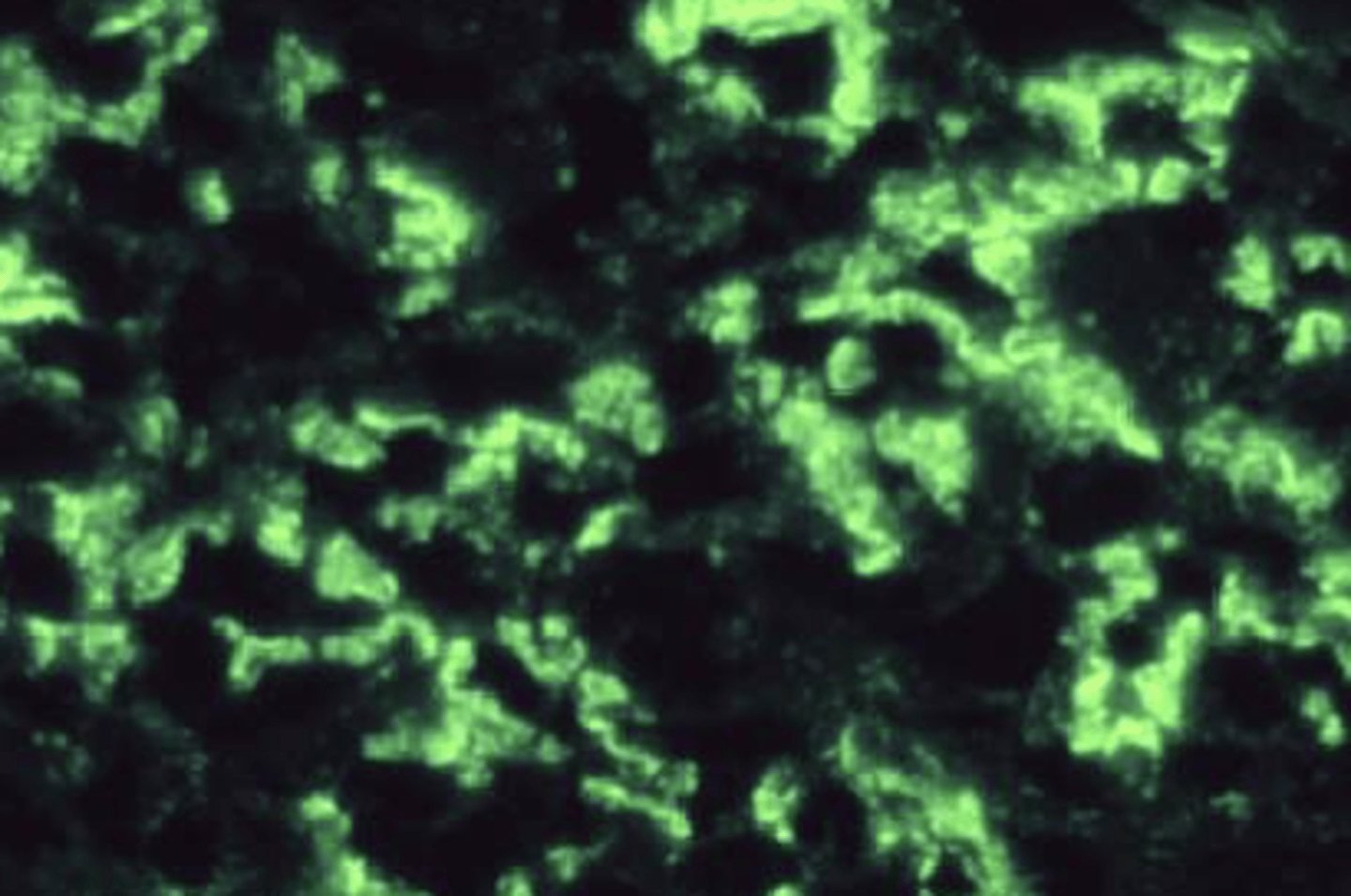
What is the management of IgA Nephropathy?
ACE-I/ARB +/- SGLT2 if proteinuria, treat dyslipidemia, sodium restriction <2g/d, protein restriction, smoking cessation, weight control, excercise
What is post-streptococcal glomerulonephritis?
Nephritic syndrome MC in children 5-12 y/o 2-3 weeks after streptococcal infection (pharyngitis or cellulitis)
What are the symptoms of post-streptococcal GN?
edema, hematuria, HTN, and renal insufficiency (áCr)
What labs are seen in post-streptococcal GN?
Elevated anti-streptolysin O Ab, Positive anti-DNAase B Ab, and Low complement levels (C3, CH50)
What is the treatment of post-streptococcal GN?
penicillin/amoxicillin if infection still present, supportive care, resolution after 3-4 weeks
What is Anti-Glomerular Basement Membrane Antibody (Goodpasture's)?
Condition isolated to the kidneys peaking in 3rd decade for males and 6th-7th decade for females
What are the symptoms of Anti-Glomerular Basement Membrane Antibody (Goodpasture's)?
hematuria, proteinuria (<3.5g/d), hemoptysis, malaise, weight loss, fever, arthralgias
What labs are obtained in Anti-Glomerular Basement Membrane Antibody (Goodpasture's)?
UA, BUN, Cr, Serum anti-GBM, CXR, CT, renal biopsy
What is the treament for Anti-Glomerular Basement Membrane Antibody (Goodpasture's)?
Plasmapheresis with Corticosteroids and cyclophosphamide
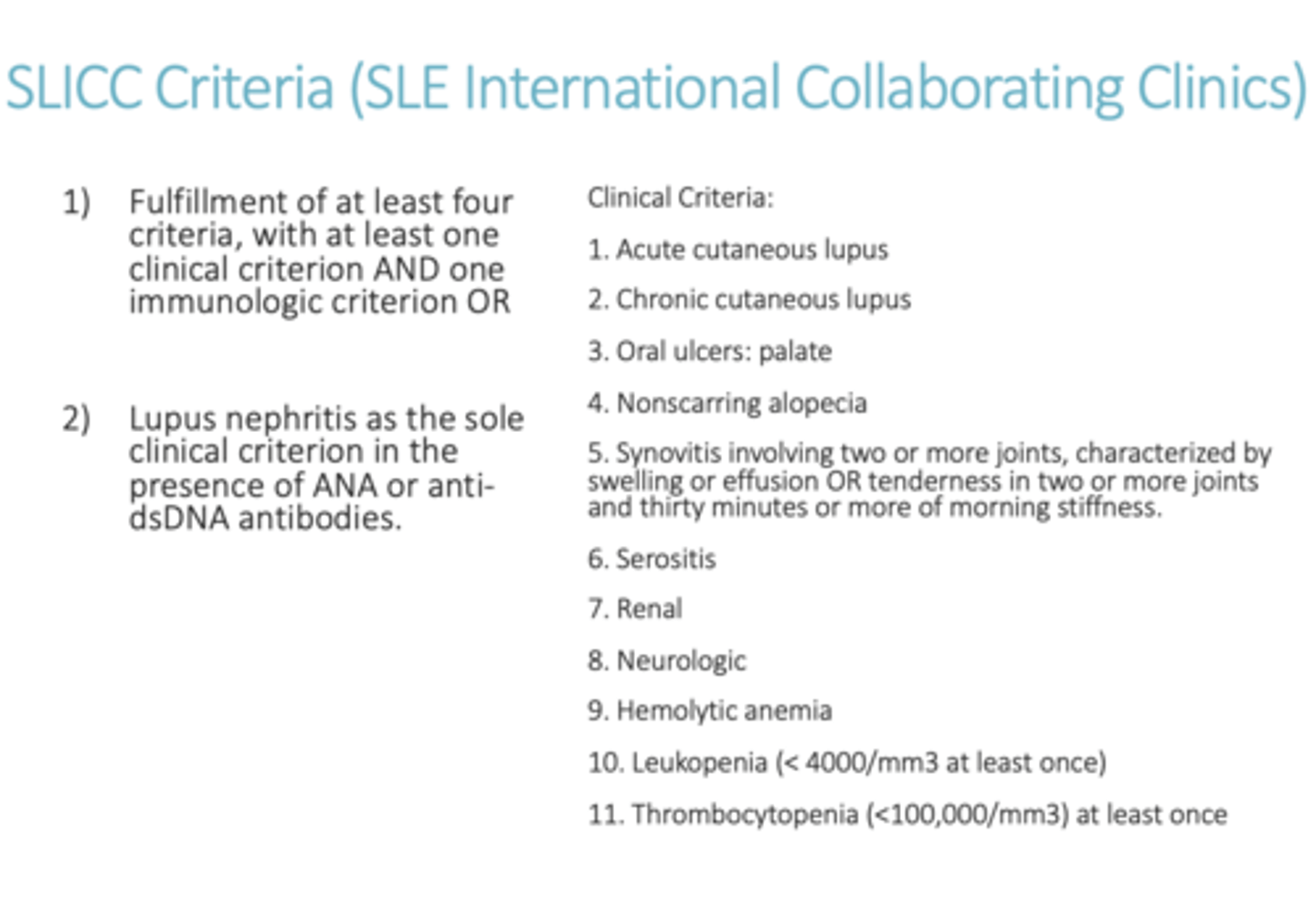
What are the risk factors for Lupus Nephritis?
50% of SLE patients, higher in AA and Hispanic patients
What is the diagnostic criteria for Lupus Nephritis?
Anti-dsDNA complex deposition, Elevated Cr, proteinurea/hematura, confirmed on kidney biopsy
What is the treatment for Lupus Nephritis?
Immunosuppressive therapy
What is ANCA Glomerulonephritis?
Characterized by necrotizing glomerulonephritis with little or no deposition of Immune-complexes or complement
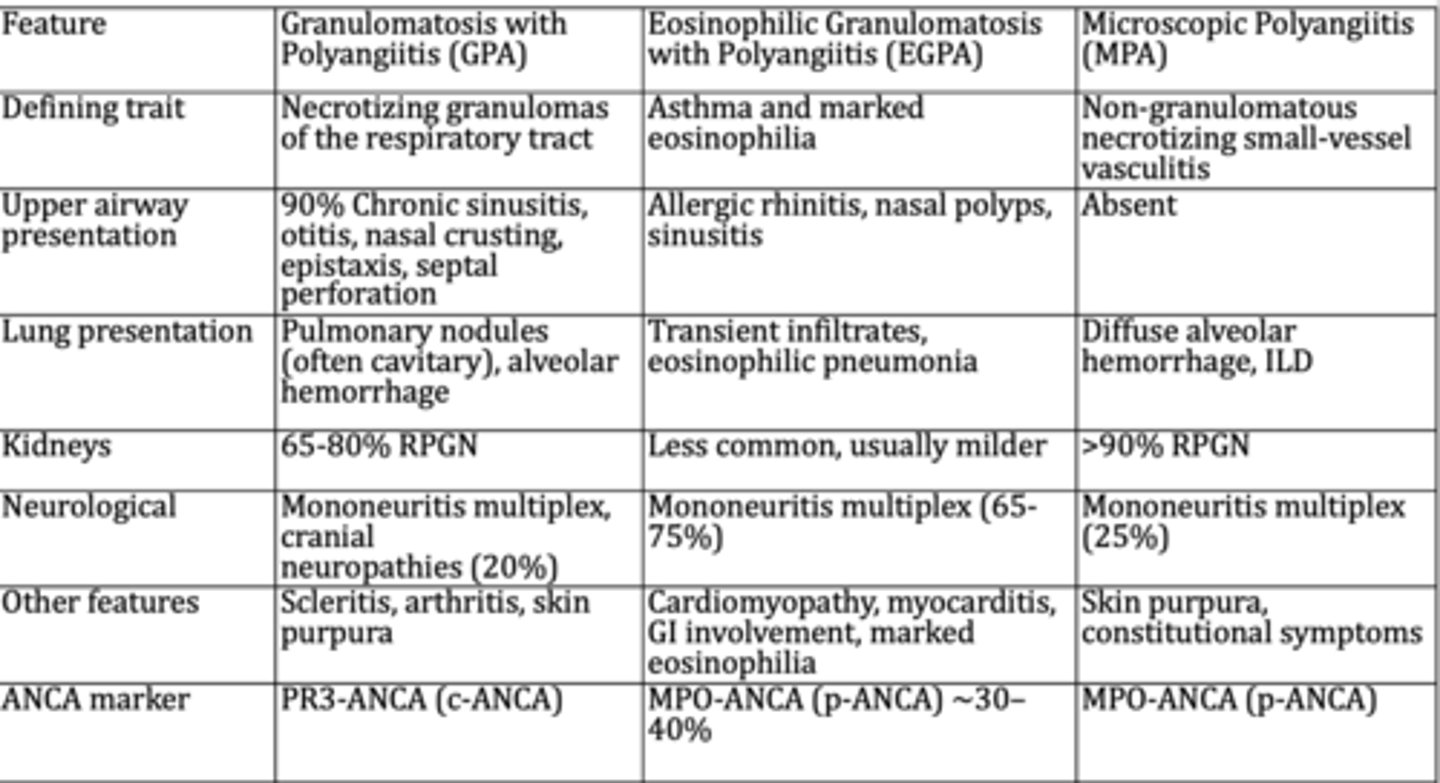
What labs are seen in ANCA Glomerulonephritis?
Proteinuria, ESR/CRP, ANCA markers, kidney biopsy +/- pulmonary findings
What is the treatment for ANCA Glomerulonephritis?
Cyclophosphamide and glucocorticoids, rituximab, plasmapheresis
What is Membranoproliferative GN?
a histologic lesion (not a specific disease) causing thickened GBM AND Increased mesangial and endocapillary cellularity
What are the causes of Membranoproliferative GN?
monoclonal gammopathies, autoimmune/rheum conditions, infections, complement
What are the symptoms of Membranoproliferative GN?
Hematuria, variable proteinuria, elevated Cr
What is the management of Membranoproliferative GN?
treat underlying cause, sodium/potassium restriction, BP control, RAS inhibition, dyslipidemia treatment +/- SGLT2
What is Focal Segmental Glomerulosclerosis?
histologic lesion associated with heroin, anabolic steroids, obesity, HIV, COVID, and prior inflammatory glomerular disease
What are the symptoms of Focal Segmental Glomerulosclerosis?
HTN, AKI, hematuria
What is the treatment of Focal Segmental Glomerulosclerosis?
Immunosuppressive therapy - glucocorticoids +/- tacrolimus with general kidney protective measures
What is the minimal change disease?
Nephrotic syndrome that can be idiopathic or secondary from NSAIDs, malignancies, infections, or allergies
What are the symptoms of minimal change disease?
sudden/severe proteinurea, hypoalbuminemia, microscopic hematuria, hyperlipidemia
What is seen on biopsy with minimal change disease?
Light microscopy shows no changes (EM shows fusion of foot processes)
What is the treatment of minimal change disease?
Corticosteroids
What is membranous nephrotic syndrome?
#1 cause of nephrotic syndrome in adults without DM associated with SLE, malignancies, infections, and BMT
What diagnostic testing is positive in Membranous Nephropathy?
C3, C4 and autoantibodies against a podocyte antigen may be detected (PLA2R)
What is the treatment for Membranous Nephropathy?
Low risk: monitor for 5 years'
Mod-High risk: immunosuppression
What is Diabetic Nephropathy?
Leading cause of ERSD that rarely requires a kidney biopsy
WHat labs are seen with Diabetic Nephropathy?
Micro (30 to 300mg/d) or macro (>300mg/d) albuminuria, decreased eGFR, creatinine ratio < 30
What is the management of Diabetic Nephropathy?
BP control, glycemic control, lifestyle modification, lipid loweirng +/-