Final Exam
 Call Kai
 Learn
Learn Practice Test
 Spaced Repetition
 Match
Match Flashcards
 Knowt Play
1/64

There's no tags or description
Looks like no tags are added yet.
Name | Mastery | Learn | Test | Matching | Spaced | Call with Kai | Chat |
|---|
No analytics yet
Send a link to your students to track their progress
65 Terms
Match each of the following organelles with the correct description:
Nucleus
Endoplasmic reticulum
Lysosomes
Chloroplasts
A. Contains genomic content of the cell
B. Site of photosynthesis
C. Series of membrane-enclosed sacs and interconnected tubes
D. Contain hydrolytic enzymes capable of degrading unwanted cellular debris
1A, 2C, 3D, 4B
Briefly explain how a Scanning Transmission Electron Holography Microscope (STEHM) works and what it is specifically used to see.
The STEHM microscope uses electron beam combined with holography technique. It is used to view very small targets such as atoms, at a magnification of up to 20 million times, giving a much better amplification than light microscopes.
Match each of the following diseases to the correct bacterial family.
Legionnaires
Wound botulism
Impetigo
Septicemic plague
A. Staph aureus
B. Legionella
C. Clostridium botulism
D. Yersina pestis
1B, 2C, 3A, 4D
Identify each of the following microorganism as either Prokaryote or a Eukaryote.
E. coli
Archaeon
Yeast
Amoeba
Prokaryote
Prokaryote
Eukaryote
Eukaryote
Match each of the following terms with the correct description:
Phototroph
Lithotroph
Autotroph
Chemotroph
A. Acquire energy from performed chemicals in the environment
B. Remove electrons from inorganic molecules
C. Utilize photons to generate ATP from ADP
D. Obtain their source of carbon from inorganic molecules
1C, 2B, 3D, 4A
A researcher is looking to solidify an agent for growth media. What polysaccharide substance would he or she use?
A. Peptone
B. Agar
C. Beef abstract
D. Yeast
B. Agar
Place the following viral life cycle steps in order beginning with viral attachment and provide a description of release.
Uncoating
Release
Replication
Attachment
Entry
New infection
1- Attachment: virus attaches to a plasma membrane protein on the host surface
2- Entry: virus enters the cell by endocytosis or membrane fusion
3- Uncoating: viral capsid is broken down and genomic material released
4- Replication: cell machinery is used to replicate viral genome
5- Release: new virions are released from host cell either through budding off the cell or by lysing the cell
6- New infection: the new viruses finds another host/cells to infect
Which type of bacteria appears purple/violet in color after staining?
A. Neither Gram-positive nor Gram-negative
B. Gram-positive
C. Both Gram-positive and Gram-negative
D. Gram-negative
B. Gram-positive
Left untreated, three percent of cases of Streptococcal pharyngitis will progress to which of the following?
A. Rheumatic fever
B. Laryngitis
C. Klebsiella pneumonia
D. Conjunctivitis
A. Rheumatic fever
Describe two difference between DNA and RNA.
DNA is double stranded while RNA is single stranded.
DNA contains deoxyribose while RNA contains ribose as sugar.
True or False. If the statement is false, change it to make it true.
When grown on Blood Agar Plates (BAP), microbes capable of alpha hemolysis present as tan/white color colonies due to incomplete (partial) lysis of red blood cells.
False, they present in a greenish-brown color instead of tan/white.
Each of the following statements about respiration is true, except:
A. It does not produce ATP
B. It is an anaerobic process
C. It produces NADH and FADH2 in abundance
D. The central cycle is called the Tricarboxylic Acid Cycle
A. It does not produce ATP
Describe the one main difference between lytic and temperate phages.
Lytic phages replicate themselves until they lyse and kill the cell and are released. Temperate phages generally exist in a non-replicative state inserted into the host’s genome, not killing the cell.
Bacteria that have a rod-like morphology are referred to as _________.
Bacillus
You want to observe the movement of microorganisms that are present in a sample of check cells obtained on a patient. Briefly explain the technique that you would use and how it is performed.
Collect cheek cells by scraping the inside of the patient’s mouth with a collection swab.
Create a liquid culture with the sample collected, add a drop onto the slide, and cover with a glass coverslip
Observe under the microscope.
A wet mount is used instead of heat fixing the samples, allowing specimen to be alive and movement to be observed.
What coronavirus-associated infection gave rise to quarantining and travel restriction in 2012?
A. SARS
B. RSV
C. COVID-19
D. ARDS
E. MERS
E. MERS
Match each type of agar plate to the corresponding general characteristics of each.
Mannitol Salt Agar
MacConkey Agar
LB Agar
Trypticase Soy Agar
A. Also known as lysogeny broth, it is a multi-purpose media capable of growing a wide variety of microorganisms.
B. A multi-purpose media capable of growing a wide variety of microorganisms.
C. This Agar is selective for Gram-positive bacteria and can differentiate members of the Staphylococci family.
D. Pale red in color and is both selective and differential media. The presence of crystal violet and bile salts in its formulation restricts Gram-positive bacterial growth. As such, only Gram-negative microbes can be grown.
C
D
A
B
True of False, If the statement is false, change it to make it true.
Tuberculosis (TB) cannot be spread through shaking someone’s hand, sharing a drink, or kissing.
True. It is spread through airborne respiratory droplets, and must be inhaled.
True of False. If the statement is false, change it to make it true.
Glucose is an example of disaccharide.
False. It is an example of a monosaccharide.
You are working with a patient who claims a friend “got the COVID-19 infection from the vaccine”. Explain why the mRNA vaccines used to prevent the COVID-19 infection cannot transmit the actual infection.
The mRNA encodes for a viral spike protein and not for other viral proteins necessary to assemble a whole new virion. Therefore, the person could not have got an infection from it.
Match each type of microscopy with the correct description.
Bright Field Microscope
Fluorescence Microscope
Phase Contrast Microscope
Electron Microscope
Confocal Microscope
Dark Field Microscope
A. Use of beams of electrons (rather than light) to increase its resolution capacity to less than 1nm - that’s 200x.
B. The simplest form of light, or optical, microscopes. Light, most often emitted from a standard halogen bulb, enters the microscope from the base (bottom) and is reflected via mirrors towards the sample.
C. Combines the usefulness of fluorescence microscopy with the ability to visualize cells in 3-D.
D. Incoming light is in the form of the ultraviolet (UV) spectrum.
E. The microscope reflects light off the specimen at an angle rather than light passing through the specimen.
F. Can provide detailed images of love cells without staining.
1B, 2D, 3F, 4A, 5C, 6E
Which of the following reactions is an example of an oxidoreductase?
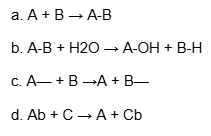
C
A. ligase, B. Hydrolase, D. Transferase
After a microbiologist obtains a quadrant streak sample, what is the next action taken in the incubation process to obtain growth?
Plate should be covered back with lid, plate should be inverted to prevent contamination, plate should be placed in the incubator at 37C and allow to grow overnight.
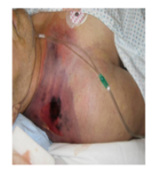
Identify the following disease based upon the physical manifestation:
A. Gas gangrene
B. Tetanus
C. Hansen’s disease
D. Anthrax
A. Gas gangrene
Which of the following is/are true of Animalia? (Select all that apply)
A. They possess the ability to move
B. Humans are example
C. They can be unicellular or multicellular
D. They are autotrophic
A. They possess the ability to move
B. Humans are example
Match each of the following viruses with the correct description:
Polio (Poliomyelitis)
Shingles (Herpes zoster)
Smallpox (Variola virus)
Chickenpox (Varicella-zoster)
A. First infectious disease eradicated in 1977 through global vaccination.
B. Target the CNS (central nervous system), temporary or permanent paralysis
C. Viral reactivation of the dormant VZV virus
D. Characterized by blisters covering the entire body
1B, 2C, 3A, 4D
A patient presents to the emergency department with severe abdominal pain after eating a grab-and-go lunch from the local corner store. The physician suspects foodborne illness to be the cause of discomfort. To treat the patient, it is essential to know the organism responsible for the illness. He learns that the organism is identified as a Gram-negative bacillus. He then orders EMB agar because he suspects of E. coli to be the cause. If his suspicion is correct, what observation will likely be seen on the agar plate.
Green-metallic colonies will grown on the plate, which is characteristic of pathogenic E. coli.
True or False. If the statement is false, change it to make it true.
In addition to being a rich source of carbon and energy, amino acids are a rich source of nitrogen and sulfur.
True
Giemsa staining is used to detect each of the following, except:
A. Chlamydia trachomatis
B. Malaria
C. Neisseria Gonorrhea
D. Histoplasma
C. Neisseria Gonorrhea
What STD is caused by Gram-negative, non-motile, rod-shaped bacteria that cause infertility and pelvic inflammatory disease?
A. Syphilis
B. Leprosy
D. Chlamydia
E. Gonorrhea
D. Chlamydia
Which of the following are considered Protista? Select all that apply.
A. Bacteria
B. Amoeba
C. Algae
D. Yeast
B. Amoeba
C. Algae
True or False: A defining characteristic of a Protista if the inability of colonies to form tissue layers.
True
The function of the ribosome is (select all that apply):
A. To produce energy (ATP)
B. Lipid synthesis
C. Protein synthesis
D. Waste disposal via hydrolytic enzymes
C. Protein synthesis
Briefly explain how a Scanning Electron Microscope (SEM) forms an image of subcellular organelles, substrates, and viral particles.
The electron beam reflects off the surface of the specimen forming a 3D image. The specimen is coated with gold or other reflective metallic material, which help enhance electron reflection.
Match each of the following disease to the correct bacteria family
Scalded skin syndrome
Bubonic plague
Ophthalmia neonatorum
Legionnaires
A. Yersina Pestis
B. Staphylococcus
C. Legionella
D. Staph aureus
1D, 2A, 3B, 4C
A researcher is looking to determine the source of contamination of a patient that presented with symptoms of food poisoning. To best determine between E. coli or Salmonella as the cause, what type of agar will be used to isolate the growth of each?
Differential media such as MacConkey agar.
The Gram stain differentiates between bacteria based on the composition of their _____________.
Cell wall
True or False. If the statement is false, change it to make it true.
When grown on Blood Agar Plates (BAP), microbes capable of alpha hemolysis present as greenish-brown color colonies due to incomplete (partial) lysis of red blood cells.
True
Each of the following statements about glycolysis is true, except:
A. Reactants include glucose, NAD, and ATP
B. 2 molecules of ATP are required as reactants
C. The net gain is 4 ATP
D. Products include pyruvate, NADH, ATP, and H+
C. The net gain is 4 ATP
Bacteria that have a curved rod morphology are referred to as ______.
Vibrio
What coronavirus-associated infection gave rise to quarantining and travel restrictions in 2003?
A. SARS
B. RSV
C. COVID-19
D. ARDS
E. MERS
A. SARS
True or False: Leprosy can move through the blood to other areas including the brain, spine, and kidneys.
False: This statement describes TB rather than leprosy.
TB is primarily considered a respiratory infection, but once it fully colonizes the lungs, TB can move through the blood to other areas including the brain, spine, and kidneys.
True or False: Proteins can function to catalyze biochemical processes and play a role in structure, but they cannot enable movement.
False, they can enable movement as well, for example as flagella and cilia.
Which of the following reactions is an example of a hydrolase?
a. A + B → A-B
b. A-B + H2O → A-OH + B-H
c. A— + B →A + B—
d. Ab + C → A + Cb
b. A-B + H2O → A-OH + B-H
Which region in a four phase dilutional streak contains the highest concentration of a microbial organism? Describe the technique that is used in pulling the sample from one phase to the next.
The first phase has the highest concentration. To pull sample from one phase to another, the handler should enter the previous phase with a new sterile loop only once, and then streak the new phase. The process is repeated for each new phase (1→4).
Each of the following statements about measles, mumps, and rubella is true, except:
A. Infect the CNS (central nervous system), leading to temporary or permanent paralysis.
B. Spread via airborne particles while coughing, sneezing, etc.
C. Caused by linear, single-stranded enveloped RNA virus
D. Immunity provided by inoculation with a vaccine
A. Infect the CNS (central nervous system), leading to temporary or permanent paralysis.
There has been an outbreak of Staph Aureus within a local cleaning business. The employer Is trying to determine which of two companies has not been using sterile precautions when cleaning. To help determine who is responsible for unsanitary practices, a researcher streaks the isolated bacterial samples from each company onto MSA agar. After incubating the samples overnight at 37°C., briefly explain how he will interpret the result of his samples.
Staph aureus plate will change plate color from red to yellow, due to this bacteria fermenting mannitol. Non-pathogenic plate will not change agar color, remaining as colorless colonies on top of red agar.
True or False: The metabolism of a lipid-derived carbon atom will yield more ATP than a molecule of glucose.
True
What STD is caused by Gram-negative, diplococci, fastidious bacteria that may result in cardiac and neurological complications?
Gonorrhea
Match each of the following organelles with the correct description.
Ribosomes
nucleus
cytoplasm
lysosomes
A. constitutes the open volume
B. contains genomic content
C. function in protein synthesis
D. contains hydrolytic enzymes
1c, 2b, 3a, 4d
Match each of the following terms with the correct description.
1. Organotroph
2. phototroph
3. heterotroph
4. lithotroph
A. Utilize photons of light to generate ATP from ADP
B. obtains their source of carbs from organic molecules
C. remove electrons from organisms....
D. remove electrons from inorganic molecules
1C, 2A, 3B, 4D
List the 4 nitrogen bases in RNA and describe how they pair with one another
Adenine, Guanine, Cytosine and Uracil.
Adenine pairs with Uracil
Guanine pairs to Cytosine
True or False. If the statement is false, change it to make it true.
When grown on Blood Agar Plates (BAP), microbes capable of delta hemolysis designate the absence or lack of hemolytic activity and the resulting colonies are often white/tan in color growing on the red background of the unaffected BAP present as greenish-brown color colonies due to incomplete (partial) lysis of red blood cells
False, gamma hemolysis instead of delta hemolysis
Describe TWO main characteristics of LYTIC bacteriophage replication
It replicates in the host until cell ruptures.
It uses host machinery to replicate all viral proteins necessary for the assembly of a new virion
Briefly explain why a researcher would use the simple stain technique. How is it preformed and what does it identify
It is used to view size, shape, and arrangement of cells. A single basic dye, such as crystal violet, is applied to a heat-fixed sample. The simple stain is positively charged and it will bind to negatively charged structures in the cell.
True or false: if false, make it true
Lipids are primarily composed of hydrophilic hydrocarbons
False, it is composed of hydrophobic hydrocarbons
Would one of the SARS-coV-2 vaccines give immunity against SARS or MERS infection? Explain
No, because vaccines are tailored to specific spike proteins in each virus, not providing enough immunity to extend to other strains of the virus.
True or false : if false, make true
Polysaccharides are easily transported directly across the plasma membrane
False, polysaccharides are too large to be transported across the membrane.
each of the following is a sample of a stain, EXCEPT:
A. Crystal violet
B. Safranin
C. Eosin
D. Methylene blue
C. Eosin
Describe the primary distinction between prokaryotic and eukaryotic cells
Eukaryotes have their genomic material enclosed by the nucleus, while prokaryotes have their genomic material free floating on the cytoplasm.
Match each type of agar plate to the corresponding general characteristics of each.
1. Also known as lysogen broth, it is a multi-purpose media capable of growing a wide variety of microorganisms.
2. Red in color and is both a selective and differential media. This agar is selective for gram-positive bacteria and can differentiate members of the staphylococci family.
3. Pale red in color and is both selective and differential media. The presence of crystal violet and bile salts in its formulation restricts gram-positive bacterial growth. As such, only gram-negative microbes can be grown.
4. Red in color and is enriched, selective, and differential media. It contains the anti microbial agents coliseum and nalidixic acid, it suppresses the growth of gram-negative bacteria and is, therefore, used for isolation of gram-positive microbes.
A. LB agar
B. Mannitol salt agar
C. MacConkey agar
D. Columbia CNA agar
1A, 2b, 3c, 4d
True or false: if the statement is false change it to make it true.
Tuberculosis primarily affects the skin, nerves, upper respiratory tract, and eyes of infected individuals.
False
Leprosy primarily affects the skin, nerves, upper respiratory tract, and eyes of infected individuals.
Common methods used to tightly adhere cells to prevent sample loss during the staining of an organism include each of the following except...
A. Heat
B. Ethanol
C. Methanol
D. Peroxide
D. Peroxide
What STD is caused by a gram negative spirochete that can lead to paralysis, blindness, and dementia?
Syphilis
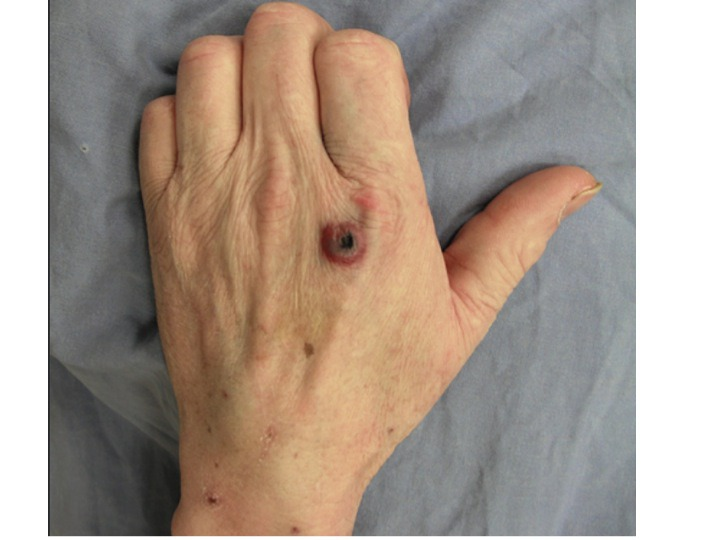
Identify the following disease based upon the physical manifestation
Anthrax