A&P 1 Test #1 (UMKC)
 Call Kai
 Learn
Learn Practice Test
 Spaced Repetition
 Match
Match Flashcards
 Knowt Play
1/236

There's no tags or description
Looks like no tags are added yet.
Name | Mastery | Learn | Test | Matching | Spaced | Call with Kai | Chat |
|---|
No analytics yet
Send a link to your students to track their progress
237 Terms
Which of the following statements regarding homeostasis is false?
1) Sweating is an example of homeostasis.
2) In order to maintain homeostasis, a person's body temperature must remain precisely at its set point.
3) Homeostasis is defined as the existence and maintenance of a relatively constant environment within the body.
4) For a cell to function normally, its variables must remain within a normal range.
3) In order to maintain homeostasis, a person's body temperature must remain precisely at its set point.
Homeostasis is defined as
the maintenance of a relatively constant environment within the body.
In the first step of negative feedback, the ____ monitors the value of a variable.
receptor
**blood pressure is monitored in the walls of the vessel this way
Information about the variable is sent to the _____ which compares the value of the variable to the set point.
control center
**in the case of blood pressure regulation, nerves send information to the part of the brain, regulating blood pressure
If a response is necessary, a/an _____ responds, causing an action that maintains homeostasis.
effector
**if blood pressure is outside of the normal range of the set point, nerves will send signals to the heart regarding an appropriate response
Homeostasis involves maintaining body functions near a/an ______, which is the ideal normal value for that component.
set point
**this range can vary slightly and still maintain homeostasis
In the homeostatic feedback loop, the first step involves the ____ that monitors the change in a ____ (or variable).
receptor, stimulus
**blood pressure is monitored in the walls of the vessel this way
Information about the variable is sent to the ______, which compares the value of the variable to the ______
control center, set point
****in the case of blood pressure regulation, nerves send information to the part of the brain, regulating blood pressure
If a response is necessary, a/an ___ responds, causing an action that maintains homeostasis.
effector
**if blood pressure is outside of the normal range of the set point, nerves will send signals to the heart regarding an appropriate response
Homeostasis involves ____ body functions near a/an set point, which is the ideal normal value for that component
maintaining
**this range can vary slightly and still maintain homeostasis
A researcher discovered a new hormone that raises blood calcium levels. According to the principles of negative feedback, this hormone would be secreted when
blood calcium levels decrease
Which of the following statements regarding negative feedback is false?
1) One example of negative feedback is the control of blood pressure within a normal range.
2) Negative feedback means that any deviation from the set point is further amplified to maintain homeostasis.
3) Three components of negative feedback mechanisms are: receptor, control center, and an effector.
4) Most systems of the body are regulated by negative-feedback mechanisms.
2) Negative feedback means that any deviation from the set point is further amplified to maintain homeostasis.
Put the following negative feedback events in the correct order.
- The effector produces a response that maintains homeostasis.
- Information about the variable is sent to the control center.
- A receptor monitors a variable.
- The control center evaluates the value of the variable compared to the set point.
- If necessary, the control center causes an effector to respond.
1) A receptor monitors a variable.
2) Information about the variable is sent to the control center.
3) The control center evaluates the value of the variable compared to the set point.
4) If necessary, the control center causes an effector to respond.
5) The effector produces a response that maintains homeostasis.
A blood clot stimulating even more blood clotting is an example of __________.
positive feedback
Which of the following statements regarding positive feedback is not correct?
1) Positive feedback is rare in healthy individuals.
2) If blood pressure decreases and negative feedback is not able to maintain homeostasis, positive feedback will cause blood pressure to increase.
3) Childbirth is an example of positive feedback.
4) Positive implies that when a value deviates outside of the norm, the response causes the deviation to become greater.
2) If blood pressure decreases and negative feedback is not able to maintain homeostasis, positive feedback will cause blood pressure to increase.
The change in the shape of tissues or organs is called __________.
morphogenesis
Anatomy
scientific discipline that investigates the body's structure
Physiology
scientific investigation of the processes or functions of living things
chemical level of organization
interaction of atoms
cell level of organization
structural and functional unit of life
tissue level of organization
group of similar cells and the materials (extra cellular matrix, ECM) surrounding them
ex- smooth muscle cell
organ level of organization
one or more tissues functioning together
ex- urinary bladder
organ system level
group of organs functioning together
ex- urinary bladder, ureter, kidneys
organism level of organization
any living thing (for us, human A&P, a human being)
structure-function relationship
function determines structure
ex- if you exercise a lot, you are going to have muscle. the muscles have form because they are needed for exercising
Systems-
Consists of related organs that have a common function
**The organs that make up a system will have a structure compatible with their common function
external environment
everything outside an organization's boundaries that might affect it
internal environment
the events and trends inside an organization that affect management, employees, and organizational culture
microbiome
the microorganisms in the body or parts of the body
ex- gut microbiome
Organization
condition in which there are specific relationships and functions
Metabolism
all chemical reactions of the body
Responsiveness
ability to sense changes and adjust
Growth
increase in size and/or number of cells
Development
changes in an organism over time (usually embryonic period)
development can be further divided into two categories, what are these?
Differentiation
Morphogensis
Differentiation
change from general to specific
process in which cells become specialized in structure and function
Morphogenesis
change in shape of tissues, organs
The process by which an organism takes shape and the differentiated cells occupy their appropriate locations.
Reproduction
new cells or new organisms
Homeostasis
The process through which a nearly stable internal environment is maintained in the body* so that cellular functions can proceed at maximum efficiency.
*independent of the external environment
where do cells live and what do they contain?
water
Claude Bernard (1813-1878)
Theory of homeostasis
Walter Bradford Cannon (1871-1945)
Theory of fight or flight
Set point
the ideal normal value of a variable.
Values of variables fluctuate around the ___ to establish a ___ of values.
set point, normal range
What is the set point for body temperature?
98.6
How does the set point work and what determines the set point?
if we are too hot, we sweat to reset our temp
if we are too cold, we attempt to warm ourself
can our control system fail?
yes, malignant hypothermia is an example of when the control system fails
Homeostasis refers to....
•Relative stability of internal milieu....
-....as opposed to external environment
•Dynamic process, not a static one
-Physiological variable fluctuates, it does not remain constant
-'Balance' does not mean unchanging
what are the two types of feedback systems?
negative and positive
Receptor
monitors the value of some variable
Control center
establishes the set point
Effector
can change the value of the variable
Stimulus
deviation from the set point; detected by the receptor
Response
produced by the effector
Negative Feedback
a mechanism of response in which a stimulus initiates reactions that reduce the stimulus
When something happens that changed the direction of a physiological variable
- if the physiological variable is increasing, negative feedback is going to bring it down
- if it is going down, negative feedback is going to bring it up
Positive Feedback
Feedback that tends to magnify a process or increase its output.
Maintains/reinforces variable
- if increasing, it will continue increasing
- if decreasing, it will continue to decrease
example of positive feedback
Examples of normal positive feedback: childbirth and coagulation.
IN THESE CASES THE POSITIVE FEEDBACK IS ALWAYS FOLLOWED BY A NEGATIVE FEEDBACK
example of harmful positive feedback
after hemorrhage, blood pressure drops, but the heart rate increases (more bleeding, instead of stopping bleeding), and eventually and the heart's ability to pump blood decreases. This is a condition know as shock.
example of negative feedback
blood pressure increases
increase is detected by receptors in the blood vessels
control center in the brain that regulates heart rate responds
the heart rate decreases
a decrease in blood pressure is caused by a decrease in heart rate
blood pressure is then maintained by homeostasis
An atom has an atomic number of 19 and a mass number of 39. This atom will have __________.
20 neutrons
Atomic number
the number of protons in the nucleus of an atom
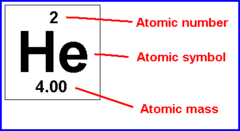
Mass number
the sum of the number of neutrons and protons in an atomic nucleus

Isotope
each of two or more forms of the same element that contain equal numbers of protons but different numbers of neutrons in their nuclei
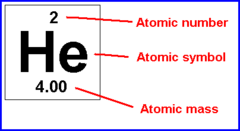
Atomic mass
The average mass of all the isotopes of an element
Mole
the SI base unit used to measure the amount of a substance
A certain quantity of atoms; Avogadro's number
Isotopes of the same element have
the same atomic number but differ in their mass numbers.
True or False: Covalent bonds are formed when two or more atoms share protons.
False
True or False: A nonpolar covalent bond means that electrons are shared equally between two atoms.
True
True or False: A polar covalent bond means that one nucleus is attracting the electrons more than the other.
True
True or False: A double covalent bond is the result of two atoms sharing two electrons.
False
True or False: A single covalent bond means that two atoms are sharing a pair of electrons.
True
In a covalent bond, the bond can be either polar or ___
non polar
Polarity deals with the ___ of electrons between the atoms.
sharing
In a polar covalent bond, each atom can have a slight ____
charge
These charges dictate how each atom will share the ___
electrons
Nonpolar bonds means there is equal sharing of electrons; polar bonds have ____ sharing.
unequal
True or False: Water molecules are held to one another by hydrogen bonds.
True
True or False: When a hydrogen bond forms, the molecules transfer electrons.
False
True or False: Hydrogen bonds are useful in determining the shape of complex molecules.
True
True or False: Hydrogen bonds are the result of nonpolar covalently bonded molecules interacting with the positively charged hydrogen end of another molecule.
False
True of False: During the formation of water, the hydrogen atom attracts the electrons more strongly than the oxygen atom.
False
The ability of one substance to dissolve in another is called ________; when ionic compounds separate in water, it is called __________.
solubility, dissociation
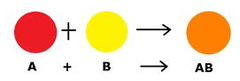
Synthesis
A new product is chemically created from two or more reactants.
Decomposition
A larger reactant is chemically broken down into two or more products.

Reversible
The reaction can proceed from product to reactants or reactants to product.

Equilibrium
The amount of products relative to the amount of reactants remains constant.
Reactions that use water to split molecules apart are called _______ reactions.
hydrolysis
In the reversible reaction, CO2 + H2O ↔ H2CO3 ↔ H+ + HCO3-, a decrease in respiration rate will increase the concentration of CO2 in the blood. What will this do to the amount of H+ in the blood?
H+ will increase.
The presence of water in our bodies allows us to...
1) cool the body with sweat.
2) maintain a fairly constant body temperature.
3) provide an environment for chemical reactions.
4) keep tissues moist and reduce friction.
Due to water's ____, it is capable of dissolving a great number of substances.
polarity
A ____ contains a dissolved substance called a ____
solution, solute
In a mixture of salt water, __ is the solute, __ is the solvent, and ___ is the solution.
salt, water, salt water
When salt is added to water, the ____ poles of the water molecules are attracted to the ____ sodium ions, and the _____ poles of the water molecule are attracted to the ____ chlorine ions.
negative, positive, positive, negative
The result is that the sodium and chorine ions ____ in water.
disaccociate
Solution A has a pH of 10 and Solution B has a pH of 2. Which of the following statements about these solutions is true?
1) Solution A is acidic.
2) Solution B is basic.
3) Solution A and Solution B are both basic.
4) Solution B has a higher hydrogen ion concentration than Solution A.
5) Solution A has a higher hydrogen ion concentration than Solution B.
4) Solution B has a higher hydrogen ion concentration than Solution A.
Chemicals that prevent large changes in pH values when either acids or bases are added are called __________.
buffers
A buffer will
resist drastic changes in the pH of the solutions.
Each element has a unique number of ______ within the nucleus of an atom of that element.
protons
True or false? Synthesis reactions are also called catabolic reactions.
False
In an oxidation-reduction reaction, ______ is/are transferred between molecules.
electrons