PEDS | health assessment of pediatric client
 Call Kai
 Learn
Learn Practice Test
 Spaced Repetition
 Match
Match Flashcards
 Knowt Play
1/30

There's no tags or description
Looks like no tags are added yet.
Name | Mastery | Learn | Test | Matching | Spaced | Call with Kai | Chat |
|---|
No analytics yet
Send a link to your students to track their progress
31 Terms
What should the general approach for a pediatric health assessment be?
- a more flexible approach is needed, often using a playful and engaging method to gain cooperation from the child.
- the nurse should adjust the approach depending on the child's developmental stage, using techniques like distraction, calming voices, or play.
- the assessment may be shortened or divided into smaller segments to prevent stress.

How should a nurse communicate with the pediatric client?
communication with pediatric clients is unique because nurses must recognize and develop skills to engage both the client and their parents in the conversation.
-> 3 party communication model: nurse, pediatric client, and family

What are some strategies for therapeutic communication with pediatric client?
- eye level + eye contact
- use noticing statements by recognizing an interest (ex. a toy/stuffed animal or a character on a shirt)
- use age-appropriate language (no medical jargon)
- interact with the client in a calm and unrushed manner
- be positive and incorporate play or fun (ex. listening to a stuffed animal's heart)

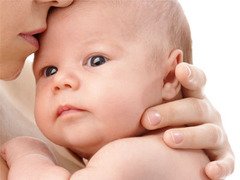
What are developmental milestones that impact communication from birth to 6 months?
cry, coo, calm, smiles, and sounds:
- reassured when talked to or held
- smiles when sees parents or is smiled at or spoken to
- attempts to get attention by smiling or making sounds
- laughs
- cries to communicate needs
- begins to coo or make other sounds
- responds to sounds
What are developmental milestones that impact communication at 12 months?
MEMORY TRICK: baby noah is in room alone → calls for mama and dada → cries → mom comes in and says his name → responds to name + smiles → reaches out to get picked up → happy → mom plays peekaboo → puts noah down again → noah waves bye
- face expresses emotions (happy, angry, surprised)
- responds to name
- looks for or cries when parents leave
- engages in games such as peekaboo and pattycake
- uses movement to express concerns (reaches out to be picked up)
- waves goodbye
- says parents' specialized name
- recognizes "No"

What are developmental milestones that impact communication at 18 months?
"copy that" (follows directions + copies other kids), clap, cuddles:
- mimics other children
- shows objects they like
- show excitement (claps)
- affection (hugs, cuddles, kisses)
- says more than three words besides parents' specialized names
- follows directions
- asks for items by pointing
- follows one-step directions

What are developmental milestones that impact communication at 24 months?
MEMORY TRICK: logan + noticing and recognizing
- notices when others are upset or sad
- notices others' facial expressions to react to events
- recognizes items when named in a book by pointing
- puts at least two words together as a sentence
- gestures more than pointing and waving

What are developmental milestones that impact communication at 36 months?
MEMORY TRICK: aria
- plays near or with other children
- follows simple instructions (will pick up toys when told it is time to clean up)
- vocabulary is about 50 words
- include an action using two or more words ("We go.")
- engages in conversation of at least two exchanges
- asks questions (who, what, where, why)
- conversation understood most of the time

What are developmental milestones that impact communication at 4 years old?
MEMORY TRICK: baby noah is at school → plays with other kids → roleplays, sings, and tells stories → other kid gets hurt → noah comforts him and helps him → noah's friend gets into danger but noah stays away → noah tells his mom what happened
- engages in imaginative play
- wants to play with other children
- recognizes when others are upset and wants to comfort them
- stays away from danger (running into street)
- wants to be a helper
- acts based on location (restaurant, school, park)
- says sentences with four words or more
- repeats songs, rhymes, simple stories
- shares at least one activity that happened in their day
- answers simple questions

What are developmental milestones that impact communication at 5 years old?
JULIUS
- follows rules
- will take turns when playing with others
- sings, dances, or acts
- performs chores at home (picks out clothes, cleans off table)
- makes up or repeats a story with at least two events ("Played ball at park.")
- can recall details of a story that was read to them when asked
- engages in conversation of three or more exchanges

How should a nurse conduct history taking during a pediatric assessment?
- the history is gathered primarily from the parents or guardians, especially for younger children.
- growth milestones, developmental history, immunization status, and family health history are emphasized.
- information about the child's behavior, feeding, sleep patterns, and socialization may be included.

How should a nurse interview the client and their support system?
- ask open ended questions (this encourages the child's parent to also answer)
- clarify and summarize what the client is saying to ensure participation
- ask the patient if this is how the child usually behaves

What is a pediatric nutritional assessment?
should include the client's *clinical history* (ex. age, weight, eating ability, etc), *dietary assessment* (ex. dietary habits), *physical examination* (ex. vital signs and assessment findings), *anthropometric evaluations* (ex. BMI and growth charts), and *diagnostic tests* (ex. lab tests).
-> remember that cultural beliefs and practices influence diet (be conscious of breastfeeding)

At what age can formula or breastmilk be replaced with other milks?
at 12 months

What should be measured during a pediatric physical examination?
measurements for 2 years or younger include length, weight, and head circumference.
-> normal head circumference is between 0.2-0.25 inches
measurements for 2-20 years old include height, weight, and BMI
*NOTE:* the nurse should take two measurements and document the average of the closest measurements

What vital signs are the same in both adults and pediatrics?
- temperature is the same as adults (97-99F)
- O2 sat is the same as adults (95% and higher)

What are the recommended routes for taking temperature in pediatrics?
- 3 months - 1 year: axillary and rectal
- 3-5 years: axillary, tympanic, oral, and rectal
- 7-13 years: oral, axillary, and tympanic

What are the pulse rates for pediatrics?
first number - 11 → 9 → 5
second number - 16 → 16 → 14 → 12 → 11 → 10
- newborn (birth to 4 weeks): 110 to 160/min
- infant (1 to 12 months): 90 to 160/min
- toddler (1 to 2 years): 80 to 140/min
- preschooler (3 to 5 years): 70 to 120/min
- school aged (6 to 12 years): 60 to 110/min
- adolescent (13 to 18 years): 50 to 100/min

Where should pulses be palpable in the pediatric client?
brachial, temporal, and femoral pulses should be palpable

What are the respiratory rates for pediatrics?
*newborn (birth to 4 weeks)* - 30 to 60/min
*infant (1 to 12 months)* - 25 to 60/min
*toddler (1 to 2 years)* - 25 to 30/min
*preschooler (3 to 5 years)* - 20 to 25/min
*school aged (6 to 12 years)* - 20 to 25/min
*adolescent (13 to 18 years)* - 16 to 20/min

What are the 50th percentile blood pressures for pediatrics?
(average):
- newborn (birth to 4 weeks): 64/41 mm Hg
- infant (1 to 12 months): 85/50 mm Hg
- toddler (1 to 2 years): 88/41 mm Hg (male), 88/45 (female)
- preschooler (3 to 5 years): 94/40 mm Hg (male), 91/52 mm Hg (female)
- school aged (6 to 12 years): 100/55 to 62 mm Hg (male), 100/59 mm Hg (female)
- adolescent (13 to 18 years): less than 120/80 mm Hg

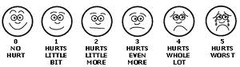
What pain scales are used for pediatrics?
- PIPP-R: preterm and term infants
- r-FLACC: 2 mos - 7 years or a child who is nonverbal or cognitively impaired
- pain word scale: 3-7 years old
- numeric rating scale: children 7 years and older
What should a nurse look for during a skin examination of a pediatric client?
- common skin conditions such as rashes (e.g., diaper rash, eczema), birthmarks, and jaundice in neonates.
- skin hydration and turgor are important, as children may be more prone to dehydration and skin irritation.
- newborns and infants may also exhibit physiological jaundice, which requires monitoring.

What should a nurse look for during a head and face examination of a pediatric client?
- inspect the head for any deformities or signs of trauma.
- for infants and young children, check the fontanelles (soft spots) for normal closure patterns and signs of tension.
- for infants, the shape of the head may need to be monitored for signs of positional plagiocephaly (flattened head).

What should a nurse look for during an EENT examination of a pediatric client?
- eye assessments may include checking the red reflex in newborns and the alignment of the eyes in older children.
- newborns and infants are assessed for visual tracking ability and eye coordination.
- hearing is often checked through response to sounds, such as clapping or talking from a distance.
- ears are checked for fluid buildup or signs of otitis media, which is common in children.
- in infants, the oral cavity is inspected for conditions like thrush or teething.

What should a nurse look for during a chest and respiratory examination of a pediatric client?
- respiratory rate is higher, and the nurse must observe for signs of respiratory distress (e.g., flaring nostrils, retractions, grunting).
- in infants, breathing may be irregular and periodic, which is normal; however, the nurse should watch for signs of apnea or difficulty breathing.
- palpation of the chest may be necessary to assess symmetry and tactile fremitus in children.

What should a nurse look for during a cardiovascular examination of a pediatric client?
- heart rate is generally faster, and rhythm may vary with age.
- evaluation of peripheral pulses is important in children, especially for signs of hypoperfusion (e.g., weak pulses).
- check for signs of congenital heart defects or murmurs, common in newborns.
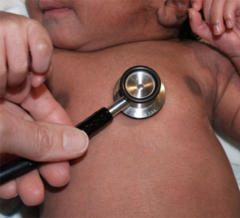
What should a nurse look for during an abdomen examination of a pediatric client?
- in infants and children, the abdomen should be soft, non-tender, and without distension.
- palpation is more gentle and requires caution as children may be more sensitive to touch.
- monitor for signs of gastrointestinal issues, such as constipation or dehydration.

What should a nurse look for during a musculoskeletal and neural examination of a pediatric client?
- for infants, assess for developmental milestones such as head control, rolling, sitting, and walking.
- in older children, the neurological exam may include assessing reflexes, muscle tone, coordination, and balance.
- check for any signs of developmental delay or abnormal motor function (e.g., difficulty walking, weakness).

What should a nurse look for during a reproductive and genitalia examination of a pediatric client?
- for children, the genital area should be assessed for signs of infection, rashes, or abnormalities.
- in infants, assess for normal development of genitalia and check for any signs of congenital abnormalities (e.g., undescended testes).
- avoid performing invasive assessments unless indicated by medical necessity.

What are the main differences between an adult and pediatric health assessment?
- the main differences between adult and pediatric head-to-toe assessments revolve around the developmental stage, level of cooperation, and physiological differences of children compared to adults.
- pediatric assessments require more attention to growth milestones, flexibility in approach, and sensitivity to the child's comfort and emotional state