Sci Oly Water Scycle
 Studied by 0 people
 Call Kai
 Learn
Learn Practice Test
 Spaced Repetition
 Match
Match Flashcards
 Knowt Play
1/40

There's no tags or description
Looks like no tags are added yet.
Name | Mastery | Learn | Test | Matching | Spaced |
|---|
No study sessions yet.
41 Terms
ECOLOGY
how organisms interact with one another and with their environment
ENVIRONMENT
living and non-living components • ABIOTIC – non-living component or physical factors as soil, rainfall, sunlight, temperatures • BIOTIC – living component are other organisms
ECOLOGICAL ORGANIZATION
INDIVIDUAL – individual organisms
POPULATION – organisms of same species in same area (biotic factors) • COMMUNITY – several populations in same area (biotic factors) • ECOSYSTEM – community plus abiotic factors •
BIOSPHERE – all ecosystems on earth
Lotic ecosystems
an aquatic ecosystem
flowing water
stereams/rivers
Lentic ecosystems
still water
ponds, lakes, wetlands
watershed
A watershed or drainage basin is an area of land where water from rain and melting snow or ice drains downhill into a body of water, such as a river, lake, reservoir, estuary, wetland, sea or ocean
Watershed
an area of land where water from rain/melting snow and ice drains downhill into body pf water (ex. river, lqke, reservior, estuary, wetland, sea, or ocean)
Homeostasis
delicate balance
ecology of individuals
• Components
– Physiological Ecology
– Temperature and Water Balance
– Light and Biological Cycles
– Physiological Ecology and Conservation
ecology of populations
Properties of populations
• Patterns of distribution and density
• Intraspecific competition
• Population dynamics
• Growth and regulation
• Altering population growth
• Human impact
ECOLOGY OF COMMUNITIES
• Closed vs. Open communities
– Closed
– sharp boundaries
– Open
– Lack boundaries
• Species abundance and diversity
• Trophic Structure of Communities
– Food chains
– Food web
– Trophic pyramid
Food Chain
algae 🡪 mayflies 🡪 stoneflies 🡪 trout 🡪 humans
• Producer
• 1st order Consumer or Herbivore
• 2nd order Consumer or 1st order Carnivore
• 3rd order Consumer or 2nd order Carnivore
• 4th order Consumer or 3rd order Carnivore
• Decomposers – consume dead and decaying matter as bacteria
INTERACTIONS AMONG SPECIES
• Interactions
• Interspecific competition
• Predation
• Exploitation
• Symbiosis
Types of Species Interactions
Neutral – two species do not interact
Mutualism – both benefit
Commensalism – one benefits, other neutral
Parasitism – one benefits, one harmed but not killed
Predation – one benefits, other killed
ECOLOGY OF ECOSYSTEMS
Energy Flow
– Energy Flow Pyramids
– Biomass Pyramids
Community Succession and Stability (C Division)
Nutrient Recycling – nutrient cycles
• Nutrients
cyclic (Biogeochemical Cycles)
energy flow
one way
Ecologic Pyramids
Ecological pyramid - a graph representing trophic level numbers within an ecosystem. The primary producer level is at the base of the pyramid with the consumer levels above.
Numbers pyramid - compares the number of individuals in each trophic level. May be inverted due to size of individuals
Biomass pyramid - compares the total dry weight of the organisms in each trophic level.
Energy pyramid - compares the total amount of energy available in each trophic level. This energy is usually measured in kilocalories.
Biogeochemical Cycles
recycles nutrients
• Hydrologic Cycle
• Phosphorus Cycle
• Nitrogen Cycle
• Carbon Cycle
• Water Cycle
Macroflora and Fauna
Identify macroinvertebrates
Identify aquatic nuisance plants by their common name
Relate organisms to water and wetland quality
Indicator Species
will also be expected to know the general ecology, life cycles, and feeding habitats of all listed organisms
Class 1-pollution sensitive
Caddisfly
Dobonfly
Mayfly
Riffle Beetle
Stonefly
Water Penny
Water Scorpion
Class 2-moderately sen.
Aquatic sowbug
crane fly
dragonfly
scuds
Class 3-moderately tolerant
Blackfly
Flatworm
Leeches
Midge
Water Mite
Class 4-pollution tol.
Air breathing snail
blood midge
deer/house fly
tubifex
Class 5 Air Br.
back swimmer
giant water bug
mosquito
predacious diving beetle
water boatman
water strider
whirligig beetle
Aquatic Nuisance Plants: Purple Loosestrife, Eurasian Water Milfoil and Water Hyacinth.
Aquatic Nuisance Animals: Zebra Mussel; Spiny Water Flea ,Asian Tiger Mosquito, Asian Carp, Crayfish/Crawdads

5-35mm
Stonefly nymph
DO NOT TOLERATE POLLUTION

Caddisfly larva
2-40mm
DO NOT TOLERATE POLLUTION

Mayfly nymph
3-10mm
DO NOT TOLERATE POLLUTION

Alderfly nymph
10-25mm
DO NOT TOLERATE POLLUTION

Fishfly larva
5-16mm
DO NOT TOLERATE POLLUTION

Stonefly adult
10-40mm
DO NOT TOLERATE POLLUTION
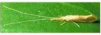
Caddisfly adult
14-25mm
DO NOT TOLERATE POLLUTION

Mayfly adult
5-25mm
DO NOT TOLERATE POLLUTION

Alderfly adult
24-50mm
DO NOT TOLERATE POLLUTION
no shells→legs→3 pairs of legs→no wings→1-2 tails→small, spin

Water penny
4-6mm
DO NOT TOLERATE POLLUTION
no shells→legs→3 pair of legs→no wings→no obvi tails→suction, cup-like

Hellgrammite (dobsonfly larvae)
25-90mm
DO NOT TOLERATE POLLUTION
no shells→legs→3 pairs of legs→no wings→1-2 tails→dobsonfly

Freshwater mussel
2-250mm
DO NOT TOLERATE POLLUTION
shells→2-8 inces→freshwater clam

Pouch snail
2-70mm
DO NOT TOLERATE POLLUTION
shell→single shell→spiral, open on left

Ramshorn snail (orb snail)
2-70mm
DO NOT TOLERATE POLLUTION
shells→single shell→coiled

12-18mm
Snipe fly larva
DO NOT TOLERATE POLLUTION
no shells→no legs→with tentacles, brushes or tails→2 fringed tails
Aquatic Nuisance Plants
purple loosestrifle
eursian water milfoil
water hyacinth
Aquatic Nuisance animals
zebra mussel
spiny water flea
asian tiger mosquito
carp
Water Monitoring
• Understand and interpret data related to testing procedures and purposes for water testing (No actual testing)
• Build and demonstrate a salinometer capable of testing saltwater (1-10% solution)
Chemical Analysis
• Salinity - only actual testing with salinometer
• pH
• Phosphates
• Dissolved oxygen
• Temperature
• Nitrates
• Fecal Coliform
• Total solids
• Biochemical oxygen demand Their relationship to one another
Salinomter
Salinometers / Hydrometers
• Hydrometer calibrated to read in % of salt concentration
• Materials (one example) –
▪ soda straw
▪ modeling clay
▪ a fine-tipped permanent marker
▪ a tall clear container to hold the solution for calibrating your device
▪ salt for mixing one or more standard solutions
▪ water (tap water will work-distilled is better