CHAPTER 8 MULTIPLE CHOICE VERSION
 Call Kai
 Learn
Learn Practice Test
 Spaced Repetition
 Match
Match Flashcards
 Knowt Play
1/18

There's no tags or description
Looks like no tags are added yet.
Name | Mastery | Learn | Test | Matching | Spaced | Call with Kai | Chat |
|---|
No analytics yet
Send a link to your students to track their progress
19 Terms
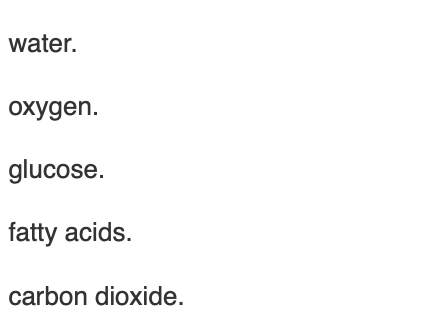
Each of the following molecules move across membranes by simple diffusion except
Glucose
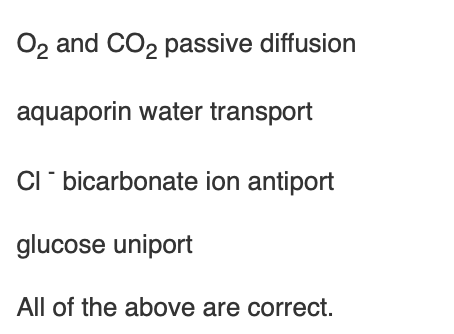
Which of the following types of transport occur across the erythrocyte membrane?
All of the above are correct
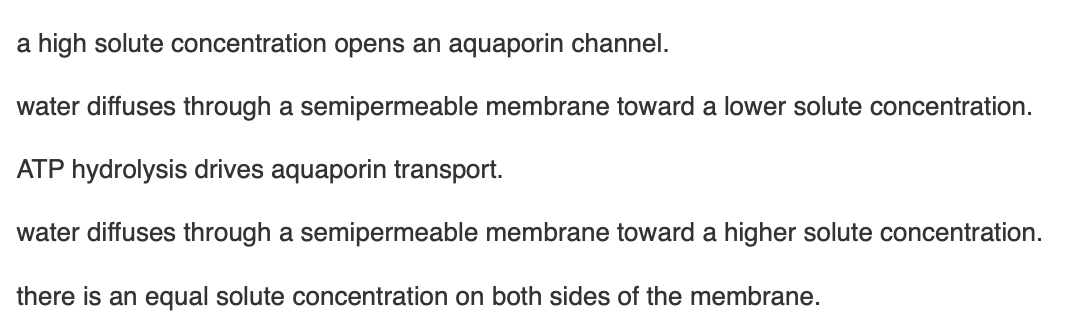
Water moves across the plasma membrane into or out of a cell by osmosis when
water diffuses through a semipermeable membrane toward a higher solute concentration
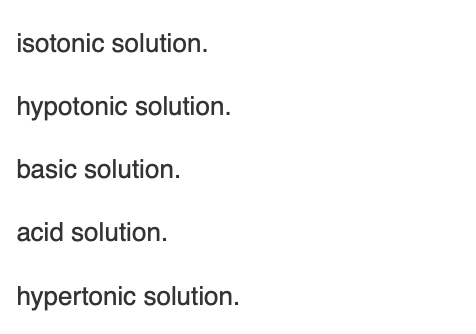
Because the procedure you are using to modify plants requires their cell membranes to be pulled away from the cell walls by plasmolysis, you place the cells in a(n)
hypertonic solution
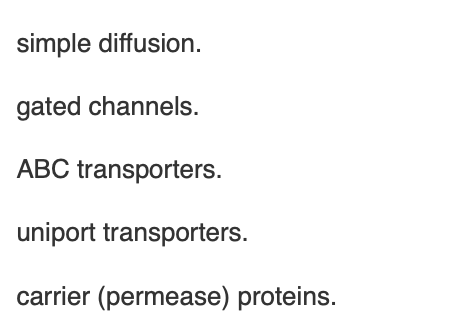
One way in which ions are specifically transported into the cell is via
gated channels
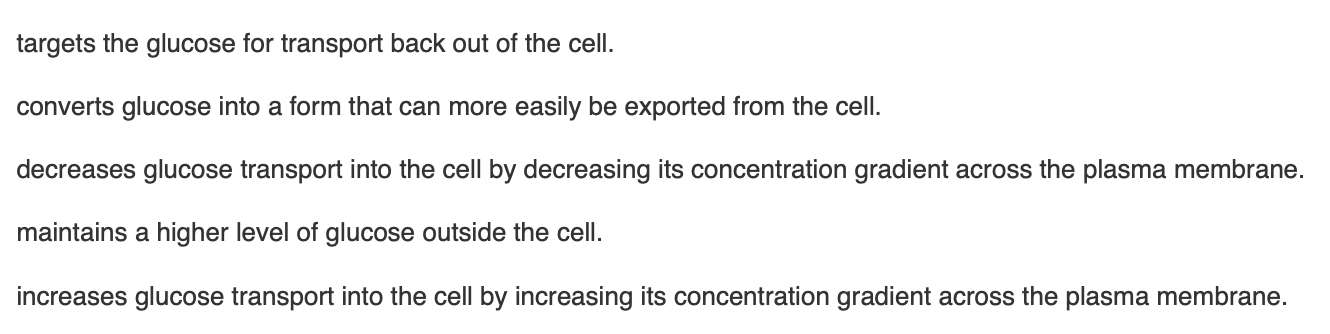
Phosphorylation of glucose following its transport into a cell
increases glucose transport into the cell by increasing its concentration gradient across the plasma membrane.
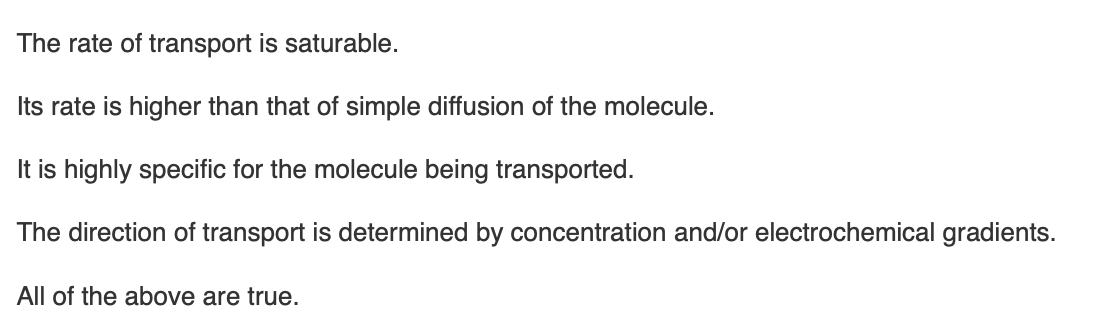
Which of the following is a characteristic of facilitated diffusion (passive transport) of a molecule across a membrane?
all of the above are true
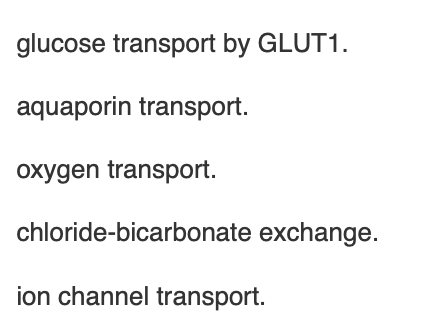
Each of the following is an example of facilitated diffusion except
oxygen transport
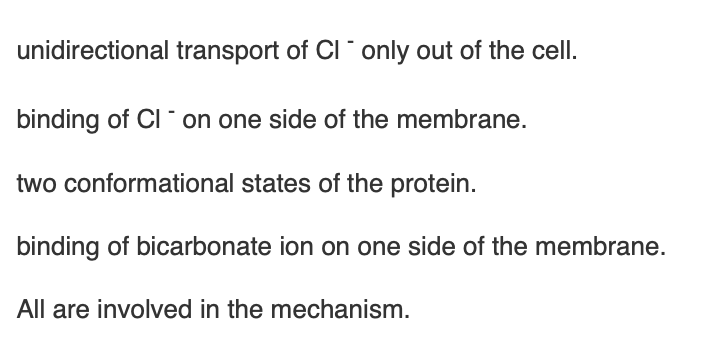
The erythrocyte anion exchange protein "ping-pong" transport mechanism does not involve
Unidirectional transport of Cl- only out of the cell
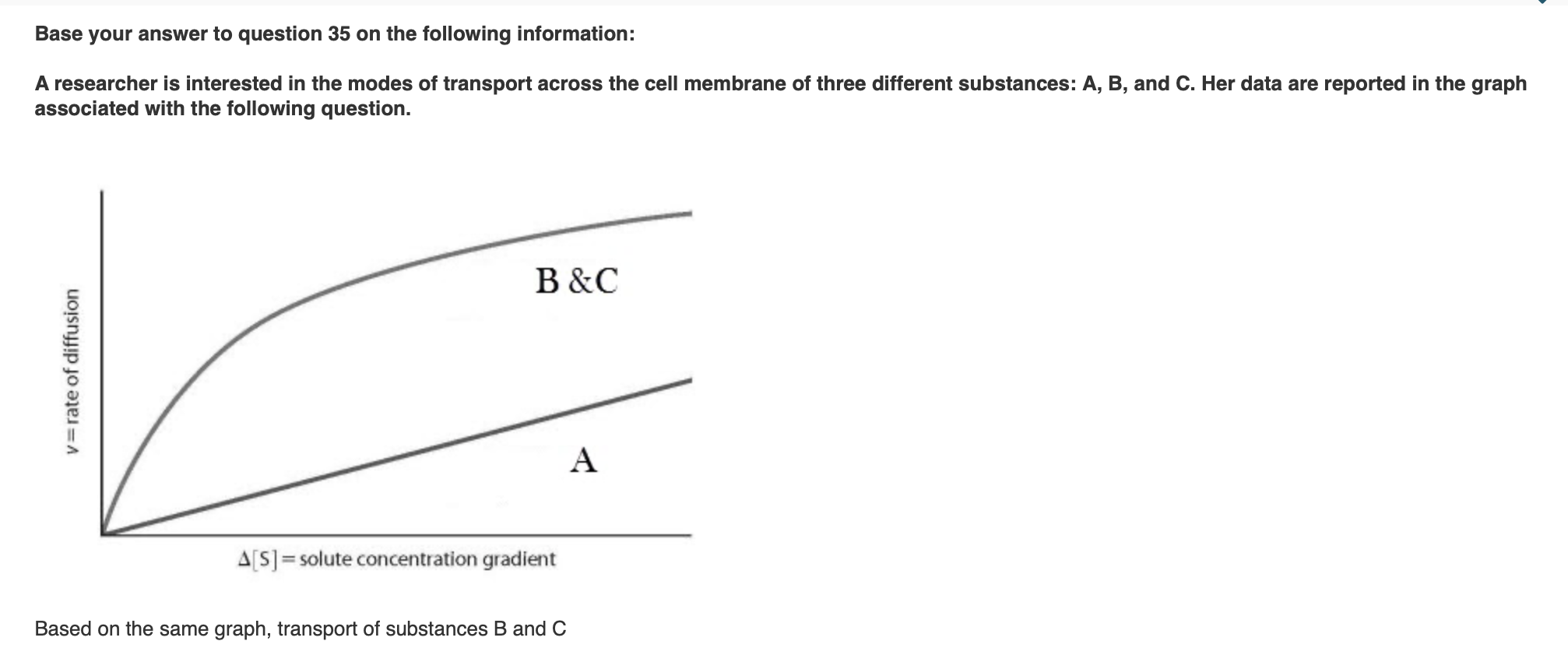
All of the above are correct.
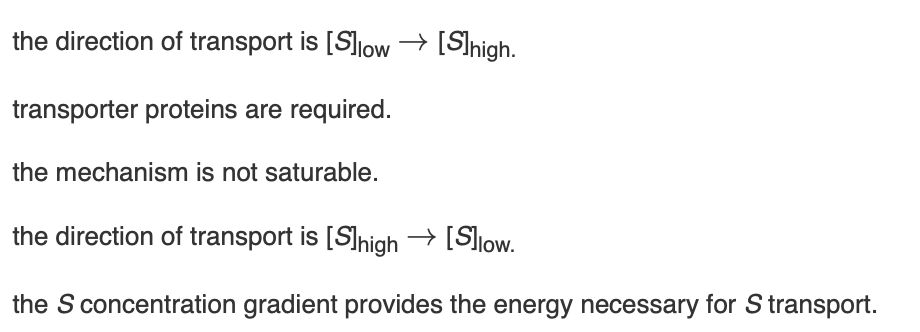
The primary difference between active transport and facilitated diffusion is that active transport is the only one of the two in which
the direction of transport is Slow—> Shigh
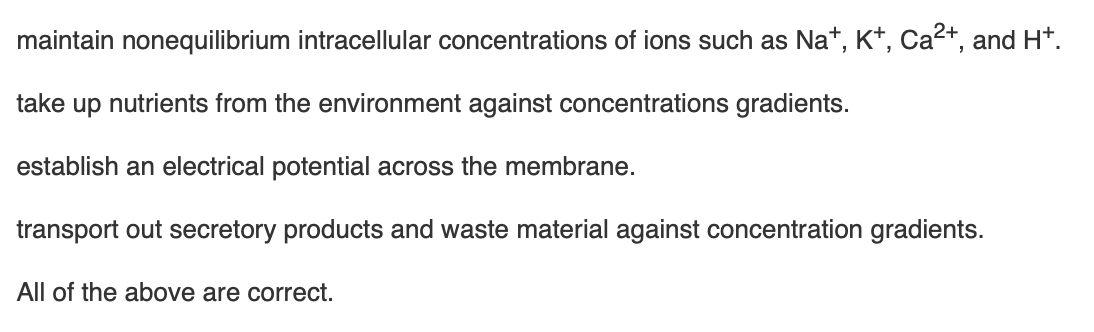
Active transport makes it possible for cells to
All of the above are correct
Frog oocytes are a useful experimental system for studying transporters, because frog oocytes possess all of the following characteristics except
they express all transporters known
Cystic fibrosis is the result of a malfunction of a cellular ABC transporter that transports
Cl -

Each of the following is a characteristic of active transport mechanisms except
nondirectionality for moving a solute in either direction across a membrane depending on the solute concentration gradient.
Which of the following is an example of indirect active transport?
Na+/glucose symport
Different ABC transporters can transport
All of the above are correct.
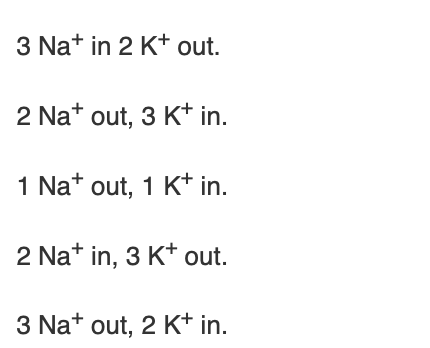
The Na+/K+ ATPase pump actively moves
3 Na+ out, 2 K+ in
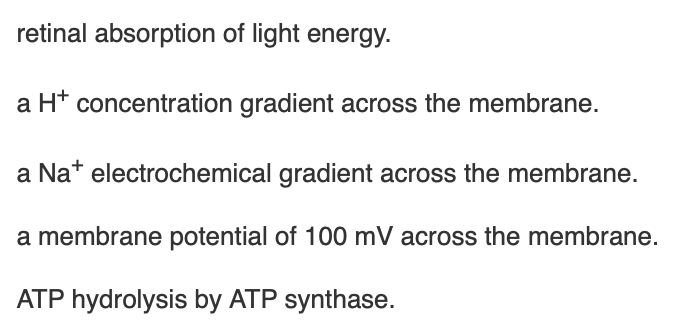
The energy necessary to drive the bacteriorhodopsin proton pump that creates the proton gradient needed for ATP synthesis is generated by
retinal absorption of light energy.