AP Bio Unit 1: Ecology
 Call Kai
 Learn
Learn Practice Test
 Spaced Repetition
 Match
Match Flashcards
 Knowt Play
1/89

There's no tags or description
Looks like no tags are added yet.
Name | Mastery | Learn | Test | Matching | Spaced | Call with Kai | Chat |
|---|
No analytics yet
Send a link to your students to track their progress
90 Terms
ecology
the scientific study of the interactions between organisms and the environment
organisms ecology
how an organisms structure, physiology, and behavior meet the challenges posed by its environment (physiological, evolutionary, and behavioral ecology)
population
group of individuals of the same species living in an area
population ecology
analyzes factors the affect population size and why is changes
community ecology
examines how interactions between between different species affect community structure
ecosystem
community of organisms in an area and the physical factors that cause the organisms to interact, most energy through sunlight
primary producers
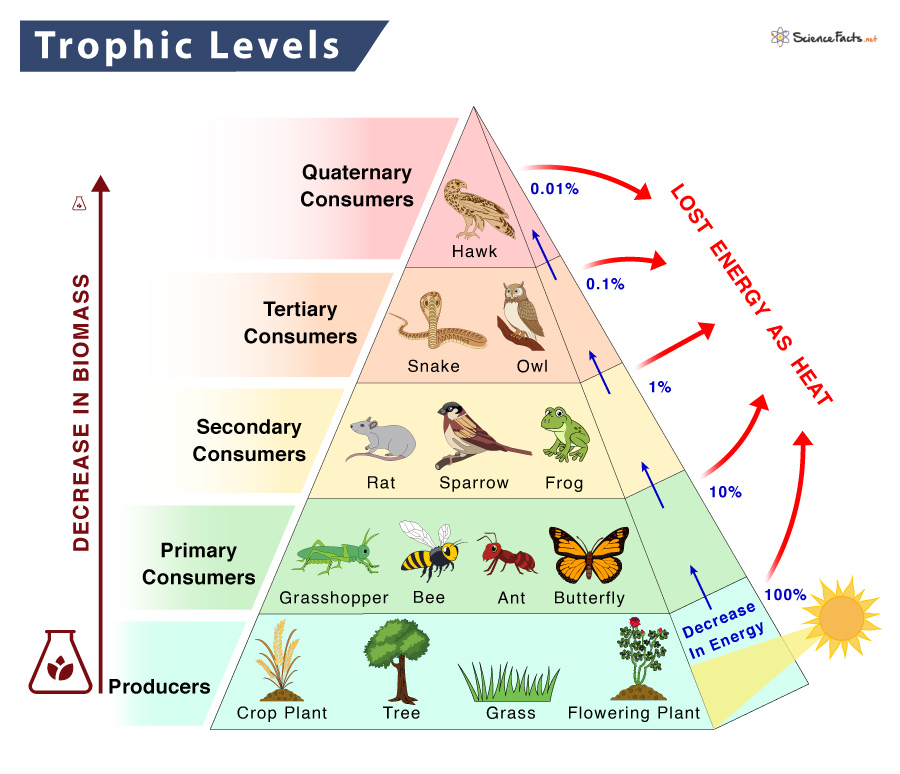
autotrophs, first trophic level
detrivores
organisms like prokaryotes and fungi that secrete enzymes that break down organic material (waste)
biomass
the total mass of all organisms in a trophic level
landscape (or seascape)
mosaic of connected ecosystems
net primary production
tracks the chemical energy in a food chain (gross primary production - energy the producer actually uses for CR)
eurotropication
is when the nutrients status changes from poor to rich (ex. nitrogen and phosphorus usually limit nutrients, adaptations help plants increase uptake on limiting nutrients)
trophic efficiency
the percentage of production transferred between one trophic level to the next (~10%!!!!!!!)
landscape ecology
focuses on the factors controlling exchanges of energy, materials, and organisms across multiple ecosystems
biosphere
global ecosystem, sum of all of earth’s ecosystems and landscapes
global ecology
examines how the regional exchange of energy and materials influences the functioning of organisms globally
abiotic
non-living factors
biotic
living factors
biomes
major life zones characterized by vegetation in terrestrail biomes and physical environment in aquatic biomes
climograph
plot of annual mean temperature and precipitation for a region
photic zone
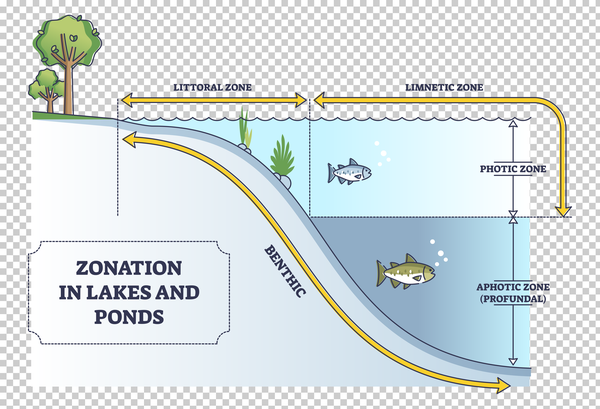
the upper layer where there is sufficient light for photosynthesis.
aphotic zone
the deeper layer that receives little to no light, making photosynthesis impossible.
pelagic zone
aphotic + photic zones combined
benthic zone
the bottom of the aquatic environment, deep or shallow
benthos
organisms that live on or near the bottom of aquatic environments (in the benthic zone)
littoral zones
water close enough to the shore, shallow enough for rooted plants
limnetic zone
waters too far from the shore to support rooted plant life
thermocline
layer of abrupt temperature change that separates the warm upper layers from lower colder layers
oligotrophic
lakes that are nutrient-poor and oxygen rich often have clear water
eutrotrophic
lakes that are nutrient-rich, oxygen dense, and murky water
population density
individuals per unit of volume
dispersion
the pattern of spacing among individuals within a population
clumped
individuals stay where resources/mating is abundant
uniform
evenly spaced, result of territoriality
random
the position of one individual is different than another
survivorship curve
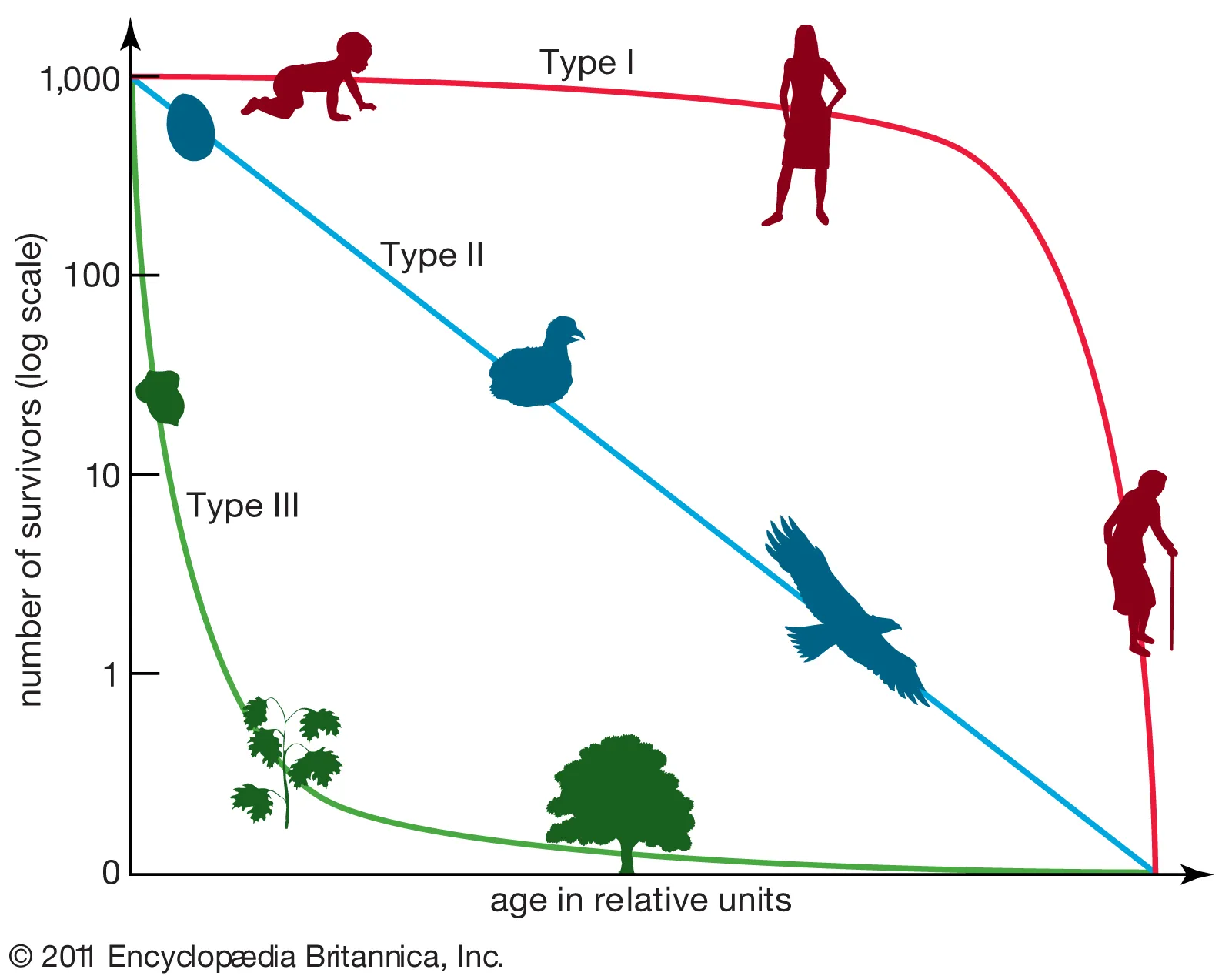
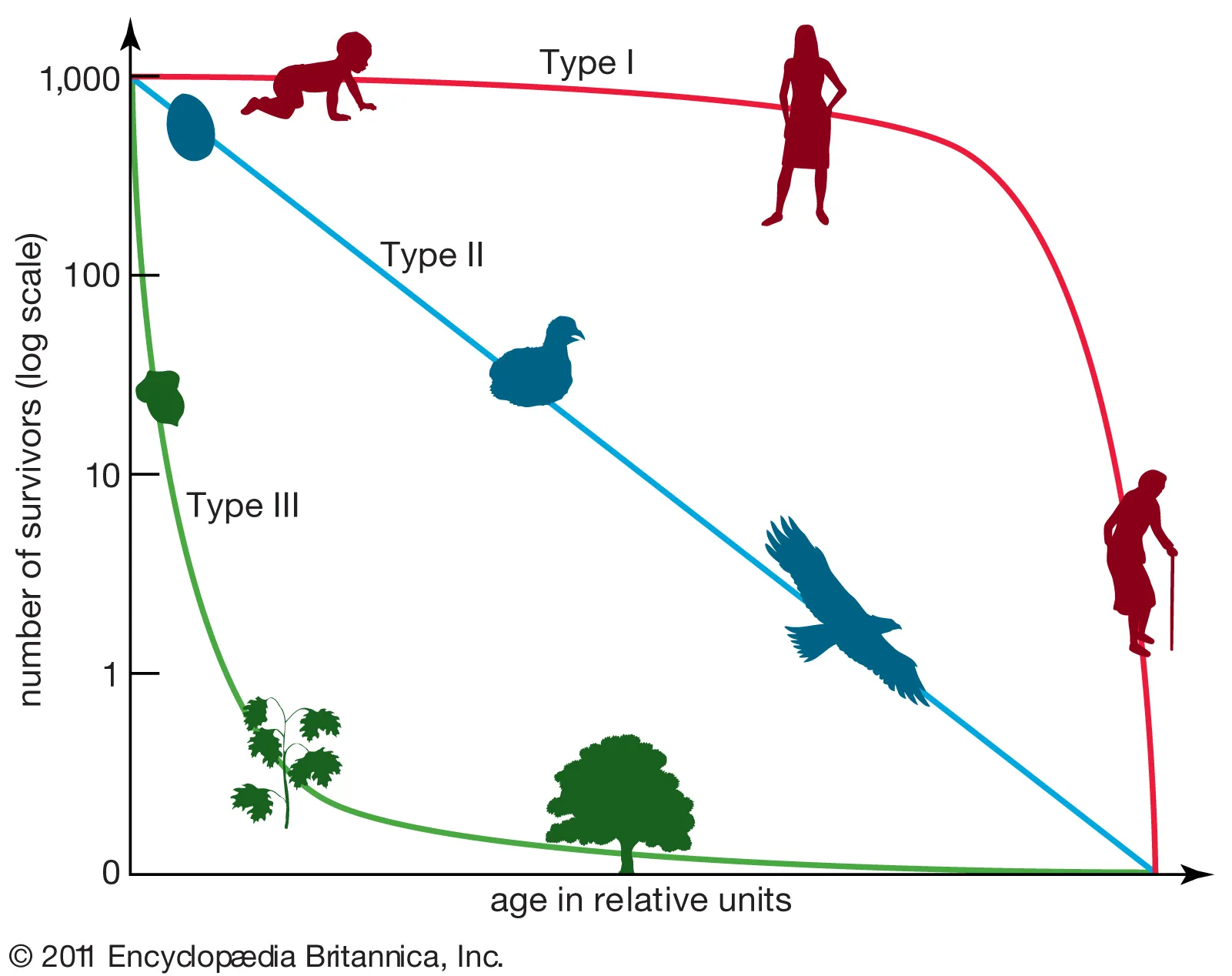
represents numbers in a cohort (group of individuals at the same age) still alive at each age
Type I
low death rates early to middle life, severely drops at higher ages (ex. humans, elephants)
Type II
death rate is fairly constant between children and adults (ex. rodents, lizards)
Type III
high death rates for young, flattens out for few individuals that survive the die-out

exponential growth
population growth due to an abundance of food and resources, drastic population reduction or population introduced to a new area
carrying capacity
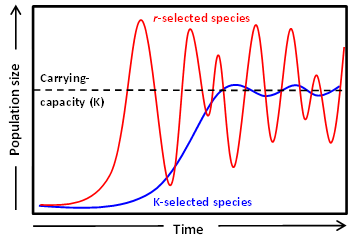
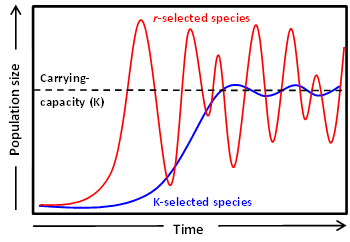
K, maximum population size that a particular environment can maintain
logistic population growth
per capita rate that that the population growth approaches zero as the population size reaches carrying capacity
K-selected species
species with few, larger offspring, raised by parents (significant energy investment), most survive, slow growth rate
r-selected species
species with many small offspring, minimal parental care, more energy efficient
density dependent limiting factors
limiting factors that become more restricting as population size increases (competition, disease, predation, etc.)
density independent limiting factors
limiting factors that affect the population randomly and do not depend on the size of the population (natural disasters, human impact, climate change)
community
populations of different species living in close enough proximity to act as a biological community
competitive exclusion principle
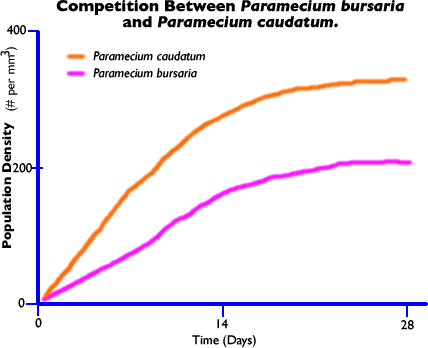
two species who compete for the same limiting resources
G.F. Gause’s experiment
grew aurelia and caudatum apart = thrived, together = caudatum extinct
ecological niche
position that a species occupies in its ecosystem, including all the interactions and roles it fills (sets of biotic and abiotic resources an organism uses)
fundamental niche
ideal/theoretical. pre-competitive, no limiting factors
realized niche
actual, post-competitive, limiting factors present, species coexisting
cryptic coloration
camouflage, makes prey harder to see
aposematic
warning coloration (poison dart frog)
Batesian mimicry
protected by resembling other species (nonvenomous snake resembles venomous one)
herbivory
animal eats part of a plant, haring it, but not killing it
visual cues
animals use sight to detect predators/ changes in environment
auditory cues
animals use hearing to detect changes in environment
physical cues
animals use movement or touch to detect changes in environment
chemical cues
animals use pheromones to send chemical signals (food, mating, etc.)
phototrophic cues
animals use response to light/dark (circadian rhythms)
competitive interactions
competition for food between members of the same or different populations, (-/-)
symbiotic interactions
long term biological interactions between members of different species or populations
predation
predators hunt and kill their prey, herbivores eat plants to get energy, (+/-)

parasitism
relationship where one organism exploits the other for food/nutrients, host is HARMED, not KILLED (reproductive parasites usually kill host) VERY slight decrease in population for host, inc. for parasite, (+/-), tapeworms
mutualism
both species cooperate and gain an advantage (+/+), pollinators
commensalism
on organism benefits while the other is not harmed or helped, (+/0)

species diversity
variety of kinds of organisms in a community (higher diversity = can recover from environmental stress)
keystone species
exert strong control on community structure by pivotal ecological roles (i.e. starfish eats competitively dominant mussels)
ecological succession
changes in a species that occupy a certain area after a disturbance
primary succession
when ecological succession occurs in a lifeless area (volcano)
secondary succession
recolonization of an area after a major disturbance
latitudinal gradients
affect species richness through evolutionary history and climate
species richness
greatest when there is more diversity, sunlight, precipitation, and evapotranspiration (evaporated water from soil and plants)
pathogens
disease-causing microorganisms and viruses
zoonotic pathogens
pathogens transferred form animals to humans
Lyme disease
spread by zoonotic pathogens to the human host from the vector (tick)