Feline Vaccinations and Parasite Protocols
 Call Kai
 Learn
Learn Practice Test
 Spaced Repetition
 Match
Match Flashcards
 Knowt Play
1/70

There's no tags or description
Looks like no tags are added yet.
Name | Mastery | Learn | Test | Matching | Spaced | Call with Kai | Chat |
|---|
No analytics yet
Send a link to your students to track their progress
71 Terms
3 Vaccine Types
Killed
Modified Live
Live
Killed
Comprised of a protein or piece of the intended pathogen that can stimulate immune response, but not cause disease
unable to replicate
weaker immune stimulation
more dependent on adjuvants
safer in pregnant and immunosuppressed
Ex: rabies
Adjuvants
something you add to a vaccine to make a stronger immune response
Modified Live
derived from the naturally occurring pathogen but modified that it cannot cause disease but does allow for immune stimulate
can replicate in host
more rapid onset of immunity
could cause false positive results on certain tests
Ex: Lyme
can give false positive on 4DX (antibody test and the vaccine gives you antibodies so patient will test positive)
Live
contain a weakened form of the pathogen that can cause disease but with the intention that the severity is limited
Ex: bordetella
Core Vaccines
FRCCP
Rabies
Non-Core Vaccines
FeLV
Feline Immunodeficiency Virus
Meaning of FRCCP
Feline Rhinotracheitis/Feline Herpes Virus
Feline Calicivirus
Chlamydia
Feline Panleukopenia Virus
Meaning of FeLV
Feline leukemia virus
What does FRCCP vaccine vaccinate for
Feline Rhinotracheitis (Feline Herpes Virus - FHV)
Feline Calicivirus (FCV)
Chlamydophila felis (Chlamydia)
Feline Panleukopenia Virus (type of Parvovirus)
Provides cross protection to canine parvovirus-2
FRCCP Vaccine Type
Modified Live
FRCCP Schedule
boosters every 3-4 wks starting at 6 wks of age to 16-20 wks of age
1 year booster after initial series
3 years thereafter
FRCCP vaccine location
Right front limb
Feline Viral Rhinotracheitis Etiology
Feline Herpesvirus type-1
Feline Viral Rhinotracheitis Transmission
direct and indirect transmission with contact of virus particles spread through saliva and ocular discharge
shows disease in 2-5 days from infection
active infection lasts 10-20 days
all infected cats will be chronic carriers → once they get it, they will always have it
latent carriers
Feline Viral Rhinotracheitis Clinical Signs
Upper respiratory signs
sneezing
nasal discharge
#1 cause of conjunctivitis
blepharospasms
clear to purulent discharge
Keratitis
Corneal ulcers → Corneal Sequestrum
Keratitis
Inflammation of Cornea
Corneal Sequestrum
Dead Cornea
Testing for Feline Viral Rhinotracheitis
PCR
Feline Calicivirus Etiology
Feline Calicivirus
Feline Calicivirus Transmission
Direct and indirect transmission through oral, nasal, and ocular secretions
Virus can survive up to a week in environment
2-6 incubation
14-21 day shedding (when they can transmit virus to other host)
Feline Calicivirus clinical signs
more severe in young
sneezing
nasal discharge
conjunctivitis
oral/lingual ulcers (unique to this disease)
drooling
lameness
Testing for Feline Calicivirus
PCR
Chlamydia Etiology
Chlamydophila felis (previously C. psittaci)
Transmission of Chlamydia
Direct contact
BACTERIA has poor survival outside of the body
incubation is 3-10d
rectal and vaginal shedding but no reported venereal transmission
Clinical signs of Chlamydia
Conjunctivitis
Nasal discharge
Sneezing
Possible pneumonia
Testing for Chlamydia
PCR
Feline Panleukopenia Virus Etiology
Parvovirus
Feline Panleukopenia Virus Transmission
Direct and indirect contact with urine, fecal or nasal secretions
have been reports of vector transmission from fleas
shed for 1-2 days
virus can survive up to a year in the environment
Clinical signs of Feline Panleukopenia Virus
Diarrhea
Panleukopenia (all WBC levels are decreased)
Anemia
Cerebella hypoplasia in kittens
Rabies Vaccine Schedule
Kittens 12-16 weeks of age and older
Booster in 1 year
After, booster every 3 years
Type of vaccine for Rabies
Recombinant live vaccine with Canarypox virus
Rabies DNA incorporated → creating structure of rabies virus to replicate and then put it on our cells so that they recognize it
Location of Rabies Vaccine
Right Rear limb
What does FELV vaccinate against
Feline Leukemia Virus
More common to vaccinate indoor-outdoor and outdoor cats
Schedule for FELV
2 doses given 3-4 wks apart as early as 8 wks of age
Type of vaccine for FELV
Recombinant live canarypox vaccine
FIV
none commercially available in U.S
did not grant immunity to all strains
Yearly booster
Adjuvanted
FISS risk
FISS
Feline Injection Site Sarcoma
Etiology for Feline Leukemia Virus
Retrovirus
Transmission of Feline Leukemia Virus
Direct and Indirect contact with nasal, saliva, urine, feces, and milk
cat bites
allogrooming
aka lovers disease → shared resources = easier to spread
Chronic disease and cannot live with others
Clinical Signs of Feline Leukemia Virus
Cancers → lymphoma
Immune deficiency
Blood disorders → anemia
Lymphadenopathy
Lymphadenopathy
reactive lymph nodes
Etiology of Feline Immunodeficiency Virus
Retrovirus
Transmission of Feline Immunodeficiency Virus
direct contact → bite wounds
Kitty AIDS virus or Cat Fight Disease
3 phases of the clinical signs of Feline Immunodeficiency Virus
Acute Phase
Asymptomatic/Latent Phase
Progressive Phase
Acute Phase of Feline Immunodeficiency Virus
1-3 months after exposure
Febrile
Possible lymphadenopathy
Asymptomatic/Latent Phase of Feline Immunodeficiency Virus
can last from months to years
Progressive Phase of Feline Immunodeficiency Virus
immune suppressed
secondary infections → urinary, respiratory, ocular, dermal
survival is only a few months
Gingivostomatitis is common
What does FIP stand for
Feline Infectious Peritonitis
FIP
mutation in the Feline Coronavirus
all FIP cats have Feline Coronavirus, but not all Coronavirus have FIP
Cats can present asymptomatic to lethargic and having organ dysfunctions
BW will show severe elevation in globulins (antibodies and immunoproteins)
High mortality rates even with supportive/intensive care
2 forms of FIP
Wet form
Dry form
Wet form of FIP
cats develop fluid accumulation/effusions (Third Spacing)
Peritoneal Space - abdomen
Pleural Space - thorax
Rivalta test
Rivalta Test
Highly sensitive test, not very specific - aka high amount of false positive
Drop of effusion fluid with acetic acid/vinegar solution → watch how effusion fluid interacts with solution → positive test = drop will sink to the bottom
Dry Form of FIP
Visceral organ lesions (kidneys, liver, ocular)
Organ failure BW changes
Testing for Feline Infectious Peritonitis
PCR testing of blood, fluid, tissue
Treatment for Feline Infectious Peritonitis
Recent antiviral drug developments
around 80% survival rate
GS-441524
Cheaper options have come onto the market for treatment
Molnupiravir
Remdesivir
GS-441524
Black market drug → recent government approval for compounding
84 day treatment period
expensive
Considerations for Feline Injection Site Sarcomas
Do not decrease vaccine volume
Do not vaccinate in the inter scapular space (scruff)
Vaccinate on the distal limb, ventral abdomen, or tail
Fecal Float
test to diagnose certain intestinal parasite by identifying parasitic eggs
Fecal Flotation Process
1 inch piece of stool less than 24 hours old
Relies on specific gravity solution and the density of the parasite
usually solution of zinc sulfate or sodium nitrate
usually shoot for specific gravity of 1.2-1.3
Eggs will rise to the top and stick to the slide
Downside of Fecal flotation
contaminants can cause misidentification of parasite
Coprophagy can cause non-infectious parasites to be found (Eimeria)
Variations in egg density could lead to misinterpretation
Hookworms

Roundworms
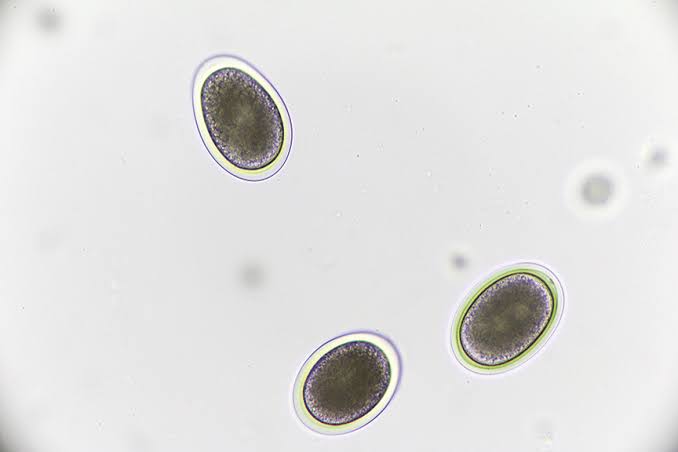
Whipworm

Roundworm Life Cycle
Vertical Transmission
Paratenic Host
Eggs are not immediately infectious at the time of defecation
Zoonotic
Vertical Transmission
spread from parent to offspring
Paratenic Host
an optional intermediate host that has passively acquired the parasite
Hookworm Life Cycle
Cutaneous Larva Migrans
Zoonotic
Cutaneous Larva Migrans
transdermal transmission of round worms
Whipworm Life Cycle
Fecal-Oral Transmission
Eggs are very resistant to desiccation, high temps, and UV exposure
Infective eggs and remain viable for many years
Not zoonotic
Fecal Oral Transmission
ingestion of the embryonated eggs is the infective stage