principles of neuropharm -- pt 3
 Call Kai
 Learn
Learn Practice Test
 Spaced Repetition
 Match
Match Flashcards
 Knowt Play
1/23

There's no tags or description
Looks like no tags are added yet.
Name | Mastery | Learn | Test | Matching | Spaced | Call with Kai | Chat |
|---|
No analytics yet
Send a link to your students to track their progress
24 Terms
why do drugs vary in their effectiveness?
site of action
morphine — inhibits neurons in CNS involved in pain perception
aspirin — reduces production of chemicals producing pain messages
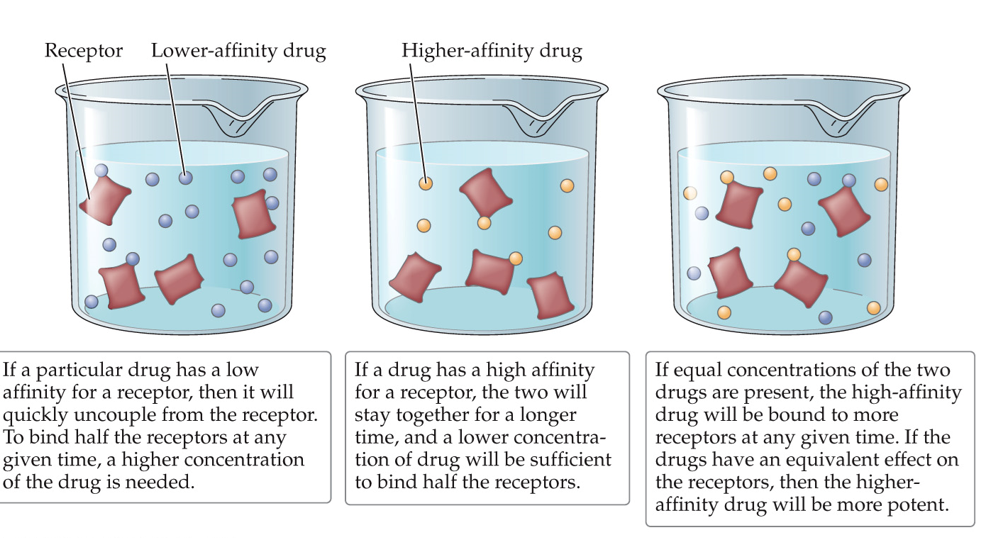
affinity
how tightly and quickly ligand binds
describe affinity
where can receptors be found?
in the cell membrane for water soluble
in the cell nucleus for lipid soluble

describe agonist and antagonists
agonist = high affinity, high efficacy
when they bind to the receptor, they initiate a cellular response
antagonist = high affinity, low efficacy
when they bind to the receptor, they produce no effects (low efficacy) and prevent the agonist from binding

partial agonist
less than full agonist, more than antagonist
inverse agonist
causes a biological response, but different than what an agonist would do
reduces constitutive activity = baseline receptor activity
competitive drugs…
shift the curve to the right
no change in maximum response
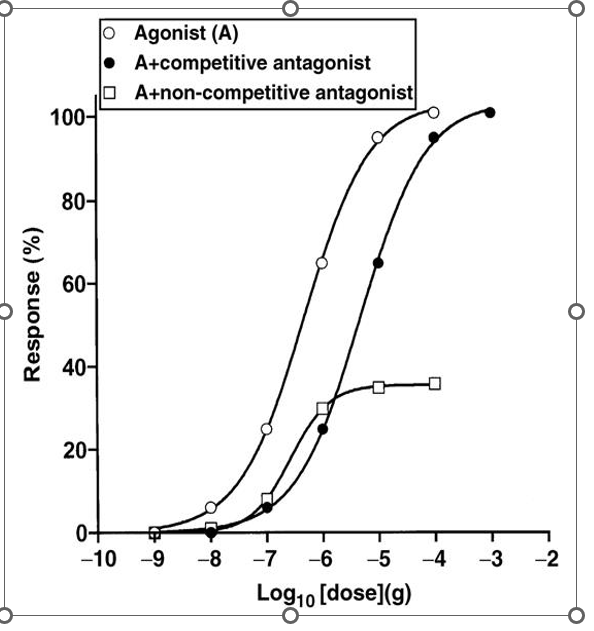
noncompetitive drugs…
decrease the maximal effect
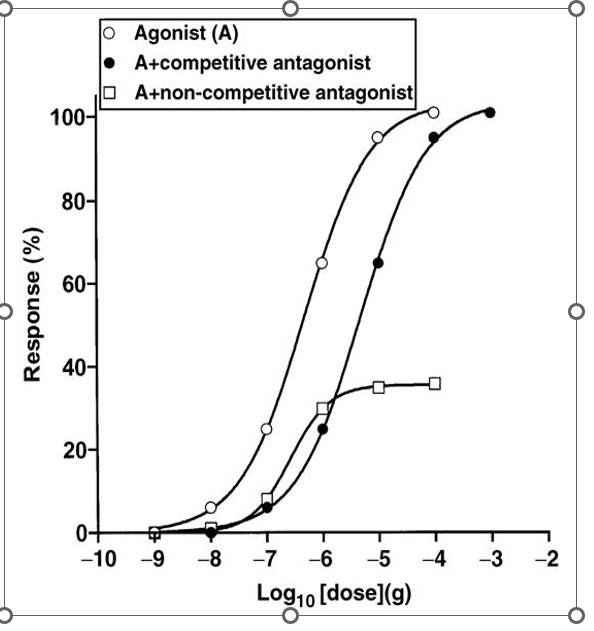
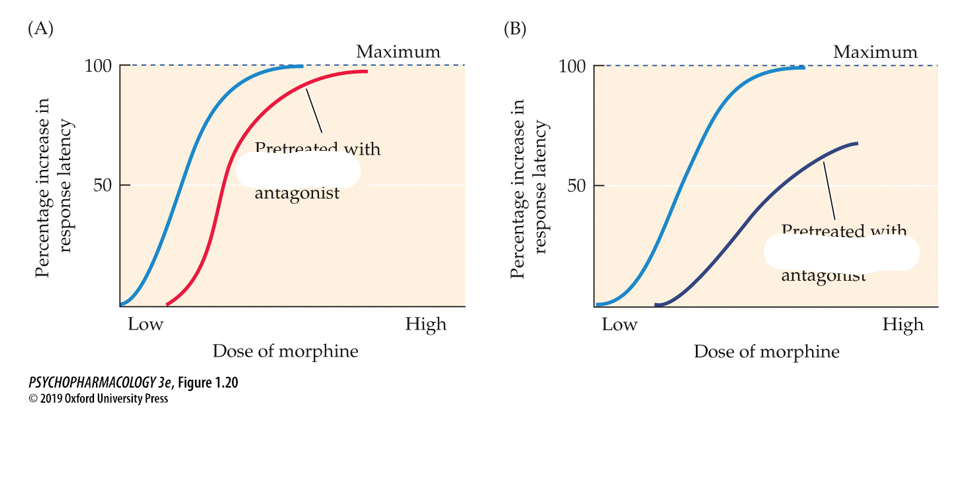
describe what is going on in these graphs
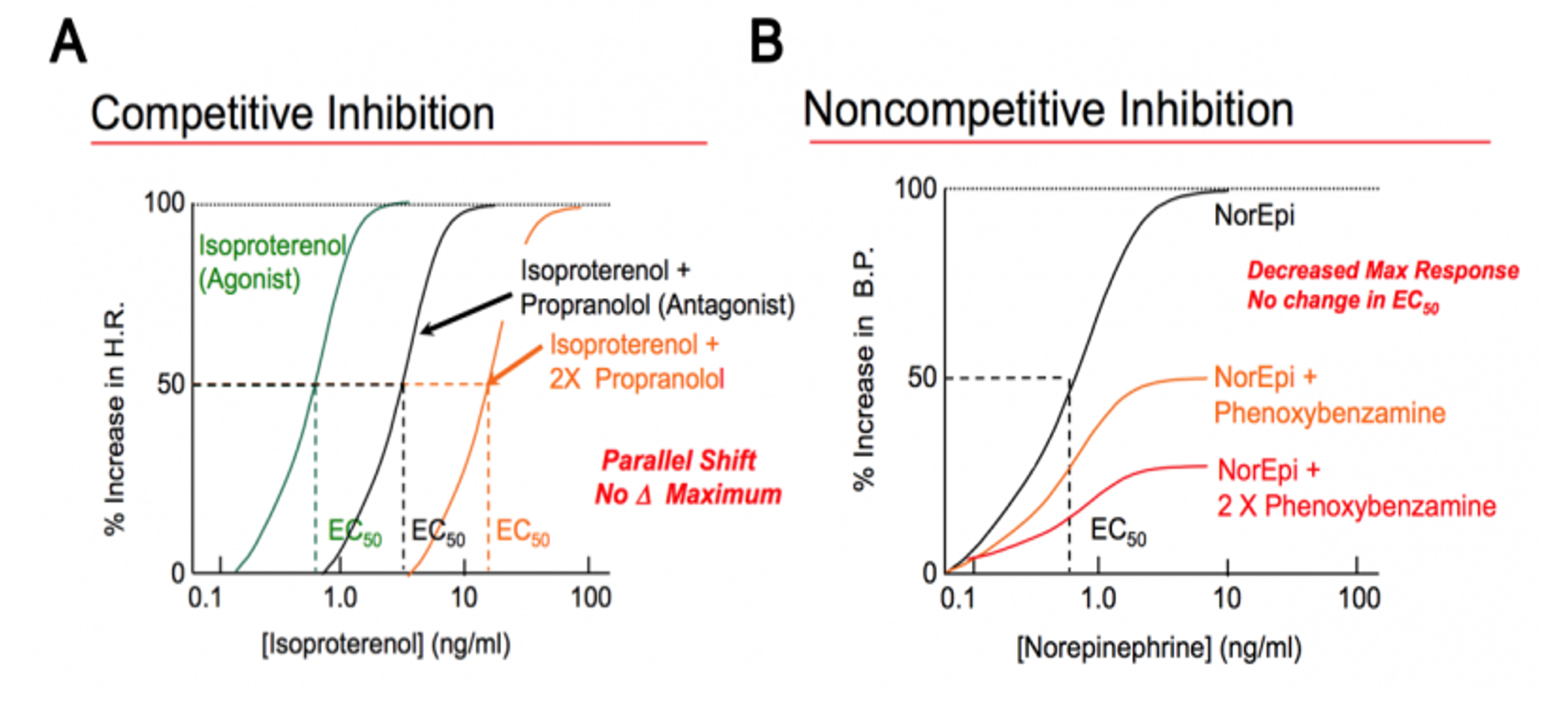
analyze graph
additive effects vs potentiaton
additive effects
combined effect equals the sum
potentiation
combined effect is much larger than the sum

what is dose adjustment for genotype?
they are theoretical estimations based on people’s ability to metabolize drugs based on their genotype
poor metabolizers could have lower than the standard dose, since it takes them longer to metabolize the drug
intermediary could have around the standard dose
extensive would have a higher than standard dose, since they metabolize faster than normal
ultrarapid would have an even larger dose, since they are able to metabolize a lot faster
what is down-regulation?
it is the cell’s response to an agonist
because there is a lot of NT in the cleft, then the number of receptors in the postsynaptic cell will decrease to prevent too much activation
what is up-regulation?
cell’s response to antagonist
because there are fewer NTs in the cleft, less binding occurs in the postsynaptic cell. the cell counters this by increasing the number of receptors in the postsynaptic cell so they may become more sensitive and compensate for less effects of endogenous ligand
what is tolerance?
decrease in responding after repeated administration
cross-tolerance
diminished effect in a second drug following tolerance to another
alcohol and isoflurane (general anesthetic)
what does tolerance depend on?
dose, frequency, genetics, and environmental factors
what are the four types of tolerance?
metabolic
pharmacodynamic
behavioral
cross tolerance
metabolic tolerance
an increase in metabolic rate of a drug following repeated exposure
AKA pharmacokinetic tolerance
enzymatic induction
CYP1A2 with tobacco
CYP2E1 with alcohol
pharmacodynamic tolerance
down-regulation
large role in withdrawal (physical dependence)
behavioral tolerance
context dependent

what are significant characteristics of tolerance
reversible when drug use stops
dependent on dose and frequency of drug use and the drug-taking environment
may occur rapidly, after long periods of chronic use, or never
not all effects of a drug show the same degree of tolerance
several different mechanisms explain multiple forms of tolerance
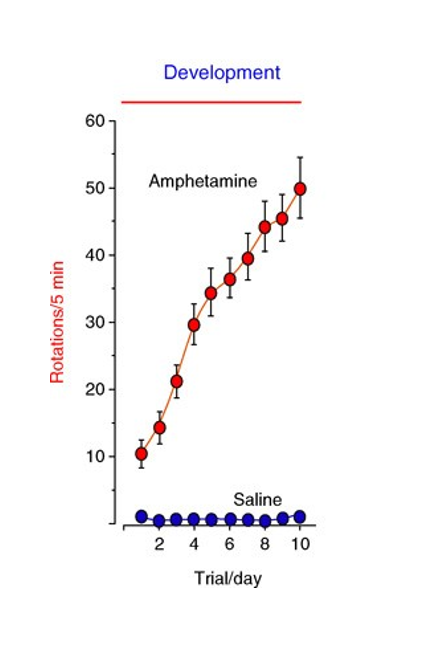
sensitization
reverse tolerance
increase in a drug effect following repeated use
psychostimulants do this to the motor system
stereotypy
repetition of simple actions