History of Interior Design: Part One

0.0(0)
Studied by 0 people
call kaiCall Kai
Locked
learnLearn
examPractice Test
spaced repetitionSpaced Repetition
heart puzzleMatch
flashcardsFlashcards
GameKnowt Play
Card Sorting

1/66

encourage image

There's no tags or description

Looks like no tags are added yet.

Last updated 1:17 AM on 9/9/26
Name
Mastery
Learn
Test
Matching
Spaced
Call with Kai
Chat

No analytics yet

Send a link to your students to track their progress

67 Terms

1
New cards

Key ideas for understanding interior design history

 Late 20th invention, the use of the terminology 

  • Space 

  • Architecture

  • Design - To draw = in the context of spaces/furniture 

  • Object in its context (Furniture, Art,”Decoration”)

  • Style (Language of style) - Living in an age that does not have defined style = post modern style (futuristic)

  • Historical context 


2
New cards

Design’s Origin in Drawing

  • Traditionally, artists first taught how to draw before painting a picture/sculpture; architects draft plans before erecting a building

  • Ever since the renaissances, in the western academics artistic/architectural traditions, drawing skills were the cornerstone of artistic practice; an outstanding draftsman became a good designer

  • Drawing allows artist/architects to collect and record ides sketchbooks, to try out proportion and to visualize ideas (preliminary drawings); something drawings can be an end in themselves

  • Drawing in Italian is designeion; English expression design is derived from it. 


3
New cards

Chronology and Terminology

  1. Paleolithic Period = Early Stone Age

  2. Mesolithic Period = Middle Stone Age

  3. Neolithic Period = Late Stone Age 


4
New cards

Paleolithic Period

Early Stone Age (from about 35,000 B.C.E. to 8,000 B.C.E.)

5
New cards

Mesolithic Period

Middle Stone Age (from about 8,000 B.C.E. to 6,000 B.C.E. for Eastern Mediterranean; extends up to 4,000 B.C.E. for Spain and Northern Europe)

N.B.: 8,000 B.C.E. final recession of ice and onset of more temperate weather in the northern hemisphere; Cro-Magnon man replaced Neanderthal man; artistic abilities expand greatly after this  point 

6
New cards

Neolithic Period

Late Stone Age  (Eastern Mediterranean: 6,000 B.C.E. to 3,500 B.C.E.; Spain and Northern Europe: 4,000 to 1,500 B.C.E)


The Neolithic Age:

Giant stride forward in human development: fixed abodes and domestication of plants and animals; village cultures surrounded by fields; change from hunter to herdsman may have started in the Near East as early as 7,000 B.C.E. and in Europe about 4,000 B.C.E.

Neolithic structures:

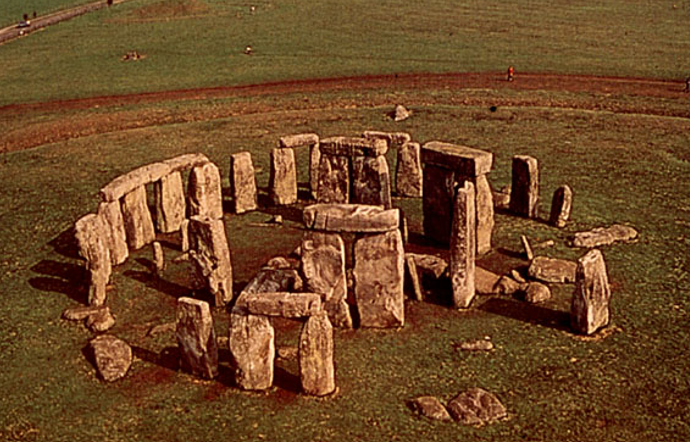
Dolmen: tomb structures consisting of rows of stones, planted vertically in the ground, covered with a slab

Cromlech: huge stones arranged in a circle

Believed to have a religious association: cult of the dead or sun worship

The most famous such structure is that of Stonehenge in GB 
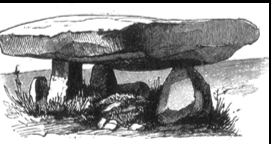


<p>Late Stone Age&nbsp; (Eastern Mediterranean: 6,000 B.C.E. to 3,500 B.C.E.; Spain and Northern Europe: 4,000 to 1,500 B.C.E)</p><p></p><p><span style="background-color: transparent;">The Neolithic Age:</span></p><p><span style="background-color: transparent;">Giant stride forward in human development: fixed abodes and domestication of plants and animals; village cultures surrounded by fields; change from hunter to herdsman may have started in the Near East as early as 7,000 B.C.E. and in Europe about 4,000 B.C.E.</span></p><p><span style="background-color: transparent;">Neolithic structures:</span></p><p><span style="background-color: transparent;">Dolmen: tomb structures consisting of rows of stones, planted vertically in the ground, covered with a slab</span></p><p><span style="background-color: transparent;">Cromlech: huge stones arranged in a circle</span></p><p><span style="background-color: transparent;">Believed to have a religious association: cult of the dead or sun worship</span></p><p><span style="background-color: transparent;">The most famous such structure is that of Stonehenge in GB&nbsp;</span></p><p><br></p>
7
New cards

Monolith, n. (adj.: monolithic)

= a single, large stone

Post-fix “lith” (lat.) means “stone”

B.C.E. = Before Common (Christian) Era

8
New cards
<p>Name and Description  </p>

Name and Description

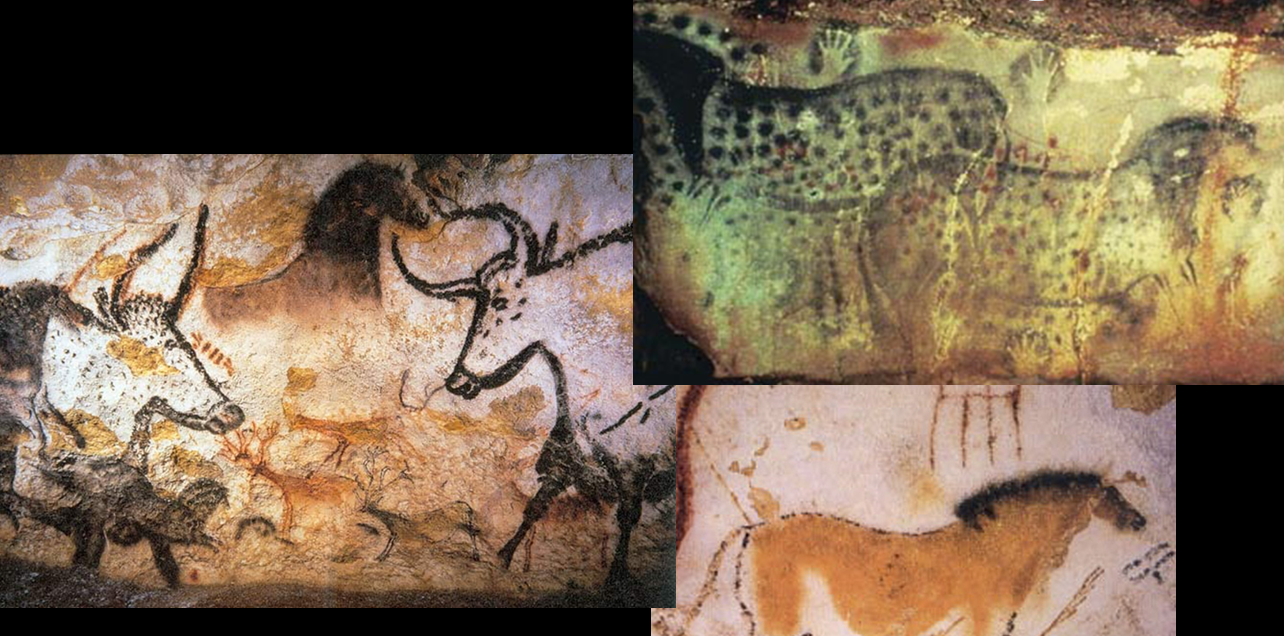
Hall of Bulls, Lascaux, ca. 15,000-18,000 B.C.E., Dordogne, France

Hall of Bulls, Lascaux, ca. 15,000

-18,000 B.C.E., Dordogne, France

•Discovered in 1940, Lascaux cave complex remains the most famous example of Paleolithic art

•Color pigment (chunks of red and yellow ocher) directly applied to walls (brushes, blowpipes), plus about 1,000 engravings (wall incisions)

•Function: proto-religious (?), mystical, ensure the success of hunting; recent theory: “teenage graffiti art”

<p style="text-align: left;"><span style="background-color: yellow; font-family: Calibri, sans-serif; line-height: 115%;">Hall of Bulls, Lascaux, ca. 15,000-18,000 B.C.E., Dordogne, France</span></p><p style="text-align: left;">Hall of Bulls, Lascaux, ca. 15,000</p><p style="text-align: left;">-18,000 B.C.E., Dordogne, France</p><p>•Discovered in 1940, Lascaux cave complex remains the most famous example of Paleolithic art</p><p>•Color pigment (chunks of red and yellow ocher) directly applied to walls (brushes, blowpipes), plus about 1,000 engravings (wall incisions)</p><p>•Function: proto-religious (?), mystical, ensure the success of hunting; recent theory: “teenage graffiti art”</p>
9
New cards
<p>Name and Description </p>

Name and Description

Hall of Bulls, Lascaux, ca. 15,000-18,000 B.C.E., Dordogne, France

Details from the Lascaux caves,

ca. 15,000-18,000 B.C.E., Dordogne, France
<p><span style="background-color: yellow;">Hall of Bulls, Lascaux, ca. 15,000-18,000 B.C.E., Dordogne, France</span></p><p>Details from the Lascaux caves,</p><p style="text-align: left;">ca. 15,000-18,000 B.C.E., Dordogne, France</p>
10
New cards
<p>Name and Description</p>

Name and Description

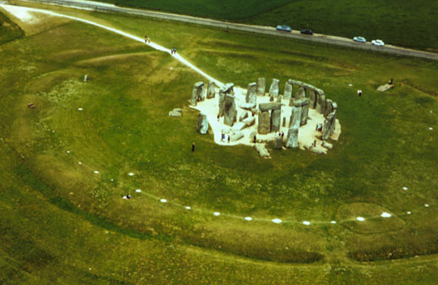
Stonehenge, ca. 2000 B.C.E., Salisbury Plain, Wiltshire, England

Stonehenge, ca. 2000 B.C.E., Salisbury Plain, Wiltshire, England

  •  giant farmer calendar through sunrise/sunset

    • •A mile in diameter

      •Outermost ring: large monoliths of sarsen stones capped by lintels

      •Inner ring of bluestones encircling

        a horseshoe (open end facing East) of trilithons (five lintel-topped pairs of the largest sarsen stones, each weighing 45 to 50 tons)

      •In the center of the “horseshoe”: the “Heelstone,” marking a point chosen to allow the observation of sunrise at the mid-summer solstice

<p><span style="background-color: yellow;"><em>Stonehenge</em>, ca. 2000 B.C.E., Salisbury Plain, Wiltshire, England</span></p><p><em>Stonehenge</em>, ca. 2000 B.C.E., Salisbury Plain, Wiltshire, England</p><ul><li><p><span style="background-color: transparent;">&nbsp;giant farmer calendar through sunrise/sunset</span></p><ul><li><p>•A mile in diameter</p><p>•Outermost ring: large monoliths of sarsen stones capped by lintels</p><p>•Inner ring of bluestones encircling</p><p style="text-align: left;">&nbsp; a horseshoe (open end facing East) of <u>trilithons</u> (five lintel-topped pairs of the largest sarsen stones, each weighing 45 to 50 tons)</p><p>•In the center of the “horseshoe”: the “Heelstone,” marking a point chosen to allow the observation of sunrise at the mid-summer solstice</p></li></ul></li></ul><p></p>
11
New cards
<p>Name and Description</p>

Name and Description

Skara Brae, Scotland, ca. 3100-2500 B.C.E.

Skara Brae, Scotland, ca. 3100-

2500 B.C.E.

Residential equivalent to a ritual structure like Stonehenge, using largely the same building techniques, esp. post and lintel

Close fitting corbelled masonry, doors, hearth, benches, sleeping platforms

<p><span style="background-color: yellow; font-family: Calibri, sans-serif; line-height: 115%;">Skara Brae, Scotland, ca. 3100-2500 B.C.E.</span></p><p>Skara Brae, Scotland, ca. 3100-</p><p style="text-align: left;">2500 B.C.E.</p><p style="text-align: left;">Residential equivalent to a ritual structure like Stonehenge, using largely the same building techniques, esp. post and lintel</p><p style="text-align: left;">Close fitting corbelled masonry, doors, hearth, benches, sleeping platforms</p>
12
New cards
<p>Name and Description</p>

Name and Description

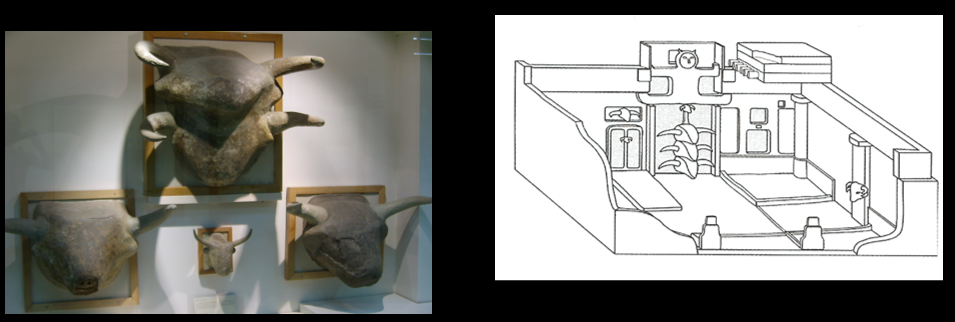
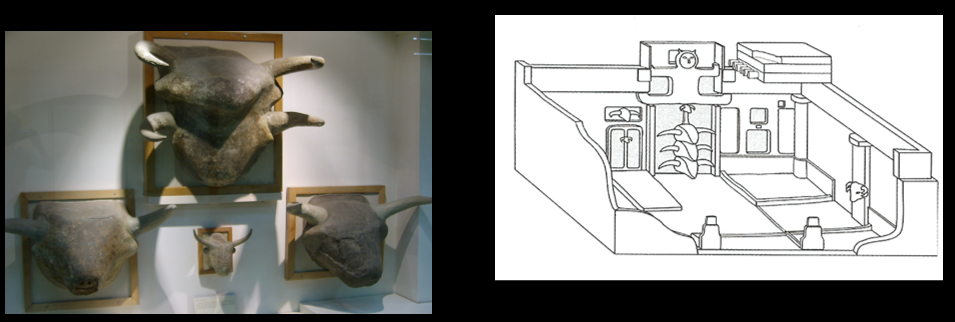
Çatal Hüyük, Asia Minor (Turkey), 6700-5650 B.C.E.

Ruins and Three Reconstructions of

Çatal Hüyük, Asia Minor (Turkey)

6700-5650 B.C.E.

Çatal Hüyük is considered one of the very first urban settlements, still dating from the (Easterm) Neolithic Period, for which archeological evidence exists

Population of 5,000 to 7,000, rectangular mud-brick houses with hearth, not unlike the architecture in New Mexico; existence of specialized craftsmen (fabric, wood)

<p><span style="background-color: yellow;">Çatal Hüyük, Asia Minor (Turkey), 6700-5650 B.C.E.</span></p><p>Ruins and Three Reconstructions of</p><p style="text-align: left;">Çatal Hüyük, Asia Minor (Turkey)</p><p style="text-align: left;">6700-5650 B.C.E.</p><p style="text-align: left;">Çatal Hüyük is considered one of the very <u>first urban settlements</u>, still dating from the (Easterm) <u>Neolithic Period</u>, for which archeological evidence exists</p><p style="text-align: left;">Population of 5,000 to 7,000, rectangular mud-brick houses with hearth, not unlike the architecture in New Mexico; existence of <u>specialized craftsmen</u> (fabric, wood)</p>
13
New cards
<p>Name and Description</p>

Name and Description

Çatal Hüyük, Asia Minor (Turkey), 6700-5650 B.C.E.

Ruins and Three Reconstructions of

Çatal Hüyük, Asia Minor (Turkey)

6700-5650 B.C.E.

.

Houses also contained shrines with ox heads, perhaps suggesting

early existence of belief structures

No evidence of kings, rulers, palaces, higher forms of authority; subsistence

economy
<p><span style="background-color: yellow;">Çatal Hüyük, Asia Minor (Turkey), 6700-5650 B.C.E.</span></p><p>Ruins and Three Reconstructions of</p><p style="text-align: left;">Çatal Hüyük, Asia Minor (Turkey)</p><p style="text-align: left;">6700-5650 B.C.E.</p><p style="text-align: left;">.</p><p style="text-align: left;">Houses also contained shrines with ox heads, perhaps suggesting</p><p style="text-align: left;">early existence of belief structures</p><p style="text-align: left;">No evidence of kings, rulers, palaces, higher forms of authority; subsistence</p><p style="text-align: left;">economy</p>
14
New cards
<p>Name and Description</p>

Name and Description

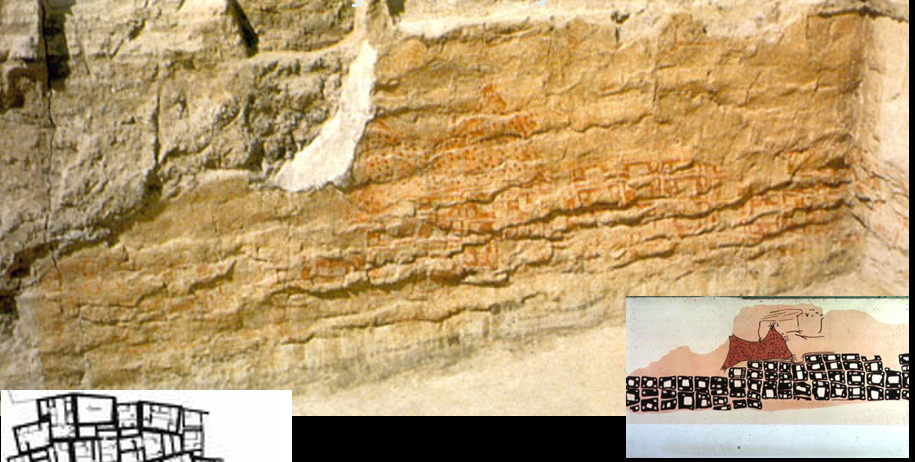
Çatal Hüyük, Asia Minor (Turkey), 6700-5650 B.C.E.

Wall fragment with painting from Çatal Hüyük, Asia Minor (Turkey) 6700-5650 B.C.E.

Earliest known landscape painting of a specific site
<p><span style="background-color: yellow;">Çatal Hüyük, Asia Minor (Turkey), 6700-5650 B.C.E.</span></p><p>Wall fragment with painting from Çatal Hüyük, Asia Minor (Turkey) 6700-5650 B.C.E.</p><p style="text-align: left;">Earliest known landscape painting of a specific site</p>
15
New cards
<p><strong><u>Sumer – Ur - 1: </u></strong>Name and Description</p>

Sumer – Ur - 1: Name and Description

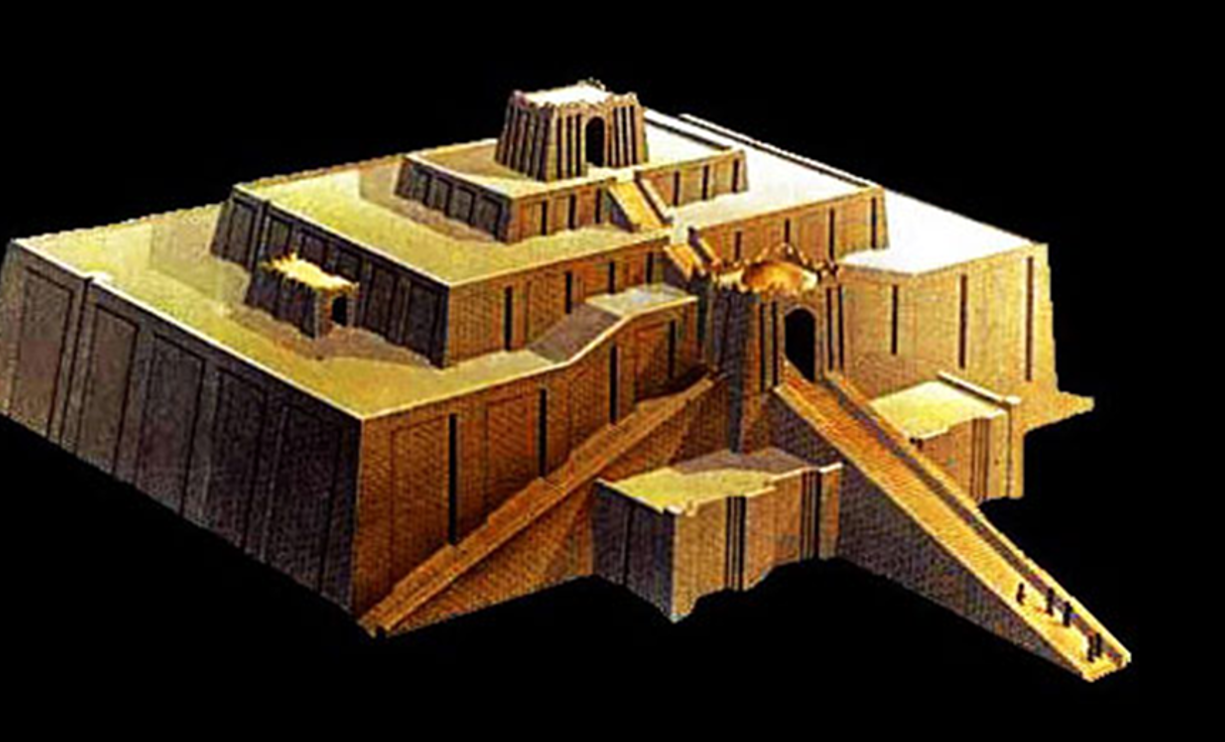
The Ziggurat at Ur-Nammu, ca. 2100 B.C.E.

The Ziggurat at Ur-Nammu, ca.

2100 B.C.E.

•A ziggurat is stepped temple structure made of sun-dried brick; it is typical for Mesopotamian civilizations (Sumer, Babylonia, etc.)

•Ur: three ramp-like stairways/100 steps each; tower-flanked gateway

•Shrine at the top of the ziggurat, where priests prayed to the “gods of the night” (planets and their constellations) – hence the drive to build as high a structure as possible
<p><span style="background-color: yellow; font-family: Calibri, sans-serif; line-height: 115%;"><em>The Ziggurat at Ur-Nammu</em>, ca. 2100 B.C.E.</span></p><p><em>The Ziggurat at Ur-Nammu</em>, ca.</p><p style="text-align: left;">2100 B.C.E.</p><p>•A <u>ziggurat</u> is stepped temple structure made of sun-dried brick; it is typical for <u>Mesopotamian civilizations </u>(Sumer, Babylonia, etc.)</p><p>•Ur: three ramp-like stairways/100 steps each; tower-flanked gateway</p><p>•Shrine at the top of the ziggurat, where priests prayed to the “gods of the night” (planets and their constellations) – hence the drive to build as high a structure as possible</p>
16
New cards
<p>Sumerian Art: Name and Description</p>

Sumerian Art: Name and Description

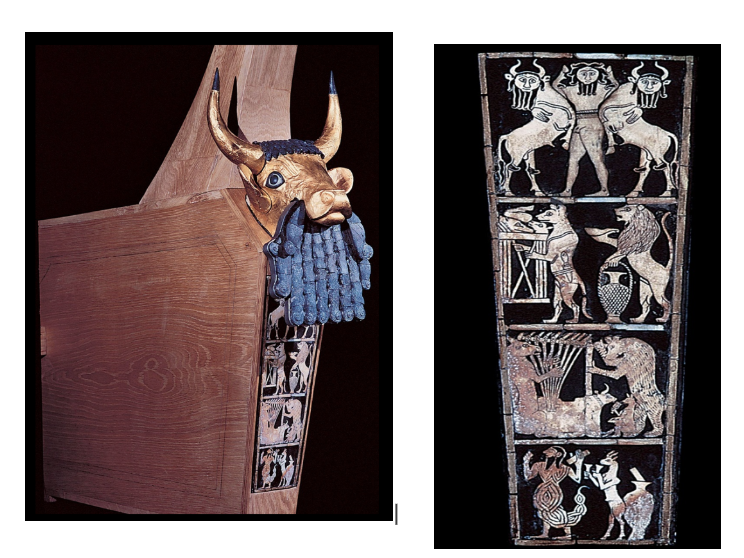
Soundbox of a Lyre from the “King’s Grave,” Ur,  ca. 2650-2550 B.C.E., wood with gold, lapis lazuli, shell and silver

Soundbox of a Lyre from the

“King’s Grave” tomb RT789, Ur,

ca. 2650-2550 B.C.E., wood with

gold, lapis lazuli, shell and silver

(partially reconstructed)

nWith Sumerian artifacts we see for the first time stylistic conventions emerge that define objects originating from one culture


Front Plaque of the same Soundbox

•Formalized poses, heraldic symmetry

•Animal symbolism, esp. bull

  Bull was considered a symbol of fertility and strength, revered through the New East and the Mediterranean (cf. Picasso); allusion to supernatural powers?
<p><span style="background-color: yellow;">Soundbox of a Lyre from the “King’s Grave,” Ur, &nbsp;ca. 2650-2550 B.C.E., wood with gold, lapis lazuli, shell and silver</span></p><p>Soundbox of a Lyre from the</p><p style="text-align: left;">“King’s Grave” tomb RT789, Ur,</p><p style="text-align: left;">ca. 2650-2550 B.C.E., wood with</p><p style="text-align: left;">gold, lapis lazuli, shell and silver</p><p style="text-align: left;">(partially reconstructed)</p><p>nWith Sumerian artifacts we see for the first time stylistic conventions emerge that define objects originating from one culture</p><p></p><p>Front Plaque of the same Soundbox</p><p>•Formalized poses, heraldic symmetry</p><p>•Animal symbolism, esp. bull</p><p style="text-align: left;">&nbsp; <u>Bull</u> was considered a symbol of <u>fertility and strength, revered through the New East and the Mediterranean (cf. Picasso)</u>; allusion to supernatural powers?</p>
17
New cards
<p>Name and Description</p>

Name and Description

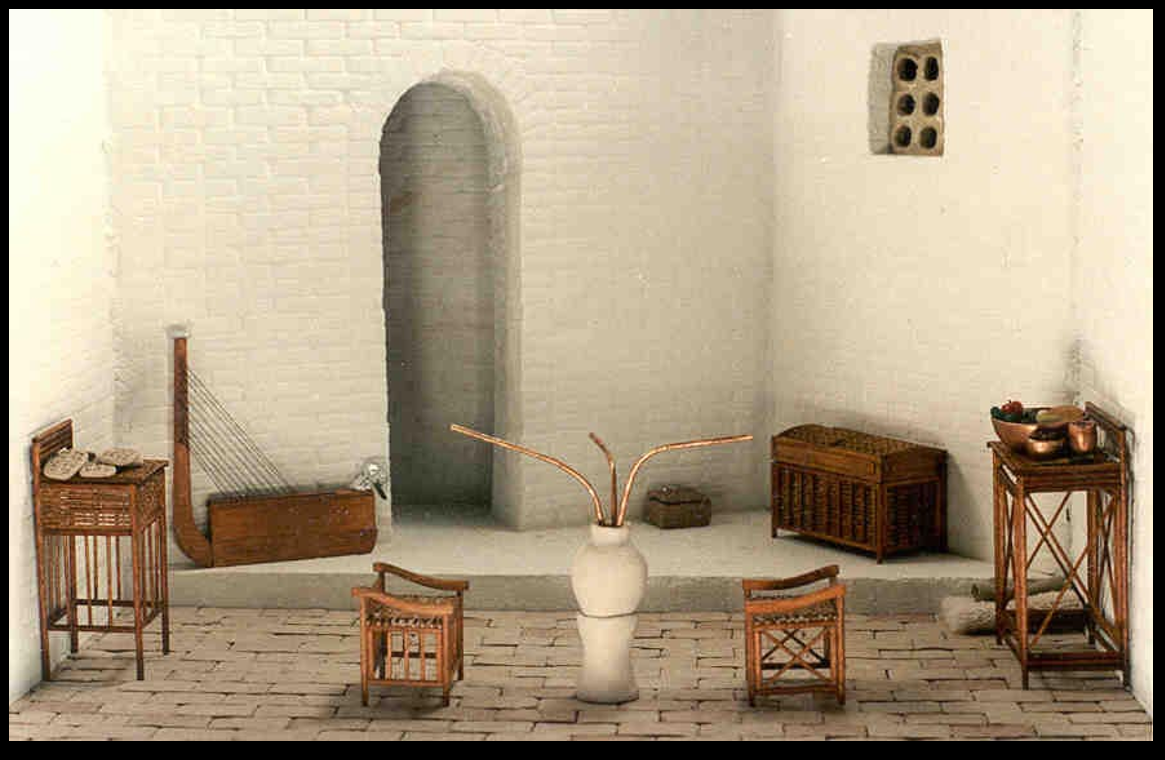
Ancient Sumerian libation room as depicted on a Sumerian cylinder seal, ca. 2,700 B.C.E.     

Royal Audience Hall and Stairway, Persepolis (Iran), ca. 500 B.C.E.

Ancient Sumerian libation room as depicted on a Sumerian cylinder seal, ca. 2,700 B.C.E.   (reconstruction by Walter Vaughn)
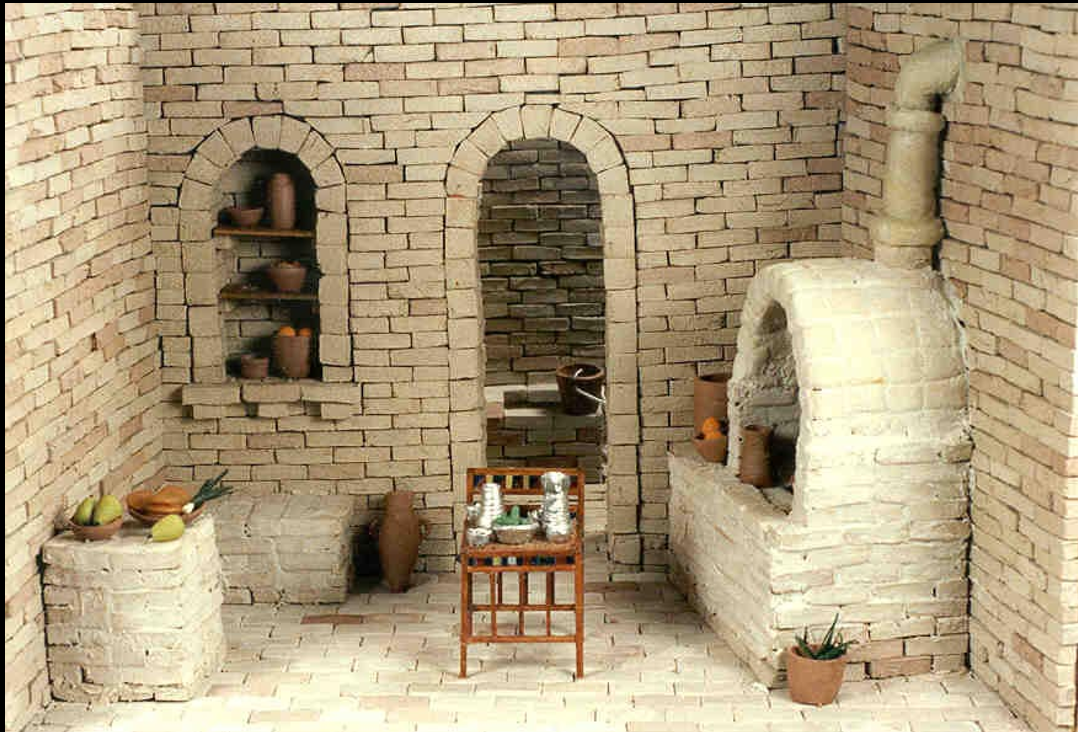
<p><span style="background-color: yellow;">Ancient Sumerian libation room as depicted on a Sumerian cylinder seal, ca. 2,700 B.C.E.</span><span>&nbsp;&nbsp;&nbsp;&nbsp;&nbsp;</span></p><p><em>Royal Audience Hall and Stairway</em>, Persepolis (Iran), ca. 500 B.C.E.</p><p><strong>Ancient Sumerian libation room as depicted on a Sumerian cylinder seal, ca. 2,700 B.C.E.&nbsp;&nbsp; (reconstruction by Walter Vaughn)</strong></p>
18
New cards
<p>Name and Description</p>

Name and Description

Stele of Hammurabi, Susa, ca. 1880 B.C.E., carved Basalt stone

Stele of Hammurabi, Susa, ca. 1880

B.C.E., carved Basalt stone

•Akkadian rulers were toppled by incursion of Guti people; political structures in Mesopotamia reverted back to independent  city-states; rise of Babylon

•Babylon’s most powerful king was Hammurabi, the first ruler to establish codified (written) laws for his realm recorded on this stele

•The image depicts Hammurabi in profile on the left as he is about to receive the laws from the flame-shouldered sun god Shamash

<p><span style="background-color: yellow;"><em>Stele of Hammurabi</em>, Susa, ca. 1880 B.C.E., carved Basalt stone</span></p><p><em>Stele of Hammurabi</em>, Susa, ca. 1880</p><p style="text-align: left;">B.C.E., carved Basalt stone</p><p>•Akkadian rulers were toppled by incursion of Guti people; political structures in <u>Mesopotamia</u> reverted back to independent&nbsp; city-states; rise of Babylon</p><p>•Babylon’s most powerful king was <u>Hammurabi</u>, the first ruler to establish <u>codified (written) laws</u> for his realm recorded on this stele</p><p>•The image depicts Hammurabi in profile on the left as he is about to receive the laws from the flame-shouldered sun god Shamash</p>
19
New cards
<p>Name and Description</p>

Name and Description

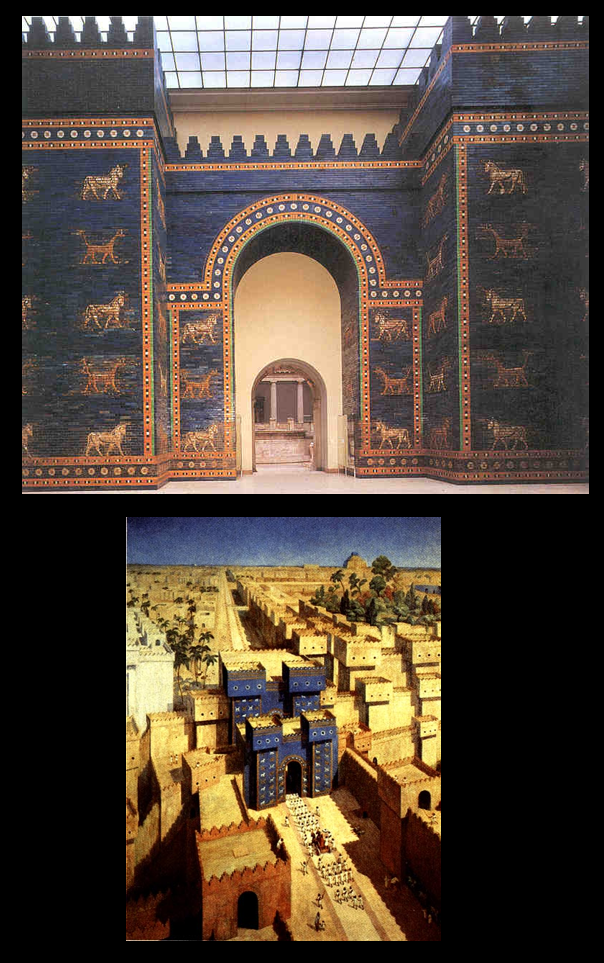
The Ishtar Gate, Babylon, ca. 575 B.C.E., glazed brick (restored, Pergamon Museum, Berlin)

The Ishtar Gate, Babylon, ca. 575

B.C.E., glazed brick (restored,

Pergamon Museum, Berlin)

nThe Hittites brought Hammurabi’s empire down, and sacked Babylon in 1595 B.C.E.

nUnder King Nebuchadnezzar (Bible: Book of Daniel), there was a revival of Babylonian culture: Hanging Gardens, Ziggurat Temple of Bel (Bible: Babel), of which this was one of the processional gateways adorned with animal motives; 60 lions on the processional way leading to the gate

<p><span style="background-color: yellow;"><em>The Ishtar Gate</em>, Babylon, ca. 575 B.C.E., glazed brick (restored, Pergamon Museum, Berlin)</span></p><p><em>The Ishtar Gate</em>, Babylon, ca. 575</p><p style="text-align: left;">B.C.E., glazed brick (restored,</p><p style="text-align: left;">Pergamon Museum, Berlin)</p><p>nThe Hittites brought Hammurabi’s empire down, and sacked Babylon in 1595 B.C.E.</p><p>nUnder King <u>Nebuchadnezzar</u> (Bible: Book of Daniel), there was a <u>revival of Babylonian culture: Hanging Gardens, Ziggurat Temple of Bel (Bible: Babel), </u>of which this was one of the processional gateways adorned with animal motives; 60 lions on the processional way leading to the gate</p>
20
New cards
<p>Name and Description</p>

Name and Description

Reconstruction Drawing of the Citadel of Sargon II, Khorsabad, ca. 720 B.C.E.

Reconstruction Drawing of the

Citadel of Sargon II, Khorsabad,

ca. 720 B.C.E.

•You may have noticed the roughly 1,000-year interval between Babylonian and Neo-Babylonian empire, during which time, from about 900 to 612 B.C.E., Mesopotamia came under Assyrian dominance

•The Assyrians came from way up north of the great river valley, from what it today northern Iraq

<p><span style="background-color: yellow;">Reconstruction Drawing of the Citadel of Sargon II, Khorsabad, ca. 720 B.C.E.</span></p><p>Reconstruction Drawing of the</p><p style="text-align: left;">Citadel of Sargon II, Khorsabad,</p><p style="text-align: left;">ca. 720 B.C.E.</p><p>•You may have noticed the roughly <u>1,000-year interval between Babylonian and Neo-Babylonian empire</u>, during which time, from about 900 to 612 B.C.E., Mesopotamia came under <u>Assyrian dominance</u></p><p>•The <u>Assyrians</u> came from way up north of the great river valley, from what it today northern Iraq</p>
21
New cards
<p>Name and Description</p>

Name and Description

Winged Human-Headed Bull (lamassu), Khorsabad,  ca. 720 B.C.E., carved limestone

Winged Human-Headed Bull (lamassu),

Khorsabad,  ca. 720 B.C.E., carved

limestone

•Citadel would have covered some 25 acres and had over 200 courtyards and rooms; lack of unity of plan; remained unfinished

•An art form at which the Assyrians excelled was relief sculpture (carved out of only one side of a block of stone) to decorate their palaces

Composite creatures between humans and animals (lamassu) of the type seen here become a standard feature of Mesopotamian art

<p><span style="background-color: yellow; font-family: Calibri, sans-serif; line-height: 115%;"><em>Winged Human-Headed Bull (lamassu)</em>, Khorsabad,&nbsp; ca. 720 B.C.E., carved limestone</span></p><p><em>Winged Human-Headed Bull (lamassu)</em>,</p><p style="text-align: left;">Khorsabad,&nbsp; ca. 720 B.C.E., carved</p><p style="text-align: left;">limestone</p><p>•Citadel would have covered some 25 acres and had over 200 courtyards and rooms; lack of unity of plan; remained unfinished</p><p>•An art form at which the Assyrians excelled was <u>relief sculpture </u>(carved out of only one side of a block of stone) to decorate their palaces</p><p>•<u>Composite creatures between humans and animals (lamassu) </u>of the type seen here become a standard feature of Mesopotamian art</p>
22
New cards
<p>Name and Description</p>

Name and Description

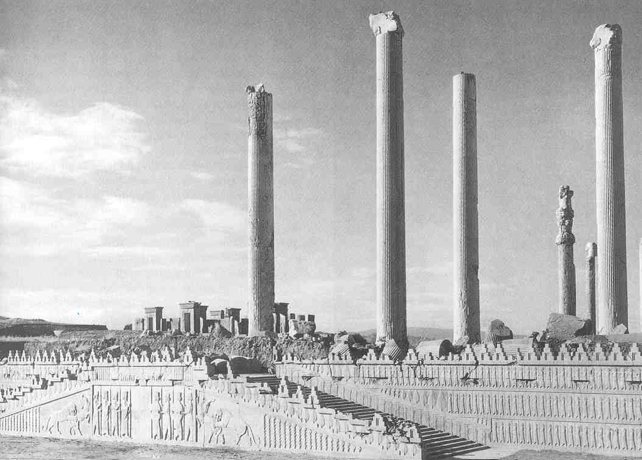
Royal Audience Hall and Stairway, Persepolis (Iran), ca. 500 B.C.E.

Royal Audience Hall and Stairway,

Persepolis (Iran), ca. 500 B.C.E.

•The Assyrians succumbed to the Babylonians, who were in turn defeated by the emerging Persian empire (538-331 B.C.E.), which at its height included most of the Near and the Middle East, including Egypt, and ranged from the Danube to the the Indus

•Center of Persian culture was Palace at Persepolis, built by Darius I and Xerxes I; destroyed by Greek conqueror Alexander the Great
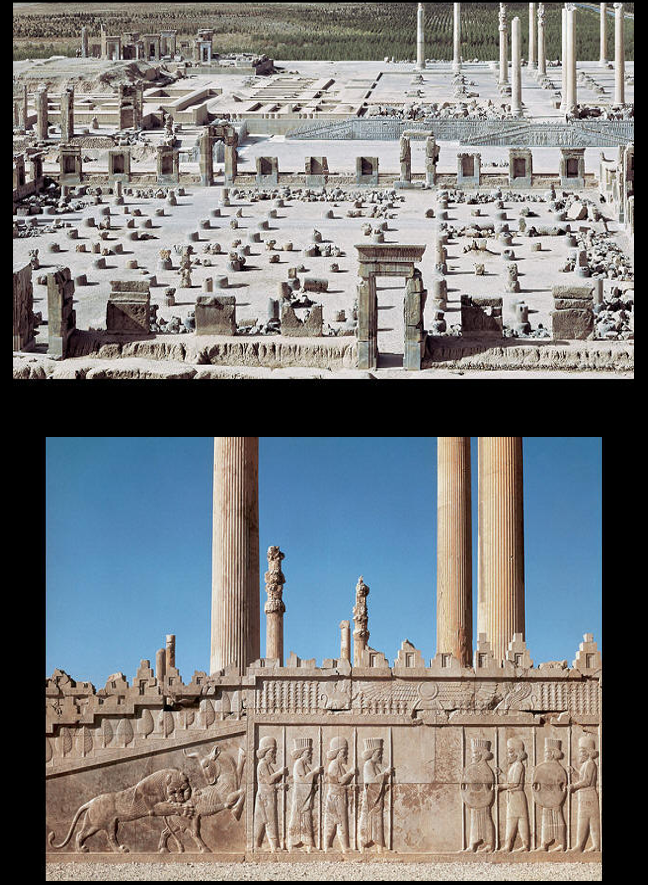
<p><span style="background-color: yellow;"><em>Royal Audience Hall and Stairway</em>, Persepolis (Iran), ca. 500 B.C.E.</span></p><p><em>Royal Audience Hall and Stairway</em>,</p><p style="text-align: left;">Persepolis (Iran), ca. 500 B.C.E.</p><p>•The Assyrians succumbed to the Babylonians, who were in turn defeated by the emerging Persian empire (538-331 B.C.E.), which at its height included most of the Near and the Middle East, including Egypt, and ranged from the Danube to the the Indus</p><p>•Center of Persian culture was Palace at Persepolis, built by Darius I and Xerxes I; destroyed by Greek conqueror Alexander the Great</p>
23
New cards
<p>Name and Description</p>

Name and Description

Royal Audience Hall and Stairway, Persepolis (Iran), ca. 500 B.C.E.

Royal Audience Hall and Stairway,

Persepolis (Iran), ca. 518 B.C.E.

•Plan unlike anyone seen before: succession of columned courts, axially arranged; central court 60 feet high and surface over 200 square feet; large, fluted columns

•Vast rock-cut podium with relief carving featuring fighting animals (bulls and lions) and superimposed registers of the Persian kings’ troops

•Heavily fortified, the palace is believed to have served above all ceremonial purposes
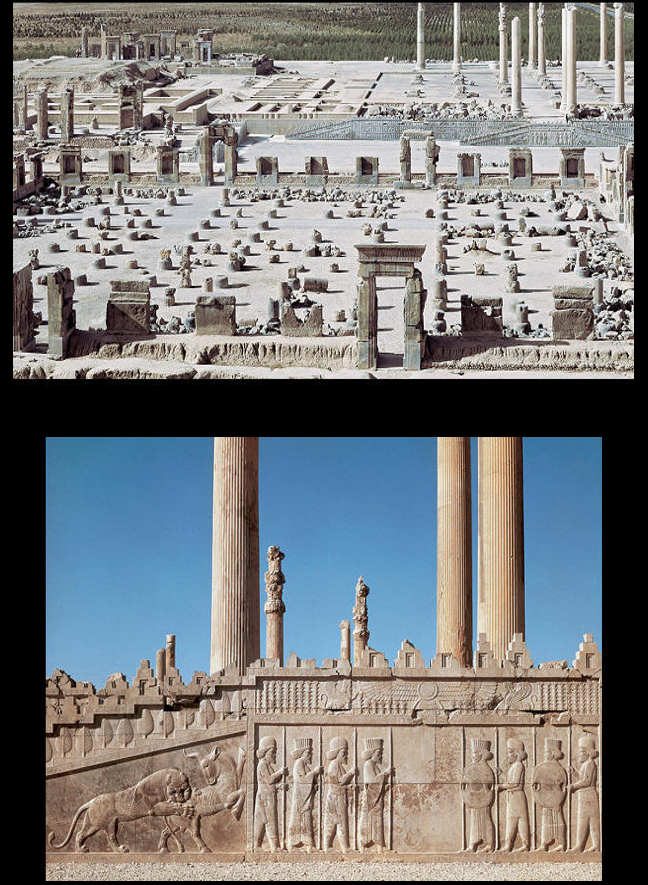
<p><span style="background-color: yellow;"><em>Royal Audience Hall and Stairway</em>, Persepolis (Iran), ca. 500 B.C.E.</span></p><p><em>Royal Audience Hall and Stairway</em>,</p><p style="text-align: left;">Persepolis (Iran), ca. 518 B.C.E.</p><p>•Plan unlike anyone seen before: succession of <u>columned courts</u>, axially arranged; central court 60 feet high and surface over 200 square feet; large, fluted columns</p><p>•Vast rock-cut podium with relief carving featuring fighting animals (bulls and lions) and superimposed registers of the Persian kings’ troops</p><p>•Heavily fortified, the palace is believed to have served above all ceremonial purposes</p>
24
New cards

Ancient Egypt

•Climatic and geographic conditions for Egyptian civilization comparable to that of Mesopotamia: River Valley of the Nile, annual inundations fertilize soil

Preoccupation with the afterlife (preservation of the ka beyond death) define type of monuments, works of art: tombs and temples dominate

•Political organization: leaders/kings were called pharaohs; politically influential cast of temple priests; ritualized religious practices, art of writing confined to temples; conservative taste in matters of art

•Founding myth according to Plutarch: Osiris, Isis, Seth, Harpocrates (Horus)

•Egyptian history divided into dynasties (successions of pharaohs, established by historian Manetho writing 2nd century B.C.E.), and larger eras: Pre-and Early Dynastic Periods, Old Kingdom (ca. 2686-2155 B.C.E.), Middle Kingdom, New Kingdom (1570-1070 B.C.E.), Late Period, Ptolemaic Period (Greek domination), thereafter Egypt part of the Roman Empire

•Hieroglyphic Writing: Deciphered in the early 1820s by Jean-François Champollion, based on his analysis of the Rosetta Stone

25
New cards
<p>Name and Description</p>

Name and Description

Palette of Narmer, Hierakonpolis, Upper Egypt, ca. 3000 B.C.E., slate

Palette of Narmer, Hierakonpolis,

Upper Egypt, ca. 3000 B.C.E., slate

•Legendary king Menes (=King Narmer?) unified Upper and Lower Egypt during the Early Dynamistic Period (ca. 3000-2686 B.C.E.)

•“Palette” was a tablet on which eye makeup was prepared; a utilitarian object (name a matter of convention)

•Iconography: King Namer (?), in hieratic scale, slaying an enemy; hawk (=Horus) with man-headed hieroglyph adorned with papyrus buds (papyrus= conquered Lower Egypt); reverse: king with cobra crown of Lower Egypt

<p><em>Palette of Narmer</em>, Hierakonpolis, Upper Egypt, ca. 3000 B.C.E., slate</p><p><em>Palette of Narmer</em>, Hierakonpolis,</p><p style="text-align: left;">Upper Egypt, ca. 3000 B.C.E., slate</p><p>•Legendary king Menes (=King Narmer?) unified Upper and Lower Egypt during the Early Dynamistic Period (ca. 3000-2686 B.C.E.)</p><p>•“Palette” was a tablet on which <u>eye makeup</u> was prepared; a utilitarian object (name a matter of convention)</p><p>•Iconography: King Namer (?), in <u>hieratic scale</u>, slaying an enemy; hawk (=Horus) with man-headed hieroglyph adorned with papyrus buds (papyrus= conquered Lower Egypt); reverse: king with cobra crown of Lower Egypt</p>
26
New cards
<p>Name and Description</p>

Name and Description

Tomb Architecture

Schematic Rendering of Mastaba

tombs

Care of the dead/afterlife was of great importance in Egyptian culture

•Egyptian religious belief: Ka lived on after death and needed to be provided for (preservation of body, food and drink, art, etc.)

Mastabas (Arabic: bench), rectangular with sloping sides and made of bricks, are the earliest types of Egyptian funerary monuments
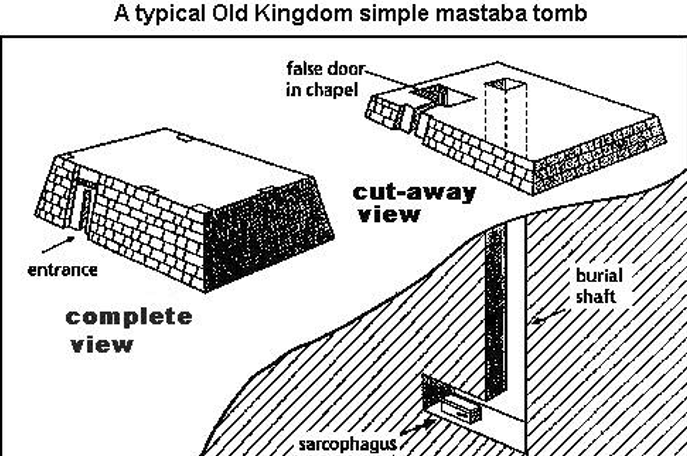
<p><span><u>Tomb Architecture</u></span></p><p><span>Schematic Rendering of Mastaba</span></p><p style="text-align: left;"><span>tombs</span></p><p><span>•<u>Care of the dead/afterlife </u>was of great importance in <u>Egyptian culture</u></span></p><p><span>•Egyptian religious belief: <em><u>Ka</u></em><u> lived on after death and needed to be provided for (preservation of body, food and drink, art, etc.)</u></span></p><p><span>•<u>Mastabas </u>(Arabic: bench), rectangular with sloping sides and made of bricks, are the earliest types of Egyptian funerary monuments</span></p>
27
New cards
<p>Name and Description</p>

Name and Description

Imhotep, Stepped Pyramid of King Zoser, Saqquara (necropolis of Memphis), ca. 2610 B.C.E.

Imhotep, Stepped Pyramid of King

Zoser, Saqquara (necropolis of

Memphis), ca. 2610 B.C.E.

•First monumental royal tomb in Egypt built for King Zoser of the Third Dynasty; precursor of pyramids of Gizeh

•Name of builder, Imhotep, known: first artist/architect of recorded history

•Stepped pyramid, reminiscent of ziggurats of Mesopotamia, with adjacent temple complex

Function: to protect the mummified king and to symbolize his absolute, god-like power

<p>Imhotep, <em>Stepped Pyramid of King Zoser</em>, Saqquara (necropolis of Memphis), ca. 2610 B.C.E.</p><p>Imhotep, <em>Stepped Pyramid of King</em></p><p style="text-align: left;"><em>Zoser</em>, Saqquara (necropolis of</p><p style="text-align: left;">Memphis), ca. 2610 B.C.E.</p><p>•First monumental royal tomb in Egypt built for King Zoser of the Third Dynasty; precursor of pyramids of Gizeh</p><p>•Name of builder, <u>Imhotep,</u> known: <u>first artist/architect of recorded history</u></p><p>•Stepped pyramid, reminiscent of ziggurats of Mesopotamia, with adjacent temple complex</p><p>•<u>Function: to protect the mummified king and to symbolize his absolute, god-like power</u></p>
28
New cards
<p>Name and Description</p>

Name and Description

Furniture of Queen Hetepheres (reconstruction), ca. 2613-2494 B.C.E., gilded wood (discovered in 1925)

Wife of Pharaoh Snefru (2613-2589 B.C.E.); the parents of Pharaoh Khufu (Cheops), builder of the largest pyramid of Gizeh (see below)

Found in the oblong burial chamber of a mastaba tomb; dignitaries were buried with food and furniture to assure their well-being in the afterlife

Headboard of bed is really footrest; square design of chair, with flower design
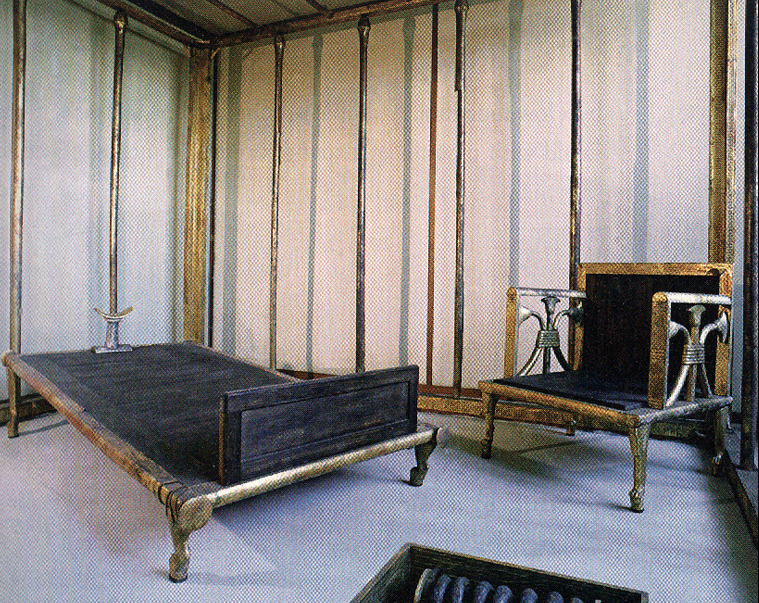
<p>Furniture of Queen Hetepheres (reconstruction), ca. 2613-2494 B.C.E., gilded wood (discovered in 1925)</p><p style="text-align: left;">Wife of Pharaoh Snefru (2613-2589 B.C.E.); the parents of Pharaoh Khufu (Cheops), builder of the largest pyramid of Gizeh (see below)</p><p style="text-align: left;">Found in the oblong burial chamber of a mastaba tomb; dignitaries were buried with food and furniture to assure their well-being in the afterlife</p><p style="text-align: left;">Headboard of bed is really footrest; square design of chair, with flower design</p>
29
New cards
<p>Name and Description</p>

Name and Description

Great Pyramids of Gizeh: Menkure (Greek: Mykerinus), ca. 2460 B.C.E., Khafre (Greek: Chefren), 2500 B.C.E., Khufu (Greek: Cheops), ca. 2530 B.C.E.

Great Pyramids of Gizeh, front to back: Menkure (Greek: Mykerinus),

ca. 2460 B.C.E., Khafre (Greek: Chefren), 2500 B.C.E., Khufu (Greek:

Cheops), ca. 2530 B.C.E.

<p><span><em>Great Pyramids of Gizeh</em>: <em>Menkure</em> (Greek: <em>Mykerinus</em>), ca. 2460 B.C.E., <em>Khafre</em> (Greek: <em>Chefren</em>), 2500 B.C.E., <em>Khufu</em> (Greek: <em>Cheops</em>), ca. 2530 B.C.E.</span></p><p><strong><em>Great Pyramids of Gizeh</em>, front to back: <em>Menkure</em> (Greek: <em>Mykerinus</em>),</strong></p><p style="text-align: left;"><strong>ca. 2460 B.C.E., <em>Khafre</em> (Greek: <em>Chefren</em>), 2500 B.C.E., <em>Khufu</em> (Greek:</strong></p><p style="text-align: left;"><strong><em>Cheops</em>), ca. 2530 B.C.E.</strong></p>
30
New cards
<p>Name / Description </p>

Name / Description

Mortuary Temple of Queen Hatshepsut, Deir el-Bahri, ca. 1350 B.C.E.

New Kingdom: incursions from Syrian and Mespotamian uplands (Hyksos) quelled with difficulty by Egyptian leadership class, new types of weaponry introduced, conquests (Eurphrates to Nubia under Egyptian control); new capital: Thebes

•No more pyramids, replaced by mortuary temples carved directly out of the cliffs on the banks of the Nile

•Hatshepsut one of the best examples: three colonnaded terraces, chamfered (flattened at the edges) columns used

•Originally rich vegetation


<p><span style="font-family: Calibri, sans-serif; line-height: 115%;"><em>Mortuary Temple of Queen Hatshepsut</em>, Deir el-Bahri, ca. 1350 B.C.E. </span></p><p><span>•<u>New Kingdom</u>: <u>incursions from Syrian and Mespotamian uplands (Hyksos) </u>quelled with difficulty by Egyptian leadership class, <u>new types of weaponry </u>introduced, <u>conquests </u>(Eurphrates to Nubia under Egyptian control); new capital: <u>Thebes</u></span></p><p><span>•No more pyramids, replaced by <u>mortuary temples carved directly out of the cliffs </u>on the banks of the Nile</span></p><p><span>•Hatshepsut one of the best examples: three colonnaded terraces, <em>chamfered</em> (flattened at the edges) columns used</span></p><p><span>•Originally rich vegetation</span></p><p></p>
31
New cards
<p>Name / Description </p>

Name / Description

Temple of Ramses II, Abu Simbel, ca. 1257

•Another example of a rock-cut funerary temple from the New Kingdom, highlighting the tendency towards monumental (gigantic) art and architecture during that period

Ramses II: Egypt’s great warrior-pharaoh; his temple built far up the Nile (in the south)

•Temple façade supposed to represent four colossal images of Ramses II

<p><em>Temple of Ramses II</em>, Abu Simbel, ca. 1257</p><p><span>•Another example of a <u>rock-cut funerary temple</u> from the <u>New Kingdom</u>, highlighting the tendency towards <u>monumental (gigantic) art and architecture</u> during that period</span></p><p><span>•<u>Ramses II</u>: Egypt’s great warrior-pharaoh; his temple built far up the Nile (in the south)</span></p><p><span>•Temple façade supposed to represent four colossal images of Ramses II</span></p>
32
New cards
<p>Name / Description </p>

Name / Description

Temple of Amen-Mut-Khonsu, Luxor, ca. 1370 B.C.E.

with entrance Pylon

(left), and court and colonnade of Amenhotep III, ca. 1370 B.C.E.

Architecturally, monumental pylon temples with hypostyle halls are typical of the New Kingdom

These details highlight another common feature of the Egyptian hypostyle design: a clerestory, or raised, central rows of columns (higher than those at the sides), which allowed for light to filter in, while the interior of the hall remained in the shadow (cooling effect)

<p><span style="font-family: Calibri, sans-serif; line-height: 115%;"><em>Temple of Amen-Mut-Khonsu</em>, Luxor, ca. 1370 B.C.E.</span></p><p><span>with entrance <u>Pylon</u></span></p><p style="text-align: left;"><span>(left), and court and colonnade of Amenhotep III, ca. 1370 B.C.E.</span></p><p><span>Architecturally, monumental <u>pylon temples </u>with <u>hypostyle halls </u>are typical of the <u>New Kingdom</u></span></p><p><span>These details highlight another common feature of the Egyptian <u>hypostyle</u> design: a <u>clerestory, or raised, central rows of columns </u>(higher than those at the sides), which allowed for light to filter in, while the interior of the hall remained in the shadow (cooling effect)</span></p>
33
New cards
<p>Name / Description </p>

Name / Description

Fowl Hunting Scene, Wall Painting from the Tomb of Nebamun, Thebes, Egypt, 1450 B.C.E., fresco

•Many other tombs, besides those of kings, survive from ancient Egypt

•This example once decorated the burial chamber of a (now anonymous) nobleman in the necropolis of Thebes

•The deceased is shown standing on a boat, driving birds from a papyrus swamp with a throwstick; in his right hand he holds three birds he has caught

•High degree of naturalism, yet very formulaic and stylized art

<p><em>Fowl Hunting Scene, Wall Painting from the Tomb of Nebamun</em>, Thebes, Egypt, 1450 B.C.E., fresco</p><p><span>•Many other tombs, besides those of kings, survive from ancient Egypt</span></p><p><span>•This example once decorated the burial chamber of a (now anonymous) nobleman in the necropolis of Thebes</span></p><p><span>•The deceased is shown standing on a boat, driving birds from a papyrus swamp with a throwstick; in his right hand he holds three birds he has caught</span></p><p><span>•High degree of <u>naturalism</u>, yet very formulaic and stylized art</span></p>
34
New cards
<p>Name / Description </p>

Name / Description

Queen Nefertiti, Tel-el-Amarna, ca. 1360 B.C.E., painted limestone

Ultimately, there was a conservative reaction and Akhenaton was disposed

•Under his monotheistic rule (monotheism, n. = belief in only one god, instead of many), the visual arts blossomed

Heightened degree of realism, temporary relaxation of the preoccupation with death; life-like appearance of individuals appreciated; Queen Nefertiti betrays a search for ideal beauty not unlike that of ancient Greece and embodies for this reason the spirit of the Amarna Period

<p><em>Queen Nefertiti</em>, Tel-el-Amarna, ca. 1360 B.C.E., painted limestone</p><p><span>Ultimately, there was a conservative reaction and Akhenaton was disposed</span></p><p><span>•Under his <u>monotheistic rule </u>(monotheism, n. = belief in only one god, instead of many), the visual arts blossomed</span></p><p><span>•<u>Heightened degree of realism</u>, temporary relaxation of the preoccupation with death; <u>life-like appearance </u>of individuals appreciated; Queen Nefertiti betrays a search for <u>ideal beauty </u>not unlike that of ancient Greece and embodies for this reason the <u>spirit of the Amarna Period</u></span></p>
35
New cards
<p>Name / Description </p>

Name / Description

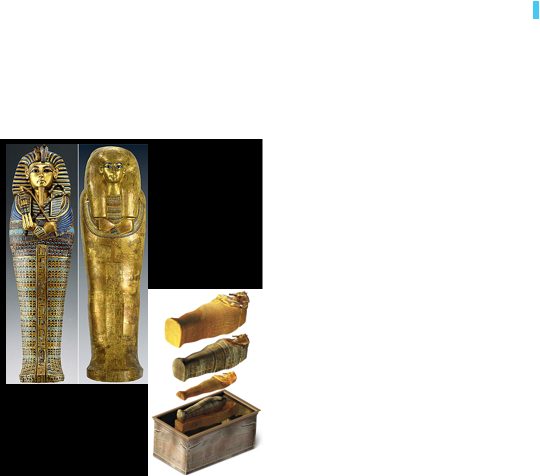
Coffin and Death Mask of Tutankhamen, innermost coffin, ca. 1350 B.C.E., gold with inlay of semiprecious stones

•Find was incomparable to anything uncovered before: burial chamber had remained untouched from tomb robbers, richness of materials with beaten gold, semiprecious stones as lapis lazuli, turquoise, and carnelian

•Musing serenity of the death mask has since then become one of the most iconic images of ancient Egypt

•1922: Spectacular discovery of the tomb of Tutankhamen (“King Tut”)

•Centerpiece of the tomb chamber: mummified body of Tutankhamen in the innermost of three coffins

•Pharaoh took the attire/attributes of Osiris

•Lingering traces of naturalism of the preceding Amarna Period

<p>Coffin and <em>Death Mask of Tutankhamen</em>, innermost coffin, ca. 1350 B.C.E., gold with inlay of semiprecious stones</p><p><span>•Find was incomparable to anything uncovered before: burial chamber had remained untouched from tomb robbers, richness of materials with <u>beaten gold, semiprecious stones </u>as lapis lazuli, turquoise, and carnelian</span></p><p><span>•Musing serenity of the death mask has since then become one of the most iconic images of ancient Egypt</span></p><p><span>•1922: Spectacular discovery of the <u>tomb of Tutankhamen</u> (“King Tut”)</span></p><p><span>•Centerpiece of the tomb chamber: mummified body of Tutankhamen in the innermost of three coffins</span></p><p><span>•Pharaoh took the <u>attire/attributes of Osiris</u></span></p><p><span>•Lingering <u>traces of naturalism</u> of the <u>preceding Amarna Period</u></span></p>
36
New cards
<p>Name / Description </p>

Name / Description

Gold Throne, Tomb of Tutankhamen, ca. 1350 B.C.E., gilded wood with inlays of semi-precious stones (incl. lapis lazuli)

Tutankhamen’s burial chamber was richly furnished, giving us a pretty clear idea of what the best of Egyptian interiors would have looked like

Legs with carved lion head decorations

Arms of chair are winged serpents (cobra heads with wings of falcons)

Compare with austerity of Furniture of Queen Hetepheres’ bed

<p>Gold Throne, Tomb of Tutankhamen, ca. 1350 B.C.E., gilded wood with inlays of semi-precious stones (incl. lapis lazuli)</p><p><span>Tutankhamen’s burial chamber was richly furnished, giving us a pretty clear idea of what the best of Egyptian interiors would have looked like</span></p><p style="text-align: left;"><span>Legs with carved lion head decorations</span></p><p style="text-align: left;"><span>Arms of chair are winged serpents (cobra heads with wings of falcons)</span></p><p style="text-align: left;"><span>Compare with austerity of Furniture of Queen Hetepheres’ bed</span></p>
37
New cards
<p>Name / Description </p>

Name / Description

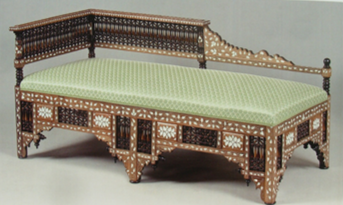
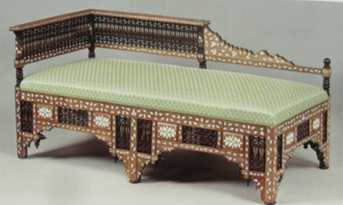
Couch, Syria, 19th century, carved walnut wood with ebony, ivory and metal inserts/inlays, green silk

Open-worked mashrabyia (open lattice work) similar to ankh decoration (next slide)

Furniture of a similar type can be found across the Maghreb (Egypt to Morocco)
<p><span>Couch, Syria, 19<sup>th</sup> century, carved walnut wood with ebony, ivory and metal inserts/inlays, green silk</span></p><p><span>•<strong>Open-worked <u>mashrabyia (open lattice work) </u>similar to ankh decoration (next slide)</strong></span></p><p><span>•<strong>Furniture of a similar type can be found across the <u>Maghreb (Egypt to Morocco)</u></strong></span></p>
38
New cards
<p>Name / Description </p>

Name / Description

Bureau “Bonheur du jour,” Syria, 19th century, carved walnut wood with ebony and ivory inserts/inlays

Calligraphic inscription (in Arabic) reads: “Everything changes! Everything disappears! Nothing lasts eternally!”

<p><span>Bureau “Bonheur du jour,” Syria, 19<sup>th</sup> century, carved walnut wood with ebony and ivory inserts/inlays</span></p><p><span><strong>Calligraphic inscription (in Arabic) reads: “Everything changes! Everything disappears! Nothing lasts eternally!”</strong></span></p>
39
New cards
<p>Name / Description </p>

Name / Description

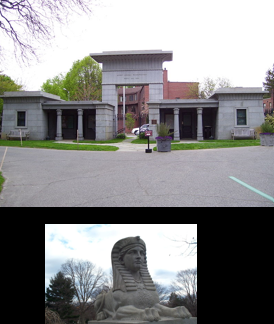
Jacob Bigelow, Egyptian Revival Entry Gate of Mount Auburn Cemetery, Cambridge, MA, 1843

•Cemetery of the Boston elite, founded in 1831

•One of America’s first “garden (or landscape) cemeteries” > imitates Père Lachaise cemetery, Paris

•Entry imitates Egyptian Pylon-style architectural portal > Bigelow’s guide book (1846): “in imitation essentially of some of the gateways of Thebes and Denderah”

•Mount Auburn Sphinx is a Civil War Memorial
<p><span style="font-family: Calibri, sans-serif; line-height: 115%;">Jacob Bigelow, Egyptian Revival Entry Gate of Mount Auburn Cemetery, Cambridge, MA, 1843</span></p><p><span>•Cemetery of the Boston elite, founded in 1831</span></p><p><span>•One of America’s first “garden (or landscape) cemeteries” &gt; imitates Père Lachaise cemetery, Paris</span></p><p><span>•Entry imitates Egyptian Pylon-style architectural portal &gt; Bigelow’s guide book (1846): “in imitation essentially of some of the gateways of Thebes and Denderah”</span></p><p><span>•Mount Auburn Sphinx is a Civil War Memorial</span></p>
40
New cards
<p>Name / Description </p>

Name / Description

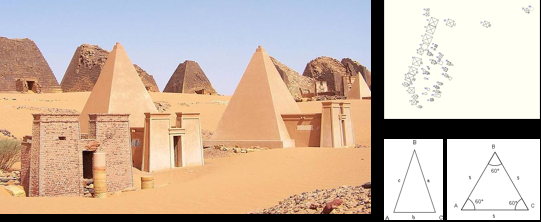
Royal Pyramids, Meroe, Upper Nubia (Sudan), ca. 337 B.C.E. – 339 C.E.

Burial site of the Kushite kings (necropolis)

•Much smaller than the Great Pyramids of Gizeh, built some 3000 years earlier

•Egyptian pyramids > equilateral (right, bottom); Meroitic pyramids > isosceles triangles (two sides longer than the third; right, top)

•Entryway with Pylons (bekhenet) precedes the pyramids

<p><span style="font-family: Calibri, sans-serif; line-height: 115%;">Royal Pyramids, Meroe, Upper Nubia (Sudan), ca. 337 B.C.E. – 339 C.E.</span></p><p><span><u>Burial site of the Kushite kings (necropolis)</u></span></p><p><span>•Much smaller than the Great Pyramids of Gizeh, built some 3000 years earlier</span></p><p><span>•Egyptian pyramids &gt; equilateral (right, bottom); <u>Meroitic pyramids </u>&gt; isosceles triangles (two sides longer than the third; right, top)</span></p><p><span>•Entryway with Pylons (bekhenet) precedes the pyramids</span></p><p></p>
41
New cards
<p>Name / Description </p>

Name / Description

Ornament from the Tomb of Queen Amanishakheto, Upper Nubia, Kushite Culture, Meroitic Period, 50-1 B.C.E., Gold with glass inlay

•Ram’s Head of Solar deity Amun (circular sun); until mid-20th century, Sudanese women continued to wear golden discs on their forehead

•Pylon-style architectural portal (bekhenet) > transition living to dead

•Erect snakes above

•Today lost fringe of cowry shells > female apotropaic devices to safeguard sexual and reproductive well being

•Stylistically and ichnographically, no parallels exist with Egyptian artifacts, although cloisonné technique for jewelry was also used by Egyptians 

<p><em>Ornament from the Tomb of Queen Amanishakheto</em>, Upper Nubia, Kushite Culture, Meroitic Period, 50-1 B.C.E., Gold with glass inlay</p><p><span>•Ram’s Head of Solar deity Amun (circular sun); until mid-20<sup>th</sup> century, Sudanese women continued to wear golden discs on their forehead</span></p><p><span>•Pylon-style architectural portal (bekhenet) &gt; transition living to dead</span></p><p><span>•Erect snakes above</span></p><p><span>•Today lost fringe of cowry shells &gt; female apotropaic devices to safeguard sexual and reproductive well being</span></p><p><span>•Stylistically and ichnographically, no parallels exist with Egyptian artifacts, although cloisonné technique for jewelry was also used by Egyptians&nbsp;</span></p>
42
New cards
<p>Name / Description </p>

Name / Description

Temple Complex of Naqa: Temple of Apedemak with Roman Kiosk, Naqa, Upper Nubia, Kushite Culture, Meroitic Period, 1st century C.E.

•Dedicated to the lion god Apedemak

•Commissioned by Queen (kanake) Amanitare and King Natakami (matrilinear kingship)

•Temple included even enclosure for elephants

<p><em>Temple Complex of Naqa: Temple of Apedemak with Roman Kiosk</em>, Naqa, Upper Nubia, Kushite Culture, Meroitic Period, 1<sup>st</sup> century C.E.</p><p><span>•Dedicated to the lion god Apedemak</span></p><p><span>•Commissioned by Queen (kanake) Amanitare and King Natakami (matrilinear kingship)</span></p><p><span>•Temple included even enclosure for elephants</span></p>
43
New cards
<p>Name / Description </p>

Name / Description

Beta Giorghis (House/Church of St. George), Lalibela, Ethiopia, 13th century, rock-cut church

•Note the modified cross plan

•Circular movement pilgrims, chanted prayers and resonance in church interior
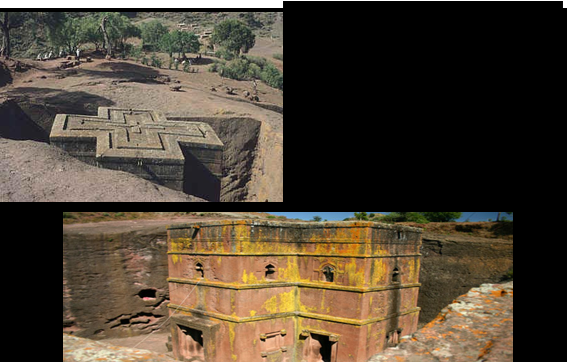
<p><em>Beta Giorghis </em>(<em>House</em>/<em>Church of St. George</em>), Lalibela, Ethiopia, 13<sup>th</sup> century, rock-cut church</p><p><span>•Note the <u>modified cross plan</u></span></p><p><span>•Circular movement pilgrims, chanted prayers and resonance in church interior</span></p>
44
New cards
<p>Name / Description </p>

Name / Description

Beta Medhane Alem, Lalibela (House/Church of the Savior of the World), Ethiopia, 13th century, rock-cut church

•Largest of all rock-cut churches; four-aisled basilica

•Conscious reproduction of the Cathedral of Mary of Zion in Aksum
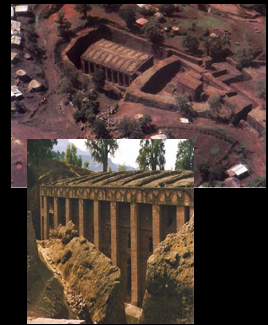
<p><span><em>Beta Medhane Alem</em>, Lalibela (House/Church of the Savior of the World), Ethiopia, 13<sup>th</sup> century, rock-cut church</span></p><p><span>•Largest of all rock-cut churches; four-aisled basilica</span></p><p><span>•Conscious reproduction of the Cathedral of Mary of Zion in Aksum</span></p>
45
New cards
<p><span>Early Minoan Art</span></p>

Early Minoan Art

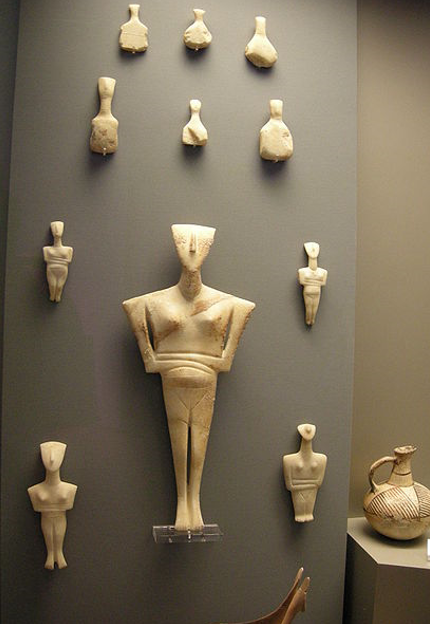
Cycladic Idols, marble, ca. 2500-2000 B.C.E.

Cycladic Idols, marble, ca.

2500-2000 B.C.E.

•Earliest examples of Greek art come in the form of these idols

•Remote descendants of fertility figures from Neolithic period

Geometric simplification: triangles, rectangles, cylinders, etc.

<p><em>Cycladic Idols, </em><span>marble, ca. 2500-2000 B.C.E.</span></p><p><span><em>Cycladic Idols</em>, marble, ca.</span></p><p style="text-align: left;"><span>2500-2000 B.C.E.</span></p><p><span>•Earliest examples of Greek art come in the form of these <u>idols</u></span></p><p><span>•Remote descendants of fertility figures from Neolithic period</span></p><p><span>•<u>Geometric simplification</u>: triangles, rectangles, cylinders, etc.</span></p>
46
New cards
<p>Name and Description </p>

Name and Description

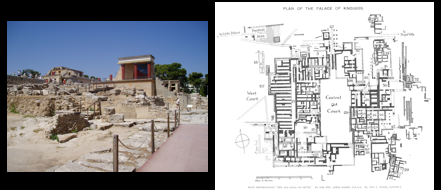
Palace of Knossos, Crete, ca. 1600-1400 B.C.E.

•First instance of a highly developed, urban culture in the Western hemisphere

•Sprawling structure with throne rooms, reception halls, drainage system, and extensive storage facilities for wine, grain, oil, honey, etc.

•Use of columns with bulbous capitals

•Numerous true fresco paintings decorated the palace
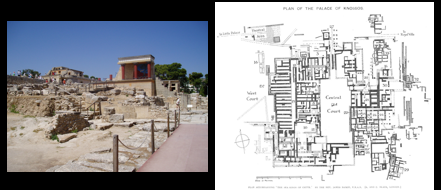
<p><em>Palace of Knossos</em>, Crete, ca. 1600-1400 B.C.E.</p><p><span>•First instance of a highly developed, <u>urban culture in the Western hemisphere</u></span></p><p><span>•Sprawling structure with throne rooms, reception halls, drainage system, and extensive storage facilities for wine, grain, oil, honey, etc.</span></p><p><span>•Use of columns with bulbous capitals</span></p><p><span>•Numerous true fresco paintings decorated the palace</span></p>
47
New cards
<p>Name and Description </p>

Name and Description

Bull-Vaulting Fresco, Knossos, ca. 1500 B.C.E

  • Lighter elements are new, darker are original. Bull of the convey of the what
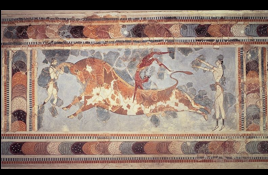

<p><span style="font-family: Calibri, sans-serif; line-height: 115%;"><em>Bull-Vaulting Fresco</em>, Knossos, ca. 1500 B.C.E</span></p><ul><li><p><span style="background-color: transparent;">Lighter elements are new, darker are original. Bull of the convey of the what</span></p></li></ul><p></p>
48
New cards
<p>Name and Description </p>

Name and Description

The Lion Gate, Palace of Mycenae, ca. 1300 B.C.E., limestone

•Lintel block with relief carving of two lions flanking a column

•Head of animals (today lost) would have been made of stone or metal

•Composition recalls Mesopotamian heraldic iconography, underlining artistic exchanges and cross-cultural influences with eastern Mediterranean cultures
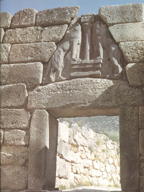
<p><em>The Lion Gate</em>, Palace of Mycenae, ca. 1300 B.C.E., limestone</p><p><span>•Lintel block with relief carving of two lions flanking a column</span></p><p><span>•Head of animals (today lost) would have been made of stone or metal</span></p><p><span>•Composition recalls Mesopotamian <u>heraldic iconography</u>, underlining artistic exchanges and cross-cultural influences with eastern Mediterranean cultures</span></p>
49
New cards
<p>Name and Description </p>

Name and Description

Geometric Krater from the Dipylon Cemetery, 8th century B.C.E., pottery

•The earliest examples of Greek art produced after the Doric invasion was pottery

Krater = Vessel form used for mixing wine and water

•The example shown here is from the Geometric Period, ca. 900-700 B.C.E.

•Designation derives from the type of decoration found on pottery from this period: multiple bands of figures forming a funerary procession; geometric, simplified rendering of figures

<p><em>Geometric Krater from the Dipylon Cemetery</em>, 8<sup>th</sup> century B.C.E., pottery</p><p><span>•The earliest examples of Greek art produced after the Doric invasion was <u>pottery</u></span></p><p><span>•<u>Krater = Vessel form used for mixing wine and water</u></span></p><p><span>•The example shown here is from the <u>Geometric Period</u>, ca. 900-700 B.C.E.</span></p><p><span>•Designation derives from the type of decoration found on pottery from this period: multiple bands of figures forming a funerary procession; geometric, simplified rendering of figures</span></p>
50
New cards
<p>Name and Description </p>

Name and Description

Exekias, Dionysos in a Sailboat, interior of an Attic black-figure kylix, Vulci, ca. 550-525 B.C.E., ceramics

Kylix = Greek drinking cup

Exekias = name of a potter-painter

•Example of black-figure pottery: engobe, or slip of finely sifted black clay, is applied where figures appear, otherwise scraped away

•Coarser clay for body of kylix; three-part firing process (oxidizing, reducing, reoxidizing)

•Scenes from Greek mythology frequently decorate pottery: Dionysos, god of wine, drunkenness, ritual madness, carrying here his gifts to mankind

<p><span>•</span>Exekias, <em>Dionysos in a Sailboat</em>, interior of an Attic black-figure kylix, Vulci, ca. 550-525 B.C.E., ceramics</p><p><span><u>Kylix = Greek drinking cup</u></span></p><p><span>•<u>Exekias</u> = name of a potter-painter</span></p><p><span>•Example of <u>black-figure pottery</u>: engobe, or slip of finely sifted black clay, is applied where figures appear, otherwise scraped away</span></p><p><span>•Coarser clay for body of kylix; three-part firing process (oxidizing, reducing, reoxidizing)</span></p><p><span>•Scenes from Greek mythology frequently decorate pottery: Dionysos, god of wine, drunkenness, ritual madness, carrying here his gifts to mankind</span></p>
51
New cards
<p>Name and Description </p>

Name and Description

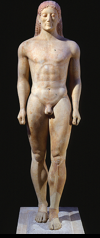
Kroisos, Kuros figure from Anavysos, ca. 540-515 B.C.E., marble

•Another example from later in the Archaic period (ca. 700-480 B.C.E.); great improvements in correct understanding of anatomy, musculature, movement of body in space, striding forward

•Conceived as a funerary monument to Kroisos, a young man who died a hero’s death in battle (inscription)

<p><em>Kroisos, </em><span>Kuros figure from Anavysos, ca. 540-515 B.C.E., marble</span></p><p><span>•Another example from later in the <u>Archaic period (ca. 700-480 B.C.E.</u>); great improvements in correct understanding of <u>anatomy, musculature, movement of body in space, striding forward</u></span></p><p><span>•Conceived as a <u>funerary monument to Kroisos</u>, a young man who died a hero’s death in battle (inscription)</span></p>
52
New cards
<p>Name and Description </p>

Name and Description

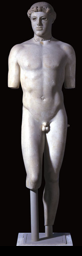
Kritios Boy, Kuros figure from the Acropolis of Athens, ca. 480 B.C.E., marble

•Complete and correct understanding of human anatomy and proportions, knowledge of the principle of weight shift or contrapposto (shifting of the main parts of the body around the vertical, but flexible, axis of the spine)

•Summary of an idealized canon of human proportions, marks the onset of the Early Classical period

•Contemporary with the Persian Wars (497-479 B.C.E.): all Hellenes joined forces against the invasion of Greece by the Persians; heroic period in Greek history; Athens emerged as leading Greek power

<p><em>Kritios Boy</em>, Kuros figure from the Acropolis of Athens, ca. 480 B.C.E., marble</p><p><span>•Complete and correct understanding of human anatomy and proportions, knowledge of the principle of <u>weight shift or contrapposto</u> (shifting of the main parts of the body around the vertical, but flexible, axis of the spine)</span></p><p><span>•Summary of an <u>idealized canon of human proportions, </u>marks the onset of the <u>Early Classical period</u></span></p><p><span>•Contemporary with the <u>Persian Wars (497-479 B.C.E.): </u>all Hellenes joined forces <u>against the invasion of Greece by the Persians</u>; heroic period in Greek history; <u>Athens emerged as leading Greek power</u></span></p>
53
New cards
<p>Name and Description </p>

Name and Description

Myron, Discobolos, ca. 450 B.C.E., Roman marble copy after a bronze original

Classical sculpture puts primacy on the naturalistic depiction of the human figure, rendered in terms of idealized proportions

•Life-likeness of Kritios Boy finds it logical culmination in the dynamic movement of the Discobolos, or discus thrower, the quintessential image of a Greek athlete

•Romans were great collectors of Greek sculpture and copied or imported such works on grand scale; many masterworks of Greek sculpture have survived only in the form of such Roman copies
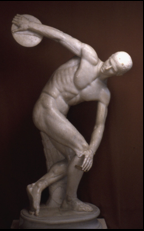
<p>Myron, <em>Discobolos</em>, ca. 450 B.C.E., Roman marble copy after a bronze original</p><p><span>•<u>Classical sculpture </u>puts primacy on the <u>naturalistic depiction of the human figure</u>, rendered in terms of <u>idealized proportions</u></span></p><p><span>•Life-likeness of Kritios Boy finds it logical culmination in the dynamic movement of the <u>Discobolos, or discus thrower</u>, the quintessential image of a <u>Greek athlete</u></span></p><p><span>•Romans were great collectors of Greek sculpture and copied or imported such works on grand scale; many masterworks of Greek sculpture have survived only in the form of such <u>Roman copies</u></span></p>
54
New cards
<p>Name and Description </p>

Name and Description

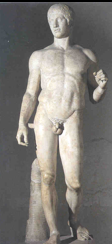
Polykleitos, Doryphoros, Roman marble copy after a bronze original from ca. 450-440 B.C.E.

Another excellent example of a statue of an athlete complying with the idealized canon of human proportions of high classicism: Doryphoros = spear bearer

•Sculptor Polykleitos was famous in ancient Greece as the great rival of Phidias in Athens; active in southern Greece, so-called Argive School

<p>Polykleitos, <em>Doryphoros</em>, Roman marble copy after a bronze original from ca. 450-440 B.C.E.</p><p><span>Another excellent example of a statue of an <u>athlete</u> complying with the <u>idealized canon of human proportions </u>of high classicism: <u>Doryphoros = spear bearer</u></span></p><p><span>•Sculptor Polykleitos was famous in ancient Greece as the great rival of <u>Phidias in Athens</u>; active in southern Greece, so-called Argive School</span></p>
55
New cards

Describe Doric/Ionic/Corinthian

Doric Order: associated with mainland Greece, simpler, massive, older, rustic; distinctive features: plain, cushion-like capitals, triglyph and metope on frieze (reminders of early wooden temples; triglyphs = ends of wooden crossbeams)

Ionic Orders: associated with Asia Minor, decorative, recent, seems lighter, sophisticated; distinctive feature: volutes mimicking acanthus leaves

Decoration of stylized Acanthus leaves

Considered more refined than either one of the first two orders (Doric and Ionic)

Eastern Mediterranean/Oriental influenced

<p><span>•<strong> <u>Doric Order: associated with mainland Greece, simpler, massive, older, rustic; distinctive features: plain, cushion-like capitals, triglyph and metope on frieze (reminders of early wooden temples; triglyphs = ends of wooden crossbeams)</u></strong></span></p><p><span>•<strong> <u>Ionic Orders: associated with Asia Minor, decorative, recent, seems lighter, sophisticated; distinctive feature: volutes mimicking acanthus leaves</u></strong></span></p><p><span>•<strong> Decoration of <u>stylized Acanthus leaves</u></strong></span></p><p><span>•<strong> Considered more refined than either one of the first two orders (Doric and Ionic)</strong></span></p><p><span>•<strong> Eastern Mediterranean/Oriental influenced</strong></span></p>
56
New cards
<p>Name and Description </p>

Name and Description

Temple of Hera at Paestum (near Naples), Italy, ca. 460 B.C.E.

•Best preserved example of an Archaic temple in the Doric order comes from Greek colonies in Southern Italy, not mainland Greece

•Whole construction is dry-jointed, use of metal cramps to hold elements (esp. column drums) together

Geometry, proportional relations as guiding aesthetic principles

Provincial conservatism: contemporary architecture in Greece, by this time (ca. 460 B.C.E.), had already entered the Classical Period

<p><em>Temple of Hera at Paestum </em>(near Naples), Italy, ca. 460 B.C.E.</p><p><span>•Best preserved example of an Archaic temple in the <u>Doric order </u>comes from <u>Greek colonies in Southern Italy</u>, not mainland Greece</span></p><p><span>•Whole construction is dry-jointed, use of metal cramps to hold elements (esp. column drums) together</span></p><p><span>•<u>Geometry, proportional relations </u>as guiding aesthetic principles</span></p><p><span>•<u>Provincial conservatism</u>: contemporary architecture in Greece, by this time <u>(ca. 460 B.C.E.)</u>, had already entered the <u>Classical Period</u></span></p>
57
New cards
<p>Name and Description </p>

Name and Description

Iktinos and Kallikrates, The Parthenon, Acropolis, Athens, 448-432 B.C.E.

Temple dedicated to Athena-Parthenos (Athena = Deity associated with Athens, Athenians)

•Architects Iktinos and Kallikrates; sculptural decoration by sculptor Phidias, a friend of Perikles

Naos (enclosed, inner temple sanctuary) subdivided with one half containing a giant cult statue of Athena-Parthenon, the other one housing the treasury of the Delian League

•Epitome of High Classical architecture

<p>Iktinos and Kallikrates, <em>The Parthenon</em>, Acropolis, Athens, 448-432 B.C.E.</p><p><span>Temple dedicated to <u>Athena-Parthenos</u> (<u>Athena = Deity associated with Athens, Athenians</u>)</span></p><p><span>•Architects <u>Iktinos and Kallikrates</u>; sculptural decoration by sculptor <u>Phidias</u>, a friend of Perikles</span></p><p><span>•<u>Naos</u> (enclosed, inner temple sanctuary) subdivided with one half containing a giant <u>cult statue of Athena-Parthenon</u>, the other one housing the treasury of the Delian League</span></p><p><span>•Epitome of <u>High Classical architecture</u></span></p>
58
New cards
<p>Name and Description </p>

Name and Description

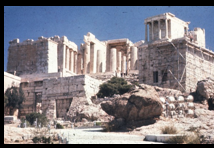
Mnesikles, The Propylaea, Acropolis, Athens, ca. 437-432 B.C.E.

The Acropolis is really an ensemble of structures built during the classical period on a plateau above Athens

Propylaea = entry gate to the complex, reached after climbing a steep, winding slope; this was the path of the Panathenaic Procession

•Remained unfinished due to financial drain of the Peloponnesian War

•Flanking building were supposed to contain library and the first picture gallery (Pinakotheke) in history; notice small temple to the far right

<p>Mnesikles, <em>The Propylaea</em>, Acropolis, Athens, ca. 437-432 B.C.E.</p><p><span>The <u>Acropolis</u> is really an <u>ensemble of structures</u> built during the <u>classical period </u>on a plateau above Athens</span></p><p><span>•<u>Propylaea = entry gate </u>to the complex, reached after climbing a steep, winding slope; this was the path of the <u>Panathenaic Procession</u></span></p><p><span>•Remained unfinished due to financial drain of the Peloponnesian War</span></p><p><span>•Flanking building were supposed to contain library and the first picture gallery (<em>Pinakotheke</em>) in history; notice small temple to the far right</span></p><p></p>
59
New cards
<p>Name and Description </p>

Name and Description

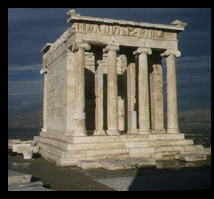
Kallikrates, Temple of Athena Nike, Acropolis, Athens, 427-424 B.C.E.

•Earliest building on the Acropolis built completely in the Ionic order

Ionian order dominant in eastern Greece and the islands; because of Athens’s dominant position in the Delian League, these influences migrated west
<p>Kallikrates, <em>Temple of Athena Nike</em>, Acropolis, Athens, 427-424 B.C.E.</p><p><span>•Earliest building on the Acropolis built completely in the Ionic order</span></p><p><span>•<u>Ionian order </u>dominant in eastern Greece and the islands; because of Athens’s dominant position in the Delian League, these influences migrated west</span></p>
60
New cards
<p>Name and Description</p>

Name and Description

§ The Erechtheum, Acropolis, Athens, ca. 421-405 B.C.E.

Names after a mythical Athenian hero, Erechtheus; the other great Ionian building on the Acropolis

§ Highly atypical (since asymmetrical plan, multiple levels because irregularity of site), several shrines that needed accom-modation: site of contest between Poseidon and Athena over Athens (imprint Poseidon’s trident with spring of saltwater), Athena’s olive tree, tomb of legendary king Kekrops

§ Intriguing detail: Caryatid figures (figural columns) of the “Porch of the maidens” (below)

<p><span>§<em> </em></span><em>The Erechtheum</em>, Acropolis, Athens, ca. 421-405 B.C.E.</p><p><span>Names after a mythical Athenian hero, Erechtheus; the other great Ionian building on the Acropolis</span></p><p><span>§<em> </em>Highly atypical (since asymmetrical plan, multiple levels because irregularity of site), several shrines that needed accom-modation: site of <u>contest between Poseidon and Athena</u> over Athens (imprint Poseidon’s trident with spring of saltwater), Athena’s olive tree, tomb of legendary king Kekrops</span></p><p><span>§<em> </em>Intriguing detail: <u>Caryatid figures (figural columns)</u> of the “Porch of the maidens” (below)</span></p>
61
New cards
<p>Name and Description</p>

Name and Description

Grave Stele of Hegeso, ca. 410-400 B.C.E., marble

•Most evidence about Greek furniture comes from vase painting

•This funerary stele is exception of the rule: features a woman admiring a necklace, seated on a Klismos chair, the great Greek innovation in furniture design (The Greeks had also folding chairs similar to those of the Egyptians)

•Key features: curving back and legs, anthropomorphic form, i.e. with proportions related to the human body

•Usually undecorated

<p class="MsoNormal"><em>Grave Stele of Hegeso, ca. 410-400 B.C.E., marble</em></p><p class="MsoNormal"><span>•Most evidence about Greek furniture comes from vase painting</span></p><p><span>•This funerary stele is exception of the rule: features a woman admiring a necklace, seated on a <u>Klismos chair</u>, the great Greek innovation in furniture design (The Greeks had also folding chairs similar to those of the Egyptians)</span></p><p><span>•Key features: curving back and legs, <u>anthropomorphic form</u>, i.e. with proportions related to the human body</span></p><p><span>•Usually undecorated</span></p>
62
New cards
<p>Name and Description</p>

Name and Description

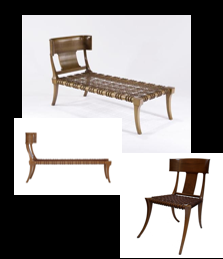
Klismos chair, Trident or Trapeza table

Depiction of Klismos (pl. Klismoi) in Greek vase painting and in a modern reconstruction

Form will be seen again later in chairs of the Directoire, Empire, Regency, Duncan Phyfe, and modern eras

<p><span>Klismos chair, Trident or Trapeza table</span></p><p><span>Depiction of Klismos (pl. Klismoi) in Greek vase painting and in a modern reconstruction</span></p><p style="text-align: left;"><span>Form will be seen again later in chairs of the Directoire, Empire, Regency, Duncan Phyfe, and modern eras</span></p>
63
New cards
<p>Name and Description</p>

Name and Description

T.H. Robsjohn-Gibbings, Klimos Chaise Lounge and Klismos Chair, ca. 1961, wood and leather

•British-American designer with background in antique trade

•Modernist who rejected Bauhaus-style functionalism

•Furniture inspired by Greek models as antidote to functionalism

•Interior Design Writings: Goodbye, Mr. Chippendale (1944), a parody of modern interior design; Mona Lisa's Mustache: A Dissection of Modern Art (1947); and Homes of the Brave (1953)

•In 1960, he met Greek cabinetmakers Susan and Eleftherios Saridis; together, they created the Klismos line of furniture, which drew heavily on classical forms

<p><span>T.H. Robsjohn-Gibbings, <em>Klimos Chaise Lounge </em>and <em>Klismos Chair</em>, ca. 1961, wood and leather</span></p><p><span>•British-American designer with background in antique trade</span></p><p><span>•Modernist who rejected Bauhaus-style functionalism</span></p><p><span>•Furniture inspired by Greek models as antidote to functionalism</span></p><p><span>•Interior Design Writings: <em>Goodbye, Mr. Chippendale</em> (1944), a parody of modern interior design; <em>Mona Lisa's Mustache: A Dissection of Modern Art</em> (1947); and <em>Homes of the Brave </em>(1953)</span></p><p><span>•In 1960, he met Greek cabinetmakers Susan and Eleftherios Saridis; together, they created the <em>Klismos</em> line of furniture, which drew heavily on classical forms</span></p>
64
New cards

Name and Description

65
New cards

Name and Description

66
New cards

Name and Description

67
New cards

Name and Description