Vital Signs | Quizlet
 Studied by 0 people
 Call Kai
 Learn
Learn Practice Test
 Spaced Repetition
 Match
Match Flashcards
 Knowt Play
1/29

There's no tags or description
Looks like no tags are added yet.
Name | Mastery | Learn | Test | Matching | Spaced | Call with Kai |
|---|
No analytics yet
Send a link to your students to track their progress
30 Terms
What are the 5 core vital signs?
Pulse, respiratory rate, BP, body temperature, and pain
What are the "outside" vitals?
Gait speed, O2 saturation, RPE
Carotid artery pulse point
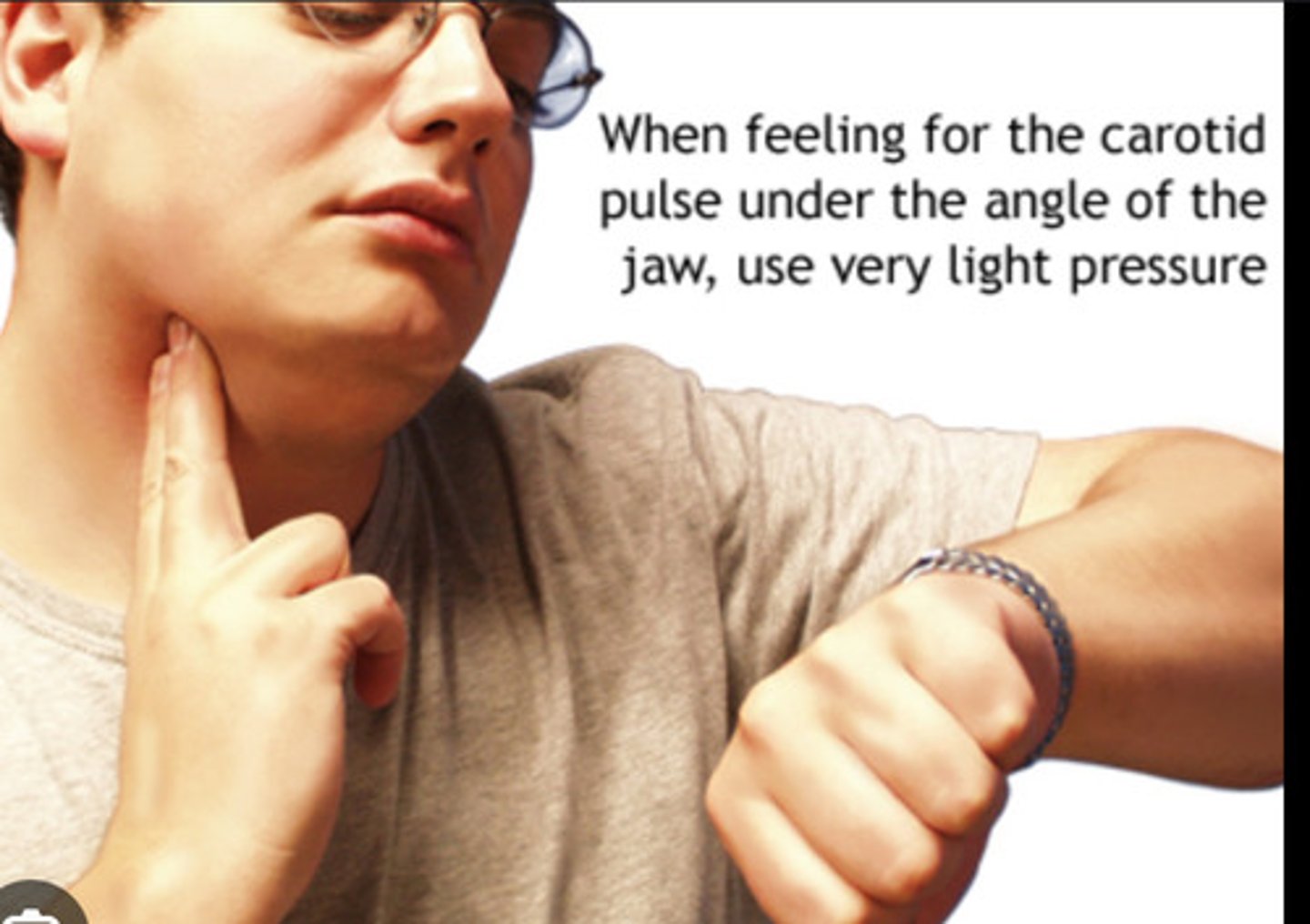
Radial artery pulse point
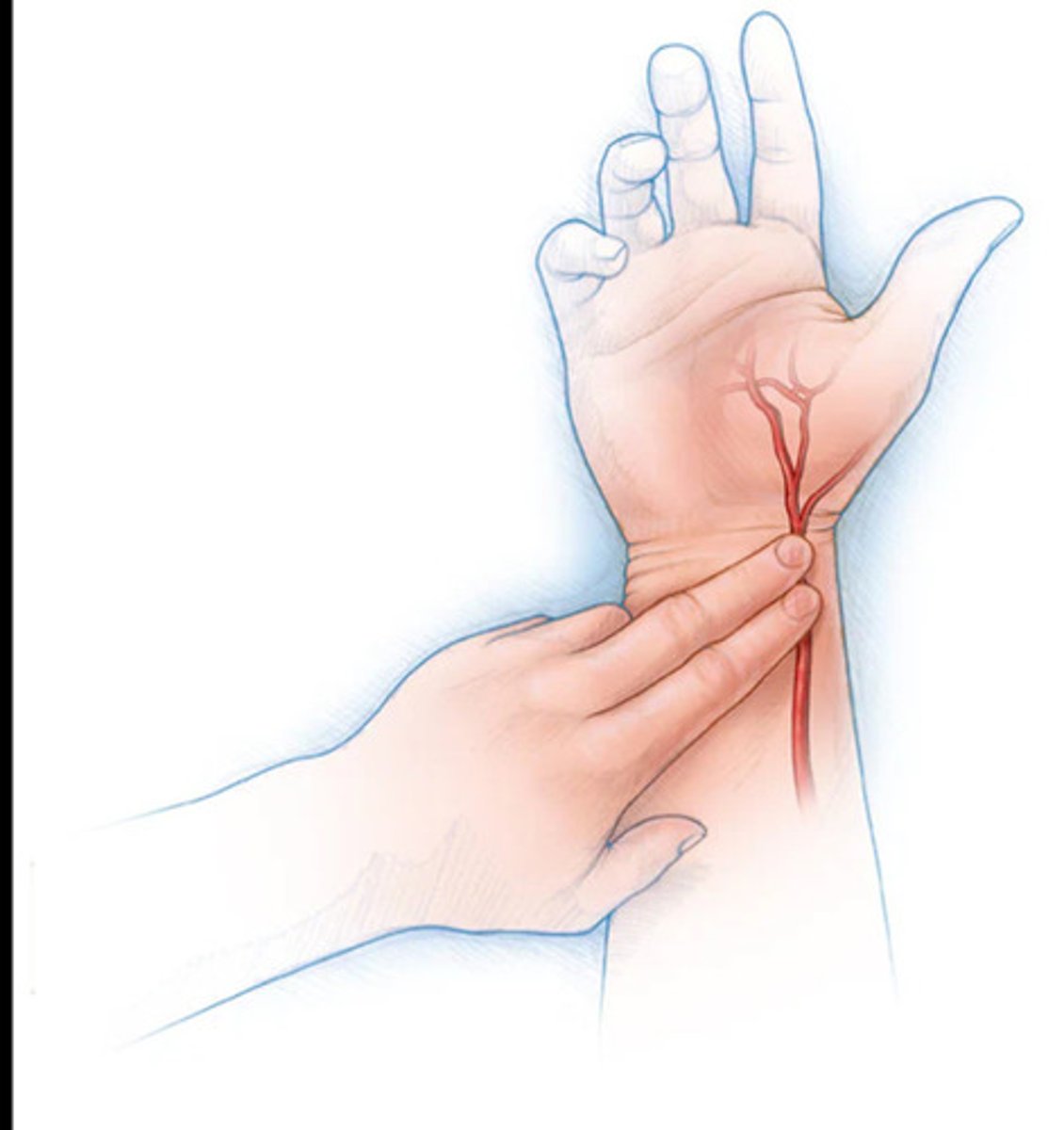
Brachial artery pulse point
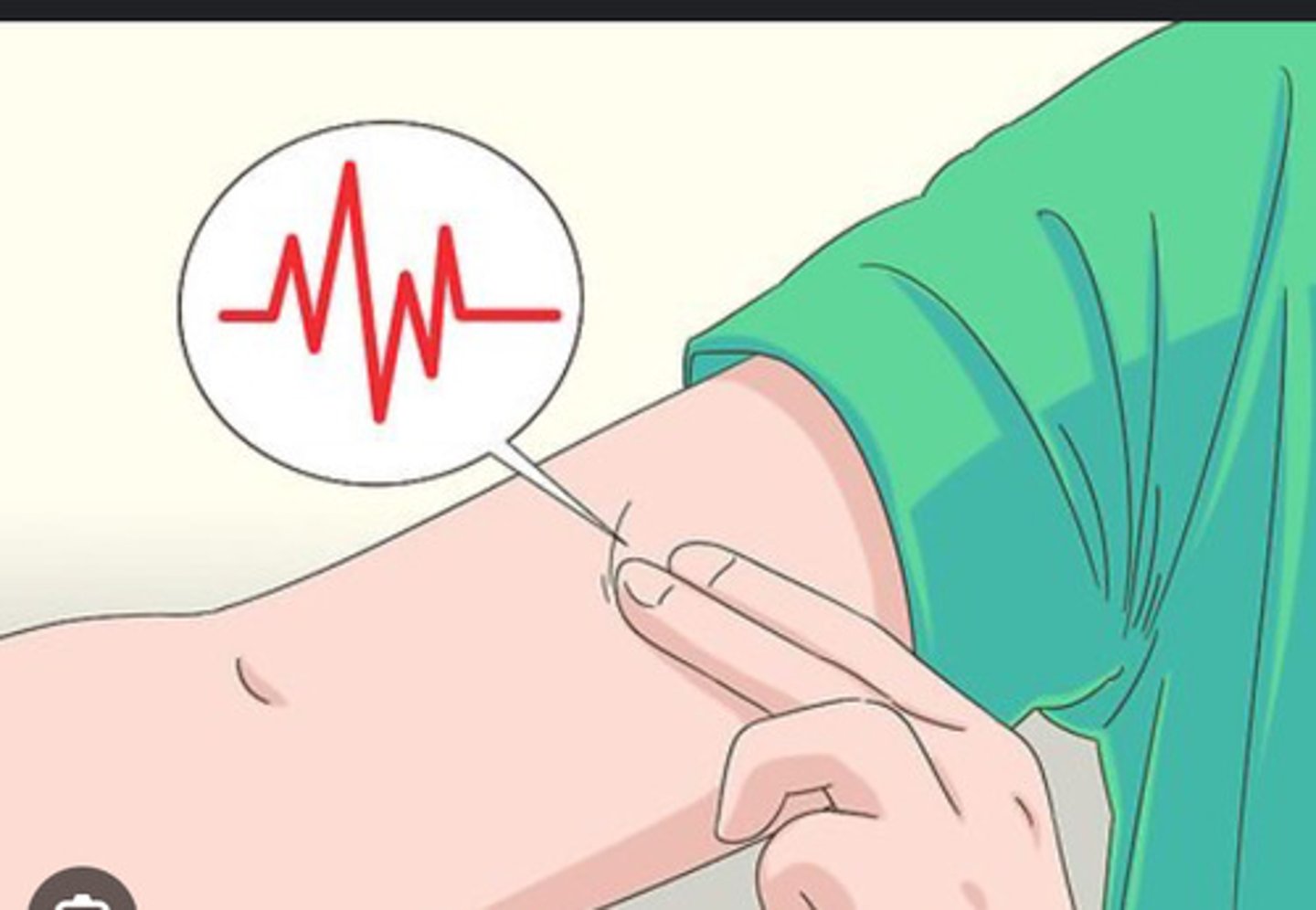
Ulnar artery pulse point
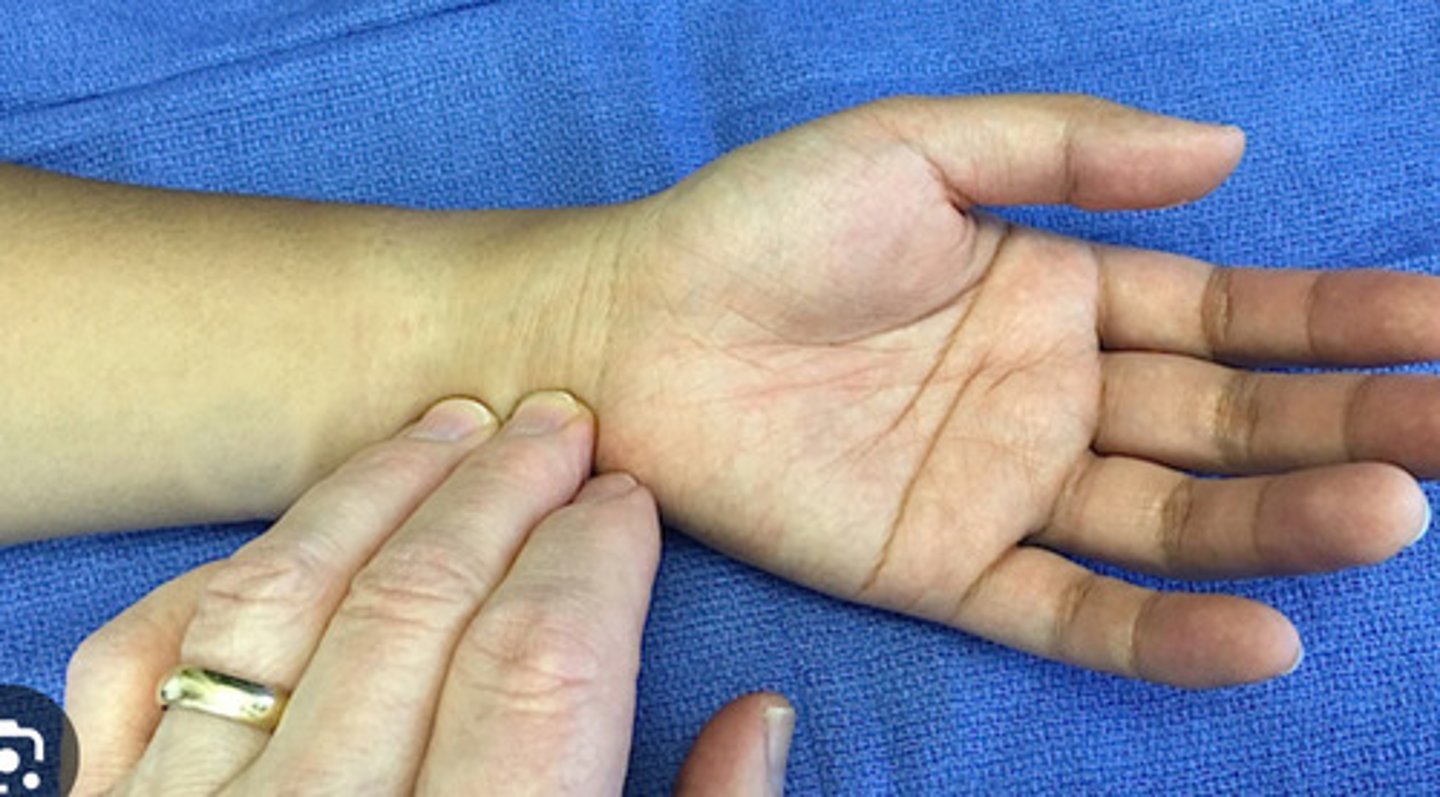
Femoral artery pulse point
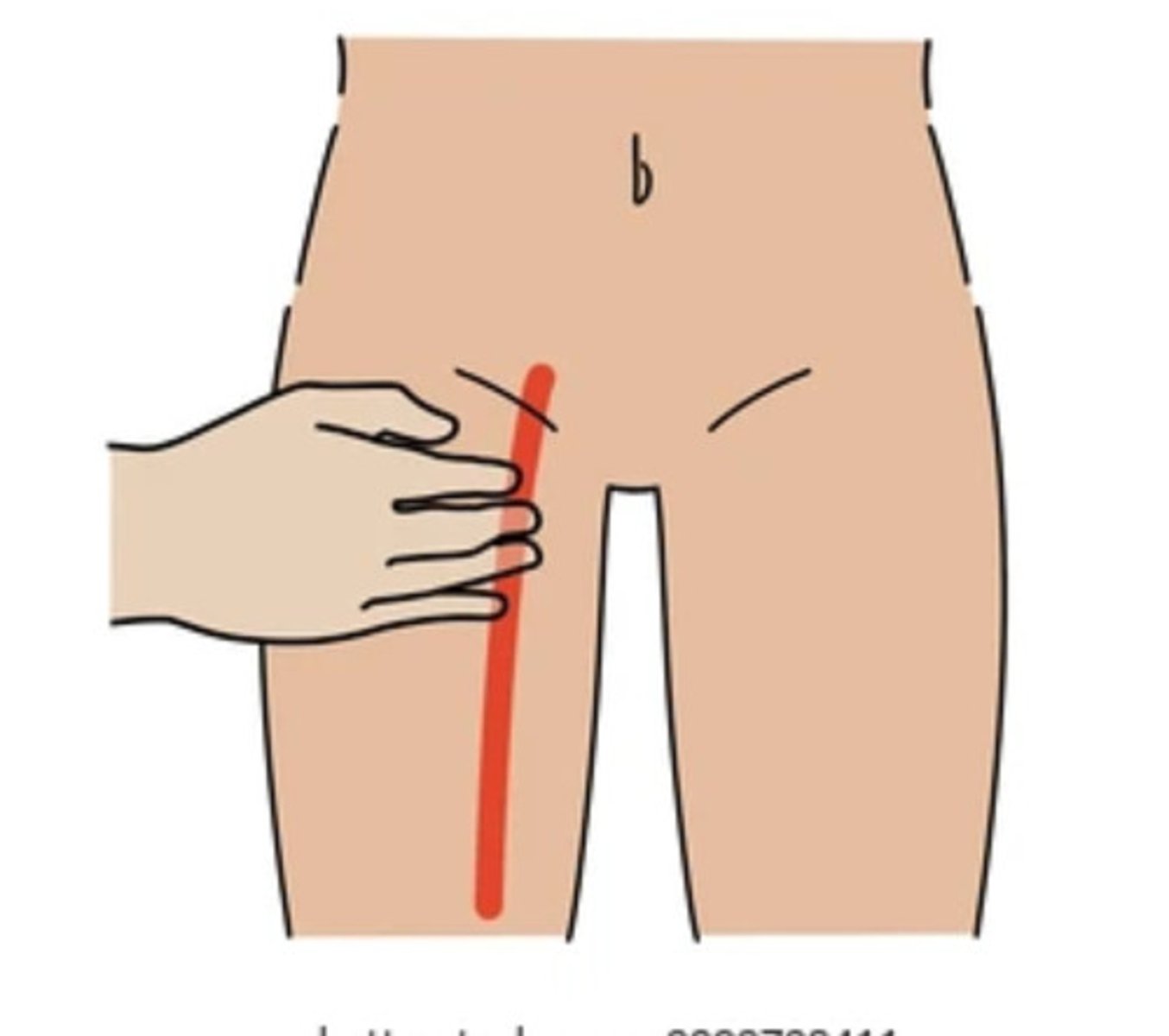
Popliteal artery pulse point
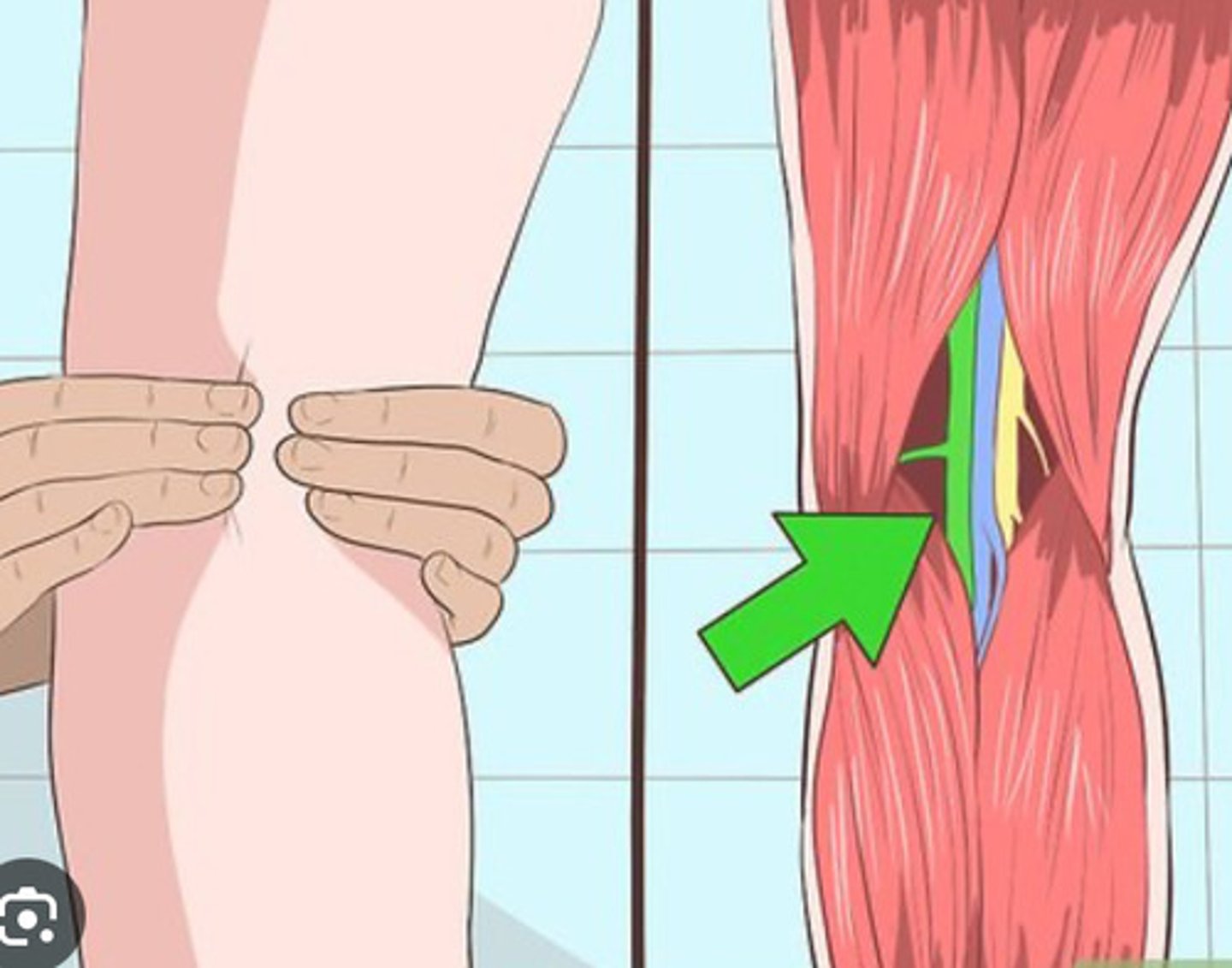
Posterior tibial artery pulse point
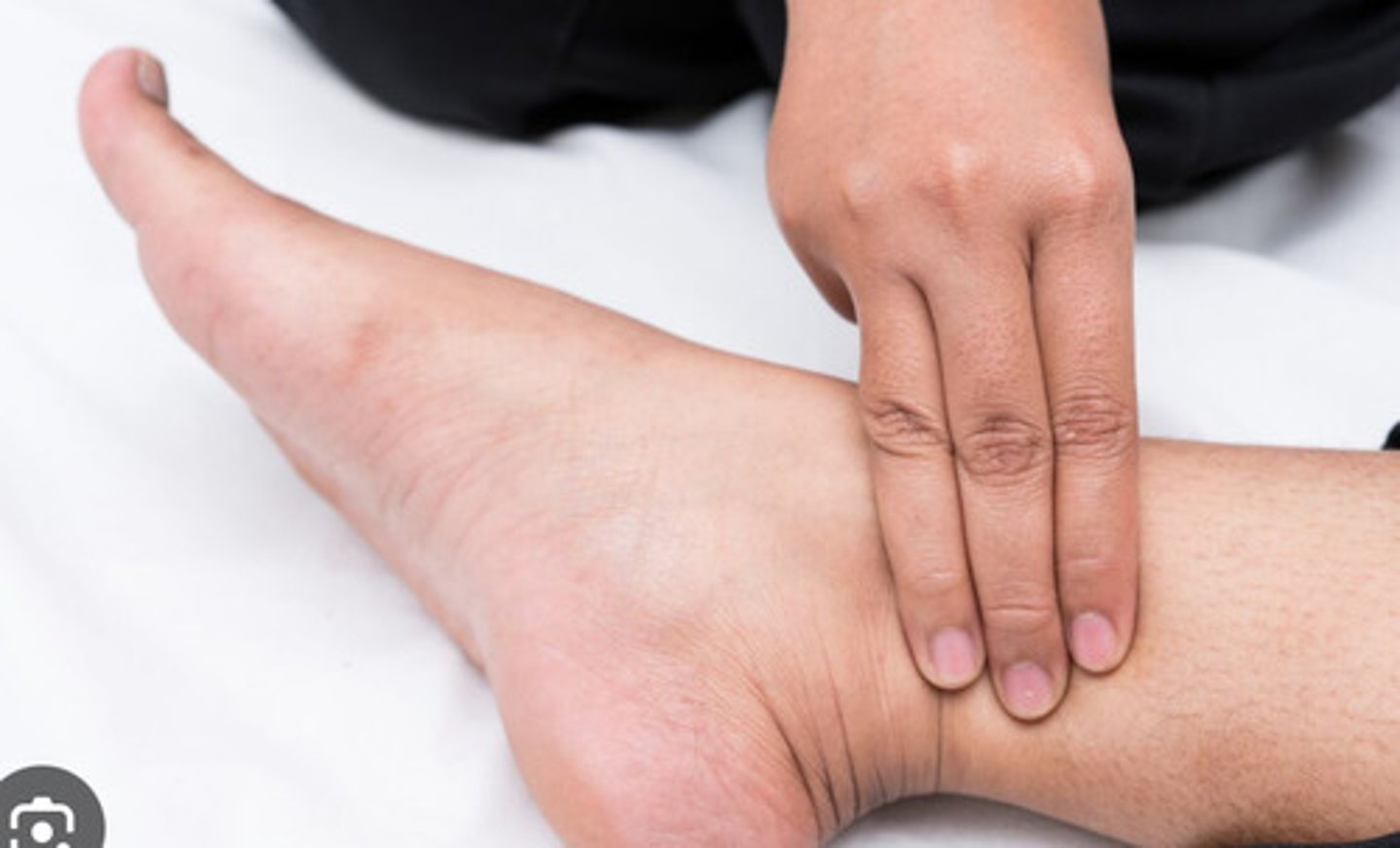
Dorsalis pedis pulse point
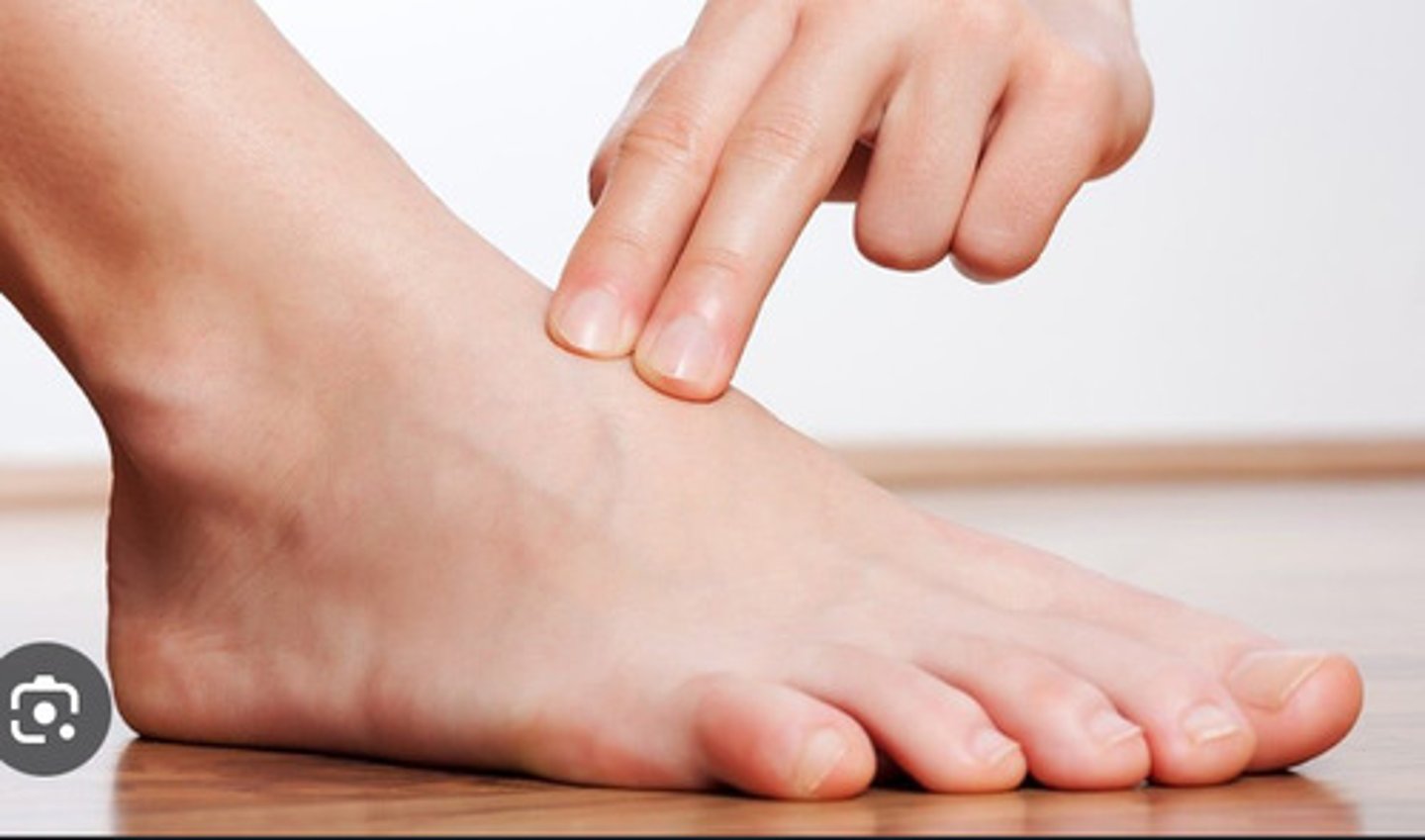
How do you find the radial pulse?
Measure for 30 seconds and multiply by 2 = pulse rate
What re normal pulse rate ranges?
Adults: 60-100 bpm
Child: 80-100 bpm
Newborn: 100-120 bpm
What is considered tachycardia and bradycardia?
Tachycardia: >100 bpm
Bradycardia: <60 bpm
What are normal ranges for respiratory rate?
Adults: 12-20 breaths/min
Child: 15-30 breaths/min
Infants: 25-50 breaths/min
What is considered tachypnea and bradypnea?
Tachypnea: >20 breaths/min
Bradypnea: <10 breaths/min
Define dyspnea
difficulty breathing
Define dyspnea on exertion (DOE)
SOB with activity/exercise
Define orthopnea
SOB with lying flat
Define systole
Arterial pressure when the left ventricle contracts
Define diastole
Arterial pressure when the heart is at rest between contractions
hypertensive crisis
>180/110 mmHg
Hypotensive
<90/60
Normal BP
<120/80
Pre-HTN
120-139/80-89
Stage 1 HTN
140-159/90-99
Stage 2 HTN
>160/>100
Orthostatic hypotension
low blood pressure that occurs upon standing up
Define oxygen saturation
The percentage of hemoglobin that becomes bound to 02
What are some causes of pitting edema
Heart disease, chronic venous insufficiency, deep vein thrombosis, dysfunction of the lymphatic system, kidney and liver disease, immobilization and inactivity
What are the different ratings for edema based on depth and time?
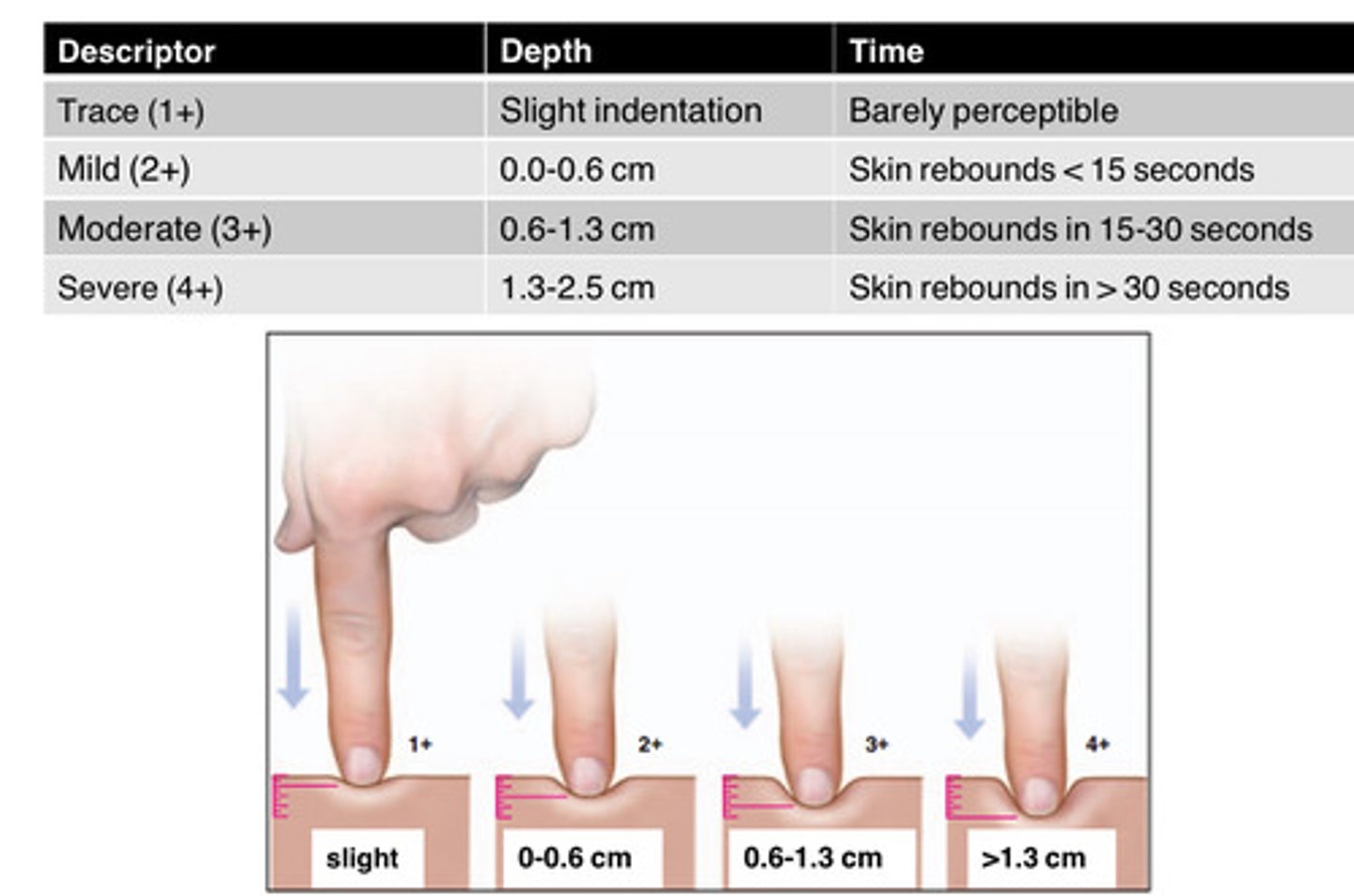
 Note
Note  Flashcards (30)