Ch. 4 Structure and Stability
 Call Kai
 Learn
Learn Practice Test
 Spaced Repetition
 Match
Match Flashcards
 Knowt Play
1/26

There's no tags or description
Looks like no tags are added yet.
Name | Mastery | Learn | Test | Matching | Spaced | Call with Kai | Chat |
|---|
No analytics yet
Send a link to your students to track their progress
27 Terms
In the following chapters, we will frequently discuss several fundamental principles necessary to understand the reactivity of organic molecules.
Structural formulas
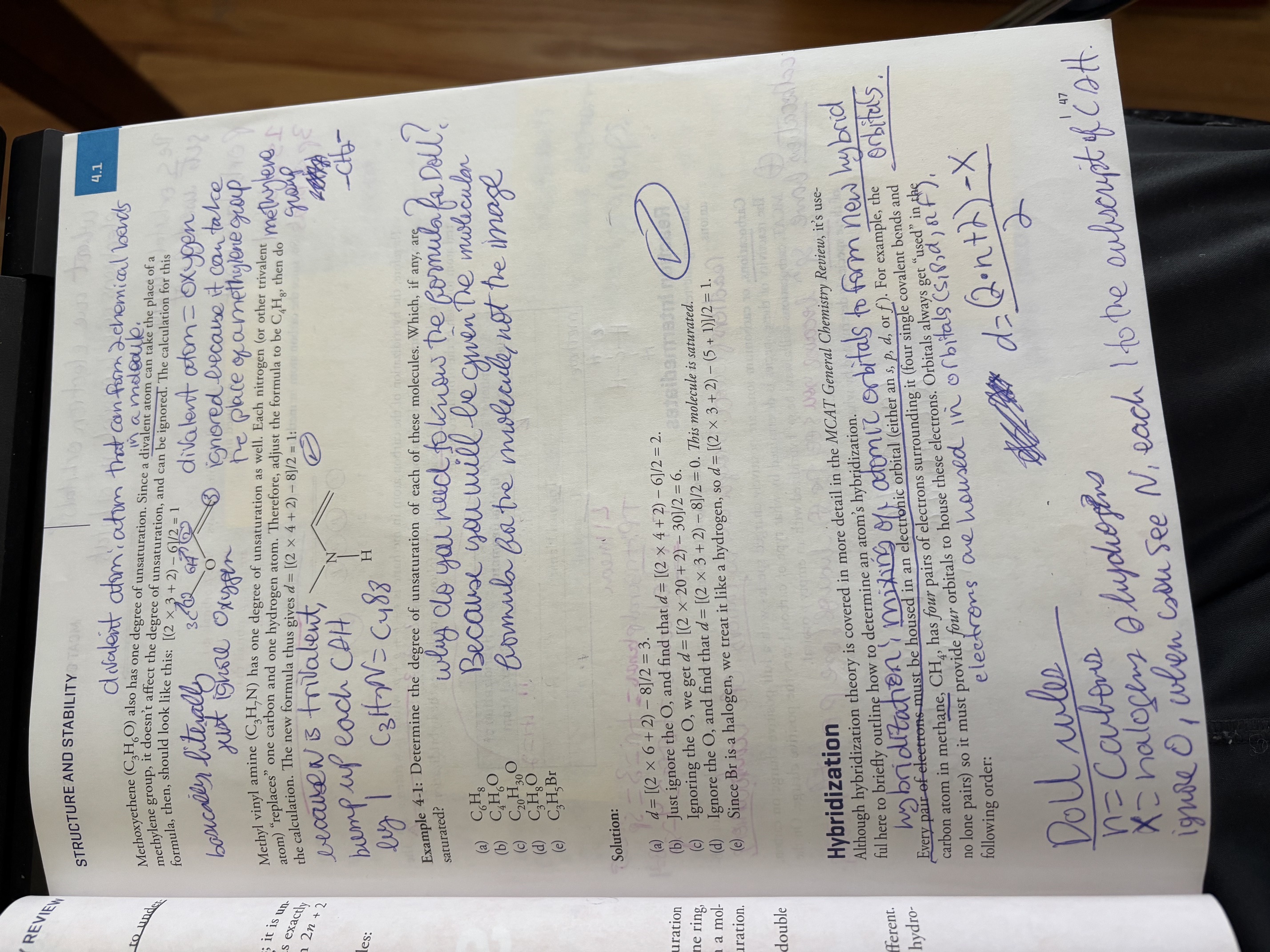
By definition, an organic molecule is said to be saturated if it contains no π bonds, and rings; it is unsaturated if it has at least one π bond or a ring. A saturated compound with n carbon atoms has exactly 2n+2 hydrogen atoms, while an unsaturated compound with n carbon atoms has fewer than 2n+2 hydrogens.
The formula below is used to determine the degree of unsaturation (d) of simple organic molecules:
(2n+2)-x/2
n: number of carbons
x: number of hydrogens
x: represents the number of hydrogens and any monovalent atoms (such as halogens F, Cl, Br, or I)
Since the number of oxygens has no effect, oxygens are ignored in calculating the degree of unsaturation
For nitrogen containing compounds, replace each N by 1 C and 1 H when using this formula.


One degree of unsaturation indicates the presence of one π bond or one ring; two degrees of unsaturation means there are two π bonds (two separate double bonds or one triple bond), or one π bond and one ring or two rings, and so on. The presence of heteroatoms can also effect the degree of unsaturated in a molecule. This is best illustrated through a series of related molecules that all have one degree of unsaturation.
Put the example of Butene from page 46 on this flashcard
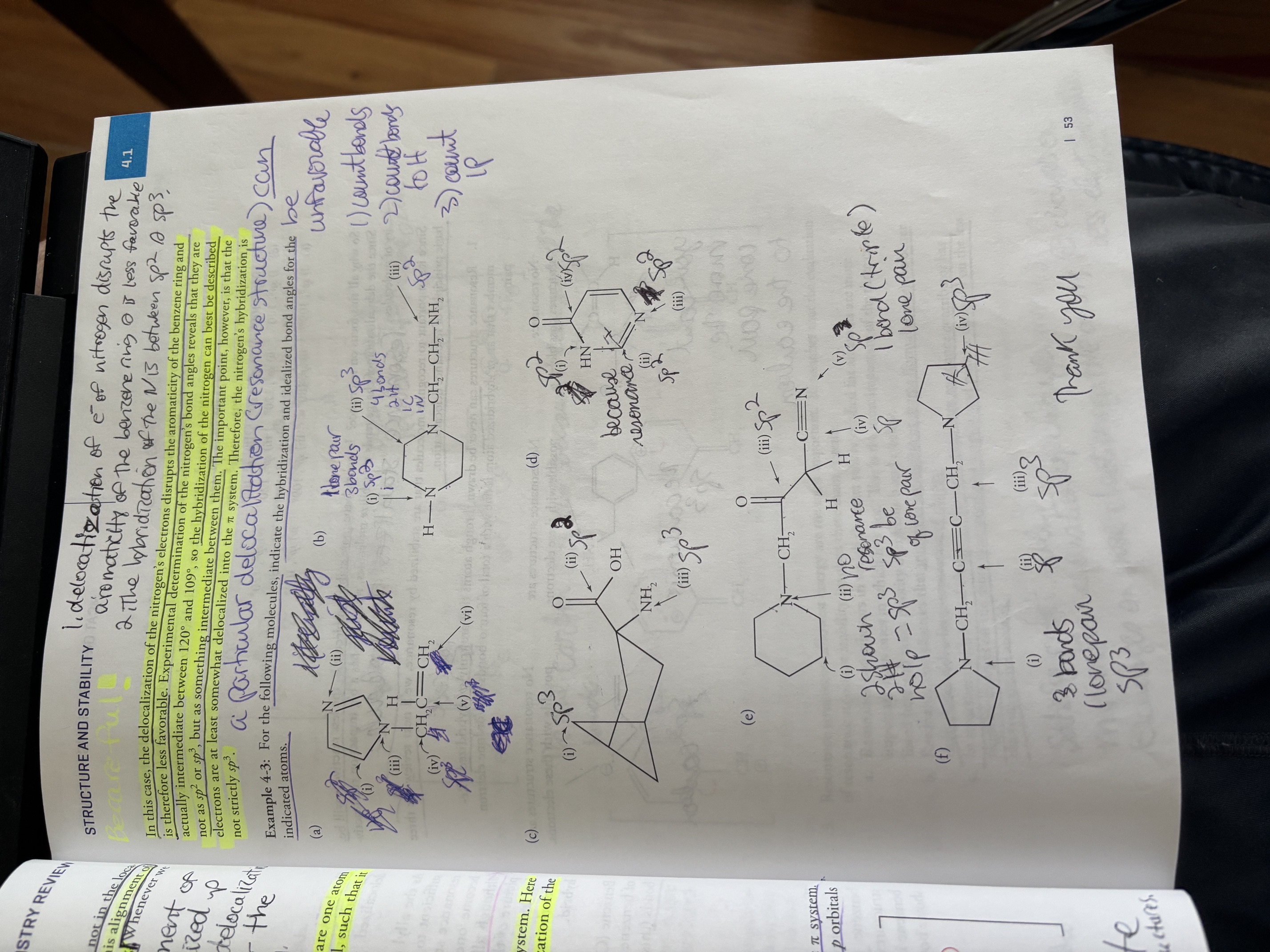
Hybridization

Reaction Intermediates


Inductive Effects


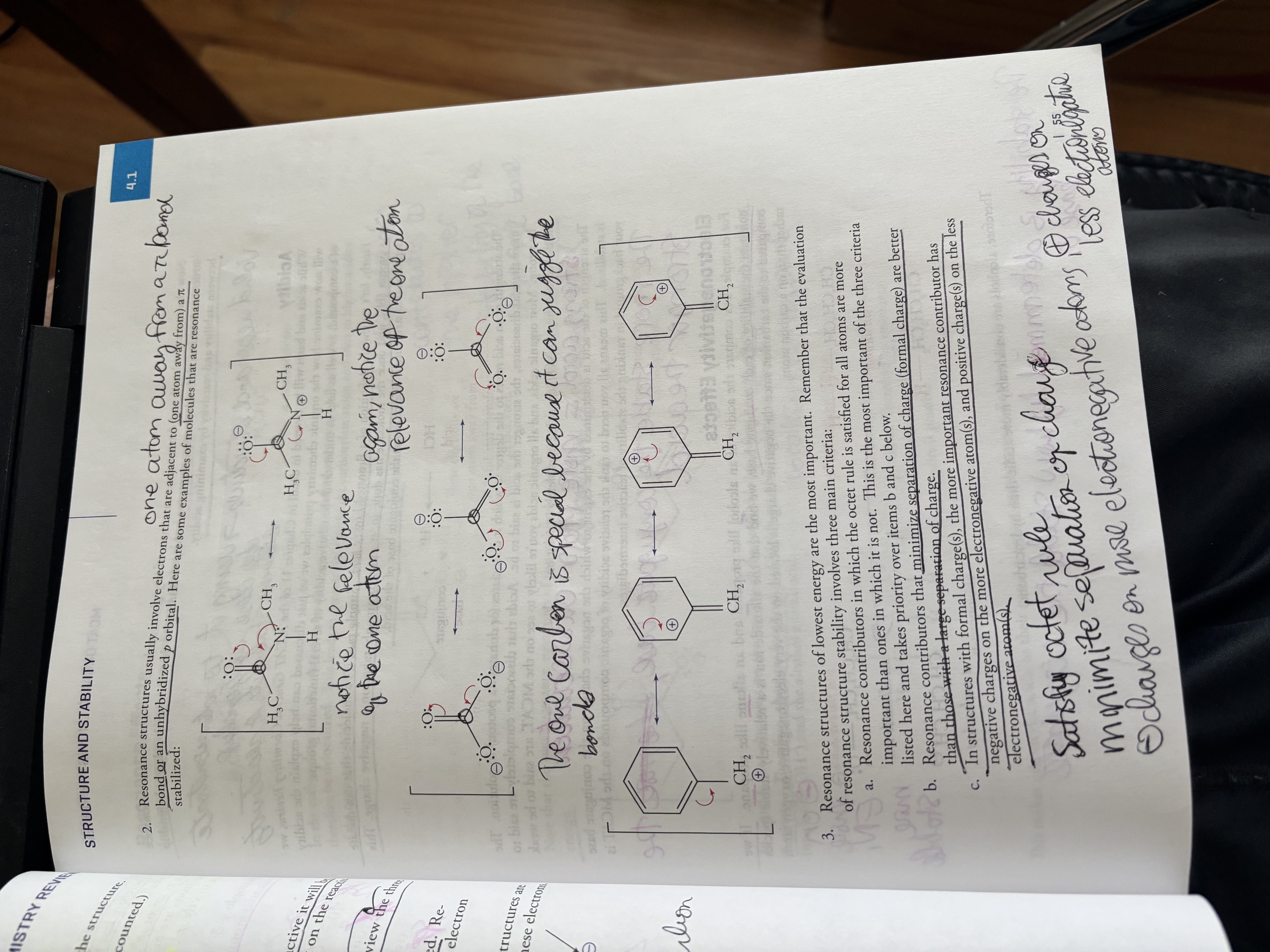
Resonance Stabilization




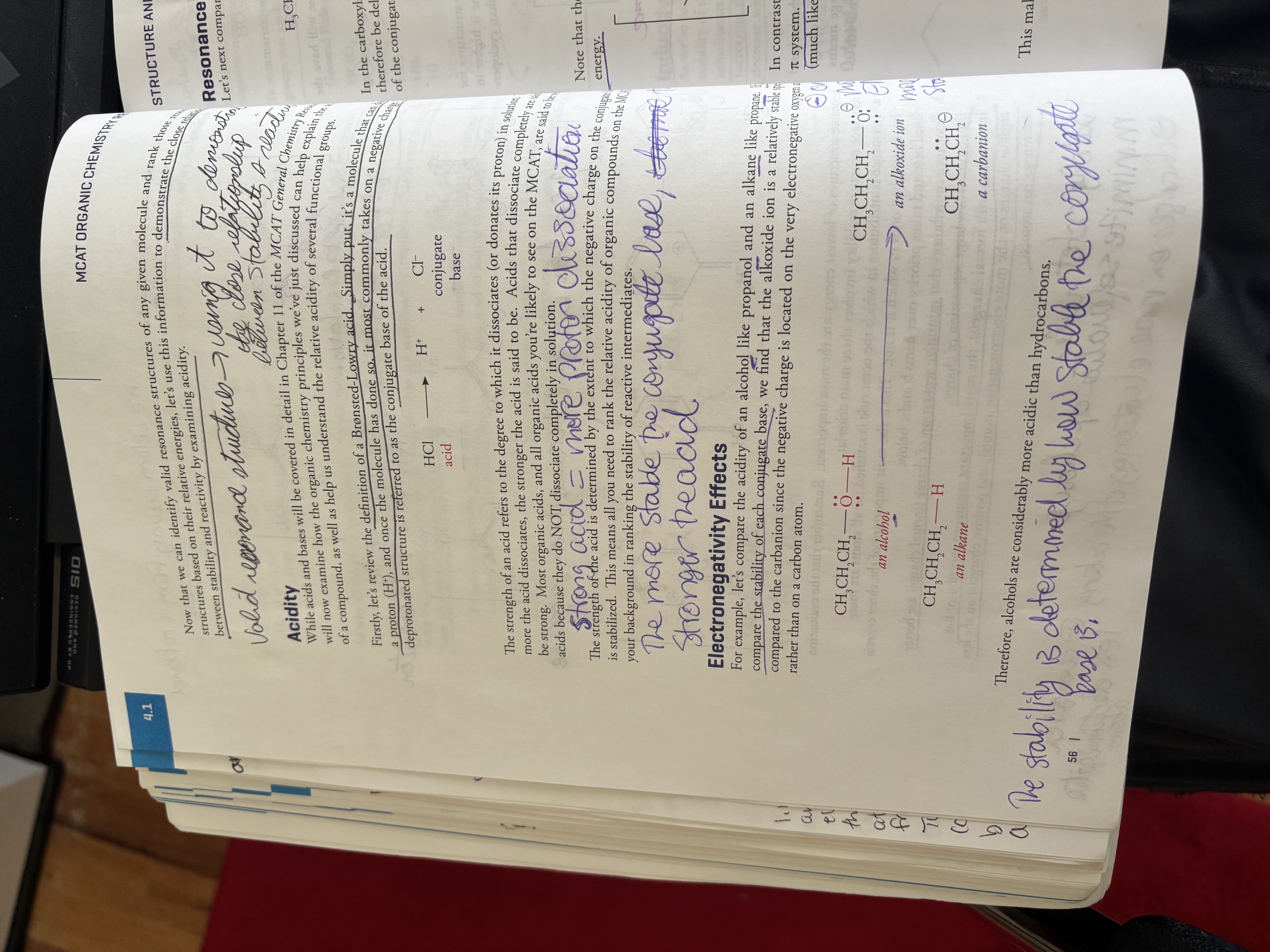
Acidity
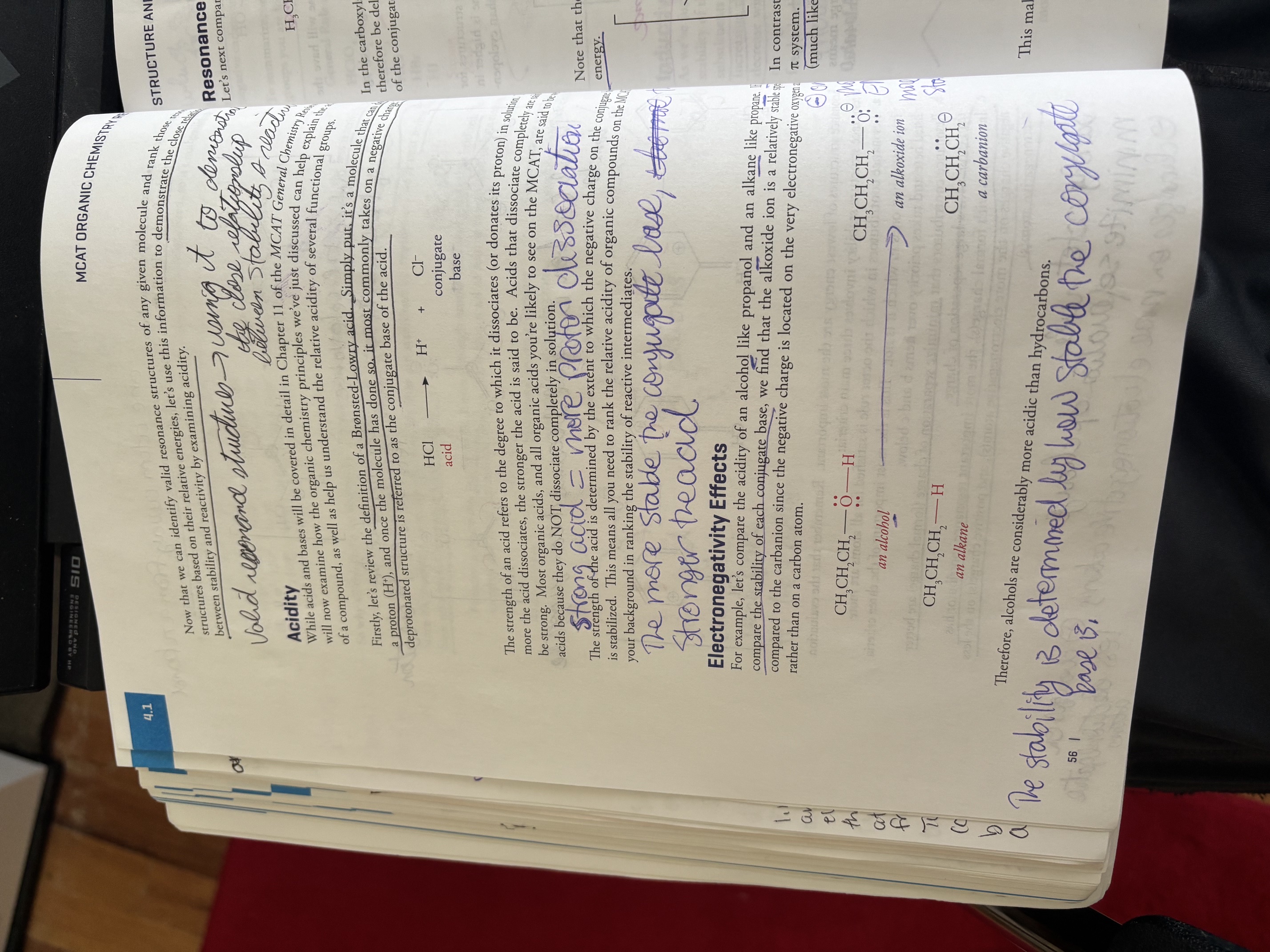
Electronegativity effects
Resonance Effects


Inductive Effects


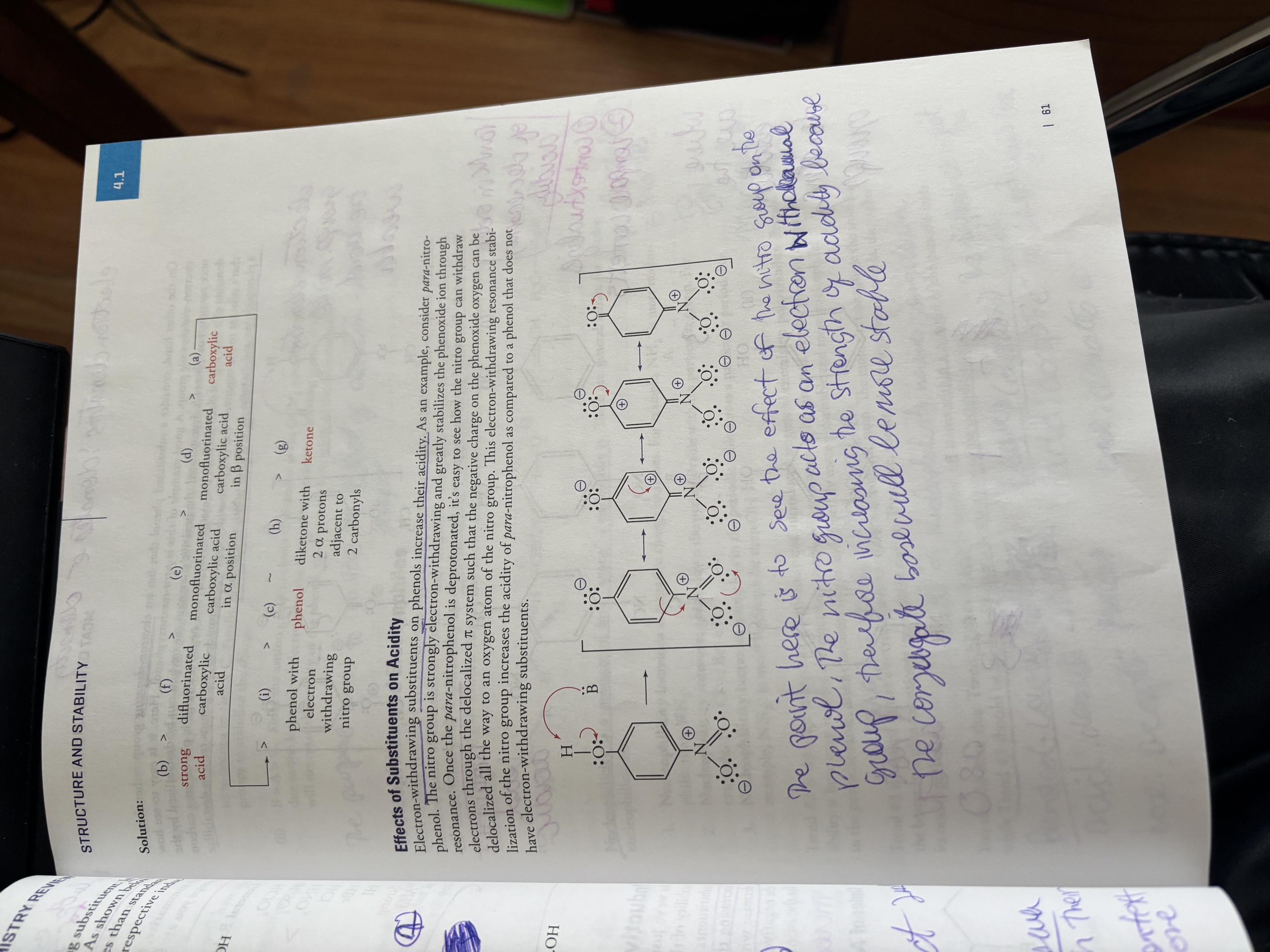
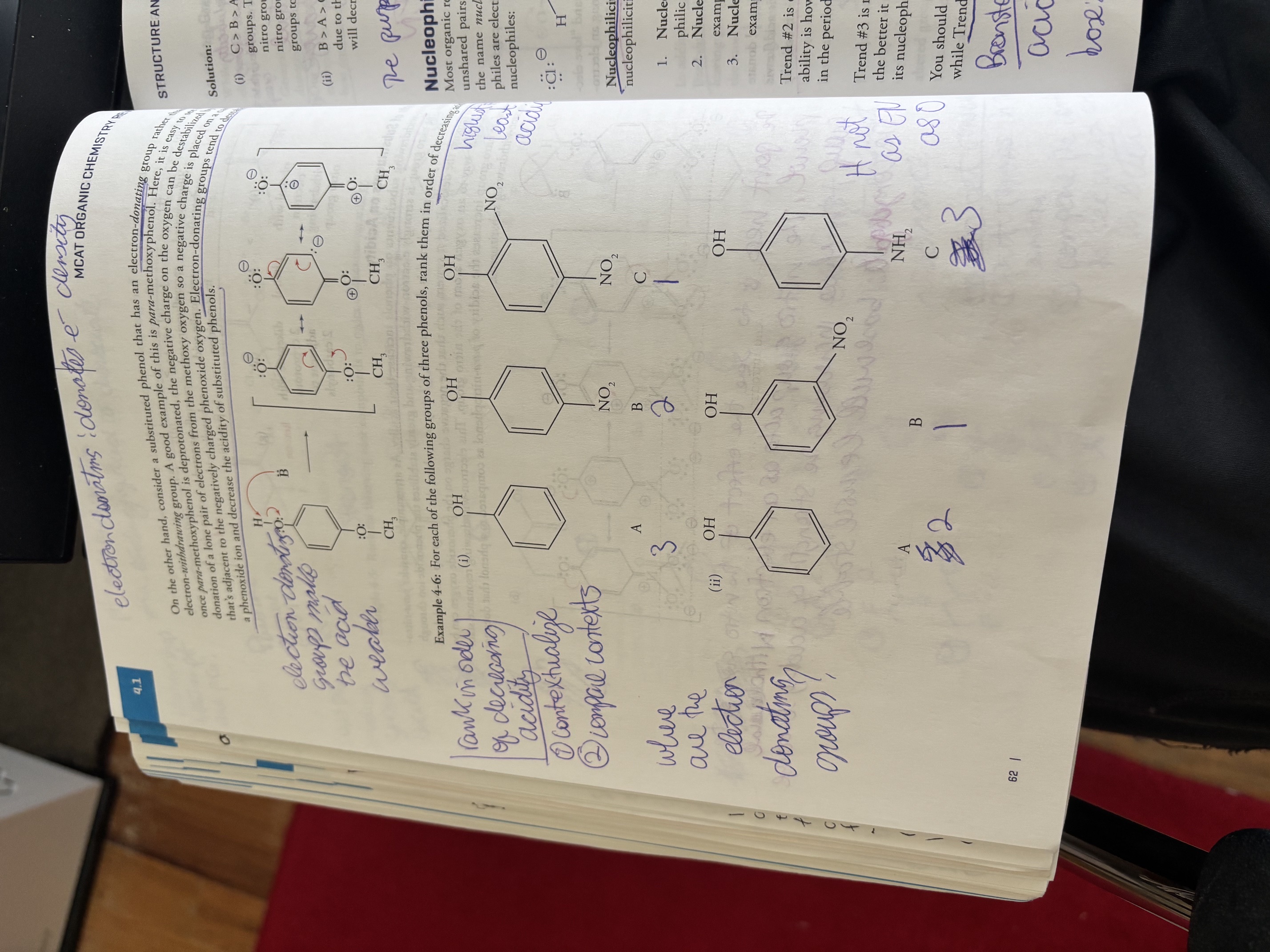
Effects of substituents on acidity

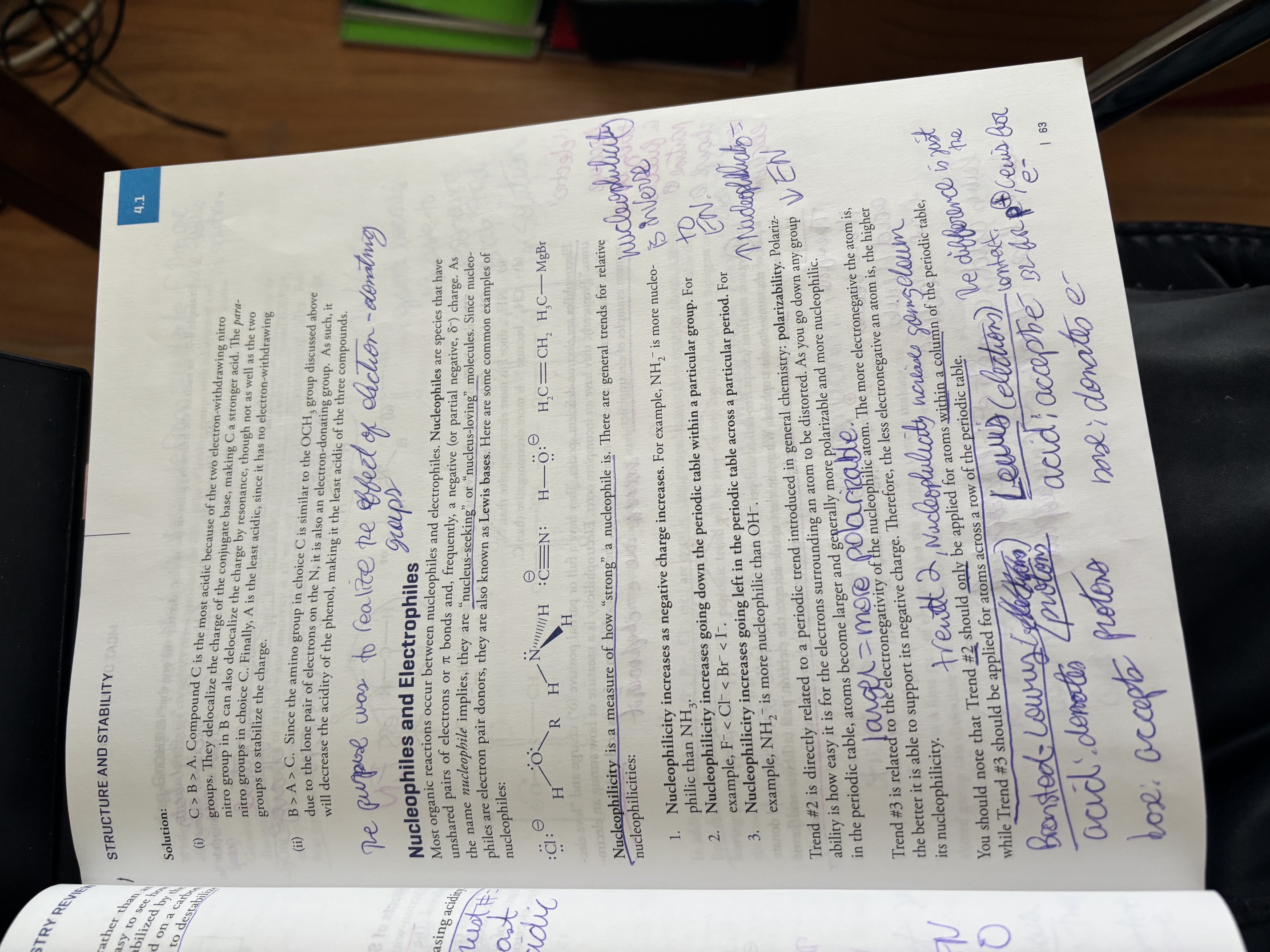
Nucleophiles and Electrophiles


Leaving Groups


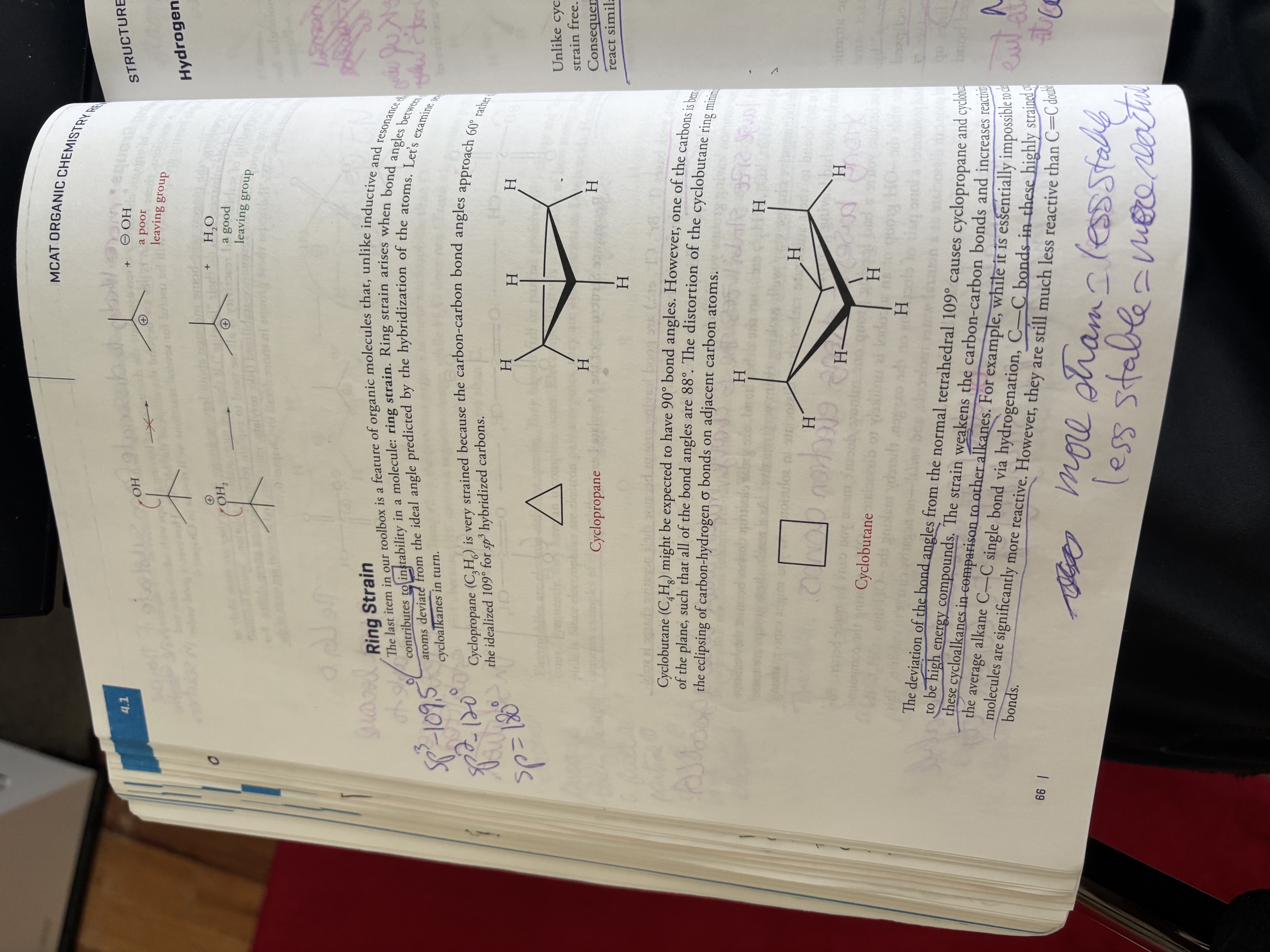
Ring Strain
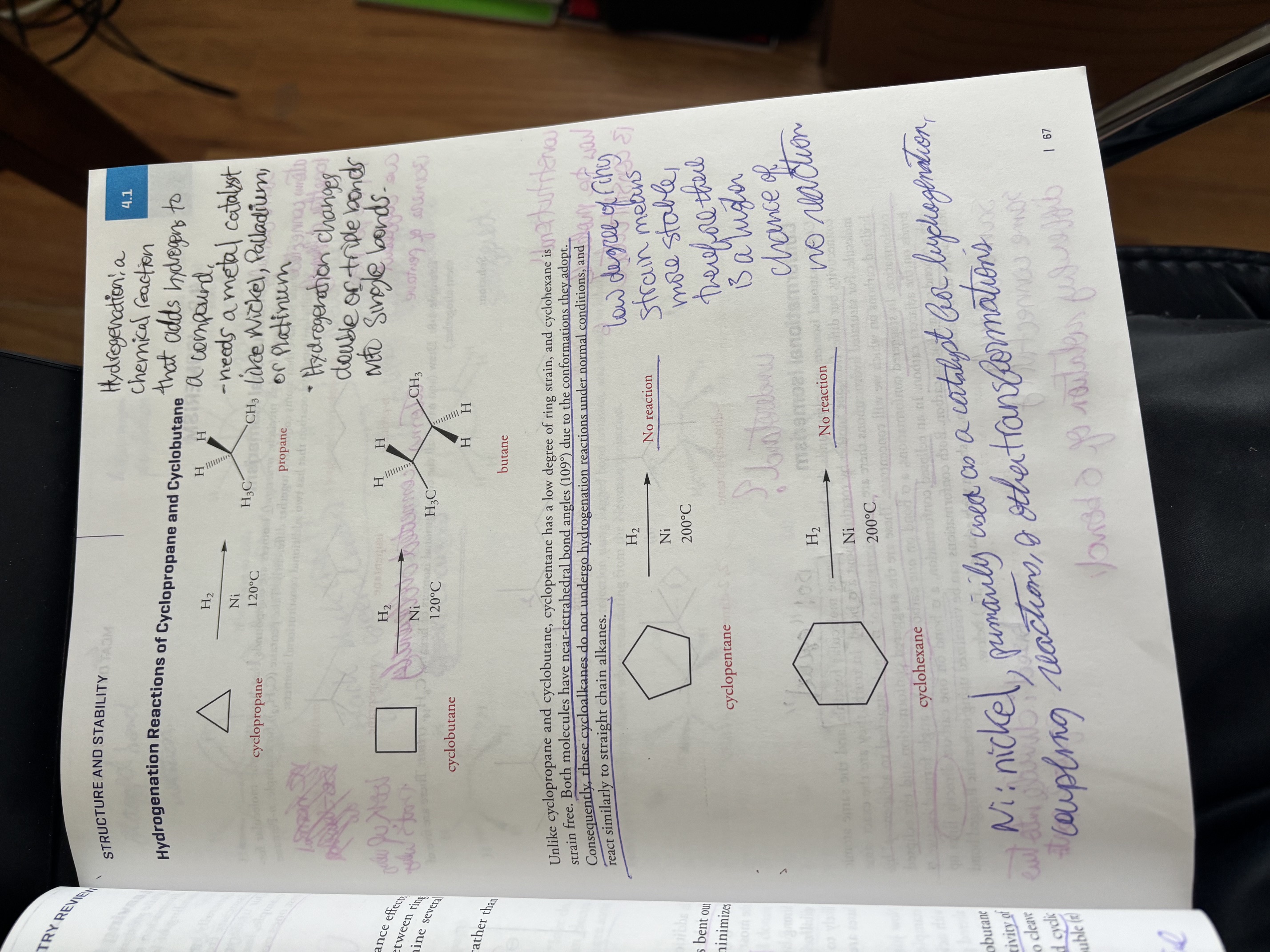
Hydrogenation Reactions of Cyclopropane and Cyclobutane
Isomerism


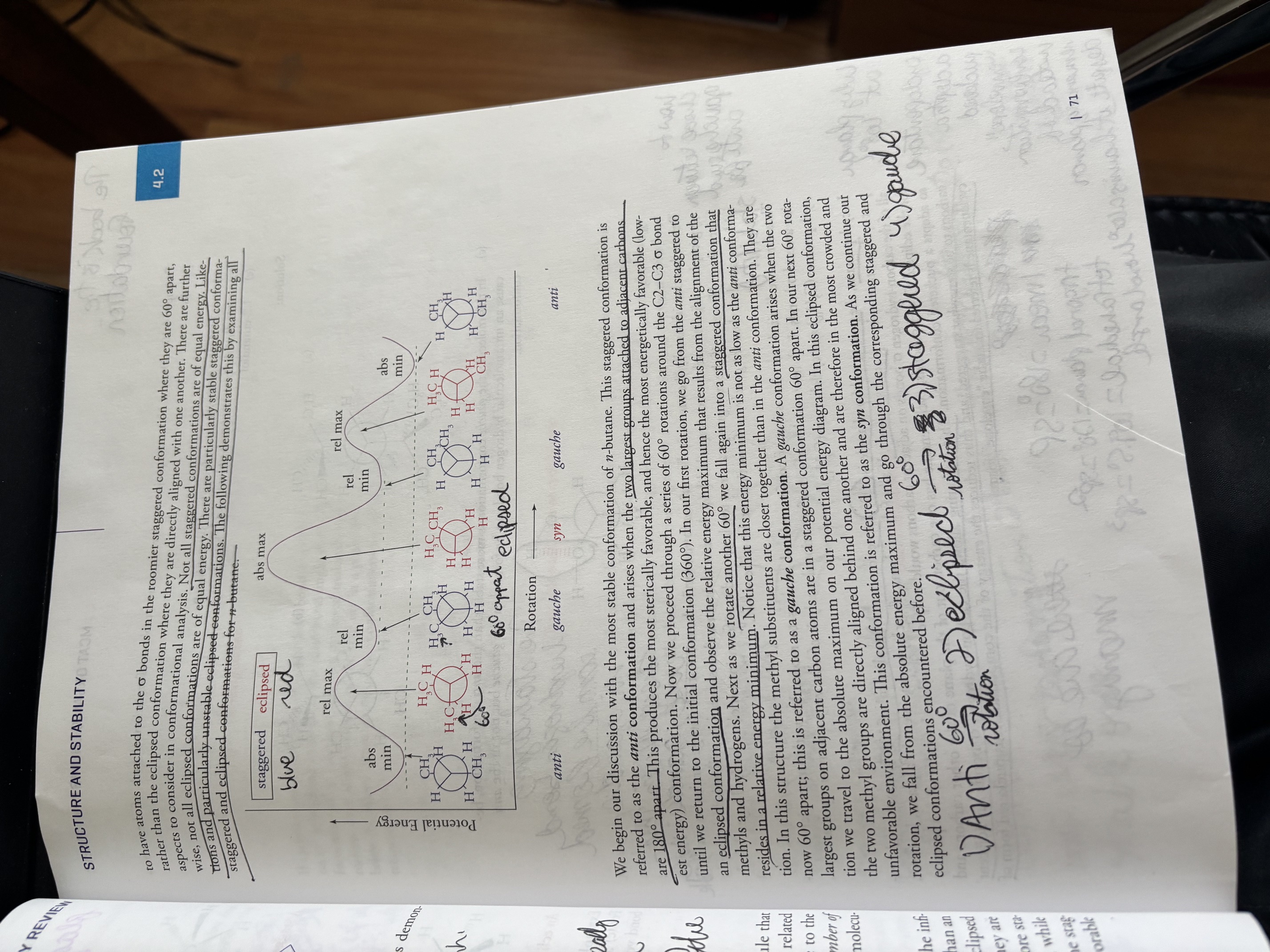


Stereoisomerism

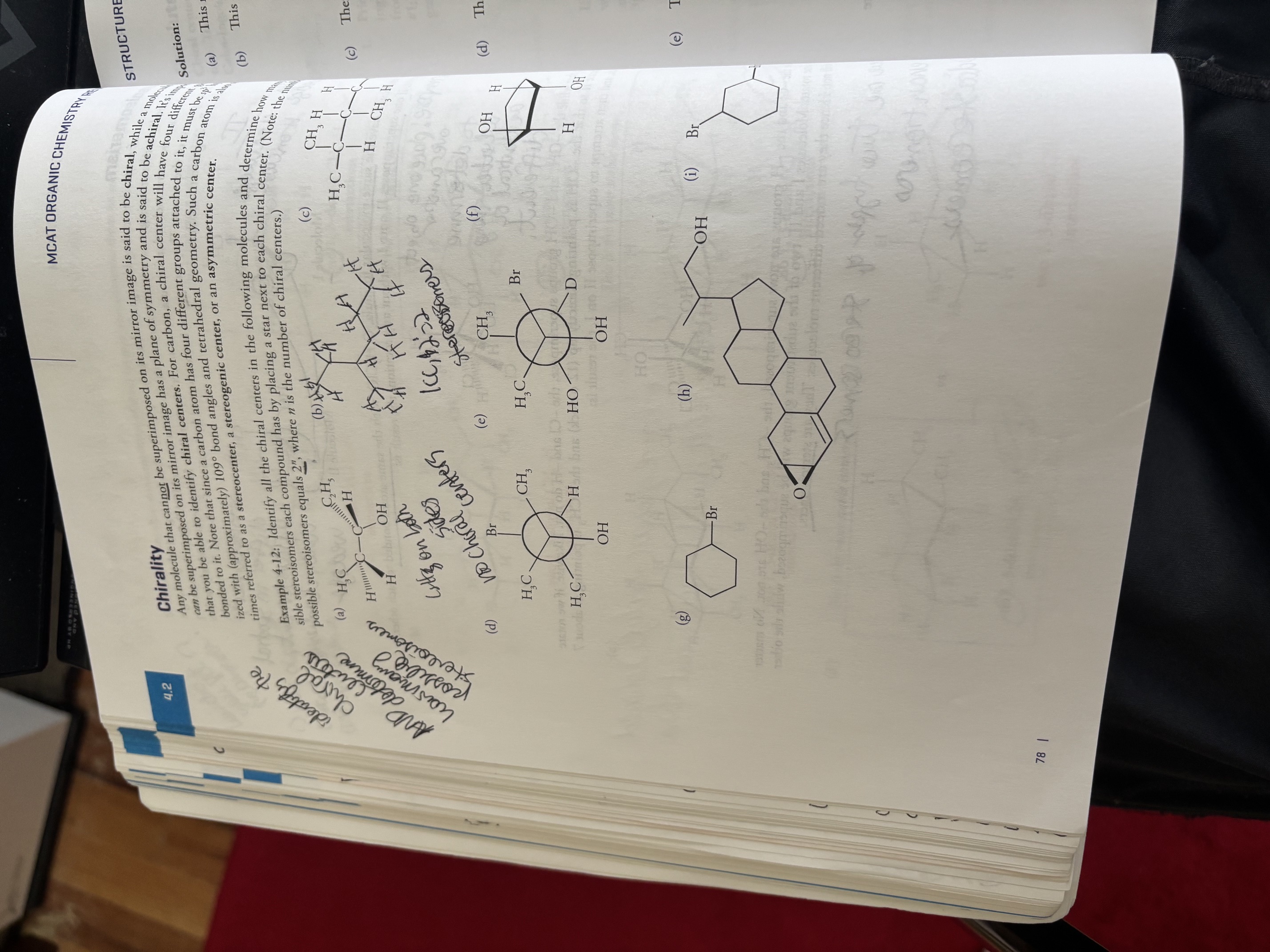
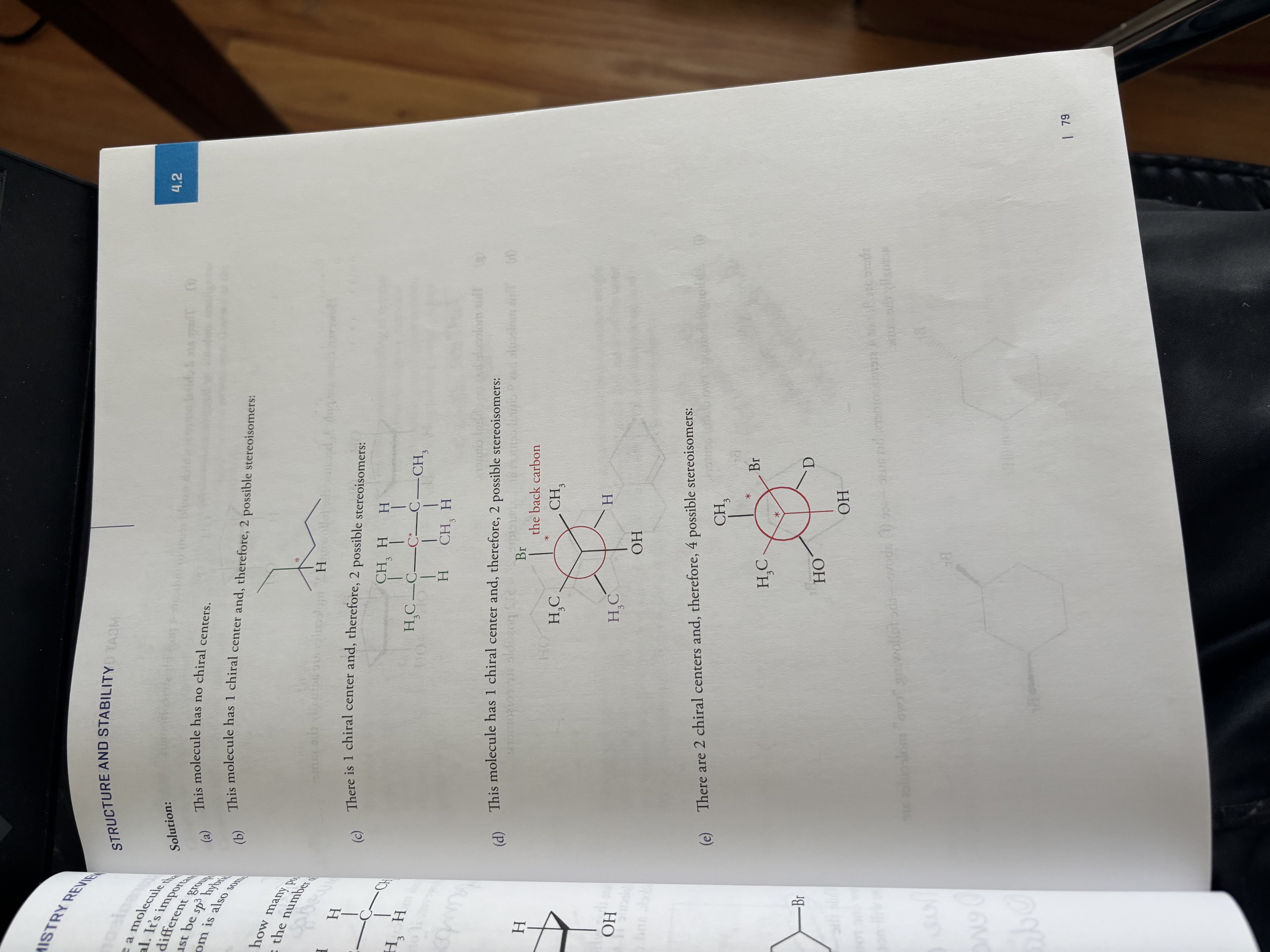
Chirality

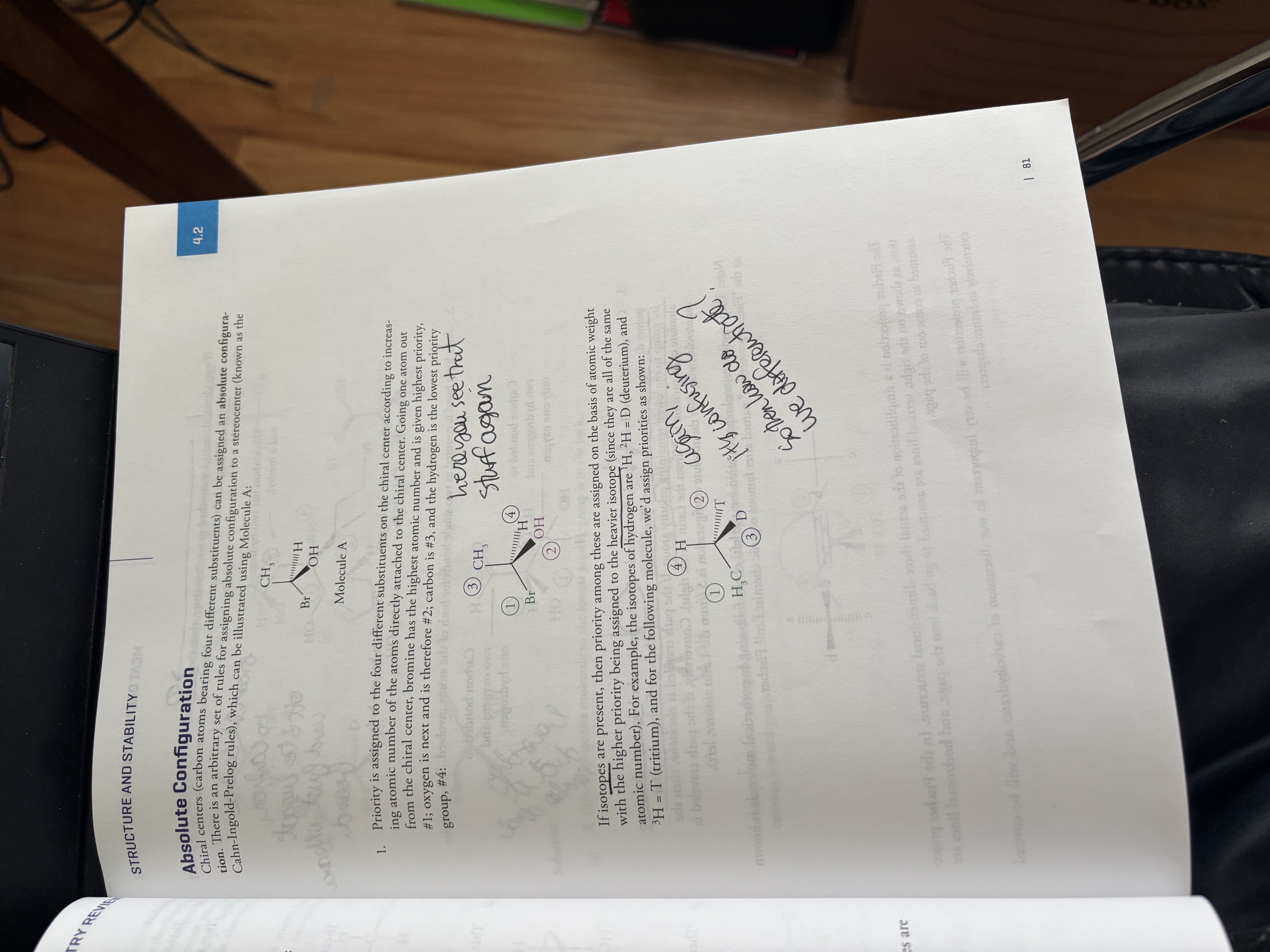
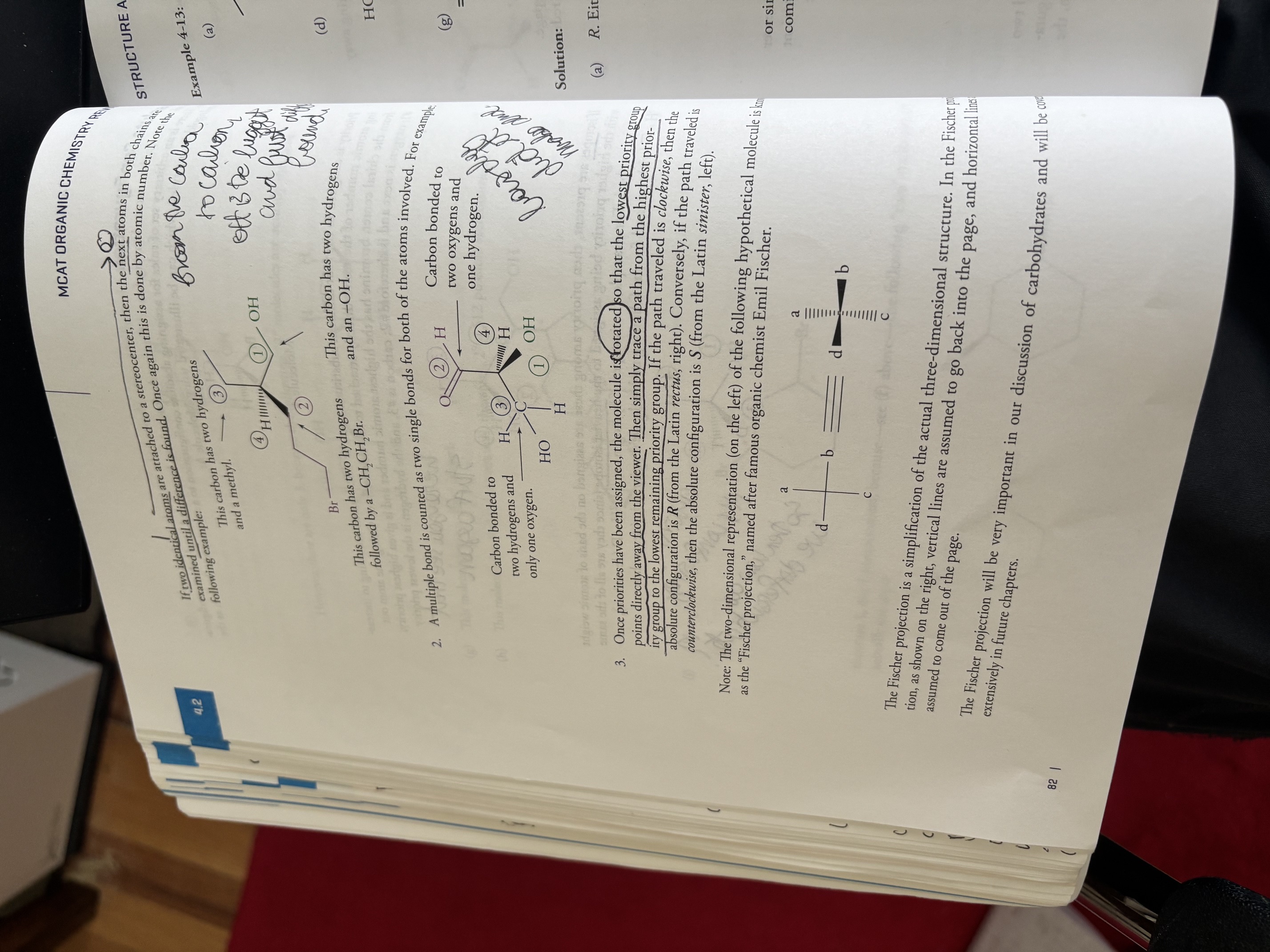
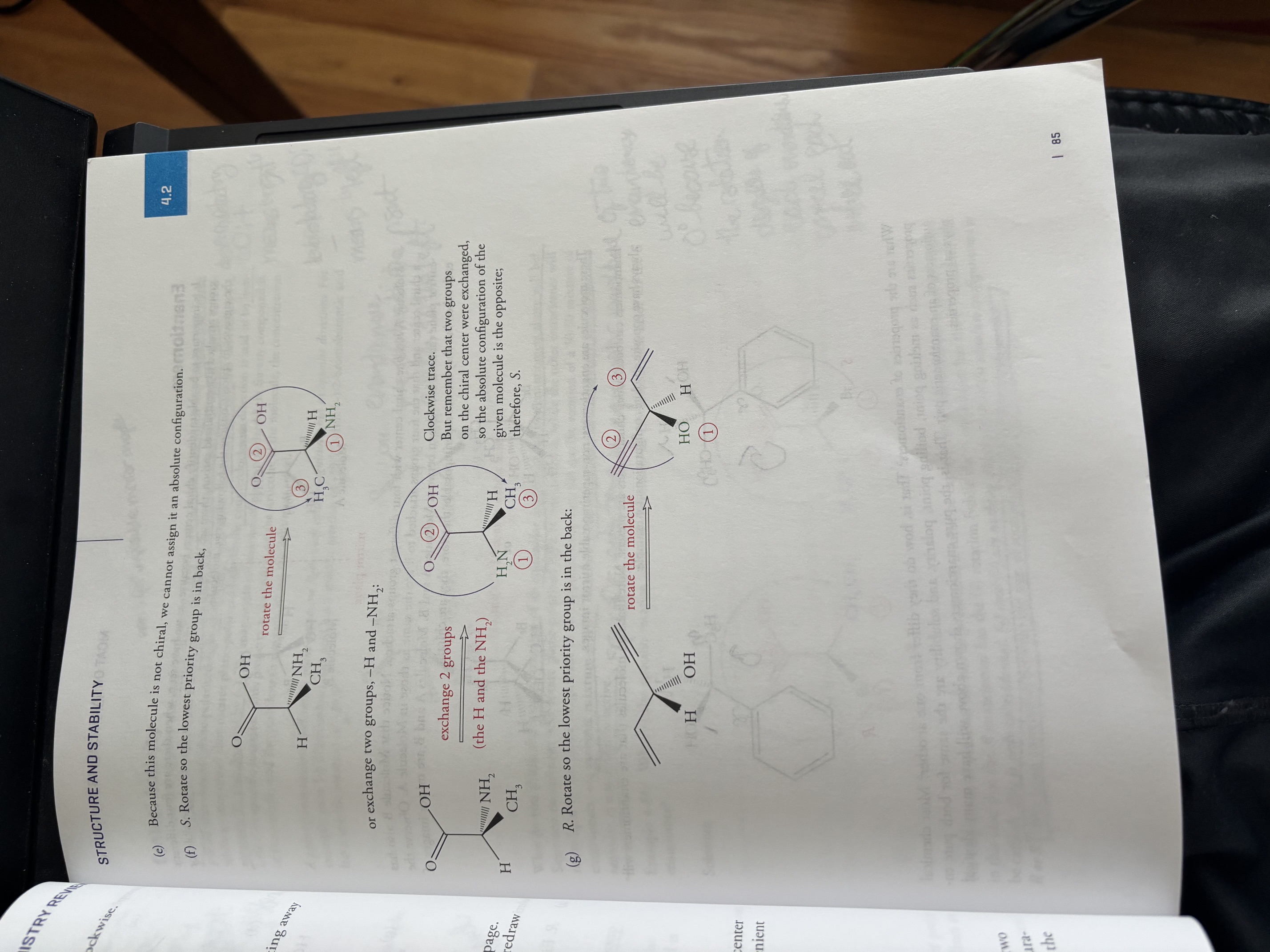
Absolute Configuration


Enantiomers

Optical Activity

Diastereomers


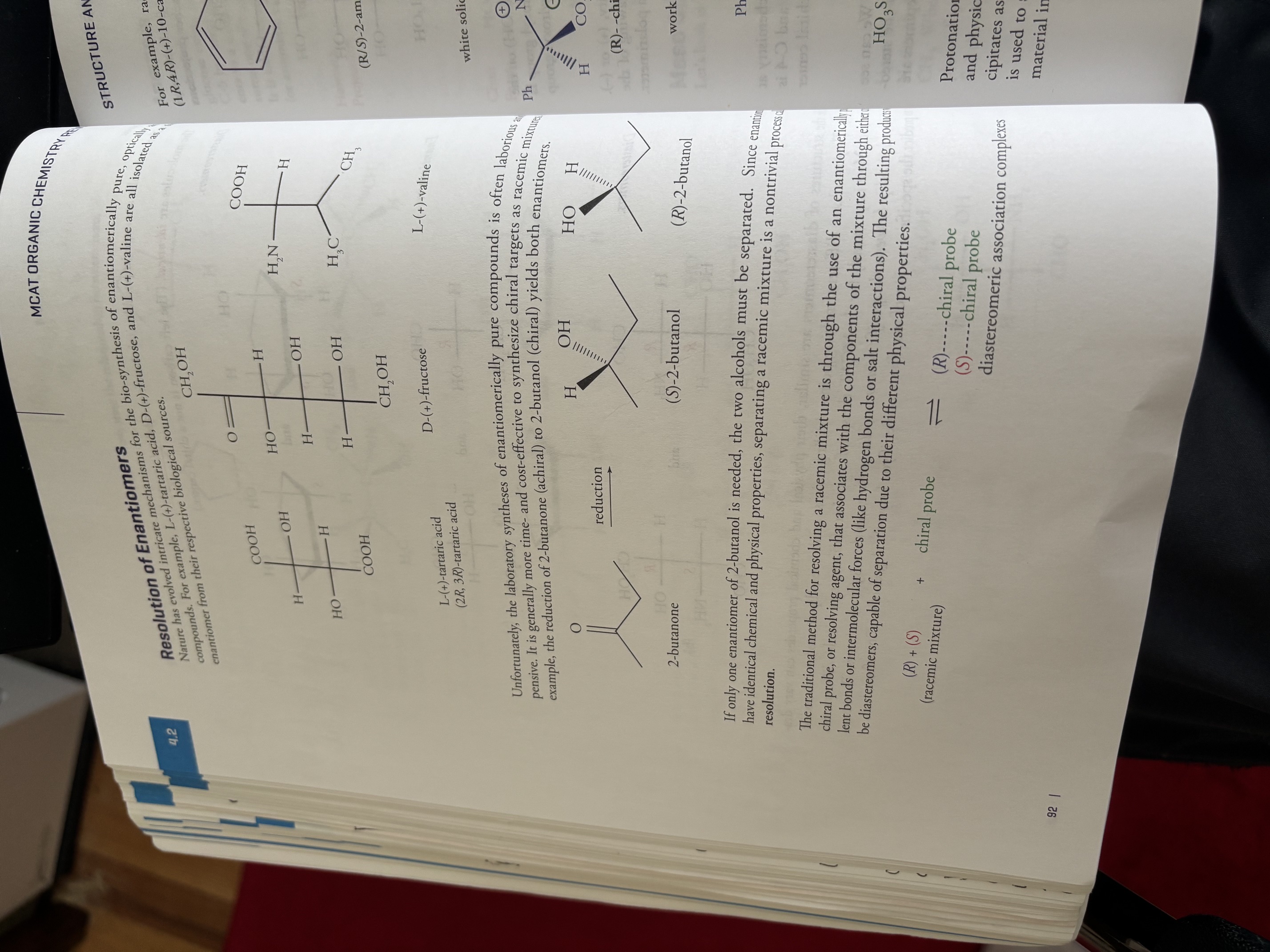
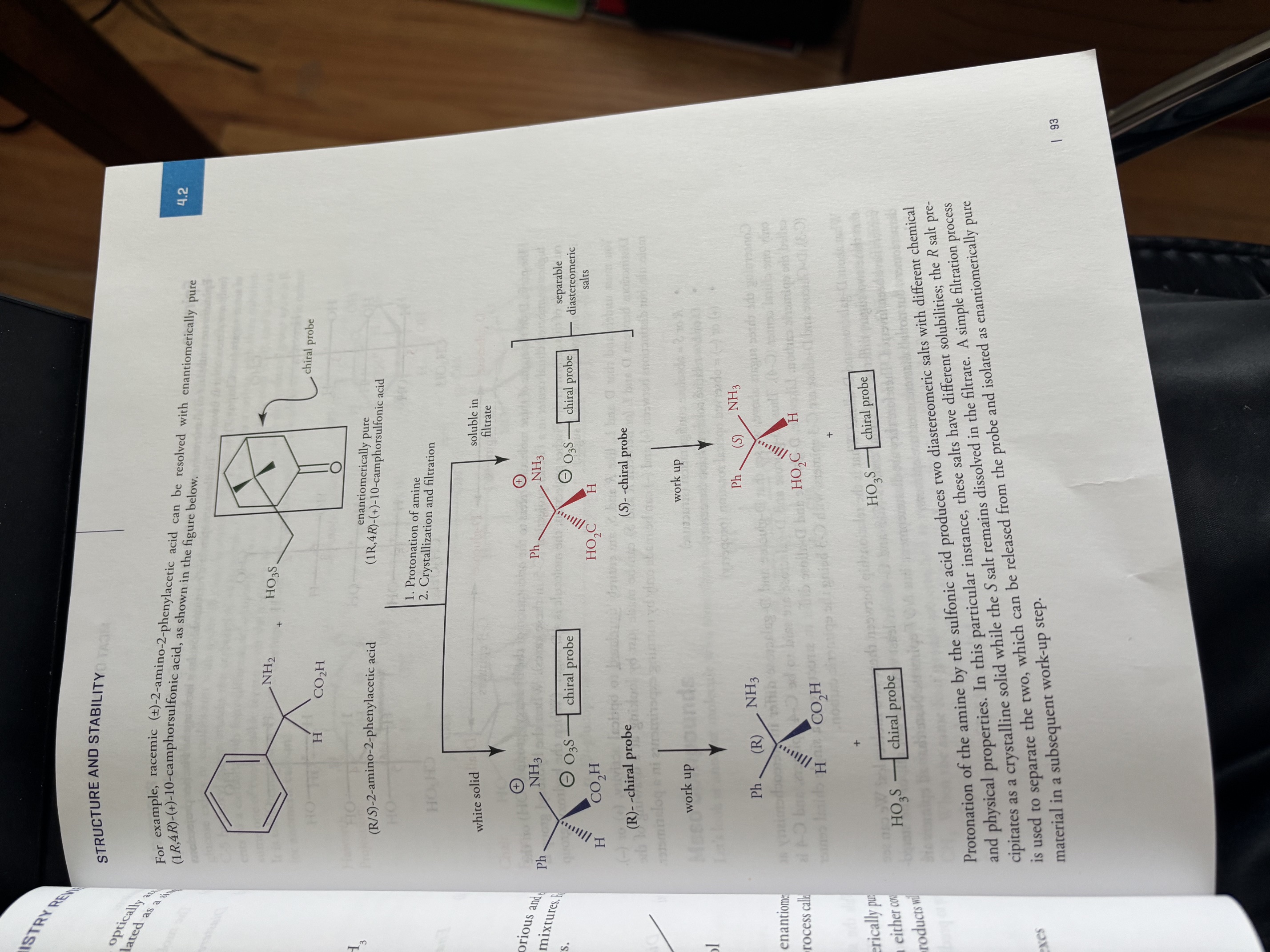
Resolution of Enantiomers
Epimers

Anomers

Meso Compounds


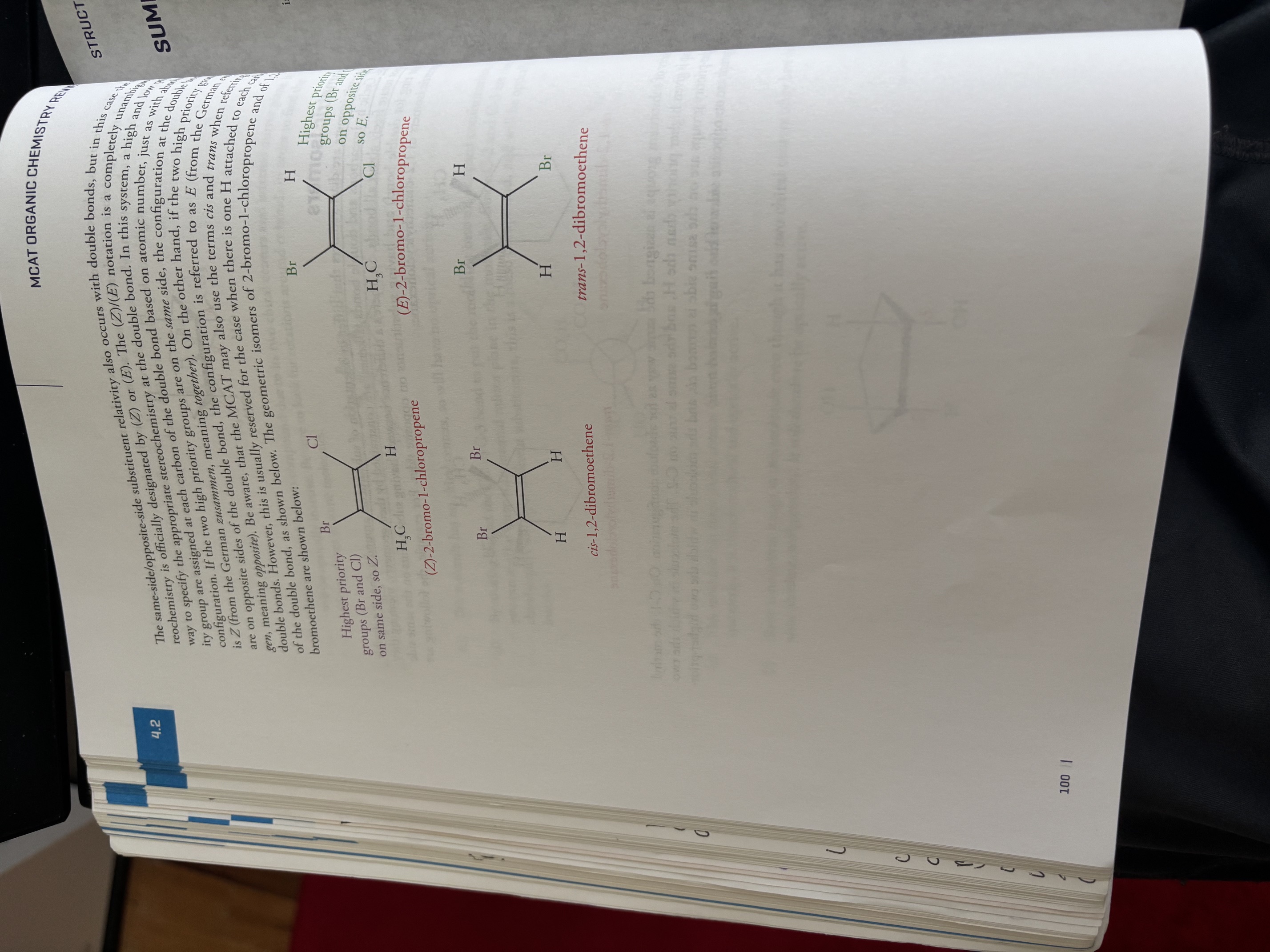
Geometric Isomers